The “American dream” of Taiwanese people from an earlier time arose from the contrast between America’s power, on the one hand, and the instability seen in Asia and elsewhere around the world. It inspired wave after wave of US-bound students and emigrants. Today, after the strenuous efforts of several generations, Taiwan has achieved prosperity. No longer do people emigrate in droves, and fewer young people are studying abroad. Attitudes have changed. Younger people today travel confidently abroad in search of adventure, leisure, and self. The different American dreams of different generations reflect changes in youth culture in Taiwan.
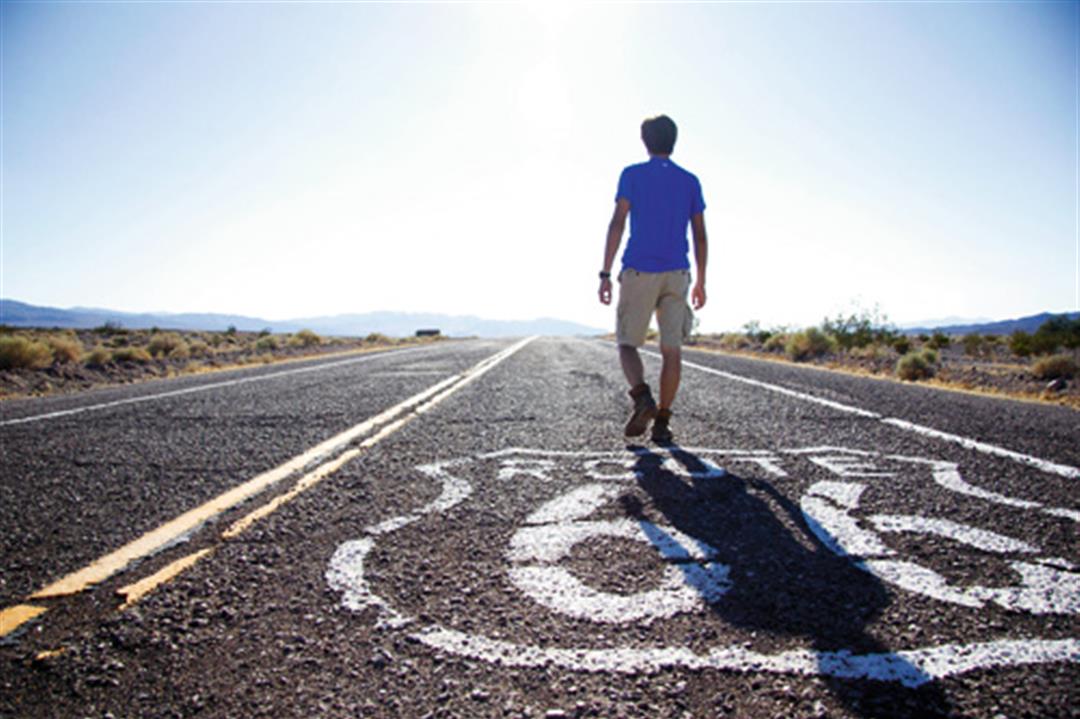
In August 2011, then-29-year-old theater director Wu Ting-chien saw the dreaded “30th birthday” crisis looming ahead of him. He decided to take a trip with an old university classmate to the US, where they would drive from the West Coast to the Midwest on Route 66, made famous in both cinema and literature. They spent a month traveling 3,940 kilometers on a journey to explore the origins of the “American dream,” and to learn a thing or two about themselves.
US Route 66 runs from Chicago, Illinois in the east to Santa Monica, California in the west, and has long served as a symbol of the quest for liberty. Route 66 also stands as a symbol of courage and enterprising spirit, for it is along this highway that multitudes of Midwesterners have trekked westward to build new lives for themselves. During the Great Depression of the 1920s and 30s, thousands found employment in the small towns located along the highway.
In preparing for the trip, Wu had assumed that this highway was something of an undeclared symbol of the American spirit for people from his generation, but after scouring all the major bookstores in Taiwan, he was surprised to find that all the US-related travel books focused mostly on America’s east and west coasts. And when he talked with friends about the upcoming trip, the Midwestern images that popped into most people’s minds were connected with horror movies such as Hostel and The Texas Chainsaw Massacre.
“But in fact, the locals we met during the trip were all super friendly, and the gasoline stations, restaurants, and hotels were all quite nice.”

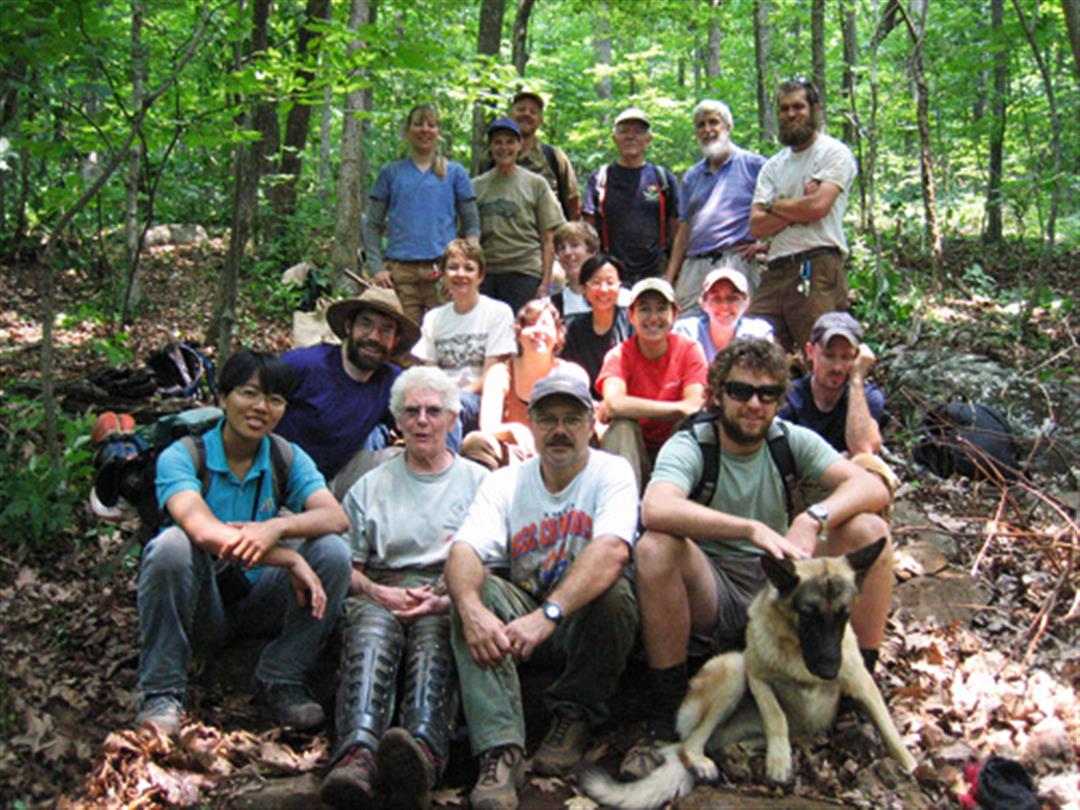
Hsu Ming-chien (front row, first from left) took time off from her studies to volunteer with an Appalachian trail crew for 100 days. It was an excellent learning experience, and many great friendships were made.
Wu chose to make a road the focus of the trip because he’s always enjoyed driving. He still vividly recalls how his father, the noted movie director Wu Nien-jen, would pile the family into the car for drives along Taiwan’s North Coast. Sitting in his father’s lap, with Mozart playing on the radio, little Ting-chien would watch his father expertly handle the steering wheel. The warmth and beauty of those trips inspired in the boy a deep love for the open road.
The impending anxieties of turning 30 prompted him to plan a trip, and what he most wanted was to take a very long drive: “Strangely enough, it was as though the physical sensation of wind rushing past the car windows and scenery slipping continually into the rearview mirror assuaged my angst and helped me find an energy that propelled me forward.”
While on the road, Wu went out of his way to visit with friends and relatives studying or working in the States. In the process, he developed a new appreciation for how he had been influenced by American culture. The preceding generation had grown up in impoverished and uncertain times, and thus tended to look upon America as a land of prosperity, progress, and limitless possibilities. Taiwanese born in the 1980s, meanwhile, grew up from the start surrounded by American entertainment and foods. Having heard the yearnings and disappointments that America had inspired in older generations, and having learned from the cross-cultural experiences from peers in his own generation, Wu felt simultaneously familiar yet unfamiliar with America.
After half a month on the road, while standing at the rim of the Grand Canyon, Wu suddenly had an insight into the nature of the “American spirit”—its strong adherence to the value of individualism. He thought to himself: “Imagine what it must have been like hundreds of years ago for the pioneers who first came here. Without the strength of numbers, they had to have a strong belief in themselves. Indeed, if this belief fell anything short of a type of faith, the pioneers would sooner or later have been swallowed whole by this vast expanse.”
Having been washed clean both body and soul by the wilderness, a trip to the supermarket—that symbol of capitalism—left Wu dismayed with the material abundance and variety of the place: “The racks bursting with products of every description didn’t give me any greater sense of security than I got from the long, empty highway. Suddenly I wondered whether modern people had lost the ability to be independent.”

Writing about his trip across the US on Route 66, Wu Ting-chien says: “Although I was utterly alone in the vast expanse, I nevertheless felt enveloped in an unfettered feeling of freedom.” Therein lies a cameo of the bold spirit of Taiwan’s younger generation.
The expansive natural scenery of America is great for touring, but there’s no reason it has to be done by car. Touring on foot is also a wonderful way to get a strong feel for the place.
Hsu Ming-chien, the deputy head of the Thousand Mile Trail Club, has long been deeply concerned about mountain environments, and distressed to see nature increasingly covered over with cement. She has a special dislike for trails made of man-made steps. Six years ago, while still working on her PhD at National Taiwan University’s Graduate Institute of National Development, she flew halfway across the world to work on the Appalachian Trail and pick up some ideas on how she might work to promote more eco-friendly hiking trails in the mountains of Taiwan.
Before departing, Hsu’s image of the American wilderness was based on the mountains, rivers, snow, and black bears she’d seen in Ang Lee’s Brokeback Mountain. When she actually got there, however, what most impressed her was the role civil society had played in creating the Appalachian Trail.
Located in the eastern US, the Appalachian Trail is the longest hiking trail in the world built by volunteers—3500 kilometers long, it passes through 13 different states. Hikers see all sorts of untamed landscapes, flora, and fauna. And the trail in some places crosses highways and passes through towns.
In the beginning there was just a disconnected assortment of paths created by Native Americans, and roads that had been used by postal carts in the colonial period. But in 1921, Benton MacKaye called for them to be linked together, a project which was eventually completed in 1937. Today, every year more than 4000 volunteers from over 30 trail clubs use their vacation time to maintain and expand the trail.
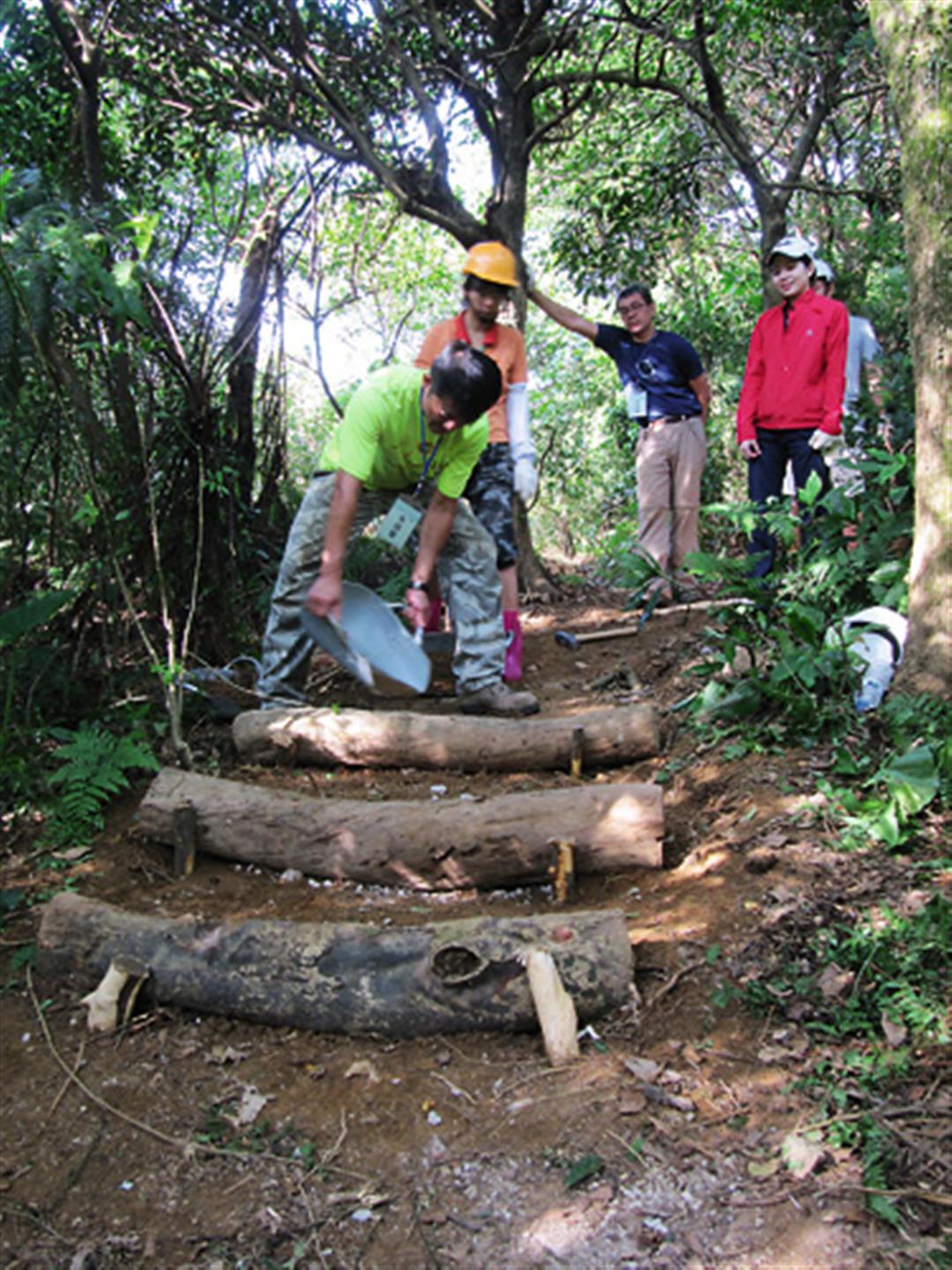
Hsu worked with the Konnarock Volunteer Trail Crew for 100 days, filling in muddy trails with chip rock, building and repairing narrow boardwalks of wooden planks laid end to end, repairing mountain cabin roofs, rebuilding old footbridges, stabilizing hillsides with wooden stakes cut nearby, laying drainage systems, closing off badly eroded sections of trail, and opening up new trails.
It was tough work, but Hsu ended up working the second highest number of hours among all volunteers that year. The experience taught her that trails are not just worn in, but in fact are consciously built. A first-class trail, moreover, feels completely natural, being built in such a way as to leave little sign of human intervention.
She also noticed that the volunteers, 70% of whom were women, came from all over the US. Most of them were retirees who took great satisfaction in the work. Everyone got along great.
After her trip was over, she wrote a book about her experience and threw herself headlong into a movement to build hiking trails in Taiwan. Today, the spirit of the Appalachian Trail has worked its way into Taiwan’s trail movement. A national trail system is now beginning to take shape here, and the Forestry Bureau has invited members of Appalachian trail clubs to conduct workshops in Taiwan. And in recent years, environmental groups from mainland China have been traveling to Taiwan to learn about the trail movement here.

Taiwan’s younger generation are fascinated by elements of American popular culture such as street dancing, hip-hop and skateboarding, which are seen as symbolic of self-realization and a spirit of innovation.
The great outdoors may be a great place to let go and ramble, but America’s biggest cities, with populations in the millions, are utopias with which people have a love/hate relationship.
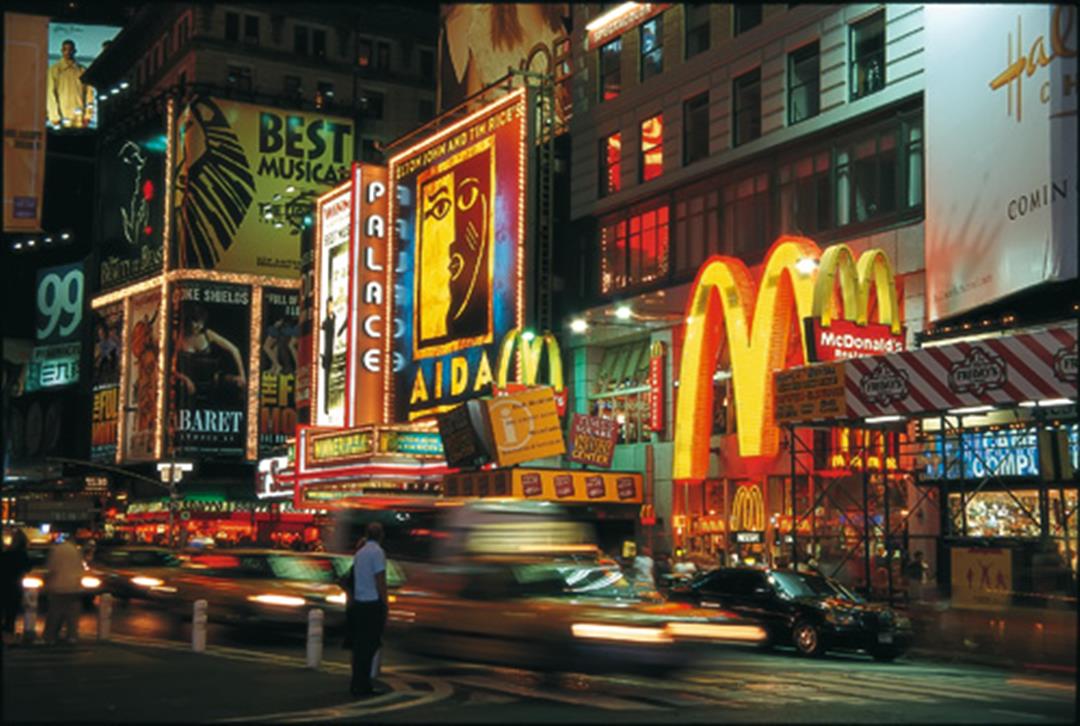
Author Tom Wang, the founder of the Dream School, in his younger days did graduate study in San Francisco. After graduating, he hurried excitedly off to New York to work in a financial institution by day and study cinema in night school at New York University. He found the frantic pace of life in New York very much to his liking.
In his article “New York by Day, Paris by Night,” he admits that in his 20s he was totally into the Puritan work ethic and the capitalist quest for success. He developed tremendous professional prowess and ability to withstand pressure, but also ended up with skewed, snobbish values.
He writes that people in New York, in order to stay ahead, are always hurrying about and grabbing for resources. Upon stepping into an elevator, they will press the button for their floor several times, as if that would speed things along a bit. After getting off work, they still talk incessantly on their mobile phones, like they’re trying to exercise remote control over every aspect of their lives. Whether working, socializing, courting, or out singing karaoke, there’s an extreme intensity on their faces, like they’re ready at all times for a fight to the death.
“When I was in New York, I was utterly convinced that anyone capable of surviving there was a worthy opponent, while anyone who slunk off was a loser. I believed that whatever you do, you have to stick with it, and that walking away showed there was something wrong with you.”
But at age 35, his “New York attitude” began to slip away, in part because he was starting to lose interest in his work. Also, his father, who had worked very hard all his life, had passed away after a two-year fight against cancer. Wang gradually awakened to the realization that life offers pleasures that are more significant and lasting than mere success and fame.
He began looking at life more like the French do: “Why not slow down and do something more meaningful? Why go through life all uptight? It wouldn’t hurt to kick back and do with a bit less.” Of course, he was thankful that the American lifestyle had honed his chops so he could put himself in a position to enjoy the French lifestyle.

What exactly is America? An irresistible melting pot that assimilates different peoples into a homogenous mass? Or a cultural salad capable of retaining great diversity? Regardless which, the influence of American culture and the US economy is felt in every corner of the globe.
At different stages of life, a person can be affected in different ways by the same city.
A veteran journalist we’ll call “YS,” who was born in the 1970s and has traveled all over the world in the course of her work, decided in 2012 to quit her well-paid but frantic-paced job and recharge her batteries for a half year in New York.
Renting an apartment in New York and blessed with time and a bicycle, YS switched to the slow lane of life to explore the city, where she made countless delightful discoveries. In Brooklyn, for example, abandoned factories had become home to a creative cluster, while the long-unused elevated tracks had been remade into a popular park. Even in the area where she lived on the edge of Harlem, long notorious as a den of crime, the streets were full of life and charming little shops. The New York Times wrote glowingly of it as the most cosmopolitan neighborhood in New York.
“I discovered that New York had been changing continually over the preceding decade, and the changes were for the better.”
She had studied for a master’s degree 12 years before at Columbia University, and now she was back as a visiting professional (similar to the status of a visiting scholar). It was a happy return.
This time around, she was at the university to study “the effect of new media upon Chinese news.” This topic had become a matter of urgent concern to her in the preceding years, but because people were always busy, it had been difficult to engage in systematic discussion with peers or on university campuses in Taiwan. “Working in Taiwan, it’s easy to get stuck doing things you’ve become proficient at. Unaware, you stop developing, and cannot sense your own blind spots.”
Leaving everything behind may have seemed like a desperate move that derailed her career, but it afforded her an opportunity to see herself more clearly and think about which direction she should move next. And Columbia University provided the sustenance she needed at that point in time.
You can sit in on regular courses, says YS, but in addition, because Columbia has so many graduate departments and has long attracted visits from the leading lights of industry, government, and academia when they pass through New York, there are lots of interesting lectures on campus every day, which makes it an excellent place to exchange ideas and debate.
When the General Assembly of the United Nations was in session at the UN’s New York headquarters this past October, for example, things got very busy at Columbia. “The most interesting thing was seeing people from all over the world with all different ways of thinking, both at the podium and in the audience, challenge each other’s ideas. I really got a feeling that in the global village, all things are interconnected.”
Quo vadis, American dream?So what exactly is America? A giant melting pot that irresistably attracts people from across the globe and assimilates them into a homogenous mass? Or a cultural salad capable of retaining great diversity? The verdict is still out on this question.
Shen Yuncong, the head of Good Morning Press, feels that going to the US has always been a big deal, both for individuals and families. In the past, lack of work experience, or the need to provide proof of sufficient financial resources, added to the difficulty of going there. But Taiwan’s recent admission to the US Visa Waiver Program has afforded more young people an opportunity to see the world. This will make them bolder, and directly change the youth culture of the next generation.
And there is the eternal question: As globalization proceeds and pop culture becomes more and more influential, will American culture become even more dominant around the world? In Shen’s opinion, prior to the 1980s, there were indeed legitimate worries that the US might establish cultural hegemony on the strength of its powerful economy and its dominant position in the mass media. Now, however, he sees no need for such concern, because information and values are growing increasingly diversified.
Ye Meiyao, the chief editor at ThinKingDom, feels that the US, having been through the 9/11 terrorist attacks and the financial tsunami, has a diverse society that is capable of tremendous introspection, and while the unblemished American dream of yesteryear is a bit faded and torn, it now has a more open and realistic social dialogue that still offers lessons for us.
As an example she points to the recently published Chinese translation of The Corrections by American novelist Jonathan Franzen. It is a satirical family drama that critiques the high cost of American materialism, touches on the economy and culture, and comments on everything from superficial beauty to the pockmarked aftermath of the bursting of the bubble. In the end, Franzen argues that a rebuilding is needed, and that it must proceed in tandem at the level of both the individual and society.
The social critic James Howard Kunstler, who boldly addresses the subject—taboo in America—of a post-petroleum age, continually warns of a traumatized future marred by terrorist attacks, a shortage of petroleum and electricity, and a decline of science and technology. At the same time, however, he attempts to describe a different sort of utopia where community festivals replace electronic entertainment, and the smell of grass and leaves replaces the stench of vehicle exhaust. He feels that America has a glorious tradition of people helping people, and the future lies not in the cities, with their soaring skyscrapers; rather, he says, we must develop local economies and agriculture, and strengthen the linkages between small towns and the countryside.
Regardless whether your attitude toward America is admiring or critical, and no matter whether you just want to enjoy it or intend to undertake a serious study of the place, one basic approach works for all: go boldly forward and fulfill your dream!