Taiwan Stakes Its ClaimsA Tour of Potential World Heritage Sites in Taiwan
Tsai Wenting / photos Pu Hua-chih / tr. by Phil Newell
July 2002


What is a "World Heritage Site"? Perhaps you don't have a very clear idea, but it is very possible that you have visited one or two, like the Great Wall of China, the Hiroshima atomic bomb memorial, Angkor Wat in Cambodia or Yellowstone National Park in the United States. Or maybe the Tikal Maya ruins in Guatemala, the Leaning Tower of Pisa in Italy, or the Palace of Versailles in France.
Does a place have to include ancient, beautiful, or impressive architecture to be considered part of the World Heritage? What kinds of conditions must be met to qualify for inclusion on the World Heritage List? Does Taiwan have any natural or cultural assets that deserve to be treasured by all of mankind? How much do you know about such potential assets?
The Council of Cultural Affairs (CCA) has been endeavoring to have world-class cultural and natural assets in Taiwan added to the World Heritage list. To this end, two years ago the CCA began collecting opinions from various parties and selected 11 potential World Heritage sites. Five of these sites are cultural: (a) Fort San Domingo and other buildings of historical and cultural importance in the town of Tanshui; (b) the Japanese-era structures, such as the Prince Hotel, and the mining industry infrastructure in the Chinkuashih area; (c) the site of the prehistoric Peinan Culture in Taitung; (d) the Tao community and their natural environs on Orchid Island; and (e) Kinmen Island, with its historic battlefields and well-preserved traditional Chinese villages.
Four of the proposed sites are natural: the "false cypress" forest on Mt. Chilan in Ilan County, the geothermal zone of the Tatun mountains of northern Taiwan, the basalt formations of the Penghu archipelago, and Taroko Gorge in Hualien County. Finally, two potential sites-the Alishan Mountain Railway and the old Mountain Line railway in Miaoli County-are of both cultural and natural importance.
It must be admitted right off that because Taiwan is not a signatory member of UNESCO, the United Nations organization which oversees World Heritage sites, for the time being it is not possible for any of these places to be included on the list. Nonetheless, applying for inclusion requires considerable preparation time. By beginning now, not only can Taiwan get on track with the rest of the world in terms of preserving its cultural and natural assets, the effort will help generate greater domestic consensus to this end.
Taiwan, an island in a corner of the Western Pacific, has been a major stage for the evolution of living things.
First we must go back to very remote times, before the appearance of Homo sapiens. On what is today Mt. Chilan in Ilan County, there remains a "false cypress" forest left behind from the Ice Age, 30 million years ago. Between 17 and 8 million years ago, lava poured out of the sea floor in the southern part of the Taiwan Strait. Today that lava constitutes the basalt formations of the Penghu archipelago. Tectonic and volcanic activity around the same time left us with today's Tatun geothermal zone. Six million years ago, the force of the Philippine Sea tectonic plate crashing into the Eurasian plate dramatically compressed and shifted the earth, and after high temperature and high pressure tempering, today's magnificent Taroko Gorge was formed.
Then came the arrival of man. Between 2300 and 5000 years ago, prehistoric man erected monoliths in what is today Peinan Rural Township in Taitung County. More than 2000 sarcophagi have also been unearthed at the site, with thousands of jade ornaments deposited inside; these constitute the single largest burial group on the Pacific Rim. Meanwhile, on Orchid Island, an small island just southeast of the main island of Taiwan, the Tao people have preserved a rich variety of traditional customs, and are a treasure trove for anthropologists.
Three centuries ago, when the Western colonial powers sailed into East Asia, they occupied parts of Taiwan, which was strategically located along shipping lanes. Here they built Fort San Domingo (in Tanshui) and other structures of non-native design. About a century ago the Japanese colonial regime which then ruled Taiwan, aiming to exploit the lumber on Mt. Ali, built the Alishan Mountain Railway, one of the three most significant mountain railways in the world. For similar reasons they also built the old Mountain Line railway in the highlands of Miaoli.
Around that same time, mining was begun in the Chinkuashih area of northern Taiwan. This area produced more than 95% of the gold extracted in Taiwan, and gave birth to the town of Chiufen, which flourished in its day and later became known as a "city of sadness." After the government of the Republic of China came to Taiwan in 1949, the island of Kinmen became the front line in the Chinese Civil War and an important military base. A huge network of tunnels was dug out underground, while, on the surface, lovely traditional villages remained totally intact.
These 11 potential World Heritage sites richly record not only the life of our planet, but also human activity and civilization in Taiwan throughout history-from prehistoric cultures and aboriginal life to the interaction between European and Asian peoples, industrial civilization, and the face of modern war in the Taiwan Strait.
Reacting to this list of potential World Heritage sites, only recently made public, Huang Jui-mao of the Tanshui Community Action Team and an assistant professor of architecture at Tamkang University, cannot help but exclaim: "Although Taiwan is very small, it has developed so many cultural and natural assets. Just look, every one is of a different character. This is what makes Taiwan so genuinely interesting."
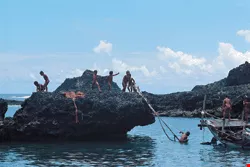
The Tao culture has its origins in the tribe's close communion with the sea. (photo by Huang Li-li)
Of universal value
The World Heritage concept is something new that has arisen since WWII. In 1972, UNESCO, considering the damage that war, natural disasters, and industrial development have been doing to precious cultural and natural assets, adopted the "Convention Concerning the Protection of the World Cultural and Natural Heritage." This set out rigorous and comprehensive conditions for determining what places are qualified to be deemed World Heritage sites; it also encouraged signatories to apply to have the assets within their territories that are "of outstanding universal value" included on the World Heritage list. Yet, with so many places from earth's and mankind's long history to choose from, what actually makes the grade to be included on the list? How does the application process work?
UNESCO has established separate criteria for cultural and natural assets. Cultural sites must meet at least one of the following criteria: (i) represent a masterpiece of human creative genius; (ii) exhibit an important interchange of human values, over a span of time or within a cultural area of the world, affecting developments in architecture or technology, monumental arts, town-planning or landscape design; (iii) bear unique or at least exceptional testimony to a cultural tradition or to a civilization which is living or which has disappeared; (iv) be an outstanding example of a type of building or architectural or technological ensemble or landscape which illustrates a significant stage (or stages) in human history; (v) be an outstanding example of a traditional human settlement or land-use which is representative of a culture (or cultures), especially when it has become vulnerable under the impact of irreversible change; or (vi) be directly or tangibly associated with events or living traditions, with ideas, or with beliefs, or with artistic and literary works of outstanding universal significance.
Most of the global cultural properties that have passed muster meet more than one of these criteria. For example, the city of Venice meets all six, the Great Wall of China meets Nos. 1, 2, 3, 4, and 6, and Stonehenge in Britain meets the first three. Liberty Hall in Philadelphia, on the other hand, meets only No. 6.
Four criteria have been established for natural World Heritage properties. Such properties must: (i) be outstanding examples representing major stages of earth's history, including the record of life, significant on-going geological processes in the development of landforms, or significant geomorphic or physiographic features; (ii) be outstanding examples representing significant on-going ecological and biological processes in the evolution and development of terrestrial, fresh water, coastal and marine ecosystems and communities of plants and animals; (iii) contain superlative natural phenomena or areas of exceptional natural beauty and aesthetic importance; or (iv) contain the most important and significant natural habitats for in-situ conservation of biological diversity, including those containing threatened species of outstanding universal value from the point of view of science or conservation.

On holidays, visitors pour into the historic Sheng-hsing Station on the old Mountain Line railway, disrupting the tranquility and simplicity that originally made the place so wonderful, and also greatly reducing the prospects for listing of the Mountain Line as a World Heritage Site. (photo by Diago Chiu)
Size doesn't matter
As of the end of June, 2002, 170 countries had signed the World Heritage Convention, and 730 sites had received approval for inclusion in the World Heritage List. There are well-known ones such as the Great Wall of China, the Dunhuang (China) caves filled with Buddhist art, the Statue of Liberty in New York, and the Hiroshima Memorial in Japan. But the list also includes little-known places, such as the Wieliczka salt mines in Poland, worked for more than 700 years, which once accounted for one-third of the total national income; the rice-paddy terraces of the Philippines; and the Isle of Goree in Senegal, once a center of the African slave trade.
Monica C. Kuo, president of the Chinese Institute of Landscape Architects in Taiwan and also a professor at Tamkang University, points out: "We can see that the spirit guiding determination of world cultural assets lies in preserving important symbols of the evolution of human civilization. Neither the size of the site nor its age are by themselves determining factors."
"Something that is part of the World Heritage cannot be seen exclusively with the eye," cautions Alice Ruhwa Chiu, executive director of the Yaoshan Cultural Foundation, who in recent years has been untiring in her promotion of the World Heritage concept. "The World Heritage listing is not a beauty pageant; indeed, many sites are not aesthetically attractive." One example is the beaches of the French province of Normandy, where a key battle costing 200,000 lives was fought in WWII, a battle that helped determine the survival of human civilization.
Last May, in view of the fact that many languages, stories, customs, games, and stage plays are disappearing, UNESCO created a new category called "oral or intangible" cultural assets. This category includes Kunqu, a living fossil of Chinese opera that has existed for 600 years, Japanese Noh drama, and Moroccan storytellers, musicans and snake charmers.
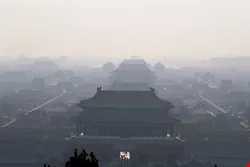
(photo at right by Chen Yueh-kuei)
Cultural self-awareness
The World Heritage review process is quite strict. Even before nomination, individual countries must undertake a long period of preparatory work. After this work is submitted to the UN, the World Heritage Center first determines whether or not the data provided is complete. Then there is an onsite evaluation by one of two nongovernmental organizations: ICOMOS for cultural sites and the IUCN for natural sites. Then a special seven-member committee reviews the reports and evaluations of the experts, before finally turning the proposal over to the 21 representative countries on the World Heritage Committee for a final decision.
Council of Cultural Affairs Chairwoman Tchen Yu-chiou, who has been strongly promoting the World Heritage project in Taiwan, states: "The prerequisite to inclusion on the list is self-affirmation and conservation. Therefore, we still have a lot of things to take care of." First it is necessary to undertake detailed field surveys and historical research in order to complete the comprehensive reports which will be sent in for review.
For example, for the Alishan Mountain Railway, considered one of the three most important mountain railways in the world, it is not enough to explain the chronological and technical processes of its construction. You must also explain its relationship to the entire history of lumbering and its effect on the forest, and conduct surveys of all the stations along the line. And your report has to exhaustively discuss the development of settlements along the way, the current operational status, problems and shortcomings, and the views of local residents.
The hidden agenda behind the report system is to determine whether or not the local government is doing a sound job in preparation for making the site a protected asset on the national level, and whether or not local people are actively cooperating in the preservation effort. For example, Orchid Island, home to the Tao people, is not even a national park, there are stockpiles of nuclear waste there, and local residents and the government have an antagonistic relationship.
As Monica Kuo says: "The ultimate spirit of the World Heritage idea is in fact a movement of self-awareness." And Lin Hui-cheng, a dean and professor in the graduate institute of architecture at Taipei National University of the Arts, avers: "Even if everybody loves you, if you don't treasure what you have yourself, then you will never make it onto the World Heritage List."
Another case in point is the Shenghsing train station on the old Mountain Line. Since it became a popular tourist destination, 16 restaurants have popped up around it. Yukio Nishimura, a World Heritage evaluator from the UN who was invited to visit this location, was astonished to see the venerable old train station virtually obscured behind a crowd of holiday vendors on the street. "Tourism development based on the cultural and historical environment is a form of dialogue between the locality and the world. The value and future prospects of the cultural and historical sites on the Mountain Line urgently require further understanding and consensus," says Chen Yuh-jean, executive director of the NTU Building and Planning Research Foundation, who has been researching and surveying the Mountain Line for over a year now.
Similar problems have plagued many World Heritage sites around the world. Many countries treat the cultural assets left to them by their ancestors as money trees to attract tourists. One example is the old town of Lijiang in Yunnan Province in mainland China. The streets of the old settlement are now lined with restaurants and shops, and at night the place is as bright and noisy as it is during the middle of the day.
Importantly, inclusion on the World Heritage list is not necessarily permanent. If the designated location is put at serious risk or is seriously damaged, the crown will be removed from its head. By the end of 2001, 31 locations had been placed on a "List of World Heritage Sites in Danger" as a result of a change in their legal status, lack of maintenance, geological or climate change, or threats brought about by regional planning or war. These sites, which are under observation and may lose their World Heritage Site status, include Lijiang in China, Yellowstone in the US, and Angkor Wat in Cambodia.
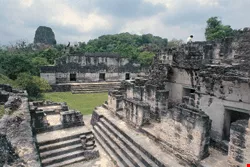
(photo at right by Chen Yueh-kuei)
Old sites, new faces?
For Taiwan, a major benefit of promoting the World Heritage concept is importing the latest ideas from around the globe on managing cultural assets, bringing Taiwan in line with world standards and clarifying objectives for future work.
World Heritage evaluator Yukio Nishimura, who has already visited the Peinan Culture site in Taitung, the old Mountain Line in Miaoli, and Orchid Island, says that while Taiwan's cultural assets are impressive indeed, in terms of their authenticity and integrity there are many shortcomings. Authenticity and integrity are two critical prerequisites for anyone knocking on the door to get into the house of World Heritage.
"Concepts about maintenance of cultural assets in Taiwan have typically not given priority to authenticity. A lot of maintenance is just random guesswork. Architectural sites in particular virtually all violate World Heritage maintenance norms," says Fu Chao-ching, a professor of architecture at Chengkung University, shaking his head in frustration. For example, the old city gate in Hengchun in Pingtung County has been repaired ten times without any detailed study to ensure authenticity. Also, there is no way today to know whether the interior of Fort San Domingo in Tanshui looks as it did centuries ago; nobody has bothered to keep the necessary records. "This kind of maintenance is misguided; it easily leads to substituting imagination for reality. It's like an old woman who's had cosmetic surgery-though she may look better, it's not her original face," says Lin Hui-cheng.
According to ICOMOS' International Charter for the Conservation and Restoration of Monuments and Sites (aka the Vienna Charter), world cultural assets must pass an authenticity test for design, materials, and workmanship, in order to prevent confusion between copies and the real thing. But this kind of standard is not entirely suitable for the wooden structures typical in Asian countries. For example, places like Japan's Horyuji Temple must be extensively repaired every 20 years, even disassembled so that rotten lumber can be replaced. Fortunately, this can be done through systematically teaching traditional skills to successive generations and careful recording of the original work, so that these wooden historic sites can maintain a high level of quality and authenticity.
The Japanese approach has introduced novel ideas into the maintenance of historic sites. In 1992, an international conference of members of the World Heritage Convention held in Japan produced the "Nara Document on Authenticity." This declared that Japan's maintenance and replacement of wooden structures help preserve traditional skills, so that the previous definition of authenticity was expanded to include "reliability of the sources of relevant information."
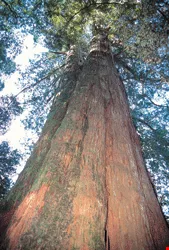
False cypress trees, like this one on Mt. Chilan, existed in the ice age some 30 million years ago. (photo by Jimmy Lin)
On-site museums
The World Heritage symbol is a square inside a circle, with the corners touching the circle. The square represents human artifacts, the circle represents nature, and their connection means that nature and culture are inseparable.
"The line between cultural and natural assets is increasingly obscured; virtually all of the natural environment reflects its coexistence with man. Thus, considering the two side by side has become the trend in World Heritage thinking," says Yukio Nishimura, who has visited World Heritage sites around the world. He points out, for example, that right near the Peinan site is the Lichi fault. This is "living teaching material" on the collision between the Philippine Sea plate and the Eurasian plate, and was also an important location for Peinan Culture 4000 years ago. If these two closely related sites could be brought within a single coherent plan, this would even more fully demonstrate the value of Peinan Culture.
In order to ensure that the contextual value of cultural artifacts is better preserved, there are growing differences in the ideas governing the founding of on-site museums as opposed to traditional museums.
The World Heritage guidelines for management and preservation of archaeological sites say that the ultimate goal is "in-situ preservation." They oppose any removal of artifacts to new sites. "This is like the difference between traditional zoos and wild animal preserves. A traditional museum can only display the static beauty of an artifact in isolation, but takes the artifact out of its overall cultural context. An on-site museum breaks down walls, directly creating a structure of preservation, like a domed stadium, over the site. This is the only way to display an object in its natural setting," explains Ho Chuan-kung, director of the anthropology section at the National Museum of Natural Science.
At the Peinan site, because of construction of the South Link Railway, there was no choice but to move all of the artifacts unearthed early on away from the original site. Some of them are kept in a small museum of archaeology and anthropology at National Taiwan University, and some in the National Museum of Prehistory in Taitung. This violates the principle that relics should be preserved on-site.
The Peinan site totals at least 80 hectares. Besides about 10,000 square meters that have already been dug up, about 40 hectares have already been designated for low-level development as a culture park, and are quietly waiting for future research to be excavated. But, "currently there is an exquisite area of almost 20 hectares which cannot be brought into the park because it is in the heavily-trafficked train station area," says Tsang Cheng-hwa, director of the National Museum of Prehistory, anxiously.
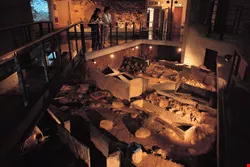
Ideally it is best to preserve the appearance of the original site. However, at the Peinan Culture Park, due to damage from railway construction, the stone sarcophagi are now kept in the visitor's center.
Decisive battle in September
The World Heritage concept is relatively novel in Taiwan, and the international community is not yet ready to accept Taiwan's list of potential sites. But what is more important is that Taiwan has already taken the first step toward self-reflection and self-awareness.
This September the Council for Cultural Affairs will bring five World Heritage evaluators to Taiwan and choose the three best contenders out of the 11 sites with potential. So what happens to the other eight? Chen Yuh-jean says there is no need for frustration. World Heritage guidelines place special importance on the agreement and cooperation of local residents. "So long as people are enlightened about the real value of the old Mountain Line," he says, speaking of one of the sites less likely to make the final cut, "and preserve its historical and cultural value and develop only economic activities that are compatible with those values, then ten years from now it may find itself at the top of the list."
Similarly, while Tanshui is far from having the largest concentration of colonial structures in Asia, where there are many similar sites, there are a lot of cultural and historical workshops in Tanshui, and the preservation movement has more than a decade of experience. Three years ago, members of a community group helped rescue a historic building near Fort San Domingo from being renovated. Last year Tamkang University prof Huang Jui-mao proposed designating the Fort San Domingo area as a special zone so that new buildings would be subjected to stricter controls. Whether or not Tanshui is selected as one of the final three World Heritage candidates, it already has world-class ideas.
Two directions
In the 1960s, the Nubian Abu Simbel Temple in Egypt was going to be left underwater by construction of the Aswan Dam. The World Heritage Center gathered together scientists and engineers from around the world, and with 20 years of effort, finally moved the temple to higher ground beyond the water. In March of last year, in tragic contrast, the Taliban government of Afghanistan demolished two giant Buddha statues, bringing cries of condemnation and sighs of regret from around the world.
The World Heritage is an important record of life on our globe and the crystallization of the wisdom of human civilization, covering all important cultural periods and providing a vital window for entering world civilization.
Let us understand the treasures of all civilizations, and value Taiwan's world-class cultural and natural assets. The World Heritage idea takes us out of ourselves and introduces us to the wider world; we look forward to the day when the world discovers what Taiwan has to contribute.


@List.jpg?w=522&h=410&mode=crop&format=webp&quality=80)


