Senior-Oriented Businesses--Opportunities for the Innovative
Chen Hsin-yi / photos Chuang Kung-ju / tr. by Jonathan Barnard
September 2011
On the eve of the lunar calendar's Double Ninth Festival-which celebrates the elderly-what new ways of thinking have emerged about Taiwan's future aged society? Will these new conceptions offer new opportunities?
Let us, for a moment, imagine a realm of public spaces where the elderly aren't hindered because of their incapacities: The tree-lined streets here are wide. Sidewalks keep pedestrians away from traffic, and when walkers get tired, they find benches everywhere on which to rest. Sweet music wafts from nearby shops and homes.
Walk into a shopping center, and it will provide free electric vehicles to move you around at your convenience. Product instructions feature large print, and sales clerks are happy to chat with elderly customers. Apart from shopping, various kinds of educational, social and leisure activities are also available to seniors. Restaurants offer tasty and easy-to-chew "silver-haired specials."
Now just the stuff of dreams, places such as these, designed around the needs of the elderly, may well arise as a result of the conceptual revolution taking place as Taiwanese society rapidly ages.
Most importantly, so long as government, industry, and all of us can look toward innovating and show more concern for quality of life, then the growing tide of elderly will do more than merely bring ample business opportunities: it will foster a true commercial and social revolution.
According to the Council of Economic Planning and Development, in another 14 years Taiwan will become a "super-aged" society. Walk down any given street, and one out of five people will be elderly.
The growing elderly population around the world has already had a discernable impact on consumer behavior and the rise and fall of businesses.
Take, for example, Japan, which is rapidly aging. Declining industries there include pediatrics, toys, child education, and real estate focused on younger buyers. Meanwhile, leisure travel, pet care, religious activity and healthcare are booming.
In Taiwan, obstetrics has been hit hardest. Although the field was booming not long ago, today many obstetrics clinics are closing or turning themselves into nursing homes.
Some businesses, however, have found ways to profit off of the rising tide of elderly. For instance, business for adult diapers, health foods, nutritional supplements, and mobility aids has been steadily increasing. Wheelchair sales have risen 20% in the last two years alone, according to industry estimates. Cell phones with large fonts or radio functions, easy-to-operate amplified telephones, and iPads with gaming functions have increasingly been winning the affections of elderly consumers. The latter in particular is the ideal gift for filial youngsters to offer their elders.

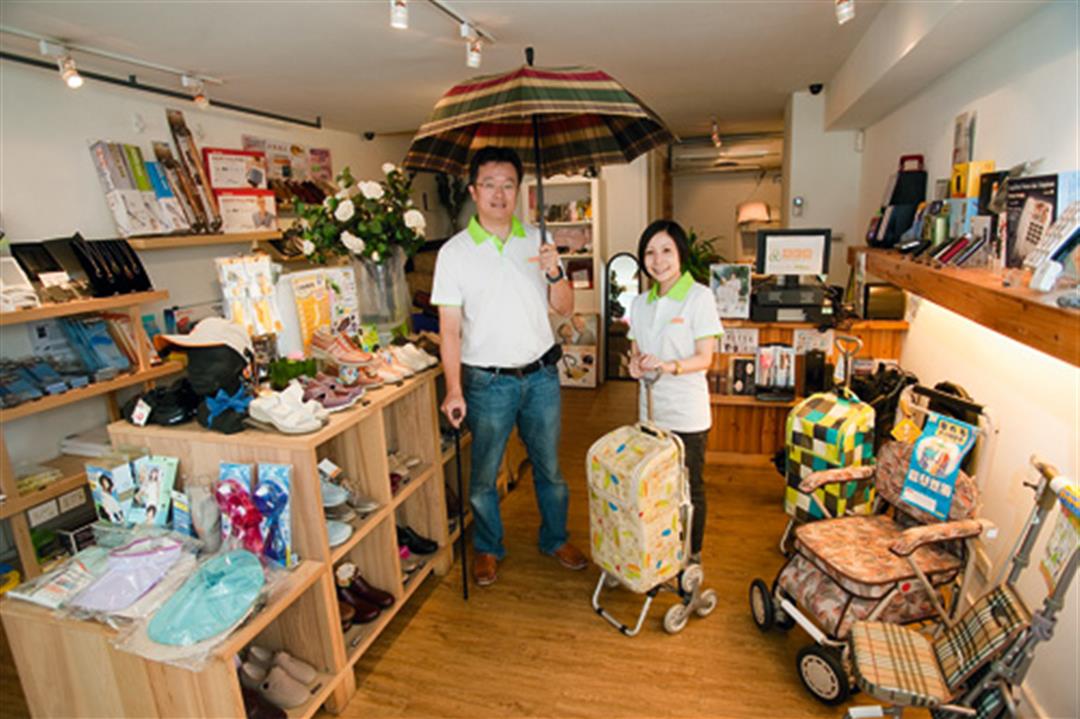
The website ez66.com.tw is mainly oriented to the elderly who can still take care of themselves. It offers products that are elegant and practical.
The wave of elderly is a challenge and also an opportunity for creative development in many industries. For example, in 2007 the market for the domestic elderly-care industry plus that for export-oriented healthcare instruments was already up to NT$106 billion, and this is expected to nearly quadruple by 2015!
But one needn't equate "elderly-oriented businesses" with healthcare alone. The new elderly are in fact the "baby boomer" generation, expecting much more out of life. The challenge for marketers is to anticipate the needs and wants of seniors in this new era and to draw up effective sales strategies.
For instance, according to a Japanese survey of middle-aged life titled Fifty-Year-Old Cowboys, Japanese baby boomers grew up regarding blue jeans as a generational symbol of rebellion, and even though they have reached maturity, they still use blue jeans to express their identity, and moreover show great sensitivity toward fashions and trends. Also, gaming companies realize that those who were born in the 1960s and 1970s grew up playing Nintendo and will still want to play computer games in their old age.
In the United States the silver-haired have long been a driving force behind the tourism industry, accounting for about 75% of the market. One airline after another has introduced special pricing aimed at attracting older customers, and travel agencies have launched a variety of appropriate "senior itineraries." Apart from satisfying boomers' desire for thrill seeking, learning and sharing, there are also options available for those with impaired mobility or special health needs. These offer special meals, accommodations with handicapped access, and so forth.

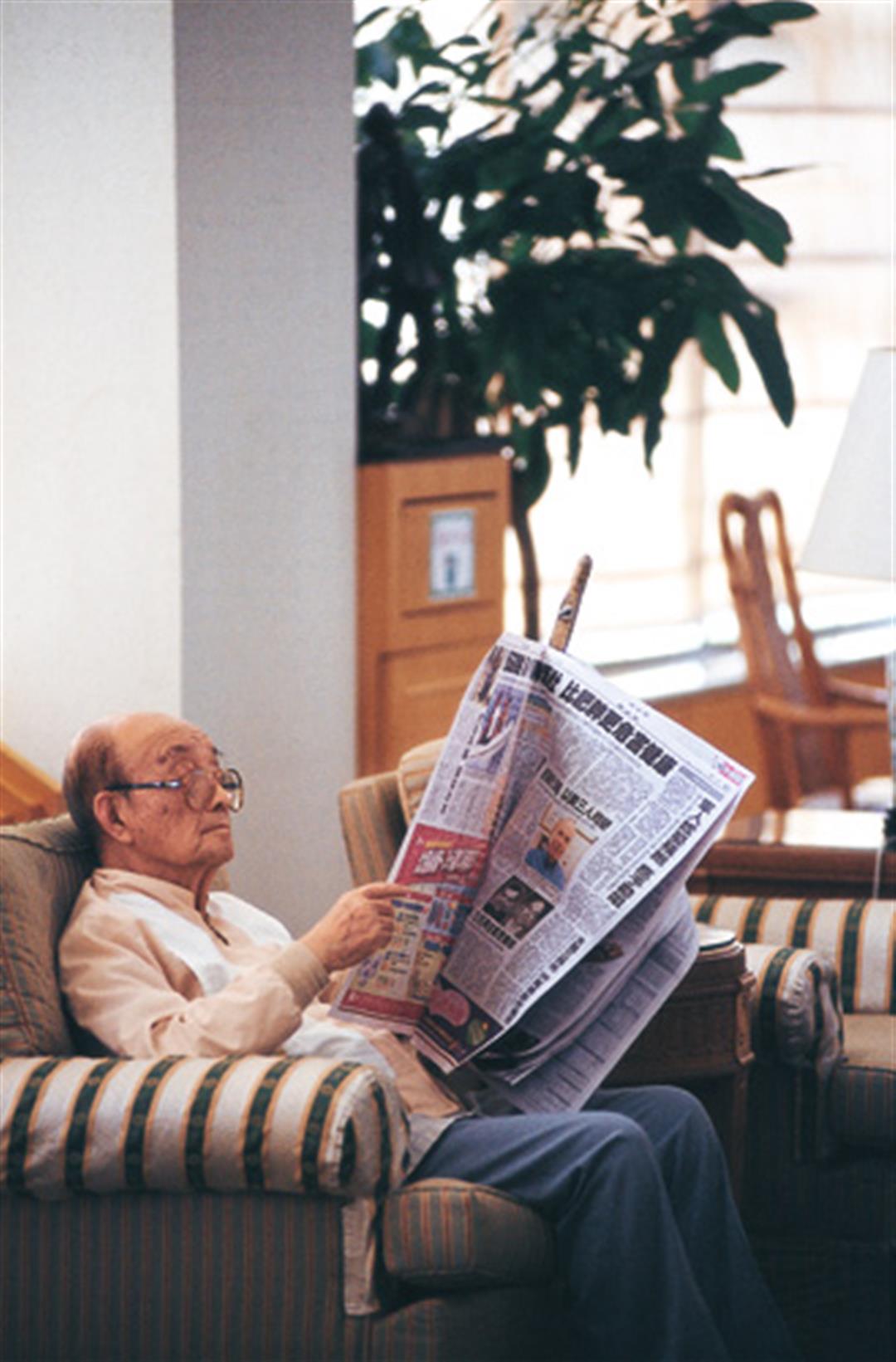
Growing incomes have given rise to various kinds of leisure, cultural and educational facilities in Taiwan. Now rental apartments for the elderly maintained at the standards of five-star hotels are all the rage. The photo shows a corner of the reception hall at the Ruenfu Senior Apartments in Danshui.
Let's return our focus to Taiwan. Although the aging of society hasn't fully hit here yet, farsighted business people are already making preparations.
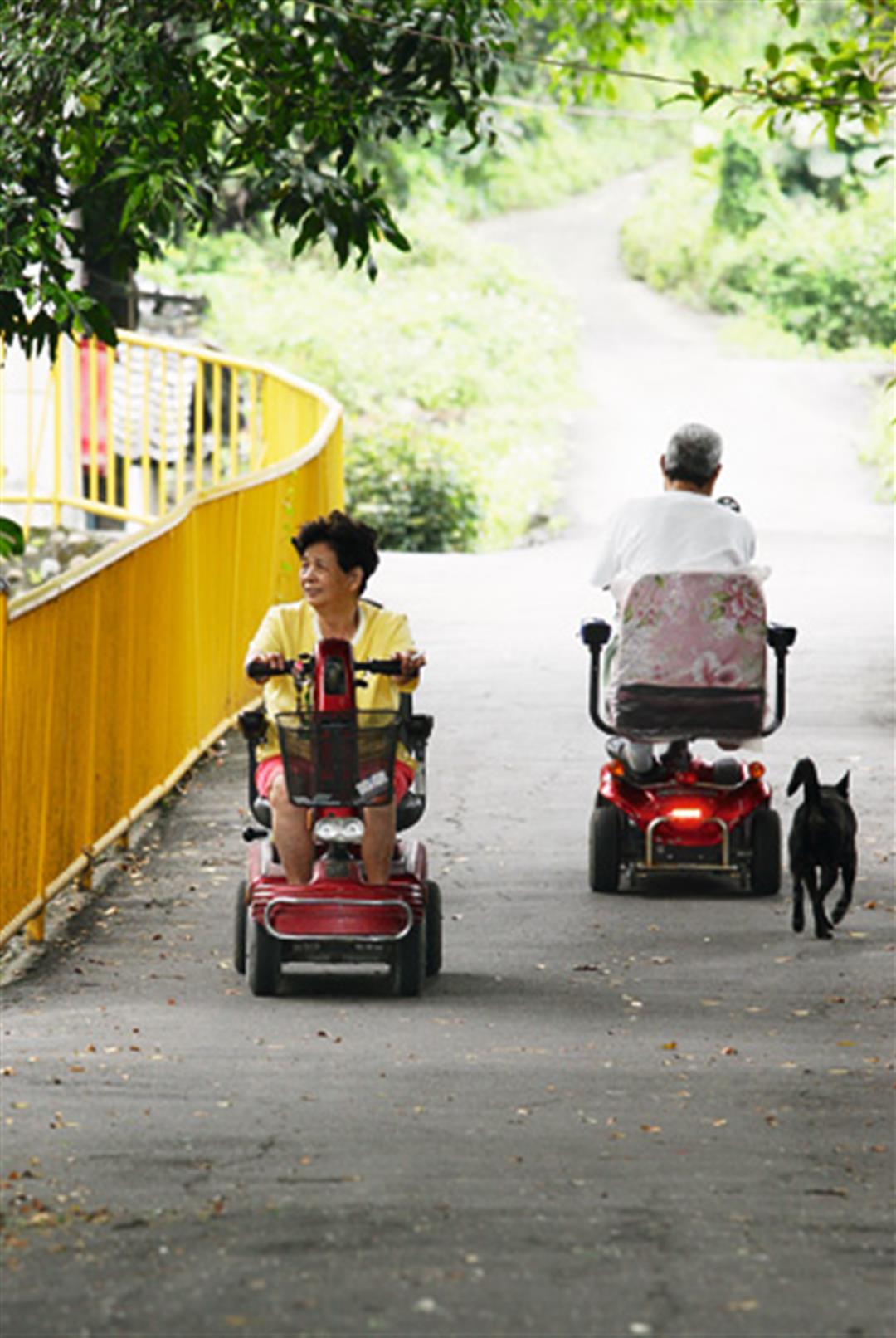
Take, for instance, Pihsiang Machinery, which makes mobility devices. Twenty years ago it developed the world's first electric four-wheel scooter. These go for NT$30,000-70,000 and are extremely safe and easy to operate. At first, they were mainly purchased by the disabled, but today, at a time when the company ranks among the three biggest manufacturers of mobility devices in the world, its products are mostly purchased by the elderly.
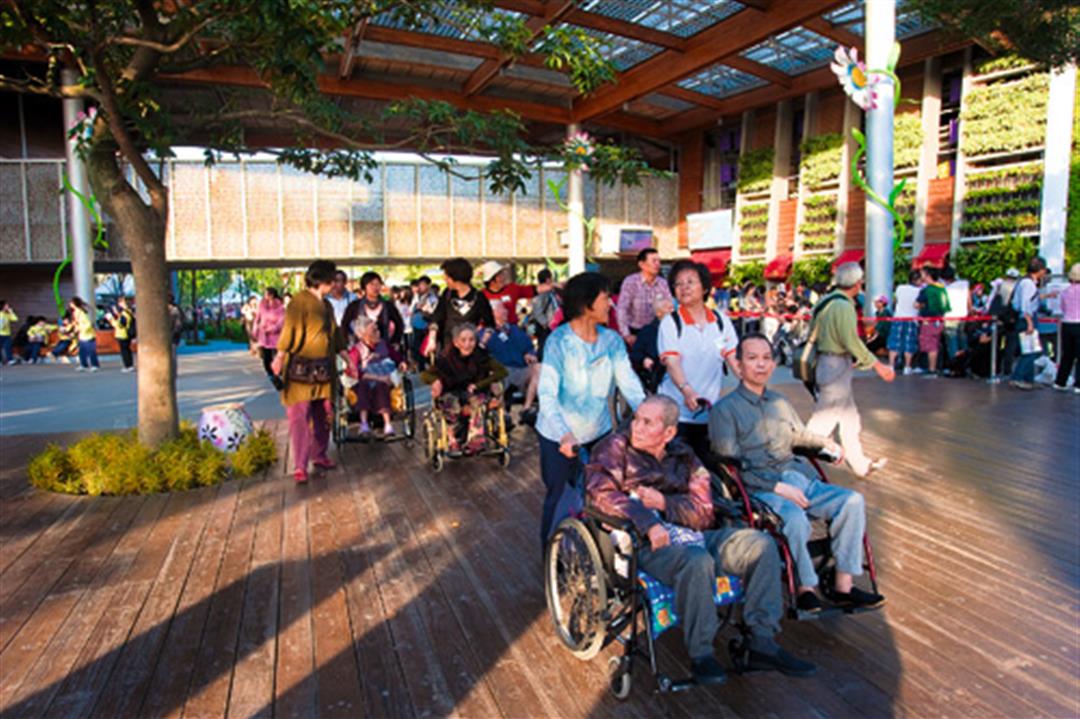
Many elderly use mobility devices to buy food, go shopping or visit friends who live nearby. The independence these devices give them supports their mental and physical health.
Retirement communities represent another flourishing industry catering to seniors. Modern people no longer anticipate living with their children in their old age, expecting to be able to afford to live on their saving and pensions. What's more, there will be growing numbers of single elderly. In consideration of these trends, the Ruentex Group, Formosa Plastics, Chi Mei Industrial and other ROC conglomerates have one after another been planning and building retirement communities. Some of them boast of accommodations and food on a par with five-star hotels. What's more, they also have health management and medical services, as well as arts and crafts classes and various other leisure activities.
Take Formosa Plastics' retirement community in Taoyuan's Guishan. Built in three stages, it has a total of 3700 households and offers convenient access to medical services at Chang Gung Memorial Hospital in nearby Linkou. The 500-700-square-foot efficiency apartments there are reasonably priced, with monthly rents ranging from NT$18,000-31,000. They've been met with an enthusiastic response among consumers.
Another business opportunity involving the elderly is plastic surgery.
Plastic surgeon Yang Chih-hsien, who has introduced long-lasting injectable implants in recent years at his Chang Hung Clinic, explains that more and more seniors are willing to shell out to look younger. "It's the phenomenon of 'repairing the face to mend the heart.' Their motivation may be to improve the impression they make on people, or it may come from reaching the pinnacle of their fields and wanting a face to match their status."
The oldest client Yang has encountered was a 94-year-old physically robust grandfather who drove his own motorcycle to the clinic. Those over the age of 65 now represent 15% of the clinic's business.

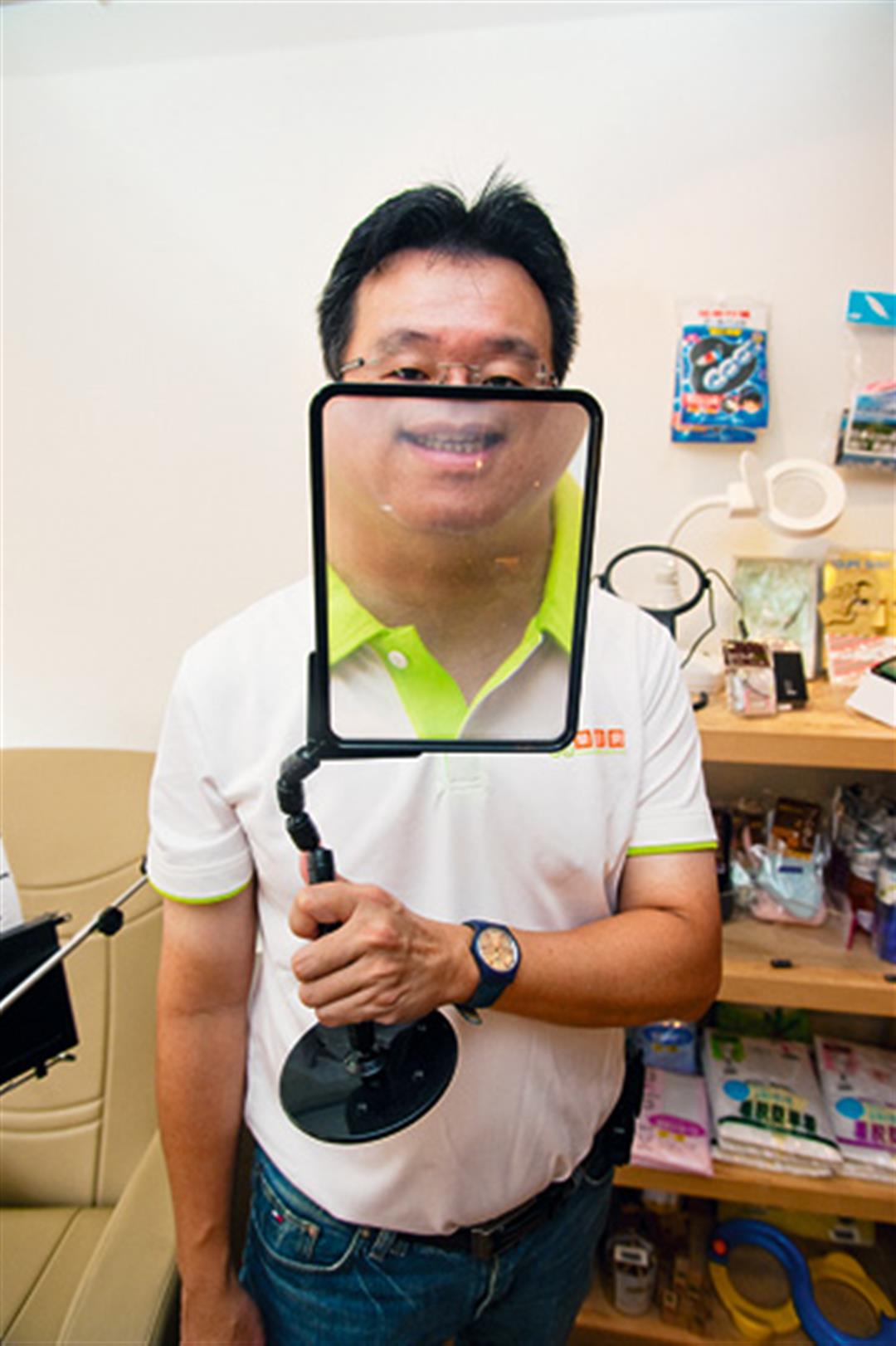
a super-large reading magnifier from Japan. It can be placed on a tabletop for hands-free operation and adjusted to various angles for easy, convenient reading.
Detailed examination shows that many products for the elderly that can be purchased in regular stores overseas are marginalized in the Taiwan market.
To combat this problem, in 2007 Keen Chang left his job at a technology company and founded ez66.com.tw, a "portal for active seniors." Originally an online department store for seniors, the company now also boasts four brick-and-mortar stores across Taiwan.
Chang explains that businesses aimed at the elderly ideally ought to serve those who have always been in good health. That's because creating an "active old age" is only possible with healthy elderly.
Through direct contact with seniors, Chang has discovered that the elderly are a diverse group but share one thing in common: "They don't want to be categorized as 'old,' even if they are old, because they don't want to face discrimination. They want to age gracefully and with dignity." Consequently, ez66 offers items that "can help the elderly get up and out and increase their living convenience and social interaction." These let them "be happy and forget about their age."
For instance, ez66 sells a cane-umbrella combo from the Taiwan brand Leighton. The tip of the umbrella has a tough, anti-slip design. This allows it to serve as a cane disguised as an umbrella, so that seniors won't feel that it makes them look old. But as soon as it starts raining, the user can open up the umbrella and then pull out an additional walking stick concealed within it. Other items include lightweight unisex anti-slip shoes from Japan that use Velcro instead of laces.
Chang laments that although Taiwan has been called "a land of inventors," until very recently it demonstrated little innovation in terms of creating products for the elderly, laments Chang. Or maybe most of the good stuff was exported abroad, with no one wanting to invest energy developing the small domestic market for these goods.
But now there has been a turn away from "exporting the good stuff." Many manufacturers have clearly been inspired by ez66 and the response from the silver-haired community here.
Currently the most expensive item in ez66 shops is a NT$40,000 sofa chair. It has massage functions and buttons to raise and lower the seat so as to assist seniors without strength in their legs to get out of the chair. It was developed by ez66 and a local manufacturer, and is sold under its own brand name. Since being unveiled three years ago, sales have been strong.
Chang recalls that one old lady was moved to tears when trying it out. She explained that pulling her husband up from the sofa would often cause her to fall down herself. She had quite a collection of bruises as a result. "Helping to raise the quality of life for the elderly is what ez66 is all about."

Mobility scooters represent a great leap forward for seniors' quality of life. They are essential items for seniors who don't have full command of their legs.
When you mention businesses aimed at the silver-haired, there's no way to avoid mentioning the "dismal trade"-i.e. the one practiced by undertakers.
According to the Ministry of the Interior, deaths in Taiwan surpassed 100,000 in 1988 and have been gradually rising ever since. In 2010, there were nearly 146,000 deaths here, with a death rate of 0.63%.
Lee Jih-pin, secretary-general of the Chinese Life and Death Academic Society, notes that, based on a life expectancy of 80, Taiwan should experience 12 consecutive years of total deaths topping 400,000 beginning in 2036, as the final curtain starts to fall on Taiwan's baby-boomer generation. Afterwards, the numbers should drop a bit, but there will still be 18 years when the numbers of deaths sit around 380,000. Those figures will certainly support growth within the funeral industry!
Lee explains that funeral and other death expenses run to NT$360,000 on average. In 10 years time, the funeral industry will top NT$140 billion per year, reaching 2.6 times its size today. "Its prospects will remain bright for 30 years, which represents a much longer run than the 10 years that high tech had."
Taiwan's undertaking industry already experienced one revolution in the 1990s, with a shift from burials to cremation. (The rate of cremation here now exceeds 90%.) Industry estimates suggest that existing ossuary spaces won't be used up for another 40 years. Consequently, there simply isn't a shortage of space for the dead. For this reason, "the focus of future funeral innovations will be on simplifying and improving," Lee explains.
For example, with the Taiwanese habit of waiting for auspicious days for funerals, the Taipei Second Funeral Parlor has already encountered the problem of a lack of freezer space, so that coffins have to be stored in hallways with ice used to keep bodies from putrefying. With the explosion of future deaths, the problem will only grow worse. Therefore the government authorities have already invited industry representatives to discuss the possibility of promoting a revolution "to cremate bodies first and hold funeral ceremonies afterwards." That would both alleviate scheduling bottlenecks and reduce public health risks.
In step with changing ideas about the nature of being old, a revolution in new products and services for the elderly looms, in areas ranging from food, clothing and shelter, to leisure and funeral arrangements. You and I will be the beneficiaries of this revolution, as well as its instigators and agents of change.