When Your Back Is Up Against It-Turn to Miracle Doctor Chang Kao-wha
Teng Sue-feng / photos Jimmy Lin / tr. by Phil Newell
March 2009
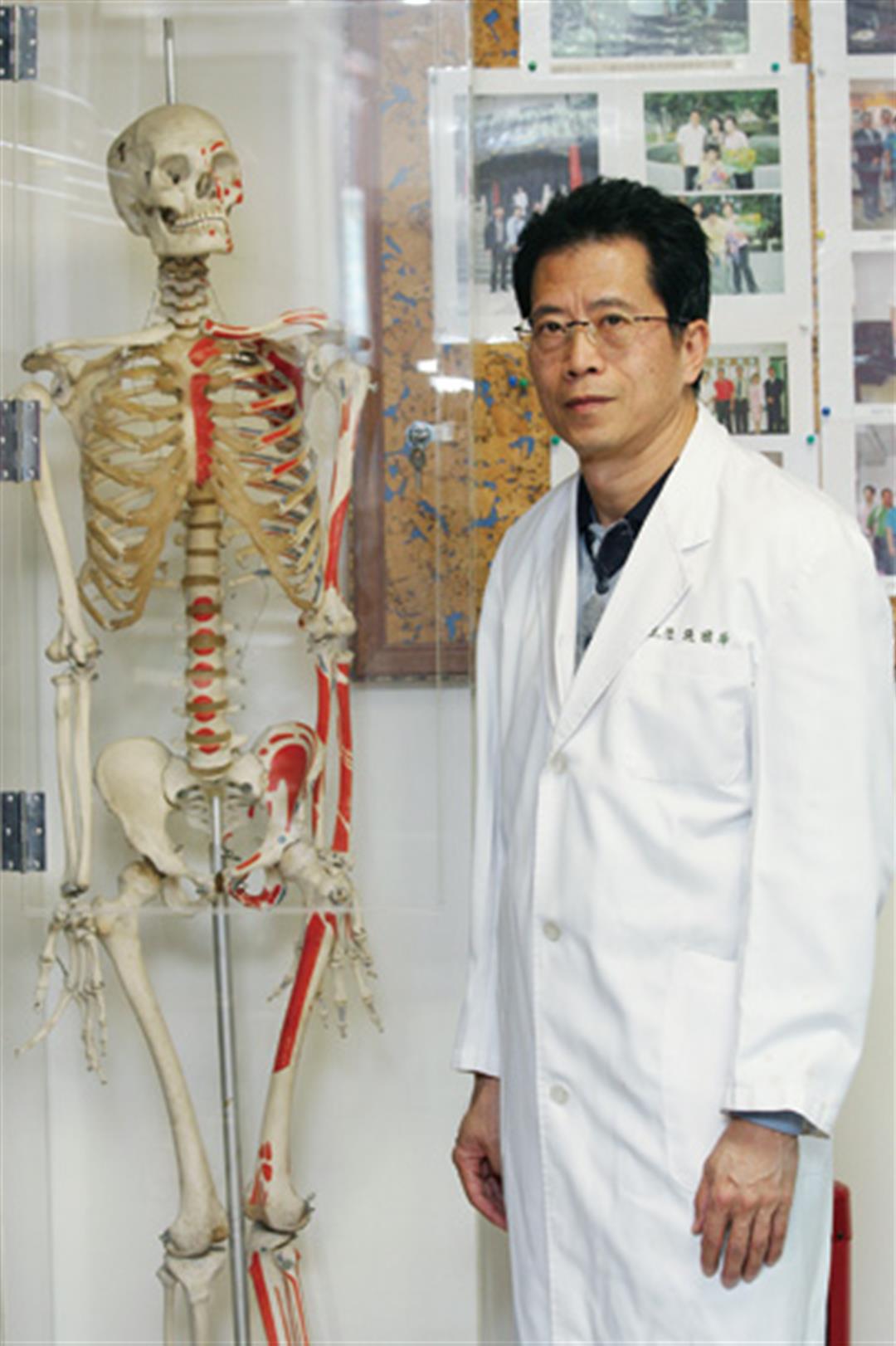
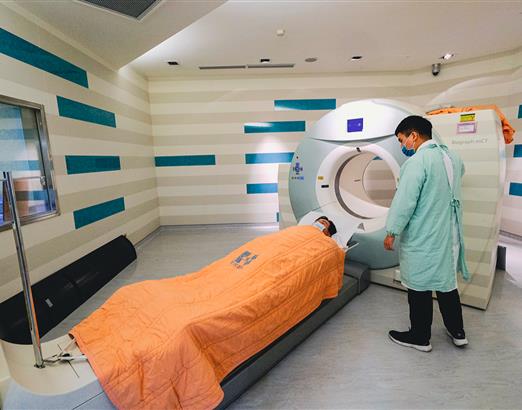
The Taichung Armed Forces Gen-eral Hospital, located about 30 minutes by car from the Taichung railway station, was never an especially famous hospital. But after the Discovery Channel broadcast a biography of Chang Kao-wha, Taiwan's "miracle doctor" of the spine, the number of patients attending outpatients' clinics at the Department of Orthopedics there boomed. Although there is a nominal limit of 80 patients per session, they couldn't turn away these people desperately seeking help, and now they routinely see as many as 300 in one "afternoon" of the clinic. In fact it is 9 p.m. by the time the last patient leaves, and the waiting time for surgery has gone up to six months.
Behind the awesome power of television lies the widespread need for treatment of curvature of the spine in Taiwan. So what "amazing powers" does Chang employ to free up the stagnant flow of qi between the ren meridian and the du meridian in the back and allow people with severely misshapen spines to stand straight and tall once again?
Patient #1: "Mr. Zhang" is a 21-year-old junior in university. He was diagnosed with a 20-degree curvature of the spine when he was in sixth grade. At that time he went to Chengkung University Hospital in Tainan, where the doctor, after looking at his X-rays, recommended that he wear a back brace for four months, after which time they would reassess. Unexpectedly the condition rapidly deteriorated, and the curvature had doubled to 40 degrees within six months. The doctor told Zhang and his family that the only option was to perform surgery to rectify the problem, but Zhang's father felt that an operation on the spine-the "dragon bone" as it is rather dauntingly known in Chinese-would be too risky. Anyway, except for being rather thin, his son could still run and jump, and was in no life-threatening danger. He decided to accept only moderate therapy, and for half a year thereafter he brought his son from Yunlin to Taichung almost every week for "spinal manual therapy."
In this indecisive way almost 10 years passed, and still young Zhang's condition continued to deteriorate, until the curvature had reached 110 degrees. His shoulders were uneven, and his thoracic vertebrae had collapsed deeply toward the right side. Fortunately Dr. Chang Kao-wha was there with his medical skills, and after surgery the boy's spine was finally straightened.
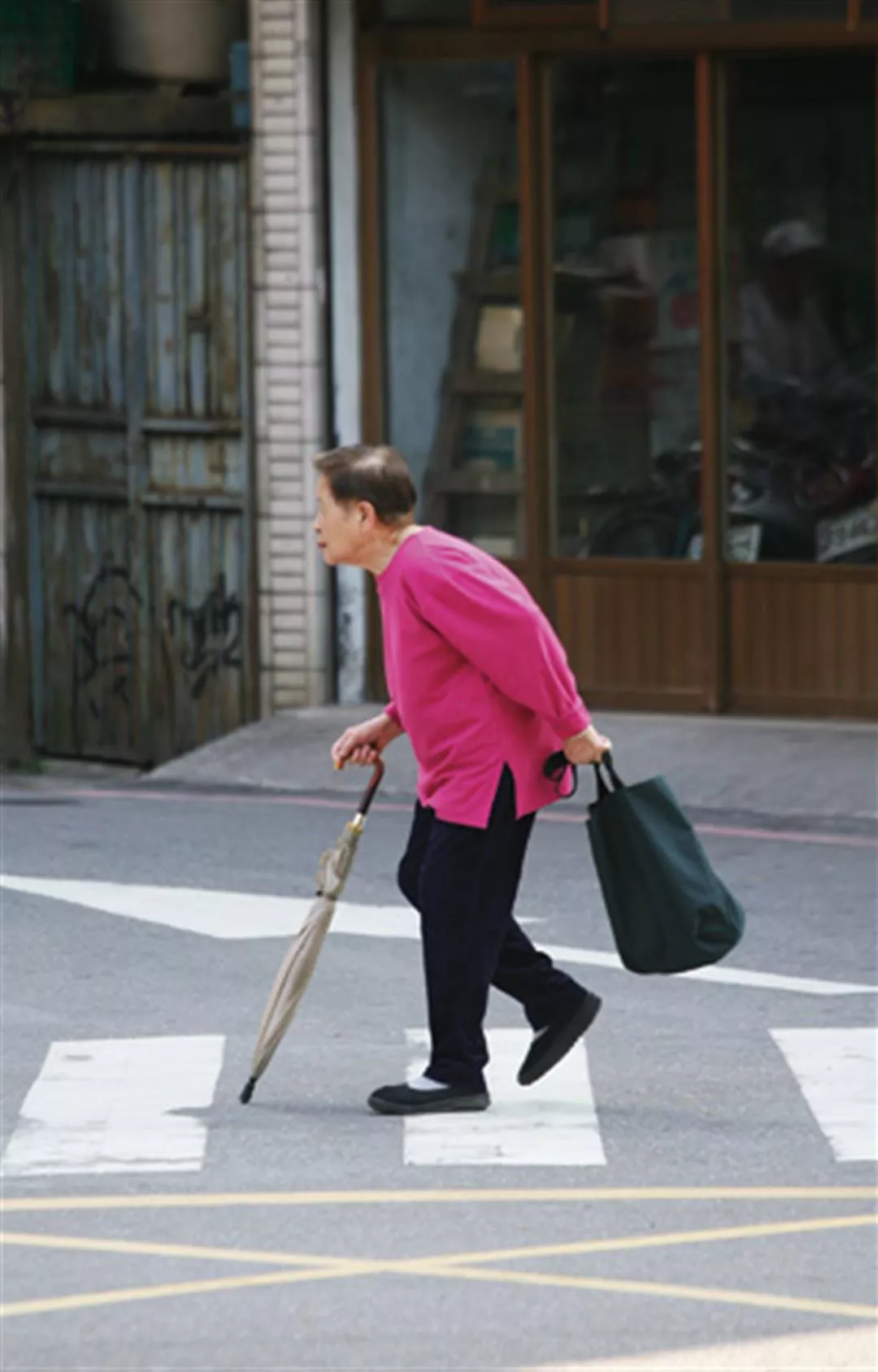
Patient #2: Eighty-year-old Zhao Shufen is a resident of Taipei. Her husband died long ago, and she raised five children on her own, working hard for many years. She became severely round-shouldered as a result of osteoporosis, with a curvature of 50 degrees. She lost strength in her legs and couldn't stand up straight, having to use a cane to walk. Zhao's worried children all cautioned against surgery, but the independent and determined Grandma Zhao didn't want to go through life getting more and more bent over and then end up in a wheelchair, so she courageously opted to go into the surgical theater.
Dr. Chang evaluated Grandma Zhao, first noting that she had no chronic conditions (diabetes, heart disease, high blood pressure, or the like) and that she was in good health, so surgery could proceed. Six thoracic vertebrae were crumbling from osteoporosis, so Dr. Chang replaced them with artificial titanium ones. The surgical scar ran from the back of her neck all the way down to her buttocks, more than 40 centimeters. After the surgery Grandma Zhao had "grown" 10 cm taller, and she promised Chang that on her next visit she would wear a traditional Chinese qipao dress to show off her upright new figure.

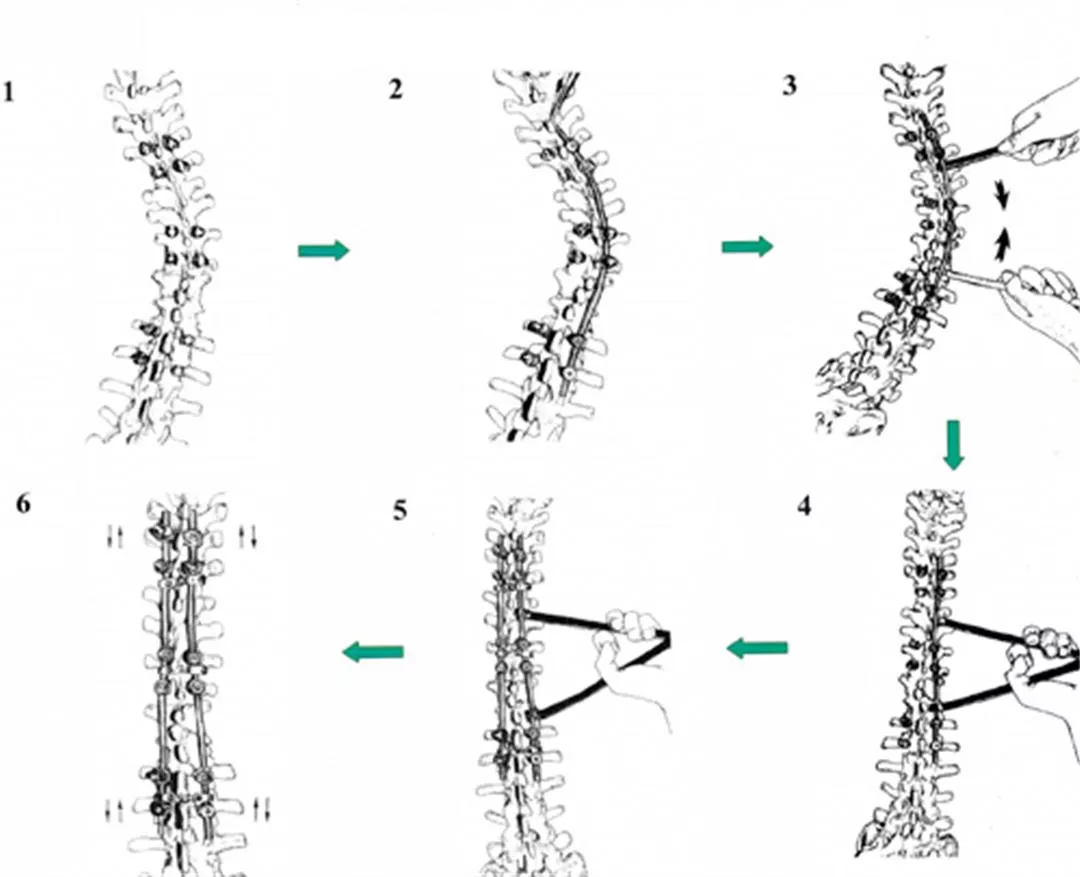
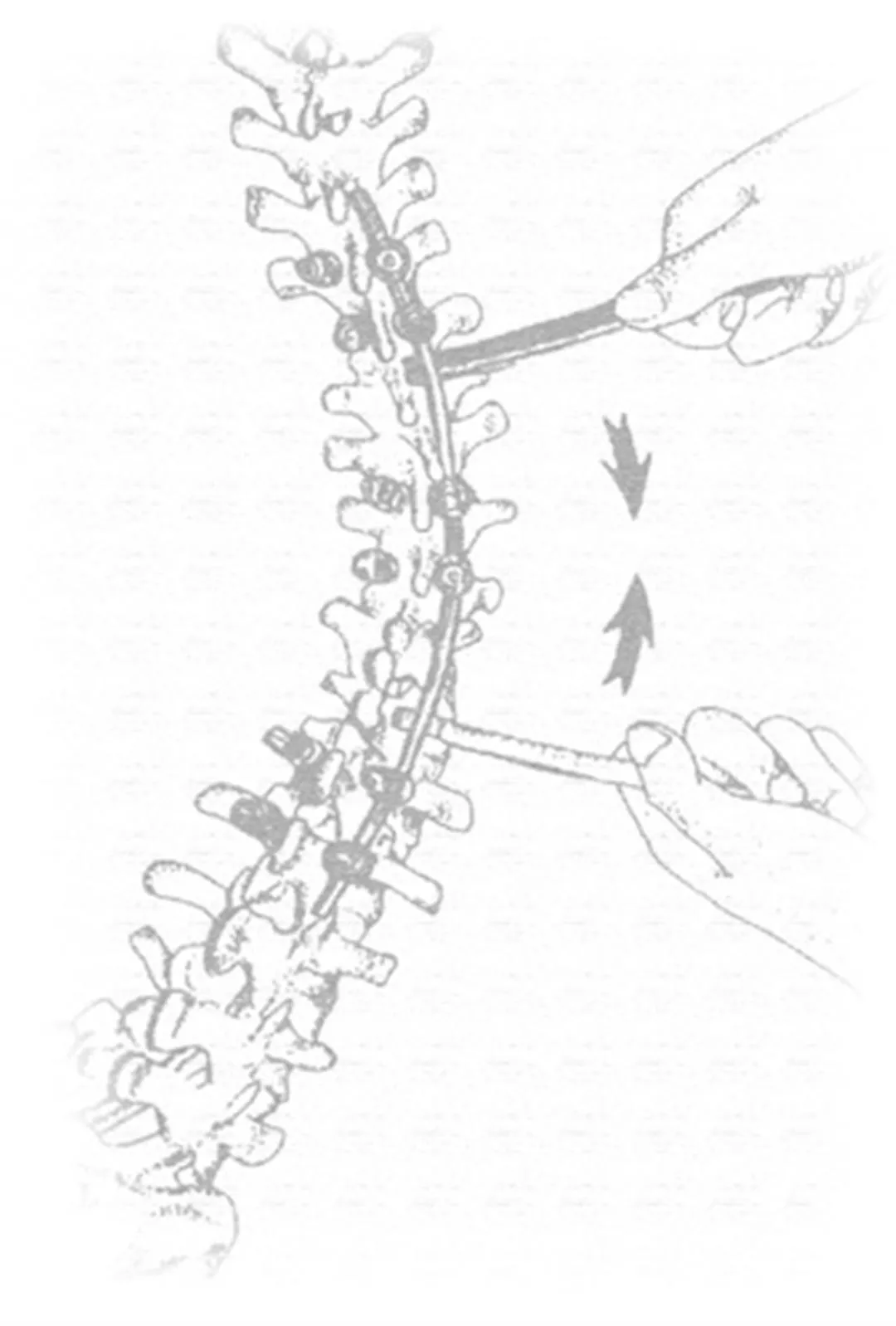
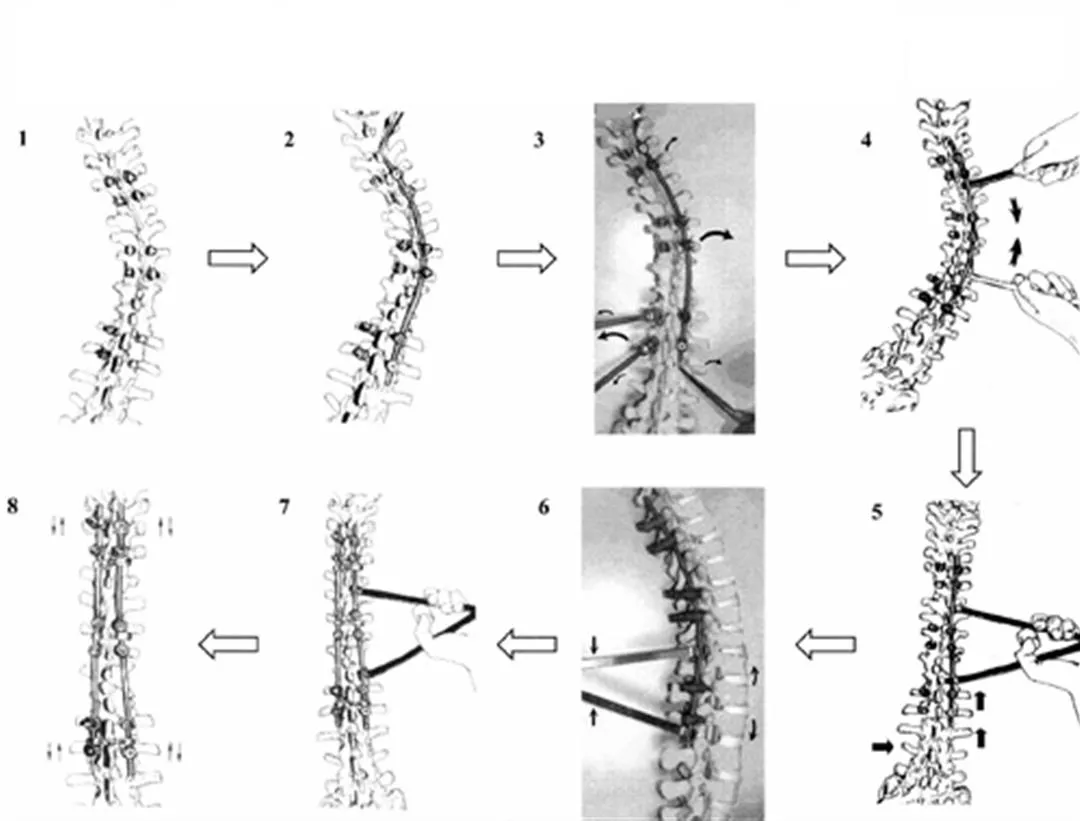
The pictures illustrate two methods Chang developed: the cantilever bending technique (left) and selective thoracic fusion (right). In both methods, holes are drilled into the pedicles of the spinal vertebrae and screws are inserted, then the displaced vertebrae are aligned and straightened, and rods are employed to form two tracks that provide stable support. The main difference is that with the selective thoracic fusion technique, designed specially to treat persons with S-shaped spinal deformations, screws are only inserted in the thoracic vertebrae, not the lumbar vertebrae, so that patients retain the ability to bend and turn at the waist after surgery.
The central pillar
The spine is the central pillar holding up the human body. It goes from the seven cervical vertebrae, which connect to the head, down through 12 thoracic vertebrae, five lumbar vertebrae, the five vertebrae (fused together in adults) of the sacrum, which forms part of the pelvis, and finally the coccyx. If the central pillar is unstable, there can be deformation leading to pressure on the nervous and circulatory systems. Less serious cases result in back pain; more serious ones can lead to paralysis.
The importance of the spine can be understood by way of analogy to the masonry of a house. In the walls of a normal house, each brick must be precisely aligned. The spaces between the bricks are filled in with flexible cement, analogous to the cartilage and discs between the vertebrae. Running from top to bottom through the structure is the wiring of the house, just as the spine connects to the nervous and circulatory systems. Meanwhile the exterior is covered over with plaster or concrete, like the muscles surround the vertebral column. It is by relying on the spine and these muscles that the human body is able to remain erect.
A straight back can mean an active life, but a weak spine-perhaps the result of heredity, deterioration or nervous or muscular disorders-can lead to incapacity and medical complications.
Just as when building a house, where if the work and materials are of poor quality or the bricks are not properly aligned the structure will lean and bulge, so too will there be "scoliosis" (sideways distortion) of the spine. If the bend is forward, this is "kyphosis" (commonly known as hunchback or humpback). If after many years of exposure to the elements the material in the "bricks" becomes soft or hollowed out, you get "osteoporosis." If a wall is built of soft or hollow bricks, then in the event of an earthquake (a fall or blow), the structure will crack (a compression fracture, often a devastating event for an elderly person).
There are countless kinds of spinal complications, with the most common syndrome known generically as "lower back pain." According to the Department of Health, each year people in Taiwan spend NT$44.7 billion on treatment of the musculoskeletal system and connective tissue, making this the sixth-ranking category in the land.

Elderly people often suffer curvature of the spine as a result of osteoporosis. Early symptoms include lower-back and hip pain, decrease in height, and hunching of the back. Women are more likely than men to experience this problem, so when young they should exercise to maintain muscle strength, flexibility, and balance.
Prevalence: two out of 100
Patients who suffer back pain from muscle spasms or ligament damage, caused perhaps by bad posture or strain, can generally find relief with medications, stretching, and physical therapy. But once structural abnormalities appear, such as displacement of a vertebra (spondylolisthesis), severe curvature or twisting, or pressure on the nerves, the patient must consider surgery.
Unfortunately, when patients hear about the pain and risks of surgery-including anesthesia, blood loss, an enormous scar, and possible complications that include partial paralysis or incontinence-they often find themselves unable to decide whether or not to go under the knife. This is particularly the case for patients with extreme curvature of the spine, who often need two or more operations, with correspondingly higher risks.
The process with ordinary surgery goes as follows: The first incision is made via the thoracic cavity or the abdominal cavity. Then the surgeon cuts through, or otherwise relieves pressure in, parts of the structure that have become fused or deformed, and realigns the vertebrae. Next, depending upon the physical condition of the patient, the following week the second surgery is conducted. This time the incision is made from the back, and screws are inserted into the pedicles, after which the vertebrae are aligned, pulled straight, and stabilized. To allow the skeleton to slowly heal, the patient must wear a back brace and do physical therapy for three to six months. Because the spine is only two or three millimeters from the central nervous system and aorta, if there is even a slight slip during surgery there could be very serious complications. The two operations require more than ten hours in all, a major test of the physical stamina of both doctor and patient.

It's all about leverage
Could the two surgeries be combined into one, to reduce the time under the knife to the minimum? This was the key problem that Dr. Chang, who has been in practice for 27 years, finally cracked in 2003.
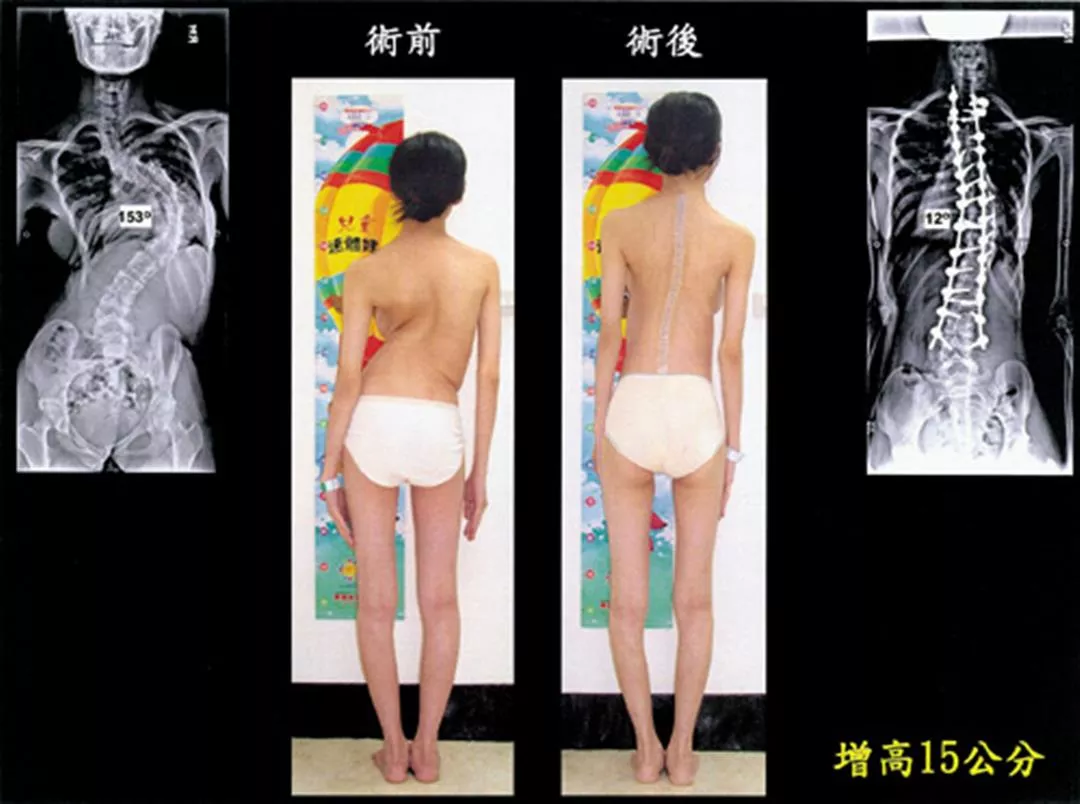
On a typical day when he does not have clinic hours, the 56-year-old Chang Kao-wha is just coming out of surgery at 2:30 in the afternoon, having done three successive operations starting early in the morning. This is his first chance to grab some food and take a break. Heading into his office, he opens a report on his computer screen and looks over some pre- and post-operative photos and X-rays of a patient he treated who had a curvature of 153 degrees in her thoracic vertebrae. The images (see p. 102) are rather shocking at first glance.
In a photo of the patient's exposed back before surgery, you can see that her two shoulder blades were clearly uneven, with the left shoulder being five centimeters lower than the right. Because her thoracic vertebrae were distorted toward the right, the muscles in the lower left portion of the thoracic cage, lacking support, had collapsed severely. On the right side, the area beneath the waist near the hip bone also showed collapse inward. The patient's cardiopulmonary system did not function well, and she would rapidly get out of breath just by walking. Even worse, because the spine pressed down on the nerves, she felt pain, numbness, and weakness in her lower limbs.
"The patient's spine and muscles were originally badly twisted, but after surgery they were corrected to become straight and even, even making the patient 15 centimeters taller, just like an ugly duckling turning into a swan! The space for internal organs was also expanded and her cardiopulmonary function improved." This is the result of the "cantilever bending technique" that allows patients to be completely transformed.
Each operation of this type begins with Chang leading a team of 24 in preparation of an electrical saw, drill, hammer, steel pins, steel wire, and other materials and implements. Lined up ready to go, they look very intimidating.
The surgical procedure is as follows: An incision is made in the back, and the muscles surrounding the vertebral column are pulled away. Then a drill is used cut holes in the pedicles of a number of vertebrae for insertion of screws. (For example, the patient with a curvature of 153 degrees had 28 metal screws inserted.) Then thin metal rods are used to link the screws and fix them tightly, after which a cantilever is used to gently align each out-of-place vertebra. Finally, the rod on the other side is locked down, thus providing two stable metal tracks, creating a pillar of support for the newly straightened spine. (See illustrations.)
"The cantilever is very strong and provides a lot of support. As for how much force you have to apply and how many vertebrae have to be aligned, you can't know that for sure until the surgery itself. Also, the number of screws differs case by case." For example, Chang explains, one patient had a spine that had curved into an S shape. The deformation was composed of three curves, so it was necessary to insert over 20 screws from the first thoracic vertebra to the third lumbar vertebra in order to get a satisfactory correction.
The greatest difficulty in the cantilever bending technique is that getting the angle and amount of force right when putting the screws into place depends entirely on "touch." Yet there cannot be even a millimeter of deviation, or you will damage the spinal cord, which is as fragile as a piece of tofu. "For most spinal surgery you can be guided by X-rays, but for patients with severe deformations, the nerves and blood vessels are also abnormally twisted. So you can't rely on the help of technology, you have to go by feel," stresses Dr. Chang.
In November of 2003, Chang published a paper in the international orthopedic journal Spine discussing 41 cases he had treated using the cantilever bending technique in a five-year period from 1998 to 2003. The average curvature for these 41 patients was 98 degrees (ranging from 75 to 133 degrees), with average post-surgery correction being 67%. Not a single patient had post-operative complications, and 38 of the patients expressed themselves "extremely satisfied," while the remaining three said they were "partly satisfied." These figures indicate that his surgical technique was quite successful.
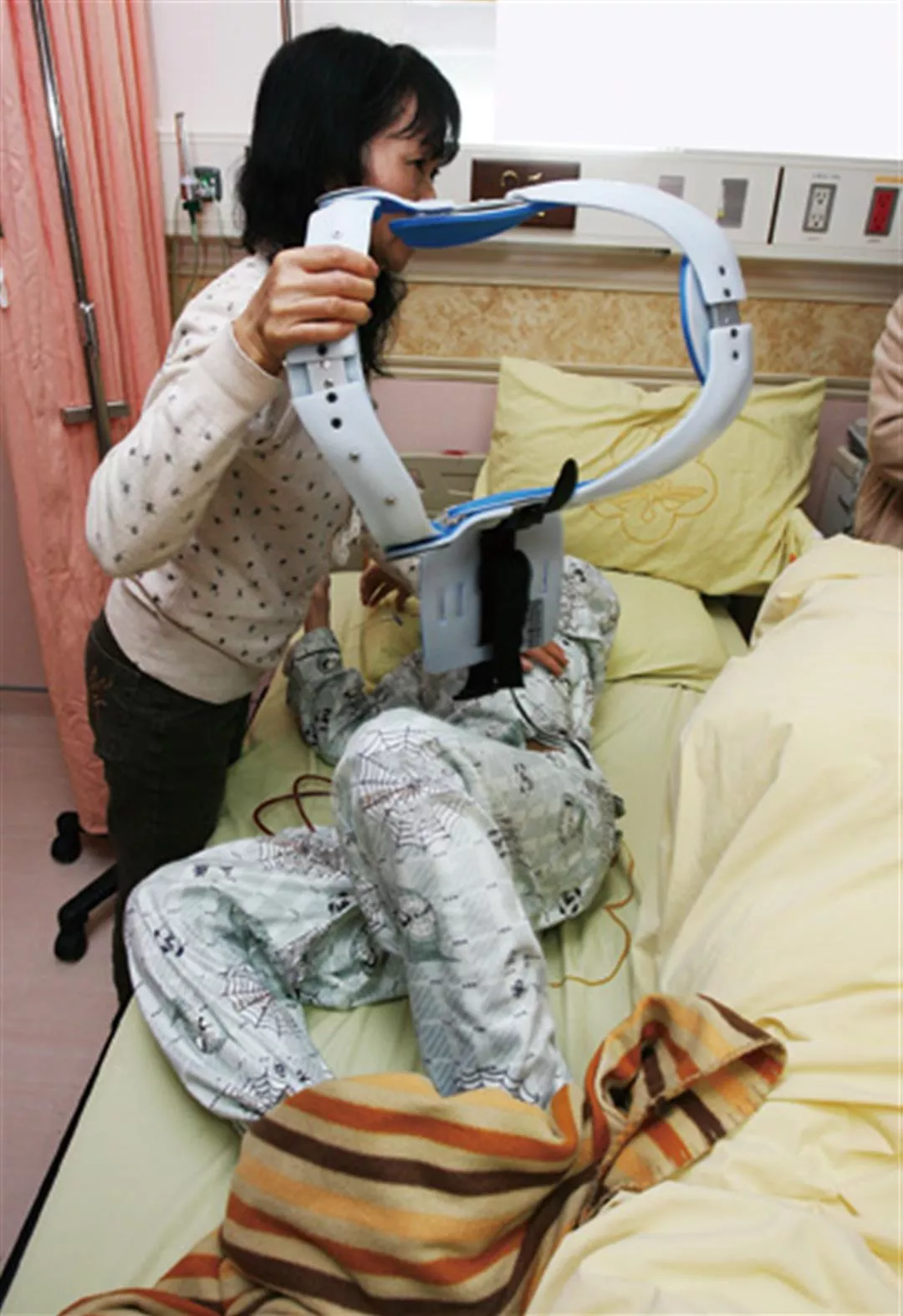
A patient who has undergone corrective spinal surgery can usually be out of bed by the third day, but he or she needs to wear a brace and do physical therapy for six months in order to allow the skeleton to properly heal.

Cascading downward
The cantilever bending technique successfully achieved the goal of reducing surgical time to a single procedure of only four to five hours, an impressive accomplishment. But Chang has gone much further in improving the pedicle screw technique. Whereas implanting pins in the thoracic vertebrae doesn't have much impact on daily life, placing them in the lumbar vertebrae causes the latter to lose their flexibility, so that it becomes impossible to bend or turn at the waist. This causes much inconvenience in daily life, not to mention completely ruling out activities like cycling and yoga.
For patients suffering from severe S-shaped curvature of the thoracic and lumbar vertebrae, Chang has developed a new method: "selective thoracic fusion." With this technique, screws are inserted only into the thoracic vertebrae, and the force applied to straighten the thoracic vertebrae is transmitted downward from the thoracic vertebrae to the lumbar vertebrae, which consequently straighten. With this method, the lumbar vertebrae are not fixed in place as the thoracic vertebrae are, so that there is no obstruction to bending or turning at the waist.
In late 2005, Chang successfully treated David, a 45-year-old American working as a missionary in Taiwan. David suffered from an S-shaped spine for over 30 years, and as middle age came on his pain worsened. Chang applied the selective thoracic fusion method to pull David's spine straight. Within three days after the surgery, David was able to stand on his own, and one year later he was competing in the Hualien triathalon, showing a lot more vitality than the average person can muster!
So where did Chang Kao-wha's "magic touch" come from? Born into a military dependents community, Chang later graduated from the National Defense Medical Center. In 1981 he began serving in Taichung Armed Forces General Hospital (where he continues to see patients to this day despite retiring from the military with the rank of colonel three years ago). In 1988 he spent a year doing advanced study at Johns Hopkins University, the world's leading institution for treatment of spinal problems.
Chang, who has treated innumerable patients, talks about his development as a surgeon: "Using traditional methods, I discovered that there were many problems that frequently came up-the corrective results were less than ideal, the procedures were too complex and took too long, there was too much risk, and so on-and over my career I have always been thinking about to how innovate and improve."
Twelve years ago Chang treated a severely humpbacked woman in her 60s. Despite careful preparation, during surgery a vertebra was displaced (spondylolisthesis), leaving the woman paralyzed. Tragically, she also developed pneumonia, dying just a few weeks later. "I asked myself again and again how such a thing could have happened, and researched why the sixth and seventh thoracic vertebrae can so easily be displaced. Could it be that in the structure of a misshapen spine there are several places that should not be moved or touched? These things could not be found in any textbook, so I had to rely on clinical experience. One patient had already been sacrificed, and I wanted to make sure that would never happen again. Otherwise what kind of doctor would I be?!"
Chang also decided to write papers about his clinical experience, which he published in order to exchange ideas with colleagues around the world. Since 1993, he has published 11 articles and 12 new surgical techniques in the journal Spine. No one else in the orthopedic profession in Taiwan can compare.

From X-rays and pre- and post-operative photos, you can see how this patient whose spine had been curved 153 degrees has been made straight by surgery, even "growing" 15 centimeters in the process.
Tai chi surgery
Chang, having trained as a military doctor, describes surgery in martial terms: "Dealing with each patient is like fighting a war." The "campaign" can be considered from the three levels of strategy, tactical preparations, and actual combat.
Take the case of a severely humpbacked patient from Indonesia whom Chang treated. The patient's head was at nearly a 90-degree angle, almost touching the breastbone. The patient could not open his mouth, and had not eaten solid food in three months. Chang assessed the patient, who was also suffering from diabetes and high blood pressure, as being too weak to risk surgery. So Chang adopted a strategy of "defeating the enemy without engaging in full-scale battle." He opted for a more moderate technique that would slowly adjust the angle of curvature over time.
In terms of tactics, Chang first analyzes the patient's curvature and decides where to make the incision, then chooses the best "operational" approach from among the various techniques available. Finally comes the hand-to-hand combat (surgery itself). Once the patient is on the table, it is necessary to make fast, accurate decisions about where to insert the screws and how much force to apply. When he gets to talking about this aspect, the hearty and good-humored Chang sounds quite proud: "This depends entirely on talent plus lots of hard training and experience, it's not something that just any doctor can do."
Surgeons have to have the physical stamina to get through three operations in one day. Starting in his fifth year of medical school, Chang began to get up every morning at five and jog five kilometers. Ten years ago he began doing tai chi, learning rules to keep his mind and body in top fighting form. He practices diligently each night after dinner.
In fact, Chang reveals that tai chi lies behind his ability to sense the tiny vibrations conveyed from the tip of a surgical instrument to the hand. During surgery, he follows various dicta like "positioning the legs so steadily that it is like being rooted to the spot," "restraining the spirit so as to concentrate all your thoughts," "emptying the mind of extraneous thought and relaxing the hands," which enhance his ability to sense how much pressure to apply and where. "This is because when we operate we rely not on the eyes, but on the sense of touch. The mental practice of tai chi can put both the body and mind into a relaxed but ready state, so that your senses are more acute."

An estimated 85% of spinal curvature cases are the result of heredity or have no discernible cause. Since problems often begin at a young age, although there is no real method of prevention, parents should pay close attention to their children's musculoskeletal development, because the spine is decisive in determining physical condition for a lifetime.
Help as many as you can
Chang's medical skills have become known far and wide, and doctors have come from the US, France, Japan, Korea, and mainland China, as well as from some of Taiwan's top hospitals, to learn from him. But there are some orthopedists in Taiwan who are less than thrilled with Chang's personality, which they consider to be self-promoting.
"There are different schools of thought in Taiwan's medical community, just like in any profession, perhaps because of a lack of understanding of his techniques. Most orthopedists don't dare to use so many screws (which cost NT$20,000 per vertebra), and don't dare to apply a great deal of force to align and straighten a back that has become hardened in its distorted shape. But he has the courage and vision, and moreover has great judgment and control over how much force to apply." So says Lin Jinsheng, director of orthopedics at Taichung's Chengching Hospital, who has seen Chang operate. Lin's argument is that, for severely deformed patients, if too few screws are inserted or the adjustment of the back does not go far enough, then there's no point in undergoing the surgery to start with. Most doctors fear damaging nerves or causing paralysis, so naturally they hold back, but this greatly reduces the effectiveness of the procedure.
Since the media began reporting extensively on Chang, the number of patients attending the orthopedic clinic at Taichung Armed Forces General Hospital has gone up to 300 a day. A bigger problem is that the patients flooding in use up, in only two weeks, the clinic's global budget allocation for an entire month. Patients who want surgery just have to wait, and wait, and wait....
"The global budget system limits the number of people we can help, so that we can't really use all our 'firepower.' Each month we can only perform surgery on 20 or so people. Patients are frustrated, and doctors with the ability to help more people have their hands tied." Chang hopes that he can help more patients when he feels physically up to it, but he also says that patients should always get the opinions of other doctors before deciding whether or not to undergo surgery. However, if you decide in the end to trust to his skills, then just leave everything in his hands and relax, "because respect for life is the highest principle of faith of all those in the medical profession.


The pictures illustrate two methods Chang developed: the cantilever bending technique (left) and selective thoracic fusion (right). In both methods, holes are drilled into the pedicles of the spinal vertebrae and screws are inserted, then the displaced vertebrae are aligned and straightened, and rods are employed to form two tracks that provide stable support. The main difference is that with the selective thoracic fusion technique, designed specially to treat persons with S-shaped spinal deformations, screws are only inserted in the thoracic vertebrae, not the lumbar vertebrae, so that patients retain the ability to bend and turn at the waist after surgery.