Living Walls: Horticultural Wonders in the Concrete Jungle
Teng Sue-feng / photos Lan Chun-hsiao / tr. by Scott Williams
August 2010
Concrete highrises cluster densely in the urban jungle. When we seek refuge in air-conditioned rooms from the sweltering summer heat, the much lower indoor humidity can dry our mouths and muddle our thoughts. The extreme differences in indoor and outdoor temperatures can also induce respiratory allergies. Architects and landscape designers recognize the problem and have in recent years begun wrestling with how to bring some of the natural greenery of our parks and tree-lined streets into our reinforced-concrete interiors, and how to use plants to clean the air we breathe, both indoors and out.
With the green trend in full swing, some builders are beginning to replace cold, rigid concrete walls with natural "living walls" that incorporate plants into their structures. These "vertical gardens" or "plant walls" resemble vibrant gardens scaling building walls and can now be seen all over Taiwan-decorating highrise department stores, fencing construction sites, and "greening" Taipei's National Theater and Concert Hall. The walls are so popular with the public that they've even become veritable hotspots for tourism.
Parents with children and young couples begin gathering beside Park Lane by CMP, the so-called "breathing building" located at the intersection of Gongyi and Yingcai Roads in Taichung, half an hour before it opens, to hang out and take photos.
Built facing Taichung's 26,000-square-meter Citizens' Plaza, the building's living wall extends from the second to the fifth floor, its leaves and small flowers swaying languidly in the breeze, playing off the park's open vistas to provide a green feast for the eyes.

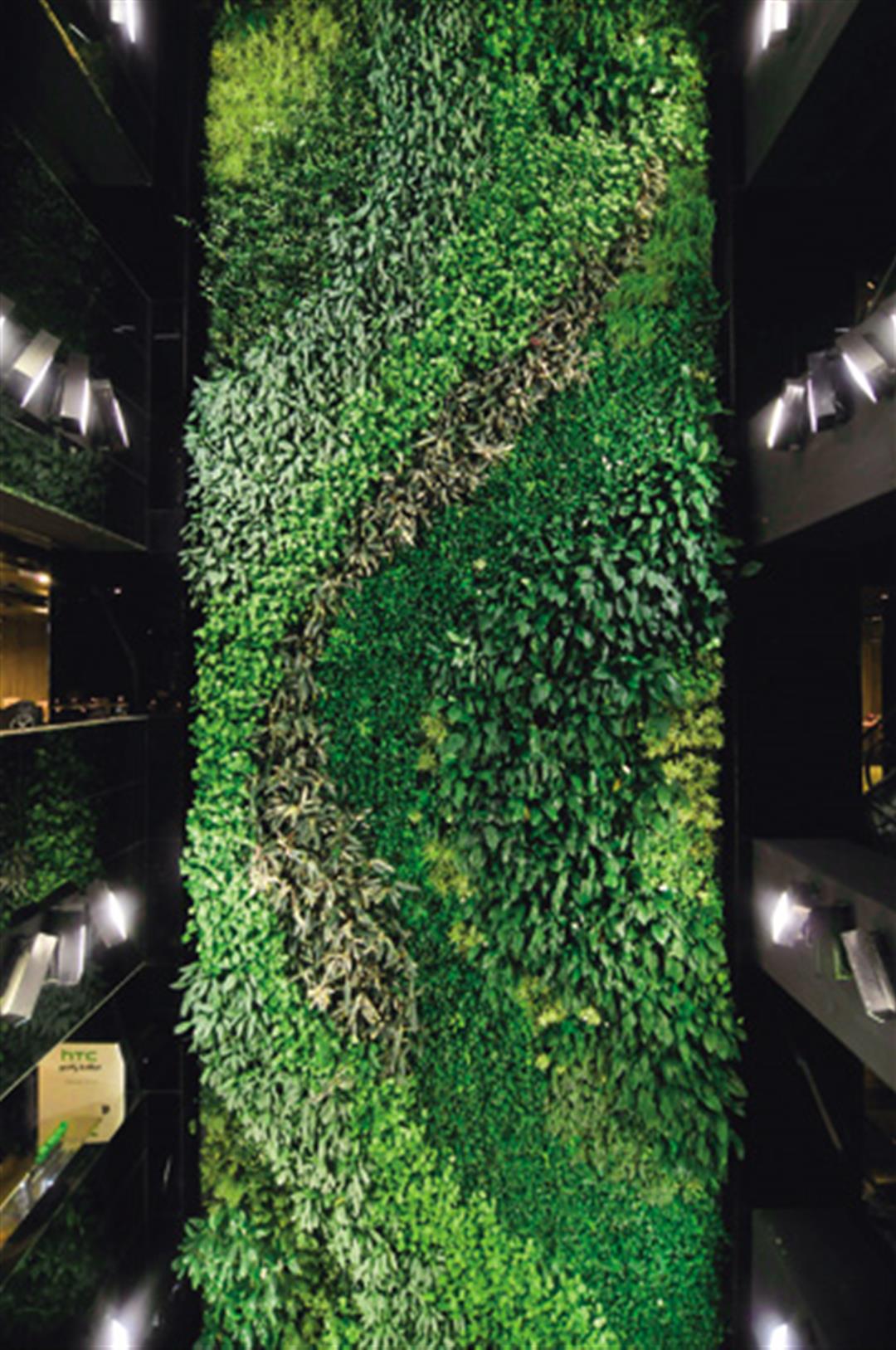
Interior vertical gardens, most of which are located in public spaces, need maintenance to grow well. The photo shows the Q Square shopping arcade beside Taipei Station.
Built by the CMP Group and Eslite Bookstore, the Park Lane living wall won a 2010 Prix d'Excellence from the International Real Estate Federation (FIABCI). Several hundred projects originating in each of FIABCI's member nations contend for the award every year. Taiwan has previously earned accolades for Tainan's Barclay Memorial Park, Taipei County's renovation of Sanxia's Old Town, Taipei's Beitou Library, and Kaohsiung's Zhouzai Wetland Park.
Park Lane by CMP earned the award for its skillful and innovative use of plants to decorate a structure, its employment of sustainable and organic plant materials, and its ability to "infect" the cityscape and environment with the living-wall concept. Park Lane's living wall is also Asia's largest, with a green area roughly equivalent in size to Taipei's Yongkang Park suspended from the side of the building.
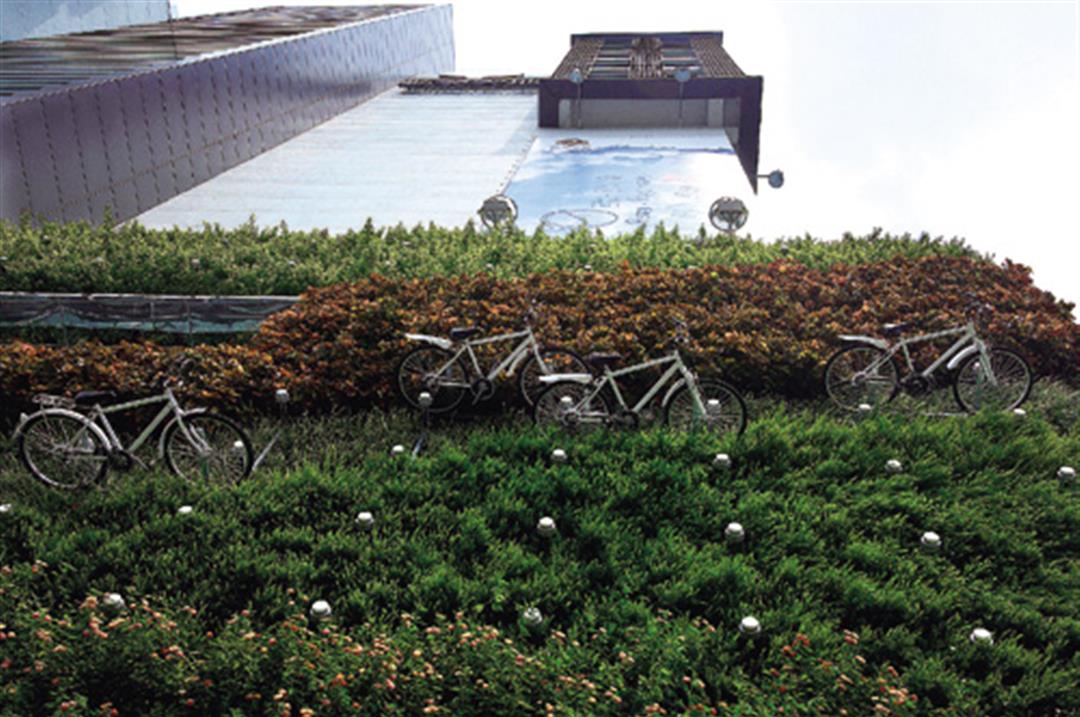
The interlinked eastern, western and southern faces of the exterior green wall cover a total of roughly 1,850 square meters and are filled with 28 varieties of plants, including common lantana, coleus, and golden dewdrops. The developers also installed several hundred LEDs that twinkle at night among the plants like fireflies flitting through a forest. The interior green wall covers about 132 square meters extending from the second basement to the third floor. Viewed from the first floor, the mass of plants is so lush and vibrantly green that visitors often wonder aloud if the plants are real.
In 2006, CMP spent more than NT$700 million to buy the building that used to house Taichung's Daguangsan Mall. Long vacant, the site had fallen into use as a semi-derelict parking garage. Aiming to integrate the building's design with the surrounding green spaces, CMP chairman Ho Ming-hsien decided to create a vertical garden, growing plants from the walls. But he ran into resistance from colleagues who worried that Taiwan's frequent typhoons and earthquakes would shake plants loose, endangering those below, or that the plants would wither and die, becoming an eyesore. The naysayers also worried that the expense of maintaining the plants would drain company coffers.

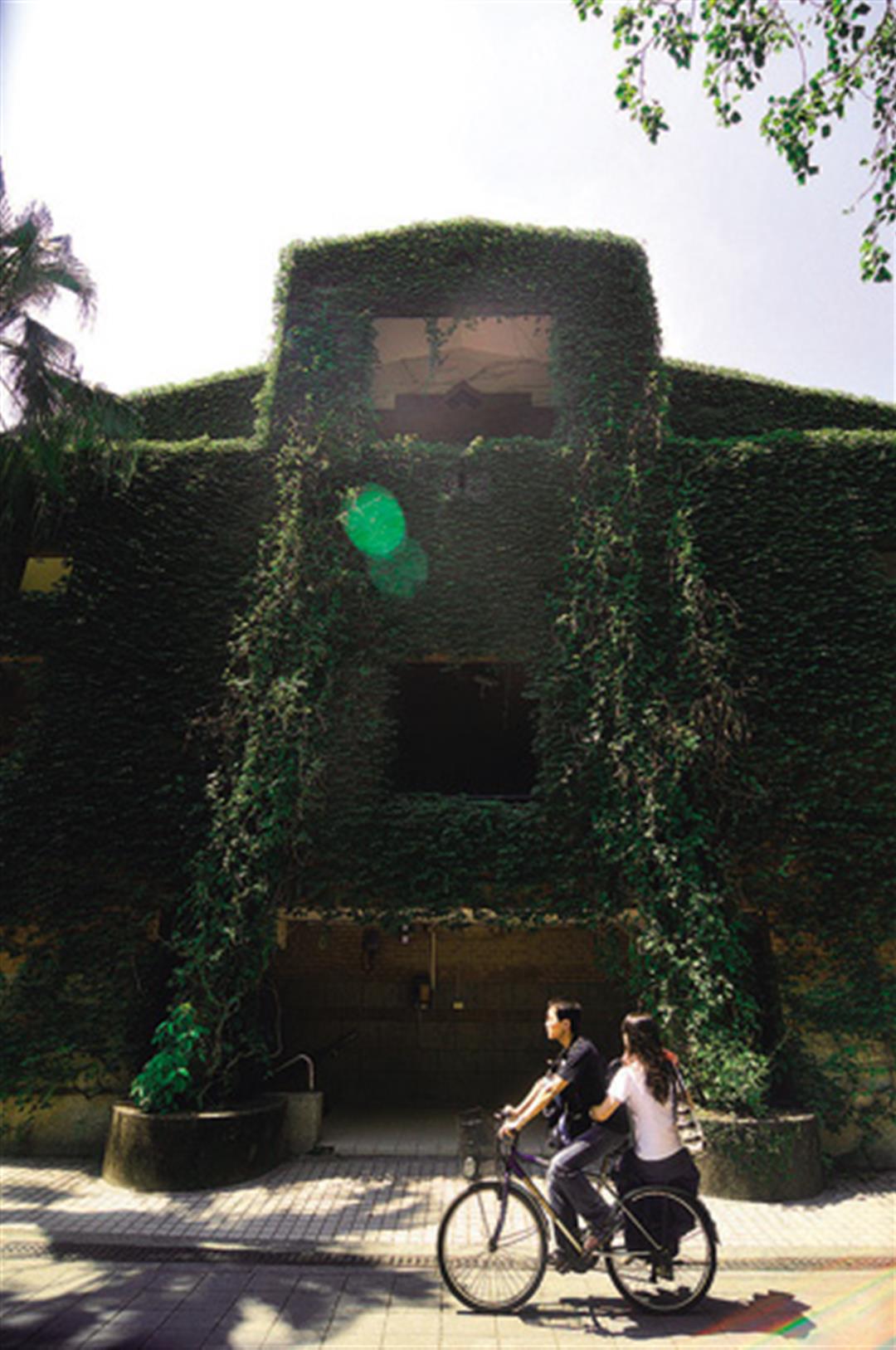
The most natural vertical garden consists of ivy or another climbing plant growing naturally up a wall on its own. Unfortunately, Taiwan's intense sun makes such ivy-covered walls a rarity here. The photo shows NTU's College of Bioresources and Agriculture.
Such things often occur in pairs. On a visit to Paris in 2006, Tchen Yu-chiou, former chair of the National Theater and National Concert Hall, was introduced to the work of Patrick Blanc, the originator of the vertical garden. Impressed by the public-art character of his work, in 2007 she invited him to Taiwan, where in just three weeks he designed and built Taiwan's first vertical garden for the National Concert Hall.
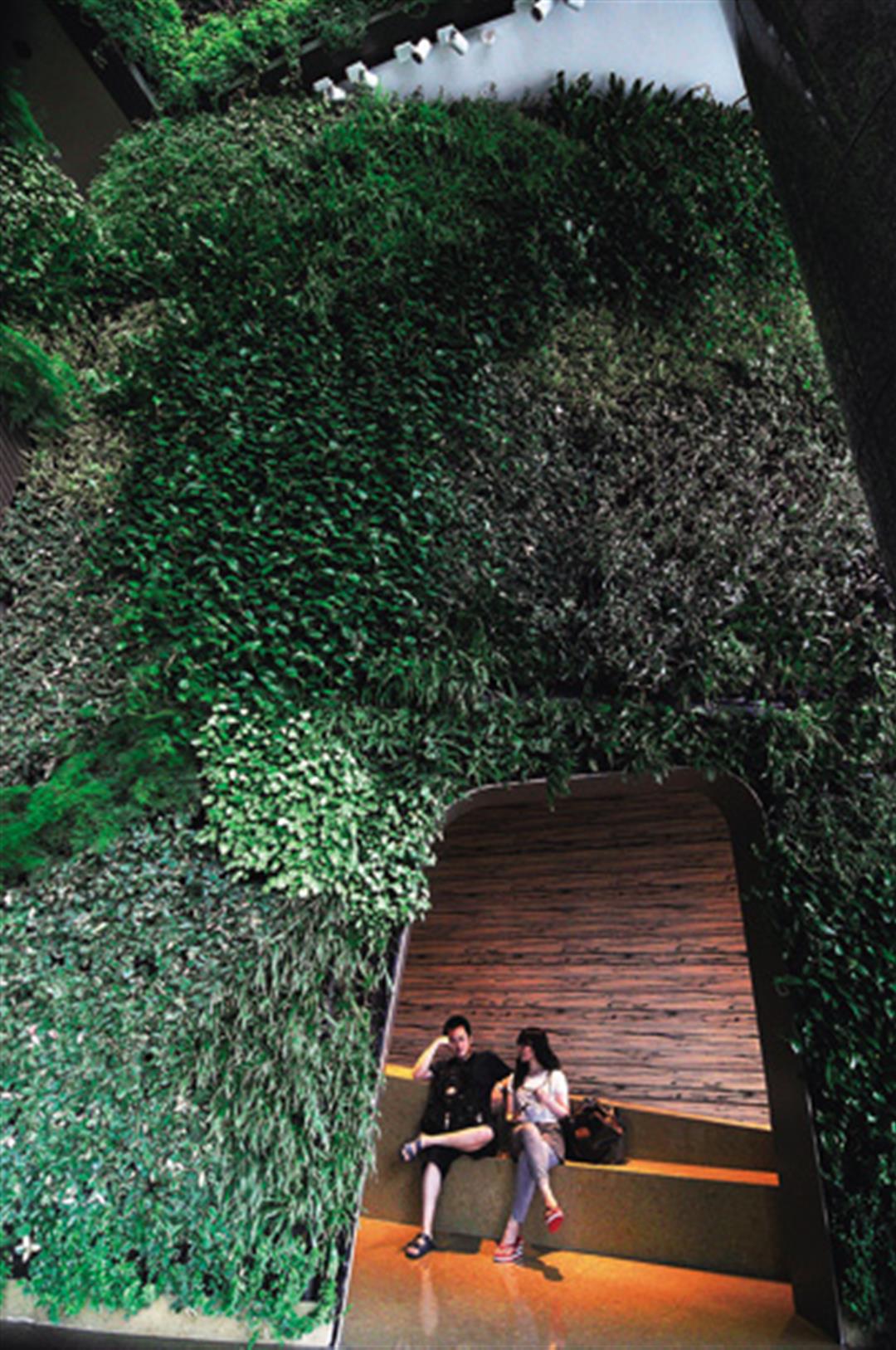
Known as the "Green Symphony," the National Concert Hall's vertical garden has two faces located on the interior surfaces of the marble walls by the No. 4 and No. 6 entrances. The gardens are 2.5 stories tall, about 134 square meters in area, and incorporate some 4,153 plants of 51 common varieties, including peace lilies, bird's nest fern, and string of pearls. The gardens features plants with leaves of varying lengths and play with colors and shades, making them look almost like huge oil paintings.
The enthusiastic response to the Green Symphony got Tchen thinking about how to show off the beauty of Taiwan's native orchids and prompted her to invite Blanc to Taiwan again in August 2009. This time, Blanc first took some time to appreciate the character of Taiwanese orchids and to understand their growing environment. After visiting local orchid nurseries, he set out to impress visitors with the exuberant vibrancy of Taiwanese orchids. Blanc installed 230 orchids of 25 indigenous varieties, including Phalaenopsis aphrodite, Taiwan pleione, and Vanda, along with some 2,900 foliaceous plants of nine species on the wall of the lobby inside the National Theater's Gate 6. He also installed some 250 orchids of 46 varieties together with about 2,000 maidenhair ferns beside Gate 4.
To allow the plants to properly photosynthesize, Blanc also installed four grow lights on the ceiling to provide eight hours of light per day. But because there are so few varieties planted on the wall, once the orchid flowering season in early spring has passed the theater's vertical garden often appears rather sparse. As a result, the concert hall's Green Symphony is usually a much more splendid sight than the theater's Orchid Waltz.
Blanc, who developed the vertical garden construction method, is sometimes known as "Mr. Green." Originally a botanist with the French National Center for Scientific Research studying plants indigenous to tropical rainforests, Blanc realized that many plants didn't need soil to live, that soil simply provided them with something to attach themselves to. For example, roughly 2,500 of Malaysia's nearly 8,000 plant species grow on soilless cliffs, rock faces, and rocks. In other words, plants could grow on walls as long as they were provided with sufficient water.

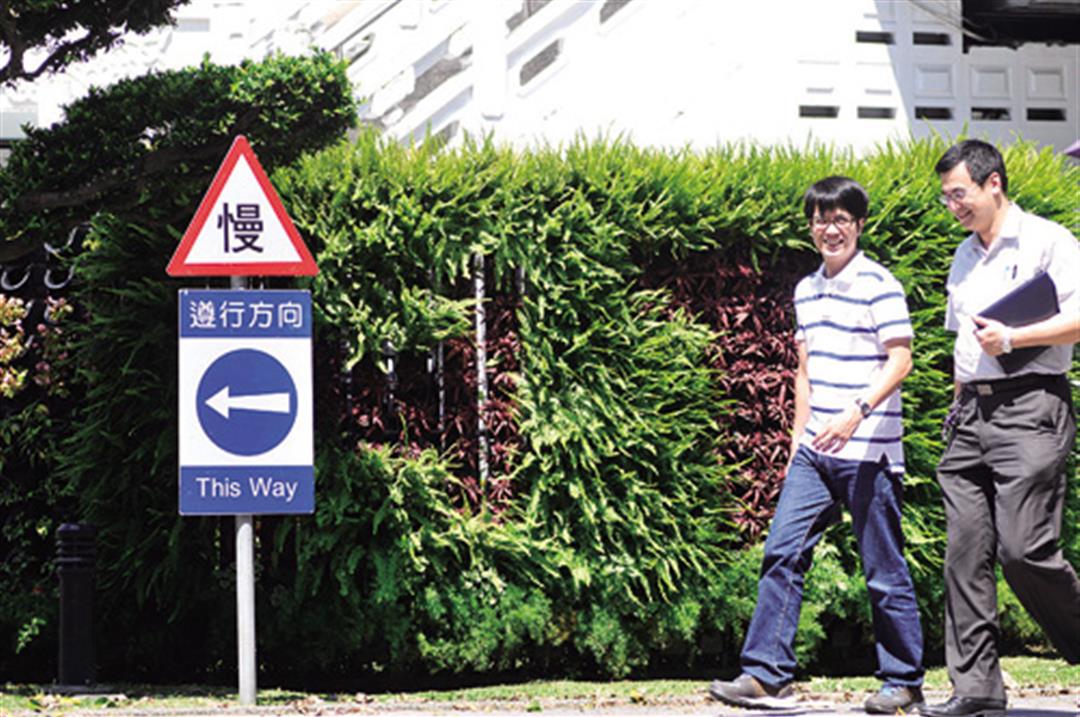
True vertical gardens are structurally complex and require careful maintenance. The simple vertical gardens often seen by the side of the road tend to run riot as they age. The photo shows a green wall on the campus of National Taiwan University.
After studying the problem, Blanc developed a growing system that delivered water at regular intervals, then set to work arranging plants in layers based on their leaves and the depth of their colors, creating artistic vertical gardenscapes that amazed the public.
In 1988, he began designing his first vertical garden for the Cite des Sciences et de l'Industrie. Important works since then include living walls at Paris' Musee du quai Branly, at Bangkok's Siam Paragon, and at Kanazawa's 21st Century Museum of Contemporary Art.
The Musee du quai Branly's wall project, which cost 230 million (nearly NT$10 billion), includes 180 15-meter-tall trees outside the museum and some 15,000 ivies, ferns, and mosses, climbing up a 20-meter-tall wall. One of the most distinctive aspects of the building is that, with the exception of the windows, all its principal architectural features are covered in green. Pedestrians walking past always move closer to touch the leaves and admire this green museum.
In 2009, Time magazine named Blanc's living walls as one of the year's 50 best inventions, along with NASA's Ares rockets and the AIDS vaccine.
Plants are tenacious survivors and readily climb walls. On the other hand, "hanging" plants that don't require soil from interior walls is quite a difficult challenge. How do you encourage them to thrive in low-light environments? And, in the event of an earthquake or extreme weather, how do you keep them from falling and injuring people below?
For Blanc, the key is his unique construction process, which is exemplified by the Green Symphony. There, he first mounted a 4-centimeter-thick frame on the wall, then covered it in a 1-centimeter-thick layer of waterproof PVC. Next, he used a nail gun to attach three layers of non-woven felt (0.3 centimeters thick) to the PVC.
"The non-woven fabric acts like three pieces of bread," says Wang Shun-yi, manager of general administration at the National Concert Hall. "You cut away the fabric between the second and third layers, insert the plants' roots into the opening, and the roots attach and grow." Wang says that there's also an automatic irrigation system mounted atop the wall. When it waters the plants, nutrient-rich water soaks into the fabric and flows downward. Channels at the base of the wall draw the excess water away.

The exterior vertical garden at Park Lane by CMP covers an area equivalent to that of Taipei's Yongkang Park and absorbs roughly 200 kilograms of CO2 every day. People visit often to take photos of the brilliant green wall.
Park Lane by CMP took a different approach.
"Taiwan's climate, its earthquakes, and the weight of the plants were important considerations during the design and engineering phases," says Huang Bozheng, chief engineer with Gabriella International Co., which handled the engineering of the wall. Huang says that the plants in the Park Lane wall are also grown without soil, but in non-woven-fabric pots (80 x 50 x 25 cm) containing a lightweight perlite, mica, and peat moss medium. The construction process involved first mounting a steel frame to the wall, then securing the pots in the frame. The company also installed some 3,000 meters of irrigation tubing, 6,000 drip-irrigation pipes, and several hundred mist nozzles beneath the frame.
The 140,000 plants in 3,260 pots weighing 30 kilograms each were cultivated for three months at a nursery in Tianwei Township, Changhua County before being installed in the wall with a crane. The entire process took four months.
The engineering team had to deal with different sets of considerations for the interior and exterior installations at Park Lane. Exterior concerns focused on issues such as wind direction, sunlight, and rain. In the run-up to last year's typhoon season, the team was very concerned about strong winds and heavy rains and prepared nylon windscreens that looked like mosquito netting. But Huang worried that the screen itself might damage the plants. If it weren't hung tightly enough, strong winds might cause it to batter the plants. Fortunately, he had made arrangements for the leaves to be gradually trimmed back from 80 cm to just 30 cm in length one month prior to the start of the season. This lightened the plants considerably, making the screen unnecessary.
Issues facing the interior wall included isolation from the weather and a lack of natural light, which meant that the builders had to provide both water and lighting.
"The shopping mall is air-conditioned all day and gets no sunlight," says Ho Pei-fen, spokesperson for the CMP Group. "So we installed 32 500-watt grow lamps. But we spent a lot of time figuring out how to set up lamps so that their light fell evenly onto all 10,000 plants. Even shade-tolerant plants are very sensitive to light. But sometimes we got the lamps angled appropriately for the plants only to discover that they were shining right into customers' eyes. We spent a very long time adjusting the angle of those 32 lamps."
Next, the team built a pool at the foot of the living wall and installed three upward-blowing fans to circulate moisture and raise the interior humidity. Ho says that the fans also make the leaves sway, which keeps them a brilliant green by helping them shake off dust.
Interior gardens offer a great many benefits. Indoor plants remove formaldehyde, benzene and other toxins from the air, reduce interior temperatures, and absorb dust from the air. Working in a pretty, plant-filled environment also keeps people alert and in a good mood. So how much does a vertical garden cost?
Ho says that companies tend to prefer to cut costs where they can and mistakenly see going green as an unnecessary expense. But after winning the Prix d'Excellence, CMP discovered that Park Lane had not only improved their corporate image, but also helped the company save energy and reduce carbon emissions. Putting plants indoors has cooled the mall, so the air-conditioning system doesn't have to work as hard. When you consider CMP's estimate that the plants cut the mall's monthly power consumption by 30%, the NT$20 million the company spent to build the wall (roughly NT$10,000 per square meter) and the NT$1 million it spends annually to maintain it look like good investments.
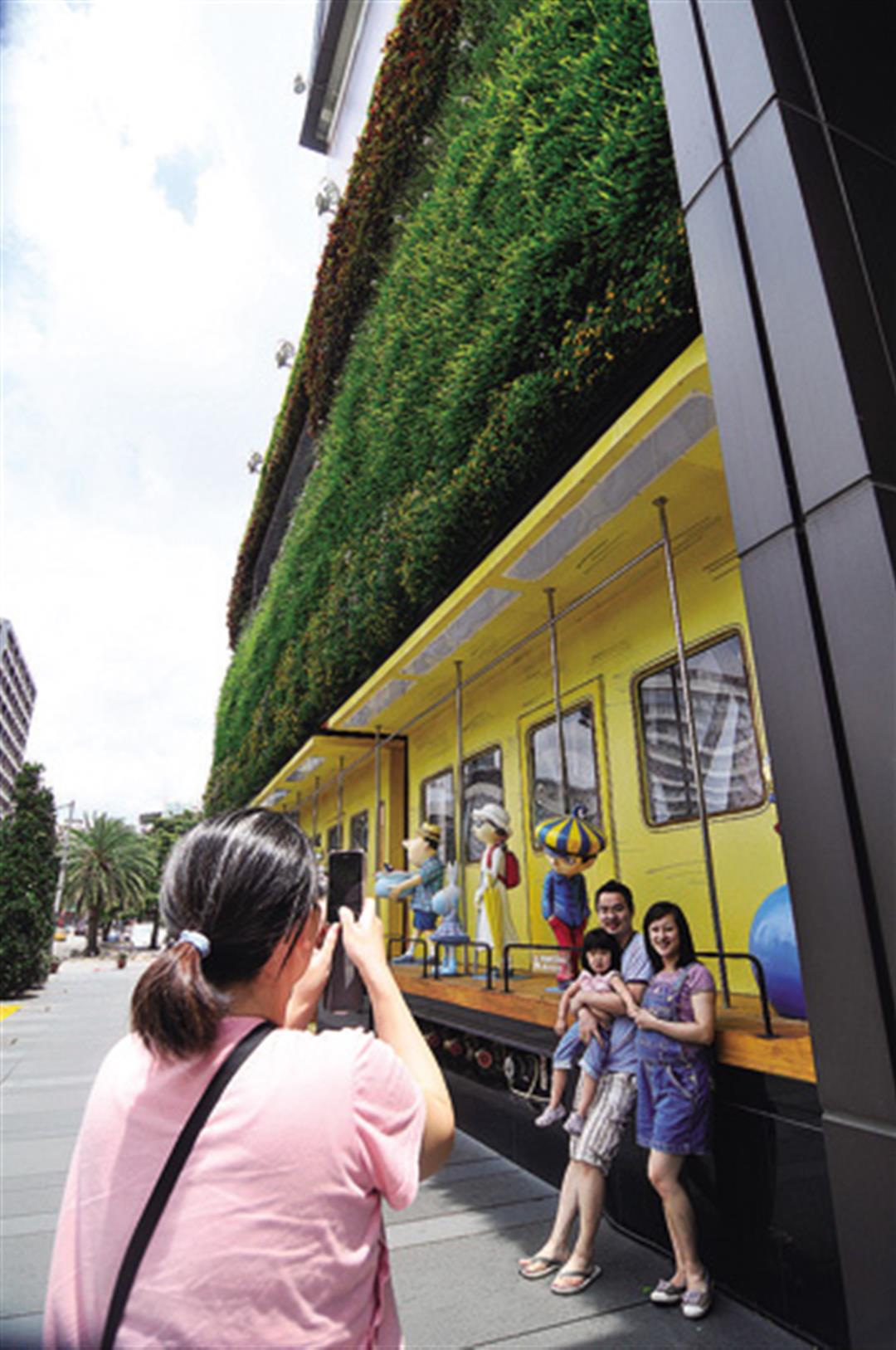
The exterior vertical garden at Park Lane by CMP covers an area equivalent to that of Taipei's Yongkang Park and absorbs roughly 200 kilograms of CO2 every day. People visit often to take photos of the brilliant green wall.

Taiwan's "beauty index" will soar if the island's bustling commercial buildings can gradually go green.
Last year, the Taichung City Government decided to apply the model used by Tokyo's Omotesando Hills and Roppongi Hills and Paris' Champs-Elysees to the 3.6 kilometer strip of land linking the National Museum of Natural Science, Park Lane by CMP, and the National Museum of Fine Arts, turning it into a cultural-creative, commercial, and environmental hub. The project was named one of five candidates for central-government assistance in developing the Tourism Bureau's International Tourism Destination Projects.
Using fluid grass-style calligraphy, Taichung mayor Jason Hu described the strip of land as being both light and dense, close and diffuse. Expressing the hope that visitors would find "the sight of grass an enlightening experience, he rechristened the area "the path of grassy enlightenment."
The influence of these green vertical gardens has spread even to construction sites. Such sites used to be surrounded by corrugated steel fences, which were often the subject of complaints for their ugliness, their inability to absorb noise, and their tendency to be blown apart by the wind and injure passersby. Since 2008, 11 cities and counties, including Taichung City, Taipei City and County, Tainan, and Kaohsiung, have established construction-site-fence beautification regulations requiring construction sites to improve the appearance of their facades. Taichung, for example, now requires construction companies to install green fences at least 1.8 meters in height along adjacent roads 10 meters or more in width. The companies can build lattices, from which they can hang potted plants such as purslane and asparagus fern, or on which they can grow vines to reduce noise, absorb dust, lower pollution, and cut CO2 emissions.
But many city and county green fence regulations are not strongly enforced, and instead depend entirely on firms' willingness to cooperate.

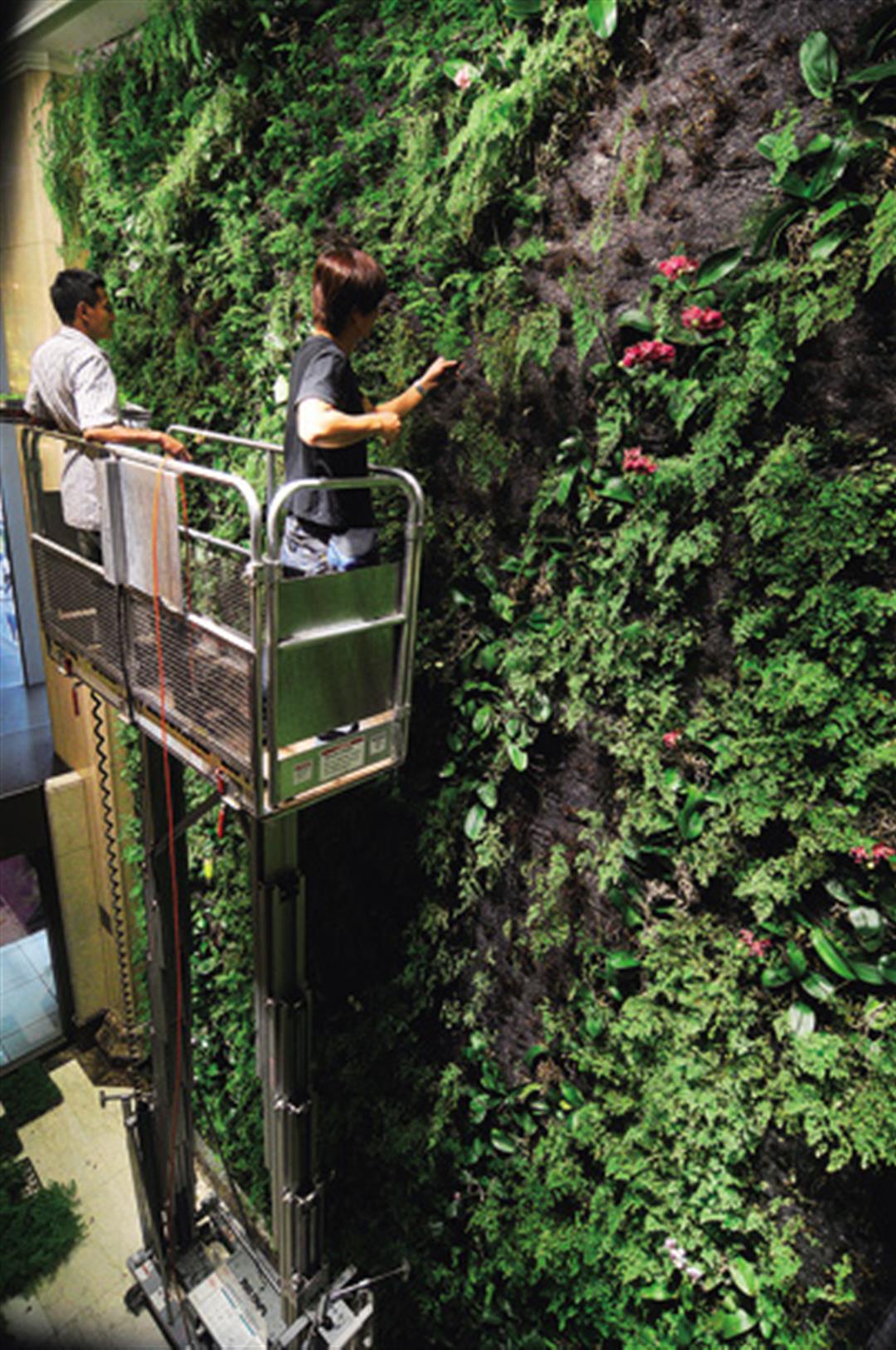
The interior vertical gardens at the National Theater and National Concert Hall are some 2.5 stories tall. Workers keep them green the year round with the help of a telescopic-lift work platform.
Patches of green in the concrete jungle are the result of people learning from Nature and building human spaces that are more closely connected to Nature.
While serving as dean of general affairs at National University of Kaohsiung, Huang Shyh-meng, now a professor in the school's Graduate Institute of Urban Development and Architecture, was in charge of campus planning. He left that role upset that he hadn't been able to complete the work of constructing vertical gardens on exterior walls.
The university originally planned to build a pencil-shaped tower on each of the College of Law and the College of Science. Huang sought to emulate the look of US Ivy League campuses by having ivy climb the walls of these towers. But, lacking supports built into the walls, the ivy grew poorly.
After studying American, French, and Japanese vertical garden projects, Huang suggested that if green walls are to achieve green objectives, the architects need to plan for them when designing their buildings. He also argued that plant types, structural supports, and irrigation systems should be chosen only after taking into account wind strength, humidity, the structure's orientation, and the amount of sun the structure receives, the better to avoid problems with plant roots digging into and damaging walls.
Root systems typically invade walls in places where the walls are already cracked. Walls should be inspected before greening them to ensure that roots don't get into every fault and fissure. When cracks are found, they need to be repaired, then the whole wall waterproofed. Surprisingly, however, it's not plants that do the most damage to concrete walls, but variations between day and night temperatures, which can cause them to split. Greening walls can keep them cooler, helping protect them from damage.
As a professor of architecture, Huang sees in vertical gardens a new concept that combines two distinct objects-buildings and plants. He also believes that, given modern-day designs' orientation towards sustainable development, architectural designs should do a better job of accommodating the natural environment.
Given that the expense of urban land suggests that all land will be put to human uses, perhaps the best way to keep a little space for the natural world is simply to allow it to creep up the walls.