Shih Chien University--On the Creative Edge
Chang Chiung-fang / photos Chuang Kung-ju / tr. by Phil Newell
June 2006
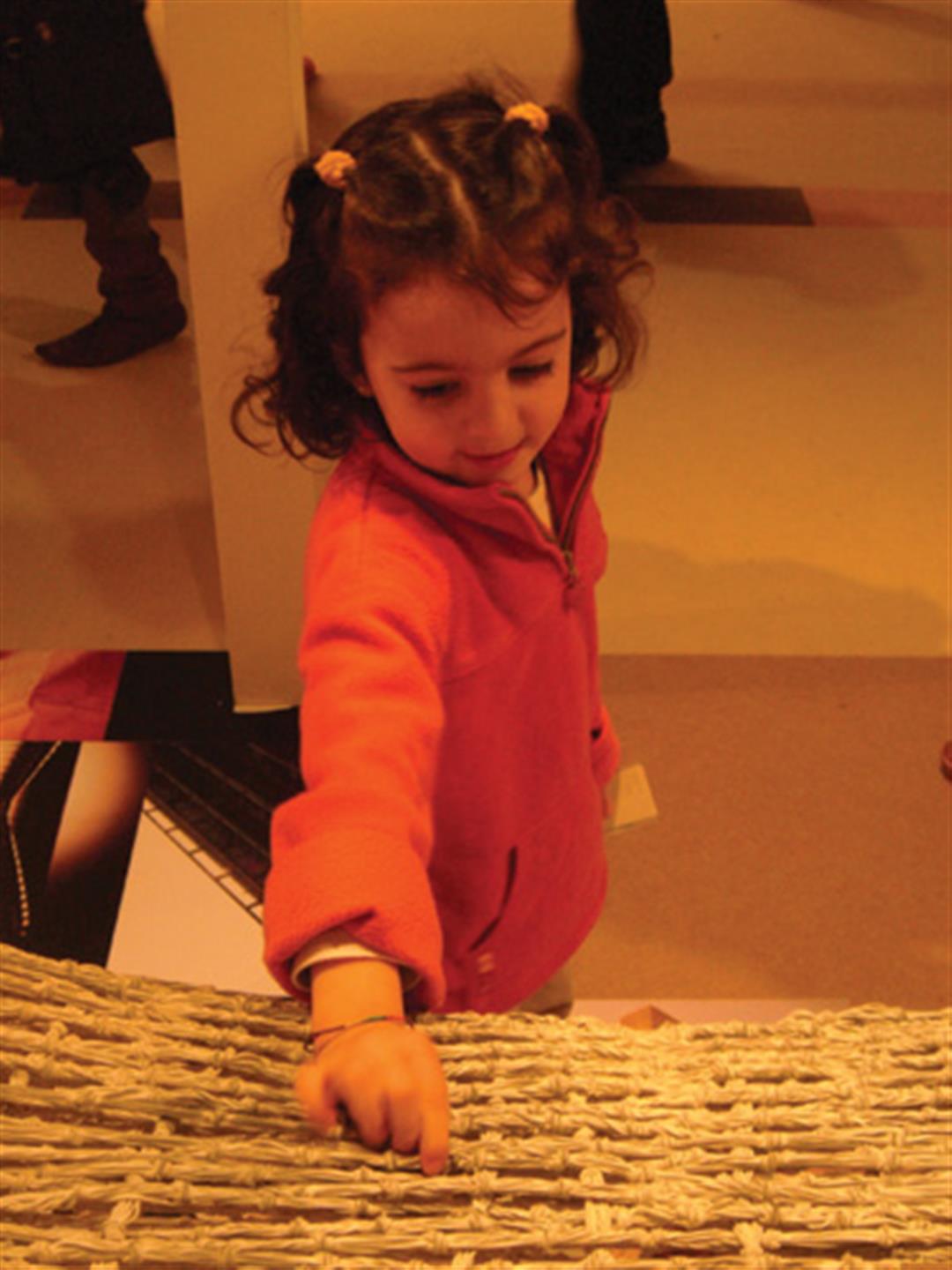
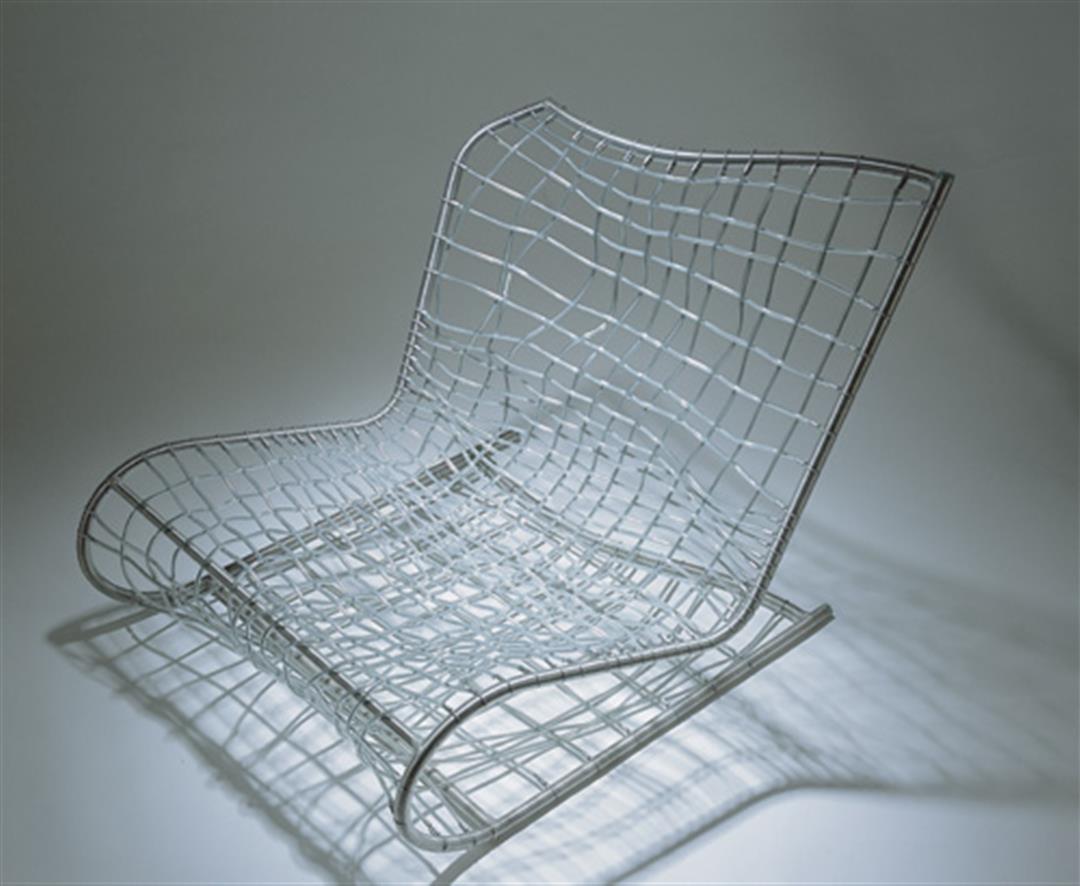
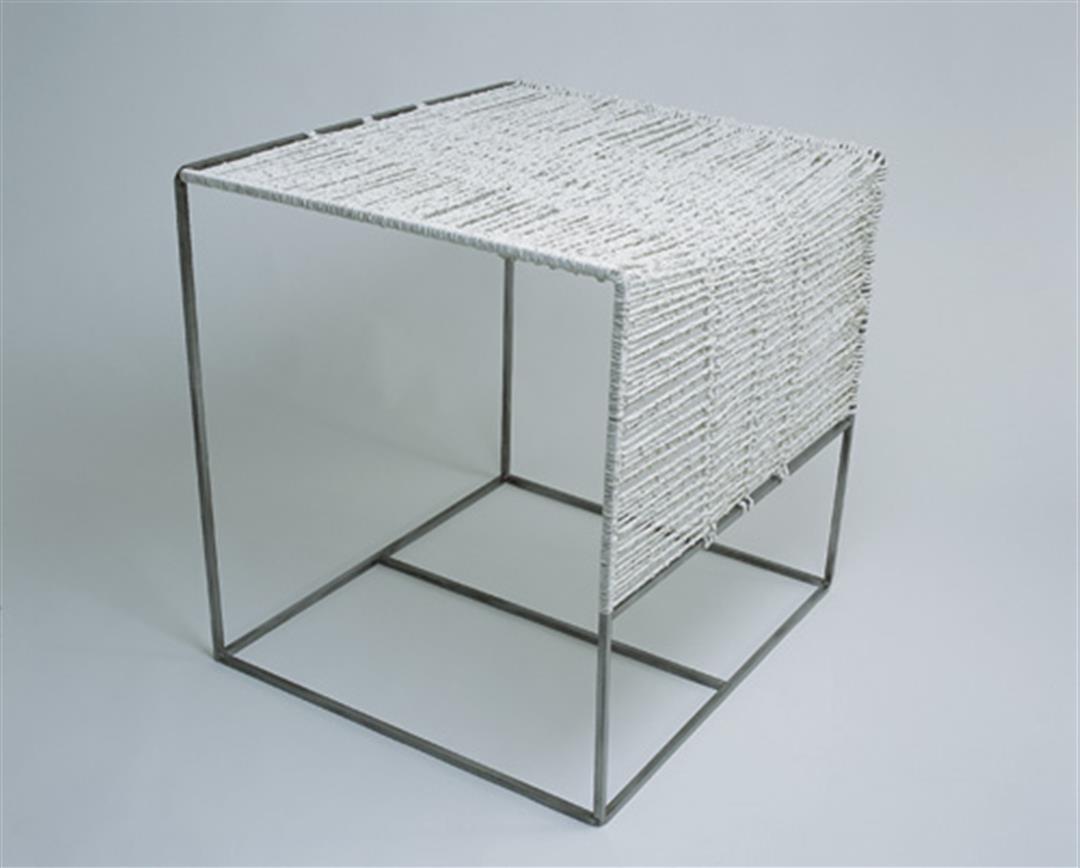
Last year Tsai Chia-lun, a third-year student in the Department of Industrial Design at Shih Chien University, created a chair made of rubber bands wrapped around a steel frame. Called GaGa, the chair was a hit at the Salone Satellite furniture show in Milan, Italy.
Only just over 20, this young woman can be found every night slaving away until the wee hours of the morning in the school's workshop. "It's tiring, sure, but I like to do it," says Tsai, who has no fears about exploring novel realms and is always looking for new paths to follow. In fact, that just about sums up the philosophy of Shih Chien University as a whole.
Shih Chien's College of Design is the first school to take its students to international competitions. Shih Chien is also the first institution to place its department of industrial design--a subject heretofore thought of as part of science and industry--into a college of humanities and the arts.
"Creativity is at the heart of design. You know what they say--you won't find any unusual flowers by following the well-trodden path. That is why challenge has become our byword, so we can create new paths," says Kuan Cheng-neng, a professor in the College of Design.
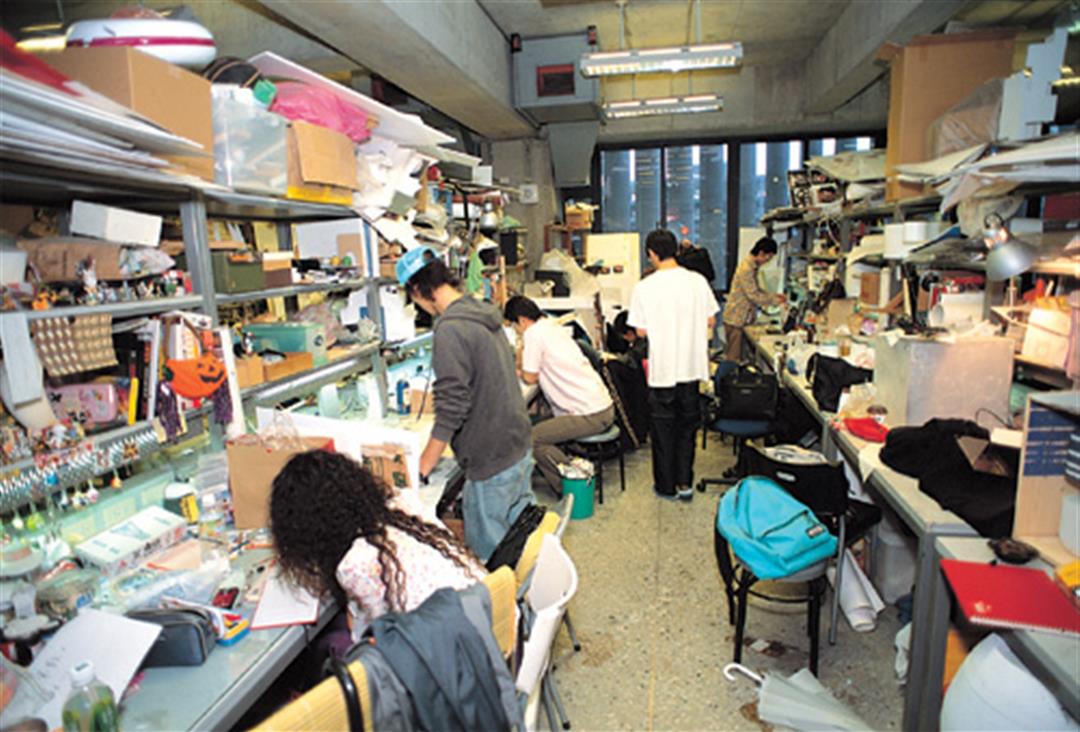
The lights are on 24 hours a day at the College of Design building, with teachers and students zipping in and out. In the workshop, you can see people who have been up all night and are still working on design projects, while others, snoring heavily, are trying to find their second wind. Books, works-in-progress, and food are everywhere. But there is method in this madness, and the air is permeated with a sense of anything-goes freedom.
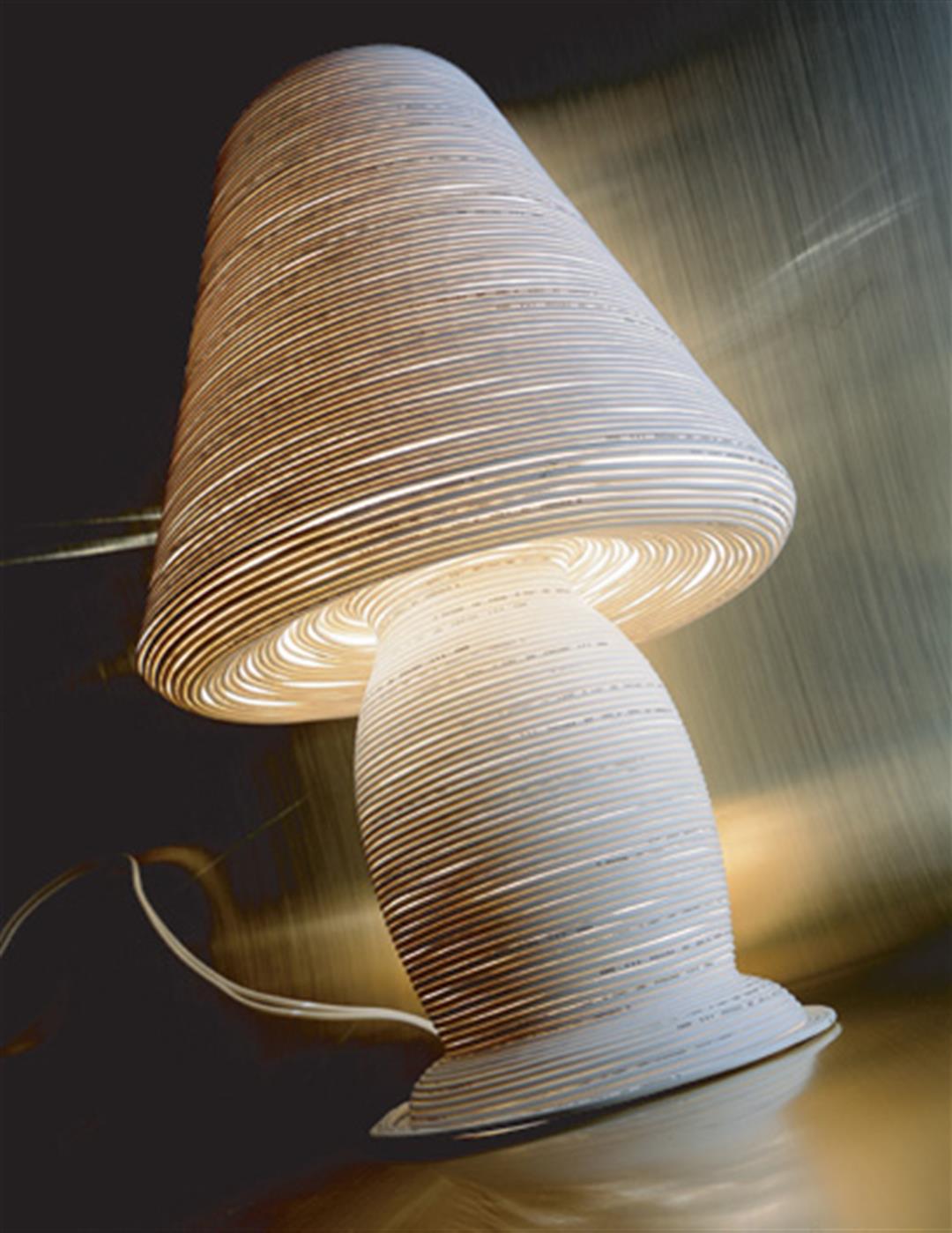
Design classrooms, digital labs, the student workshop, and the model factory are all concentrated in this structure. In the common areas, where the different departments can interact with one another, student creations are everywhere: a chair in the shape of a wave, a standing lamp wound round with electrical cable.... It's a feast of constant surprises for the eyes.

Design is a 24-7 profession. You can find students in the workshop at all hours of the day and night, driven by a passion for art.
Everything in flux
The College of Design, founded in 1997, currently has four departments--fashion design, architecture, industrial design, and communications design--and two graduate institutes: one for fashion and communications design, and one for industrial design and architecture.
But all of this is provisional, because the departments and institutes at the college are often recombined or divided up, with everything being in constant flux.
"We are always raising questions, restructuring, removing," says Kuan Cheng-neng, who personally called the College of Design into life and is currently dean of the Graduate Institute of Industrial Design and Architecture. He says that in the early 20th century, things like dance, architecture, and industrial design were all part of the same big family. It was only later that they gradually were separated into different categories. But in fact, both in terms of theoretical concepts and daily life, creative fields are all linked. To keep pace with the students' needs and maintain flexibility, teachers and students routinely get together to discuss the direction of the curriculum.

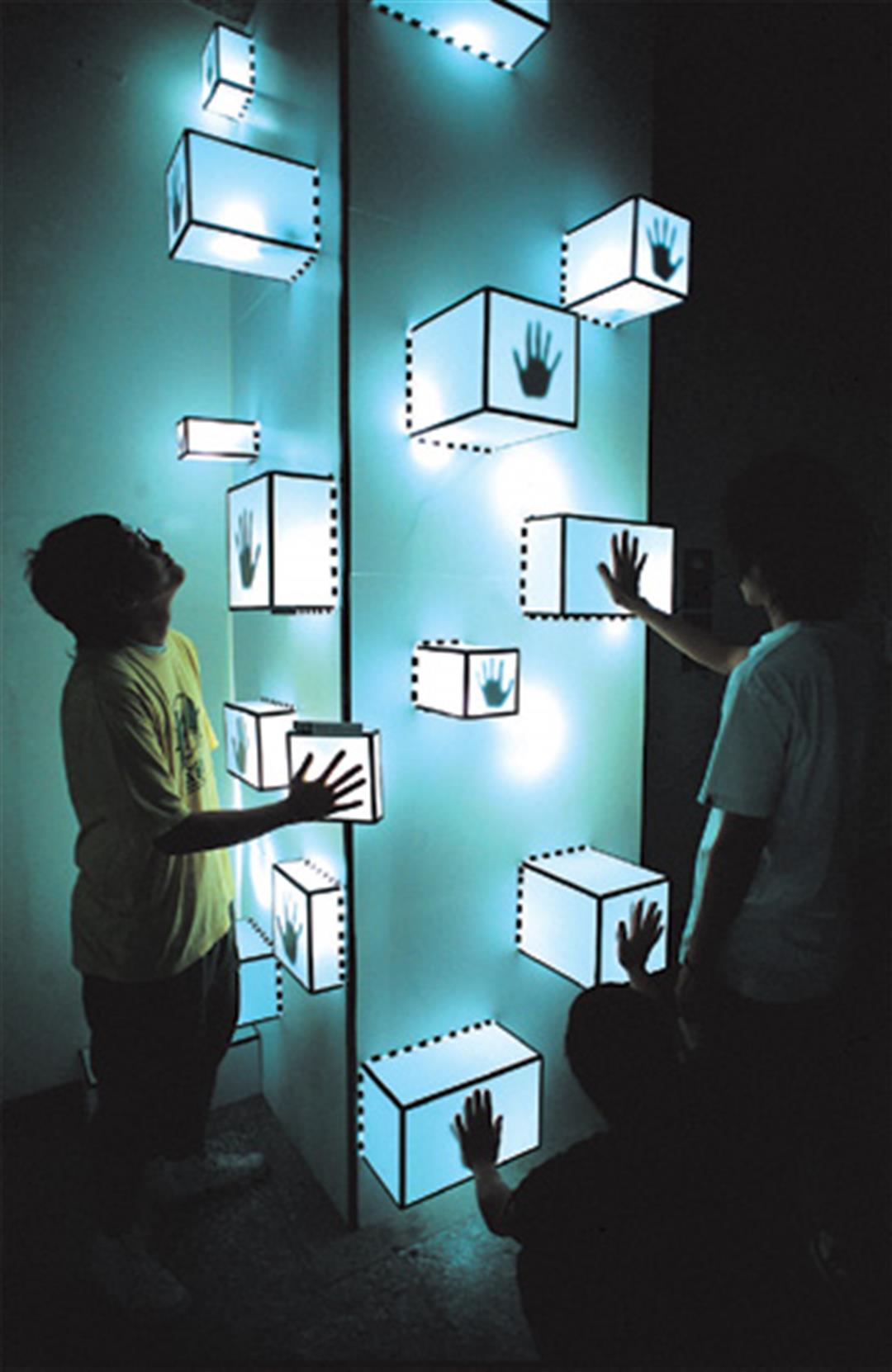
Innovative and mature works created by students studying industrial design at Shih Chien University made a splash at last year's SaloneSatellite furniture show in Milan.
Well-rounded
"If you want to be a designer, first be a well-rounded person." This is the college's core belief.
As Kuan Cheng-neng says, this may sound easy, but it's not: still suffering the residual effects of authoritarian thinking and collectivism, Taiwanese children grow up within very strict bounds. During their six years of junior high and high school, they are wrapped up in drab-colored uniforms, and must keep a low profile in terms of both appearance and behavior, lest they be singled out for attention by the disciplinary officers. This way of growing up is exactly the opposite of what is needed in design--bold individual style and a taste for the unusual and even bizarre. For Shih Chien faculty, just trying to get students to "loosen up" and "express themselves" is a major project.
The process of advancement through the education system by way of standardized exams also forces them into cookie-cutter molds. They are relentlessly forced to give up all outside interests and curiosity in anything that is not within the limited scope of the examination questions. But people who grow up this way are incomplete. Thus the College of Design encourages students to go back and pick up what they left off--to carry on playing piano, dancing, skateboarding.... Kuan relates that when he says this to students, they invariably ask, astonished, "Can I really?"

Innovative and mature works created by students studying industrial design at Shih Chien University made a splash at last year's SaloneSatellite furniture show in Milan.
Aesthetic experience
Moreover, the college also welcomes students from unrelated departments to join their classes.
"Creativity is the expression of an idea, and whether the idea is good or bad is not determined by the refinement of technique involved," explains Kuan. Naturally, execution is a critical step in design, but there are many internationally famous designers who owe their success not to their skills at digital manipulation, but to their understanding of literature or philosophy.
"You've got to have breadth as well as depth to stand out," opines Kuan. University education should be broadening, not narrowly specialized. Although universities need to stay in touch with society and industry, Kuan believes they should not just be for vocational training focused on one particular occupation.
"From 18 to 22 is a critical stage in life. Is it really right to focus everything on a job?" Kuan feels that in this period when youth is in full bloom, schools should implant an expansive outlook and basic abilities, which are the tools students will need to give them a real chance to succeed in society and industry, without having to worry about falling behind. "And when it comes to such concepts and skills, there is no real distinction between architecture, industrial design, interior design, and so on."

Innovative and mature works created by students studying industrial design at Shih Chien University made a splash at last year's SaloneSatellite furniture show in Milan.
Moss-free stones
Besides its stressing the need to think across disciplinary boundaries and its state of constant flux, the College of Design is also defined by industry-academic cooperation and international exchanges.
The headline feature at the college is exchange and friendly rivalry with sister schools like the Hong Kong University of Science and Technology, Donghua University in Shanghai and Tsinghua University in Beijing, and participating in competitions and exhibitions at home and abroad. Last year, for example, not only were the department and graduate institute of industrial design invited to a Milan furniture show, students were also taken to attend the Cologne furniture exhibition. Such events expose students to different ways of thinking and different cultures.
Given that other schools in Taiwan generally lack the ambition to participate in international competitions, Shih Chien's pioneering attitude is even more noteworthy. And results have been very positive.
For example, in recent years the department and graduate institute of industrial design have won 449 awards. Of these, 94 have been international prizes, including first prize for the Asian region in the 1994 Sony international design and innovation competition, the award for best product design at the 1996 CeBIT Australia computer show in Sydney, top prizes at Italian furniture design competitions in 1996 and 1997, and a bronze medal at the 2001 JDF International Design Competition Osaka.
While the prizes have certainly enhanced the reputation of the Shih Chien College of Design, Kuan Cheng-neng points out that the point of joining competitions is to put one's teaching methods and results to the test so that they can be reevaluated and improved. Awards are only a by-product.
As Kuan tells students, having made the choice to be designers, they cannot just lock themselves away and rely entirely on their own judgment. They have to air their ideas in public and measure their works against international standards to get feedback and new perspectives. Prizes are not in themselves the important thing.

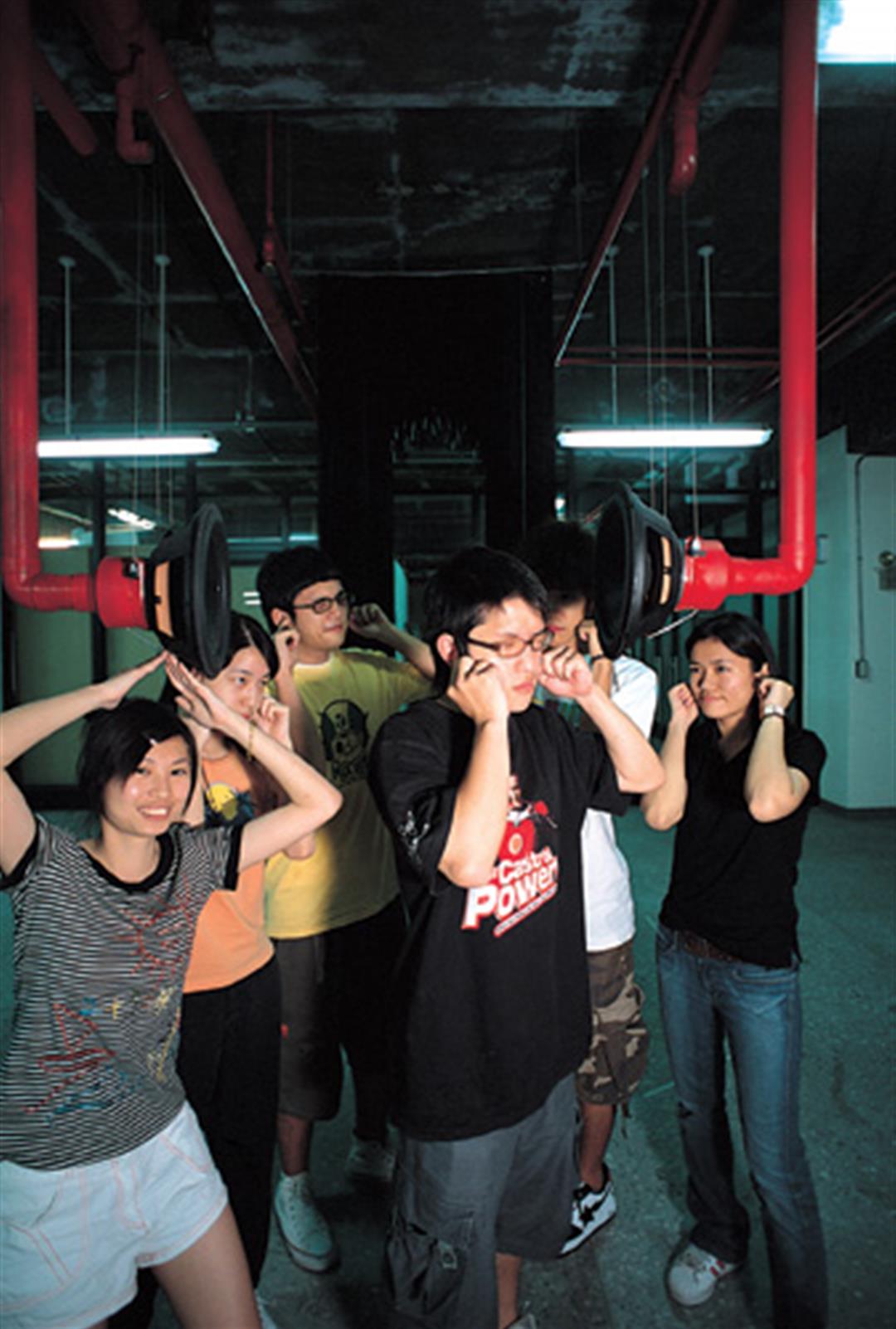
The College of Design at Shih Chien University encourages students to develop themselves as well-rounded individuals before thinking of themselves as "designers." The photo shows a student-designed audio project.
Not just drawing and painting
The last few years have seen rapid growth for creative and cultural industries in Taiwan, and all sectors of the economy are paying increasing attention to creativity and design. There has been a parallel shift in the status enjoyed by departments of design on the preference lists filled out by students taking university entrance exams.
In its days as a junior college for home economics, Shih Chien was dismissively called a "finishing school for future brides," and most of the students who studied fashion and design did so only because their scores were not high enough to test into the departments and schools they genuinely wanted. But today Shih Chien is a full-fledged university and a place in its school of design is much sought after. There are even some cases of students with very high exam scores who put the College of Design at the top of their preference lists.
Kuan Cheng-neng says it has long been common overseas for design to be a respected field. In the UK there is the Royal College of Art, while at highly rated Stanford University in the US, design serves as a platform to integrate the humanities, technology and commerce. In Taiwan, design used to be relegated to vocational schools. Now industry is beginning to take it more seriously, but still, from a certain point of view, this is only because people have realized it can be a moneyspinner. This bottom-line way of thinking remains different from the role played by design in other countries, where it is integrated into daily life.
In Taiwanese culture, there remain a lot of misunderstandings about design as an academic major.
Kuan says that a lot of parents think design just means drawing or painting, and they let their kids go into the department because the kids have always loved fine arts. Then there are parents who go by the "process of elimination." Their child is bad at math, English, science, and the humanities, so he or she might as well study design! On the other hand, if gifted children opt to study design, people are likely to say they are "wasting their talent" and that design is "not a serious profession."
Many parents are therefore amazed to find that after their children enter the College of Design, they end up coming home late every night and have to go into the workshop even on the weekends. It is not unusual for parents to think their children are instead up to no good: "Who do you think you are fooling?! This is Shih Chien we're talking about here!"
"It has always been difficult for us to explain or prove to society that design is a legitimate profession, and that it can also be 'the right thing,'" says Kuan Cheng-neng. As an illustration of what he means, Kuan points to the case of director Ang Lee. Lee's father, a middle-school principal, thought that his son's choice to study film in university was an embarrassment to the family. It was only after Lee had won numerous international awards that his dad finally understood that it was perfectly OK. But now that there are precedents like film director Ang Lee, Chang Yi (famous for Liuli Gong Fang glass arts), and Hsiao Ching-yang (well-known for album cover design), Kuan is convinced that people will be increasingly accepting of such choices.
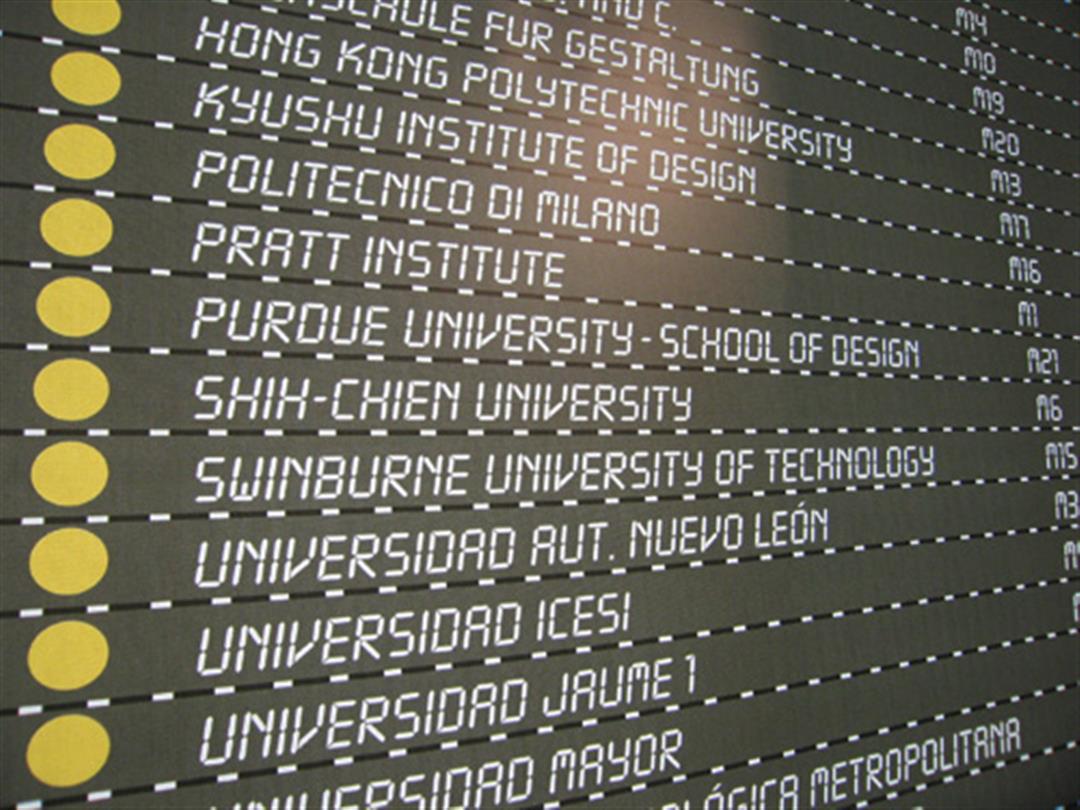
Innovative and mature works created by students studying industrial design at Shih Chien University made a splash at last year's SaloneSatellite furniture show in Milan.

The creative habit
Attracting top people into this field is the key to raising Taiwan's creative design capability, which is in turn critical to industrial upgrading.
Of course, one might first ask: Does creativity require inborn talent? Are only the naturally gifted likely to find creative work rewarding and interesting? Or can people develop talent through taking an interest? These are much-debated questions in the field. And their insolubility is made even more prominent by a system in which university positions are allocated on the basis of scores on standardized exams.
Kuan argues that "everyone probably has the ability, it's just a question of whether it is developed or not." Rather than seeing creativity as a gift of the gods, it is better to see it as a kind of habit or mindset. But if you want the seeds of creativity to bud, a lot depends on the "nurture" provided by the environment.
By offering such an environment and nourishment, Shih Chien University's College of Design is raising a new generation imbued with creativity, thereby enhancing Taiwan's beauty and competitiveness.

Innovative and mature works created by students studying industrial design at Shih Chien University made a splash at last year's SaloneSatellite furniture show in Milan.


Innovative and mature works created by students studying industrial design at Shih Chien University made a splash at last year's SaloneSatellite furniture show in Milan.
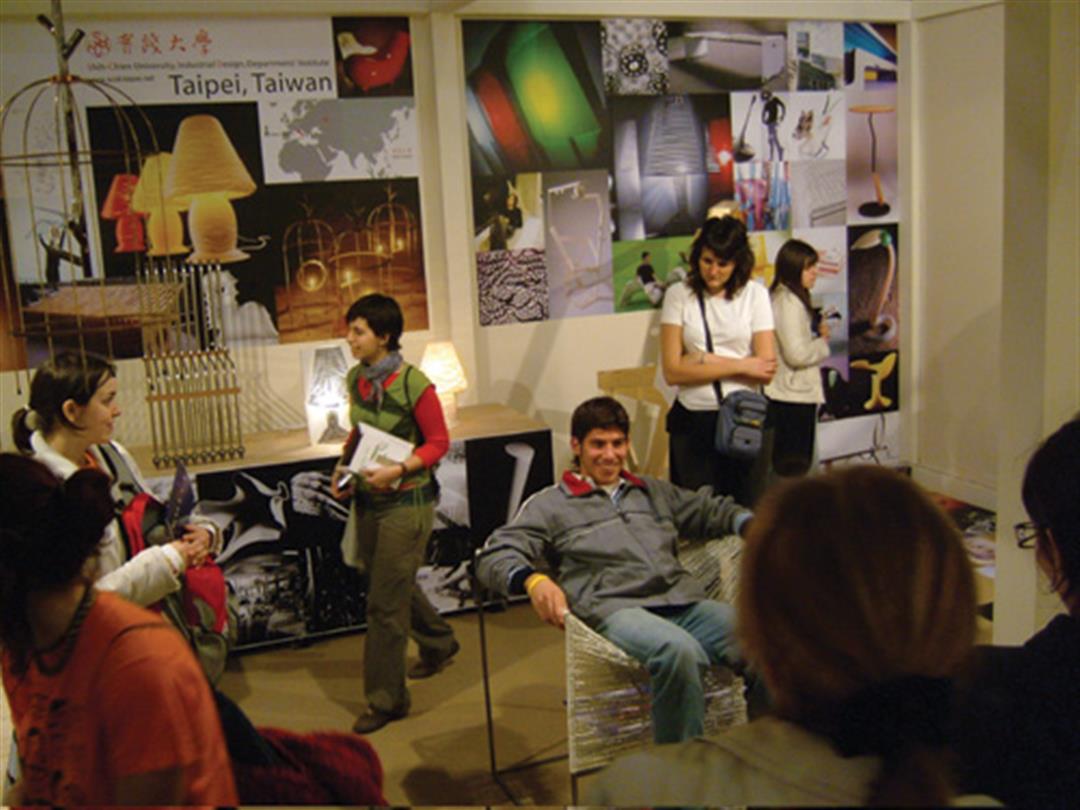
Design is not separate from daily life, nor is it limited to furniture or architecture. Only by keeping an open mind and learning a broad variety of things can one ultimately stand out from the crowd.

Innovative and mature works created by students studying industrial design at Shih Chien University made a splash at last year's SaloneSatellite furniture show in Milan.