The "Taiwan Old Fogeys" of Zhoushan
Ventine Tsai / photos Hsueh Chi-kuang / tr. by Phil Newell
May 1995


On Yadanshan Pier in Zhoushan, you can often see taxis carrying old veterans from Taiwan driving off the ferry from Ningpo. Many of them are just back to visit friends and relatives, but a good number have settled down in Zhoushan for good. In fact, Zhoushan City has more permanently returned veterans from Taiwan than any other city in China. And it has an especially great number of tragic stories of marriages divided by the Taiwan Straits.
"Sure, there are a lot of old fogeys from Taiwan in Zhoushan. Too bad my wife and I aren't related to any of them, otherwise we'd be rich. You can always tell those old guys from Taiwan. They eat well, and look healthy, and they speak with an accent," says a taxi driver at Yadanshan Pier. It's clear that he truly doesn't know any "old fogeys from Taiwan," because then he would know that they are not, as he imagines, loaded with crates of gold and jewels.
But he is not the only one with this misconception. Some old soldiers who had been living back in Zhoushan for many years say: "When we first went to the market and just bought a small fish, the vendor would laugh and ask, 'How come guys from Taiwan are eating like poor men?' It was only after a long while that they stopped calling us 'Taiwan boss-men,' and started calling us 'the old guys from Taiwan.'"
Sometimes the neighbors will be chatting and joke, "I wish it were me that was grabbed back then." When they hear something like this, the old soldiers, who pined day and night in Taiwan to return to their hometowns, can only give a sour smile by way of reply.
According to the Taiwan Affairs Office of the Zhoushan City Government, since 1979, 988 old soldiers from Taiwan have returned to take up residence in Zhoushan. Why are there so many old veterans here? The answer lies in the tragedy of their times.
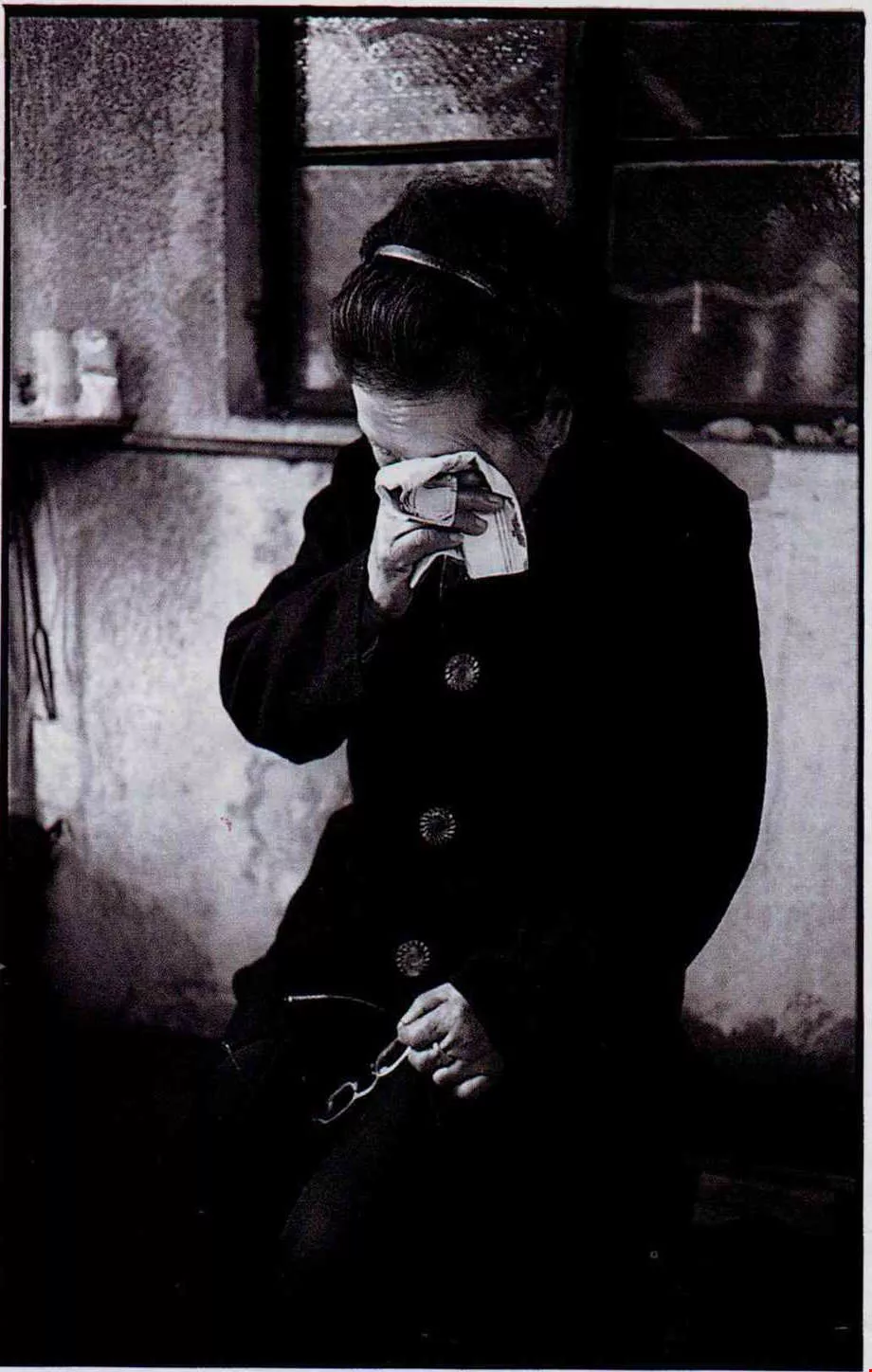
A long separation, a lifetime of waiting. To meet again, but to remain apart in their old age. The era tragically destroyed many marriages, but who is there to complain to today?
The VIPs were all here
The Zhoushan Islands are located at the mouth of Hangzhou Bay off Zhejiang Province in mainland China. They are rich in marine life. They are an important fishing ground for China, and they lead the nation in size of catch. Ninety-eight of the 1,339 islands in the chain are inhabited, while the remainder are tiny deserted islets. The total population is 980,000. Zhoushan Island itself is China's fourth largest island. Zhoushan City is famed for its yellow croaker fish and its plums. The islands provide natural defenses for one another, and the whole chain is strategically important. It is for this reason that it was one of the last positions held by the Nationalist army in mainland China as it retreated to Taiwan.
In 1949, after the Nationalist armies' defense of the Chang Jiang (Yangtse River) collapsed, the Nationalists abandoned Shanghai and Ningpo. Leading figures from the ROC government, including Chiang Kai-shek, Chiang Ching-kuo, and Chiang Wei-kuo, all stopped over in Zhoushan. On May 15, 1950, Chiang Kai-shek personally ordered all the forces in Zhoushan to pull back to Taiwan. In the course of the retreat, many Zhoushan civilians were forcibly conscripted and taken to Taiwan.
According to documents from that time, 13,500 people were recorded as being taken to Taiwan. "In our neighborhood there were less than 100 households, yet more than 50 men were taken away by force. The husbands of all three of my sisters were carried off to Taiwan. It was very cruel," recalls Wang Changgen, who now lives in Ma'ao Village on Zhoushan Island. After the Nationalist armies had left, Zhoushan became an island of widows. "People used to say that if you wanted to find a wife, there were plenty of women in Zhoushan," says Wang, whose wife was four months pregnant when he was carried off to Taiwan.
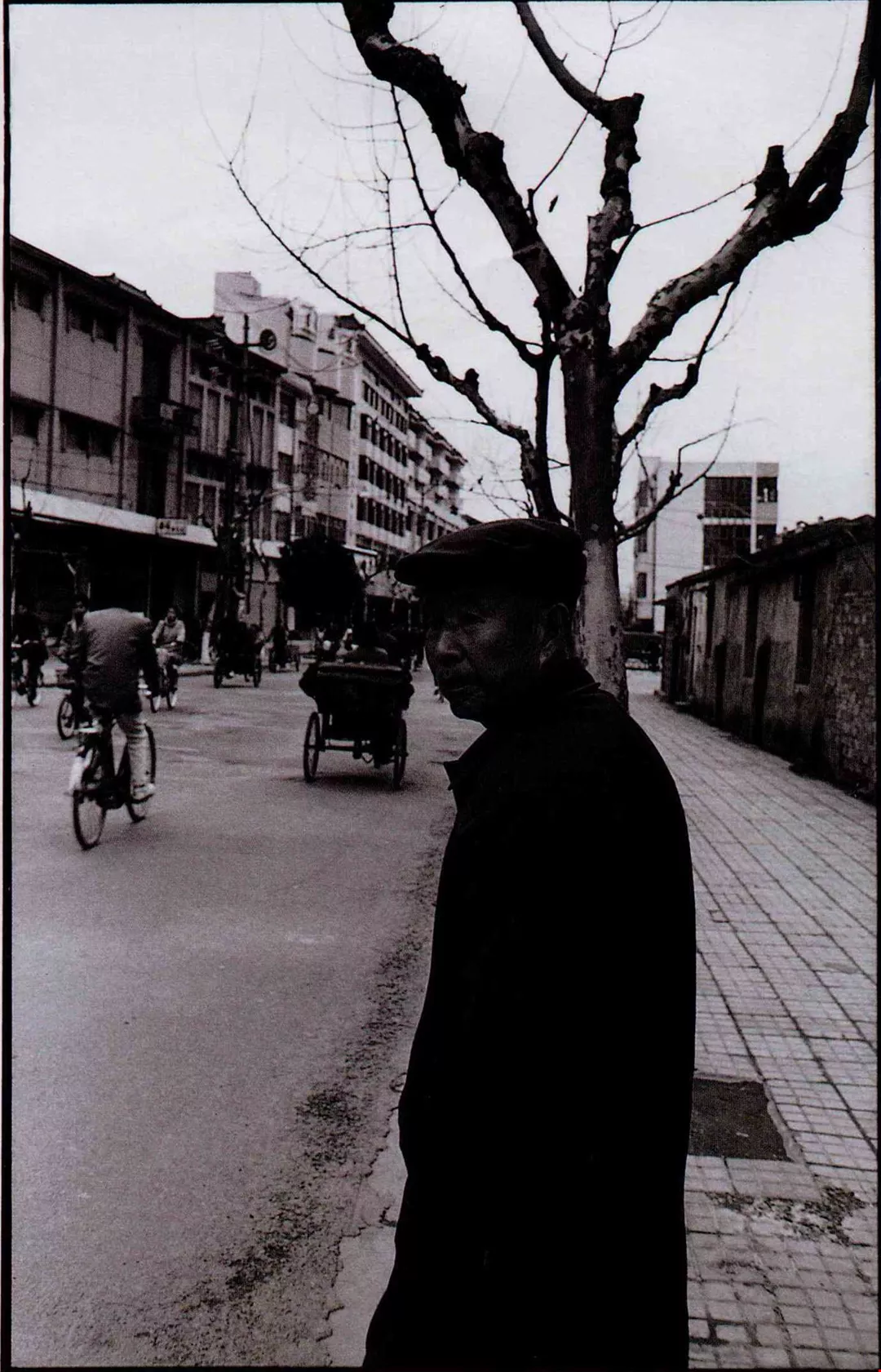
Leaving home so young and returning so aged Though they have the same local accent The young ones do not recognize them And ask with a smile where they come from.
Give me back my wife
From the time of the retreat in 1950 to the permitting of visits from Taiwan to mainland China in 1987, these old soldiers were separated from their wives and children for nearly 40 years. Faced with the reality of waiting without knowing when their waiting would end, most women in Zhoushan remarried. Similarly, many of the Zhoushan men then in Taiwan erased the "married" indication from their identity cards and found new partners, raising families and setting down roots.
But some old soldiers waited in the hope the mainland would be retaken by Nationalist forces, after which they could reunite with their wives. Most of the men who have returned and taken up residence in Zhoushan are single old men in this category. However, after a separation of 40 years, though their children may still call them "Father," their wives are not necessarily able or willing to return to their sides and live out their lives with these old soldiers. The 40-year-old distance between them by no means can end just because the husband has returned to his hometown.
"When these old veterans return home, they tell us they want their wives back," says Yu Changfeng, director of Taiwan Affairs for the Zhoushan City Government. Currently the mainland approach to the problem is to acknowledge that if the woman has remarried, even if she has no legal marriage certificate with her second husband, they have the fact of 40 years of life together as husband and wife. However, if the husband on the mainland has already passed away, or the wife has divorced the mainland husband, then the woman can return to the Taiwan husband. However, the couple must again go through a marriage procedure. Otherwise, the Taiwan husband has no legal right to demand that his wife return to him.
Thus in some cases the return of the former husband is a happy event, in others traumatic. Some men have gone back and held boisterous nuptials with the same woman they wed 40 years before. Some leave quietly disillusioned, unwilling to disturb their former wives' current families. Some file lawsuits and insist on getting their wives back. Some are angry and seek to disgrace their former wives by legally disavowing the original marriage. Others come back and only mention that they have bought a house in Taiwan, leaving out the fact that they have remarried.
Some mainland women stay with their current husbands, but agree to be buried next to their original husbands. Some, hoping to get their hands on some of the relative wealth of those from Taiwan, drop good-for-nothing second husbands and go back to the first. Some women can't bring themselves to choose and take care of both husbands.
Some older veterans whose wives have remarried find a new partner in their hometowns. Approximately 65% of those who have returned from Taiwan to settle in Zhoushan live with a wife. Of these cases, 13% found new wives after returning to the old hometown.
Like a dream
One mainland wife whose husband remarried in Taiwan says, "When there was no word at all, life was peaceful. It was only after seeing so many husbands coming back one after the other that I felt that life was really difficult. But when you think about it, he couldn't have taken care of himself in Taiwan, so I really should thank his Taiwan wife for taking care of him for so long. I can understand his situation."
These couples are like mating birds in the forest forced apart by some natural disaster. The old soldiers from Zhoushan didn't leave of their own accord. That era imposed misfortune on so many people, so who has the heart today to go around finding fault and deciding who is right and who is wrong? The only way for the pain of that generation to be put behind them is for everyone to be like that mainland wife, and say "I can understand. . ."
[Picture Caption]
p.84
There are nearly 1000 "old fogeys from taiwan" scattered around in the new apartment blocks in Zhoushan.
p.86
A long separation, a lifetime of waiting. To meet again, but to remain apart in their old age. The era tragically destroyed many marriages, but who is there to complain to today?
p.87
Leaving home so young and returning so aged Though they have the same local accent The young ones do not recognize them And ask with a smile where they come from


@List.jpg?w=522&h=410&mode=crop&format=webp&quality=80)


@List.jpg?w=522&h=410&mode=crop&format=webp&quality=80)
