Privately Run Public Schools--An Alternative Answer to Elementary Schooling
Tsai Wen-ting / photos Chuang Kung-ju / tr. by Christopher J. Findler
July 2006
In recent years, parents of over 24,000 students in central Taiwan have been sending their elementary-school-age children off to buxiban (cram schools) to help them obtain "gifted student" status, hoping against hope that their little tykes can make it into schools that accept less than 1% of applicants. It seems that the "objectionable practice" of separating junior-high-school students according to ability has once again raised its ugly head.
After more than a decade of educational reforms, a process marked by potholes and incessant controversy, most parents still view grades as the all-important gauge of education. Educators and parents unwilling to goose-step to the latest mainstream whims, however, have established experimental elementary schools, including Forest Primary School and Seed's Primary School in the north, and Miaopu Montessori School and Sarkar School in central and southern Taiwan. The majority of parents, however, find the NT$100,000-plus-per-year price tags for tuition prohibitive.
Five years ago, privately run, publicly owned elementary schools, including Ci-Xing Waldorf School, Humanities Primary School, and Da-Pin Elementary School, appeared in Ilan and Hsinchu Counties. These schools incorporate the best of both worlds--public resources and educational concepts of the private sector. These "alternative elementary schools" have abandoned punishment (both corporal and verbal), textbooks, and report cards and taken up the banner of autonomous study. They have launched a silent education revolution that offers students and parents an alternative choice.
As a southpaw, first-grader Hsiao-pei's writing differed from that of his classmates. He used different stroke order than right-handers normally would, skewing his script. His teacher demanded that he write with his right hand and wrote C-minuses on his homework in big, red letters. To escape the paddle, Hsiao-pei would run away with his teacher in hot pursuit. His annoyed teacher would call out, "You really are bingshang, bingxia"--A play on words in Hakka, meaning a "C-plus, C-minus" student and alternatively "run here and there."
Hsiao-pei's elder sister is an exemplary pupil in school and his father a feng shui master. Hsiao-pei's father couldn't help but ask himself, "Is attractive handwriting really all that important? Kids are all different." He observes, "Not everybody has to grow up to be president!" For Hsiao-pei's sake, he transferred him, his older sister and his younger brother to Hsinchu County's Da-Pin Elementary School, which is run by the Arco Foundation.
Hsiao-ting is another victim of "school trauma syndrome." She just transferred to Da-Pin from Hsinchu City this past year and still trembles when she recalls her old teacher. "She would spank us. She would hit us with our textbooks and pinch our necks."

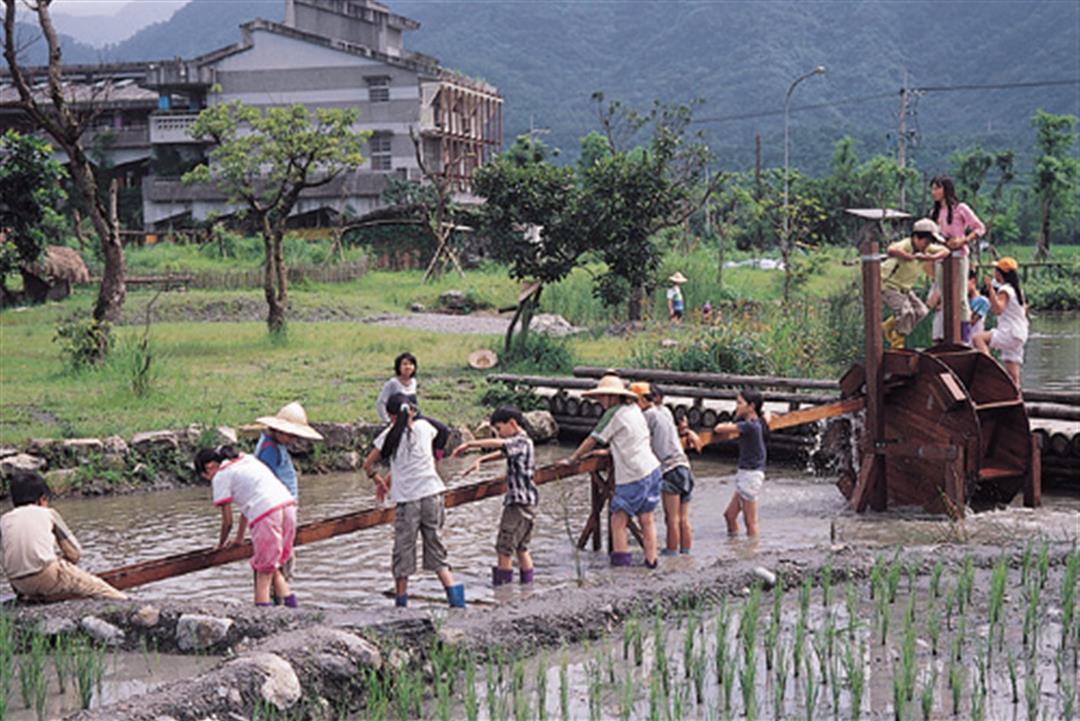
Sporting rain boots and traditional bamboo leaf conical hats, Ci-Xing Waldorf kids are taking farming class.
Escaping, or making a choice?
Like Hsiao-pei and Hsiao-ting, many children have chosen to study here, because in regular schools, students are raked over the coals and/or physically disciplined at the drop of a hat, while alternative elementary schools like Da-Pin deal with students without resorting to punishing them. These institutions are more open and flexible in regard to educational ideals and have become virtual havens for these children who have, in turn, spread the good news about them to others.
The goal of inclusive education, which has been around for years, is to allow children with special needs to study alongside other students of the same age. When obliged to deal with more than 30 students, however, teachers are generally more concerned with establishing rules and maintaining order than trying to accommodate the individual needs of special children. What's more, Special Education 101 is not nearly enough to equip them to identify students with special needs. Many teachers maintain that children who find it difficult to comply with the rules or to finish their homework on time have been "spoiled by their parents" and can be "disciplined into shape." Teachers of this sort are the source of untold frustration for children with special needs and their parents.
The angry, repressed, frustrated kids that "flee" to alternative schools come weighed down with bags packed with anything from emotional and learning disorders to hyperactivity or Asperger syndrome. Alternative schools see more of these students than regular schools, averaging two or three of them per class.
Teachers at Da-Pin Elementary School have an agreement with hyperactive kids: when they feel they can't take it any more, that they are about to have an "attack," just drop a hint to let their teacher know, then quietly leave the classroom. After they've managed to calm down, they can come back in.

Education for the gifted
While their children's difficulties in adapting to regular schools are the reason some of the parents have renounced prominent schools that are the envy of most and are willing to travel long distances to alternative schools, even more parents made up their minds from the start to give their children the opportunity to attend what in their minds are ideal schools.
"My husband and I were outstanding students. We can appreciate from experience what it's like to be part of a system that holds up tests as the be-all and end-all of education. As a result, we missed out on so many important things," sighs Da-Pin parent Liu Man-hsiu. She and her husband understand what it is like to be students "inside the system"--devoid of passion for their studies and not knowing where their own interests really lie. Her husband is involved in nanotechnology research and she is a writer.
"Each child is important and should be provided an education geared to his or her individual needs." This the motto of Humanities Primary School, another privately run public school located in Toucheng, Ilan County that has attracted many Taipei parents.
Two years ago, Lin Yi-ling, one-time head of the Minsheng Community Book Club, led a group of neighborhood parents on seven visits to Humanities Primary School. After the South Asian tsunami in December 2004, she was highly impressed when a teacher of natural sciences at Humanities explained to students how these phenomena form and showed students on a globe in class just how large an area was affected by the disaster. In art class, children made cards to express their condolences to disaster victims and teachers took students directly out into the streets to raise money for victims.
"The kids at Humanities are aware of what is happening around the rest of the world!" exclaims Lin. "This really is 'education for the gifted.'"
Alternative elementary schools have been around in Taiwan for 16 years, the earliest being Forest Primary School in Hsichih, Taipei County and Seed's Primary School in Wulai, in which groups of parents and teachers worked together to create an educational Shangri-la of sorts. Others would soon follow: Hsinchu County's Arco Elementary School (now merged with Da-Pin Elementary), Sarkar School in Tainan County, Ci-Xing Waldorf in Taichung County, Changhua's Miaopu Montessori School, and Kaohsiung County's Ta-Ching Primary and Secondary Class Experiment on Inclusive Education (currently closed).
The cost of running small privately operated schools is exorbitant. The director and parents spend a great deal of energy to raise funds and with tuition ringing in at more than NT$100,000 per year, these schools seem to be in danger of becoming just another kind of "school for the upper crust," as they remain out of the financial reach of most parents.

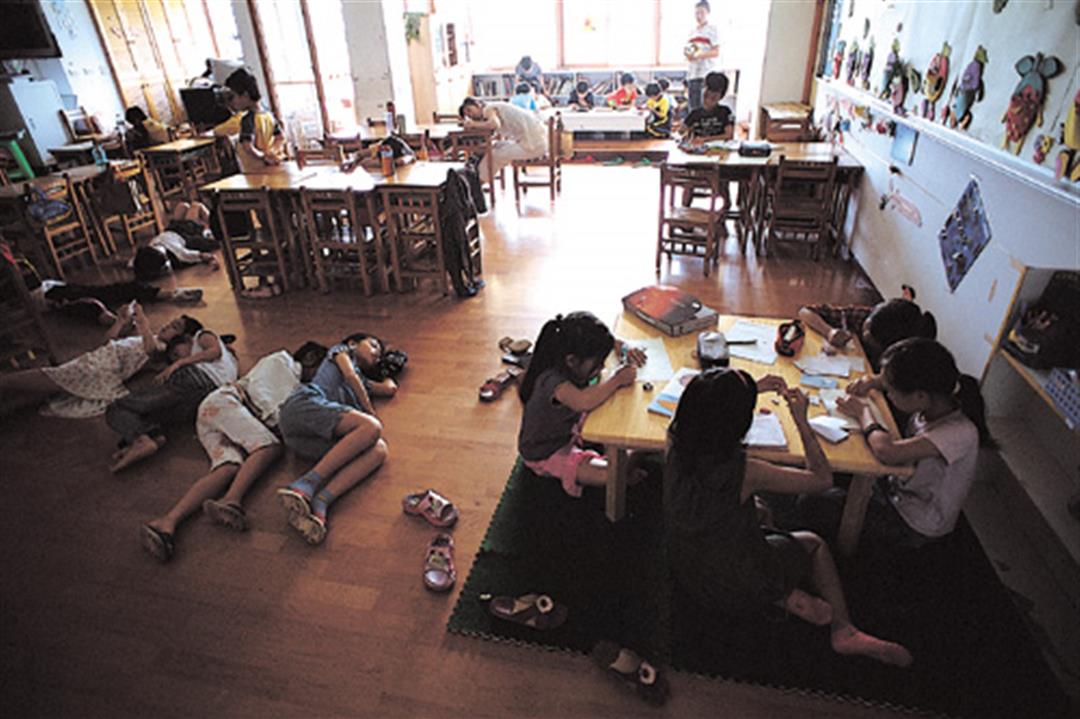
During the noontime break, kids at Humanities Primary School lie down and rest or read quietly. They are not required to comply en masse to unbending rules; rather, they can decide for themselves when they rest based on their own needs.
Working with the system
The original intent of programs introduced since the seminal education reform demonstration of 10 April 1994, including the nine-year integrated curriculum and the diversified entrance criteria, was to introduce diversity into public school education. Unfortunately, faced with a single-mindedly achievement-oriented education system that continues to place tests and getting into the best schools above everything else, diversified education has amounted to little more than "diversified testing." Furthermore, because the public education system has been ossified for a long time, asking teachers to forsake instruction methods they are accustomed and to work with others to create an integrated teaching approach is no easy matter and has resulted in chaos stemming from the clash of old and new ideas.
In order to promote the development of diversified education, the Fundamental Law for Education, passed in 1999, opened up the way for the private management of public schools, while assigning the task of formulating relevant measures to local governments. This has given the private sector greater scope to establish schools.
Li Ya-ching, who founded Seed's Primary School in 1999, pioneered the idea of incorporating alternative schools into the existing education system with the establishment of the self-study-oriented Forest Experimental Class in Taipei City's Peicheng Junior High School. The curriculum was divided into three parts--required, optional, and autonomous study. The curriculum for the required study portion of this "system within a system" experiment was completed in 2001, but due to the city government's unwillingness to continue subsidizing it, the entire project will be put on hold this year.
The first truly privately run public school was established in 2002 by Ilan County's Bureau of Education after it promulgated the Regulations Governing the Private Management of Public Primary and Secondary Schools in Ilan County and solicited interested parties from the private sector to repoen and operate two closed elementary schools. Whereupon, Ci-Xing Waldorf School in Tungshan Township, which started out as a home schooling program, and Humanities Primary School in Toucheng, became the first privately managed public schools in Taiwan.
The term "privately managed public school" means that the government provides the school grounds, buildings and other tangible assets, and the standard funding that any public school receives, while the educational concepts and curriculum are designed and implemented by the private organization that operates the school. Arco, the private elementary school founded by music professor Sun Te-chen of National Hsinchu University of Education, merged with Hsinchu County's Da-Pin Elementary in 2003 to become Taiwan's third privately run public primary school.

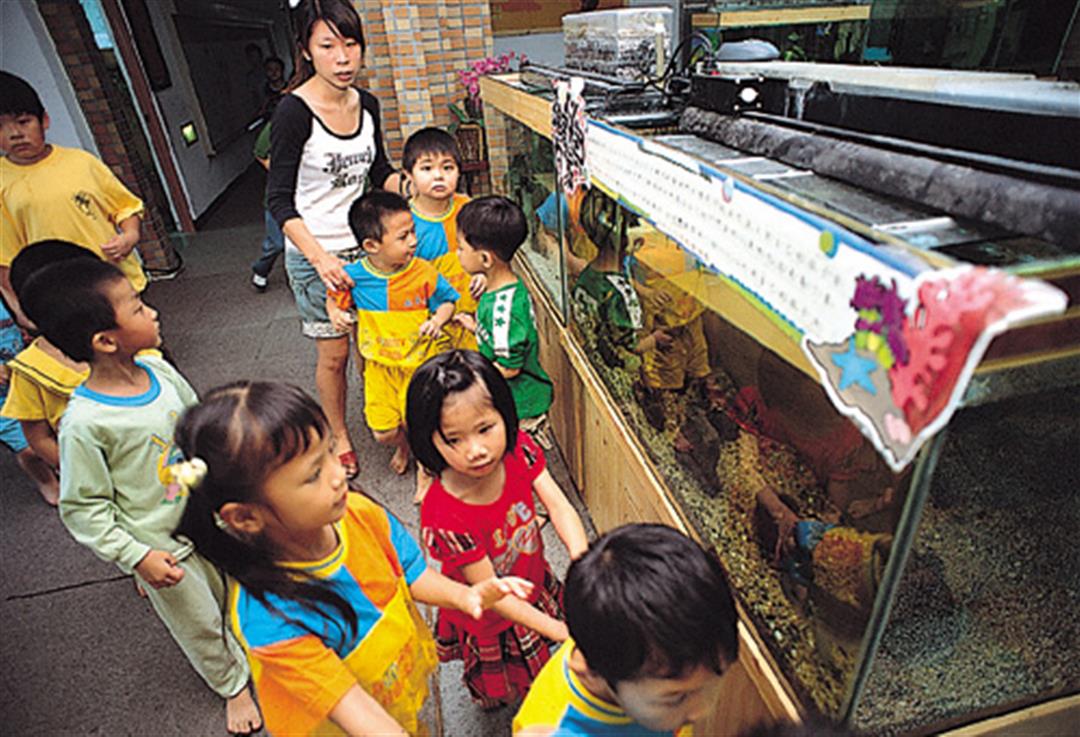
Humanities Primary's colorful "Fish Museum" stops many visiting kindergarteners in their tracks.
Educational Utopia?
Privately managed public schools are naturally subject to government rules in terms of administration, documentation, and qualifications. For example, it doesn't matter how many letters follow a teacher's name, if they haven't taken the required education courses in university, they can only be hired as a substitute teacher.
Municipal and county governments are responsible for formulating the regulations for privately managed public schools, some of which aren't all that appropriate. After Hsinchu County's Arco and Da-Pin Elementary Schools merged, for example, Arco's original founder became the program coordinator and the principal was designated by the government. The loss of their core leader was, for a time, a cause for concern for many teachers and parents.
All three may be privately run public elementary schools, but they are operated based on different ideas. The educational concepts of Ci-Xing Waldorf, for instance, are based on 20th-century German psychologist Dr. Rudolf Steiner's "anthroposophy." As such, each curriculum is developed around the special characteristics of the particular age group and everything possible is done to ensure that the sensitive "feelings" of each child aren't bruised.
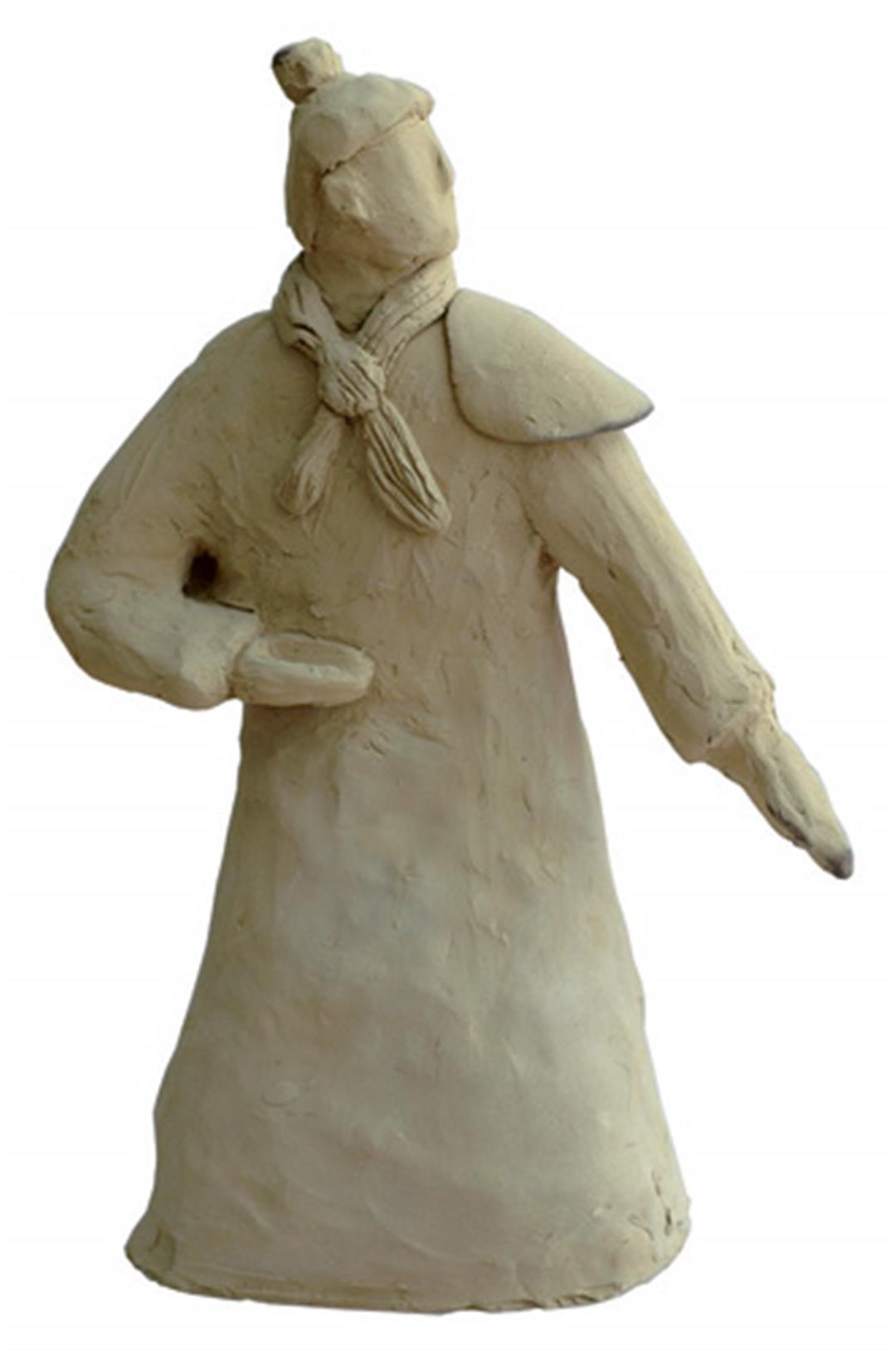
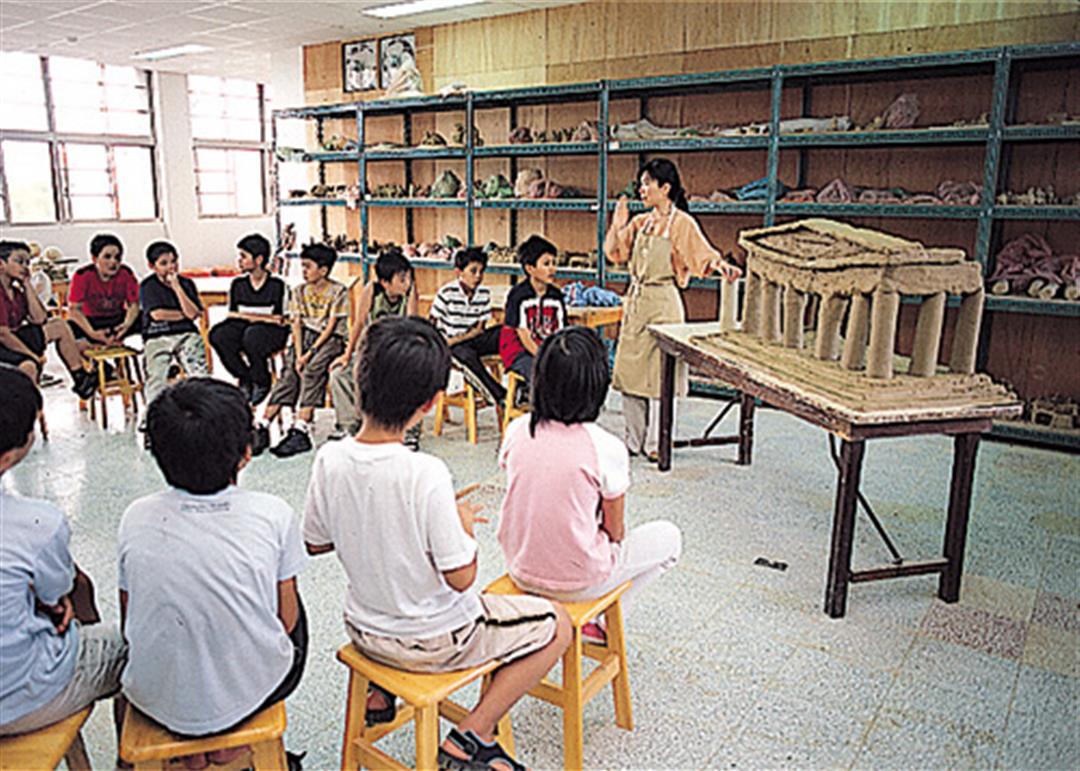
For example, the theme of the curriculum for sixth graders, who are in that stage of life just before they undergo dramatic physical and mental changes, revolves around darkness and metamorphosis. Language courses cover the Dark Ages in Europe and the expansion of China following unification under the Qin and Han Dynasties. Students learn to make terracotta warriors in pottery class and study unknown factors in mathematics. The theme of psychological change weaves a common thread through all of their courses.
To shield the children from undesirable influences, before children are admitted into the school, parents are required to sign a "parental agreement," stating that they will do their best to do such things as feed their kids organic foods and make TV and computers off limits to them.

Publicly owned, privately operated alternative elementary schools face the future armed with their own ideas as they strive to create an autonomous-study paradise from within the system.
Museum-cum-academy
In contrast to Ci-Xing Waldorf, which strives to provide an environment marked by innocence and gentleness, Humanities Primary School, which is a part of the education system associated with Fo Guang Shan Monastery, is a virtual "museum academy," emphasizing diversity and openness, and chock-full of all manner of surprises.
When you enter the school auditorium, you will see free reading material you can take home on one side and a fish exhibit on the other. In the professionally designed culture and art corridor are exhibited works by artists both inside and outside the school. Next to that are two long walls on which kids can doodle to their hearts' delight. The only rule is "respect others"--no altering or erasing scrawlings made by others.
Humanities assigns a cross-cut of the student population to each class, recognizing that each student is different and allowing each to develop in accordance with their individual aptitude. In core classes, like Chinese, math, English, and natural sciences, pupils are divided into classes based on their personal learning styles, which are determined by individual abilities, academic preferences, and love of challenge. Furthermore, students are free to decide, based on their own progress, when they are to take their "finals." The afternoons are set aside for "family time," when students from the second to sixth grades get together in school clubs of sorts. Instructors serve as homeroom teachers, and as "family teachers," and are divided into groups of teachers according to area of expertise to design curriculum.
"This is an organic school. Instructors continually support each other, so a spirit of teamwork is crucial," Humanities Primary School principal Yang Wen-kuei explains. During the school's first couple of years, the staff kept at it well into the night every night.

Students more alive
You won't find the stacks of textbooks, reference books, and assessment materials found in regular schools. None of these three alternative elementary schools uses off-the-shelf course books. This animated teaching requires more cooperation and brainstorming among teachers to design curriculum.
"Teachers that want to stay on at Ci-Xing Waldorf have to have the right attitude toward their work," Kuo Chao-ching asserts. "Pumping life into students is our biggest challenge." It's no wonder that almost all alternative elementary schools experience early periods of flux, when it is difficult to hold onto instructors, before they finally start settling down.
With that in mind, in addition to sitting written and oral exams, teachers applying for positions at Humanities Primary School are tested on their ability to work and teach in teams.
"These testing methods are what initially drew me," points out Humanities first grade teacher Wang Mei-hung. Wang says that she designed a lot of fun and educational lesson plans when working within the system as a substitute teacher for eight years in large elementary schools in Taipei County. But she not only had a difficult time finding others willing to work with her, teachers gently chided her--"Don't go overboard. Don't make life more miserable for the rest of us."
Now, Wang can finally take her first graders to traditional fruit stands and supermarkets to educate them about fruits and vegetables. After they learn what the various fruits look and smell like and how much they cost, they get practical experience in addition and subtraction when they purchase their favorite fruits with the NT$50 that she issues to each group of tykes. Back at school, they use the fruit to create pieces of mosaic art. Wang's lesson plan was chosen as Ilan County's entry for the national Annual Teaching Excellence Award.

Controversy over education has been ongoing for the past ten-odd years, but from the confidence that shows in the eyes of the children that go to alternative elementary schools within the system, it seems that the education system has received a new lease on life.
Having it both ways
After bringing their children way out to one of these schools, some parents leave disappointed. Some take their kids to other alternative schools, while others inject them back into the mainstream.
"Ci-Xing Waldorf offers a diversified education and has its own overall take on what an ideal education should consist of. There is no way that it can conform to each and every parent's idea of what 'alternative' means." Kuo Chao-ching explains, "Schools like Summerhill in the UK, or Forest Elementary, more often than not shape most people's thinking of what alternative schools should be like. They assume that every alternative elementary school stresses openness and gives children plenty of room to be independent.
"It might scare a lot of parents away to say so, but Ci-Xing Waldorf instructors are very 'authoritarian,'" notes Kuo. Ci-Xing teachers encourage friendly relations with children, but a line determined by ethics divides teachers and students. Teachers are guides, not "pals" on equal standing with the kids. The Waldorf ethos emphasizes respect for others. That means no sleeping in class, no feet on desks, no "I don't wanna go to class."
Many parents aren't satisfied with schools within the system, but when asked how they would define an "ideal" school, they are generally at a loss as how to answer. Tang Kuang-hua, a parent dedicated to Seed's Primary School and autonomous study for a number of years explained at an alternative education symposium, "Being overly idealistic is also a problem."
Many parents vacillate, wanting the happiness of autonomous study offered by alternative schools for their children, yet also using the standards of the mainstream education system to assess children's performance.
The lack of "somewhere to go next" has caused a number of parents to transfer their children out of alternative schools. Hsinchu County's Da-Pin Elementary School, for example, has no secondary school, forcing reluctant parents to send their fifth and sixth-graders back to mainstream schools to give them a chance to adapt before it's too late. Ci-Xing Waldorf, which began accepting seventh-grade students last year after opening Taiwan's first alternative middle school, and Humanities, which will be opening its own middle school this summer, have helped take a load off of parents' minds. Both are now actively applying to set up alternative high schools.

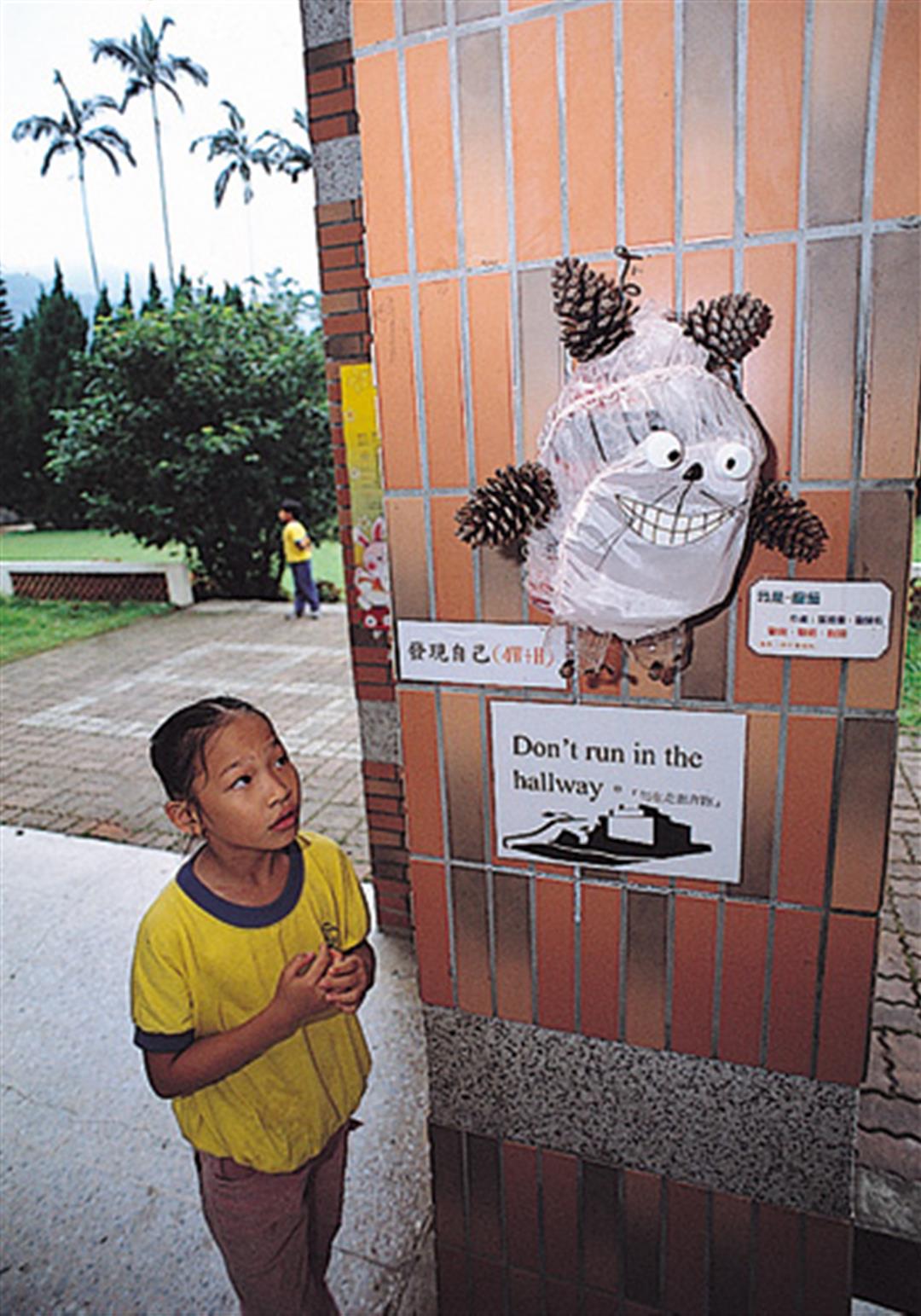
Given the theme "discover/invent, students at Da-Pin Elementary School use everyday items like pine cones and a bathing cap to make an adorable Totoro.
Silent educational reforms
For the past ten-plus years, system schools have undergone one reform after another. At a time when they are finding it difficult to realize diversified, well-rounded education provided by teachers working in teams, three alternative privately run public elementary schools have been trying out their wings and gradually maturing. They have won over both parents and students and not only are they filling classrooms every year, many students have to wait in line to get in.
"As I see it, these alternative schools are carrying out silent educational reforms from the bottom up," observes Tang Kuang-hua. Only three privately managed public schools of this sort exist in Taiwan, but they are serving to stimulate and set an example for the public school system. Perhaps the spring of educational reforms will sprout from the independent and happy classes of these alternative school students and spread.

Ci-Xing Waldorf School, Ilan County
A special beginning: Morning time
As soon as students come to the school, they are encouraged to take a walk around the campus and come into contact with nature to gradually wake up their bodies. Teachers shake hands with them one at a time as they enter their classrooms at 8:30 a.m. to try and determine their physical and mental state that day. Led by teachers, children learn to listen and share during morning time. Then, students relay sandbags to the beat of music and singing to encourage them to become one. They increase their speed as they focus their energies in preparation for another wonderful day.
Environment: Wooden floors, pastel-colored classrooms, hand-dyed curtains, and an altar-like "season table" used to present seasonal decorations. Materials used for arts and crafts are all-natural and students are fed organic foods and beverages.
Curriculum: Major courses are taught along a major theme for three weeks, every morning from 8:20 to 10:00. This enables students to gradually come in contact with subjects and learn them in depth, and gives them enough time to process them. Second-grade students, for example, create pottery ducks. Everything from kneading the clay, pinching it into balls, and making oval-shaped duck bodies, to smoothing the surface of the bodies requires four 45-minute classes.
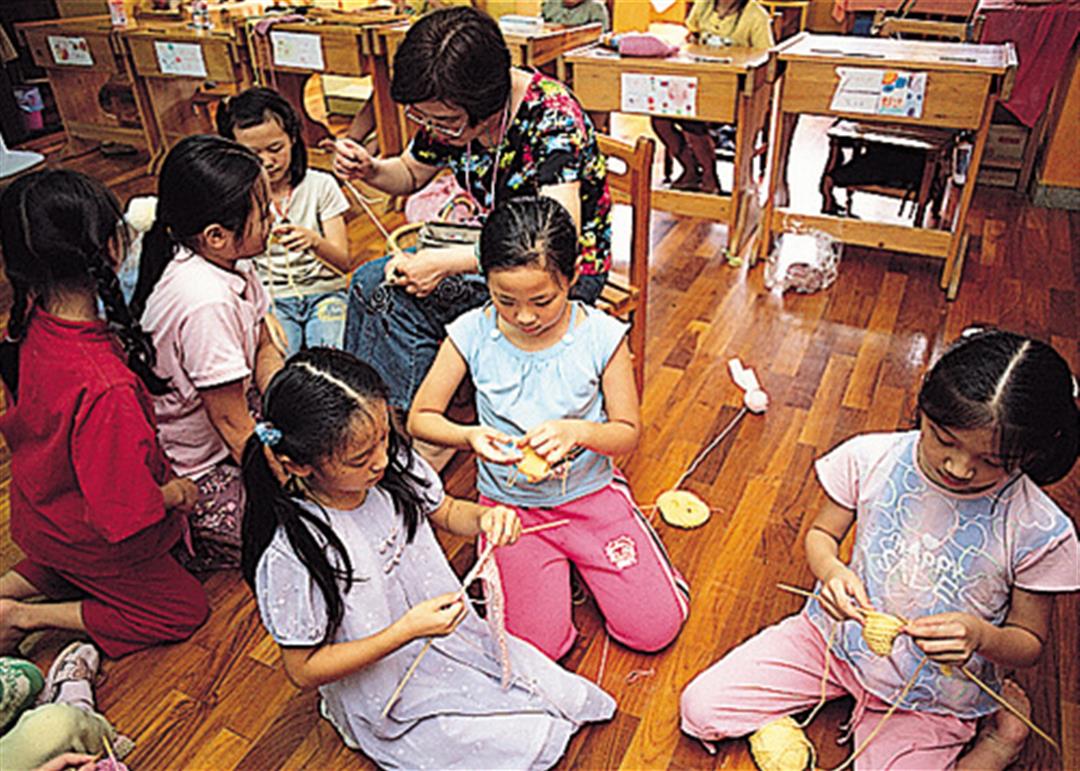
Special courses: Weaving, pottery, woodworking, farming, architecture, and form drawing.
Semester: Four terms per year corresponding to the four seasons.
Student numbers: 300 students in 12 classes, including seventh graders (first year of middle school).
Address: 257 Chao-an Road, Hsianghe Village, Tungshan Township, Ilan County
Tel.: (03) 9596222
Website: www.waldorf.ilc.edu.tw

Based on the theme "harmony," Ci-Xing fifth graders fashion Greek temples in pottery class.
Humanities Primary School, Ilan County
Focusing on adapting to stages of life
The four teachers assigned to the two classes in the first grade decorate study corners to provide tots with more opportunities to experience and discover. This trains their senses, while giving them more time to gradually adapt to group life.
Special course: Family Time
"Family classes" are held every morning, noon, and afternoon, and kids of all ages from the second to sixth grades take part. They are divided into "families," such as artists, mathematicians, explorers, literary authors, entomologists, and artists, depending on the specialties of the teachers involved and students' interests, so that older students can teach younger ones and younger ones can learn to respect older ones as they study subjects that they're interested in.
Environment: A diverse museum-like area with an open library, aquarium, and art gallery.
Curriculum: Chinese, mathematics, natural sciences, and English classes are held between 8:20 and 11:40 a.m. Afternoon is family class time. First- and second-graders also take all-day classes.
Semester: Four semesters per year
Student numbers: 265 students in six grades.
Address: No. 150, Wenya Road, Toucheng Township, Ilan County
Tel.: (03) 9773396
Website: www.jwps.ilc.edu.tw

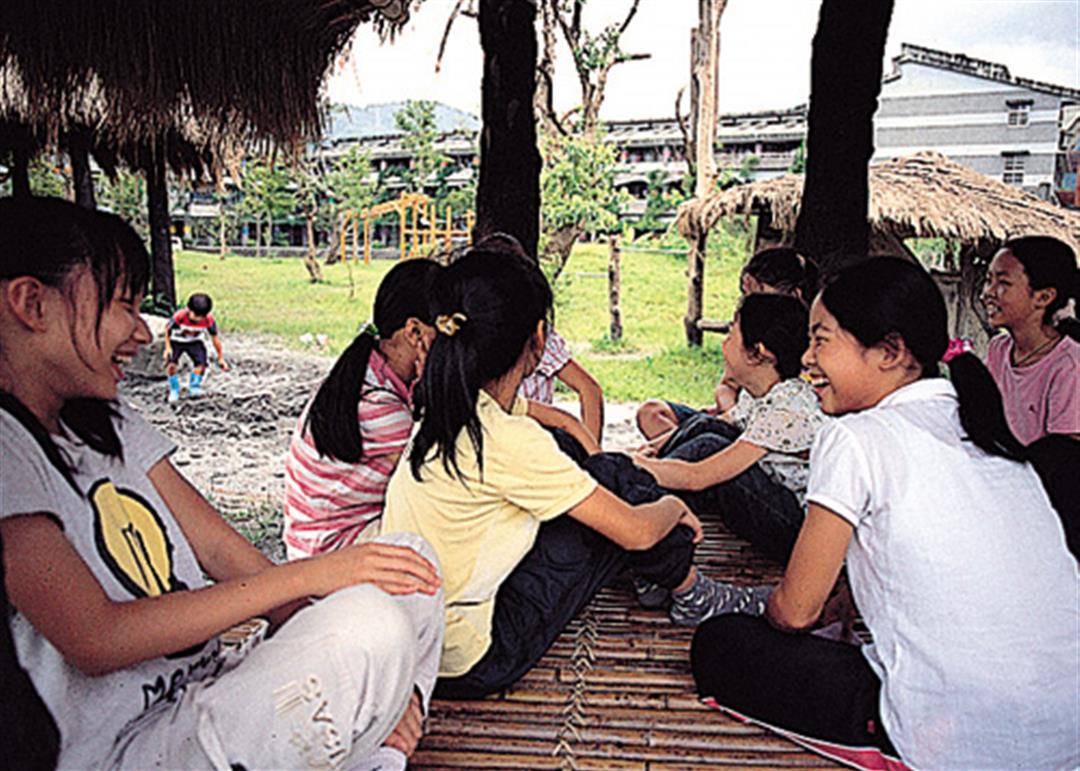
This Atayal pavilion was made by third-year students and their teachers in architecture class.
Da-Pin Elementary School, Hsinchu County
Journals: Sharing the beautiful things of life
Each week, students write two to five essays on what they've learned or about their feelings on life, and parents and teachers are required to respond to them. One child sees the selfishness of humanity and the destruction of nature when he examines an insect, while another, after enjoying colored Easter eggs, designs her own colored egg outfit.
Special Course: Research class
Every semester, students "learn how to learn" as they determine their own major topics of research and how they are to be presented, based on relationships, working together in harmony, and discovery/invention. Throughout the process, teachers ask students to focus on what they learn from the course and decide on how they will present it, so that they can share what they've learned with classmates. Through presentation sessions, the children obtain an in-depth understanding of the subjects of their own research projects, while becoming acquainted with the subject matter of some 20 other projects prepared by classmates that introduce knowledge about places around the world and other spheres of knowledge.
Music: a required course
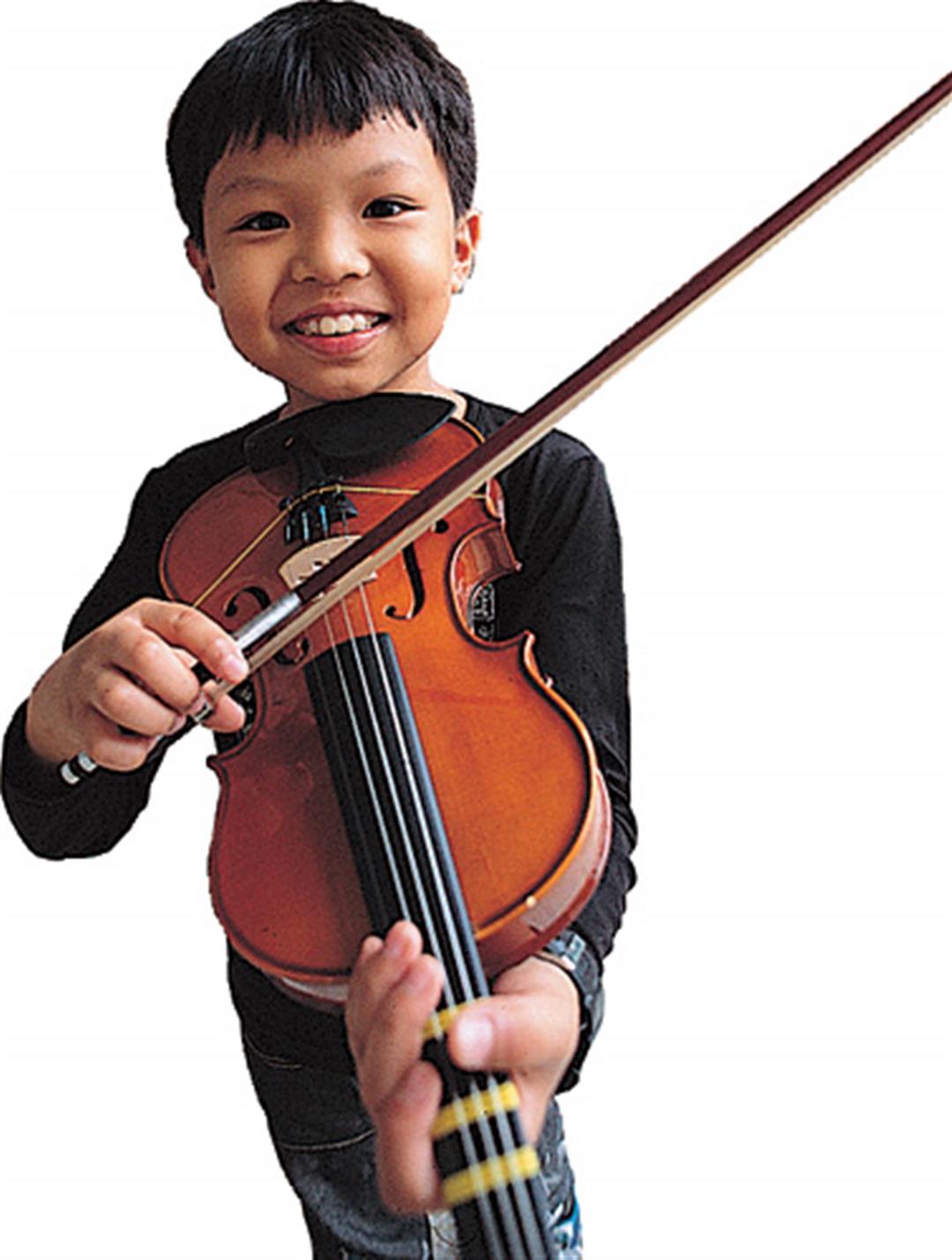
The violin and the instruments used in traditional Hakka music, required courses at Da-Pin Elementary School, teach children to focus as they watch, listen, and hum, while playing their instruments in time with their classmates.
A stage for intellectual diversity: The people at Arco believe the importance of education is not in the transfer of knowledge per se, but in awakening the intellect. The school is responsible for presenting various intellectual platforms to help children develop their own strengths. Each semester, it organizes two or three exhibitions which students are free to sign up to, to show what they have learned. The Kingdom of the Pond, a major children's production put on every three years, is an overall representation of the seven major subjects and six major topics covered in the nine-year integrated curriculum.
Student numbers: Six classes in three age bands, total of 99 students.
Address: No. 8, Lin 1, Waiping Village, Peipu Township, Hsinchu County
Tel.: (03) 5802264
Website: www.dpes.hcc.edu.tw
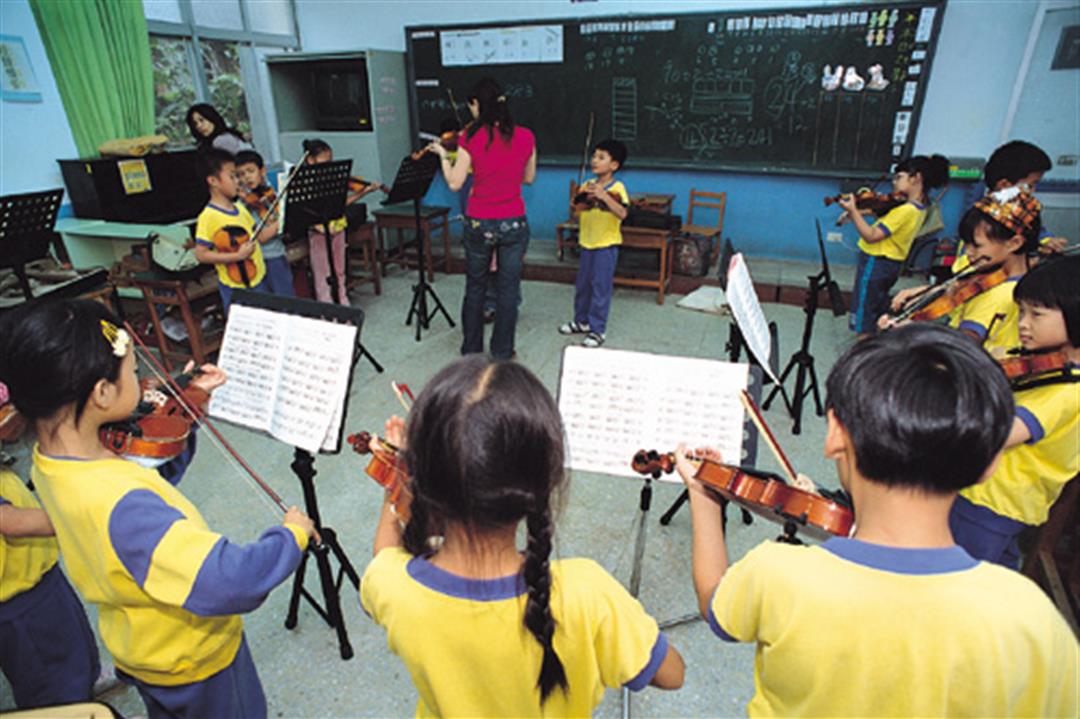
Eyes intent, ears focused, and mouths humming as they draw their bows--children learn how to concentrate in violin class, a required course at Da-Pin Elementary School.