The National Symphony Orchestra
The Warm and Resolute Voice of Taiwan
Sharleen Su / photos courtesy of NSO / tr. by Phil Newell
December 2021


Founded 35 years ago, the National Symphony Orchestra has become famous around the world as the “Taiwan Philharmonic.” It has provided countless music lovers with timeless melodic feasts, and has become a platform for elite musicians to make their dreams come true. As the Covid-19 pandemic has raged for nearly two years, the musicians of the NSO have held to their ideals and pursued the beauty of music, using sublime sounds to bring people peace of mind and the light of a brighter dawn.
The Covid-19 pandemic has brought anxiety and anguish. Fortunately, we still have music.
For the brave people of Taiwan
As we begin our visit to the National Symphony Orchestra (NSO), some members of the orchestra are rehearsing for their season-opening concert. Following their longstanding custom, they are performing “The Angel from Formosa,” a piece by Hsiao Tyzen. As the music fills the National Concert Hall, our eyes unexpectedly become moist with tears.
“Whenever we go on tour, whether in Europe, Japan, or the US, the orchestra usually plays this piece as our encore,” says NSO executive director Lydia Kuo. Meeting with us in the National Concert Hall, Kuo’s face lights up when we mention Hsiao’s work. “When Hsiao Tyzen wrote this work, he said it was dedicated to the brave people of Taiwan.” The melody of this composition is simple and unsophisticated, making it “similar to how the Taiwanese speak, as it expresses the sincerity, friendliness, and warmth of Taiwan’s people.”
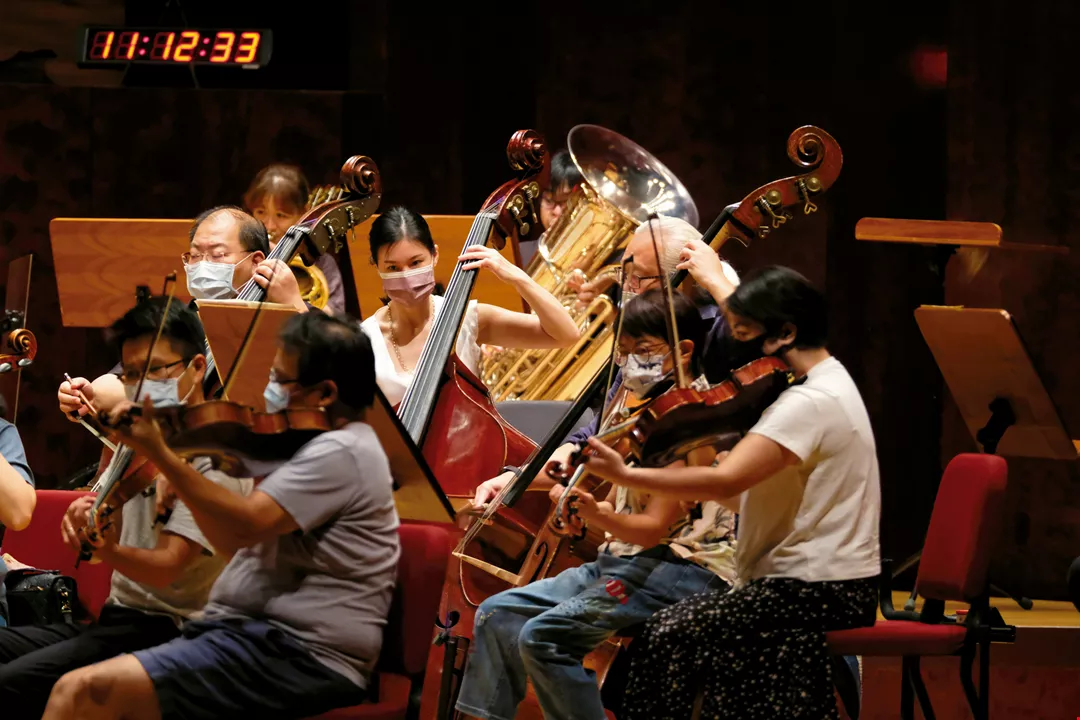
For many young musicians, the NSO is a platform for realizing their dreams. (photo by Kent Chuang)
Global live streaming
On May 24, 2020, with performance halls around the world closed by the Covid-19 pandemic, the NSO held a “Lü & NSO” concert (the NSO conducted by its music director, Lü Shao-chia) at the National Concert Hall. The show was broadcast live around the world in 4K definition while 500 music lovers attended in person.
This one and only classical music concert open to the public during the surge of the global pandemic attracted a great deal of international media attention. In the middle of the night before the performance, Lydia Kuo received a telephone call from a reporter for the British newspaper the Financial Times, who asked with disbelief: “Are you really going to hold an open concert? Is it really OK to do this?”
For musicians around the world, 2020 was a tough year. The fact that the NSO was able to hold concerts as usual represented an extremely important fact: It was only thanks to Taiwan’s highly successful disease prevention and control work both in the community and at its borders that live shows could be held without obstacles. Afterwards, the Financial Times ran a headline asking, “When will the music start again?” which expressed people’s desire to return to concert halls.
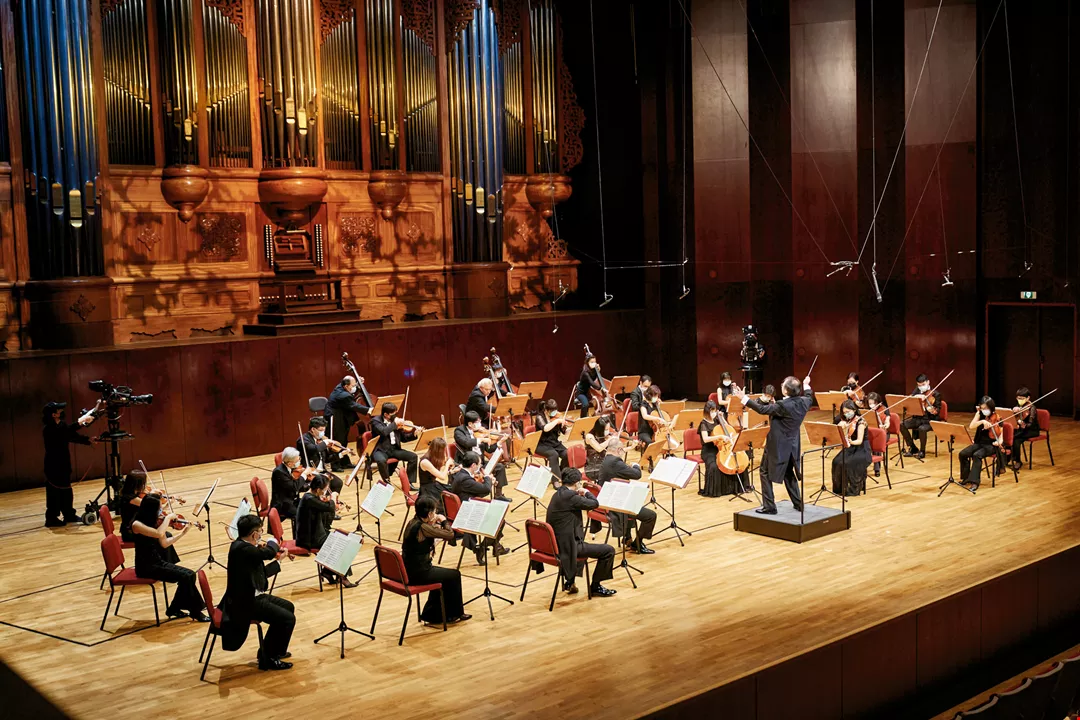
In the midst of the Covid-19 pandemic in 2020, thanks to Taiwan’s successful disease control measures the NSO was able to hold the world’s first online broadcast during the pandemic of a concert with a live audience in attendance.
Modern musical vocabulary
Each time the NSO performs in Europe or North America, they express Taiwan’s unique culture through the selection of works that they play. “There is usually some meaning behind the choice of pieces.” Kuo briefly explains the process of choosing the program for an NSO concert: “For the overture, we usually select a short work by a modern Taiwanese composer, such as Gordon Shi-wen Chin’s ‘Golden Beam on the Horizon of Formosa’ or Jiang Wenye’s ‘Formosan Dance.’ The work selected is often one with elements of Hakka or Aboriginal culture, representing the diversity of Taiwan. The concerto is usually used to draw attention to the skills of a soloist from Taiwan, and for that we search out musicians who have a relatively deep connection to Taiwan to perform famous concerto pieces.”
For the second half of each concert the NSO programs a grand symphony. On the one hand this demonstrates the talents and skills of the orchestra, and on the other it enables audiences to get a sense of the musical trends and cultural features of contemporary Taiwan.
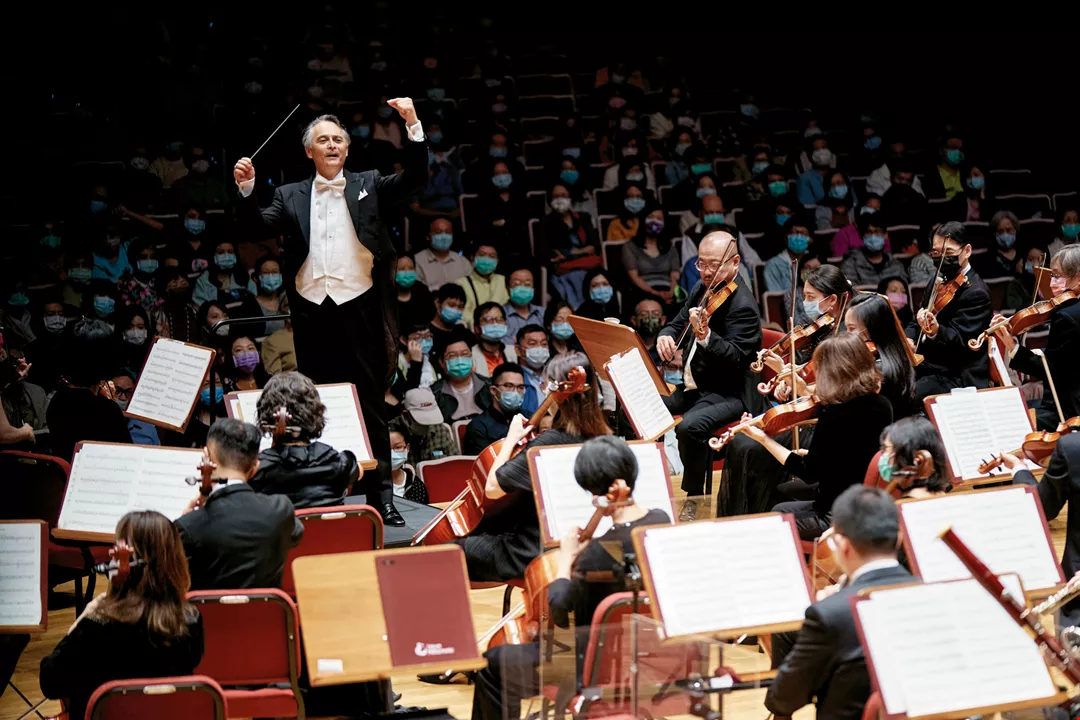
Under successive music directors the NSO has gained an international audience and achieved many performance firsts, earning the admiration of other Asian orchestras.
Self-confident voice of Taiwan
As its name suggests, the National Symphony Orchestra, founded in 1986, is a symphony orchestra that represents Taiwan. Its forerunner was the Experimental Symphony Orchestra. The NSO gathers together outstanding young musicians from a variety of backgrounds, and has made a name for itself overseas as the Taiwan Philharmonic. Looking back over the orchestra’s historical development, several important music directors, including Jahja Ling and Chien Wen-pin, laid the groundwork to give the NSO the unique character it has today.
Lü Shao-chia, who had the longest tenure of any music director at the NSO, often selected difficult pieces or grandiose classic works, such as Mahler’s “Das Klagende Lied,” which is extremely intricate and has rarely been heard live by music lovers in Taiwan. He also staged Wagner’s “Der Ring des Nibelungen” cycle, doing one work per year. By interpreting such works, he fostered the orchestra’s aesthetic sensibilities and deepened their understanding of the art of music. Kuo says, “With Lü leading the way, the NSO has performed many works that other Asian orchestras have never done.”
The NSO’s music directors have worked to nurture its performance abilities and cultural self-confidence in a way that has won quite a bit of admiration from other orchestras in Asia. Over the last three decades plus, the NSO has become a self-confident, elite, culturally self-aware “voice of Taiwan.” Its success in international music circles is self-evident, and it has become a musical ambassador through which Taiwan interacts with the world.
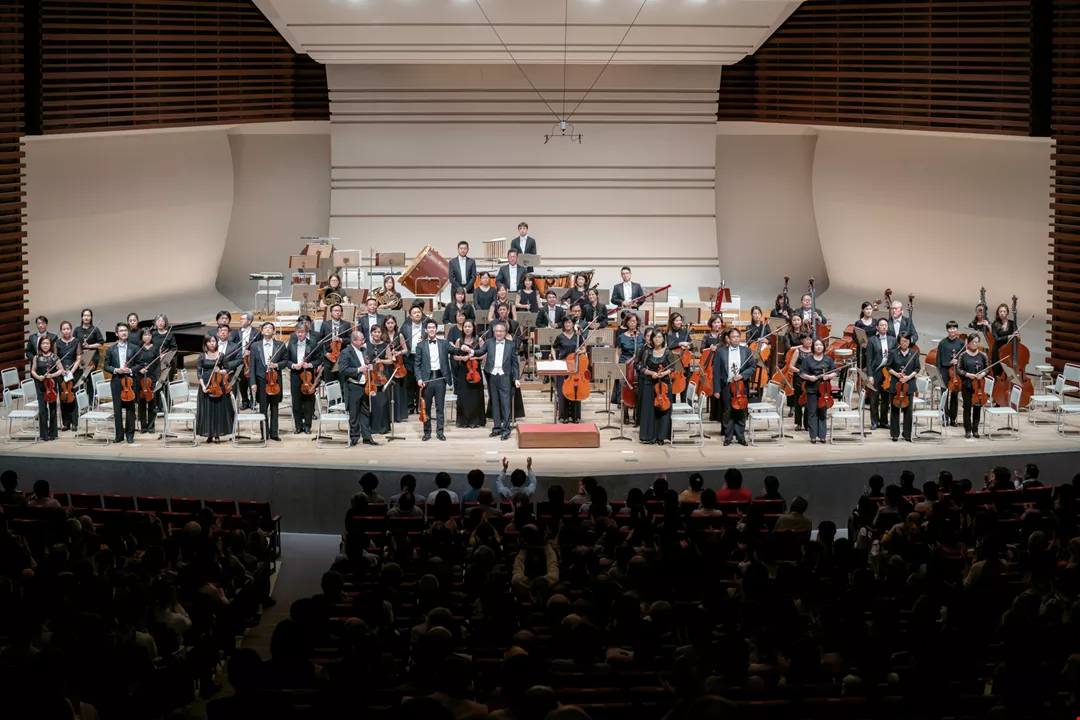
At every overseas performance, the NSO’s program includes pieces with Taiwanese cultural characteristics, earning a great deal of praise in the music community. The photo shows an NSO performance at Tokyo Bunka Kaikan in 2019, with then music director Lü Shao-chia conducting.
Building cultural bridges
In late September 2021 there was long-awaited good news: NSO artistic advisor Jun Märkl signed a contract to take over as music director in 2022. Kuo says in a bantering tone: “After a selection process lasting 1016 days and with enormous efforts put in by a great many people, Ju Tzong-ching, chair of the National Performing Arts Center’s board of directors, finally signed a contract to hire a new a musical director, and now even the administrators and accountants at the NSO are all enthusiastically studying English!”
Märkl is a highly accomplished musician who has led five orchestras in Europe and recorded more than 50 albums with over ten European, American, and Asian orchestras. He has even been named a Chevalier de l’Ordre des Arts et des Lettres by the French government. Of mixed German and Japanese parentage, his unique background has led him to work all his life building bridges between cultures. During the pandemic he has come to Taiwan numerous times to work with the NSO, and he hopes to find inspiration here to break down the barriers between traditional culture and classical music.
Märkl, who was musical director of France’s Orchestre National de Lyon for several years, hopes to bring the characteristics of French music to Taiwan, aiming to introduce the light and color of French music into the clear-cut, systematic structure of German and Austrian works.
Entering a completely new season, the NSO has gotten an injection of new artistic elements, and we can expect its musical style to become even broader and its technique more solid. It will discover a whole new orientation, even as it continues to express Taiwan’s warm and resolute voice to the world.
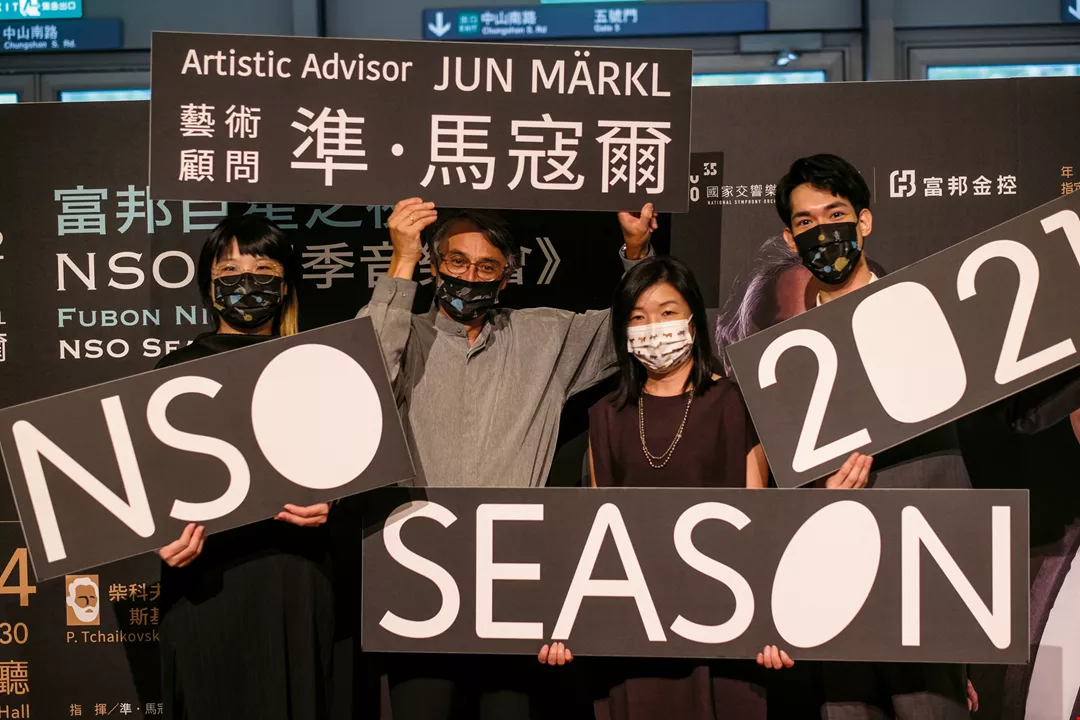
Jun Märkl (second from left) has headed up five European orchestras. As he is very familiar with French classical music, he wants to introduce its light and color into the NSO’s style. Music lovers can hardly wait! (photo by Kent Chuang)
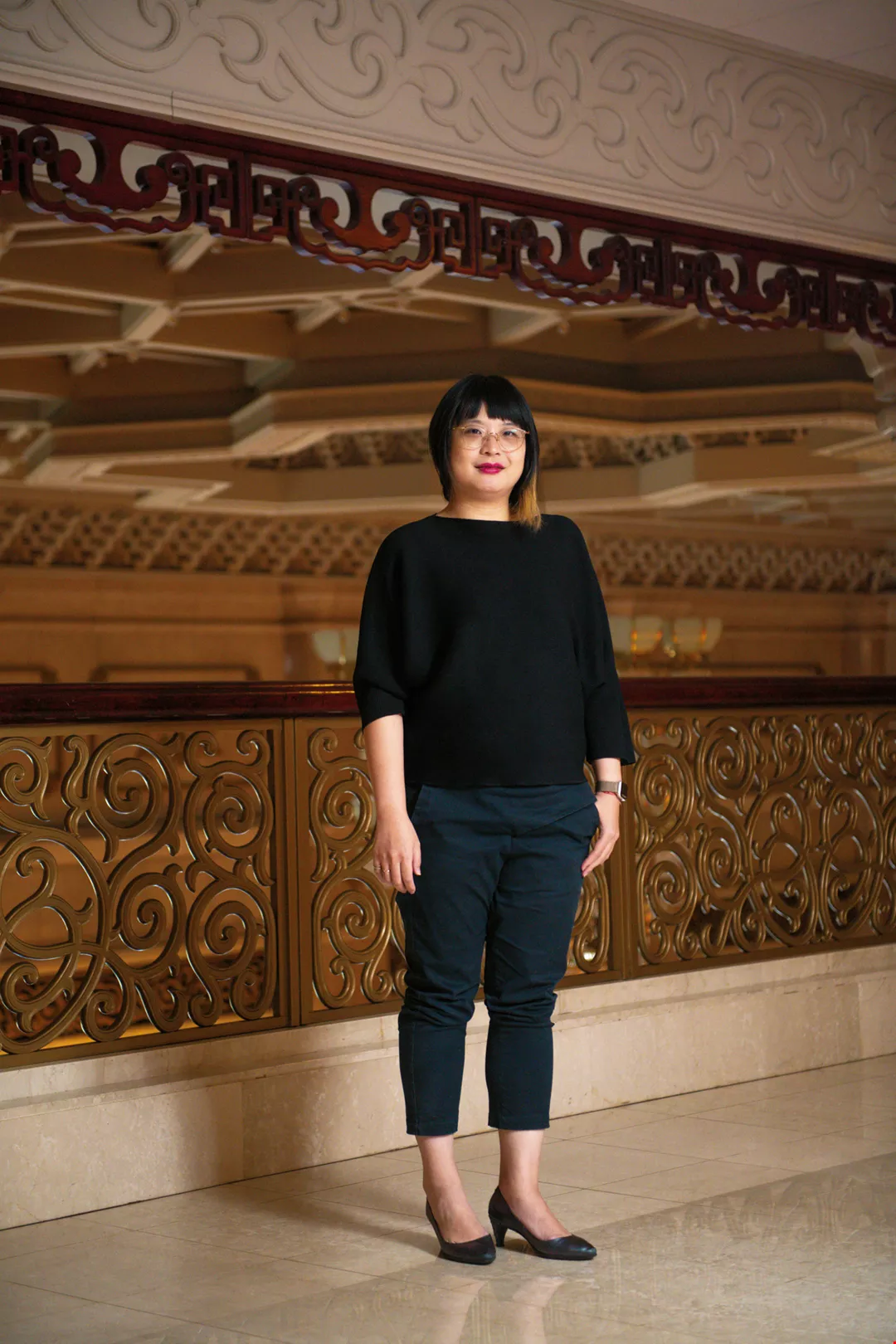
NSO executive director Lydia Kuo is busy with the new concert season, which coincides with artistic advisor Jun Märkl taking up his new post as music director. She hopes his leadership will inject fresh vitality into the orchestra. (photo by Kent Chuang)

@List.jpg?w=522&h=410&mode=crop&format=webp&quality=80)


