Rose House--Taiwan Takes its Tea in British Style
Anna Wang / photos Pu Hua-chih / tr. by David Mayer
February 2002


What would you do if you had mil-lions of dollars? That's a timely question these days in Taiwan, now that the national lottery has been resumed and ticket buyers across the island are dreaming of riches falling into their laps. What about you? What would you do if you became a multi-millionaire all of a sudden?
A bit over a decade ago, a 28-year-old man found himself sitting atop a fortune of over NT$100 million, earned in just five years thanks to a combination of intelligence, hard work, and a bit of good luck. But he had better things to do than spend his entire lifetime wrapped up in the construction industry, and so, in an abrupt career switch, he opened the teahouse of his dreams, a place where one can go to enjoy paintings of roses while sipping coffee from bone china and listening to music, or perhaps just chilling out in the pleasant surroundings. The teahouse has turned out to be very popular, for apparently many others shared his dream.
The man is Robert Teng-huei Huang, and the shop is Rose House, which today has expanded to some 50 locations and ranks as the largest English-style teahouse in Taiwan. A store will even be opening up next June in Shanghai. Things are going well for this talented man, who has attained a professional level of competence as an oil painter even though he only took up the brush for the first time a bit over three years ago. Huang's is one of the more fascinating success stories in Taiwan's business world. Always the romantic, he says he owes it all to roses.
Bucking the economic deep freeze, Rose House opened its newest Taipei store in the Nanking West Road shopping district early this year. In mid-June, Rose House will establish its first location in mainland China, a joint venture with Britain's venerable Whittard of Chelsea. Rose Republic president Robert Huang has attracted a lot of notice with his aggressive moves in the midst of economic recession.
Says Huang with a chuckle: "We've been watching the situation in Shanghai for a couple years, and we felt that the time was ripe. Our decision has nothing to do with the general rush of Taiwanese investors to Shanghai."
Huang has never been one to follow the crowd. Quite the opposite, he has been a trendsetter in two of the three careers that he's pursued so far. A soft-spoken man, he modestly attributes his success to good luck, but it seems likely that his personality must have had something to do with the good breaks that have come his way. He's the kind of man who will go to the wall for an idea once he's decided what he wants to do, and will do everything possible to make sure everything is done just right. He's a businessman with the uncompromising heart of an artist.
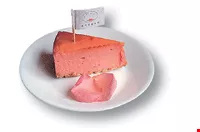
female crowd.
The first hundred million
A native of picturesque Juisui Rural Township in Hualien County, Huang's parents were small shopkeepers. Although young Robert was never a loquacious lad, he was a bright student and made friends easily. All in all, he enjoyed a peaceful childhood.
After graduating from high school he easily passed the entrance examination for the department of international trade at Tunghai University. When he packed up his bags and headed to university in Taichung, it was the first time he had ever left home. Loaded down with luggage that included even his bedding, the greenhorn got off the train at the wrong stop and had to walk for an hour before finally arriving at the university at 10 o'clock in the evening. Exhausted and confused, he wandered into the dormitory for architecture majors. The accident was the beginning of a long and significant relationship. Although he majored in international trade, half of the classes he attended were in the department of architecture, and that was where he made many of his closest friends.
After graduating from university and putting in his two years of compulsory military service, Huang went to work as special assistant to Hsieh Chin-ho, president of Wealth Magazine. The work was closely related to what he had studied, and things went smoothly.
Like most young people, Robert Huang didn't figure he'd be making it monstrously big in business, but opportunity came knocking when a group of friends from the Tunghai University department of architecture decided to found an architecture firm and build a residential division where people would be able to establish the close personal ties typical of traditional rural communities while still enjoying all the conveniences of modern apartment life. This is precisely the "sense of community" ideal that has since gained such strong currency in the field. Huang spent an entire afternoon discussing the idea at the Dream House coffee shop on Nanking East Road, and Huang can still remember that afternoon as if it were yesterday. After spending the night thinking about it, Huang quit his job the next day and set out in pursuit of his dreams.
The first project they took on was called "Ideal Country," an apt description for the sort of environment the idealistic young bunch were thinking of creating. After a year of hard work and much frustration, company chairman Pai Hsi-wen got wind of a failed project that another firm was wanting to get out of. Pursuing the concept of a "community with a human touch," they took over the project and made a smashing success of it. One key to their success was to attract artists to move in and create an "artists' village." After a thundering success in phase one, the project went quickly on to a second and third phase. Their "Ideal Country at the Foot of Mount Tatu" became a dream community for middle-class residents. Famous people moved in, the news media picked up on it, and all of a sudden a bunch of young-turk architects still in their twenties were a hot commodity. No more sleeping on the office floor in sleeping bags! A listing on the Taiwan Stock Exchange! Luxury homes! It all happened practically overnight. But the rich men in their expensive vehicles were too busy now to enjoy life. Huang, who was in charge of marketing, felt acutely uneasy, as if some dark force were pushing on him from behind, keeping him always on the run, taking complete control of his life.
"The company grew too quickly. The situation was suddenly beyond our control. The chairman spent all his time running around trying to arrange financing," says Huang, who liked his job less and less all the time. Growing increasingly unhappy, he decided after a full half-year of careful consideration to quit his job at Tai Ting Construction. He had just been promoted to company vice president not long before, but he wanted a chance to settle his thoughts and do something he would enjoy.
But after having risen to such heights, what was he to do?
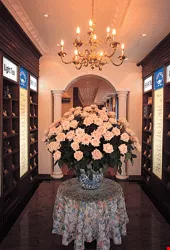
female crowd.
Victorian style
"I've always had a taste for all things elegant. I like Mozart, Rubinstein, a pot of good tea, a full-bodied cup of coffee, a good book, or maybe a collection of poetry. . . ." A great admirer of Yang Kui (a writer and poet who lived in the Tunghai University area), the culturally inclined Huang was lucky to make a fortune while still young so that he could strike out and found a chain of teahouses to his own liking. When he has time, he travels around Europe to see how people maintain the European style. He asks for little more from life.
After leaving Tai Ting in 1990, Huang opened a small teahouse in the artists' village that grew up as a result of Tai Ting's "Ideal Country" project. With a mere 80 or 85 square meters of floor space, design and decorating were handled entirely by Huang and his wife, who put in a wooden floor and displayed English bone china. One might generously call the location "slightly off the beaten track," but frankly speaking, it was pretty much out in the sticks. The shop required customers to take off their shoes, forbade boisterous behavior, refused to serve anyone under 12 years old, and limited the size of a single party to no more than six persons. All the prohibitions were a reflection of the uncompromising character of the shop's owner. Apart from Huang and his wife, absolutely no one expected the shop stay in business for long.
From the day it opened on August 20, 1990, Rose House was like Huang's own private garden. One day he sold nothing but one NT$45 cup of coffee, and even that lone customer complained, "How come your coffee tastes so bad?" But Huang's house rules remained in force. He wanted to create an elegant atmosphere where a person could relax and forget about the outside world for a while, have in-depth chats with their really good friends, and steal a few moments of peace.
Most of the customers at the original shop at the foot of Mount Tatu were students from Tunghai University. People noticed the quiet, tasteful atmosphere at Rose House, and the word spread quickly. Lots of people wanted to see this different sort of teahouse and get to know its strange proprietor. By December, Rose House was a Taichung phenomenon. People began driving in from out of town on weekends to enjoy a cup of first-class cappuccino or some authentic English tea.
The name "Rose House" has practically become a synonym in Taiwan for authentic English tea. This goes far beyond Huang's original expectations, for he was motivated solely by a love for the aesthetic sensibility of Victorian England, with the delicate beauty of its art, architecture, furniture, and decorative style. That is precisely what is lacking in Taiwan, where people have spent the last several decades pouring most of their energies into economic development. Combining a mild outward appearance with a man-of-action personality lurking just beneath the surface, Robert Huang is actually rather similar to the seemingly stoic but untamably adventurous Victorian Englishmen that he admires. It probably isn't fair to attribute the success of Rose House, with its emphasis on Victorian style, to simple chance. Destiny would seem the more likely explanation.
For Huang, the spirit of the Victorian era is perfectly captured by the rose, with its unrivaled beauty-the thorn hiding behind the brilliant warmth, the mysterious air, self-confidence, and romance. . . . One cannot help but love the rose, and afternoon tea, which reached the height of its prominence during the Victorian era, symbolizes the luxury and abundance of life back then.
Rose House's unwavering commitment to both of these themes is what has enabled the shop to distinguish itself from the many other coffee shops and teahouses in Taiwan. Rose House has proved especially popular with young women.
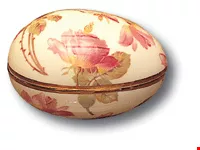
on rose-related themes. It's like a mini-museum.
Opening new branches
Rose Republic's vice president for franchising operations, Ann Chiang, comments: "Mr. Huang never imagined when he opened that first Rose House location that he would be jumping into franchising beginning with his second store." Rose House's expansion was actually prompted by a customer who approached Huang about the possibility of running a second Rose House location on a franchise basis. After 12 years in business, Rose House has opened some 45 locations throughout Taiwan, some run by Huang himself, and some run as franchise outlets. As the operations grow, the company's management is becoming more and more professional.
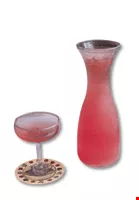
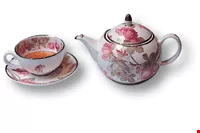
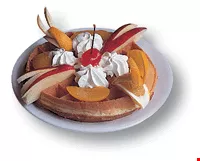
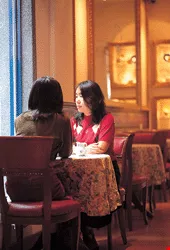
Walk into any Rose House and a scene of pleasing elegance greets the senses: the walnut furniture and flooring; rose decorations everywhere; shelves lined with myriad flavors of English tea and special Rose House blends; fruit-flavored teabags tailored to please local taste buds; display cases with beautiful Rococo and Aynsley brand-name English bone china; the sweet fragrance of waffles; strains of violin music or an operatic aria, not too soft, not too loud. . . . The place definitely has a delicate, feminine air, and some 80% of the customers are in fact women. As Wu Kuan-ching, who has run a Rose House franchise on Taipei's Roosevelt Road for over four years now, points out: "Most customers in the early years were university students, and most Rose House shops were located on little side streets near the schools. But things have changed since then. At the first shop, near Tunghai University, female office workers have been the main clientele for the past few years."
Before Wu opened his franchise, both he and his future wife were loyal Rose House customers. Wu feels that the Rose House head office has made great strides in recent years in the services it offers to its franchise operators. Franchise operators are sent to England every year, where they receive training in authentic afternoon tea rituals and visit famous tea companies, to develop a deeper understanding of English tea and cultivate a deeper commitment to the business.
But Huang's great devotion to Rose House means that large sums of money must be plowed back into the business. Many locations fail to achieve profitability quickly and end up going out of business. Some store closings have been cut-and-dried affairs, but others have been acrimonious due to disputes over contractual rights and obligations. The company has even had to go to court.
Huang has been avoiding journalists since becoming the focus of a recent media feeding frenzy arising from a trademark dispute over the name of his chain, and he is concerned about a deeply ingrained scofflaw streak in Taiwan society. He notes ruefully: "Taiwan is already a member of the WTO, and we cannot afford to be lax in our observance of intellectual property rights."
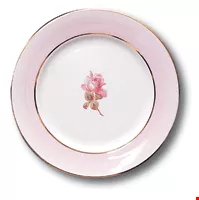
on rose-related themes. It's like a mini-museum.
For the love of roses
But all is not doom and gloom. Now that Rose House is into its second decade, the business has grown rather large and Huang is no longer the hands-on manager he used to be. Now he concentrates on policy-level issues and spends a lot of time painting as he heads into a new stage of his life.
When the talk turns to painting, Huang lights up like a Christmas tree: "I don't know what got into me. All of a sudden one day three years ago I just got this urge to start painting roses. I ran off to the arts supply store and bought some paper, brushes, and paints, then I hired someone to tutor me at home. That's how it all got started."
Although Huang has a life-long love of art and has collected many paintings related to roses, his first experience putting oil paints to canvas himself is a relatively recent affair. His tutor was Kao Shu-hui, a graduate of National Taiwan Normal University who has studied under such notables as Li Mei-shu and Yang San-lan. Kao started off the lessons by asking Huang to paint a head of cabbage. It seemed an appropriate approach for a beginner, since cabbage has a simple profile and offers sharp contrasts between light and dark, but Huang refused the assignment, and told his teacher: "I don't want to paint cabbage. I just want to paint roses." Helpless in the face of Huang's intransigence, Kao just had to let him have his way. She taught him about perspective and the basics of oil paints, then set him loose. The results left Kao astounded. How could a rank beginner like Huang paint so well? From the very start, his compositions, colors, and brush strokes were already quite good, and he had a style all his own.
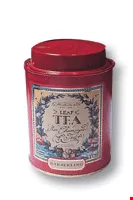
"Were those first paintings actually any good? If they were, it's probably because I love roses so much," says Huang. After studying for nine months, he asked his teacher to join him in exhibiting their paintings at the Taichung Cultural Center. The next year he exhibited again, this time at the Changhua Cultural Center. Citibank and ABN-AMRO Bank then approached him separately with plans to use his paintings in commemorative mug sets and tea canisters. Eva Air then agreed to act as the overseas agent for his woodblock prints. Writers and composers used his paintings for their book covers and CD jackets. In November of this year the art gallery at Taichung Shin Kong Mitsukoshi Department Store will display his new rose paintings, and he is now hard at work getting ready for the exhibit.
In his three years of painting, Huang has only departed from the subject of roses on rare occasions (to paint Venice, Tanshui, and Puli, all areas for which he has a special feeling). Otherwise, it has all been roses: roses in vases, rose bouquets, rose gardens. . . . His style can be realistic or abstract. The roses may be bright and airy or a weighty, deep red. Some sport a romantic, exuberance, while others have a softer, more poetic feel. His roses are like love, which comes in many forms-men's love, women's love, the different loves of different people at different times. And of course, Huang's love for roses is there in every work.
"The most important thing in life is not success; it's what you've invested your passion in, and whether you can look back at that investment without regrets." This is a famous quote of Huang's. His experiences show the mysterious power of love and dreams. What about you? Do you have a passion in your life? Is there anything pushing you to develop your innate talents? Robert Huang's story gives pause for thought, and reason for hope.
female crowd.
on rose-related themes. It's like a mini-museum.
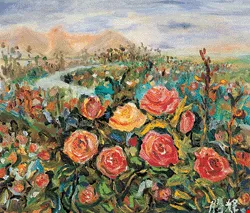
Robert Huang adores roses, and has done more than 300 paintings of the flower. At right is a still-life of a rose garden in Puli. It is a genuine masterpiece, by any standard-composition, depth of field, color, dynamism-so it is hard to believe that it was only his fourth painting ever.
female crowd.
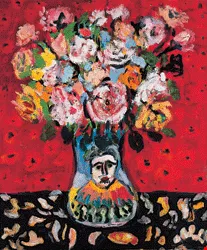
Robert Huang adores roses, and has done more than 300 paintings of the flower. At right is a still-life of a rose garden in Puli. It is a genuine masterpiece, by any standard-composition, depth of field, color, dynamism-so it is hard to believe that it was only his fourth painting ever.
female crowd.
female crowd.
female crowd.
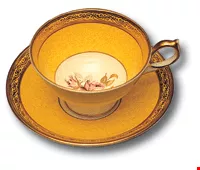
on rose-related themes. It's like a mini-museum.
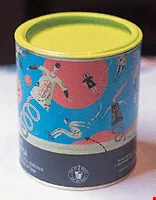
on rose-related themes. It's like a mini-museum.


@List.jpg?w=522&h=410&mode=crop&format=webp&quality=80)


