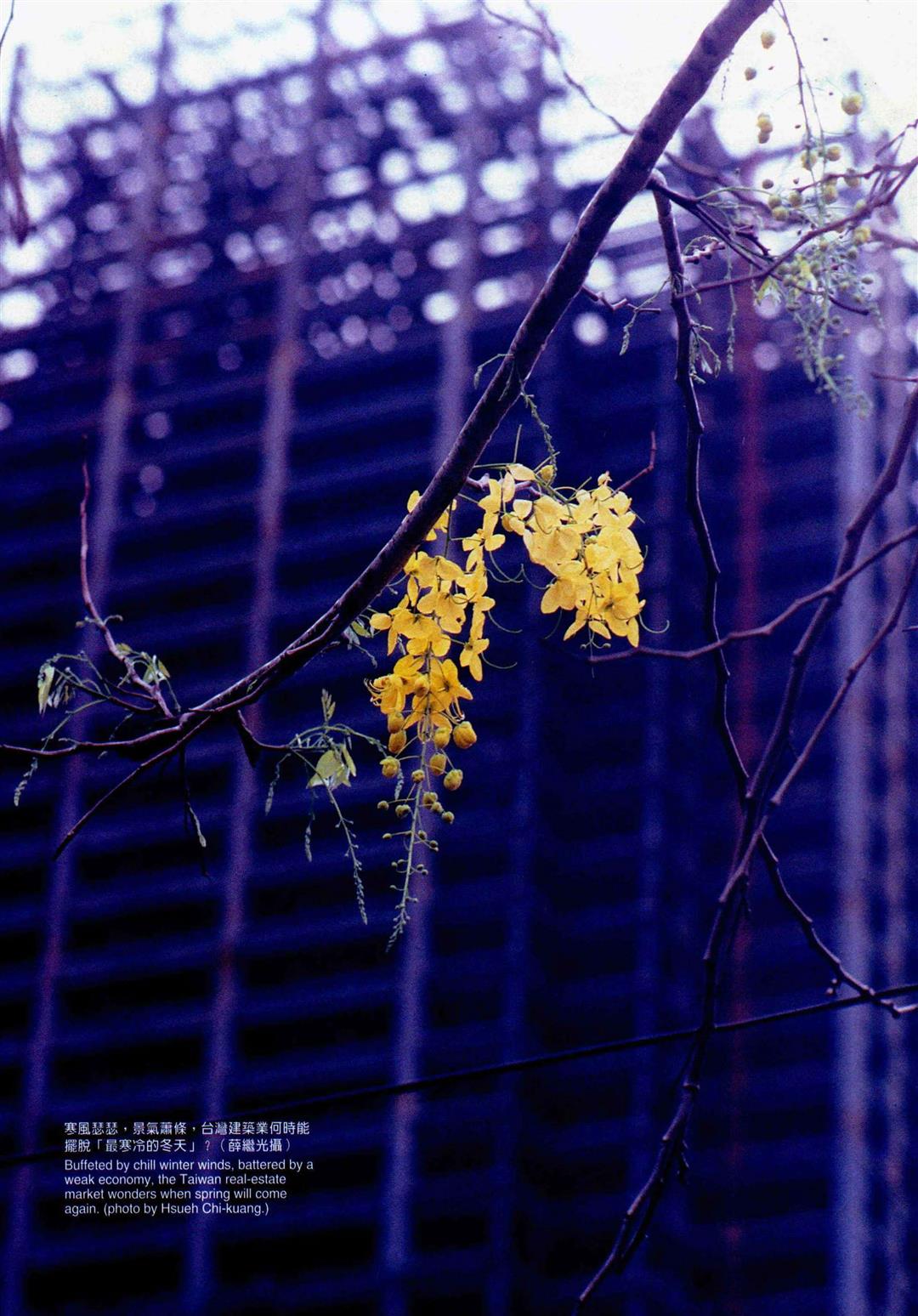
Burst Bubble? Taiwan's Troubled Property Market
Laura Li / photos Pu Hua-chih / tr. by Scott Williams
February 1999

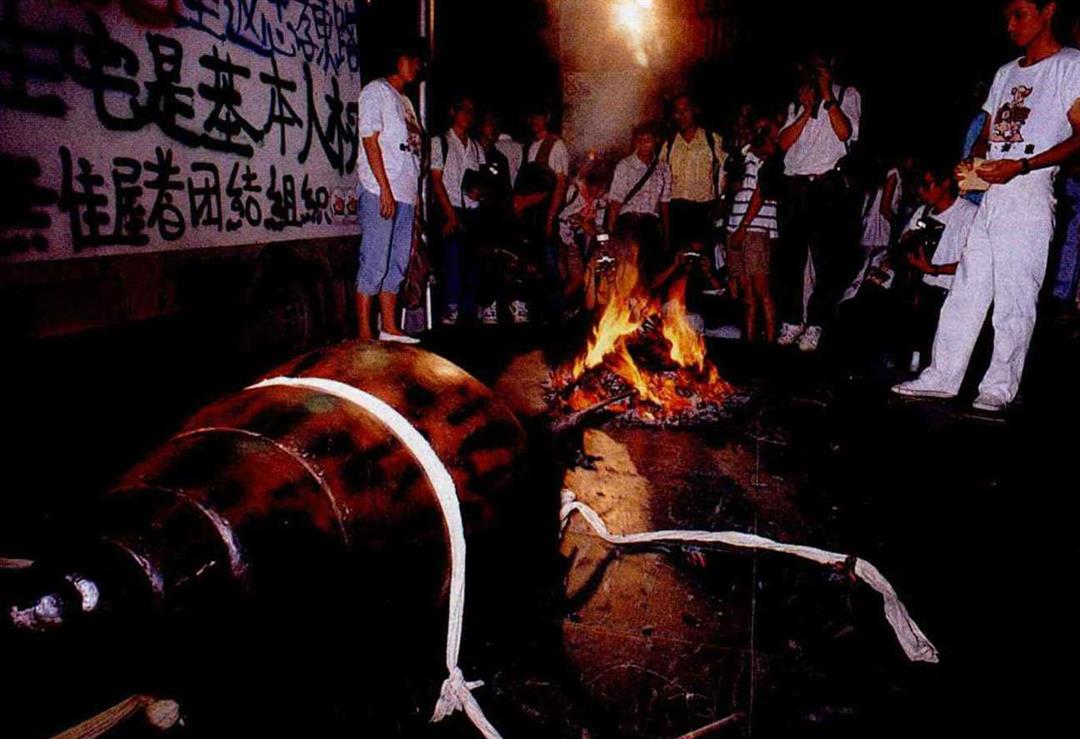
Ten years ago, Snails Without Shells caused a ruckus by camping out on Chunghsiao East Road to protest soaring prices for homes. With the government's implementation of a real-estate market stimulus program, the Snails have taken to the streets again, albeit in fewer numbers than before. (photo by Diago Chiu)
On the eve of the New Year's holiday, the cabinet introduced a plan to stimulate the local housing market. The plan's goal was to pull the local property market out of a multi-year slump by reducing the supply of excess housing. The mechanisms to bring about this reduction were to be tax incentives and reduced interest rates on mortgages.

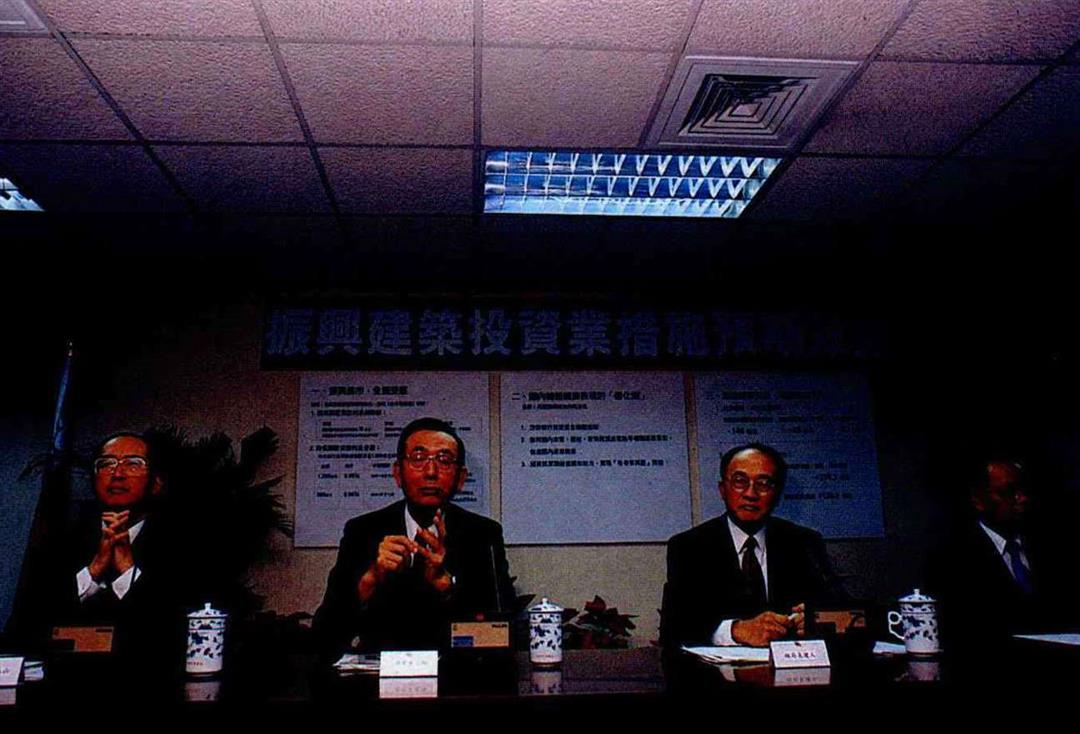
At a joint press conference on the government's real-estate stimulus plan held by a number of finance and economics officials, the officials explained the policy's objective again: make everyone--the construction industry, the consumer and the government--a winner.
Though the idea has merit, the introduction of the plan has led to a public outcry which has not yet quieted. What is wrong with the Taiwan real-estate market?
On Christmas Eve of last year, the government announced measures it planned to take to stimulate the local property market. It would make NT$150 billion in postal saving deposits held by the Central Bank of China (CBC) available to the banking industry to be redistributed as low-interest housing loans. The differential between market interest rates and the rate on these mortgages would be made up by the national treasury. Supporting measures to be implemented at the same time included increasing the mortgage interest allowance on income taxes and suspending work on government housing projects for two years.

The result of developers' blind rush to get apartments onto the market has been a glut of empty units. This waste of resources is painful to see.
But the public outcry began the moment the plan was announced. It was said that the plan was simply an effort to bail out the construction industry, and was not in the public interest. Reasons for this view included the huge amount of money involved, and the fact that the were no provisions to stop the rich or those who already owned homes from taking advantage of the special mortgage rate. In fact, anyone who wants to purchase a new home from a construction company is eligible for a low-interest mortgage to buy one. Not in the public interest?
Minister of Finance Paul Chiu, a member of the team which laid out the plan, states emphatically that the ups and downs of the property market are intimately connected to the national economy. Since last October, a number of large business groups have encountered financial difficulties. Given that the construction industry is one of the locomotives driving economic development, if it fails, no one knows how bad the situation might become.
"The government is carrying out a timely rescue. If the package acts as a catalyst on the property market, this NT$150 billion will be money well spent. Otherwise, we might end up in a situation like that in Japan where the government didn't act and is now spending ¢D60 trillion [NT$15 trillion] to stimulate its economy, and not very effectively at that. There, it's too late for regrets," says Chiu.
So how serious is the crisis confronting Taiwan's construction industry? Everyone has their own view.
Strangely, although the government has been quick to administer strong medicine, the industry itself does not admit to being in the sort of serious trouble that requires government assistance.
Lin Yu-ling, director of the Federation of Real Estate Investment Associations of the ROC, protests making the "bailout of the construction industry" the focus of the current debate. During a press conference, while exhorting all of Taiwan's construction firms to work with the government by lowering prices to unload excess housing and relieve financial stresses, Lin nonetheless insisted that the primary objective of the govern-ment's policy was to make it easier for low- and middle-income families to buy homes.
Similarly, at the end of December, Lai Cheng-i, executive director of the Taiwan Province Association of Real Estate Investors and president of Shing Construction, also pleaded the industry's innocence. Lai states that nobody thought that the "courtesy call" they made on President Lee, at which they repeated suggestions they had already offered to the government several times previously, would be interpreted as "reporting on an industry in crisis" and make such waves.
Lai says, "Those outside the industry are talking about it as if it's about to go belly up. Things are really not that bad." He asks, "Where's the construction industry's problem? I really don't know of one."

The government has acted to absorb new apartments from the market, but what about old ones? And how will the government provide aid to renters? Both are issues that must be considered.
Lai, whose company is based in Tai-chung, says that there are rumors going around the market of around 100,000 unsold units in the city, and that the city is an industry "powder keg." But Lai estimates that there are 12,000 empty units in the city at most. "Most major, aboveboard developers sell all their units within six months of completing a project. Where's the threat of bankruptcy in that?"Where's the problem?
Lai emphasizes that even though some developers in the central and southern part of Taiwan might be facing problems because they chose poor locations for their projects, such troubles won't affect the larger eco-nomy. In his view, the domestic construction industry is the kind of industry in which firms are easily founded and often just as quickly closed.
Even so, given that there are some 10,000 construction companies in Taiwan, if the ants of the industry collapse in their twos and threes, this could eventually add up to a significant number of companies and have an effect on the domestic construction industry as a whole. The story of a small Taichung firm provides a typical example.
The chairman of this company, who is not willing to reveal his name, says that in 1993 his company built ten-odd apartment buildings, the first-floor storefronts of most of which remain unsold. "When these storefronts were finished, we naturally used the names of various persons to take out mortgages to 'purchase' them." He says that in those days storefronts in the "hot" part of Taichung had asking prices of NT$16 million. The banks providing the mortgages were cautious, however, lending only half of the asking price, or NT$8 million per shop. Nobody expected that prices would fall precipitously over the next five years. The company still owns nearly 10 of these storefronts, which it is unable to sell even at a price of NT$6 million per unit. And at a recent board meeting it was decided to simply declare the company bankrupt. By turning over the properties to the bank, they save NT$2 million per unit.
Wouldn't the announcement of a bankruptcy damage the company's reputation? The chairman laughs and says that if they reopen under a different name next year, they start over with a clean slate. There are many one-project developers in Taiwan. As long as their next project sells well and they keep the prices down, consumers are not going to go digging into their records.

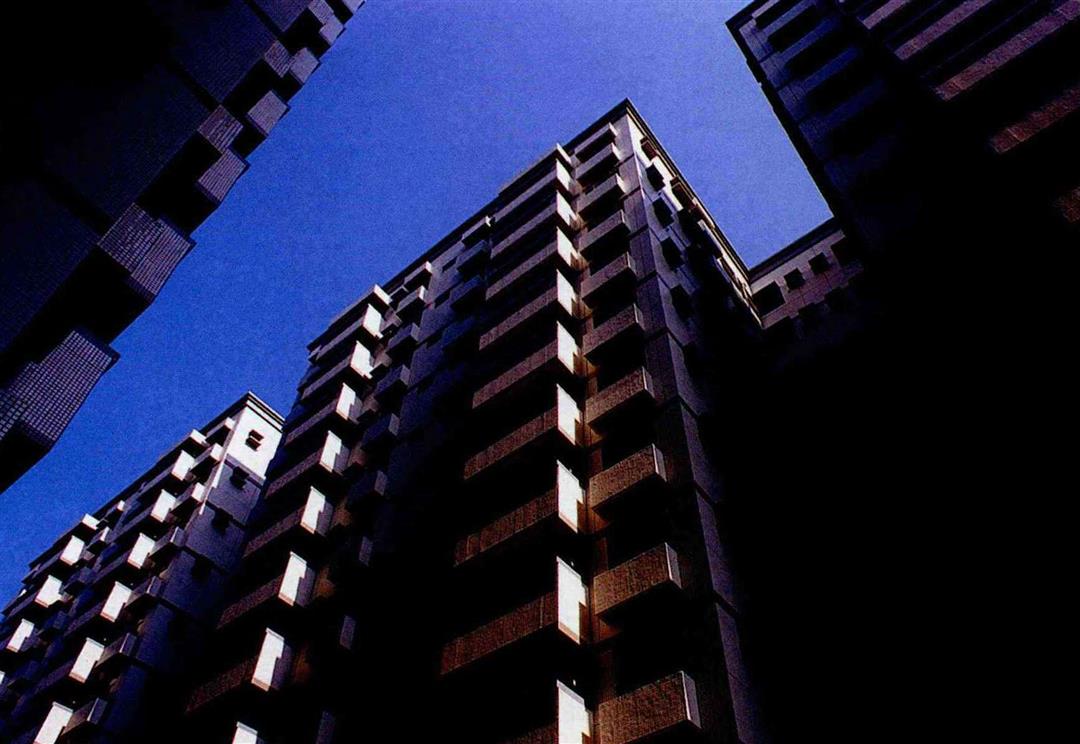
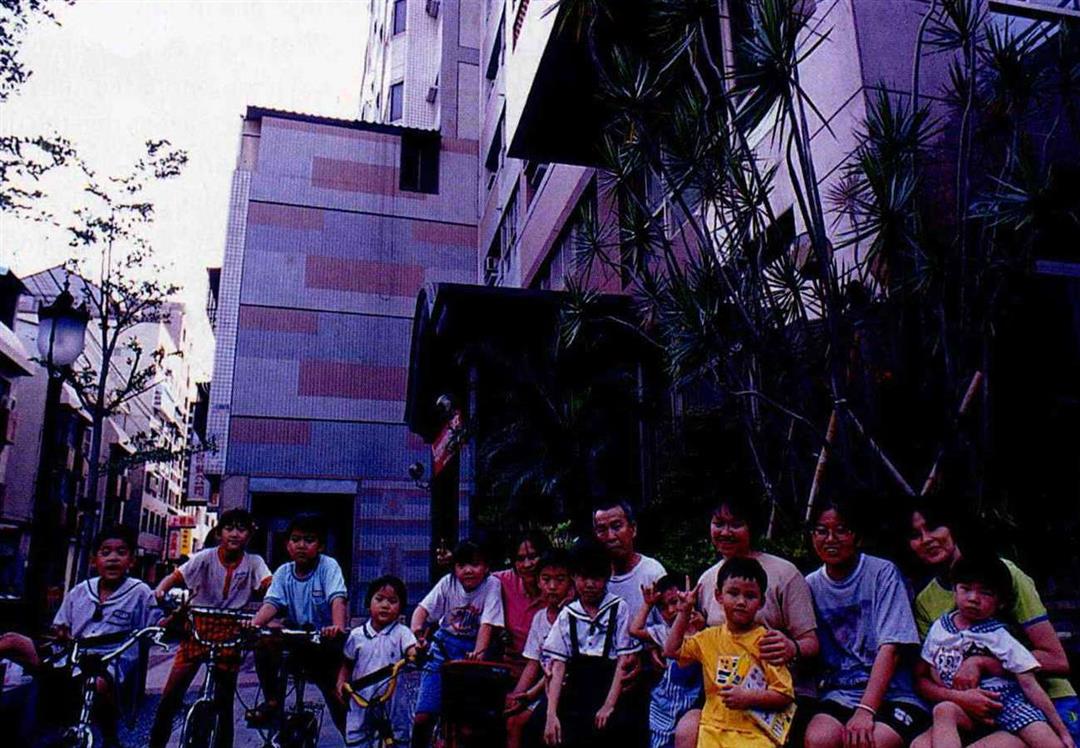
In Taiwan, where 84% of households own their own homes, the total supply of housing available far exceeds the number of households. In the future, developers will have to compete in terms of quality and service if they hope to turn a profit. The picture shows a model community in central Taiwan.
Profits and losses vary widely from firm to firm, and depend on factors including the size of the company, the number of years it has been in business and the price at which it has acquired the land which it is developing. Nonetheless, data shows that the local property market has been in a slump for the last seven or eight years. In such an environment, virtually all firms are having problems. This is one of the reasons why even though major developers are unwilling to admit there is a problem, the government is afraid to take the situation lightly.Just how many empty apartments are there?
The stock market tends to view such situations with the most critical eye. Last year, among the 34 construction firms listed on the main board, three had trading in their shares suspended because they were on the verge of bankruptcy and more the 20 saw their shares prices drop to historical lows. Meanwhile, the construction sector fell 46% over the course of the year, compared to a 21% drop for the stock market as a whole.
Looking at the situation from in terms of supply and demand, Lin Yi-hou, the newly appointed director of the Ministry of the Interior's Construction and Planning Administration (responsible for issuing building permits), states that according to the 1990 national residential housing census there were more than 670,000 vacant properties on Taiwan in that year. But urged on by skyrocketing real-estate prices from 1987 to 1989, local developers nonetheless rushed to get new large projects started.
Between 1991 and the end of 1997, a total of 1,540,000 housing units were completed, or an average of about 220,000 per year. The problem is that there were only about 150,000 new households formed per year during the period, meaning there was an excess of about 70,000 new housing units per year.
"After six or seven years, you have more than 400,000 excess housing units. When you add the original excess of 670,000 units, you have in the neighborhood of 1 million empty homes. [Talking about a crisis] is not a scare tactic," says a heavy-faced Lin.
Supply far exceeds demand in Taiwan's property markets. If you take a nighttime drive out to Tanshui, Hsichih or Ankeng, all of which are on the outskirts of greater Taipei, you'll see any number of tall apartment buildings, black as pitch except for a smattering of dim lights here and there. The rate of occupancy in these buildings is stunningly low, and this is why mopping up excess supply is the focus of the government's new real-estate stimulus package.
So how many unsold apartments are there really in the whole of Taiwan? How are they distributed? How many are in the hands of developers? How many are in the hands of original landowners who worked with developers on a project? How many are in the hands of investors? Unfortunately, there are no reliable figures with which to answer these questions.
Hsiao Chia-hsing, head of the Construction and Planning Administration's Department of Public Housing, laments that the construction industry views information on the number of unsold units as top-secret information, making it difficult for the government to get accurate data. When the Urban Housing and Development Department of the Council for Economic Planning and Development (CEPD) mailed out a questionnaire on this topic in the hope of finding out the real situation, it was also confronted with the industry's unwillingness to respond.

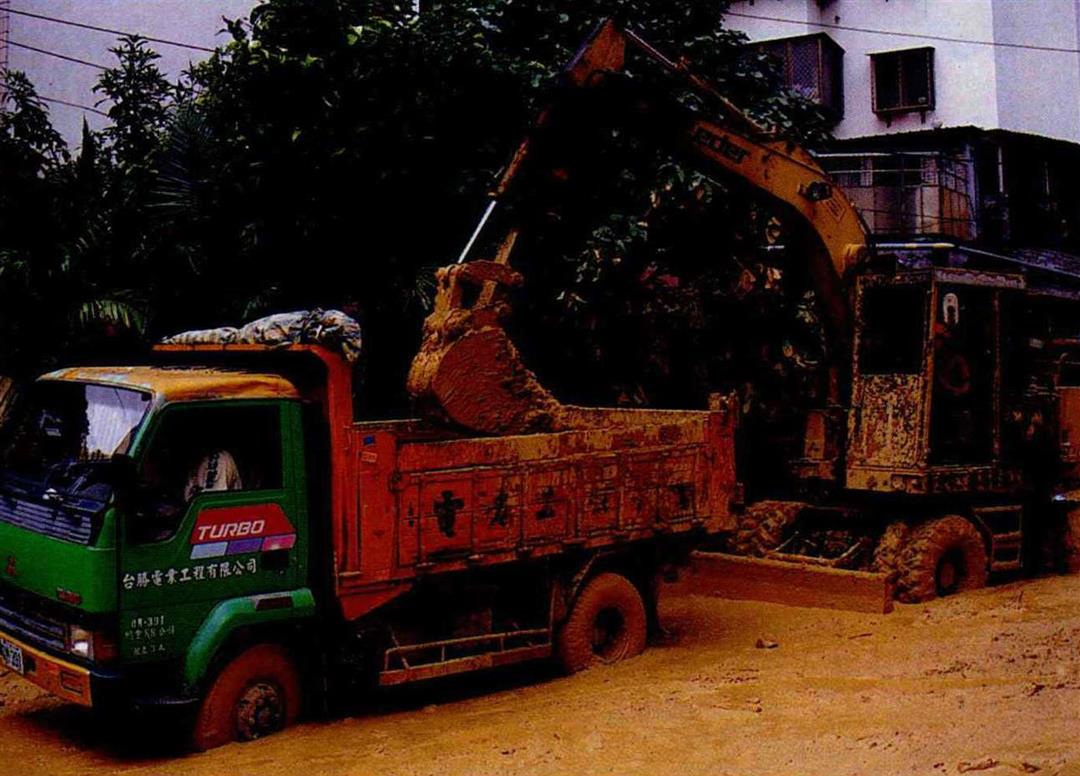
In an environment where developers are rushing to get projects onto the market, when a typhoon strikes, buildings on hillsides fall down while those along riverbanks flood, further dampening already weak buying sentiment. The photo shows flooding in Taipei's Neihu district. (photo by Vincent Chang)
Chang Chin-oh, a professor in National Chengchi University's department of land economics who has long followed the local real-estate market, says that developers are unwilling to reveal the true number of unsold units in part because the figures are ugly and would make banks less willing to extend credit to them. Another reason relates to the accounting methods they employ. From the time a project receives approval to the completion of construction may take as long as three years. But many builders use the "percent of construction completed" method in their accounting. This means that the developer cannot enter sales into the company's book until the project is 70% sold. So the company then "sells" properties to itself (using a false name for the buyer) in order to be able to show that it is generating income at an earlier phase in the project's development. This means that many allegedly "sold" units remain unsold, and developers are not in a position to be very upfront about the situation.Saving the economy, not the developers
Forget about the 670,000 pre-1990 unsold apartments for the moment. If we assume a construction cost of NT$3 million for each of the more than 400,000 unsold units estimated to have been built since 1990, the industry has around NT$1.5 trillion tied up where it can't do anything with it. When you then include mortgage interest, property taxes and the fact that the apartments are aging, developers are wasting an additional 10% of that amount per year.
Making matters worse, with the notable exception of Taipei City, where prices have remained relatively stable, property prices in the island's major cities have fallen by an average of more than 30% over the last few years. The longer the industry holds onto its unsold units, the more money it loses. And most firms have long since used up all the profits they made in the last real estate boom.
"If this NT$150 billion stimulus package had not been put forward, I'm afraid the real-estate market would have collapsed by the Lunar New Year," says Yin Nai-ping, a professor in National Chengchi University's department of finance.
Liu Yu-shan, vice chairman of the CEPD, believes that with the real-estate market having been in a slump for several years, firms are all anticipating the next boom. But of the several large domestic business groups which have collapsed since October of last year, most were primarily property developers. And with the Asian financial crisis dragging on and Taiwan's trade surplus dipping to a mere US$6 billion or so last year, a 10-year low, no one knows quite when the economy will recover. Desperate cries of "How long can we hold out?" and "We can't hold on any longer!" are now being heard-the industry is in genuine crisis.

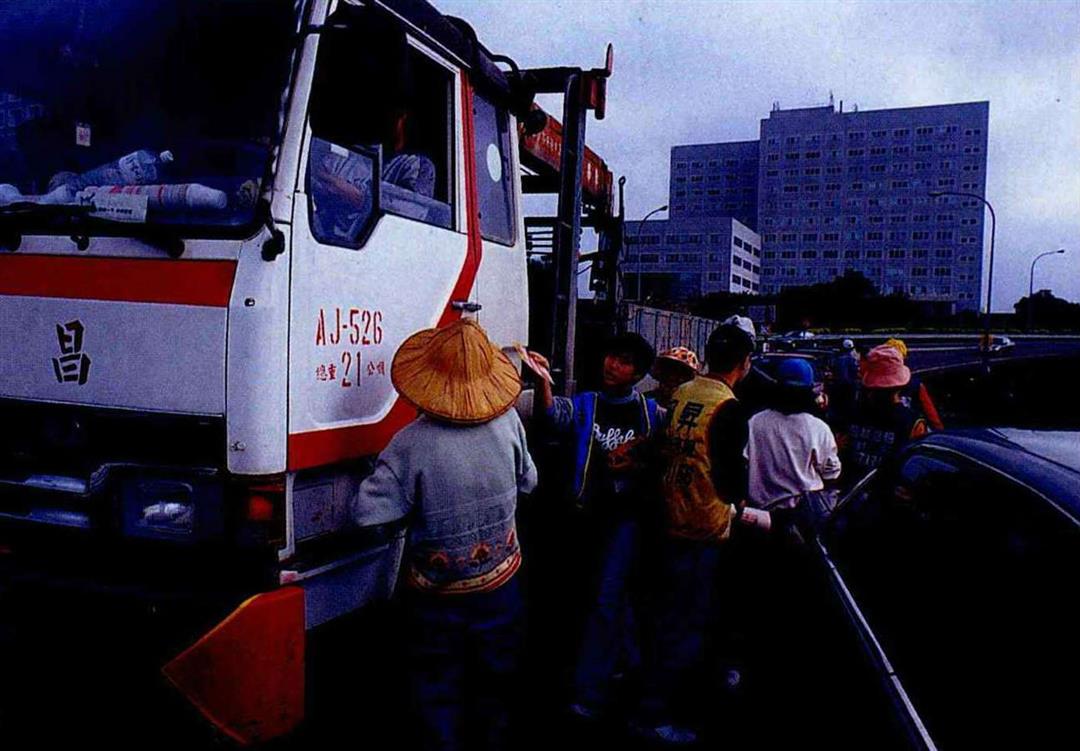
With the economy in a rut, competition in the real-estate market is white hot. The picture shows some boys distributing advertising to passing motorists on a freeway off ramp.
Liu further states that from the collective perspective of the stock market, the real-estate market and the banking industry, the government's stimulus package is not meant to bail out the construction firms, but to save the banking industry.Will it spread to the financial system?
How are the developers and the financial system linked?
Yin Nai-ping uses bank lending to illustrate the connection. Currently, developers have about NT$1.4 trillion in outstanding loans, and consumers hold residential mortgages worth about NT$2.3 trillion. In addition, more than half of the more than NT$5 trillion of outstanding industrial and commercial loans is secured by real estate. In total, loans involving real estate amount to NT$5-6 trillion, or nearly two-thirds of Taiwan's NT$9-trillion-plus GNP. No matter how you look at it, this is a significant sum.
How much of this money will ultimately have be to written off as bad loans? Every has a different answer to this question.
Chang Chin-oh observes that while the number and value of bad checks have risen in recent months, the increases have not been large. To him this indicates that there has not been a rapid worsening of the credit crisis. But the overdue loans rate has been climbing steadily since the beginning of last year. At banks it has reached a historical high of more than 4%, while at agricultural associations and credit cooperatives it averages around 10%. However, given that the sluggish economy is affecting all industries, it is difficult to estimate how much of this bad debt stems from the real-estate crisis.

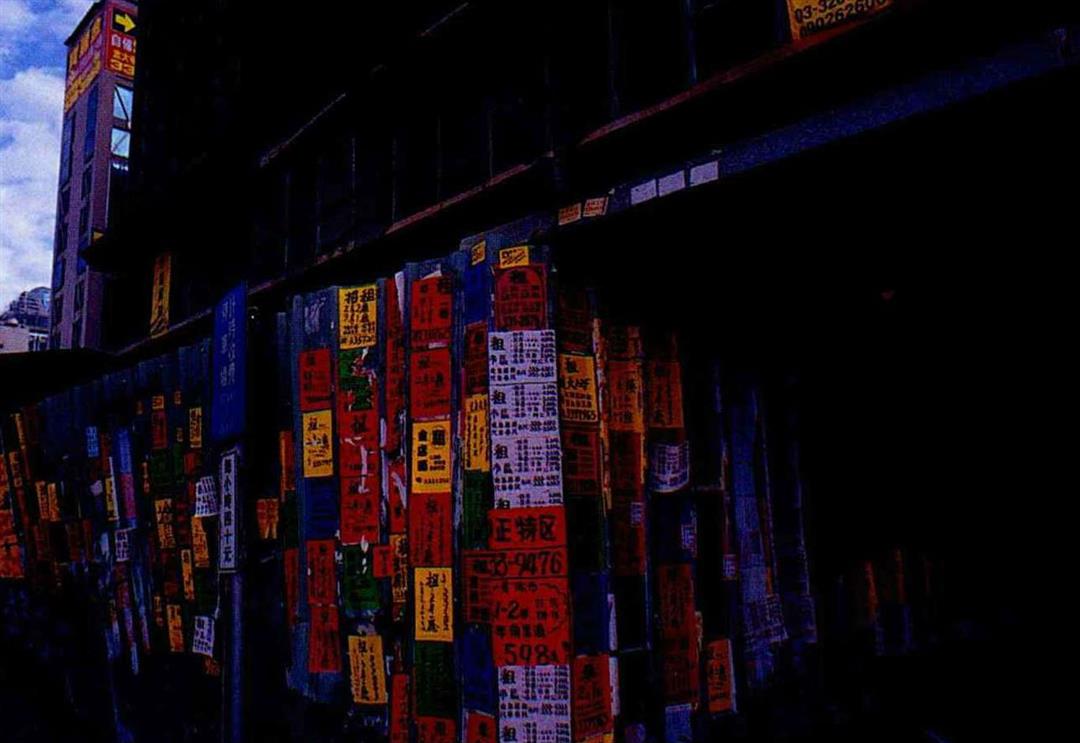
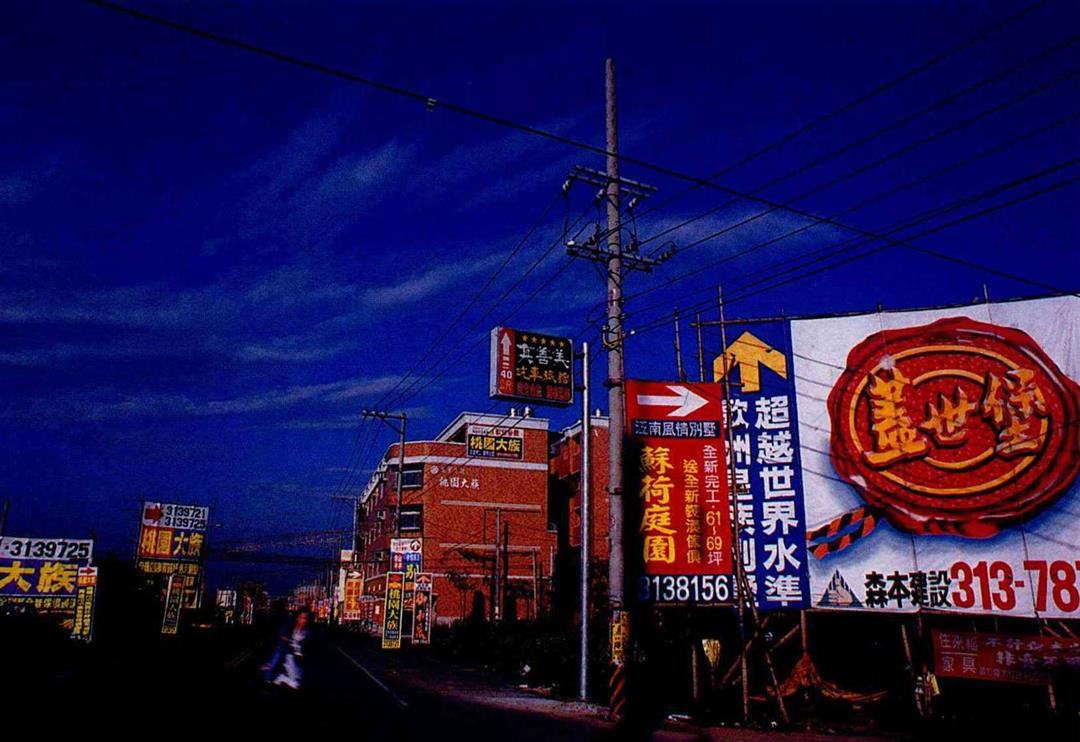
Taiwan's towns and villages are buried under billboards, some long faded. The cruel reality of the market has caught up with the illusion of a property boom.
On the bright side, Chang points out that according to article 84 of the banking law, real-estate lending (including lending to builders and mortgages) cannot exceed 20% of the sum of a bank's deposits and the value of bonds it has sold. With such a provision in place, even if the real-estate market continues to worsen, banks won't necessarily suffer too badly. In addition, local banks tend to be conservative in their lending practices. Chang's own research on Taiwan's largest bank specializing in real-estate lending-the Land Bank-shows that the bank typically provides real-estate loans of 56% of properties' market value. Based on this figure, "Although property values have fallen by 30-40%, they have not yet dropped below the value of the loans."Learning from Japan
Chang says that what people fear is that there may have been illegal lending invisible to those outside the banking industry. For example, in addition to providing a loan for 70% of the market value of a property, the bank might also provide an additional short-term loan for another 10-20% of the property's market value under the guise of a signature loan, thus pushing the total lending amount as high as 90% of the property's market value. In this case, the hidden risk to the banking industry from the real-estate crisis is much greater.
When one remembers Japan's real-estate troubles, the situation in Taiwan's real-estate market is all the more worrisome. When Japan's bubble economy peaked in the 1980s, the total value of Tokyo real estate was greater than that of the entire United States. But with the bursting of the bubble in the 90s, the myth that property prices can only rise was shattered. Financial institutions have suffered, and the Japanese economy has been mired in recession for eight years.

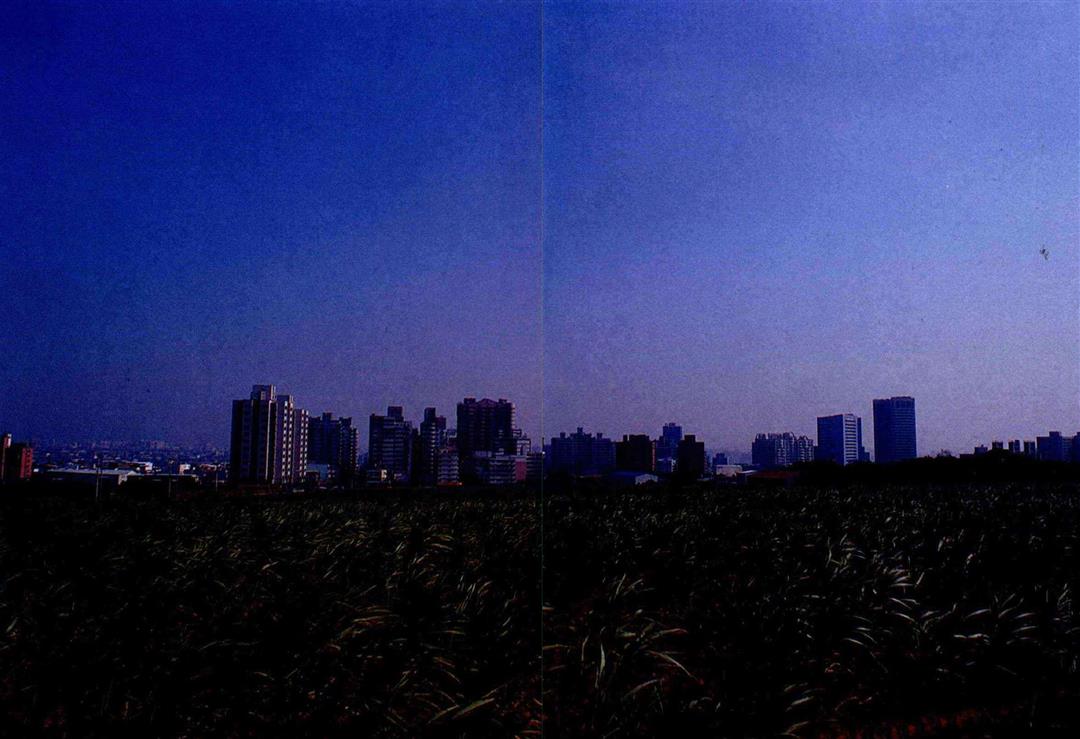
Rezoning all over Taiwan has made a great deal of new land available for construction. As a result, emerald rice paddies are now fringed with tall buildings. Taiwan, however, is still searching for a cogent policy on the use of national lands and on housing.
The Taiwanese and Japanese property bubbles were cast in the same mold, but fortunately Taiwan's electronics industry provided it with a buffer in the early 1990s, allowing the island to avoid the implosion of its real-estate bubble. After an eight-year-long "soft landing," people thought that the Taiwan real-estate market had largely cleaned the bubbles out of its system. But then the Asian financial crisis struck and the economy went into a slump. This has caused business groups to bounce checks and introduced some major bumps into the real-estate market's "soft landing." How low must prices go?
From the perspective of boosting the economy and preventing a crisis of confidence from causing the collapse of the real-estate market, many the real-estate stimulus package was necessary. But there is another view. Snails Without Shells (an advocacy group for people unable to afford their own homes) protests that the government's intervention in the real-estate market has destroyed the hopes of Taiwan's less wealthy families for cheaper housing. The public debate has also mentioned the ads jointly placed in newspapers in the early 80s by Cathay Construction and Pacific Construction offering 20% cuts in the prices of their homes. These price cuts sparked interest in buying homes and revived a lifeless property market. People wonder why the construction industry has not offered large-scale discounts on the homes it has on hand, thus bailing itself out. Why is the government using taxpayers' dollars to support high prices?
In response to these questions, Chiang Hui-hsiung, executive director of the Federation of Real Estate Investment Associations of the ROC, cites the example of Tanshui. "The average price of a new apartment in Tanshui has fallen from a pre-construction price of NT$220,000 per ping [about 3.3 square meters] four years ago to about NT$130,000 now, and you still can't sell at that price! Don't talk about 20% cuts in prices. Prices have been cut 20%, and 20% more, and it's still no use."
Chang Tiao, head of the Kaohsiung Association of Real Estate Investors, says that you can buy an apartment in the high-rises of downtown Kaohsiung at a price of NT$100,000 per ping and get back change. In more rural locations such as Yunlin, Chiayi and Pingtung, new apartments are selling for NT$60,000-70,000 per ping, yet there are still empty apartments everywhere.
There used to be a saying in real-estate circles which ran, "There is no such thing as an unsellable apartment, only an unsellable price." But with supply so greatly exceeding demand and buyers all waiting for the market to collapse, "Who can tell us at what price we can sell properties?" asks Chang.Taipei-playground for the rich
Objectively speaking, real-estate prices in many cities and counties have already fallen to what are reasonable levels based on standard family incomes. (Generally speaking, most families are expected to be able to afford a house that costs about 3.5 to 4 times their annual after-tax income.) For example, in 1997, the average annual after-tax income of a family in Tainan was about NT$820,000. Based on this figure, a reasonable average purchase price for a standard apartment of about 30 pings would be about NT$3 million. And, in fact, in high-rise apartment buildings on Kungyuan Road, not far from the train station, apartments are available at a price of NT$80,000-90,000 per ping. But this is not the case in Taipei. In Taipei, the average annual after-tax income per family is around NT$1.2 million, thus a reasonable average price for a 30-ping apartment would be NT$4.5 million, more or less. But you could wear out a pair of iron-soled shoes looking for a 30-ping apartment for that price in Taipei City.
Chuang Meng-han, an associate professor in the industrial economics department of Tamkang University who is very familiar with the real-estate market, says that the situation is much like that in Tokyo: "All of Taiwan's wealthy want to have a home in Taipei." This is one of the reasons Taipei's apartment prices are so high. Snails Without Shells have been protesting the government's real-estate market stimulus plan everywhere, stating that without such support prices in Taipei could fall to NT$100,000 per ping. But, "If the average price of a Taipei apartment fell to NT$100,000 per ping, I'm afraid Taiwan's entire economy would go belly up," says Chuang, shaking his head.
Wang Ying-chieh, executive director of the Chinese Association of Real Estate Brokers and member of the National Assembly, states that 84% of people in Taiwan own their own homes. Many have scrimped and saved their entire lives to purchase an apartment, and more than half of their total assets are tied up in this one object. If real-estate prices collapsed, "everyone would lose."
Of the government's plan to boost the property market, Yin Nai-ping says if the government is concerned about criticism that it is trading benefits with the construction industry, it could wait until the real-estate market and developers begin to go under before acting. Then it could put together an organization to package up repossessed properties for sale to help the banks clear bad debts off their books. But by that time, "Taiwan's credit rating and its international image would have been wrecked. The cost of fixing the problem would be much higher." From the perspective of preserving financial stability and avoiding a crisis of confidence, the government had to act.Stepping in in six months?
But Yin emphasizes that the local property market has cycled between boom and bust for the last 30 years. Clearly the present system has some serious flaws, and this NT$150 billion is just an emergency measure which will give the market six months of breathing room.
"The long-buried problems of the construction industry will not be resolved by short-term rescue packages," says Yin. He feels that in order to avoid making the long-term situation worse, the government must implement measures which address these deeper problems within the next six months. If it does not, the construction industry's problems will recur. Yin wonders how many times the government can afford to throw NT$150 billion at the problem.
Tsai Wei-ming, president of the Wei-Ming Real Estate Investment Weekly, has estimated that the benefits of this NT$150 billion will play themselves out in three to six months, and that the money will take about 70,000 apartments off the market. But when one considers the number of excess apartments, these 70,000 are a mere drop in the bucket.
Tsai ridicules the demand aroused by this policy as "the last kick of a dying man." He predicts, "If the government doesn't come up with a stronger incentive to make people buy, once this program runs out a new nightmare begins."
There's no question that these government-sponsored low-interest mortgages will stimulate buying, especially by those who already had the need or desire to make a purchase. Offered a low-interest mortgage that will save you NT$600,000-700,000 over the life of a 20-year mortgage, who wouldn't be interested? But if consumers push up their purchase timetable to take advantage of the low-interest loans, what happens next year? Would it be like Chang Tiao says, with construction firms taking advantage of this opportunity to unload the apartments they have on hand and then "running for their lives," some moving into different industries and others carrying out mergers? At this point no one can say.Reolving the problems
Looking at the troubles confronting the construction industry, Lai Cheng-i says feelingly that over the years the government has always focused its industrial policy on manufacturing industries. Except for its occasional efforts to either restrain or bail out developers, the government has largely let the industry go its own way, allowing firms to make it or fail on their own.
Even now, there is no government agency exclusively responsible for monitoring the construction industry, an industry closely linked to social stability. Moreover, even housing policy and planning for the use of national lands are not coordinated. The only issues are: Which cities and counties are going to implement land-use ratios? When? Firms spend all their time guessing. When Taipei County announced that it was putting land-use ratios into effect a year and a half ago, builders rushed to get projects going before they were implemented. The 4,000 new building licenses that were approved translated into 200,000 new apartments. Over the last two years, there have also been a number of instances of buildings built on slopelands falling down, leading the government to ban the construction of buildings on slopes of over 30 degrees. While this may have alleviated the slopeland problem, it has left firms which bought large tracts of slopeland for development in the lurch.
In addition, there is a great deal of legislation relating to the real-estate market-everything from regulations on the construction of residential buildings to securitizing mortgages-which has not yet passed the Legislative Yuan and has therefore not been implemented in spite of several years of discussion. Moreover, in spite of the obvious oversupply problem which exists on the real-estate market, the government has been moving forward with its renovation of housing for military dependents and opening up more agricultural land for development. This makes developers anxious.
Chang Chin-oh understands that firms have their troubles, and he knows that government policy is not perfect. But he nonetheless feels that when you're in business you should exercise some business sense; you can't blame all your problems on someone else. For instance, in order to get around land-use ratios, firms have been rushing to get projects completed before these ratios take effect. "What are these firms thinking? The sides of mountains and the banks of rivers are packed with 1,000-unit apartment buildings. Excuse me, but how many people are going to want to live in that kind of place? And are firms thinking that they can go against the economic tide, creating demand out of nothing?"Come clean and everyone wins
Chuang Meng-han believes that the solution is going to hurt, and the industry had better start thinking about how to deal with that hurt. The first thing to be done is to get market mechanisms fully instituted in the real-estate market as quickly as possible. Information on planned projects, sales rates, unsold units and transaction prices should be made more readily available. Consumers would thus have more confidence when buying a home and would be less likely to regret their purchase. Still more important is to create a "warning system" for the industry to reduce the number of projects begun with little deliberation, and thereby conserving resources.
Chang Chin-oh says that while long-term planning for the real-estate market is being carried out, the importance of social equity must be remembered. "The real-estate market can be divided into the rental, previously-owned-home and new-home segments. The government's stimulus package is aimed primarily at absorbing some of the excess of new homes, and it provides tax breaks to home owners. The weakest group, the renters, get nothing."
Chang says that the government should quickly put in place a system which provides more help the lower your income is. On the one hand, this will help alleviate some of the difficulties faced by Taiwan's "snails without shells," while also ameliorating the negative effects of a construction industry used to ignoring the little guy and raking in profits without actually doing very much.
The government has already administered strong medicine to the property market, but whether this will bring about a recovery remains unclear. Looking back at Taiwan's last property boom in 1987, we note that it occurred at a time when the NT dollar was appreciating and there was a lot of "hot money" flowing around. The trade surplus was at unprecedented levels and there were not many investment alternatives available. In this situation, property prices boomed under pressure from local and foreign capital. But those days are past, and the dream of overnight riches from real estate should have passed with them. Taiwanese society will only regain its stability when it washes the property bubble completely out of its system.
"I only hope that these jolts to the market and the passing of the bubble market will allow Taiwan's economy to put down more stable roots, and that it will lead to a better living environment for everyone. If that happens, then these recent difficulties will have been worthwhile." Chang Chin-oh's wish is everyone's wish, isn't it?