Culture Masters: Introducing Taiwan Authors to the PRC
Tsai Wen-ting / photos Pu Hua-chih / tr. by Jonathan Barnard
January 2002
When writers from Taiwan have their books published in mainland China, some find that the experience is an exercise in futility and earn nary a cent, whereas others garner fame and fortune, joining the ranks of the mainland's hottest literary figures. Apart from writing books that appeal to the mainland market, it is essential that writers from Taiwan have a knowledgeable guide when confronting publishers, readers and media unfamiliar to them in the PRC.
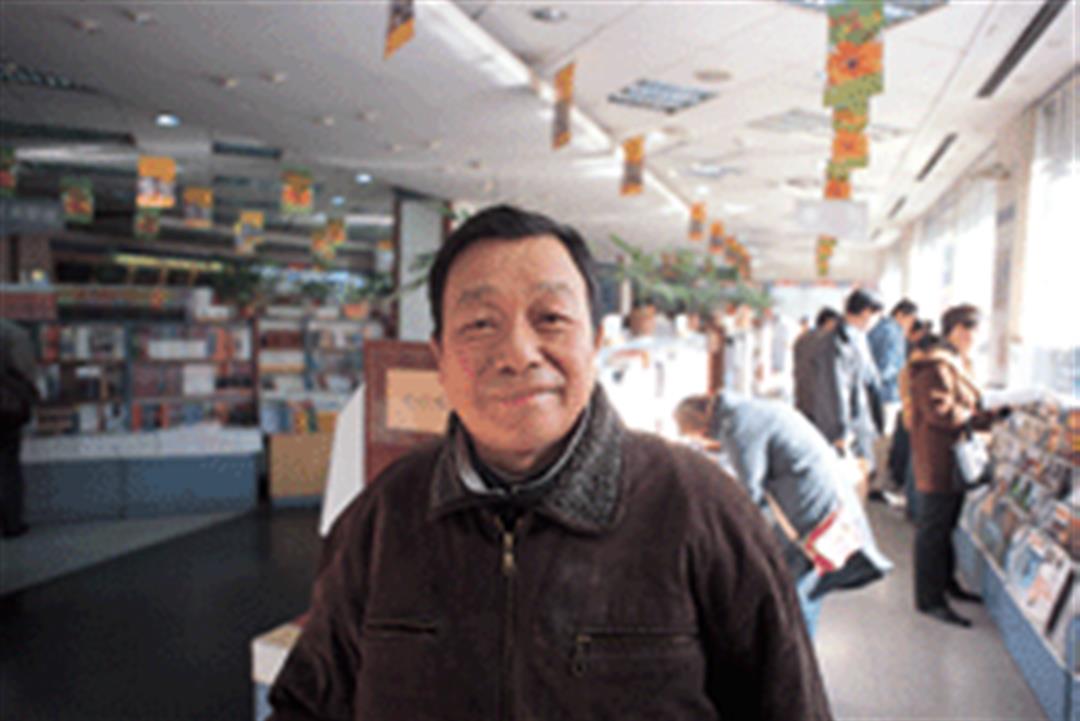
Shen Changwen, who was formerly editor-in-chief of the mainland's Dushu ("read") magazine and general manager of Joint Publishing Company, and Qu Xiaoxia, who used to work for the PRC's Press and Publication Bureau, are behind-the-scenes facilitators who have successfully introduced many works by Taiwan authors to the mainland.
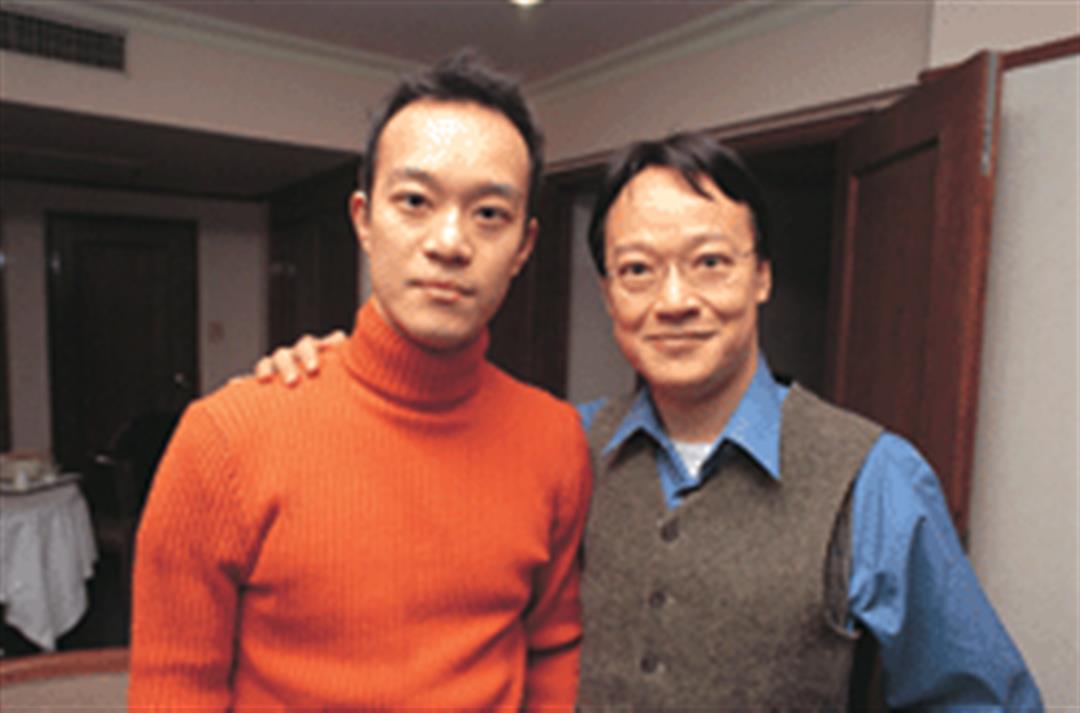
It was after 10:00 on a late October night last year before Liu Yung and Liu Hsuan, writers from Taiwan who are father and son, stepped into their Beijing hotel and began pre-shooting discussions with three people from the PRC's Central Television program Chat. With an audience of 20 million, Chat is one of the most important interview-type shows on mainland television. Its host Ni Ping is a star who has also hosted special New Year's broadcasts for the last ten years running, and once on the night of the Mid-Autumn Festival asked Jiang Zemin to get up on stage with her.
Before the Lius had arrived in the mainland, Liu Yung's agent Qu Xiaoxia had already arranged for a tight schedule of interviews and speeches. The interviews included one with the Beijing Evening News, which has a circulation of 1.3 million, as well as an on-line chat at Sohu.com, the mainland's second most popular website.
In fact, when Liu Yung isn't on the mainland promoting his books, Qu is focusing on his main group of readers: the young. She has helped him place columns in magazines that are most popular with junior high school students, including Nuyou ("girlfriend"), which has a circulation of 3 million, as well as Zhongwai Shaonian ("Chinese and foreign youth") and Zhong Xuesheng ("secondary school student"), each of which has a circulation of over 300,000. "Every month, I help Liu get work published, and not necessarily just in Beijing. His work has appeared in Chongqing, Taiyuan, Guangzhou-all over the country." Qu explains that she spends time every day flipping through magazines and newspapers and watching television from across the PRC to keep familiar with all of the nation's major media outlets. In this way she can find opportunities to make appropriate matches between writer and outlet.
Apart from Liu Yung, the Taiwan authors that she currently represents include Lin Ching-hsuan and Chien Chen. Qu is also handling publicity for Ruby Hsu's books for learning English.

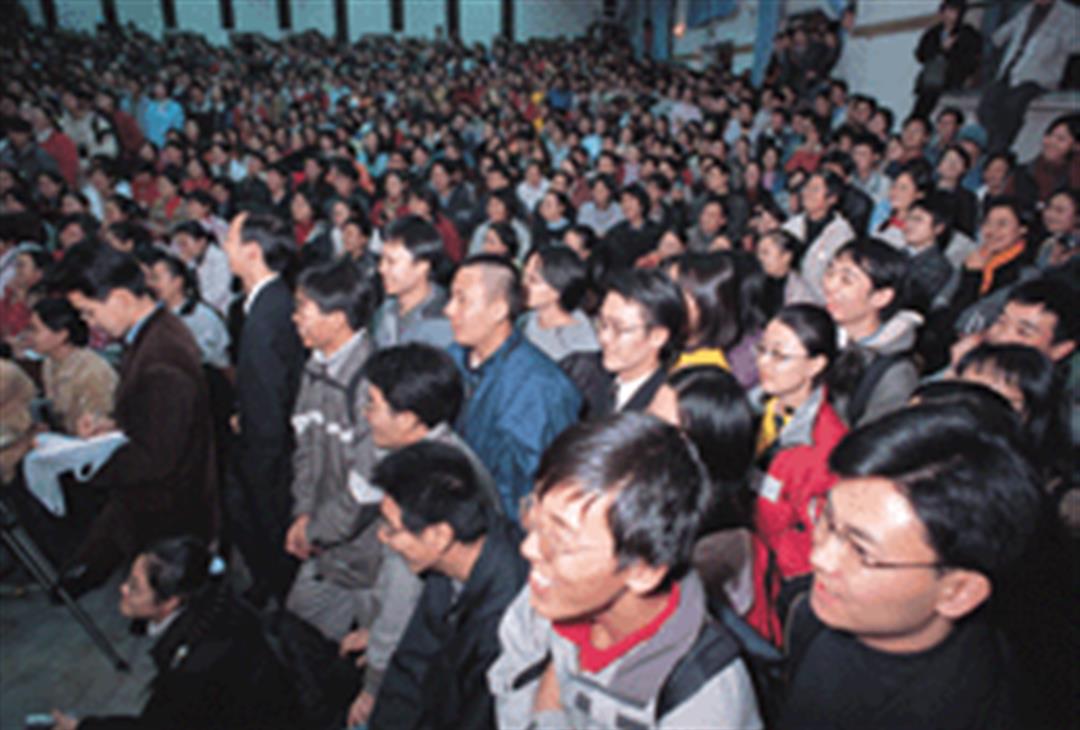
When Liu Yung and his son lectured at Peking Univer-sity, he drew a packed house. Even the window sills were full.
Nationwide
On the wall of Qu's library, she has hung many of her own photographs. There are photos of the murals in the mountains of Ningxia, and a 360-degree panorama of the Yellow River. Born in 1957, Qu from a young age spent much time traveling and collecting folk songs with her father, who was a scholar of Chinese opera. She originally worked for the PRC's Press and Publication Bureau, and ended up as director of the publishing office there. She had always wanted to work for the government, but because her job provided little money and little spare time (so that she had no chance to travel and collect folksongs) she boldly left her position and opened up her own cultural studio.
In 1995 Qu and Liu formally began cooperating, as Qu became Liu's mainland promoter. There wasn't much of a lecture circuit in the mainland back then, and Qu was attacked from many quarters for promoting speakers from Taiwan. Yet because of Qu's past connections, many institutions were willing to take a chance on her. Liu and Lin Ching-hsuan have by now given dozens of speeches, and each time they do the sponsoring organization relies on Qu to set the proper limits, by communicating with the writers about content ahead of time, filtering possible lists of questions, and reminding writers how to handle sensitive topics that might prove inflammatory.
Even with ample preparation, all kinds of pitfalls are possible when the writer actually faces his audience. For instance, once when Liu Yung was discussing differences between literature in Taiwan and the mainland, he expressed the opinion that Taiwanese literature was relatively "free and easy." This immediately caused members of the audience to ask, "Do you mean to say that mainland literature isn't free?" And once when Lin Ching-hsuan was speaking in Changsha during the Mid-Autumn Festival, he said at the beginning of his speech: "This is the first time I've been abroad for Mid-Autumn Festival." The use of the word "abroad" caused an immediate uproar, and many members of the audience passed up notes of protest. And so Qu sits alongside her writers and passes them notes asking them to expound upon points or correct themselves.

When Liu Yung and his son lectured at Peking Univer-sity, he drew a packed house. Even the window sills were full.
A first against the pirates
Upon entering the mainland market, all writers worry about pirated editions. On a bitterly cold winter day in 1999 Liu Yung won a lawsuit against book pirates in Shenyang. This was the first time that an author from Taiwan had won a lawsuit against copyright infringers on the mainland.
There are more than 70 different pirated editions of Liu's books on the mainland. "Enough for a separate book fair," Qu jokes. At the beginning, Qu assiduously worked the normal channels. She went through the Press and Publication Ministry to get a "red head" (a document with the official national insignia), which requested all areas of the country to strengthen their enforcement efforts. Up against pirate publishers who don't leave a trace, she targeted, at Liu Yung's suggestion, the bookstores. They ended up winning the lawsuit and received RMB40,000 in compensation. Qu Xiaoxia is now helping the young Taiwanese travel writer Kuan Sun-chih with another suit against pirates.
In the past, publishers on the mainland were all government bodies, and books were regarded as nutrition for the spirit rather than as consumer products. Qu may well be the first person in the PRC to have molded authors into kinds of brands and their books into commercial goods. For instance, before working with Qu, Liu had signed a contract with another mainland publisher, but they sold less than 10,000 books over the course of five years. Today Liu's books are very hot among junior high and high school students all over China, and he is known as a super best-selling author.
Qu, who has successfully marketed Liu for the mainland market, recommends that writers from Taiwan not spread themselves thin by working with several different publishers. This would only cause each of the publishers to be reluctant to promote the author, lest it help their competitors. Such a strategy also makes publishers less motivated to stamp out pirated editions. By splitting the pie, you satisfy no-one.
Liu Yung estimates that his books, including both legitimate and pirated editions, have sold more than 10 million copies on the mainland. It's a staggering number. "I believe that Liu is very farsighted," says Qu. "Early on, he saw the potential of this market and he threw himself into it." Many writers from Taiwan thinking about entering the mainland market lack this kind of determination. Even though Liu Yung's works had been Kingstone bookstore bestsellers for over ten years in Taiwan, he didn't try to capitalize on this to get higher royalties. Moreover, all of his mainland royalties from the first three years were plowed back into publicity for the mainland market.
Of course, not all the authors that Qu represents are cash cows. She once introduced a pictorial edition of Shakespeare from Taiwan and lost RMB300,000 on it. And she is still struggling on behalf of Chien Chen, a more purely literary author. But Qu, who admires Chien's work, holds that her efforts are worth it. "Raising the quality of readers requires efforts from people in mainland China and Taiwan."
As her own boss and a lover of cultural travel, Qu is good at organizing her time. Last summer, she brought Lin Ching-hsuan to ten famous tea towns on the mainland, as well as to Hangzhou's Longjing and Junshan Island in Dongting Lake to sample "Junshan Yinzhen" tea. In January of 2001 she went to see swans in Rongcheng County, Shandong. Then, after the Chinese New Year, she went to Shanbei County for a folk arts festival. Qu's cultural horizons are only growing broader.
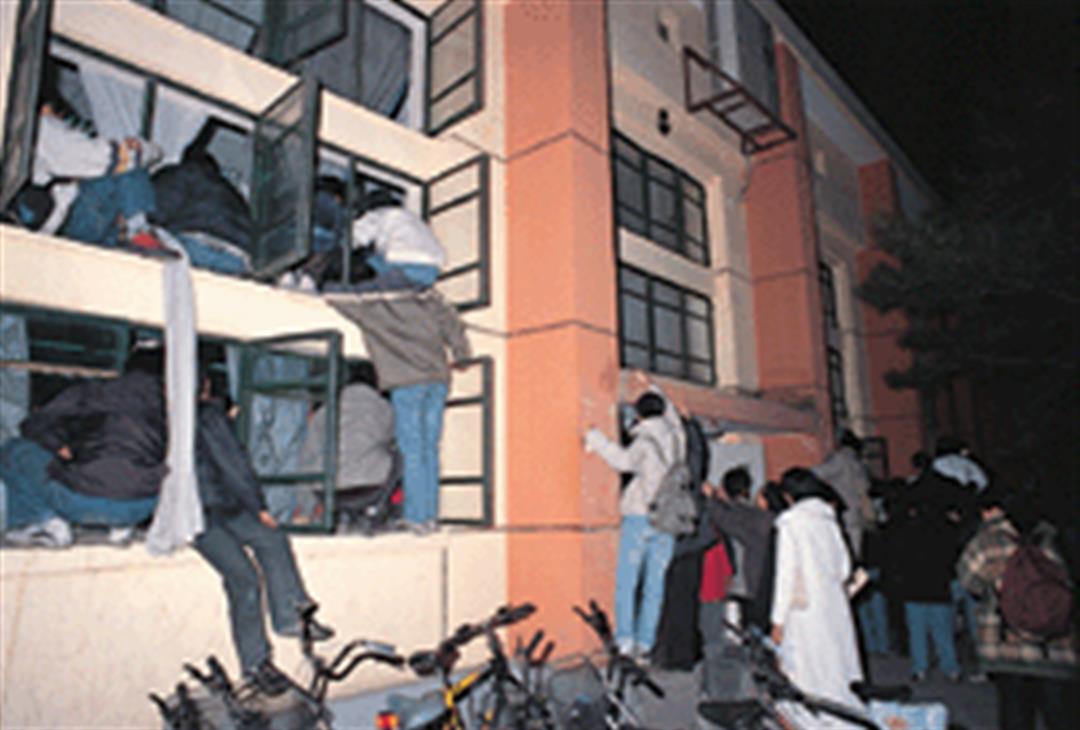
When Liu Yung and his son lectured at Peking Univer-sity, he drew a packed house. Even the window sills were full.

Longing for reunification
Taiwan's writers are now aggressively going to the mainland. Yet back in the days when there weren't many channels for cultural exchange, Joint Publishing Company, the mainland's leading book publisher, served as an intermediary between the mainland and writers in Hong Kong and Taiwan. Shen Changwen, JPC's former publisher, had a hand in introducing virtually every Chinese-language writer from outside the PRC to the mainland market.
In November 1978, when Deng Xiaoping set the mainland on the course of reform at the Third Plenum of the CPC's Eleventh Central Committee, he also turned over a new leaf for cultural work in the PRC. In April of the following year Dushu, which has since become very influential within the PRC's publishing industry, published its debut issue. Shen Changwen, a senior figure in the mainland's publishing world, was appointed editor-in-chief in 1980. He would serve in that position until he retired in 1995.
JPC, which was originally the PRC's most important propaganda machine, was shut down for various reasons in 1951 and existed in name only for many years. It wasn't reopened until January 1, 1986, the last of the publishing houses to be resurrected. Shen, who was editor-in-chief of Dushu, was also given the top job at Joint, which he held until he retired six yeas ago.
"There's a phrase that has bad connotations to you across the strait, but has good connotations here: namely tongzhan ['united front']" says Shen, who is constantly laughing and joking. Early on JPC was eager to make a contribution to this "united front." Aiming to serve as the mainland's principal reception center for overseas writers, they established a branch in Hong Kong (which was actually much larger than the headquarters within the PRC). JPC made publishing Taiwan and Hong Kong writers, as well as Chinese-language writers living in America, their main line of business.
The Taiwanese writers they introduced back then included Li Li, Yu Li-hua, Nieh Hua-ling, Chen Ying-chen, Hsi Mu-jung, and Yu Kuang-chung, as well as many scholars in the humanities and social sciences, such as Tu Wei-ming (an early Taiwanese scholar who lived in America), Hang Chih, Fu Wei-hsun, Lin Yu-sheng, Kao Hsi-chun and Chen Ku-ying, who had taught for more than ten years at National Taiwan University but couldn't return to Taiwan because he was blacklisted. All of these writers established strong friendships with Shen. During one three-year period, Kao Hsi-chun bought a thousand copies of every issue of Dushu so that students at Peking University could have them free of charge. Furthermore, "For the sake of Huang Jen-yu's works, I specially flew to New York and had coffee with him by the Hudson. It took a lot of effort!" Shen has the tone of voice of an overgrown child despite being 71. He's really quite lovable.

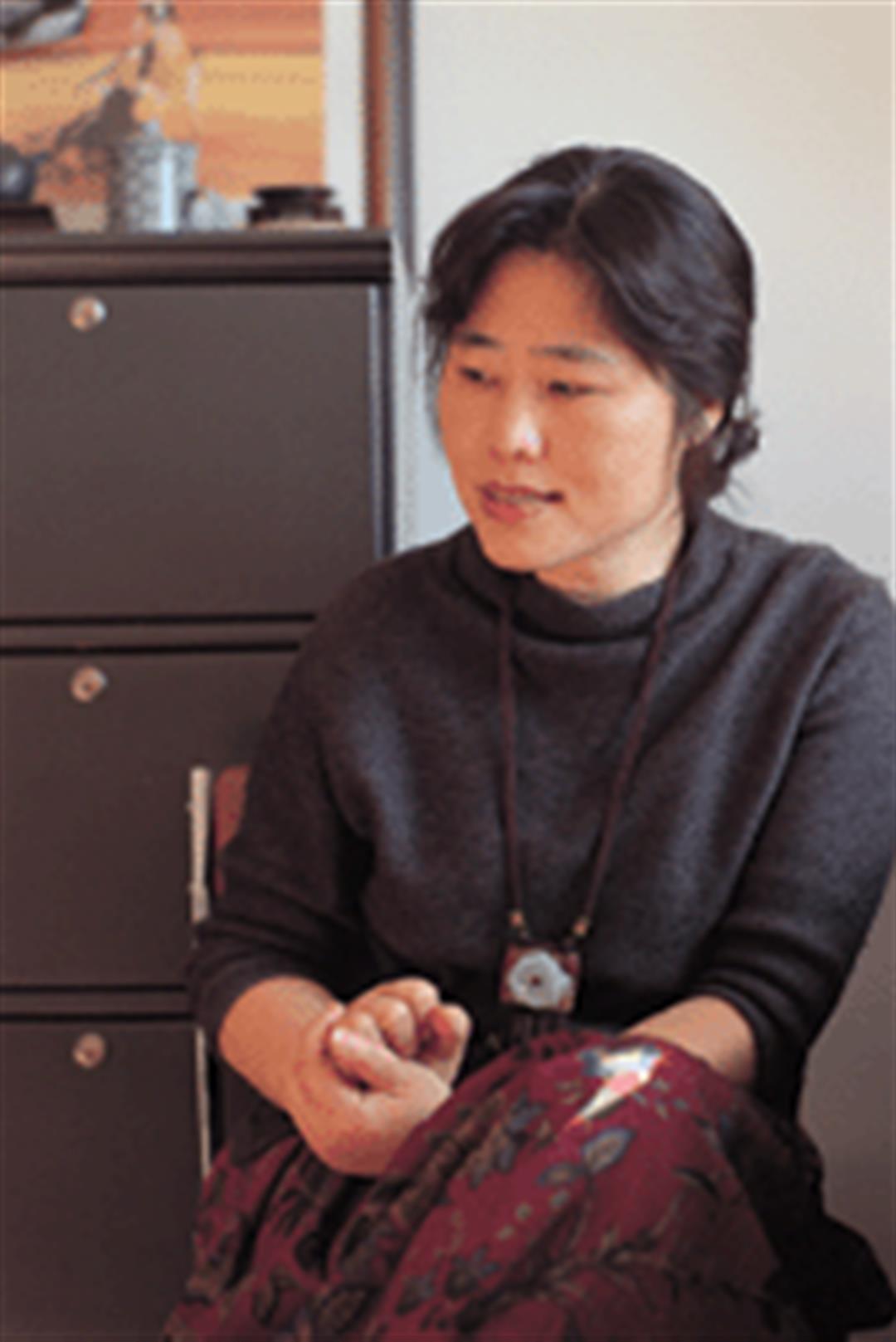
Gentle and graceful, clever and able, Qu Xiaoxia is a leading literary agent in the PRC. She has successfully helped turn Liu Yung, Lin Ching-hsuan and other Taiwanese into best-selling authors on the mainland.
A busy retirement
Although he officially retired when he stepped down from those posts, because he was very familiar with writers and publishing resources both in China and abroad, he couldn't refuse his friends' entreaties, and has become a major behind-the-scenes force in publishing on both sides of the Taiwan Strait. He both serves as a go-between to find appropriate mainland publishers for the complete works of such writers such as Yu Li-hua, Yu Kuang-chung and Hsi Mu-jung, and he also continues to introduce many young and middle-aged authors to his contacts on the mainland.
"There's another big star that we're about to introduce here, but it's confidential," jokes Shen, before explaining that on that very afternoon he is going to be thinking up a strategy for Chi Mi ("Jimmy"), a Taiwanese illustrator whose name is a homonym for "confidential." In fact, Shen made the mainland introductions for Tsai Chih-chung and Chu Te-yung, Taiwanese cartoonists who are already very popular in the PRC.
Shen Changwen, who visited Taiwan in 1994, has encouraged the younger generation of mainland publishers to go to Taiwan for a look. "The mainland has abundant cultural resources, but Taiwan has a publishing industry that is five to ten years ahead of its mainland counterpart." Building bridges between the publishing resources across the Taiwan Strait is an endeavor that Shen has been happily working toward during his retirement.
Shen has helped introduce works of all kinds, from literature to social theory to comics. And you can see that he has taken great care in introducing each and every one of them. He is a bit of an extremist, holding firmly that works that "are inclined to exalt the ideology of freedom will be beneficial for the mainland." At the end of last year, Shen raised money from industry to support a conference on Hu Shih.
"In the mainland people used to think that Hu was inferior to Lu Xun, but today many academics hold that Hu Shih's freedom and tolerance are just what the mainland needs right now," notes Shen. "I've been encouraging this line of thinking."
Shen's 20-character maxim
Shen, who is just as famous for being an epicure as for being a publisher, has the menus of top Beijing restaurants stored in his PDA. At the close of the interview, Shen, a self-described "busybody," gives an explanation of his "Matchmaker," a five-line, 20 character poem-maxim about cross-strait culture: "Every day I sit with writers and exchange thoughts, 'Sweet talking'; the first step of which is to wine them and dine them in order to 'Steal the secrets' and find out what they are thinking and writing; then I go on to 'Sell the information' to publishing houses; and subsequently 'Engage in blackmail' to get the best deal; and finally I just 'Wait for the money.'"
So the secret is out. If a writer from Taiwan wants to go to Beijing to sweet-talk Shen, he ought first to ask around about where to find some of Beijing's best food. The way to the heart is through the stomach-yes indeed!