New Taipei City: Sky Lanterns in Pingxi
Yeh I-chun / photos Jimmy Lin / tr. by David Mayer
January 2016
It is misting the day we visit Pingxi. One of the rainiest of the 29 districts in New Taipei City, Pingxi gets almost 200 days of precipitation per year, hence the lush green hills. On this day, the scenery is a bit blurry.
Prior to Han Chinese settlement, modern-day New Taipei City was inhabited by the Ketagalan tribe. In the Age of Discovery, the Spanish and Dutch arrived and built settlements. Industry, agriculture, and commerce differed in each locality. Every hamlet had its own special feel. Today, New Taipei City is dotted by old town centers left over from the past. The old quarters in Jiufen, Pingxi, and Shifen all grew up when coal mining thrived. The old part of Jinshan developed as a commercial center. Old Shenkeng and Shiding are noted for their tea and cloth-dyeing industries. Old Xizhi arose as a transshipment point on the Keelung River. Old Yingge teems with ceramic kilns and shops, while the old quarter of Sanxia boasts a baroque sort of European ambience. And old Tamsui abounds with interesting people and culinary delights.
Pingxi is famed for its sky lanterns. The first Pingxi Sky Lantern Festival was held in 1999. In 2000, BBC coverage of the release of a world-record 18.9 meter sky lantern was watched by millions of viewers worldwide. The festival quickly became one of the most important in Taiwan, and generated lots of tourist business.

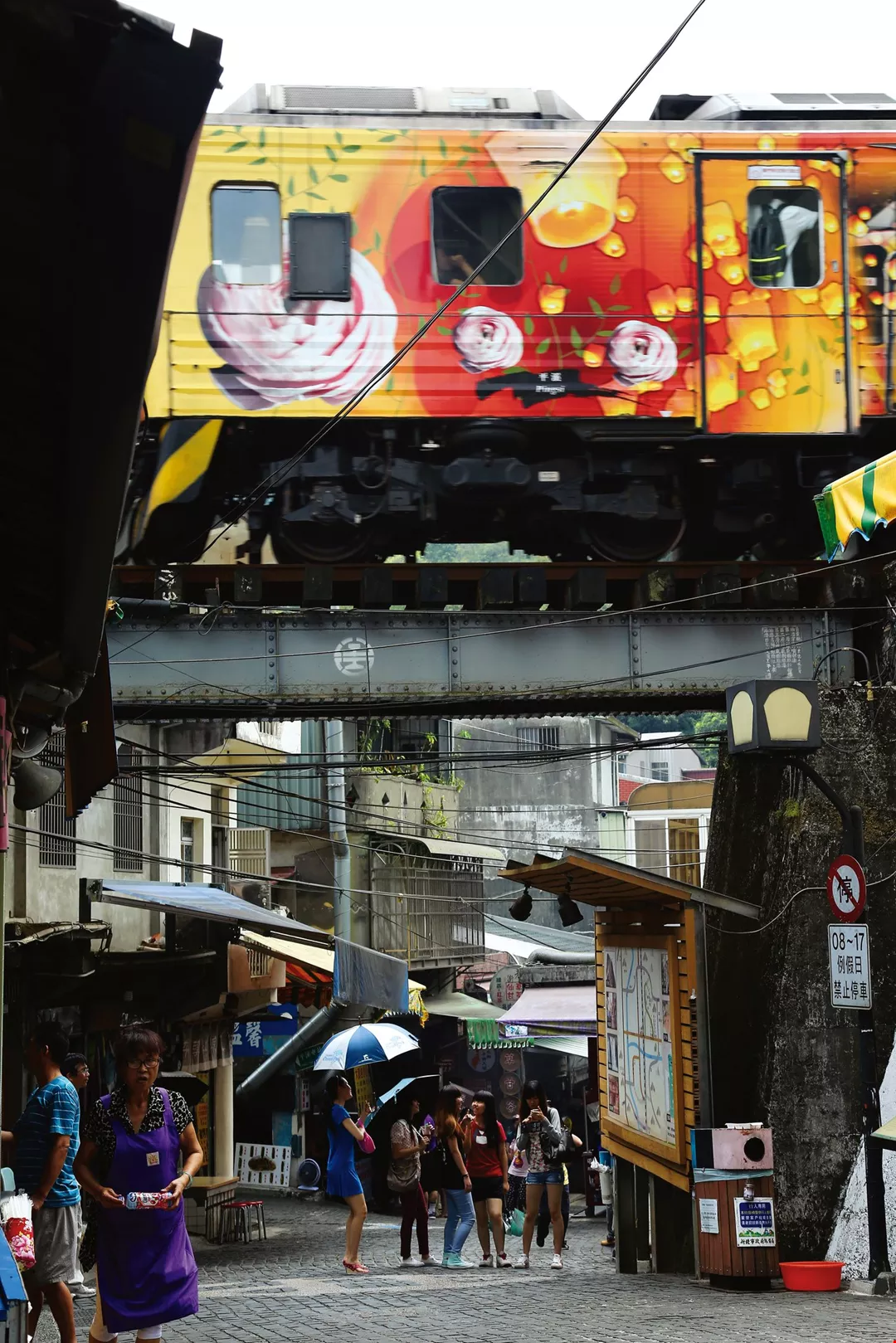
Due to the lie of the land in Pingxi, the railway bed looms higher than the streets down below.
International fame
At the World Expo 2010 in Shanghai, the Taiwan pavilion was designed to resemble a sky lantern. What’s more, the Sky Lantern Festival made the CNN list of “52 weeks, 52 things to do in 2013” and Fodor’s “15 Festivals to Attend Before You Die.” Sky lanterns and Pingxi are inextricably linked, like a pair of twins. Their use in Pingxi originated in the Qing Dynasty, when bandits roamed the land and people were forced now and again to flee into the hills while able-bodied kin stayed behind to defend the homestead. Sky lanterns signaled that it was safe to return. This eventually led to the custom of releasing sky lanterns on the day of the Lantern Festival to supplicate the gods for good fortune and more offspring.
Up until about a century ago, most of the locals in Pingxi cultivated Assam indigo or tea. In 1908 coal deposits were discovered, and in 1921 the Taiyo Mining Corporation built the Shidi rail line (today’s Pingxi line) to haul coal. Coal brought prosperity to Pingxi and drove development along the rail line in places like Shifenliao and Jingtongkeng. Over 80% of the area’s population made their living from coal. But in the 1970s the coal deposits began to dwindle, some big mining accidents occurred, and the nation began turning to other sources of energy. The coal mines closed down. People left the area, and the prosperity left with them.
Chairman Wang Ruiyu of the Pingxi Tour Guide Association explains: “There were simply no industries in Pingxi, and no job opportunities.” Young people left in droves, and the average age of the remaining population jumped sharply. Chairman Wang Zhaojing of the Pingxi Shopping District Association recalls a joke going around at the time: “There were three people on the train to Pingxi. One was driving the train, one was checking tickets, and the other had gotten on the wrong train.”

There’s a forgotten-by-time charm to the mountain town of Pingxi that makes it a favorite destination for foreign tourists in Taiwan.
Train-driven revival
As I ride out on the Pingxi line, I have Koreans on my right, Hong Kongers on my left, and a couple from Singapore sitting directly across. When the train pulls into the station at Shifen, I notice a group of older women from Japan and think to myself: “This place is even more cosmopolitan than Taipei!” Ask any ten foreign tourists, and eight will probably tell you they’re coming to see the sky lanterns. But the town can’t rely on sky lanterns alone. Business is good during the holidays, but what about the rest of the year? So it’s lucky that the old coal-hauling rail line runs through Pingxi. Wang enthuses: “The Pingxi line is like a living museum. Along the line you can find ‘giant’s kettle’ geological formations, waterfalls, old mines, sky lanterns, mountain forests... it’s incredible!”
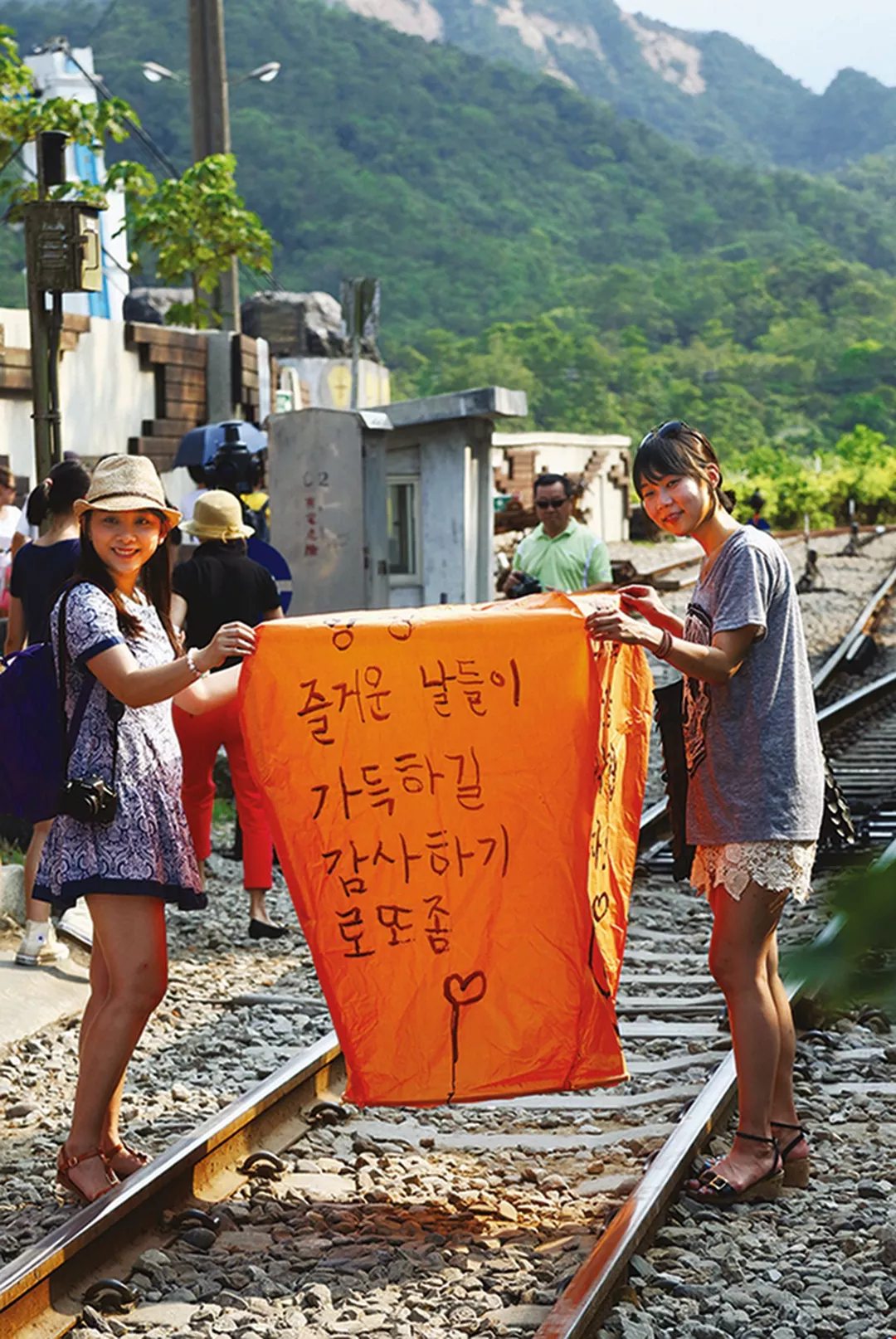
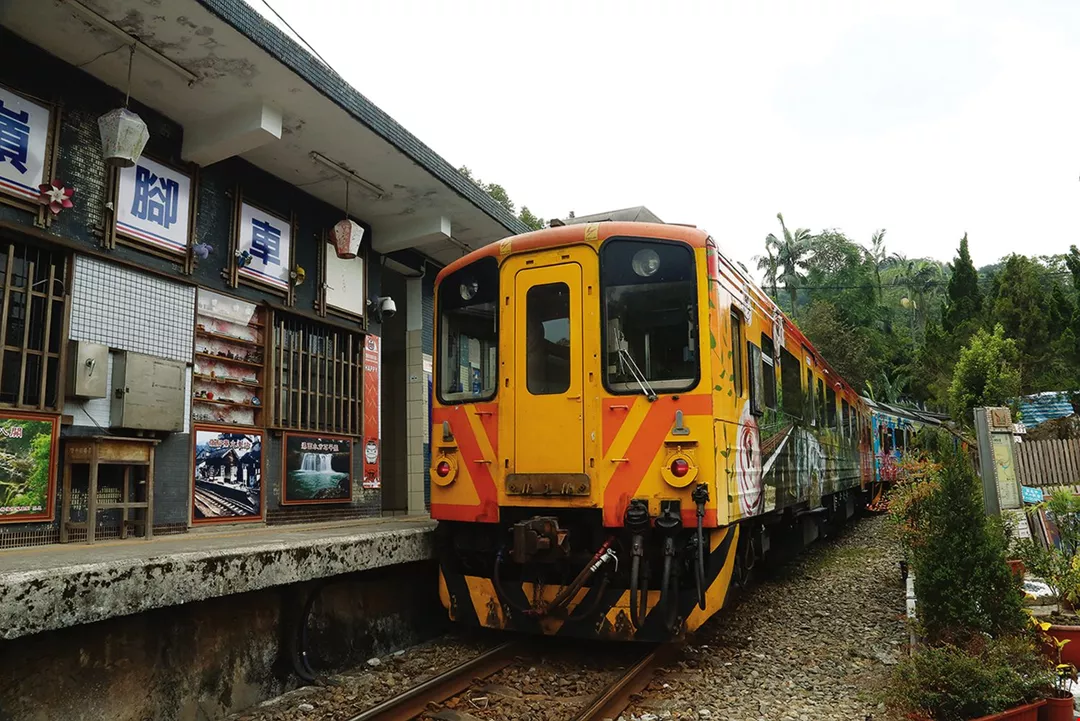
The Pingxi line was very nearly abandoned at one point, but people rallied to save it. It splits off from the main line at Sandiaoling Station, then crosses the old “Fish Belly” iron bridge that spans an emerald-green stream. It moves on by Dahua’s weird “giant’s kettle” formations, and past rows of shops at old Shifen, the familiar squeal of its steel wheels sounding much like an old neighbor stopping by for a visit. In this cozy burg, people used to set up stalls beside the tracks to husk bamboo shoots, wash fruits and vegetables, and sell noodle dishes. Today the tracks are lined by shops selling sky lanterns. Tourists release sky lanterns right on the tracks, and have to scatter each time a train comes. Locals have grown used to the sight, the railway authorities turn a blind eye, and it certainly adds to the unique appeal of the place.
The rail line snakes forward through Lingjiao Station and on to the little town of Pingxi. In a well-known television commercial filmed on location here, a little girl runs through the cobbled streets, past dry goods shops, hardware stores, and bakeries, crosses a suspension bridge, and passes a barber shop, the local post office, and an elementary school. But she could have turned the other way and gone to Shidi Street to sample some handmade taro balls and gaze upon the Keelung River flowing through a deep gully. At times one will see people fishing off Shidi Bridge, while children chase and play. One might be excused for thinking that the march of time here had been called to a halt many years ago.
The final stop on the Pingxi line is Jingtong Station, where the old 1929 Japanese station building still survives. The old quarter in Jingtong is right next to the Jingtong Mining Industry Museum, and nearby stand the remains of former mining company structures, Japanese-style employee dormitories, and the Shidi Slope Mine. About 100 meters distant stands the Crown Prince Hotel. All these old properties, having somehow survived the years, are now valuable pieces of our cultural heritage.
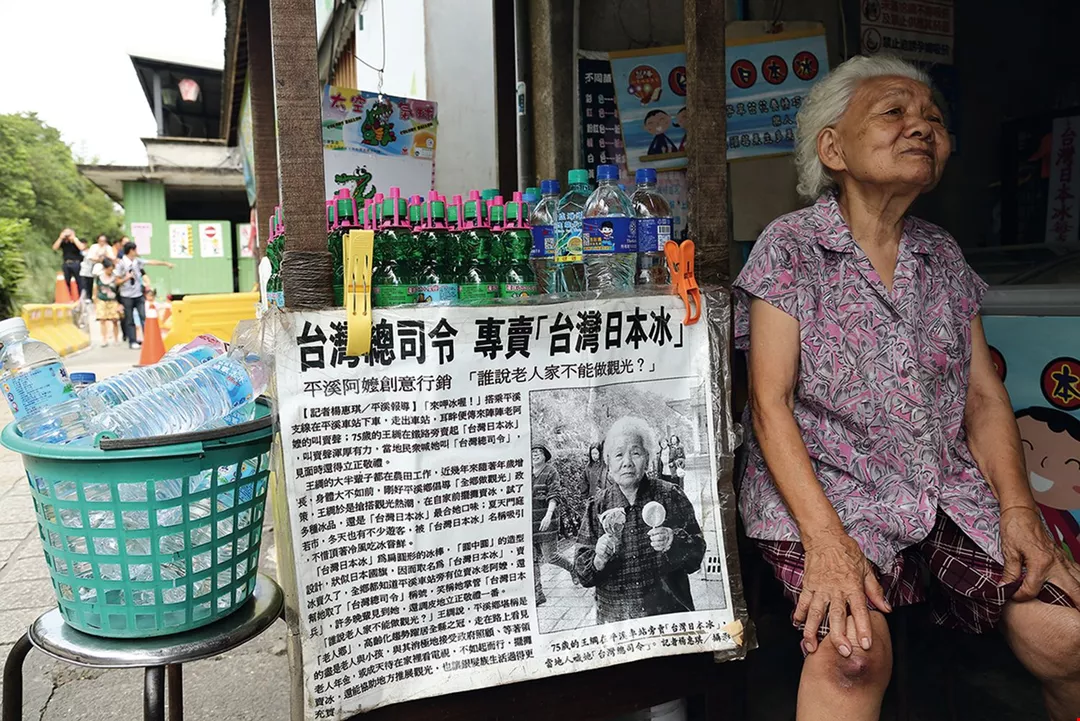
There’s a forgotten-by-time charm to the mountain town of Pingxi that makes it a favorite destination for foreign tourists in Taiwan.

Local flavor
Wang Zhaojing, a veteran field researcher and local guide, feels that “only locals can solve local problems.” He therefore encourages other local residents to get involved. People have criticized the release of sky lanterns, for example, for polluting the environment and starting fires in the hills, but they’ve addressed these problems by paying a set sum for each spent sky lantern that anyone picks up and brings in for disposal. This approach requires local involvement if it’s to work over the long haul.
Wang emphasizes that having lots of tourists is not necessarily a good thing, particularly given the currently underdeveloped state of local infrastructure. He doesn’t want to see the area go commercial, doesn’t want to see rents ramped up, or outsiders coming in and speculating. Says Wang: “If Pingxi ended up like Jiufen, our nightmare would just be beginning.”
When foreign travelers write their wishes on sky lanterns and release them into the air, chances are they’ve been drawn here by an ad or perhaps an “idol drama” shot on location in Pingxi, but their presence represents mere idle curiosity. The locals want something more than that. They would like to use creative methods to bring visitors in touch with local history and society. During our interview, the telephone rings constantly. It’s always tourists asking for information. Maybe this strong interest builds up hopes. And so the locals rack their brains in an effort to please visitors. Wang and his son, for example, are discussing the possibility of displaying an old warning bell to jog the memories of old-timers and give tourists a hands-on way to get a feel for what it was like during the war when people had to scurry for cover during air raids.
Such conversations are not idle chat. This is their lives. Maybe every locality has its own mix of light and shadow, failure and success. But no one feels it more acutely than the people of Pingxi. They’ve walked through fire and crossed through water to get the peaceful mountain town they now call home. And the people in this town understand that you can’t live well in a place you don’t love. Once you understand that, your affection will show through in the form of concrete action.

The Pingxi rail line in recent years has brought tourists and boosted the local economy.

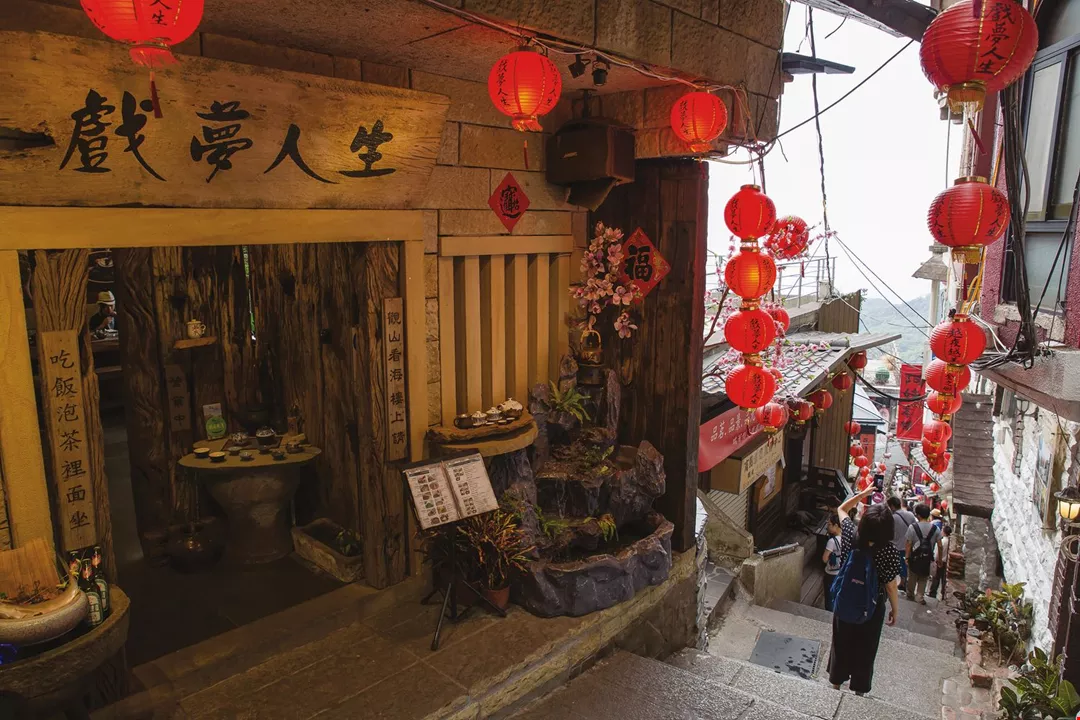
An old town perching on a mountain, Jiufen retains many buildings from the Japanese era. (photo by Chin Hung-hao)

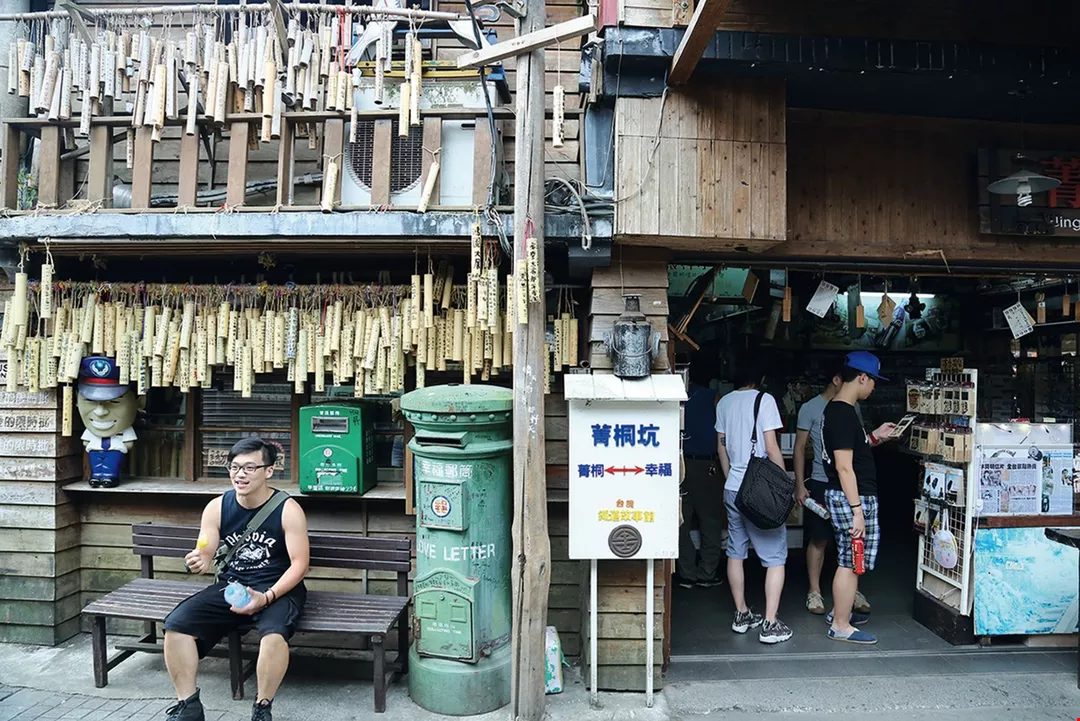
A souvenir shop near Jingtong station.

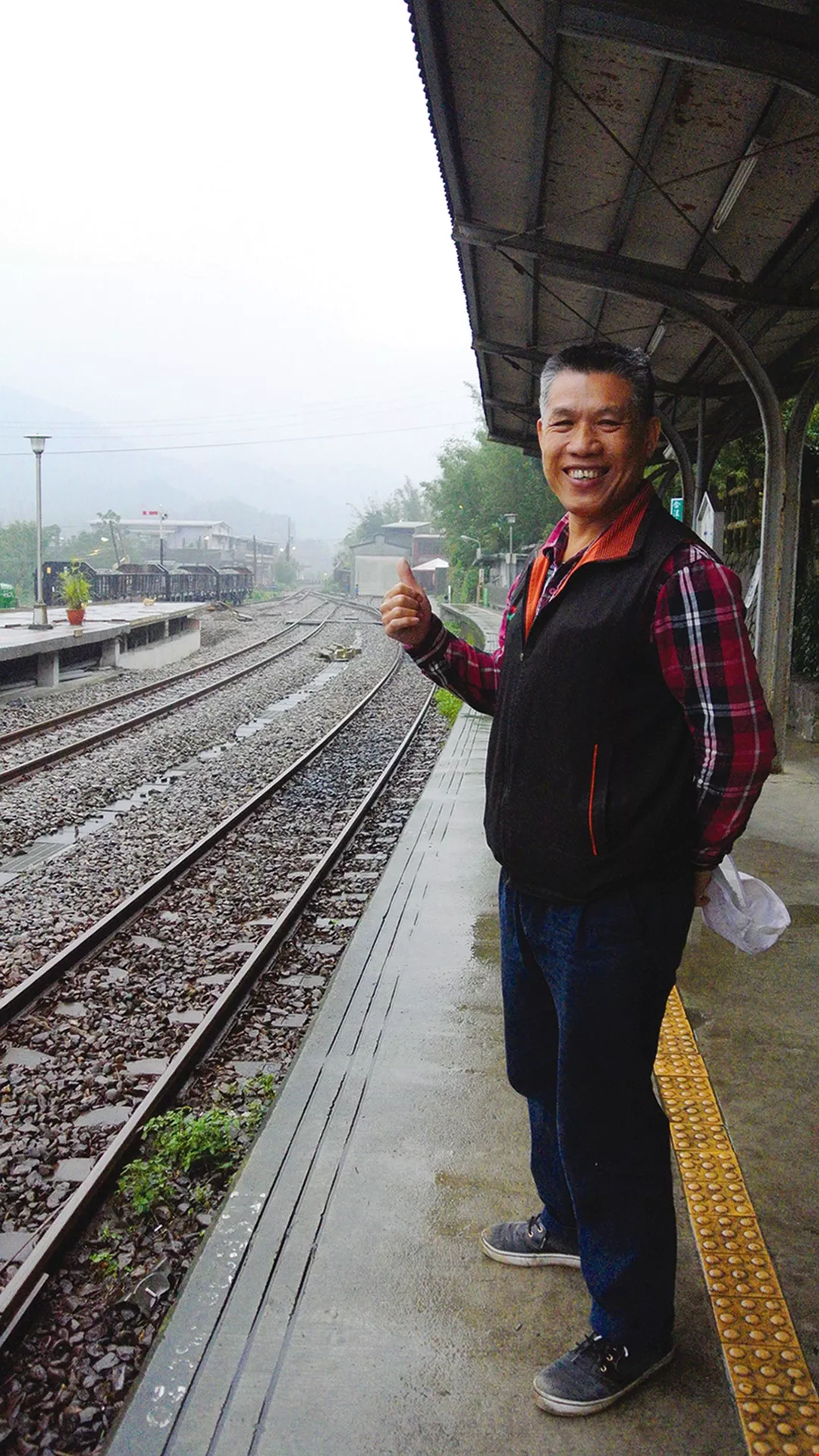
Chairman Wang Ruiyu of the Pingxi Tour Guide Association grew up in the town of Shifen in Pingxi District, and has seen the area in both the good years and the lean. (photo by Yeh I-chun)

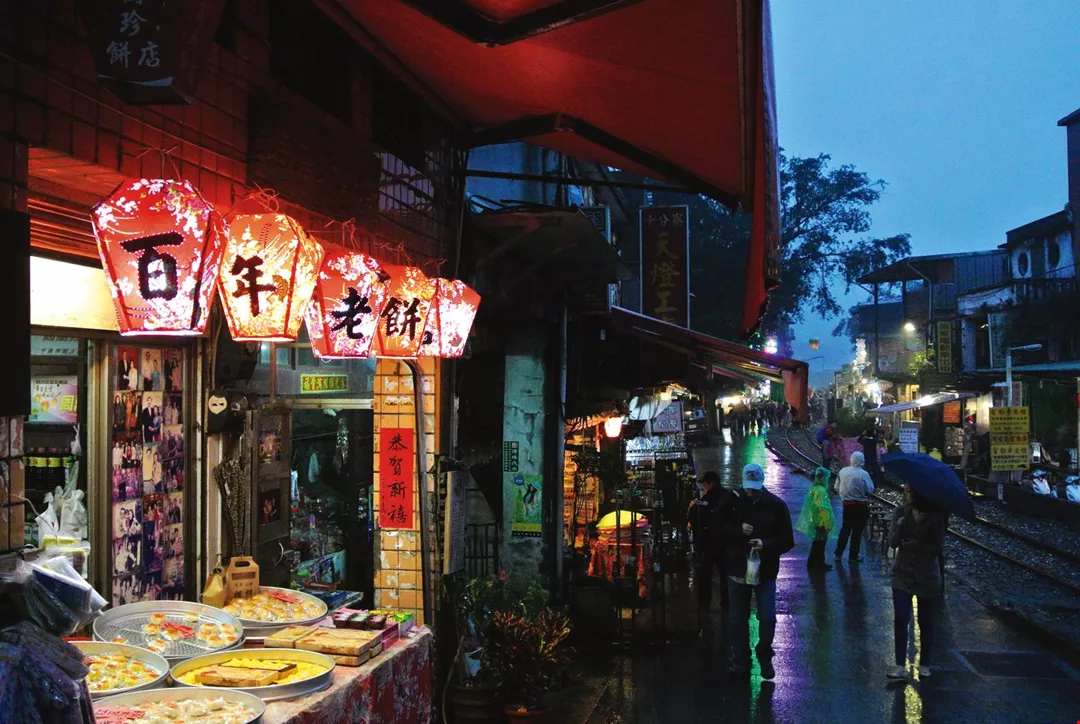
The lights are still on at this century-old patisserie in the old quarter of Shifen, shown here at twilight. The shop is a favorite among those who know the town well. (photo by Yeh I-chun)