The dog is man's best friend, and where goes man, so goes the dog. So reasoned the Japanese government in 1980, when, embarking on a project to find the origins of the Japanese people, they sent research teams to Korea and Taiwan to find dog strains related to Japanese breeds, such as the Hokkaido, the Akita, the Shikoku, and the Shiba.
Three months of testing blood strains failed to turn up the Formosan dog in the populated areas of Taiwan, but it did find a breed that appeared to be closely related to the Shiba, found in southern Japan. The discovery confirmed the theory of ancient Japanese texts that groups of people from southern China over 10,000 years ago migrated north along the Kuroshio, with some stopping in Taiwan while others continued to Japan. In sum though, the greatest beneficiary of the project was not the research team but rather the Formosan dog.
Dog lovers in Taiwan had been preferring foreign breeds up to that point, but the Formosan dog suddenly started coming back into favor. However, as Sung Yung-yi, head of the National Taiwan University Department of Animal Husbandry notes, most of these short-haired, yellow animals were mutts being mixed with strains brought in from overseas.
Canine history in Taiwan reflects the island's past. When the Dutch colonized Taiwan in the 17th century, they slaughtered large numbers of indigenous dogs and introduced their own breeds as well. In the early part of this century, Japanese colonists raised their own favorite kinds, and after 1949 came all sorts of dogs from China's various provinces. Canines care little about culture and background, and the result has been substantial interbreeding, to the point where pure breeds are quite rare.
What does a pure Formosan dog look like? Exhaustive research reveals two types, medium- and small-sized. "The mid-sized," according to Sung Yung-yi, "is a regular Charles Atlas," about 50 centimeters high and narrow-waisted and barrel-chested (about 40-odd centimeters). Its face is round and loyal, and its hair is in shades of brown and tan. The tail usually stands straight up or curls back on itself.
The small one is found in two varieties, one standing 40 centimeters and the other below 30 centimeters. The first is much more numerous, and while the breed lacks the stature of the mid-sized type, it possesses considerable cleverness and stamina. Its tongue sometimes has black spots, and unlike its mid-sized cousin, its ears stand straight up.
The Formosan dog does not owe its resurgence in popularity to good looks, but to personality. Foreign dogs in Taiwan, prized like jewels, have gradually lost their spunk. The Formosan dog, by contrast, is an intelligent and loyal mountain dog, accompanying its master at work or play and well able to fend for itself.
Yet loyalty comes with a price. The Formosan dog when young is known to often run away from its master, and one owner had to make three trips to the mountains to retrieve his dog after it had run back to its original home.
The breed also makes a clever hunter. Attacking a mountain boar, far bigger and equipped with two lethal protruding fangs, the dog aims only for the beast's hind legs. When the boar turns its head to strike, the dog will immediately flee toward its master, with the boar in pursuit. Yet the boar cannot catch the dog and tires, and the dog returns to press the attack. Back and forth they go, until the boar is exhausted and the master can finish it off.
Owing to previous neglect, the Taiwanese dog has not been registered by the Taiwan Kennel Association. Experts have yet to certify its physical characteristics and blood lines, and the dog remains unrecognized by the international dog-loving community. Only sustained and selective breeding can correct this condition, an effort being made by groups in Taipei and Taichung.
As a result, the Formosan dog faces a promising future, in which its numbers seem certain to grow significantly. One only hopes quality will not suffer for the sake of quantity.
[Picture Caption]
Barrel-chested with long legs and a proud face --the Formosan dog.
Although the number of purebred Formosan dogs is decreasing, the muttss till make great companions.
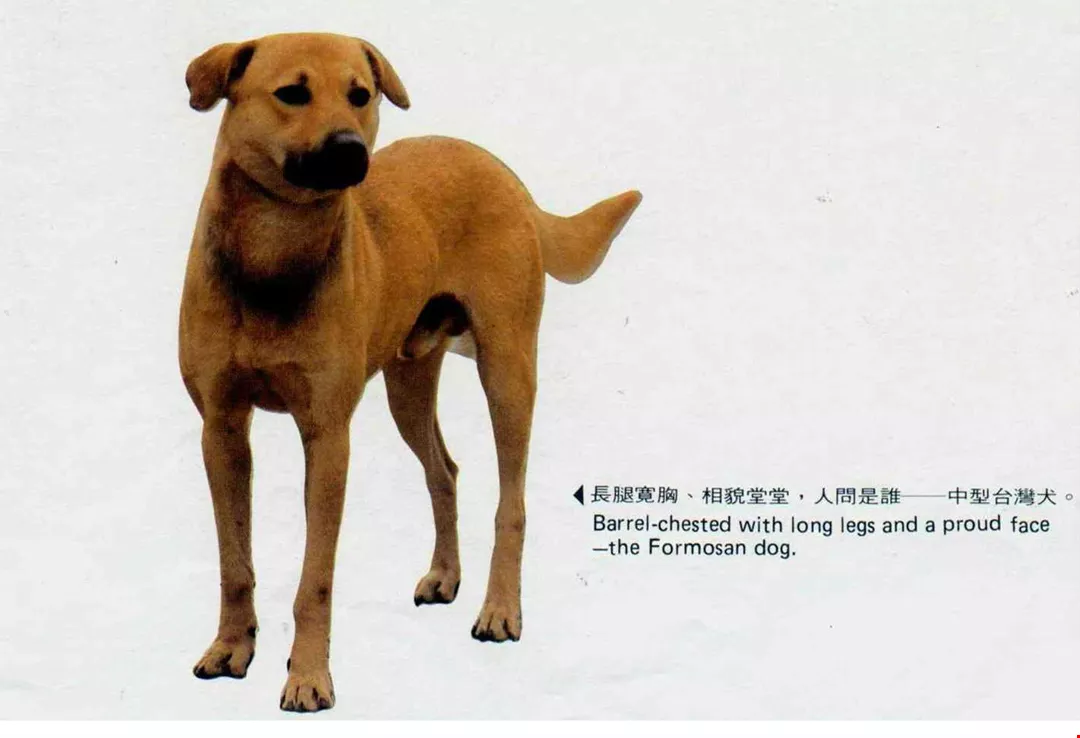
Barrel-chested with long legs and a proud face --the Formosan dog.
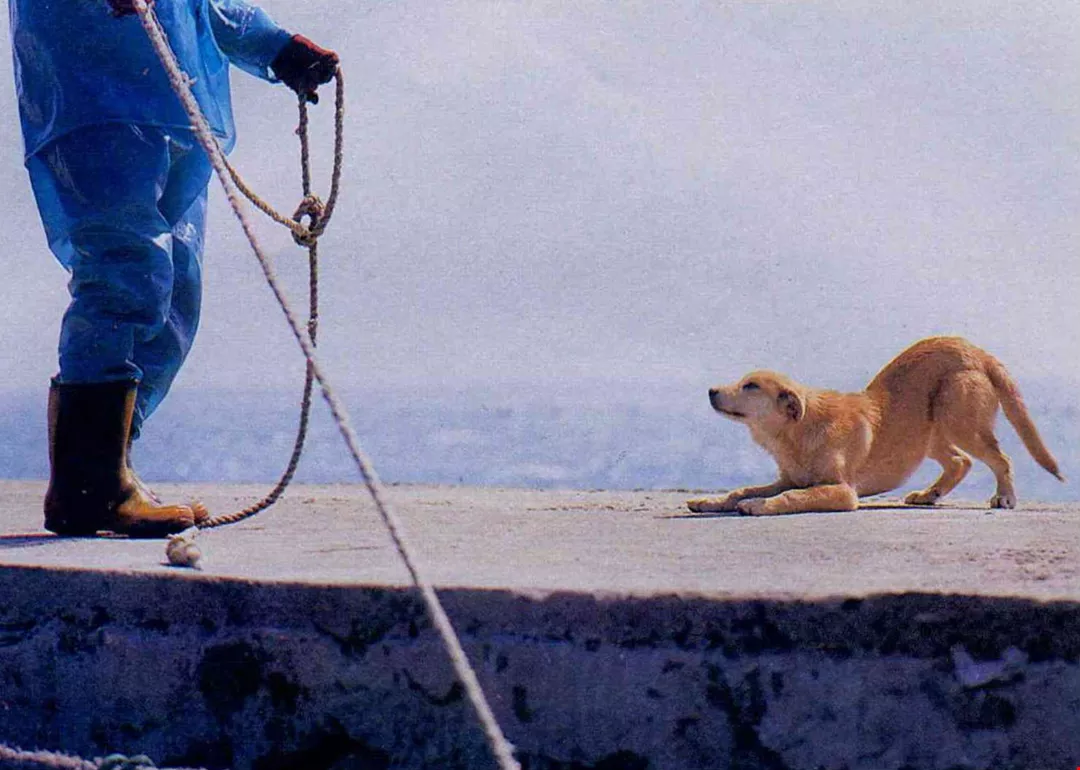
Although the number of purebred Formosan dogs is decreasing, the muttss till make great companions.




@List.jpg?w=522&h=410&mode=crop&format=webp&quality=80)


@List.jpg?w=522&h=410&mode=crop&format=webp&quality=80)
@List.jpg?w=522&h=410&mode=crop&format=webp&quality=80)