A dream dashed
Now 27 years old, Tang began studying ballet in her childhood, and grew up hoping to become a top dancer. Her dream saw her study at Kuo-kuang Academy of Arts, and then Chinese Culture University; her whole life was dance, dance, dance. While others her age hung out in cafes and went out shopping, Tang would be in the studio, trying to better understand ethnic dance and practicing folk dances from Mongolia and Xinjiang, even learning other Chinese minority folk dances such as the Dai people's Peacock Dance and Dunhuang dance from northwestern China. She was usually the first person into the studio and the last one out.
Unfortunately, you don't always reap what you sow, and eventually the various injuries Tang had suffered over her years of practice took their toll. During a medical examination, Tang's doctor found she was suffering an ailment all dancers dread, "dancer's knee," which meant that her kneecap could no longer sustain the burden involved in leaping dance moves.
"Because of the changes in weight and acceleration involved in leaps, my knee joint had been bent out of shape. Whenever the weather changed, it would start aching. Also, bending and twisting my waist had, over time, led to a minor twinge of pain there too. Even worse, though, sometimes it even hurt to breathe; when I breathed in, a stabbing pain would shoot through my chest to my forehead, making me wish my brain and body were in two separate places," recalls Tang.
Fate was not finished with her just yet, though. On her way to class one day, a moment's carelessness led to a traffic accident, and the force of the impact bent her tailbone out of shape, leaving Tang, already unable to jump, now not even able to do simple back stretches. This accident forced Tang, already a tearful wreck, to face up to the fact she would never become a professional dancer.
While fate could destroy her dreams of dancing, it could do nothing to dampen her passion for the art. She dried her eyes, and with her parents' support, traveled to America for graduate study. While working toward a master's degree in sports management, Tang encountered a form of exercise that was being used to help train dancers and treat sports injuries--Pilates. She then went on to complete her thesis on the relationship between Pilates and weight loss.
Meeting fellow travelers
Before completing her degree and returning to Taiwan, Tang began practicing "yogalates," which brought together the strengths of both yoga and Pilates. Grateful for all she had gained from it and wanting to share the joy with others, Tang decided to begin a new career, this time one focused on yogalates. After coming back to Taiwan, she took courses at the Dance Department of Chinese Culture University, the National Taiwan College of Physical Education, Shih Hsin University, and Shih Chien University, while also working as an exercise consultant at Wanfang Hospital's Core Exercise Center, where she promoted the use of yoga and Pilates.
During her work, she found the number of people seeking physiotherapy for injuries resulting from inappropriate methods of studying yoga had been on the rise over recent years. "While it's true that yoga can be effective in improving health, many traditional yoga positions are not particularly ergonomic, such as touching your forehead to the floor and doing headstands perpendicular to the wall, or trying to twist the body through 270 degrees. You could easily injure your back or pull a muscle, and with so many local yoga classes not differentiating between beginners and advanced students, some teachers can get a bit too enthusiastic and 'help' their students by pushing on their backs or pulling them to help with stretches, unwittingly causing injuries," says Tang.
How can these yoga lovers continue to indulge their passion without risking further injury? Pondering this question, Tang's mind went back to her experience with yogalates.
Starting anew
The name "yogalates" is a portmanteau formed from "yoga" and "Pilates," and describes a new kind of exercise formed by the fusion of the two. Pilates was developed in post-World War I Germany, where it was initially used by a nurse called Joseph H. Pilates to provide physiotherapy to bedridden casualties. The main focus of Pilates is the strengthening of the core torso muscles and training students to have full control over their limbs.
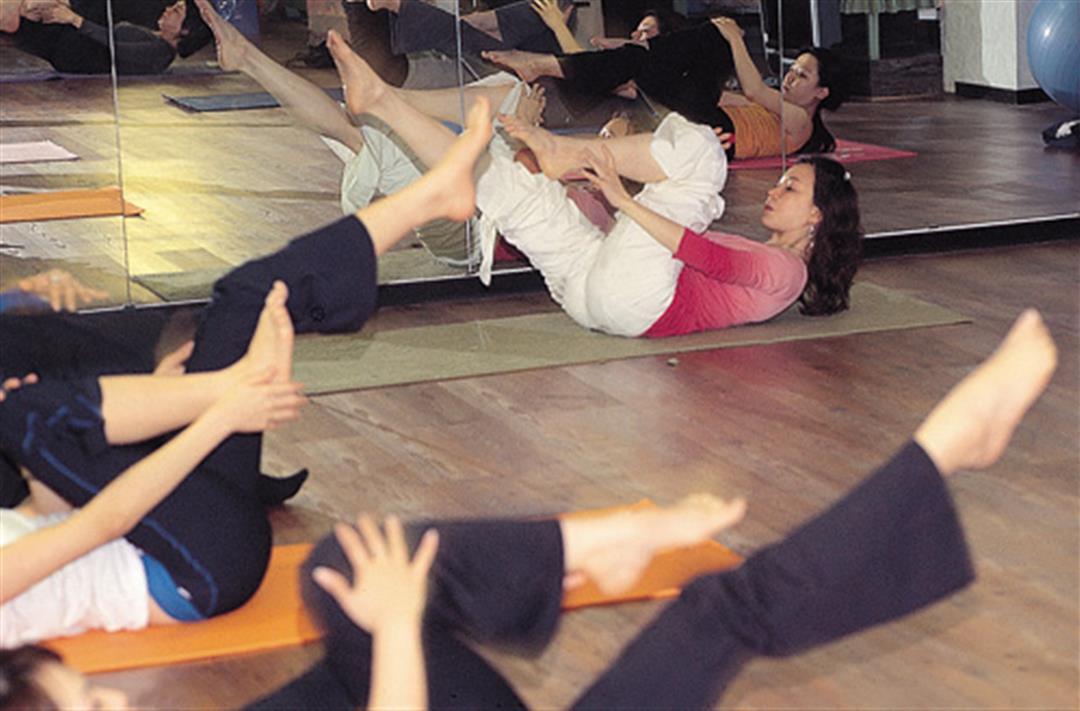
However, while Pilates can exercise the muscles, there is relatively little emphasis on the spiritual aspect, and thus yogalates, combining the strengths of both yoga and Pilates, was born, adding yoga's emphasis on flexibility to Pilates, with Pilates making up for yoga's lack of focus on muscle strength and the resulting issues with physical stability.
An example of the benefits of yogalates is its developer, Jonathan Urla. Originally a dance instructor, during the course of his practice Urla realized the compatibility of yoga and Pilates, and decided to integrate the two, improving not only improving his physical flexibility, but also his spiritual wellbeing.
Huang Chia-hui, who first learned yoga and then moved on to yogalates under Tina Tang, says her heavy workload led to hyperthyroidism, which in turn led to insomnia, excess sweating, poor digestion, and a short temper. After taking up a colleague's suggestion that she try yoga, her condition improved immensely, but while she felt that her level of flexibility was increasing, her muscle strength seemed to be lagging behind.
Then, by chance, she happened across yogalates. "Yogalates places a lot of emphasis on strengthening the core, which structurally speaking includes the transverse abdominals, pelvic floor muscles, and lower back. This is where all normal arm and leg movement starts, and so strengthening the core is vital to full-body stability and coordination."
Meditation and movement
Tina Tang explains, "Any movement, particularly of the main limbs, is all based on one central, inescapable principle--balance." It is extremely important for instructors to design appropriate movement routines for each person according to their individual body structure, muscle strength, muscle stamina, and flexibility. Unlike most exercise, which focuses just on strengthening the major muscle groups, yogalates also works the deeper, smaller muscle groups. These smaller muscles can be important to stability and overall physical health by, for example, stabilizing the spine, thus preventing lower back pain and strengthening the knee joints.
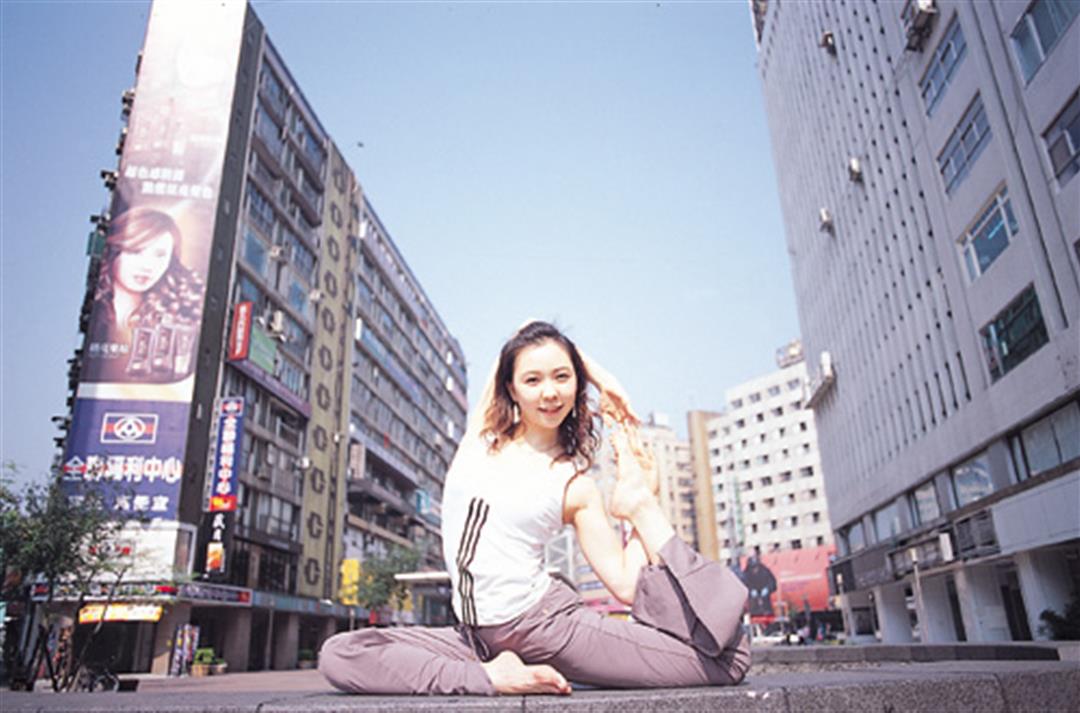
Now that she has a sense of the benefits of yogalates, Tang has not only gone on to develop new movements based on research into yoga and Pilates, but more notably, she has established the Taiwan Yogalates Association, aimed at promoting awareness of this "meditative exercise." At present, the association boasts over 100 members, who will go on to be Taiwan's next generation of yogalates instructors.
Standing in her recently opened yoga studio, it seems that that young girl with a passion for dance has, after going through the fires of injury, forged a stronger self through the spirit of yogalates.



@List.jpg?w=522&h=410&mode=crop&format=webp&quality=80)