Critical Reading Taiwan's Indomitable Homegrown Literature
excerpted from a lecture by Chang Heng-hao/edited by Coral Lee / tr. by Scott Williams
August 2003
Over the course of Taiwan's history, the island has experienced waves of immigration and colonization, been subject to martial law and, recently, grown into a free and open society. But Taiwan's complex history, together with the assimilation of its 11 Aboriginal peoples into a new, multicultural mainstream, has given rise to questions about the island's identity. Taiwanese literary critic Chang Heng-hau's talks on the changes that Taiwanese literature has undergone over the last 100 years and the sweat and tears the island's writers have poured into their work give his listeners a strong sense of this history and a deeper appreciation of the vitality of Taiwanese literature. Chang's remarks are excerpted below:
In attempting to define Taiwanese literature, I am reminded of a story. Thirty years ago, a young Japanese woman with a heartfelt interest in Taiwanese literature made her way to Taiwan, where she approached the Chinese literature department at National Taiwan University about studying the "Taiwanese literature" she had been hearing about for so long. But the head of the department responded to her inquiries by telling her: "I'm afraid you're in the wrong place. The only literature on Taiwan is 'Chinese literature.'" The young woman had no choice but to make her way back to Japan. Although disgruntled by her setback, she didn't give up. After years of diligent study, she has earned renown as Japan's leading scholar of Taiwanese literature. That woman is, of course, Professor Okazaki Ikuko of Kibi International University.
Is there such a thing as "Taiwanese literature" on Taiwan? What exactly is "Taiwanese literature?" These questions only began to receive broad attention within Taiwanese society after local universities began establishing Taiwanese literature departments in 1997.
So, what is Taiwanese literature? My own perspective is pretty all-embracing: I believe that any work produced on this island is Taiwanese literature. We needn't be sticklers about the political stands people have taken at various times and places, nor about ideology. Neither do we need to concern ourselves with the changing of dynasties. Whatever has come down to us from the various waves passing over and through Taiwan should be considered Taiwanese literature; the passing of time always leaves us with the cream of the literary crop.
If we apply such a broad definition, Taiwanese literature becomes a luxuriant garden filled with silken blossoms. Regardless who the historical actors were at the time any given piece of this literature was produced-whether Aboriginal, Spanish, Portuguese, or Dutch, whether Zheng Chenggong (Koxinga) and his heirs, the Qing court, the Japanese emperor, or the Nationalist Government-and regardless of the alliances and rivalries of the day, all the work that has survived the travails of time to the present is rich in cultural nutrients. These nutrients have accumulated over time and provided Taiwan with the rich intellectual soil that has produced today's varied and abundant cultural harvest.
The point to learning the history of Taiwanese literature is not to remember which periods produced which writers, or who wrote what works. It is instead to unearth correspondences between literature and ourselves. Simply put, we should dive into literature from a point of our own choosing and let it inspire our creativity. Take Zhang Yimou's film Hero, for example. According to Zhang, the classic forms of the wuxia, or wandering swordsman, genre of Chinese film have already been defined. There are, for example, King Hu's gentle and even feminine Zen-flavored aesthetics; Chang Cheh's tough exteriors that hide gentle hearts; and even Ang Lee's evocation of the boldness coupled with restraint central to Chinese culture. Zhang didn't want to replicate any of these, so in Hero he set out to define a new wuxia aesthetic. In one scene, Zhang has two swordswomen strike at one another against a backdrop of golden leaves as if they are performing a piece of modern dance. In another, Zhang again reveals his peerless aesthetic sense with the death scene in the beautiful Jiuzhai Valley. Similarly, a sense of history helps writers orient themselves; it helps them see and say what others have not, and engenders their own unique perspectives and aesthetics. For readers too, a knowledge of history can deepen their appreciation of works of literature.

Literature sets sail
In speaking of the changes that Taiwanese literature has undergone over the years, one can't help but speak of the influence of politics, economics, and history. Taking the historical perspective, the myths and songs of Taiwan's Aborigines were the island's earliest literature. When not working, the Aborigines sang, danced, and retold the myths passed down to them by their ancestors, sometimes to entertain themselves, sometimes to offer thanks to the heavens, and sometimes to express their fear of natural disasters. These orally transmitted myths and legends-which told of attacks on the sun, floods, and sacrificial offerings-were the earliest forms of literature.
In the latter half of the 16th century, Taiwanese literature moved into new areas as the works of various ethnic groups began to appear on the island's stages. Following newly opened trade routes, the capitalist nations of the West were pouring into the Pacific looking for new territories in which to sell their goods and acquire resources. Here they explored, conquered and colonized.
The Dutch, who had occupied southern Taiwan, eventually won the battle of the European naval powers for Taiwan when they succeeded in pushing the Spanish out of their holdings in the north. The Dutch went on to rule the island for 38 years. During that period, Governor-General Frederic Coyett and his colleagues wrote a book on the island entitled Verwaerloosde Formosa (Neglected Formosa) that offers readers a Western perspective on the customs of the Taiwanese under the Dutch. While not much as literature, the book is an invaluable historical document, essentially a piece of first-hand reportage that describes how people lived under Dutch rule and records the interactions between the Dutch and the Aborigines.
Zheng Chenggong took control of Taiwan in 1662 with the objective of restoring the Ming. While not successful in this ambition, under the Zheng family's rule increasing immigration to Taiwan of mainland peasants and Confucian scholars allowed mainland culture to establish a foothold on the island.
Among these immigrants was a literatus named Shen Guangwen. Shen, an opponent of the Qing, was originally forced to land on the island by a typhoon, but chose to remain rather than return to the Manchurian-ruled mainland. Making his home in Tainan, Shen set up a private academy and practiced medicine. With other literary enthusiasts, he also formed the Tungyin Society, the writings of which were filled with the nostalgia, grief, and resentment of men of standing forced into exile. Shen taught many, many students at his academy, and through them the first seeds of traditional Chinese literature were sown on Taiwan.
In 1885, the Qing court elevated Taiwan to the status of a full-fledged province. Over the course of the island's 212 years under Qing rule, any number of mainland literati had come to Taiwan, some to visit, others to stay. While here, they produced literature that was from a stylistic standpoint very traditional, largely accounts of traveling in Taiwan and the nostalgic recollections of the mainland so typical of intellectuals from literati families. However, in the middle years of the Qing dynasty, Taiwan began to develop its own "native" literati class. While still writing in the traditional genres, these native intellectuals slowly began to produce work that responded to local customs and showed a concern for the sufferings of the local people. However, the bulk of their output remained traditional regulated verse written in classical Chinese on the theme of longing for the mainland. As such, while these writers did figure in the development of Taiwanese literature, most modern readers have difficulty responding to them either intellectually or emotionally, and their work is not terribly important to the island's literary history.

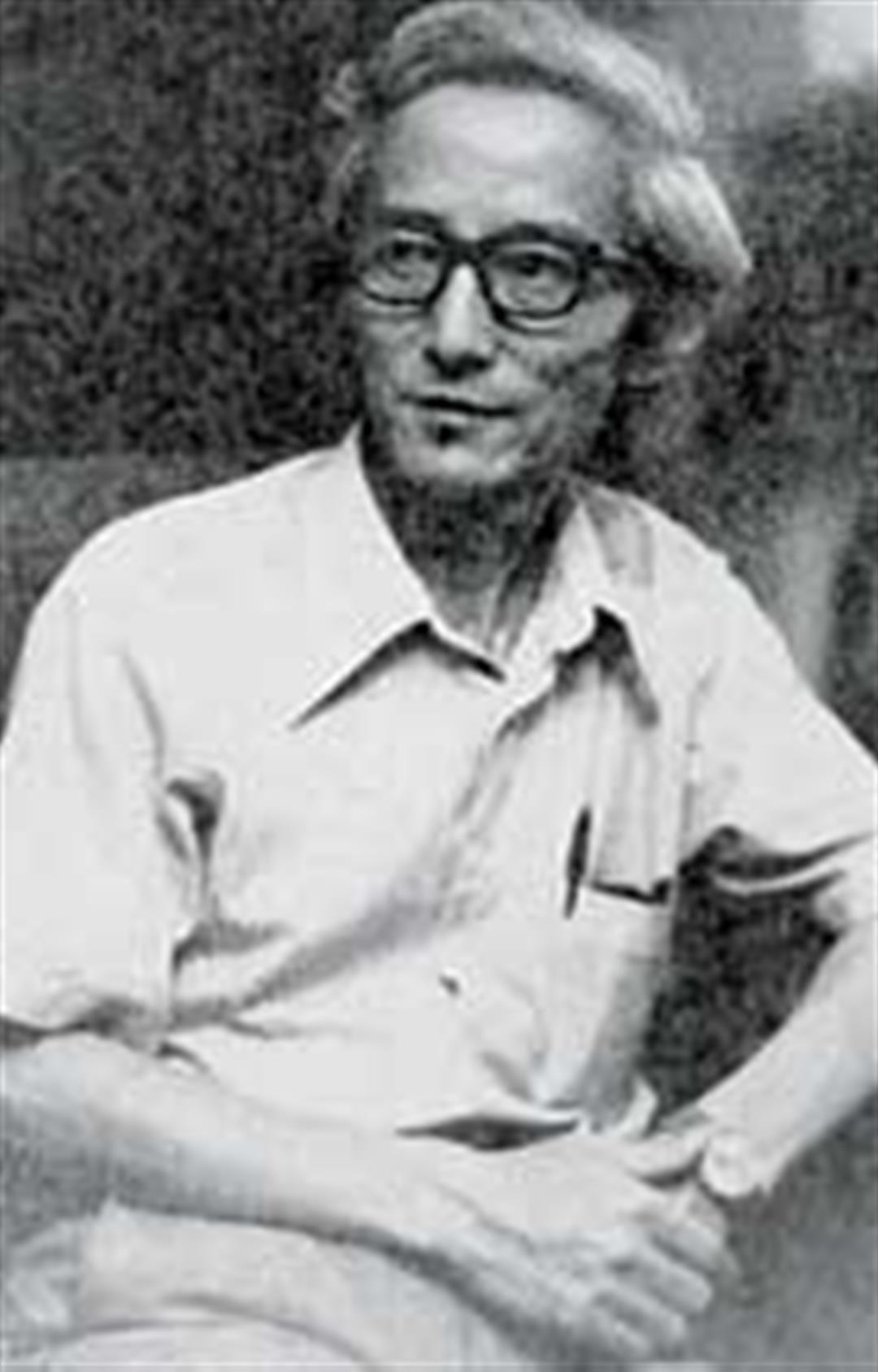
Chu Hsi-ming (upper right), the one-time leader of the military's new literature movement, wrote prolifically for his entire life, producing work of a high standard. His three daughters-Chu Tien-wen, Chu Tien-hsin and Chu Tien-yi-have also made names for themselves within Taiwan's literary circles. (courtesy of Chu Tien-hsin)
The aspirations of Taiwan's people
During the period of Japanese rule, which began in 1895 with the signing of the Treaty of Shimonoseki, the island's writers gained access to world literature, bringing Taiwanese literature into the modern era. The literary developments of the half century of Japanese colonial rule fall into three stages.
For the first 20 years of the Japanese era, some Taiwanese maintained an armed resistance that the Japanese forcefully suppressed. Following the First World War, a desire for democracy began to arise. US President Woodrow Wilson's call for "self-determination" in the colonial world had provided an impetus for democracy movements in Asia. Taiwan too felt the changes that were afoot-the opponents of Japanese rule put down their arms and instead called for the liberation of the island's people.
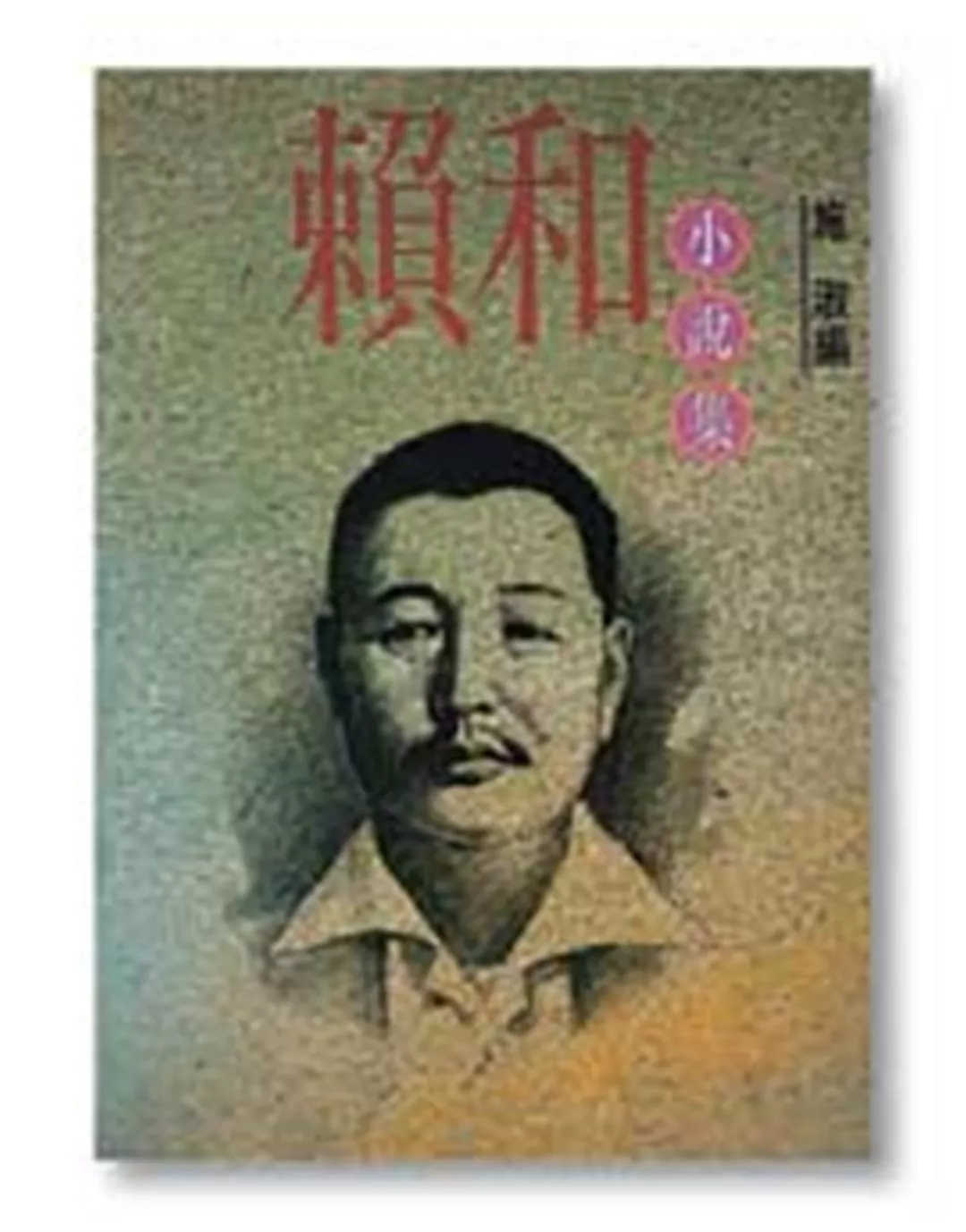
The New Literature Movement that got underway in the 1920s in fact grew out of these calls for the liberation of the Taiwanese. Large numbers of literati forcefully advocated reformist ideas that were anti-imperialist and anti-feudal, and hoped to use literature to "awaken" the people. The New Versus Old Literary Debate and the Taiwanese Language Movement followed. Traditional literature gradually fell from favor and Taiwanese literature, influenced by European writers' desire to emancipate the individual from social constraints, began to focus on critical, socially realistic themes. Most of these works were written in Chinese and most were published in the Taiwanese People's Newspaper. Although the island's literature was developing vigorously, topicality frequently overshadowed artistry. In terms of technique, writers were still feeling their way and their works were consequently somewhat rough around the edges. Lai Ho and Chang Wo-chun were perhaps the most important writers of this period.
In the 1930s, Taiwanese literature began to mature. Following the first Nativist Literature Debate, the island's literary circles had come to accept that literature had to be rooted in one's native soil. At the same time, socialism had come into its own and displaced the earlier nationalist ideology, resulting in leftist literature's movement into the mainstream. Also important for the literature of the 1930s was that by this time a large number of Taiwanese had received a comprehensive Japanese education, giving rise to a local market for Japanese-language literature.
During the 1930s, Taiwan's Japanese-language authors demonstrated that they were capable of going head-to-head with the writers of Japan's mainstream literary circles when three Japanese-language stories by Taiwanese writers-Yang Kui's "The Newspaper Man," Lu Ho-jo's "The Ox Cart," and Lung Ying-tsung's "The Village of Papaya Trees"-won Japanese literary prizes. In addition to providing evidence of the literary prowess of Taiwanese writers, these works revealed to the colonizers the aspirations of a colonized people. "The Newspaper Man" and "The Ox Cart" were even translated into Chinese and distributed in mainland China, surreptitiously expanding Taiwanese literary turf.
With the outbreak of war between China and Japan in 1937, the Japanese government tightened its control over public speech. Under the policies of Japanization, industrialization and preparing the island as a southern base for expansion, not only were young Taiwanese men drafted and sent to the South Pacific and China, but writers too were ordered by the authorities to cooperate with the "holy" war effort. They served the nation with their writing, producing works that encouraged law-abiding behavior and loyalty to Japan. Many writers were forced to stop writing or to flee abroad, but there were others like Lu Ho-jo, Chang Wen-huan and Wang Chang-hsiung who, while seeming to cooperate with the authorities, had other ideas. Through adept use of their writing talents, they embedded other, deeper meanings in their works, giving voice to unsanctioned thoughts and aspirations from amidst the shadows of war.
While the magazine of the Japanese writers working with the authorities and the magazine of Taiwanese writers reflecting the thoughts of the common people were clearly in distinct ideological camps, from a literary perspective, both produced masterpieces. But the worsening war forced both kinds of publications to shut down in 1944.

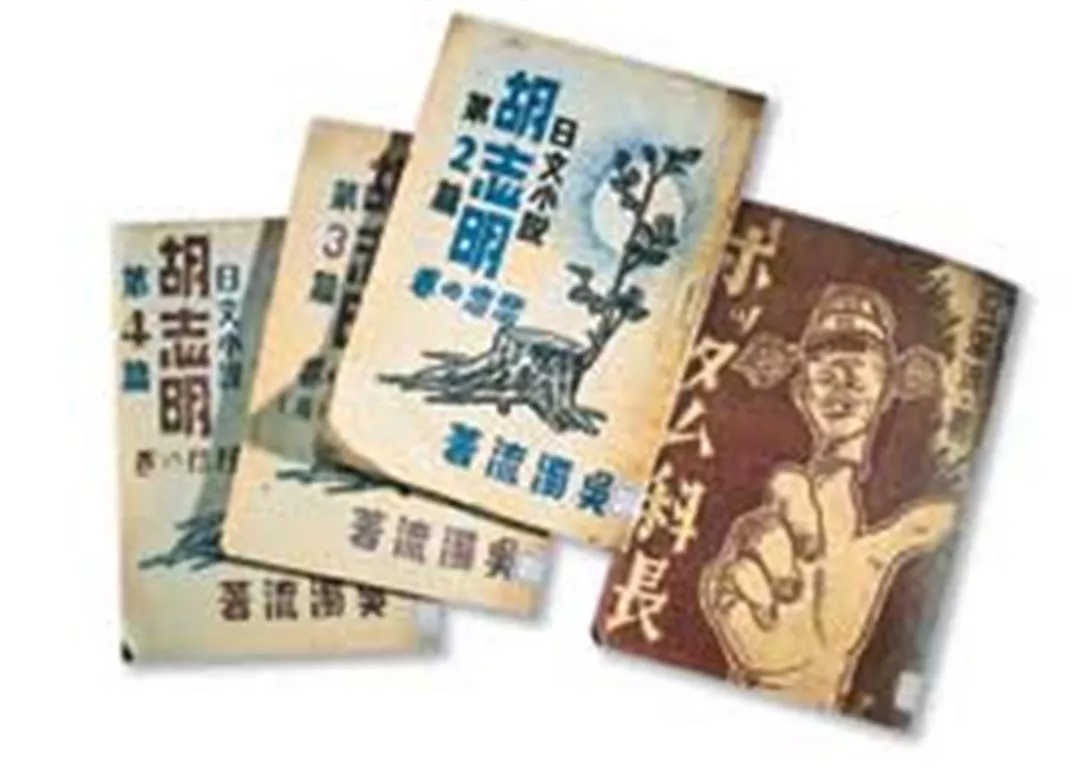
In Wu Cho-liu's Japanese-language novel Hu Chih-ming, the author describes the confusion felt by Taiwanese youth searching for their roots and a national identity. When the Chinese-language edition was published in the 1960s, the title was changed to The Orphan of Asia. (photo courtesy of the Lai Ho Foundation)
Post-war anxiety
How has Taiwanese literature changed in the nearly 60 years since the end of the Second World War?
The people of Taiwan were overjoyed when Japan surrendered unconditionally in 1945. The surrender also sparked a revival in the island's cultural circles. A succession of mainland writers, including Tai Jingnong and Xu Shoushang, visited Taiwan to encourage cross-strait cultural exchanges. The Nationalist government's Taiwan policy at that time was to reverse the Japanization of the island, and shortly after the end of the war it banned the use of Japanese. Authors who wrote in Japanese lost their medium, and the Taiwanese people, most of whom were as yet unfamiliar with Mandarin, became effectively illiterate. In short, the policy wrought cultural havoc on Taiwanese society. And after the February 28 Incident of 1947, most of Taiwan's writers lost all interest in writing.
In spite of the climate of fear, a few writers didn't give up. Instead, they fought on in the literary supplement of the Hsinsheng Daily, triggering a second Nativist Literature Debate. Generally speaking, the mainland writers who had come to Taiwan after the war believed that Taiwanese literature was a fringe Chinese literature. The local Taiwanese writers, on the other hand, believed that Taiwanese literature had its own particular character that derived from Taiwan's particular historical circumstances. With the debate, two factions-one mainland, one Taiwanese-became apparent within Taiwanese literature.
In the tumultuous times immediately following the war, the leading lights of the local literary scene who were still writing or editing fell on hard times, with most of those who didn't retire ending up either in jail or dead.
As Japanese rule was coming to an end, Wu Cho-liu completed the novel The Orphan of Asia at great risk to himself. (The novel had originally been titled Hu Chih-ming, but this was changed to avoid associations with the Vietnamese revolutionary Ho Chi-min, whose name is written using the same characters.) The novel spoke of the confusion of Taiwan's young intellectuals and their search for an identity. Published in Japanese in 1946, it was more than ten years before a Chinese edition of the book came out. After the war, Wu worked as a reporter for the Min Pao, a job which was to make him an eyewitness to the February 28 Incident. In an effort to leave a historical record of the incident, he published his own account, one which differed greatly from the official reportage, under the title Flowerless Fruit. From 1947 on through the 1950s, Wu acted as something of a literary knight errant. Disregarding the danger in which he was placing himself, he produced works such as Taiwan before the Dawn and The Potsdam Director that gave voice to the thoughts of the Taiwanese people under the White Terror.
Yang Kui, meanwhile, threw himself into the post-war reconstruction effort and remained active in the literary field. He worked as an editor at the Li-hsing Pao, compiled a three-volume collection entitled Taiwanese Literature, and produced a series of translations which placed Japanese and Chinese on facing pages, including works by Lu Xun, Mao Dun, Yu Dafu, and Shen Congwen. However, in 1949 the KMT authorities arrested Yang for having signed the "Declaration for Peace," a call to the KMT to release all prisoners of conscience and renounce the White Terror. He was sentenced to 12 years in prison.
Immediately after the war, Lung Ying-tsung edited the literature section of the Japanese-language China Daily and published a collection of informal essays entitled The Lonely Bookworm in Japanese. In this post-war period, he also wrote Qingtian Bairi Qi, a novel that describes the innermost feelings of Taiwanese youth welcoming the end of Japanese rule, and A Man from Swatow, which depicts the inner conflicts and sense of original sin felt by Taiwanese during the war. Lung withdrew from Taiwan's literary circles in the 1950s.
Meanwhile, Lu Ho-jo, Taiwan's most talented writer during the Japanese era, published four short stories in Chinese after the war. Three of them-"Name Change," "A Prize," and "The Bright Moon"-reflected on the Japanization program of the latter years of Japanese rule and the war. "Winter Nights," on the other hand, used the difficulties encountered by a Taiwanese woman in post-war Taiwan as a vehicle to criticize much of what was happening in post-war Taiwanese society. The February 28 Incident erupted shortly after the stories came out, and Lu, who was bitterly disappointed with the KMT, joined Taiwan's underground Communist Party. Lu later became involved with the armed resistance around Luku and died sometime in the early 1950s.
Yeh Shih-tao published fiction, poetry, informal essays, criticism, and translation in the China Times and the Hsinsheng Daily. Yeh, however, got caught up in the White Terror in the 1950s, and was jailed for "not reporting criminals."

Anti-Communism and homesickness
When the Nationalists lost control of the mainland in 1949, more than a million mainlanders fled with them to Taiwan. After the Nationalists' arrival here, they conducted a heart-wrenching examination of how they had lost power: How could they have lost the hearts of the people so soon after winning the war against the Japanese? They concluded that one reason had been the success of the Communists' propaganda in winning over the people. A great many writers had been very sympathetic to the plight of the weak and property-less masses, and at a key moment had thrown their support behind socialism. Their works became weapons in the Communists' literary onslaught. Having reached such a conclusion, the KMT determined that consolidating its control over Taiwan required that it not only eliminate the remaining Communists on the island, but that it also tighten the ideological screws. To this end, the party used the media in all its forms to disseminate an anti-Communist and anti-Russian ideology.
Over the course of the 1950s, anti-Communist literature, "combat" literature, and the literature of nostalgia for the mainland that emerged later in the decade all took their place in the mainstream. Writers employed the techniques of realism to portray the ruthlessness of the Communists and described in intimate detail the homesickness felt by those who had fled the chaos in the mainland. Conservative estimates place the number of writers of fiction in Taiwan in the 1950s at 1500-2000 and their collective output in the neighborhood of 70 million words. Simply put, they were a force too large to be ignored. But anti-Communist literature distanced itself from the literary spirit of Lu Xun and Shen Congwen by casting aside the awareness of the changing of the times and the concern for the nation that predominated in the literature of the 1930s. It also severed all links with the anti-imperial literature of 1930s colonial Taiwan, taking on a form that bore no resemblance to the work of Lai Ho and Chang Wen-huan.
Because none of the first generation of post-war Nativist writers, which included Chung Li-ho, Yeh Shih-tao and Chung Chao-cheng, had first-hand experience of fighting the Communists, they were unable to produce model anti-Communist works. In consequence, they lost their place in the mainstream and had a hard time earning a living. Chung Li-ho is a case in point. Chung's novel Lishan Farm makes use of the bitter harvest which results from an intra-clan love affair to expound on the merits of being able to choose one's own spouse. In the novel, Chung, who lived in the Hakka farming village of Meinung, also paints a vivid and accurate portrait of life in such a community in the latter years of Japanese rule and the early years of KMT rule. Chung's short story "Hometown" is another good example of post-war rural literature. Chung Chao-cheng, meanwhile, was a dedicated writer who lived in Lungtan. In addition to writing, he quietly produced Wenyou Tongxun, a periodical that kept alive the flickering flame of "homegrown" literature by gathering together and publishing works by scattered Nativist writers.
Not everyone writing under the banner of anti-Communist literature in its heyday produced hackneyed material. Take, for example, Chiang Kui's novel The Whirlwind. Chiang was a KMT member who, in his later years, encountered as many troubles as Chung Li-ho and ultimately died in straitened circumstances. As with Chung's Lishan Farm, publishers rejected The Whirlwind dozens of times, and Chiang ended up publishing the book himself. The novel utilizes realism and satire to describe the rise and fall of an important clan with ties to the government. In doing so, it shines a light on the suffering of the peasantry and reveals the paradoxes and corruption that existed within the Communist Party.
Other highly regarded works from this period include Pan Jen-mu's My Cousin Lien-i, Ssu-ma Chung-yuan's Wasteland, Chu Hsi-ning's Love of the Great Torch and Teng Ke-pao's Another Land. Anti-Communist literature was a peculiar product of an authoritarian era. By chronicling that era, its works have added yet another hue to the garden of Taiwanese literature.

The harvest of a golden age
With the arrival of the 1960s, anti-Communist literature went into a gradual decline. Under the powerful influence of European and American culture, local literary circles began to Westernize and, in what was yet another rebellion against the government's monolithic cultural policy, turned towards Modernism. Modernism came to Taiwan when a group of professors from National Taiwan University (NTU) began calling for the importation of avant-garde Western literary theories, techniques and works. They were not advocating positions on sensitive political and economic issues, but rather were calling for the use of new and improved writing techniques to raise the standard of Taiwanese literature. The students in NTU's Department of Foreign Languages and Literatures in those days included such future luminaries as Kenneth Pai (Pai Hsien-yung), Chen Jo-hsi, Wang Wen-hsing, Wang Chen-ho, and Ou-yang Tzu. Together, they founded Modern Literature, a magazine advocating "experimental, exploratory, and creative artistic forms and styles." The group enriched the expressive repertoire of Taiwanese literature by boldly bringing to Taiwan the major works of avant-garde Western writers such as Kafka, Joyce, Woolf, Sartre, and Faulkner, works which frequently employed soliloquies and stream of consciousness in an effort to explore the unconscious depths of the human mind. The most important works produced by the Modern Literature group include Kenneth Pai's Tales of Taipei Characters and Wang Wen-hsing's Family Catastrophe. These were seminal works that used sharp, original language, structures, and symbols to reflect the society of the day and express their authors' strongly humanistic leanings.
Two other important literary streams also appeared in this period, one centered around Literary Quarterly, and the other around Wu Cho-liu's Taiwanese Literature.
The nucleus of Literary Quarterly consisted of writers such as Chen Ying-chen, Chi Teng-sheng, Hwang Chun-ming, and Liu Ta-jen who exploited realism and a socially critical eye to shape the lives and experiences of individuals in society into a substantial collection of literary works.
Wu Cho-liu, meanwhile, founded Taiwanese Literature on his own in 1964. Wu, who insisted that his periodical have "Taiwan" in the title, was determined to keep alive the New Literature tradition, which had been through hard times since the end of Japanese rule, and to promote Taiwanese Nativist literature. Taiwanese Literature has passed through several hands since the 1960s, but the magazine's Taiwanese spirit has never flagged. It has been the spiritual bastion of post-war Taiwanese literature, and few indeed are the Nativist writers who have not had ties to it. Over the years, its principal contributors have included Wu Yung-fu, Chung Chao-cheng, Li Chiao, Cheng Ching-wen, Yang Ching-chu, and Hung Hsing-fu.
The third Nativist Literature Debate
By the early 1970s, Taiwan was in a diplomatic bind. It had withdrawn from the United Nations and diplomatic ties with Japan had been severed. Along with the political debate, a wave of nativization swept through every level of Taiwanese society. Within the literary community, a reevaluation of the Modernism it had adopted with Westernization was unavoidable. A group of Taiwan's intellectuals embraced the people, became more engaged with the larger society, and returned to the land. Their change of focus resulted in a renewed interest in literary realism and a revival of the spirit of the Japanese-era New Literature Movement, with its sense of mission, its emphasis on social realism, and its depictions of the hardships of the poor.
When this group attacked the Modernist orthodoxy in the pages of the United Daily News' literary supplement and in China Tide, they kicked off a third Nativist Literature Debate. The heretics wondered how literature could limit itself to playing games with technique at a time when the country was facing crises at home and abroad, and argued that it should instead be considering the livelihood of the people and the future of Taiwanese society. They began publishing work after work critical of the island's politics, economic system and society. Hwang Chun-ming's novella Sayonara! Zai Jian! attacked Taiwanese society's infatuation with the West. Other writers, meanwhile, picked up themes which had once been considered marginal and brought them into the mainstream. Examples include Yang Ching-chu's workers' fiction and Wang Tuo's immigrant literature. The Nativist fervor even gave rise to new Nativist trends in film and music.
A polyphonic age
Since the lifting of martial law in 1987, Taiwanese literature has experienced a freedom unprecedented in Taiwanese or Chinese history, and a multitude of literary schools now clamor for the public's attention. In Taiwanese society at large, everyone has gained the right to freedom of expression and is able to criticize publicly the political situation, even the president and high officials. Within the literary field, a myriad of new directions have opened up. Aboriginal literature, new feminist literature, environmental literature, gay literature, and pornographic literature have taken the stage one after another, providing material for readers of every taste. The principal authors of this new era include Wu Ho, Chang Ta-chun, Chu Tien-hsin, Ping Lu, Tien Ya-ko, and Chi Ta-wei.
Some think of this as a period of literary diversity. Others see in it the "decentering" of a deconstructed era. Over the last 15 years, views on literature have changed radically. In this new age, it is axiomatic that Taiwanese literature should leave tragedy behind, and seek instead the personal and the pleasurable-literature no longer begins with Lai Ho, but with oneself. Today's writers have been exploring every kind of expressive possibility, inventing techniques as they go. Thematically, literature has abandoned politics and is now free to describe both hetero- and homosexual relationships. While the February 28 Incident is solemnly memorialized in the political arena, within the literary field, it has become a symbol, an object of satire, and even a product. The ascendancy of this hedonistic or perhaps individualistic literature can be seen in the media's efforts to make this new literature into a story and in the literary prize committees' attempts to add fuel to the fire.
Is this new, wide-open, multi-faceted literature, so different from the Taiwanese literature of the last 100 years, something to be excited about? Should we be concerned? What view should we take of the future of Taiwanese literature?
If Taiwanese literature is to continue to improve and advance, I personally believe that we should not just compare it to the Taiwanese literature of earlier eras, but that we should also place it out on the world stage to see how it stacks up against what the rest of the world has to offer. Only in this way can we avoid a self-satisfied complacency and move on to something new. Compared to work generally accepted as part of the global canon, Taiwan's best works are only second- or even third-rate. If Taiwanese literature is to improve, we have to be aware of both our own strengths and those of others. We must develop a thoroughgoing understanding of contemporary trends in world literature. We must, in engaging with the world, find that critical juncture that will take us forward. We must turn our gaze outward to the world.