

In the early 1900s, a group of artists who lived in Paris—including Pablo Picasso, Marc Chagall, and Henri Matisse—were instrumental in creating Post-Impressionism, Cubism, and Fauvism. These artists, both French and non-French, became known to history as the “School of Paris.”
At that time many artists and cultural figures in Paris organized arts societies or salons where the culturati could meet, stimulate each other’s creativity, and lend mutual support. These groups were critical in driving the enormous changes that were happening in the world of art.
Artists’ associations have likewise played a vital role in Taiwan’s art history. From the Japanese era (1895–1945) through the present day, Taiwan has witnessed four major waves of autonomous organization by artists. In the latest wave, here in the 21st century, artists’ groups do not just exist for the purpose of issuing manifestos of their shared ideals; instead, the new way of thinking is: “Can forming a group generate new creative sparks?”
In this kind of atmosphere, numerous experimental groups—including LuxuryLogico, Wonder Boyz, Xindian Boys, and Show Your Island Artist Group—have appeared one after another. They have overturned the old stereotype of artists’ collectives, in which each creator pursues his or her work separately. Instead, in these new associations the artists not only do individual pieces but also come out with works that appear under the name of the group. They sometimes even open and operate new art spaces.
Contemporary art is highly diverse. New-media art in particular raises technical problems far more complex than drawing, painting, or sculpture. The members of new artists’ groups each have their own skills, and while they are all capable of conquering new territories alone, they can bring even more firepower to bear if they work as a team.
Looking back at the tradition of artists’ societies in Taiwan, they have gone through four phases, which in general have run along two main streams: those which have followed international trends, and those which have been nurtured in local soil.
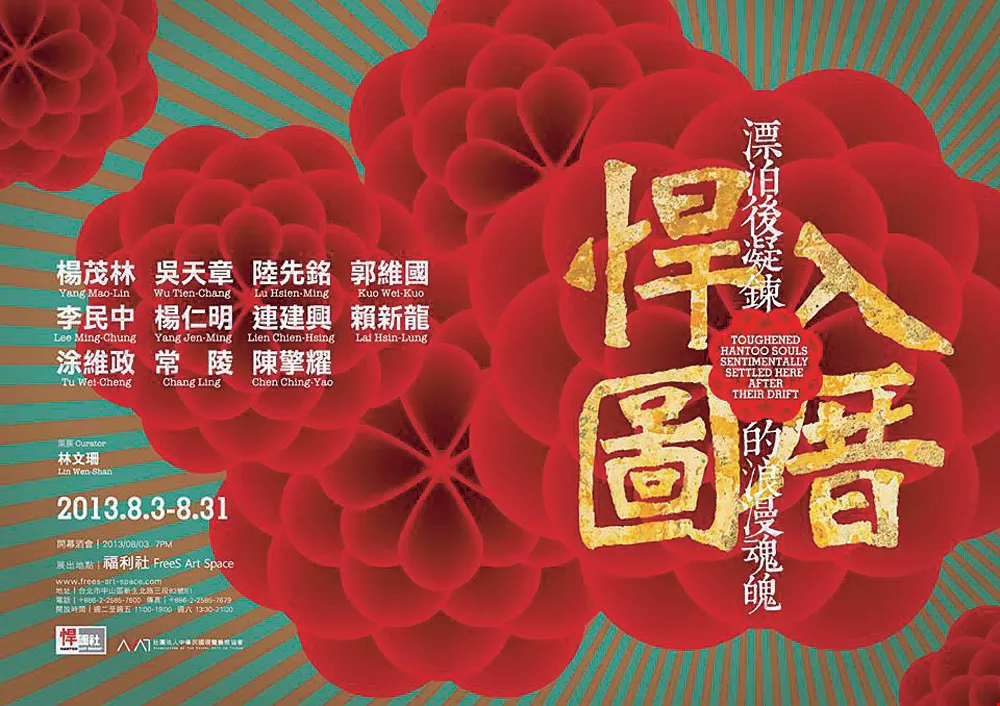
Poster celebrating the 15th anniversary of the founding of the Hantoo Art Group.
The “School of Paris” of the pre-WWI era sent reverberations around the globe. The tide reached Taiwan in 1924. It was the Japanese Occupation Era, and a passel of young Taiwanese painters were studying the latest in Western styles in the elite Japanese-language school set up by the Office of the Governor-General of Taiwan. Filled with youthful enthusiasm, they harbored great ambitions for art and hoped to become professional artists themselves. They wanted to express the beauty of Taiwan in their works and convey their love for this piece of the earth. Encouraged by their mentor, the Japanese artist Kinichiro Ishikawa, they formed Taiwan’s first painting society, the Qixing Huatan (Seven Stars Painting Forum). The seven founders were Ni Jianghuai, Chen Zhiqi, Chen Chengpo, Chen Yinyong, Chen Yingsheng, Lan Yinding, and Chen Chengfan.
Founded in Taipei, the group took the city’s Mt. Qixing as their spiritual symbol, which is how they got their name. Ishikawa, who had participated in artists’ aggregations in Japan, felt that Taiwanese needed to independently promote an atmosphere conducive to art, and that organizing arts societies would be the best way. The Qixing Huatan’s appearance raised the curtain on the history of artists’ groups in Taiwan. At that time Western art in Taiwan was still the purview of a tiny elite, with most ordinary people equating the words “artist” and “starving.” In these circumstances, the Qixing Huatan had several substantive functions: It created a sense of belonging, encouraged exchanges of ideas, and organized exhibitions.
In 1927 there appeared a new group, the Taiwan Shuicai Huahui (Taiwan Watercolor Painting Society), to promote that particular art form. In 1929, the Qixing Huatan disbanded, and some of its members then got together with Tainan’s Chiyang Hui (Red Sun Association) to form the Chidao She (Red Island Society). It incorporated virtually every artist of note working in the field of Western art, and was the first organization to span both northern and southern Taiwan. Although the Chidao She dissolved in 1933, the Tai-Yang Art Association (alternatively known in English as the Taiyang Fine Arts Association), which launched the next year, proved that arts groups could be built on a firm and lasting foundation: It remains in existence today as Taiwan’s oldest continuously operating artists’ collective.
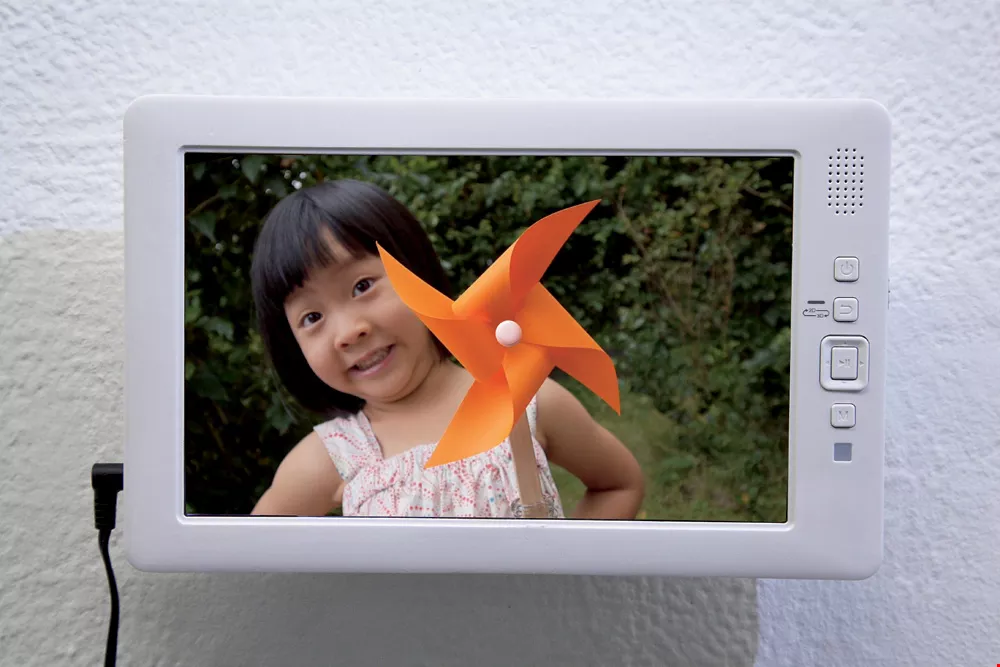
The video installation work Paper Windmill by Yuan Guangming, a pioneer of video art in Taiwan.
The second wave of autonomous artists’ organizations came in the late 1950s and into the 1960s. Young people formed such societies as a means of combating the conservative stagnation of academe. Two representative ones were the Wuyue Huahui (May Painting Society) and the Dongfang Huahui (Orient Painting Society). Wuyue, formed in 1957 by several graduates of the Department of Fine Arts at National Taiwan Normal University (including Liu Guosong, Guo Dongrong, and Li Fangzhi), and taking its name from Paris’s “Salon de Mai,” drew on the salon’s experimental spirit and endeavored to promote “the modernization of Chinese painting.”
In that politically sensitive era, the successful formation of the Wuyue and Dongfang groups was the signal for others to follow suit. In 1959, Qin Song, Yang Yingfeng (a.k.a. Yuyu Yang), and other artists founded the Xiandaiban Huahui (Modern Edition Painting Society). In 1960, reacting against modern drawing and painting, Huang Huacheng and others started up the Da Taibei Huapai (Greater Taipei School), which extolled the concepts of Dadaism and Pop Art and advocated experimenting with mixed media. In 1967, Li Changjun and other graduates of National Taiwan Normal University formed the Huawai Huahui (“Beyond Painting” Painting Society). And in 1968, Zhuang Shihe and others launched the Nanbu Xiandai Meishu Hui (Southern Taiwan Modern Art Association). Moreover, Li Zhongsheng’s students established several associations of their own, and the so-called “Li Zhongsheng School” became a major force in the development of abstract art in Taiwan, with Li himself earning the accolade “Father of Modern Art in Taiwan.”
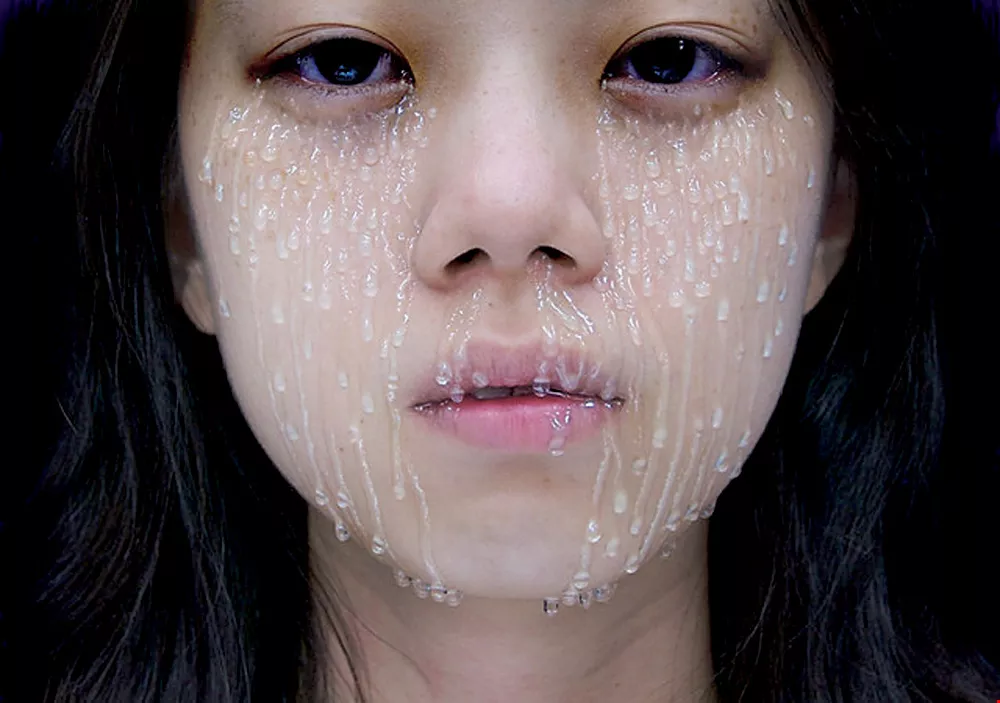
Su Yuxian’s most representative work, Eyes, the Dropping Tears of the Moon, creates a counterintuitive image of a woman whose face, though covered in tears, retains its beauty.
The third wave of artists’ packs exploded onto the scene in the 1980s, exceeding past periods not only in sheer numbers but also in the scale of operations.
In 1982, four graduates of the Department of Fine Arts at Chinese Culture University (CCU)—Yang Maolin, Wu Tianzhang, Ye Ziqi, and Lu Yizhong—organized the 101 Xiandai Yishu Qun (101 Modern Art Group). They followed their forebears by issuing a manifesto, calling for “the creation of new types of graphic art of as yet unknown forms.” After the group broke up in 1984, some of its members went on to found the Taipei Huapai (Taipei School), advocating new art forms that would reflect political and social reality. This posture not only demonstrated that the group belonged to a new, youthful generation, it was an echo of the effervescent atmosphere of attention being given to social and political issues in Taiwan in the mid-1980s. (Taiwan was at that time soon to see the lifting of martial law—with its restrictions on political activity, autonomous civil society, speech, and press freedoms—which had been in place for almost 40 years). The Taipei Huapai also deliberately took a position in opposition to the intellectualized, dispassionate styles of Minimalism and Installation Art that some artists and academics had brought back to Taiwan after living and studying abroad.
The attacking strategy of the Taipei Huapai inspired numerous other CCU students to form artists’ clusters. Not only did these serve to tie the members together, but whenever possible they also disseminated their ideals to outsiders.
In 1998, Yang Maolin and Wu Tianzhang went on to organize the Hantoo Art Group, carrying their earlier activism of the 1980s into a new generation. Hantoo is the most structured and organized of contemporary artists’ groups, and today, with the association still in existence, the older members have been able to add a layer of 30 years of friendship to their original challenge-the-system élan.
Besides the formation of artists’ associations, the 1980s also saw the appearance of groups whose emergence took the form of arts spaces. For example, Lian Decheng, Fu Jiahun and others founded Erhao Gongyu (Apartment #2); Lai Chunchun opened the SOCA Xiandai Yishu Gongzuoshi (SOCA Modern Art Workshop); and Huang Wenhao, Liu Qingtang, and Chen Huiqiao started a gallery called Yitong Gongyuan (IT Park). There were no formal membership lists for these arts spaces; they have simply served as nuclei for like-minded friends who are “regulars.”
The rise of arts spaces was due to two main factors. First, at that time Taiwan had only limited resources devoted to art museums and other venues to display creative work. Secondly, artists wanted to open places free of the disruptive demands that commercial galleries, given their profit orientation, make on artists. These new spaces would be independent redoubts where people of similar views could gather—of, by, and for artists.
This model was subsequently reproduced several times. Examples of venues directly opened and operated by artists include, from the 1990s, the SLY Art Space, and after 2000: (i) the Open-Contemporary Art Center, organized by students from the Department of Fine Arts at National Taiwan University of Arts; (ii) the VT Artsalon, founded by curator Hu Chaosheng and artists Yao Ruizhong, Su Huiyu, and Wu Dakun; and (iii) the FreeS Art Space, opened jointly by Audio-Visual Art Taiwan (AVAT) and the Hantoo Art Group. The main advantage of such locations is that artists control their own voices and how they are presented. But they also have the extra benefit of being windows for international exchange: Bypassing the authorities in charge of art museums or commercial galleries, the spaces can be utilized by foreign artists who decide to come to Taiwan, or are invited by the space operators, to exhibit their works.
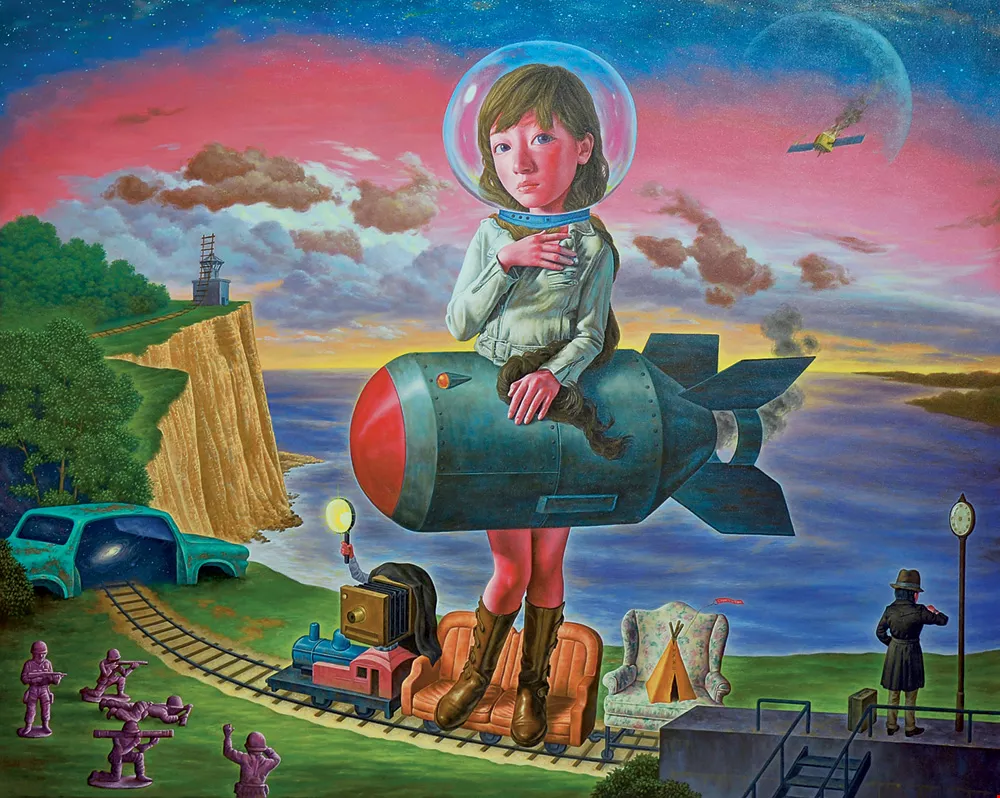
Venus 2, a work by Show Your Island Artist Group member Zhan Yufan. Wearing a leather jacket and holding a bomb, this tough, no-nonsense modern Venus is fighting off an attack from tiny soldiers.
Here in the 21st century, the consideration that is first and foremost when artists think about forming a new posse is: “Can forming a group generate new creative sparks?”
The quest to answer this query has been the motivation behind several contemporary experimental groups. Representative bodies include Wonder Boyz, formed by three graduate students (Jiang Zhonglun, Huang Yanying, and Su Yuxian) at Tainan National University of the Arts; LuxuryLogico, founded by four graduates of the Institute of New Media Art at Taipei National University of the Arts (Lin Kunying, Chen Zhijian, and the brothers Zhang Genghao and Zhang Genghua); and the multi-generational Xindian Boys, including four artists (Zhuang Pu, Chen Shunzhu, Su Huiyu, and Wu Donglong) born in the 1950s, 1960s, and 1970s, who united on the basis of their shared geographic location (the Taipei suburb of Xindian).
Through synergy, these groups are able to marshal even more artistic firepower. For example, LuxuryLogico’s Lin Kunying has a strong background in classical music, so in group creations he is mainly responsible for composing the score; Chen Zhijian, meanwhile, is adept at digital image production, Zhang Genghao writes computer programs, and Zhang Genghua brings expertise in three-dimensional installations. LuxuryLogico not only participates in exhibitions, they are very active about working with the performance and drama communities. For instance, in 2012 they worked with a choreographer and an engineer at the Future Media Festival for a work that kneaded together interactive projections, lighting machinery, and dance postures/movements. And in 2013 they collaborated with new media practitioner Wang Junjie to create Taiwan’s first ever technological-media human-free play, Sin City. In such ways they have pioneered an operating model for an art assemblage that is quite different from anything done in the past.
Zhuang Pu and Chen Shunzhu have proposed similar concepts. The former of these two young-at-heart veterans of the arts world specializes in installation art, the latter in photography. After forming Xindian Boys with new media artist Su Huiyu and abstract painter Wu Donglong, they found themselves having completely new experiences, because they decided to draw most of the inspiration for their collective work from the realm of daily life. Chen admits, “Only now do I feel that I genuinely know Xindian, a place where I have been living for over a decade.”
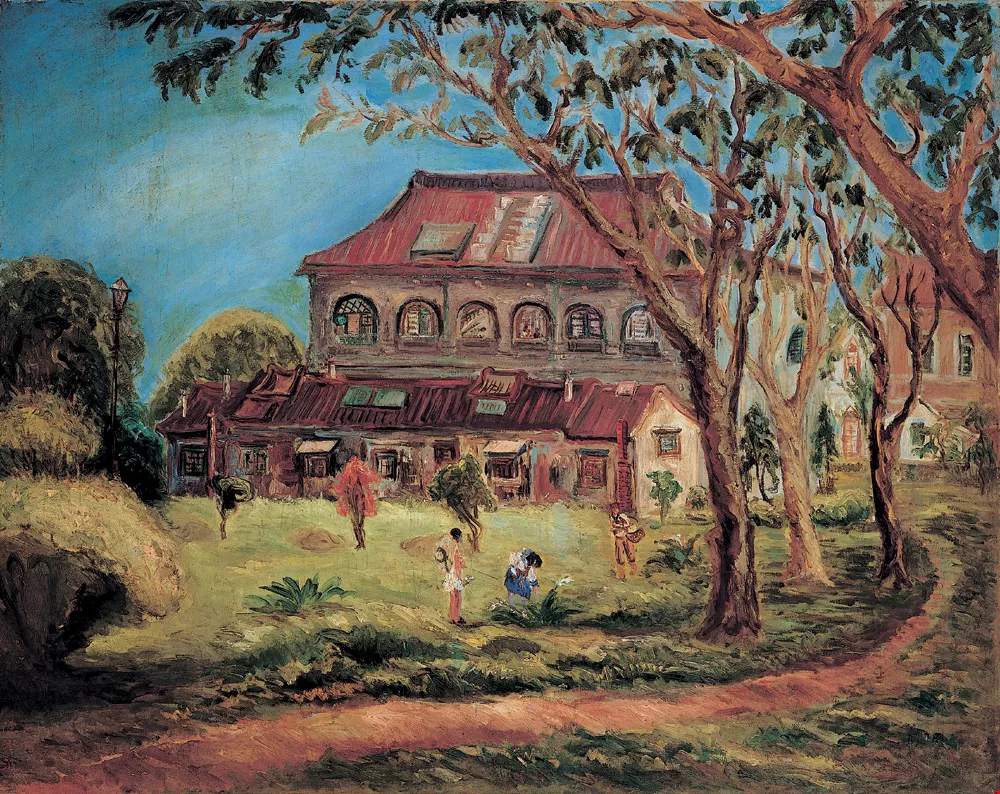
Chen Cheng-po, Changrong Girls High School Dormitory. This oil painting was completed in 1941.
The peaks of self-organization by artists in Taiwan started with the first wave under Japanese rule, followed by stages showcasing important collectives in the 1960s and 1980s. The most important feature of these groups—in addition to proposing new ideas to resist the narrow and conservative art establishments of their times—was that they had a profound impact on the development of art in Taiwan. They each set the bar for their respective eras, thereby raising it for their successors. It should be remembered, moreover, that although the four waves appear to be distinct phases, if you look further into the details you see that in fact there are hidden inheritances passed from one generation to the next.
For example, we can follow the threads from Taiwan’s first artists’ association, Qixing Huatan, to those of the 1950s and 1960s. Qixing member Chen Chengpo, during a stay in Shanghai, participated in a group founded by mainland Chinese artists. One member of that group was Li Zhongsheng, who came to Taiwan after World War II, and became the mentor of a whole generation of abstract painters. The influential Dongfang Huahui was then founded by some of his students. The contemporaneous and equally influential Wuyue Huahui, meanwhile, was inspired behind the scenes by Liao Jichun, an artist who had been very active in collectives under Japanese rule. Ni Jianghuai was another Qixing member who played a key role in later regional groupings.
Although the members of Wuyue and Dongfang scattered to the four winds, they set an example after which the generation of the 1980s could pattern themselves. Wu Tianzhang has said that he (along with Yang Maolin) was inspired to found Taipei School by Wuyue and Dongfang. Moreover, Taipei School and the Hantoo Art Group (which is still in operation) triggered the formation of the youthful Show Your Island Artist Group.
There are currently 26 members in Show Your Island, with an average age of 30. They come from all over Taiwan, and each has his or her own style. These young artists, who all share the same dream of making a living from art, got to know one another via the “King Car Youth Oil Painting Prizes” awarded by the King Car Educational Foundation, and then went on to establish Show Your Island. They held their first collective exhibition in 2013, and this year plan to hold their second, steadily drawing public attention to their artistic achievements.
The new generation enjoys an arts scene of unprecedented vitality, with more artists, art schools, and exhibition venues than ever before. The problem now is that if young people on the cutting edge want to stand out from the crowd and attract public attention, they need to be more strategic. Forming associations generates mutual inspiration, raises the profiles and reputations of members, and gives artists greater confidence to pursue their favored creative direction. Groups have other effects too: information sharing, promotion toward overseas artist-in-residence programs, and so on.
The pluralistic island of Taiwan is glittering with creativity. For nearly a century, artists’ conglomerations have sprung up and flourished here. They have helped individual artists strive toward the realization of their dreams, and have added threads of richness and diversity to Taiwan’s colorful tapestry of fine arts.
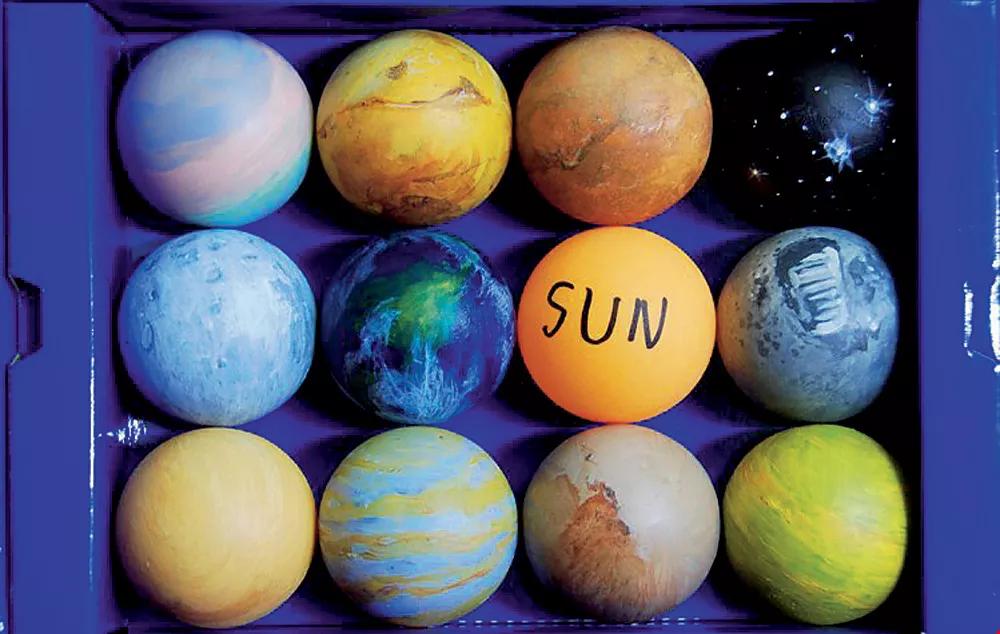
Su Yuxian took the planets of our solar system as his theme in the work Universe Ping-Pong Balls.
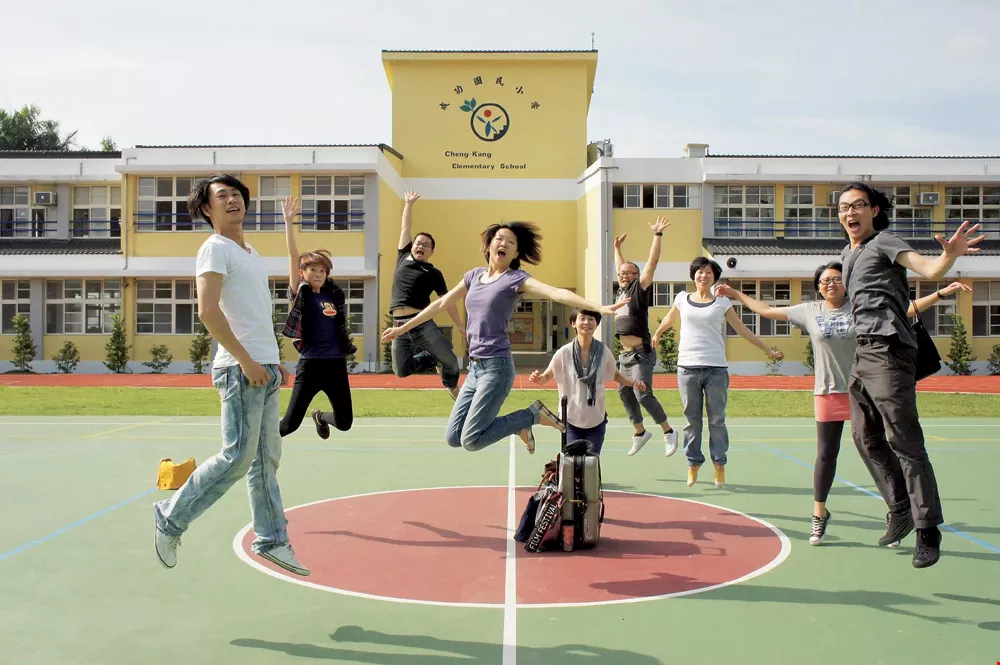
LuxuryLogico members Lin Kunying (right), Chen Zhijian (left), Zhang Genghua (rear, second left), and Zhang Genghao (rear, second right).
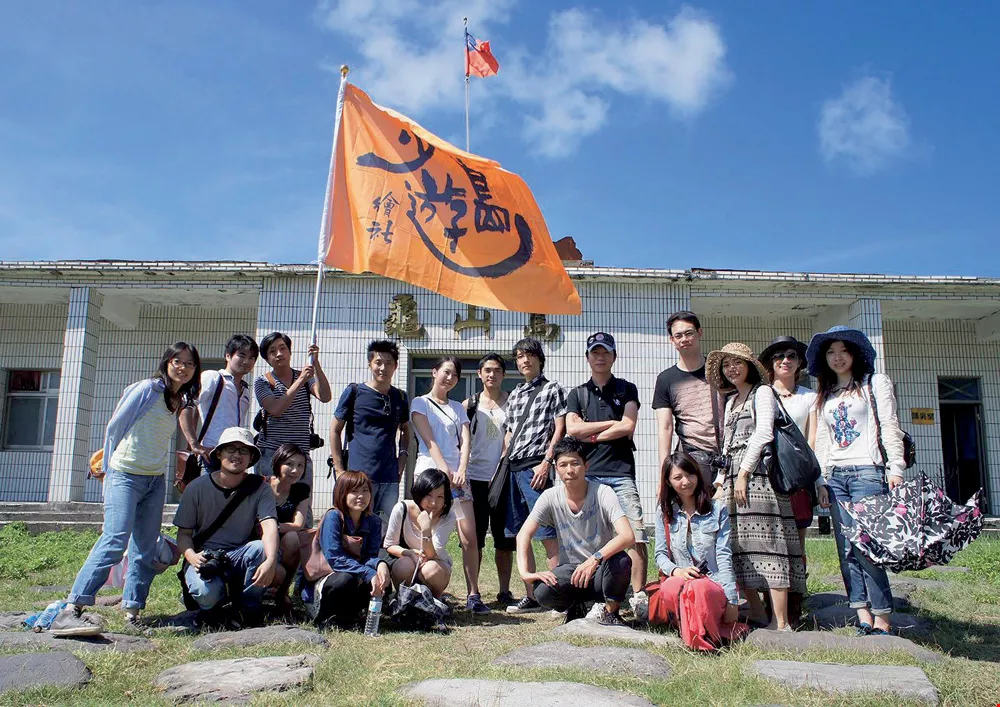
Young people determined to become professional artists have formed Show Your Island Artist Group, which serves as a platform for exchanging ideas and staging exhibitions.
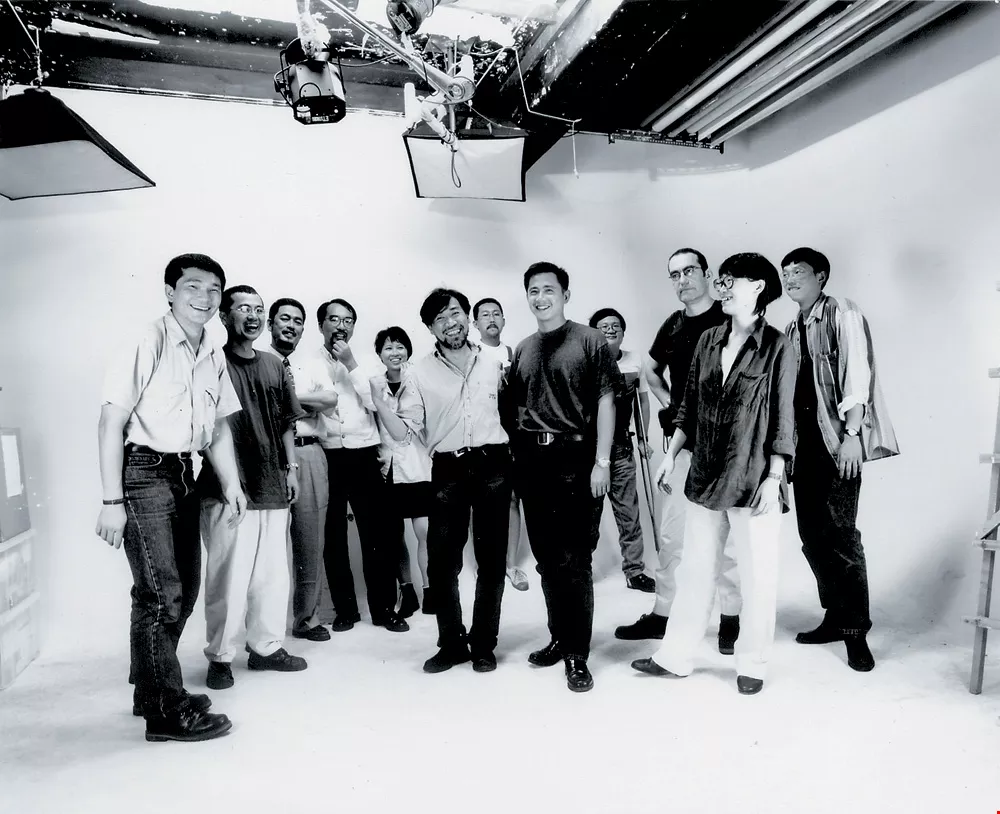
IT Park, a venue founded in 1988 by artists, for artists, has always maintained a policy of openness. The photo is of the founders and some of the regular participants.
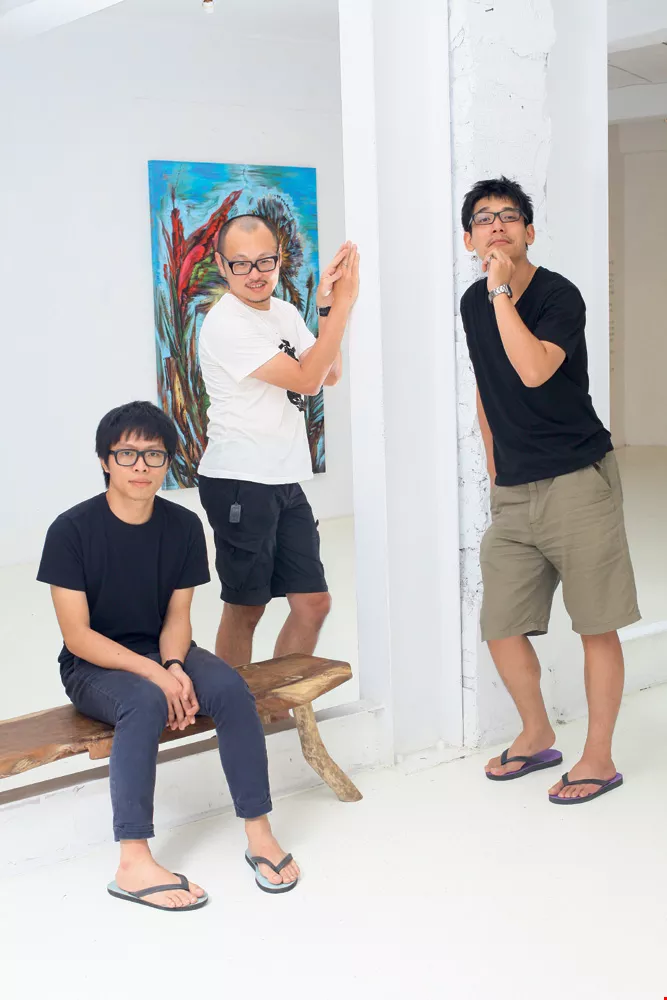
(from right to left) Huang Yanying, Jiang Zhonglun, and Su Yuxian, the founders of Wonder Boyz.

@List.jpg?w=522&h=410&mode=crop&format=webp&quality=80)

@List.jpg?w=522&h=410&mode=crop&format=webp&quality=80)


