

In 1945, first Nazi Germany and then Japan surrendered. Thus ended World War II, in which 110 million soldiers fought and 50 million people perished. In all, some 80% of the world's population was caught up in the conflagration. In China, countless soldiers and civilians lost their lives, with tens of millions displaced. In Taiwan, over 200,000 men, including the Takasago Volunteers, joined or were drafted into the Japanese army to do battle in China and the South Pacific. Over 30,000 of them died in this war from which no one could stand aloof.
The leaders of the Western world recently gathered in Moscow to commemorate the end of WWII. In doing so they reflected on the war and pledged to uphold mutual security. In contrast, however, Asian countries that went through that same war continue to this day to provoke each other with protests, demonstrations, and heated rhetoric.
In Taiwan, one sees both Taiwanese who fought for Japan, and mainland Chinese who fought against the Japanese. In addition, there are those who suffered in the 228 (February 28) Incident of 1947, shortly after Taiwan's return to Chinese rule, and under the authoritarian government of Chiang Kai-shek which fled to Taiwan after losing the civil against the Communists. Add to that the complex relations among Taiwan, Japan, and China that have brought out the contradictions between different ethnic identities, and one can understand why historical terms such as "victory in the Anti-Japanese War," "armistice celebration," and the "glorious retrocession of Taiwan" have become so controversial. Somber historical reflection offers few easy answers to deal with these feelings.
"History is like the clouds that I lifted my eyes up to see; it is like the thunder whose sound caught my ears." Such are the wartime sentiments of the writer Wang Tin-chun. The end of war should be a day forever remembered by all of humanity, not so much to relive the celebration of victory, but to collectively look back and reflect so that the people may understand history and condemn warfare. This is the only way that war might truly be ended, banished from the future.
"For the Europeans, WWII ended when the two aggressors, Germany and Italy, sincerely apologized for the war and accepted their responsibility. They could then build a social order that moved beyond the war and work cooperatively to achieve prosperity. But for Asia, since Japan refuses to admit wrongdoing, WWII is still being waged!" says cultural critic Nanfang Shuo.
Offering another perspective, Council for Cultural Affairs vice-chairman Wu Ching-fa comments, "A 'silent war' still rages on in Taiwan. Whether reflecting on the experience of the Japanese occupation, the 228 Incident, the White Terror, or strident anti-communist education, the problems stemming from the war remain unresolved."
The levels of anti-Japanese and anti-Chinese feeling recently prevalent in Taiwan have enveloped the 60th anniversary of the end of the Sino-Japanese War in an antagonistic atmosphere.
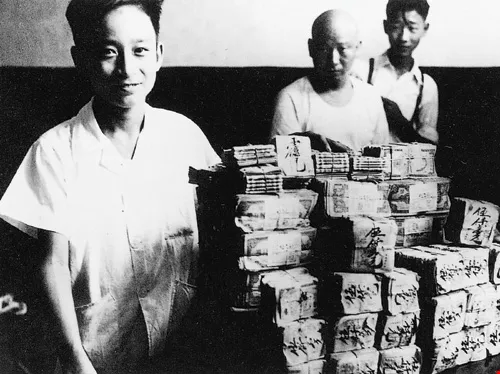
After the war, inflation spiraled and corruption ran rampant. Government action against a cigarette vendor exploded into the 228 (February 28) Incident, in which countless citizens rose up in protest (see opposite page), and many of Taiwan's best and brightest were killed. The event has caused lasting grief for the Taiwanese people and has also cast a dark shadow over the celebration of the victory over Japan in WWII.
Passing through two eras
But let us set aside current tensions and return to the starting point. What were your fathers and grandfathers doing on the day that the war ended?
In China, that day marked the end of eight bitter years of fighting. With victory celebrations resounding, people began to return to their homes and the hope of a life of peace. Victory would prove to be short-lived, however, for following the Nationalists' failure to sweep away the Communists, two million soldiers would subsequently follow the Nationalist government as it fled over the waters to Taiwan.
In Taiwan, most Taiwanese were that day gathered in front of their radios listening to the broadcast of the Japanese emperor proclaiming "armistice." With the end of war also came the end of raids by American B-29 bombers and the end of the difficulties of rationing. Having been returned to their "mother country" after being an occupied people, the Taiwanese had a hazy but hopeful vision of the future.
Goethe wrote, "If a person is born ten years earlier or later, they may turn out entirely differently in terms of their education and freedom of action." That war can be a turning point in an individual's life or subject a generation to tragedy can be seen by the fate of the Taiwanese who lived through the Sino-Japanese war, or the mainland Chinese who achieved victory against the Japanese but then lived a life of exile in Taiwan.
"Memories of war are among the root causes for Taiwan's internal divisions," says Wu Mi-cha, associate professor of history at National Taiwan University, noting that divisions between communities arise from the confrontation between identification with Chinese as opposed to Taiwanese ethnicity. While a consciousness of Chinese national identity arose out of the shared enmity against the Japanese, this process did not include the Taiwanese, who had already lived through 40 years under Japanese rule.
The events of July 7, 1937-when Japan launched its full scale invasion of northern China-caused Chinese everywhere to take up arms against the Japanese. Subsequently, the bloody scenes of the Nanjing Massacre brought about a transcending of regional loyalties and the formation of a powerful spirit of Chineseness. The historian Hsu Cho-yun remarks, "The self-awareness of the Chinese as a people was not a theoretical construct, but was shaped by Japanese gunfire and formed out of Chinese blood."
Meanwhile, back in Taiwan, "The period of the Sino-Japanese War happened to coincide with the most intensive efforts on the part of the Japanese at assimilating the Taiwanese as subjects of the Japanese empire," says Chou Wan-yao, a researcher at the Institute for Taiwan History of the Academia Sinica.
At the time, Taiwan was in the latter period of rule by Japan. After 40 years, the younger generation of Taiwanese held Japanese passports, read Japanese books, and spoke the Japanese language. While appreciating the enhancements brought about by modern Japanese culture, they also, however, felt a sense of inferiority as a subjugated people when compared with the Japanese themselves.
Just two months after the Sino-Japanese War began, a group of Taiwanese soldiers had already been sent to the Chinese front, serving to transport military goods. Later, when the Nationalist government in Shanghai collapsed and its troops carried out a scorched-earth policy to prevent agricultural resources from falling into enemy hands, the Japanese colonial government in Taiwan sent a squad of Taiwanese agricultural volunteers over to that region.
The twists of history were such that the people of China and Taiwan met on opposite sides of the battlefield and, although overlapping with each other, never had any opportunities for dialogue.
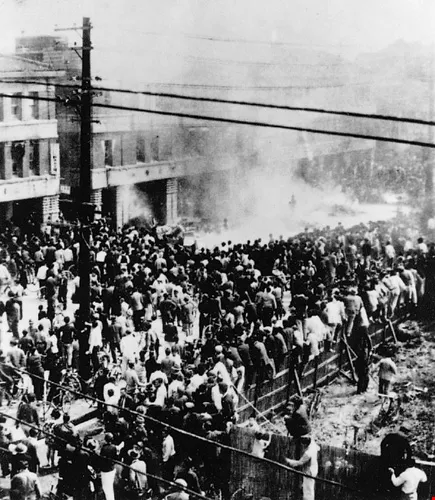
After the war, inflation spiraled and corruption ran rampant. Government action against a cigarette vendor exploded into the 228 (February 28) Incident, in which countless citizens rose up in protest (see opposite page), and many of Taiwan's best and brightest were killed. The event has caused lasting grief for the Taiwanese people and has also cast a dark shadow over the celebration of the victory over Japan in WWII.
Dashed hopes-February 28
With hostilities ended, the Nationalist government sent Chen Yi, the new governor of Taiwan, to formally take back control over the island in a ceremony at today's Zhongshan Hall in Taipei on October 25, 1945. Fifty years prior, the Japanese had themselves assumed control over Taiwan from the Qing dynasty at that very spot.
To celebrate the return of Taiwan to Chinese rule, the people made ready to welcome the Nationalist army's arrival at Keelung, learning Mandarin, making flags, and organizing welcoming festivities, while 88,000 Taiwanese returned to the island from their sojourns abroad.
However, the sight of the Nationalist soldiers in their tattered uniforms, shouldering cooking pots, and with loose leg bindings, inevitably caused some disappointment when compared with the crisp, clean-cut appearance of Japanese soldiers. However, the onlookers, still full of goodwill, guessed: "They must have tied strips of lead to their legs to train their strength, which is why they march so sloppily!"
Given the exuberance with which the Taiwanese people welcomed the Nationalist army, most scholars do not feel that different wartime experiences account for the communal frictions or the nostalgia for Japanese rule that later came about. Instead, the real blow would come three years later with the 228 Incident.
Many Taiwanese soldiers remember how the Japanese soldiers with them in the prisoner camps would say to them, "We envy you, for whether Japan wins or loses, you have won." Yet when Taiwanese soldiers returned to their homes, they had to face the resentment that came from "serving the enemy," and never tasted the fruits of victory. Others who were taken in by the Nationalist army while in China were immediately conscripted into the civil war against the Communists. Still others, who did not make the retreat to Taiwan, were pressed into the Communist army. It was thus possible for a person, in the short span of a lifetime, to serve the Japanese Emperor, President Chiang Kai-shek, and Chairman Mao.
Meanwhile, ordinary people in Taiwan suffered the effects of inflation. The price of rice rose by 400 times and that of charcoal by 200 times. The crime rate rose 28-fold, and corruption spiraled out of control.
After the 228 Incident began, at Keelung Harbor almost 100 people were bound together in groups with thick wire, shot, and their bodies pushed into the water. The army commenced a crackdown on the streets, and those who had previously come forward as mediators between the mainlanders and the locals were tortured and publicly executed in droves. The people of Taiwan, who had so vigorously welcomed their return to Chinese rule, now began to doubt the nature of this "glorious retrocession."
"If the 228 Incident had not happened, or if in the beginning the government had not excluded Taiwanese from participating in politics, the people might not have come to feel that they were being governed by an outside authority," says historian Bo Yang. Nanfang Shuo agrees. According to him, one of the main reasons for today's ethnic divisions lies in the way that the Nationalists, bringing with them two million people, came into such a small place as Taiwan. Their actions, which squelched the aspirations of two generations of Taiwanese, led to communal disharmony that lingers on even today.
Chou Wan-yao says, "We do need to walk out of tragedy. But only when this journey has become a part of our collective consciousness and feelings do we have the right to ask the people of this land to let go of that tragedy."
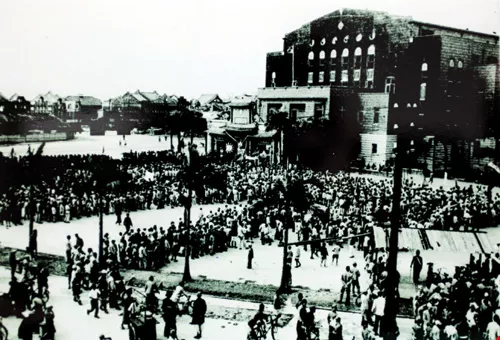
On October 25, 1945, at Zhongshan Hall in Taipei, Governor Chen Yi and other officials of the incoming Nationalist Chinese government formally received authority over Taiwan from the departing Japanese colonial regime. The crowds gathered in the plaza celebrated the long-awaited return of Taiwan to its mother country.
Memory and history
History springs from memory. But memory is formed out of a process of selection that is highly contingent upon one's surroundings. Living under authoritarian rule in the early days following the war, says Nanfang Shuo, "The people of Taiwan began to have good associations with the era of Japanese rule, and the more this sentiment was exaggerated, the more their memory of the times was distorted."
For Chou, "People's differences stem from differences of 'historical memory,' and not from having different memories about the war." That is, what is at issue is the overly stark contrast between the history officially promulgated by the Nationalist government and the memories of ordinary people-mainly Taiwanese-which they inherited from their families and communities, but were long suppressed. As Wu sums it up, "The Nationalist government foisted a Chinese consciousness upon the Taiwanese people."
So which memories have been distorted? Which have been fabricated? Should one use terms such as "glorious restoration," "armistice," and "victory in the Anti-Japanese War?" Scholars, too, are divided.
Take for example the use of the term "armistice" to describe the end of the fighting. Yang Chang-chen, director of the Cultural and Ethnic Affairs Department of the Democratic Progressive Party, argues, "Even if the term 'armistice' is a Japanese convention, it is a neutral term that does not concern itself with who won or lost. Indeed, from a human perspective, who ever really wins in war?"
On the other hand, "For the Japanese to speak of 'armistice' is to refuse to admit that they were defeated, to continue to see things from the aggressor's viewpoint. Victory in the Anti-Japanese War was a fact. The retrocession of Taiwan to the Chinese nation was a fact. We can't change the way we talk about these things simply because of a change in government or mentality," says Nanfang Shuo.
Over the last 20 years, researching Taiwanese history under Japanese rule, Chou Wen-yao has talked with with dozens of Taiwanese who served in the Japanese army. Chou feels it a bit "too lazy" to simply adopt the Japanese term "armistice." On the other hand, regarding the term "glorious retrocession," Chou says that after having viewed the records left by those who suffered through the 228 Incident and the White Terror, "It's a phrase I can't really bear to use in my writing. Perhaps expressions like 'the defeat of Japan' or 'the end of the war' would be more suitable."
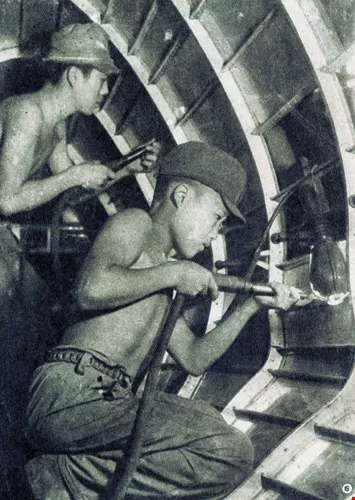
In the latter part of the war, Taiwan was a target of Allied bombings. No one, whether young or old, escaped this baptism by fire. More than 8,000 youth workers left their homes to help the Japanese build warplanes.
Whose war? Whose memories?
"History involves a process of choosing to remember and choosing to forget. When a group of people agree to change their collective memory, they must not only gather some new memories but also jettison some old ones. However, Taiwan has not gone through a very natural process of constructing its collective memory," says Chou. This may be why, following the end of martial law and the rise of a Taiwanese consciousness, it has been so easy in the last decade to reverse the history curriculum promulgated by the Nationalist government for over 40 years.
The officially promulgated history of the war prior to the lifting of martial law in 1987 focused exclusively on the fighting in China proper. This is also what one sees in museums of history. As for accounts of Taiwanese soldiers in the Japanese army, or of life in occupied Taiwan from the 1920s to 1945, these experiences of the Taiwanese people have been hidden from view.
"When I look at a handkerchief given by one young person to another when they marched off to war, and preserved these 50 years by a Taiwanese soldier who fought in the Japanese army, the red blood turned dark brown with the passage of time, I sense the presence of a young, authentic life spirit. Only when we understand that generation's feelings and way of thinking can we understand the formation of a Taiwanese consciousness," Chou has written.
In contrast to the "mainlander" veterans who loudly proclaim their wartime contributions, the 200,000-plus Taiwanese soldiers and the Takasago Volunteer Detachment who fought in the Japanese army have kept silent for nearly half their lives. "Why don't they talk about it? Even their children do not talk about what they did, because this would only cause others to despise them," says Cheng Li-ling, an assistant professor of history at National Taipei University.
"This is a group of soldiers without a nation to protect them," says Liu Feng-sung, director of Taiwan Historica. Though it may not be appropriate to glorify service as a soldier in an army of conquest, Liu is still actively working to erect a memorial to these Taiwanese soldiers. "The point is not to make them into heroes. It' s just that we really cannot face up to our history if we simply let them slip away silently, with their names vilified."
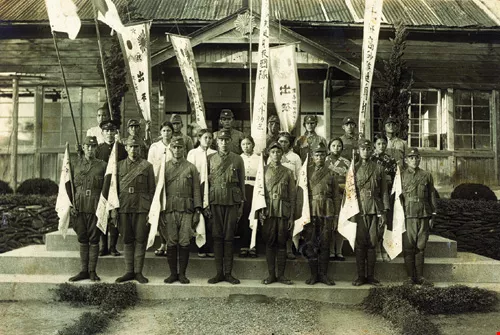
Attired in a crisp military uniform with sturdy leg bindings, the Takasago Volunteers were cheered as they went off to battle, but abandoned by the times upon their return.
Recovering a missing page
"In Taiwan, the war has never been a topic about which people could really have a dialogue," says Yang. It would seem that the period right after the war would have been the best time for reflection, discussion, and forging a collective understanding. However, in order to help the new rulers consolidate their control in a place formerly ruled by the enemy, "The collective memory was completely wiped away, and we became a country that could not form a collective memory," says Yang. This applied even to engaging in anti-colonial reflection.
"The old language has become rusty, and everything-the things that should be forgotten and the things that should not be forgotten-has slipped from memory," writes Chen Chian-wu, a Taiwanese poet who served in the Japanese army.
"Actually, the modern history of China during the war with Japan needs to be viewed afresh," says Lu Fang-sang of the Academia Sinica's Institute of Modern History. To historians, the 1987 end of martial law in Taiwan constituted a quiet revolution in which taboos against certain subjects or certain primary source materials were lifted. "When modern Chinese history is no longer such a loaded subject, then we will see things more clearly," says Lu. Unfortunately, not enough scholars today are engaging in this work.
How much do we really understand about the war with Japan?
Apart from the canonical accounts of the war found in the textbooks, there is another history: That of the Nationalist soldiers from China who were dislocated from their homes and conscripted away from their families, of families who faced the excruciating choice of who would take the last remaining boat ticket to escape, and of the harsh life of so many military families living in Taiwan after the war. These stories have yet to be revealed. Moreover, with the waning consciousness of the "Republic of China" seen in recent years, and the growing international impression that it was the Communists who were the real force behind fighting the Japanese, these Nationalist veterans who fought tooth and nail for eight years have felt even more aggrieved.
"We need to honestly assess the past to see where the basis for our life today lies," says Nanfang Shuo. "Only with a change of attitude can we develop a new worldview, one that differs from that rooted in the 50 years of Japanese rule, and from that which stems from the 50 years of the Cold War."
Confessions
In his lectures, Wu Mi-cha often tells new students in the history department that when a young man fervently relates his own family history to a young woman, what he is really saying is that "he wishes for her to become a part of his family."
"Mainlanders" who bitterly fought the Japanese in China have no way of understanding the feelings and helplessness of those who lived under Japanese rule. Similarly, those who were in Taiwan during the war have no way of understanding the ferocity of that conflict and the deep pain occasioned by the loss of the civil war in China. But, says Wu, "If you don't understand what that other person went through during the war, how can you expect him to understand what you went through under Japanese rule?" While the older generation is still saddled with preconceived notions, Wu hopes that the current generation of young people will be able to set aside emotionalism and look more closely at history, engage in a more expansive dialogue, accept each other, accept each other's memories, and acknowledge their differences, but nonetheless strive to co-exist.
When speaking of the fierceness of the fighting in the war against the Japanese or of the deeds of war heroes, one cannot simply characterize people as "traitors to the Chinese," "rebels," or "Maoist bandits" if one wants to see the complexity and many-sidedness of this history. Indeed, aside from the Nationalist government in Chongqing, the map of China at that time reveals different powers in Manchuria, the government in North China, Wang Jingwei's government in Nanjing, the Communists in Yan'an, and others. "We have never faced up, or even been willing to face up, to the history of the war with Japan," says Wu.
From another perspective, when we look back with nostalgia on the cleanliness, order, universal education, and modernization occasioned by the Japanese occupation, it is also necessary to remember the resistance and the butchery with which the colonization began in the late 19th century, the suffering occasioned by that occupation, as well as the way Taiwanese were treated as second-class citizens. Only with an honest reappraisal of history can we arrive at a deeper understanding of the occupation.
And while we shed tears for the tragedy of the 228 Incident, we should also take care to fairly assess the positive contributions to building up Taiwan made by Chiang Ching-kuo and other Nationalist figures.
Likewise, rather than getting caught up in polarization between placing on pedestals those who cried "kill the Japanese devils" or those who cried "banzai," we would do well to remember that most people on both sides were bewildered by the war, and hoped only to survive until peace came. Though history is often painted in dollops of black and white, in fact all the spaces between are wide swathes of grey.
Let us tell stories!
It has been 60 years since the end of the war. According to the traditional Chinese calender, 60 marks the completion of a sexagesimal cycle, bringing a sense of completion. Wu Mi-cha can only shake his head as he recalls 60 years of fruitless, suspicion-filled conflict: "Taiwan is in an extremely unhealthy state, and is full of intractable conflicts. Let's not even mention reconciliation and the conclusion of war. I fear that it may even be impossible to hold an objective dialogue."
For too long, there has been too little research and dialogue, with the result that those in power have been able to tamper with the historical record. The people, whose emotions have been toyed with all along, have become fodder for "memory's battlefield."
Listening
A diverse country will of course be home to different ethnic identities. This, however, should not hinder a national consciousness. Sun Ta-chuan, who heads Dong Hwa University's Graduate Institute of Indigenous Relations and Culture, feels that ethnic divisions, being inherently insular, do not belong in the political arena. Sun hopes for more creative work, art, and films that can express a spirit of mutual tolerance and care.
"During the era of 'greater China,' when mainlanders ran the show, native languages and regional loyalties were suppressed. Now that 'Taiwanese consciousness' prevails, the mainlanders have been relegated to the collective memory's periphery," says Yang. Yang has recently been working on a documentary utilizing the oral histories of the mainlanders, and a project entitled "The Listening Series" has been launched in the hopes of allowing people to listen to each other's stories. Through such stories, the true contours of that past will emerge, bit by bit.
Every age sings a secret song that may be heard, softly, in one's memory. Sometimes it is joyful; other times it is sorrowful. The war has been over for 60 years, and perhaps the passage of time will allow us to serenely listen to that era's song, without passing judgment. May we walk in the present, encounter the past, and catch sight of the future!


@List.jpg?w=522&h=410&mode=crop&format=webp&quality=80)


