Taiwan Reaches Out to Refugees on the Thai–Myanmar Border
Sam Chu / photos courtesy of TOPS / tr. by Max Barker
March 2015
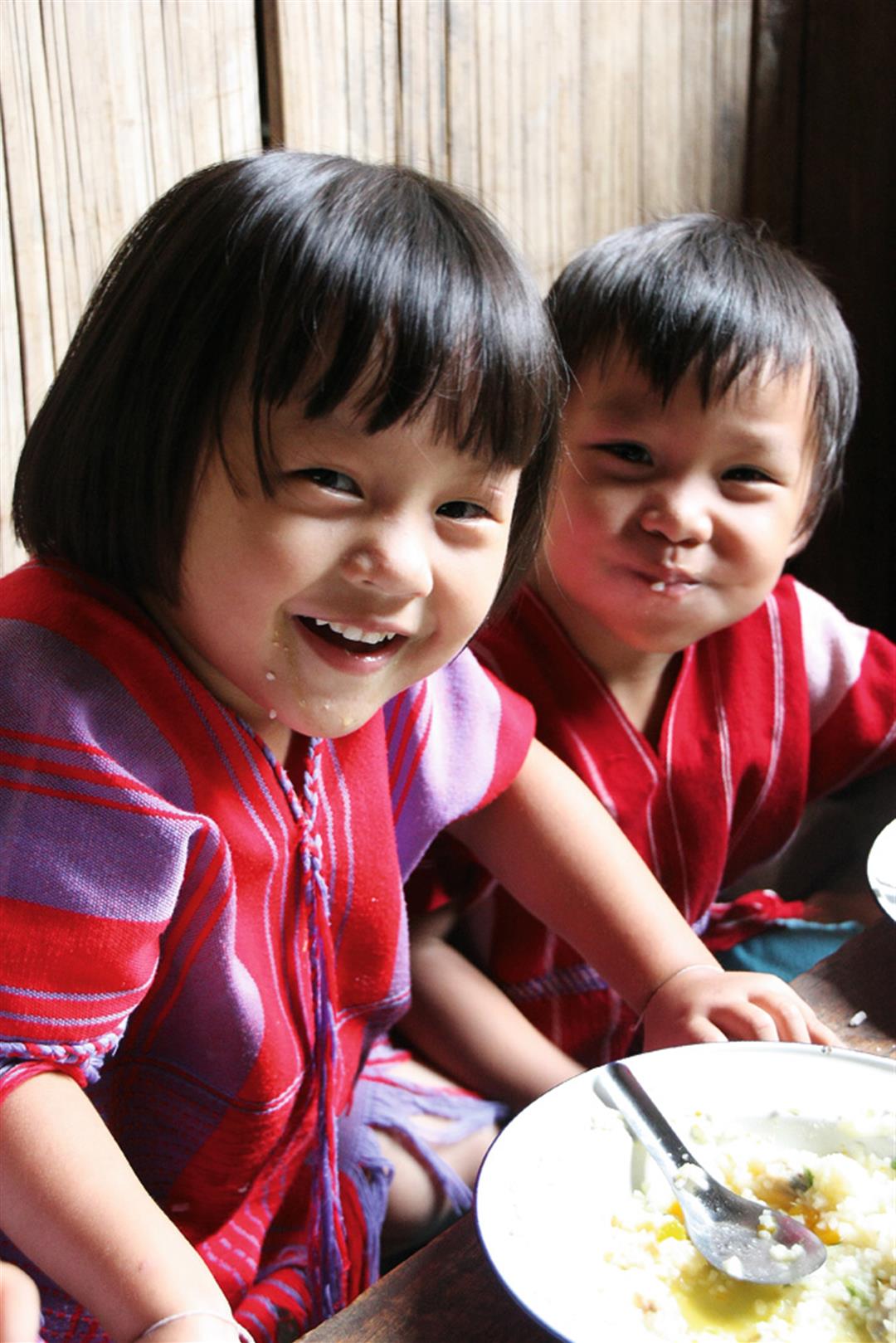
A humanitarian commitment is today an essential component of international values. For seven straight years now, the Ministry of Foreign Affairs of the Republic of China has been funding international non-governmental organizations to provide free nutritious lunches to more than 4000 children in the Thailand–Myanmar border region. Taiwan is thus far the only Asian country to have provided humanitarian assistance to the refugees in this border area.
As the fires of war have ravaged the Middle East in recent years, people have been forced to flee their homes and seek refuge wherever they can. But they are not the only ones. In the faraway Indochina Peninsula, another refugee crisis continues unabated.
Myanmar ranks first on the list of “forgotten crises” compiled by the European Union’s department for Humanitarian Aid and Civil Protection. This assessment encompasses both the conflict in Rakhine and Kachin states and Myanmar refugees in Thailand.

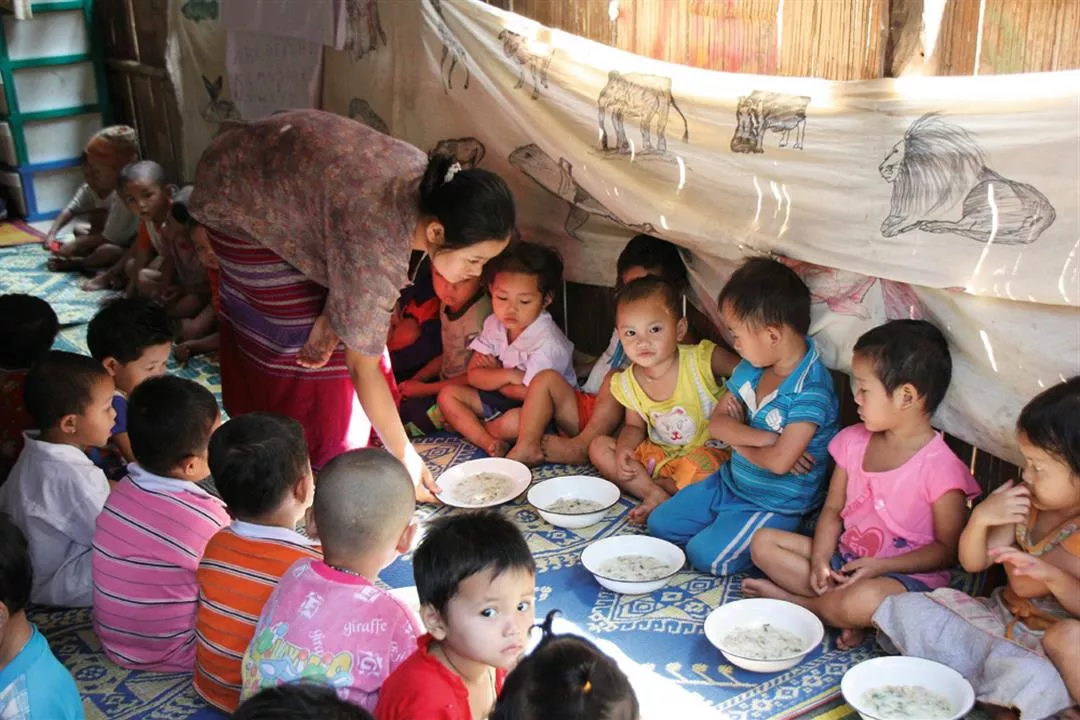
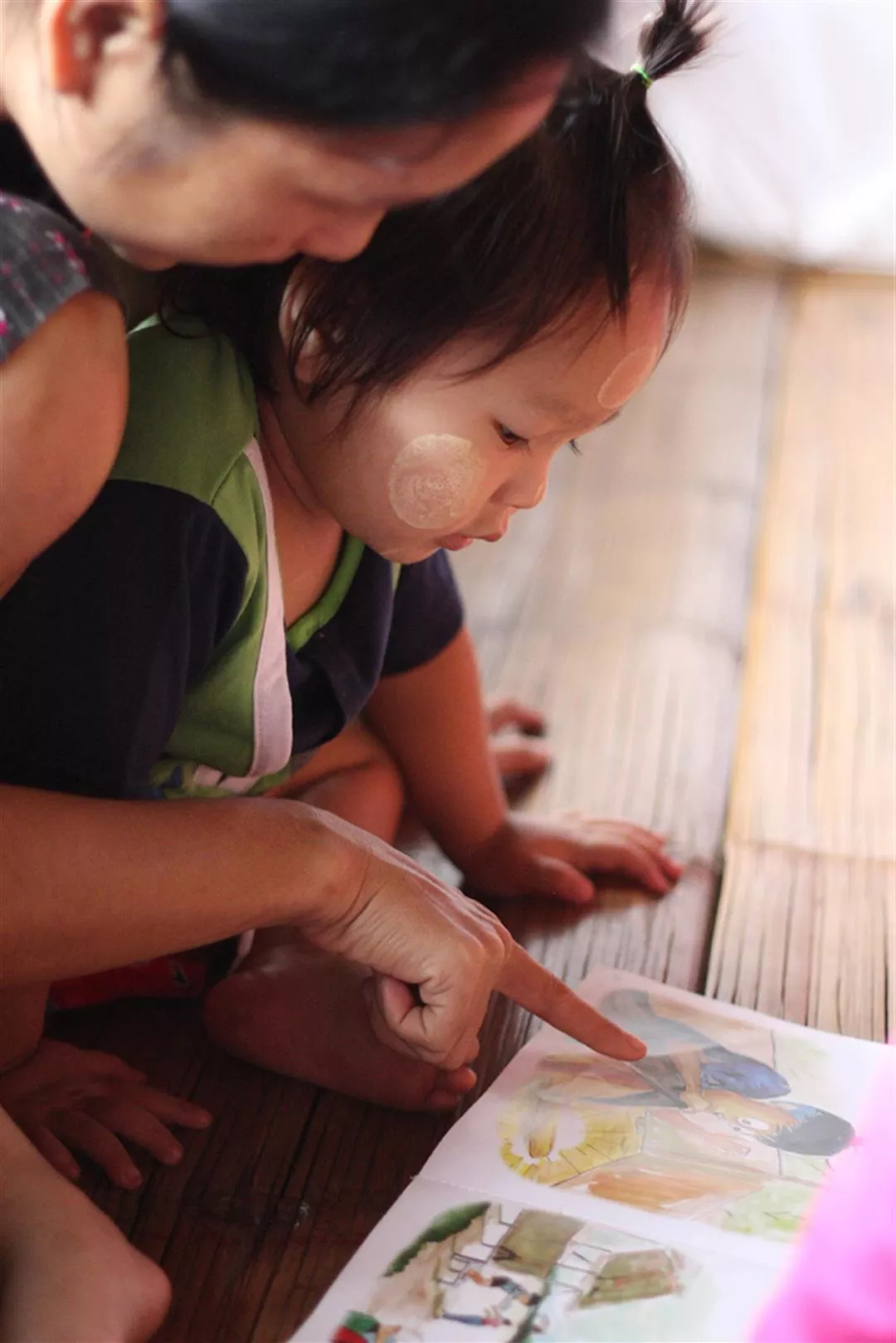
The Taipei Overseas Peace Service, under the Chinese Association for Human Rights, trains preschool teachers in the refugee camps, so that the people there can do more to help themselves.
Myanmar has a total population of 51 million, of which Bamar account for 70%, with the remainder constituted by seven or eight major ethnic groups. The largest of these are the Shan and the Karen, accounting for 9% and 7% of the population, respectively.
Since military strongman Ne Win took power in 1962, the central government has been in a state of civil war with one or more ethnic groups on numerous occasions. The conflict with the Karen army has been especially intense, and many Karen people have fled to neighboring countries to avoid the violence. To cope with the influx, in 1984 the Thai government began setting up refugee camps along the Thai–Myanmar border.
In 1995, the Myanmar government launched a major offensive to take the main base of the Karen National Union, and over 100,000 Karen refugees poured over the border into Thailand. Asylum seekers have continued to come across for 20 years, and the Thai government now has nine refugee camps on the border, housing at one time nearly 150,000 people. 90% of the residents are Karen.
Of these nine sites, Mae La—located just eight kilometers from Myanmar—is the largest refugee camp in Southeast Asia. A space of less than two square kilometers holds 50,000 people. Supplying them with food, medical care, and public sanitation has been a chronic problem.

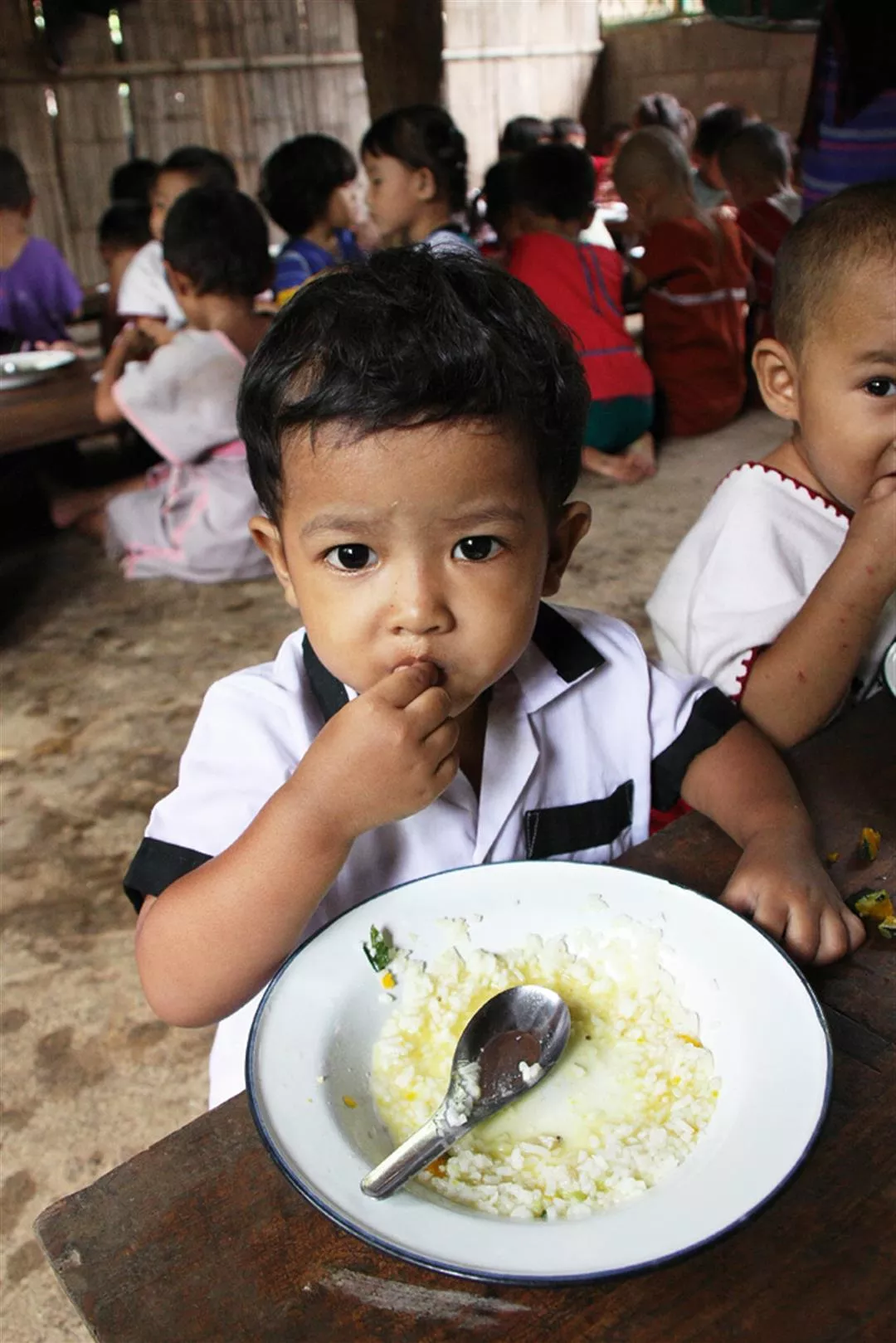
Food is rationed in the refugee camps on the Thai–Myanmar border, and there are only limited supplies of dietary supplements. Without further assistance, many children would not get adequate nutrition for optimal development.
These people have not been completely ignored. Not long after the camps were founded, an international grouping known as “The Border Consortium” (TBC) was formed to lead the way in providing humanitarian assistance.
Based in Bangkok, the TBC is an alliance of ten religious and secular charitable organizations from eight European and North American countries. They have branch offices in five towns including Mae Sot and Mae Sarliang. These are the front line of refugee services.
The Taipei Overseas Peace Service (TOPS) group, under the Chinese Association for Human Rights, was the first non-governmental aid organization from Taiwan to establish a presence in the Thai–Myanmar border area. Its first team arrived there in 1996, working in several refugee camps to promote children’s education and to undertake poverty relief.
Humanitarian assistance should not take notice of nationality or ethnicity, nor is there any point in splitting hairs over whether such aid is “official” or “private.” Keeping these principles in mind, the ROC Ministry of Foreign Affairs (MOFA) has been funding a Refugee Early Childhood Development Program for preschool children (ages three to five), under the auspices of the TBC and implemented by TOPS. This is the seventh year of this trilateral cooperation.
Funding from MOFA, which is budgeted for two-year periods, has increased from US$100,000 in the first phase to US$200,000 in the current fourth phase, and the scope of the program has expanded from the initial three camps (Mae La, Nu Po, and Umpiem Mai) to four (with the addition this year of Ban Don Yang). The number of children benefitting has grown from 3500 to 4000.
According to TBC data, there are a total of 7900 children not yet in primary school in the nine refugee camps. This means that more than half of the preschool children in these camps are receiving humanitarian assistance, in the form of nutritious lunches, from the ROC. To put the level of aid in different terms, the four refugee camps with a TOPS presence need US$120,000 per year to fund the nutrition program, and over 90% of this comes from the annual contribution from Taiwan.
Ray Mou, director-general of MOFA’s Department of NGO International Affairs, explains why MOFA is so pleased to be able to fund the program to supplement children’s daily nutritional intake: He says that under the food rationing system used in the refugee camps, there is already too little food per household. When you also factor in the traditional values of giving elderly family members first priority, concerns arose that preschool children were not getting enough nutrition, impacting their development and growth and thereby setting them back for life. TBC donors—which include over a dozen governments and national aid agencies in North America, Europe, and Oceania—are very cognizant and appreciative of MOFA’s long-term support for this program. Taiwan is the first Asian country to give assistance to refugees along the Thai–Myamar border.

Children in the refugee camps should also enjoy the right to an education.
According to a report issued in 2014 by the non-profit organization Global Humanitarian Assistance (GHA) and based on data released by the Development Assistance Committee of the Organization for Economic Cooperation and Development and by UN agencies, in 2013 total implemented humanitarian assistance worldwide reached US$22 billion, an all-time high. Of this, US$16.4 billion came from governments, while US$5.6 billion came from private organizations. It is clear that many governments and NGOs see humanitarian assistance as a core duty of the international community.
The report notes that four countries—the US, the UK, Turkey, and Japan—gave at least US$1 billion each in humanitarian aid in 2013. They combined for a total of US$9.26 billion, accounting for 42% of all governmental aid.
But when you look at aid as a percentage of gross national income (GNI), the top three countries in 2013 were Turkey, Kuwait, and Luxembourg. Turkey gave US$2.10 in international humanitarian assistance for every US$1000 of GNI, making it the most generous country in the world.
In 2012, a total of US$130 million was spent on humanitarian assistance for people affected by events in Myanmar, placing that country 20th among aid recipients. Syrian refugees got the most aid, at US$1.536 billion, or roughly equivalent to the total for the second and third ranked locations: (a) South Sudan and (b) the West Bank and Gaza Strip.
The United Nations says that in 2013 there were 16.7 million refugees worldwide in urgent need of outside assistance. In response to this problem, says Ray Mou, humanitarian aid is a major direction of work for MOFA currently and for the future. Besides the Thai–Myanmar border, the government and people of Taiwan continue to show concern for asylum seekers in the Middle East, where war in Syria has created more than a million refugees and the largest refugee camps in the world. The US has expressed its appreciation of Taiwan’s attitude.
Large private groups from Taiwan like the Buddhist Tzu Chi Foundation and World Vision Taiwan have committed resources to countries like Turkey, Jordan, Lebanon, and Syria to assist in improving the lives of refugees and the poor within their respective territories. In addition, the ROC Red Cross has also launched a fundraising drive on behalf of Syrian refugees.
Last year Ray Mou, at the invitation of TBC, personally visited the Mae La Oon and Mae Ra Ma Luang refugee camps on the Thai–Myanmar border. He says that these mountain areas are resource-poor and can be reached only by steep and difficult mountain roads, which makes assistance work all that much more meaningful. The willingness of Taiwanese to offer humanitarian assistance in such a faraway place has earned praised from the international community.
Mou adds that in the future MOFA will continue to work with NGOs to deliver aid from Taiwan—the expression of a deep desire to help others that shows the most admirable side of our citizens—to every corner of the world where it is needed.
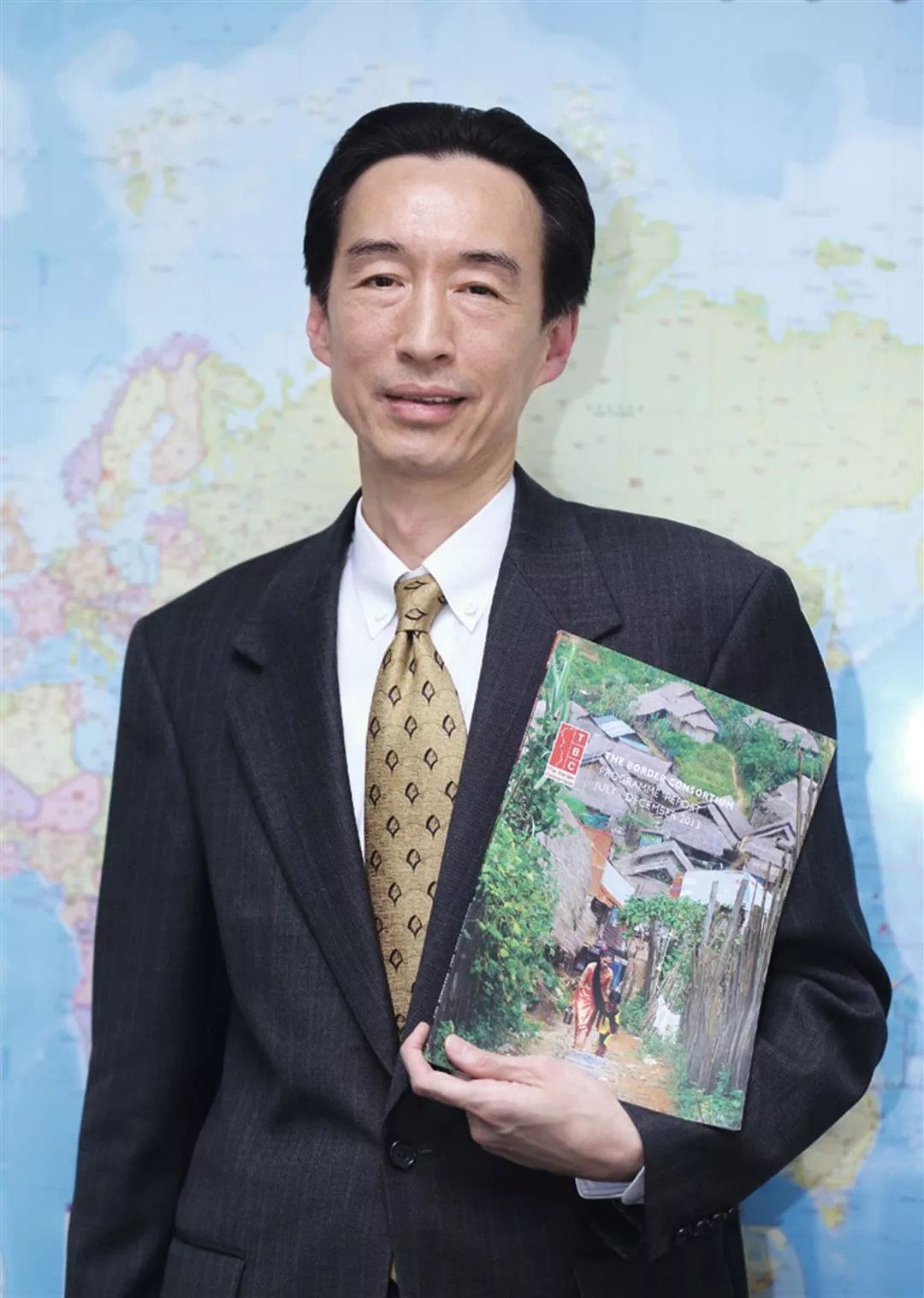
Ray Mou, director-general of MOFA’s Department of NGO International Affairs, personally visited the Thai–Myanmar border area last year, seeing first-hand how difficult life is for those in the refugee camps.