A Tradition Upheld through 80 Generations--Confucius' Descendants in Taiwan
Coral Lee / photos Chuang Kung-ju / tr. by Chris Nelson
September 2006
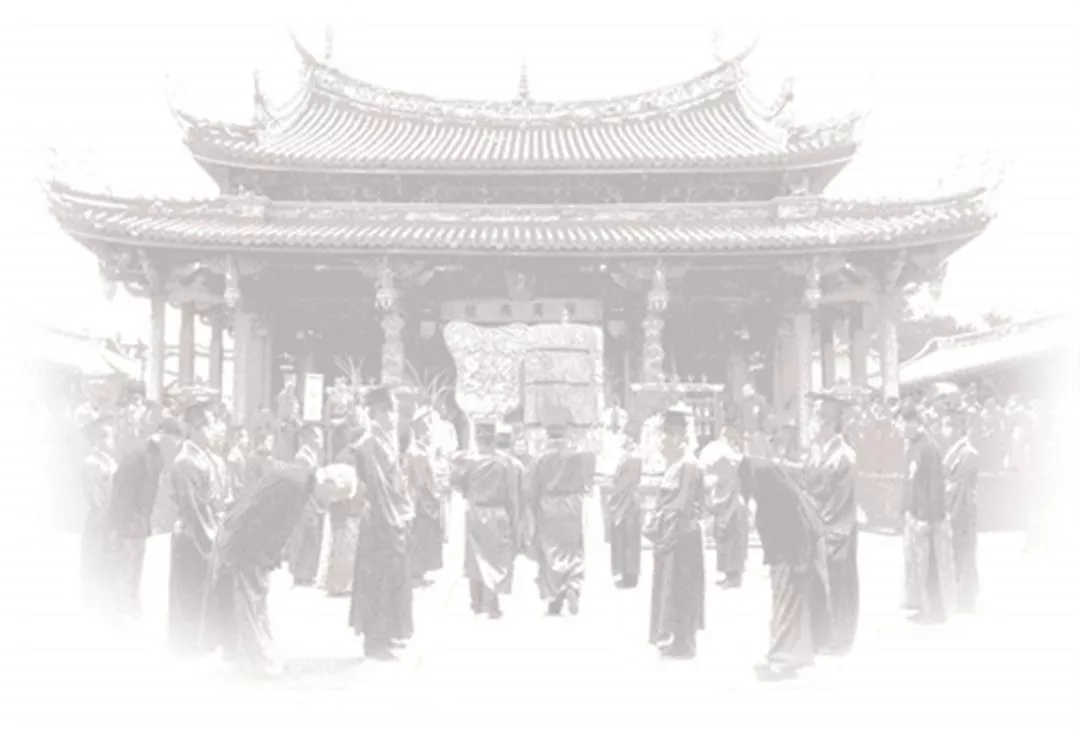
Confucius' birthday falls on Sep-tember 28 of each year, a time when grand ceremonies are held in Chinese communities throughout the world in his honor. But in Taiwan, the sage's direct descendants personally participate in the worship services, adding extra meaning to the event.
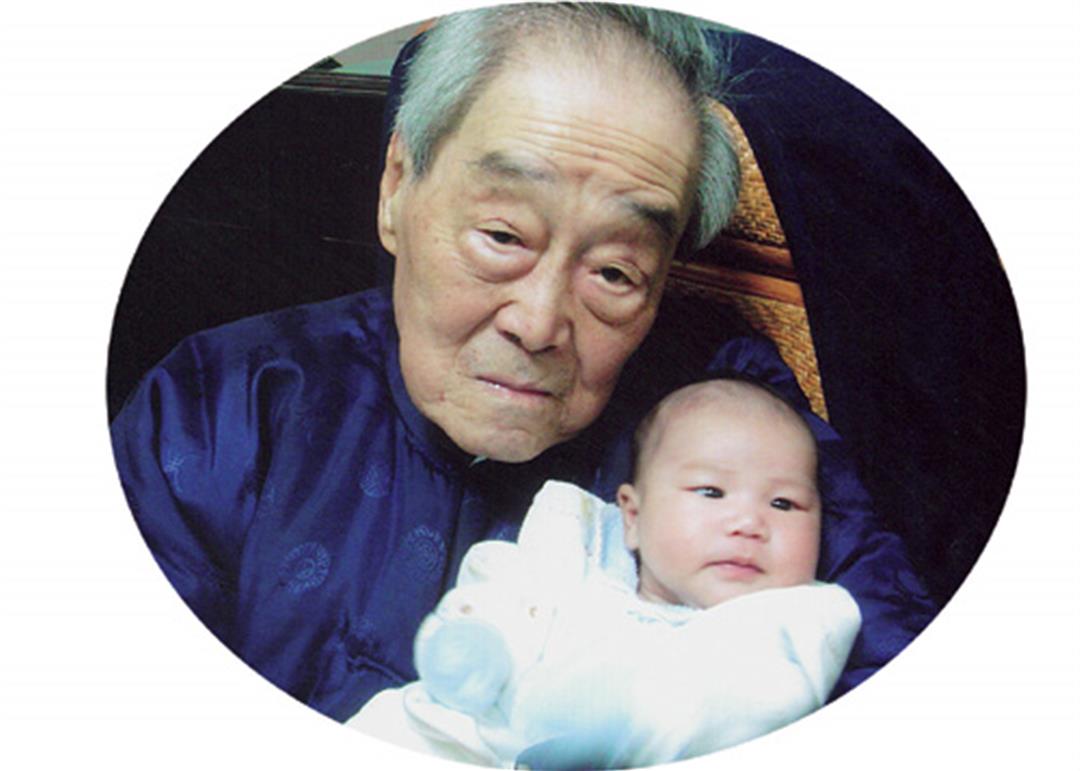
Kung Te-cheng, the 77th-generation main-line descendant of Confucius, has for many years served as Sacrificial Official to Confucius for the Republic of China; he is also an accomplished teacher and scholar of noble character who was once appointed as president of the Examination Yuan. This year, Kung Yu-jen--his great-grandson and Confucius' 80th-generation main-line descendant--was born in Taipei, keeping the 2500-year lineage of the First Sage alive in 21st century Taiwan.
Unassuming in his conduct, Kung Te-cheng, direct descendant of Confucius' and former Examination Yuan president, rarely accepts media interviews. Kung was awarded an honorary doctorate from National Taiwan University at the end of last year, and on the day of the conferral, NTU president Lee Si-Chen commended him for disseminating Confucian culture and for guiding anthropology and Chinese literature students in reviving ancient rites, a project that exemplified the integration of technology. During the ceremony Kung declared, in his self-effacing manner, that his contributions during his 50 years of teaching at NTU were few and that he felt great shame, but that he was heartened and encouraged by NTU's motto: "Cultivate virtue, advance intellect; love one's country, love one's people."
In 1950 Kung followed the Nationalist government's withdrawal to Taiwan; since then he has not returned to his hometown in mainland China. In recent years the Chinese government has founded several Confucius Institutes around the world, quite contrary to its "criticize Confucius and praise Qin Shihuang" policy during the Cultural Revolution. Besides expressing pleasure at this dissemination of Chinese culture, Kung avoids talking about political subjects. Even during the joyful occasion of this year's birth of Confucius' 80th-generation progeny--Kung Yu-jen--it was his daughter-in-law who made the statements.
"Mr. Kung Te-cheng's discretion in words and deeds may be related to the setting into which he was born," says Tung Chin-yue, professor of Chinese Literature at National Chengchi University. Kung was born in 1920, but his father Kung Ling-i died of illness three months before his birth. The issue of whether the Kung family's last child would be a boy or a girl drew the attention of the entire nation at that time. Since Kung Ling-i's wife had not yet produced a male heir and his concubine had only borne him two daughters, if the last child were to be a girl, there would be no successor to the hereditary title of Duke Yansheng, and the great prestige and wealth of the House of Kung would trigger a struggle for succession. Kung Te-cheng was thus born under the full protection of the Beiyang government.
As described in 100 Biographies of the Republican Era, "As news of Kung Te-cheng's birth spread, the sound of firecrackers rang throughout the city of Qufu in celebration of this much longed-for boy."
Kung Te-cheng was born amid the turmoil of the May Fourth Movement, with its rejection of Confucian ideology, yet the Kung family's prestige still held an irreplaceable standing. A glimpse of such status may be seen from the time the Qianlong Emperor sought the union of the Imperial Family and the House of Kung. It is said that Qianlong's daughter was cursed due to an inauspicious mole on her face. To stave off disaster, he wished for the princess to marry into the Kung family. Hampered by the Qing court's ban on Manchu-Han intermarriage, the Emperor, out of love for his daughter, had one of his Han ministers adopt her, allowing the marriage to proceed under her new identity as a daughter of a Han family.
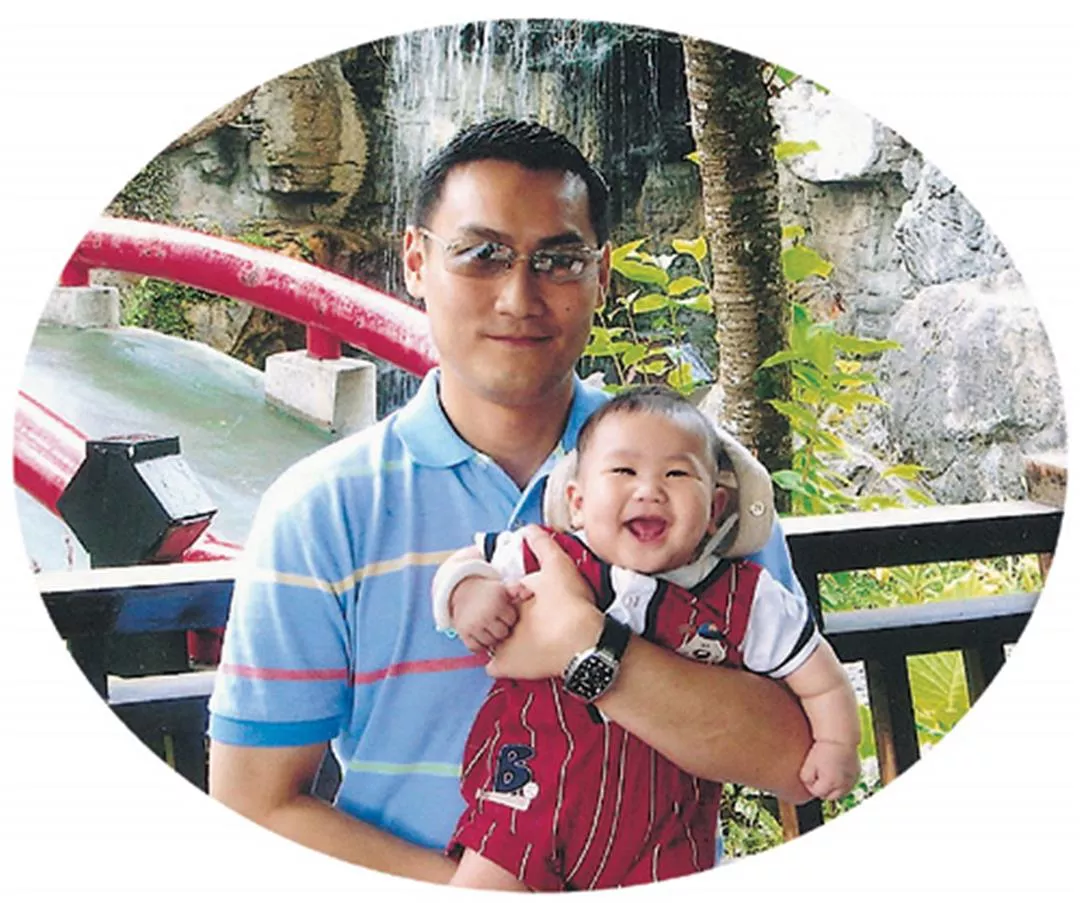
Confucius' 79th-generation descendant Kung Chui-chang, holding his son Kung Yu-jen. Chui-chang's father has predeceased him, making him the heir apparent to the ceremonial post of Sacrificial Official to Confucius.

A tale of twists and turns
Though he was born with a silver spoon in his mouth, Kung's upbringing was replete with twists and turns. His mother passed away not long after his birth and his stepmother died when he was nine, so Kung was looked after by his tutor Wang Tzu-ying. Fortunately, the superb traditions of the House of Kung and the consideration of the populace afforded him a fine education, and from youth he was diligent, studious and well read.
In 1935, when Kung was 15, the Nationalist government decided to abolish the noble title of Duke Yansheng granted to the eldest main-line descendant of Confucius since the Song Dynasty, changing it to "Sacrificial Official to Confucius," whose main duty remained to officiate over sacrifices to Confucius, with all the perquisites of a government minister. Kung Te-cheng formally assumed this new position that year, setting the record for the youngest ministerial-grade official in the history of the Republic. The position of Sacrificial Official to Confucius continues to this day, being the only hereditary post within the current government.
Besides receiving rigorous home schooling, Kung met scholars from the north and south who frequently passed through when he was living in the wartime capital of Chongqing, during the Second Sino-Japanese War. At that time, there were debates within academia between old and new concepts and methods involving research into Chinese culture, which affected him greatly.
"By age 20 he had found the right direction within academia: he wanted to become an ordinary scholar, and did not consider himself an orthodox Confucianist," noted historian Wu Hsiang-hsiang. In 1948, Kung accepted an honorary position as a researcher at Yale University for a year and also journeyed throughout the United States, which had a considerable influence on his studies.

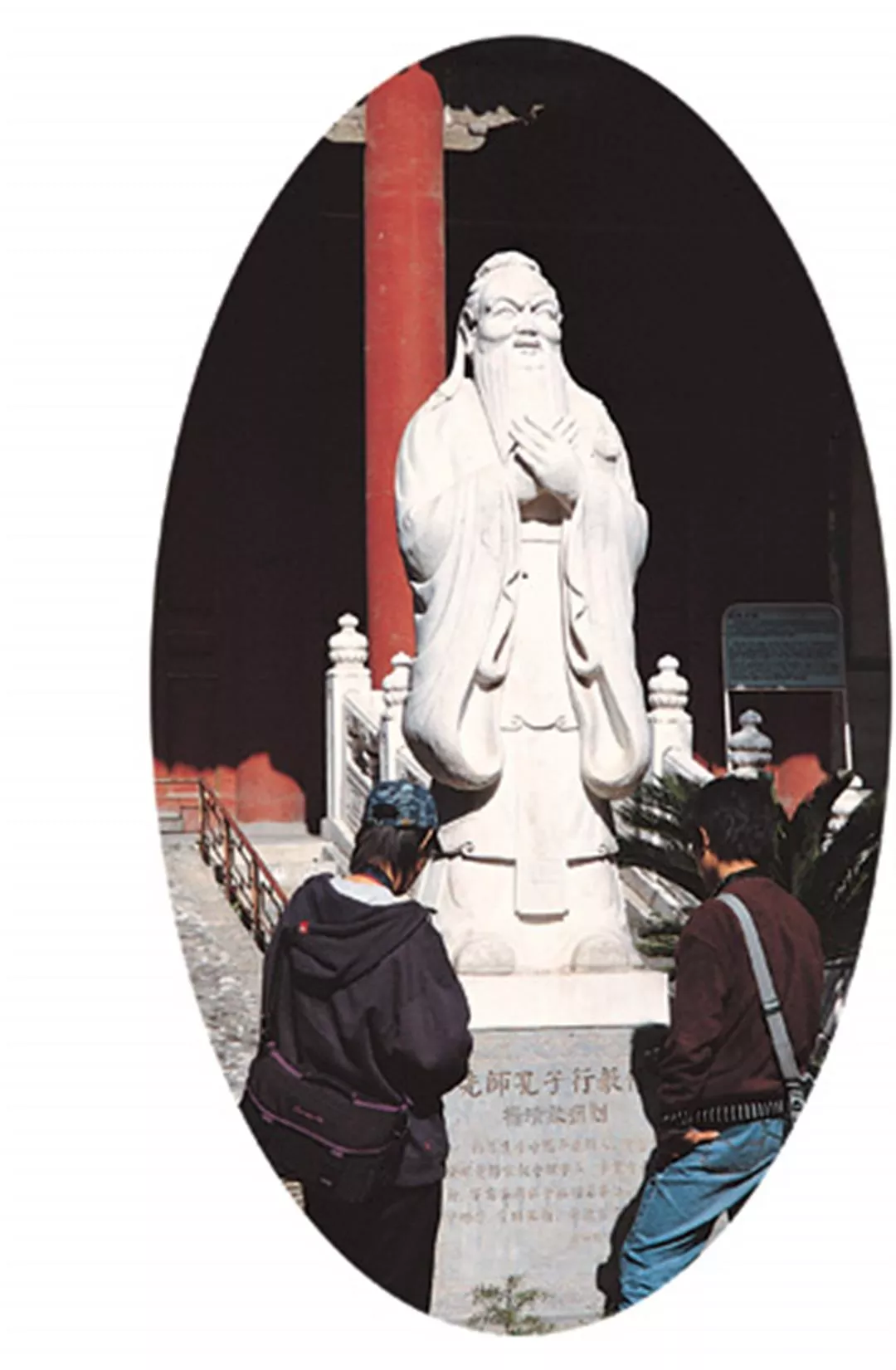
Wherever in the world there are Chinese people, there are statues of Confucius. Even in the 21st century, his ideas and the example he set seem novel and timeless.
Reviving ancient weddings
After Kung and his family moved to Taiwan, he spent most of his time in the Department of Chinese Literature at NTU, teaching classes in Three Rites studies, bronze inscriptions and bronze vessels. He has instructed countless students.
Among Kung's academic achievements, one that elicits eager discussion is a collaborative project with Professor Tai Ching-nung, in which they guided NTU graduate students of Chinese and archaeology in systematically studying the Etiquette and Rites--a classic text that records the rituals and customs of pre-Qin society--and reconstructing various rituals, including an ancient wedding ritual which they made into a live action film. The replicas of ancient wedding artifacts, clothing and music used in the film were fashioned on the basis of meticulous study. The entire project took several years to complete.
Kung's calligraphy is also celebrated among scholars. He started out by studying the techniques of the Two Wangs (Wang Xizhi and his son Wang Xianzhi, of the Jin Dynasty), and later turned toward the Yan script developed by Yan Zhenqing of the Tang. Kung's calligraphy is characterized by graceful and delicate forms and aficionados of his work abound, but he prizes characters as if they were gold and does not wield his brush lightly. However, his imitators are numerous.
Exacting in his scholarship, Kung nevertheless displays the unrestrained humor of the traditional academic to his students. According to Yeh Kuo-liang, dean of the College of Liberal Arts at NTU, Kung loves telling jokes, whether teaching, eating or drinking. His relationship with students is relaxed and cheerful, especially when he's in a drinking mood--and he is reputed to be able to drink many a younger man under the table.

Never fading
Besides his scholarly genius, Kung is also prominent in his diplomatic contributions due to his lofty stature as Confucius' descendant. He has given speeches in Japan, South Korea and Southeast Asia, and is received as a VIP in the countries he visits. In South Korea and Japan he received honorary doctorates in Confucian scholarship.
Kung raised two sons and two daughters. His eldest son, Kung Wei-i, once taught Chinese literature at the National Taiwan College of Arts (now National Taiwan University of Arts), but he died of heart disease in 1989. Kung's eldest grandson, Kung Chui-chang, a 30-year-old businessman, is heir apparent to the title of Sacrificial Official to Confucius. In 2002 the younger Kung presided over the private family worship ceremony in the Chungsheng Shrine of the Taipei Confucius Temple, dedicated to five generations of Confucius's ancestors, but most of the time he maintains the Kung family's trademark low-key demeanor, rarely making public appearances.

In this age of fading traditions, Kung Te-cheng does not believe that Confucianism is waning, because the spirit of Confucianism is the principle of good conduct, and good conduct is based on ren (benevolence), which comes from within and does not change with the times. As for the liyi (ritual propriety) that Confucians value, its spirit lies in the expression of goodwill between people: its external form may change with the times so there is no need to insist too much on particular details. Kung Te-cheng's unassuming, warm demeanor seems to exemplify the passing down of Confucian virtue from Confucius himself over a span of 2500 years.