The "Hottest" Hot Spot--Peitou Hot Springs Museum
Tsai Wen-ting / photos Yang Chien / tr. by Geof Aberhart
September 2003
During the 80s and 90s, Peitou was in decline. Now, however, heat and life have returned to the area through the work of activists in the Peitou hot springs community. These past few years, even in the bitter heat of summer, there have always been throngs of visitors. This is especially true for the newest attraction to the area, Peitou Hot Springs Museum, which backs onto the foothills of the Tatun volcanic area. This museum vividly brings to life three important parts of Peitou's story-from the volcanic eruptions here 2.8 million years ago, to sulfur mining 300 years ago, and to the "hot spring culture" that arose during the Japanese occupation.
But the Hot Springs Museum doesn't just chart the development of Peitou and tell the story of its springs; its creation also sparked the idea of the "Peitou Eco-museum," and it provides an excellent model for making new use of an historical site. Since its opening three years ago it has broken the million-visitor mark, in spite of a restriction on the number of visitors that may safely be in the building at one time. This certainly is one "hot" museum.
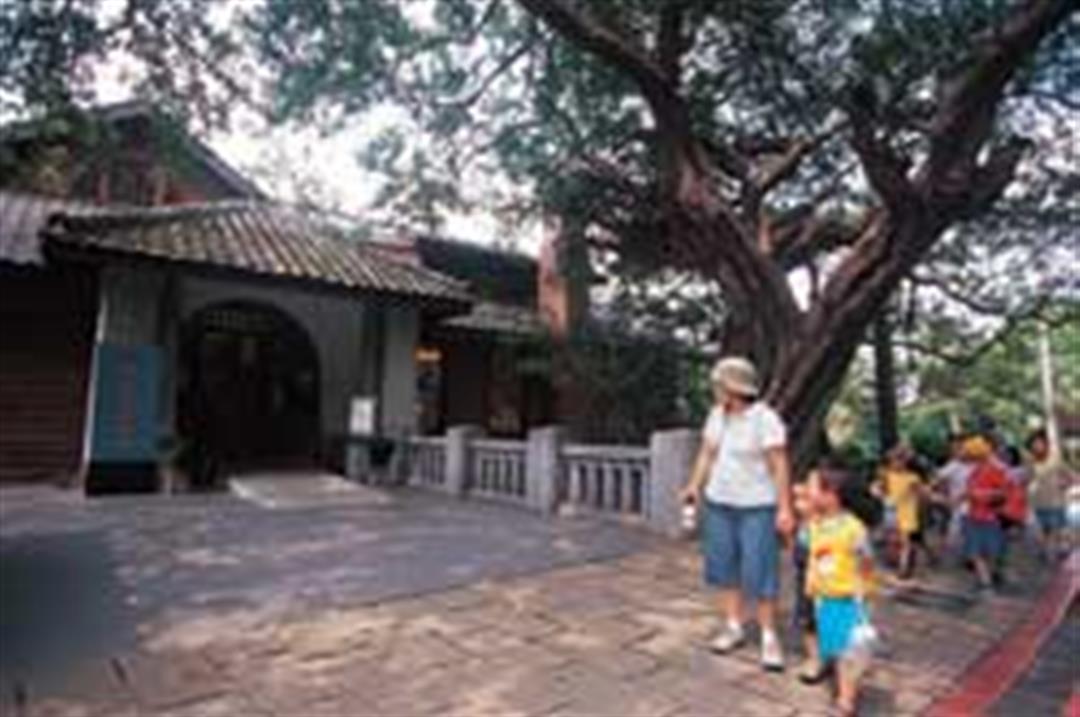
Peitou, with its hot springs that once attracted so many visitors, had been in decline through the 1990s, prostitution having been abolished there. At the back of Peitou Park stood an innocuous old structure, seemingly drowned by trees, vines, and other plants. Even regular visitors to the Peitou hot springs were largely unaware of the existence of this barely-visible old building, and the local children told stories of it being haunted. However, it did manage to attract the attention of one group of people.

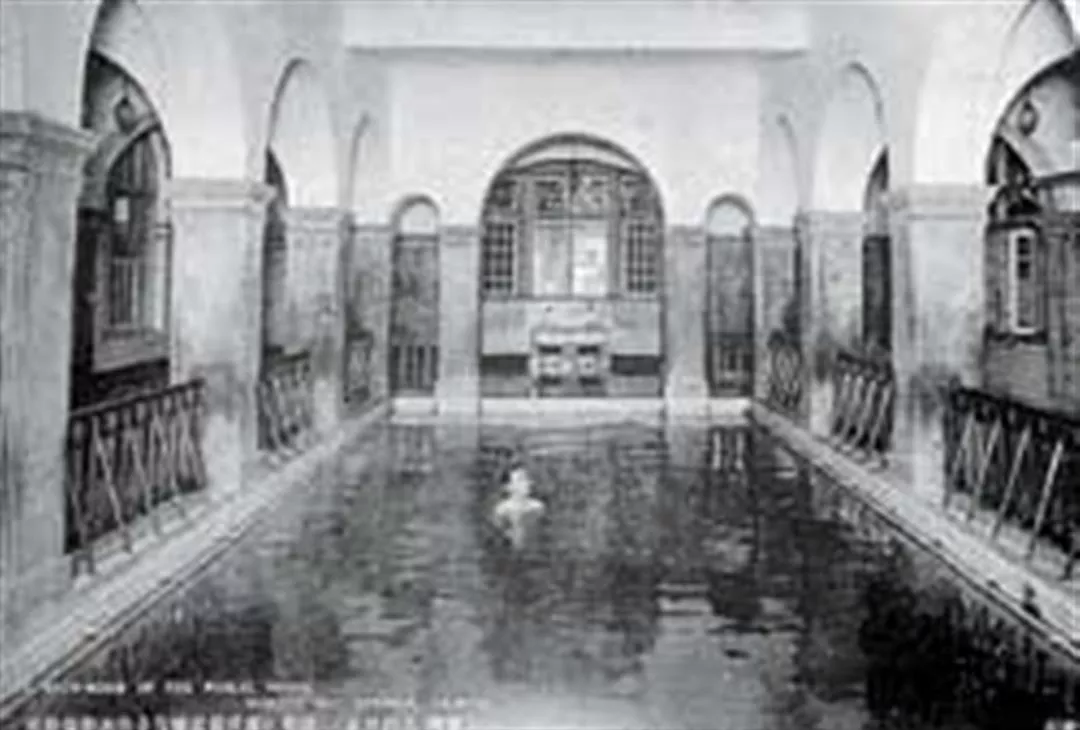
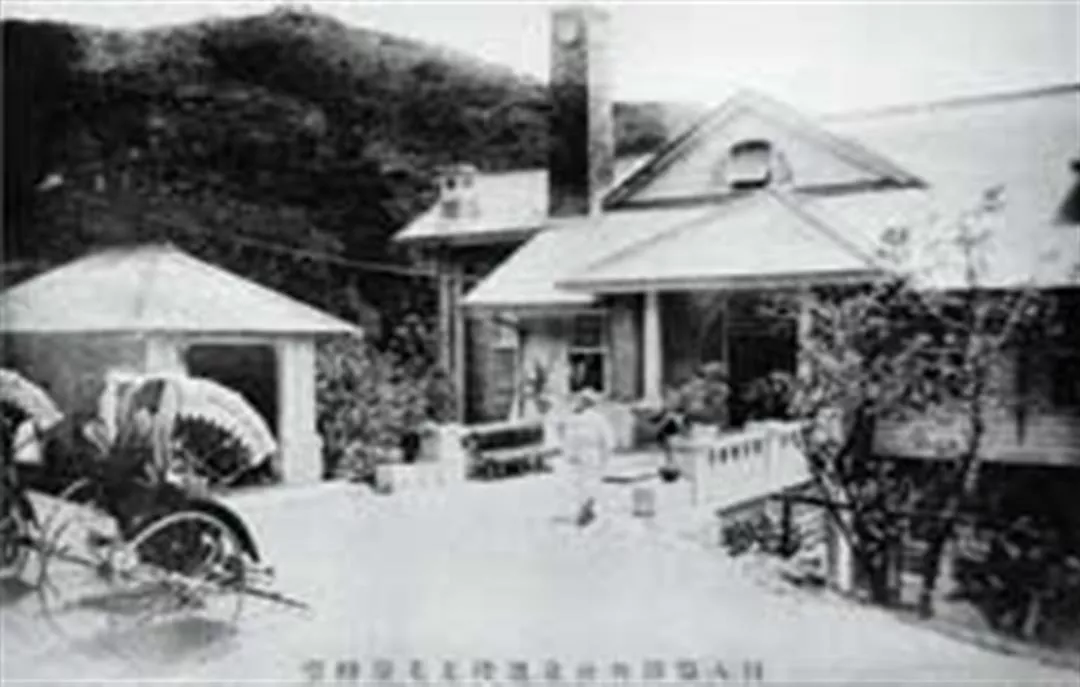
Twilight sun shines through the painted window into the Roman-style baths, bathing visitors in tranquility. Unfortunately this scene can now only be glimpsed in old photos. (photo courtesy of Taiwan Folk Arts Museum)
A glorious past
In 1994, led by teachers Lu Hung-wen and Huang Kuei-kuan, a group of students from the Peitou Elementary School investigated the natural resources of their local area. They sought out documented information on the "Peitou Hot Springs Public Baths," which have close ties with the development of Peitou itself. From this information, they discovered that the long-forgotten, overgrown, and run-down "haunted house" was in fact the site of that very same pool complex, Southeast Asia's largest and most luxurious public pool in its day.
The teachers and students from Peitou Elementary, along with community groups like the Peitou Community Development Association, did all they could to rescue the building: they ran guided tours of historical sites, held seminars and gala days, and wrote up petitions. Their activities caught the attention of the Taipei City Government, and caused the possible demolition of this old building to be called off. In 1996 the government finally designated it as a historic site, and on October 31, 1998, the Museum was officially opened. The establishment of the Peitou Hot Springs Museum helped reveal the epic history of the Peitou Hot Springs Public Baths and the area itself. It also became the first stop for visitors to the local hot springs, where they would first bathe in the intriguing history of Peitou before making their way to the springs.
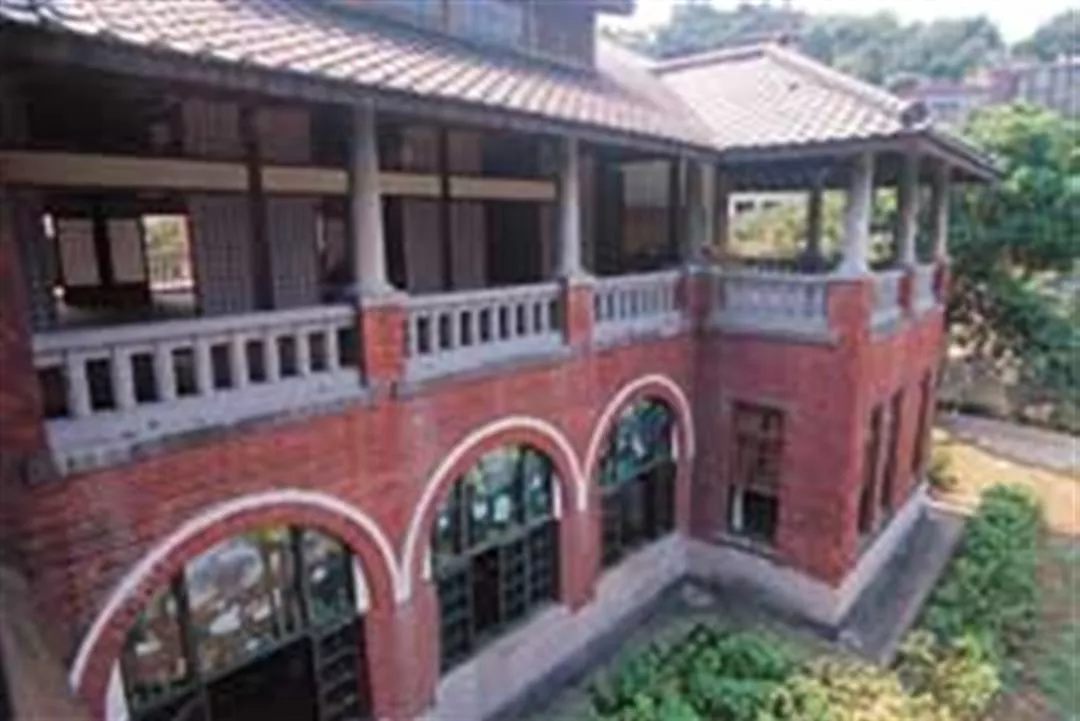
Nearly a century ago, in 1913, during the Japanese occupation, the colonial government in Taipei spent over ¥56,000 on the construction of the Peitou Hot Springs Public Baths; it was built in a faux-English style, with thick, sturdy European-style outer walls and a Japanese-style roof. In 1923, to celebrate the imperial visit of Crown Prince Hirohito, the bathhouse was extended at a cost of ¥17,000 into a particularly artful blend of Western and Japanese styles. This was a milestone in the development of Peitou, and is the most representative example of Taiwan's hot-spring architecture.

After bathing on the first floor, you can head to the second floor's tatami hall for tea, to play Go, or to take in a geisha performance. You can really visualize the coziness and elegance of the old hot spring culture here.
A quality bathing-pool culture
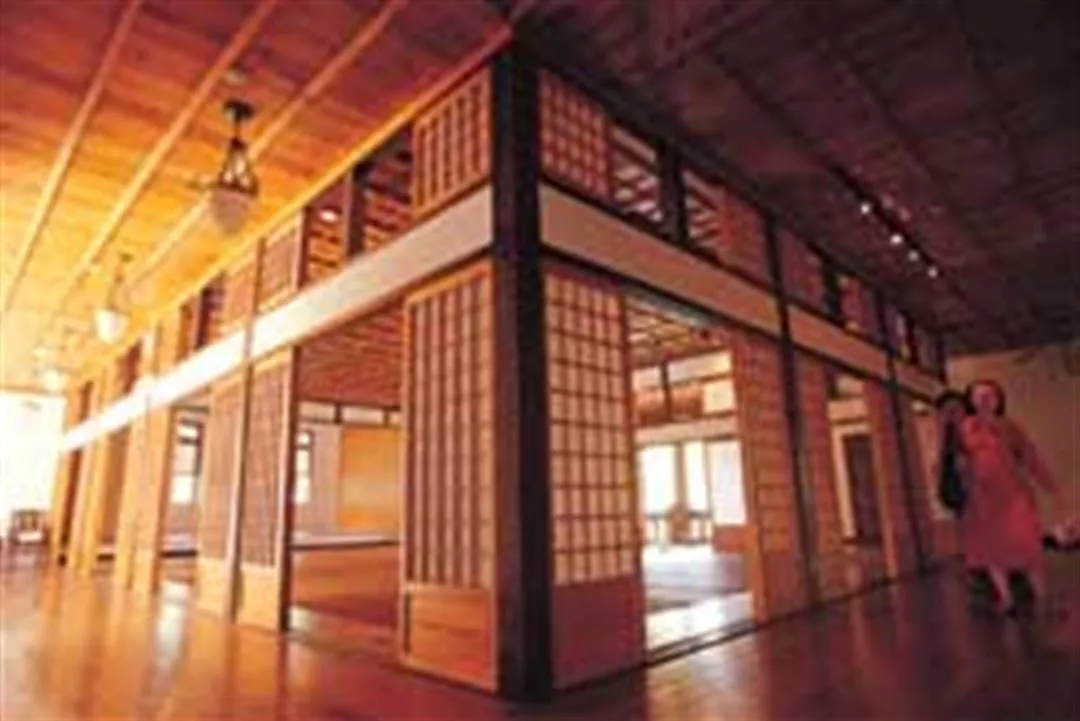
When you step into the second floor of this Grade 3 historic monument, this heirloom from the Japanese occupation, and slip on the slippers, your feet will be first to feel the coziness and tranquility that make the Hot Springs Museum stand out. On the main hall's floor sits an expansive tatami, and a hint of sulfur wafts through the naturally ventilated hall. Looking to the west, the dense greenery and fragrant waters of Peitou Park bring with them a sense of refreshment and calm, while if you gaze out into the distance, beneath the outline of Mt. Kuanyin, the Tanshui River and the Kuantu Plain spread out before you. To the east, on the other hand, Mt. Chihsing and Mt. Shamao loom over you, while if you stand at the viewing platform to the southwest you can see Peitou Creek and the former site of the Peitou Creek Falls, one corner of the modern-day Chinshui Park. The Hot Springs Baths were designed to take full advantage of their natural surroundings. With eye-catching natural scenery to all sides, the soothing trickling of the creek, and the mountain winds whispering across the tatami hall, the feeling of total relaxation is overwhelming, and one's mind is whisked back to 1913....
Throngs of people, fresh from bathing in the Roman-style hot springs baths of the first floor, making their way up to the second floor for a relaxing snack... people sprawled out, lying on the tatami, while some play Go amidst the fragrance of fresh tea. Still others would be propping themselves up on the balcony, looking down at Peitou Creek or out toward Mt. Kuanyin, while some would be out for a stroll in Peitou Park. Then geisha would take the stage, playing samisen, and immediately attracting the attention of all the bathers, as their performance gradually unfolded in the fading light. "You can really tell from this room that the springs bathers here were of very high quality," says Peitou Hot Springs Museum staff member Sung I-chen, sitting on the tatami in the main hall. She does think it's a shame though, the way the nearby trees have grown taller than the building since its renovation, slowly obscuring the scenery that was part of the Museum building's original design.

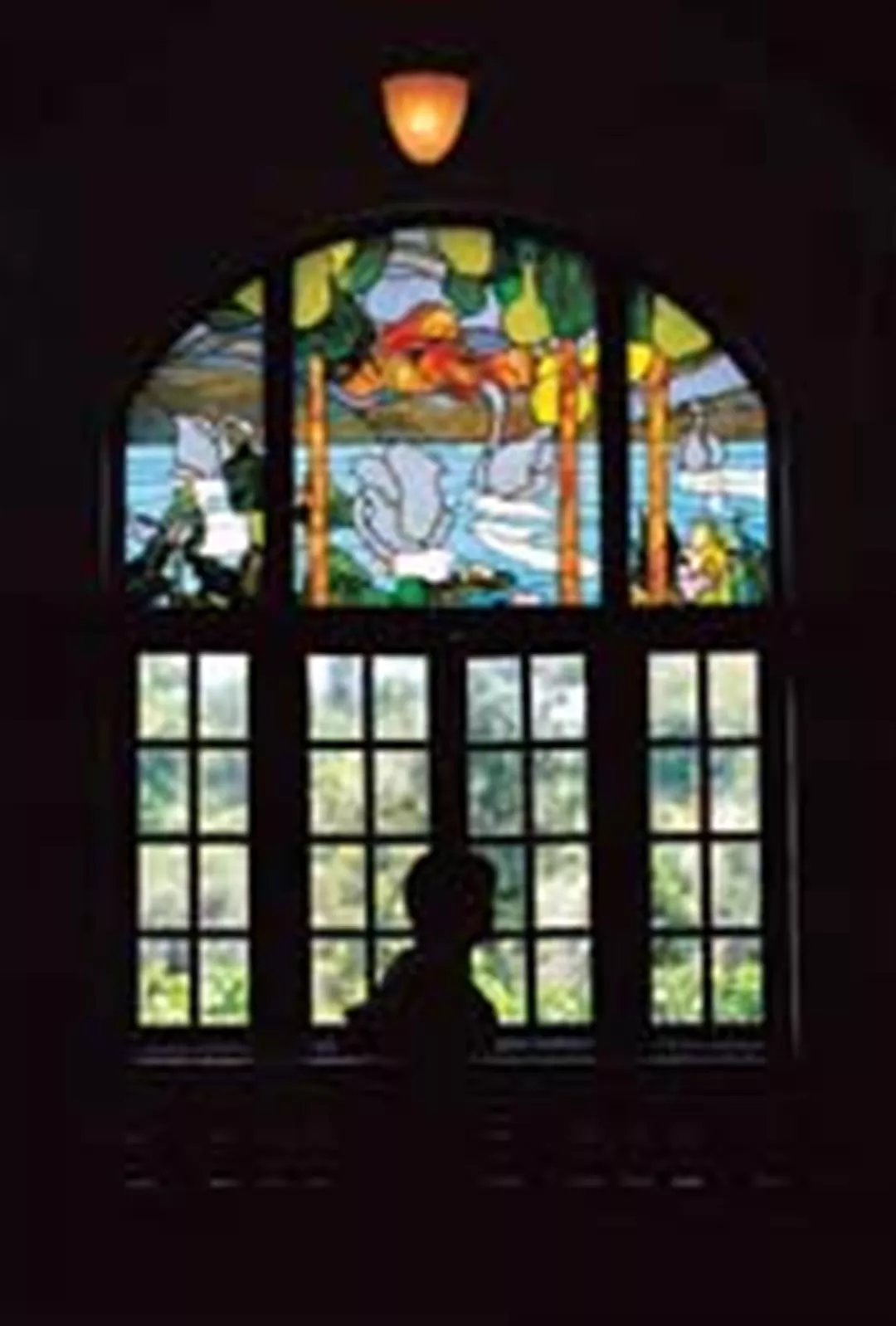
An arched, painted window-it not only serves practical purposes of ventilation and insulation, but the light which passes through lends everything an air of beauty.
A huge explosion
"When talking about the development of Peitou with children, I usually tell them that it all came from a 'huge explosion,'" says Sung. In 1696, during the Qing dynasty, a huge explosion happened at a gunpowder storehouse in Fuzhou; to make up for the loss, the Qing court dispatched one Yu Yonghe to Taiwan to collect sulfur, the raw material for explosives. The trade in sulfur between the Han Chinese and Aborigines is what spurred the development of the Taipei Basin. When the first governor of Taiwan, Liu Mingchuan, established a sulfur mining facility in Peitou, it was also the start of the development of the roads.
Long before Han Chinese arrived, Peitou had an aura of mystery about it, shadowy and wreathed in mist. For this reason the Aboriginal Ketagalan people living nearby named it "shamaness," which in their language sounds similar to the Taiwanese pronunciation of the characters for "peitou." By the 17th century, word of Peitou's sulfur reserves had spread far and wide, and the Spanish and Dutch started to enter northern Taiwan to raid those reserves. At their hands development began and the face of Peitou changed completely.
With the area being volcanic, Peitou's air, soil, and water were all rich in sulfur, and the Spanish, Dutch, Chinese, and Japanese all fought over the plentiful sulfur output of the area. The Japanese were especially active: After Taiwan was ceded to Japan, in eight short years sulfur exports amounted to over 2500 tons!
However, any discussion of the two natural resources that have brought Peitou to the attention of people around the world, sulfur and hot springs, must naturally start 2.8 million years ago. At that time the crushing together of the Philippine plate and the Eurasian continental plate caused the volcanoes in the Tatun area of northern Taiwan to erupt violently, with the lava continuing to spurt until just 300,000 years ago. Deep below Peitou, subterranean water flowed through, steadily getting warmer and warmer. Then, also due in part to the pressure and swelling of the earth above, the water gurgled forth.
The Japanese, well acquainted with the curative effects of hot springs, were pleasantly surprised to discover Peitou's hot springs whilst hunting down anti-Japanese rebels and collecting sulfur. In a short time, a hostel offering bathing pools for army use was built on the site, along with the Taipei Garrison Hospital, Recuperation Branch-both were completed with the same speed and quality of construction used in the other areas of Taipei and Peitou.

Of all the minerals in the world, only "Peitou Stone"-hokutolite-is named for a place in Taiwan. This 80-kilogram piece of Peitou Stone is the pride and joy of Peitou Hot Springs Museum.
From hot springs to hot times
In 1896, Hirata Gengo came to Peitou on the recommendation of a friend. He originally came for the curative effects of the hot springs, but then established the first hot springs hotel, "Tengu Cabin." After that, all kinds of luxurious and sophisticated establishments for visitors to the springs lined both banks of Peitou Creek. The common people, however, preferred to enjoy the hot springs via Peitou Creek's open-air Tang Lung Bathing Pool. As one can see from the historical photos exhibited in the Museum, Peitou Creek at the time was a place of great natural beauty, with five small waterfalls pouring down like rain. The townsfolk would sit under these waterfalls, letting the spring water attack their aches and pains-compared with the modern way of doing things, a naturally curative environment like that seems superior in virtually every way! However, men and women bathing together in the open air of Peitou Creek like that led to questions of possible harm to morality, so, in 1913 the Peitou Hot Springs Public Baths were constructed, so that the general public could also have access to a complete bathing facility.
However, once the Japanese left Taiwan in 1945, after 50 years of occupation, the long-standing hot springs culture gradually changed from a form of social interaction into a special kind of adult service, and the comfort of the hot springs gave way to a different kind of "comfort." In a short time "women of easy virtue" thronged into the area, and at one point a photo of two of the women bathing with American soldiers was published in the American magazine Time, giving the springs a moment of fame. In 1979 the government finally put into action an ironhanded policy to abolish prostitution, and the hot springs' hotels, once so vibrant and full of life, closed one after another. The Peitou Hot Springs Public Baths followed in the decline, and its ownership changed hands repeatedly, until at one point it was owned by three government departments and was split into three separate units. By the end of the 1980s, with each and every one of the neighboring businesses vacated, the place ended up run-down and disused.
Today the second floor of the Hot Springs Museum has displays of relics and photos of Peitou's history: these include photos of the first hot springs hotel, the Tengu Cabin, and its founder Hirata Gengo, plus photos of Crown Prince Hirohito's visit to the area, along with various other historical items. Also in their collection are examples of other industries that were once specialities of Peitou, such as the sulfur industry, lincao rush weaving, and Peitou porcelain. Nagashi singing and the "express" motorcycle taxi service particular to Peitou also play a part in illustrating its evolution as a hot springs village.
Most special of all is the exhibition in the eastern wing, "Taiwan's Hollywood," which reveals Peitou's close ties with Taiwanese-language cinema. The museum stages continual screenings of old Taiwanese-language films, in which you can occasionally see the hauntingly beautiful scenery of Peitou Park, its arched bridges or the Pu-dong Ming-wang Temple, and the many hot spring hotels that served both as film sets and places for the cast and crew to relax. At the height of its popularity, there would be two or three groups filming different movies in the same hotel at the same time-some, such as The Guitar of Hot Springs Village, starring Huang Chiu-tien, were filmed entirely on location at Peitou.

The Grade 3 historic monument that serves as home to the museum, a unique blend of Western and Japanese styles, is a thing of beauty inside and out.
Peitou Stone-a national treasure
On the Museum's second floor, with its Japanese-style architecture, one can reminisce about the glory days of Peitou. After descending the wooden staircase to the first floor with its Roman-style baths surrounding their namesake springs, one can fully appreciate the particular styles of hot springs baths from both Taiwan and the rest of the world in one sweeping view.
The hot springs at Peitou and Yangmingshan are divided into white, blue, and iron sulfur springs. The water of the white sulfur springs has the usual acidity of sulfur, while the iron sulfur spring water is clear and odorless, and contains ferrous minerals. Of the three, however, the most acidic springs are the blue sulfur ones, and it is these that are the Peitou thermal valley's speciality. Their water is clear, with a hint of blue-green, and contains traces of radioactive elements-it is said that these springs are especially therapeutic.
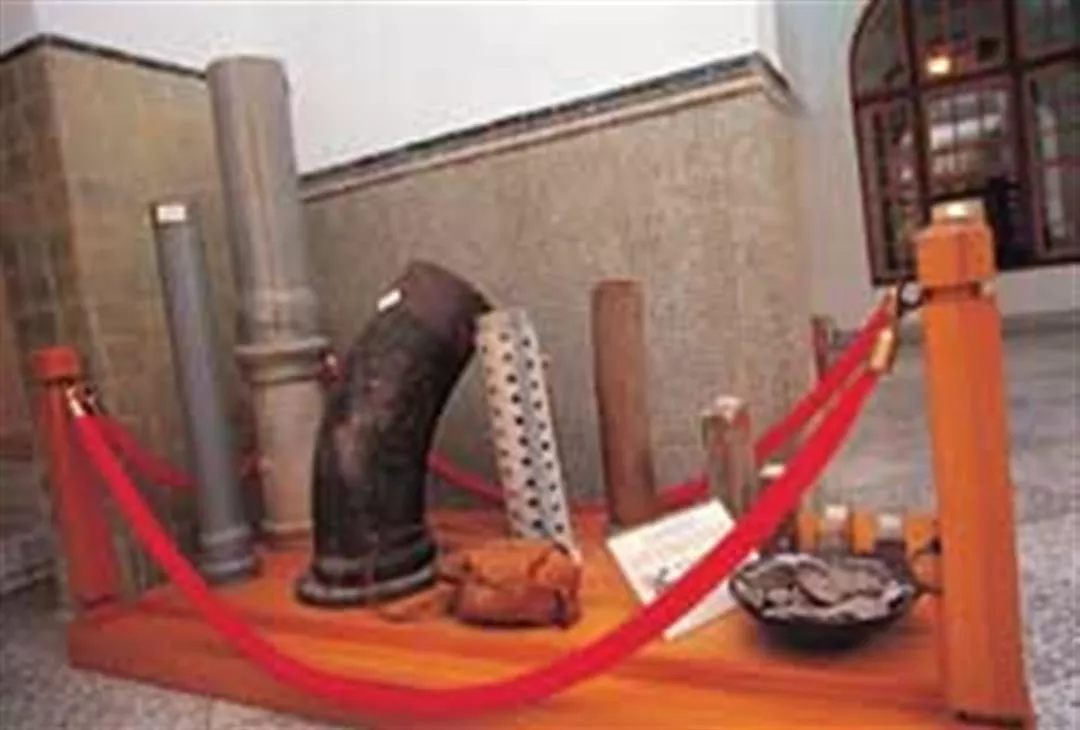
The exhibition doesn't just explain the differences between each kind of spring, however-it also houses three-dimensional miniatures, showing the springs used by each hotel and residence in the Peitou area today. "If you want to know which hotel uses which kind of spring water, this model can more or less show you," says Sung. Surrounding the main bathing pool are unusual looking porcelain pipes, ringed with brick. While most visitors have been to a hot springs before, this is generally their first exposure to the mechanisms for keeping track of water flow and fees.
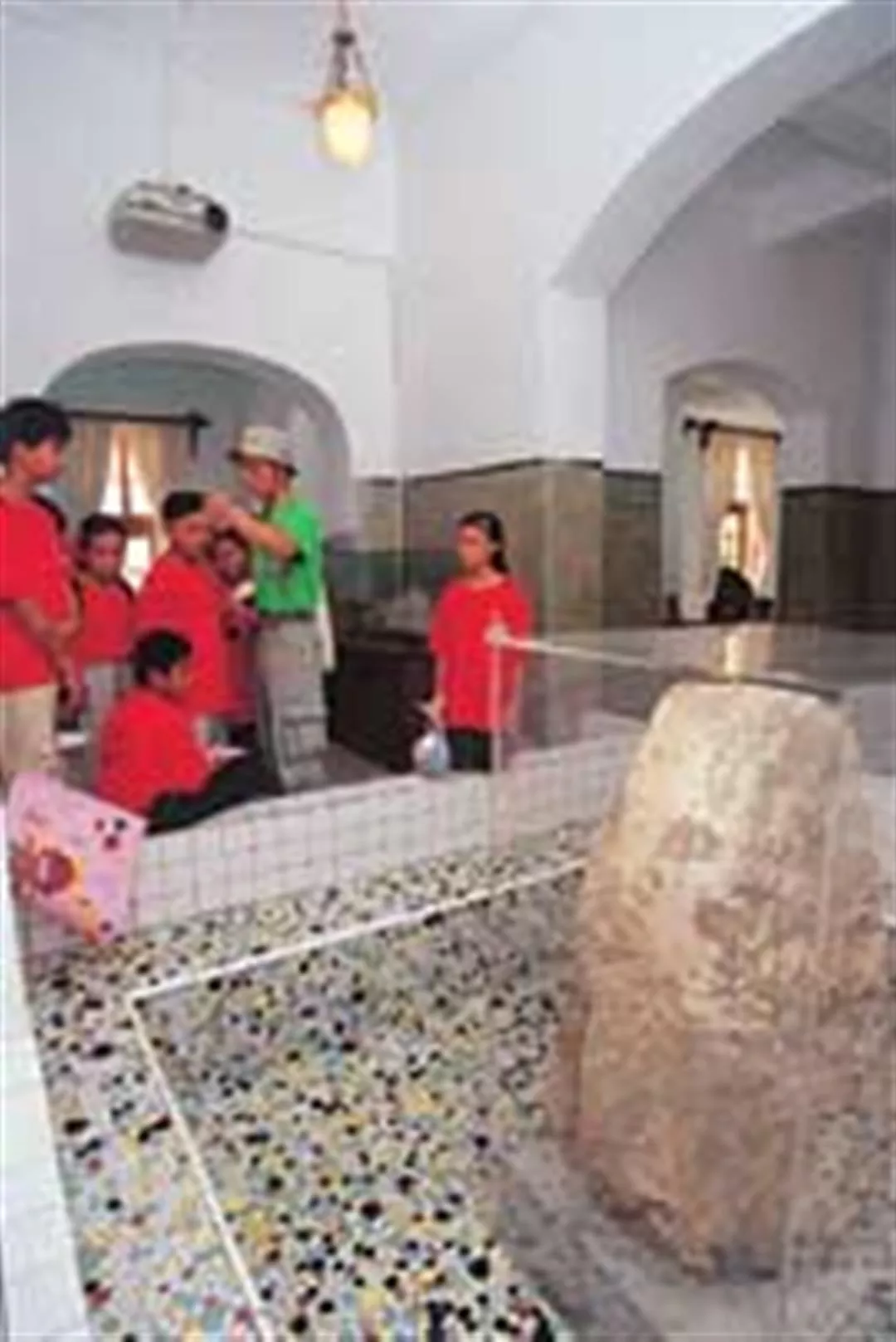
At each bathing pool area, a path down the center divided it into two sections-a large, Roman-style pool for the men and two small, shallow, mosaicked pools for their wives and children. The men and women also used different staircases to their respective pools, although each could still hear the sounds from the other staircase filter over the dividing wall.
Over the women's pool was a clear glass skylight, through which scattered sunlight would shine down onto an 80-kilogram rock, which is a prized possession of Peitou Hot Springs Museum-"Peitou Stone"
Peitou Stone-hokutolite-is the only mineral in the world to be named after a place in Taiwan, and is only found in Peitou and the hot springs of Tamagawa in Japan. The thermal valley at the source of Peitou Creek contains sulfuric acid, iron, barium, radium, and other base elements. As the creek water flows between 90 and 390 meters from the source, the water temperature drops enough to cause these elements to crystallize on the gravel that lines the creek bed.
Peitou Stone emits a small amount of radiation, and during the occupation the Japanese saw it as a "natural memento," and thus granted Peitou Creek a degree of protection while developing the area. Even today, since Peitou Stone is still formed there, the riverbanks are protected in their natural state and may not be banked up with cement as at other sites.
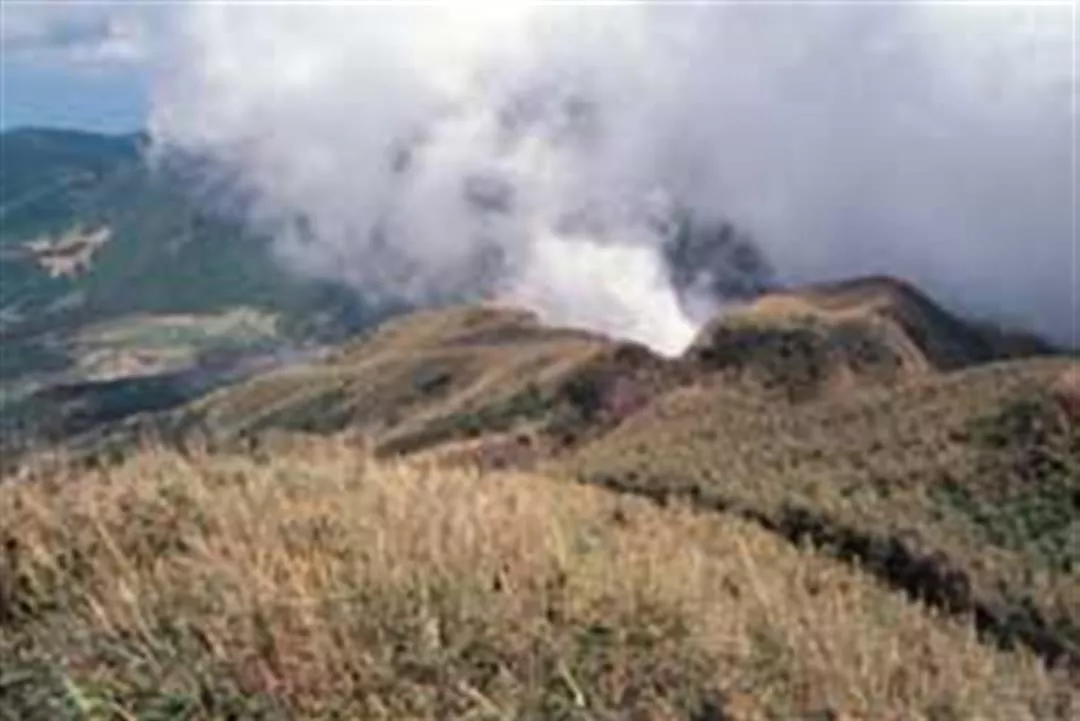
The eruption of the Tatun volcanic area 2.8 million years ago was the prologue for the Peitou Hot Springs Museum story, which continues to play out to this very day. (photo by Hsueh Chi-kuang)

Rainbow bath
From 3 p.m. till 5 p.m., the light from the sinking sun comes in through three arched windows in the west, through a window colored with an image of a swan in repose. This light projects through into the bathing pool and is reflected onto the beams of the roof, casting the warmth of the weakened sunlight around the room and lending a dreamlike beauty to the Roman bathing pool.
On either side of the larger pool, a semicircular arched hallway winds around, fitting in with the European styling of the space, but also giving the area a certain feeling of lyricism. A member of the Peitou Community Development Society, Pang Peng-pien, has written several critiques of the Hot Springs Museum's architecture. He hopes that, as well as coming to soak in the springs, people won't lose sight of the rich artistry of the museum building itself.
A short walk from the Peitou Hot Springs Museum, you can sit and dangle your feet into the water at Chinshui Hot Springs Park, set up along the side of Peitou Creek. If that's not enough for you, you can walk to the open-air "Plum Blossom Hall" bathing pool at the edge of the park, or to the "Lung Nai Tang" bathing pool, which has been in use since the time of the Japanese occupation. Here you can also find all kinds of hot springs hotels, old and new alike. In addition, there are other historic sites to visit-the long-hidden riches of the Peitou Folk Arts Museum, the geothermal valley at the head of Peitou Creek, the Pu-chih Temple and the extraordinary Pu-dong Ming-wang Temple, and others. Then there is the natural scenery itself, which serves as the very heart of the Hot Springs Museum, and the path through the springs and Chinshui Park; taken together, all this makes up the bigger, more complete "Peitou Eco-museum."

Thanks to the museum, visitors can now see the myriad of water pipes and monitoring nozzles that were the behind-the-scenes backbone of the baths.
A living museum
Thinking back to the Peitou Hot Springs Museum's discovery, it comes down to the simple efforts of a group of children to save a piece of history. While pushing for its preservation, they also aroused the interest of scholars and the local community, and spurred on the development of the plans for Chinshui Park at Peitou Hot Springs. Having succeeded in saving that historical site, and through the plans for the city area in the vicinity of Peitou Park, they've also come another step closer to the ideal of a "living museum."
During the Mid-Autumn Festival two years ago, a group of local elderly men and women put on a performance in the tatami hall of the museum. They sang and danced, singing the old Taiwanese song "Shao Rou Zong" ("Roasted Meat Dumplings"), while handing out home-made zongzi, much to the amusement of everyone.
At the end of last year, at the Museum's fourth anniversary celebrations, they invited the Han-Tang Yuefu Music Ensemble to perform in the tatami hall, along with a teacher to teach everyone some Japanese songs. And thanks to co-operation between the Museum and the nearby Hot Springs hotels, a Nagashi singing troupe was also found and invited to perform, which brought the house down.
With the moon hanging radiantly in the sky, the museum full of liveliness, and the faint smell of sulfur, one can't help but feel that the Hot Springs Museum is like the trickling waters of Peitou Creek's hot springs, flowing since time immemorial, and going on forever.