Painting Changing Times-Fifth Moon Group Founder Kuo Tong-jong
Kuo Li-chuan / photos courtesy of Kuo Tong-jong / tr. by Josh Aguiar
November 2010
In 1947, when American iconoclast Jackson Pollock (1921-1956) put aside his brush to paint with unconventional objects, the art world would never be the same. Pollock's abstractionism lighted the pathway to movements as varied as Abstract Expressionism, Neo-Dadaism, Pop Art, Optical Art, Neo-Realism, Surrealism, and even Neo-Expressionism and Postmodernism, all of which emerged in his wake within a short span of years.
Kuo Tong-jong was born in 1927 in Chiayi. His father made mannequins for a living, and watching his father apply colors provided his first lessons in the use of color. His first grade instructor at Shirakawa Elementary School (now Ta-Tung Elementary) possessed fine calligraphic skills, and he was drawn early on to the beauty of the brushstrokes. In third grade, his teacher brought in a plaster model of a dog for the students to draw. Kuo's rendition was the most lifelike, and the teacher hung it on the blackboard for the others to admire, greatly boosting young Kuo's confidence.
In fifth grade, a Japanese fine arts instructor from Shikoku, Kanichi Anzai, tutored him in basic watercolor portrait and still life technique and oversaw his efforts in sketching. At that time, all of the fifth and sixth-grade students were required to stay after school to prepare for the junior-high-school entrance exams, but Kuo's teacher made him complete a watercolor sketch every day before heading off to the cram session. Two years of this regimen improved his skill to the point that he won first prize for painting in the all-school competition. Within his heart he could feel faint yearnings to become an artist.
In 1940, he tested into the five-year Chiayi Agriculture and Forestry Public School. As World War II escalated in Southeast Asia, the Japanese began recruiting Taiwanese volunteers for their armed forces. Teenagers were enlisted to help the war effort as noncombatants. Following graduation in 1945, Kuo was sent to be a groundskeeper at the Chiayi Solvent Factory, which at that time was manufacturing airplane fuel.

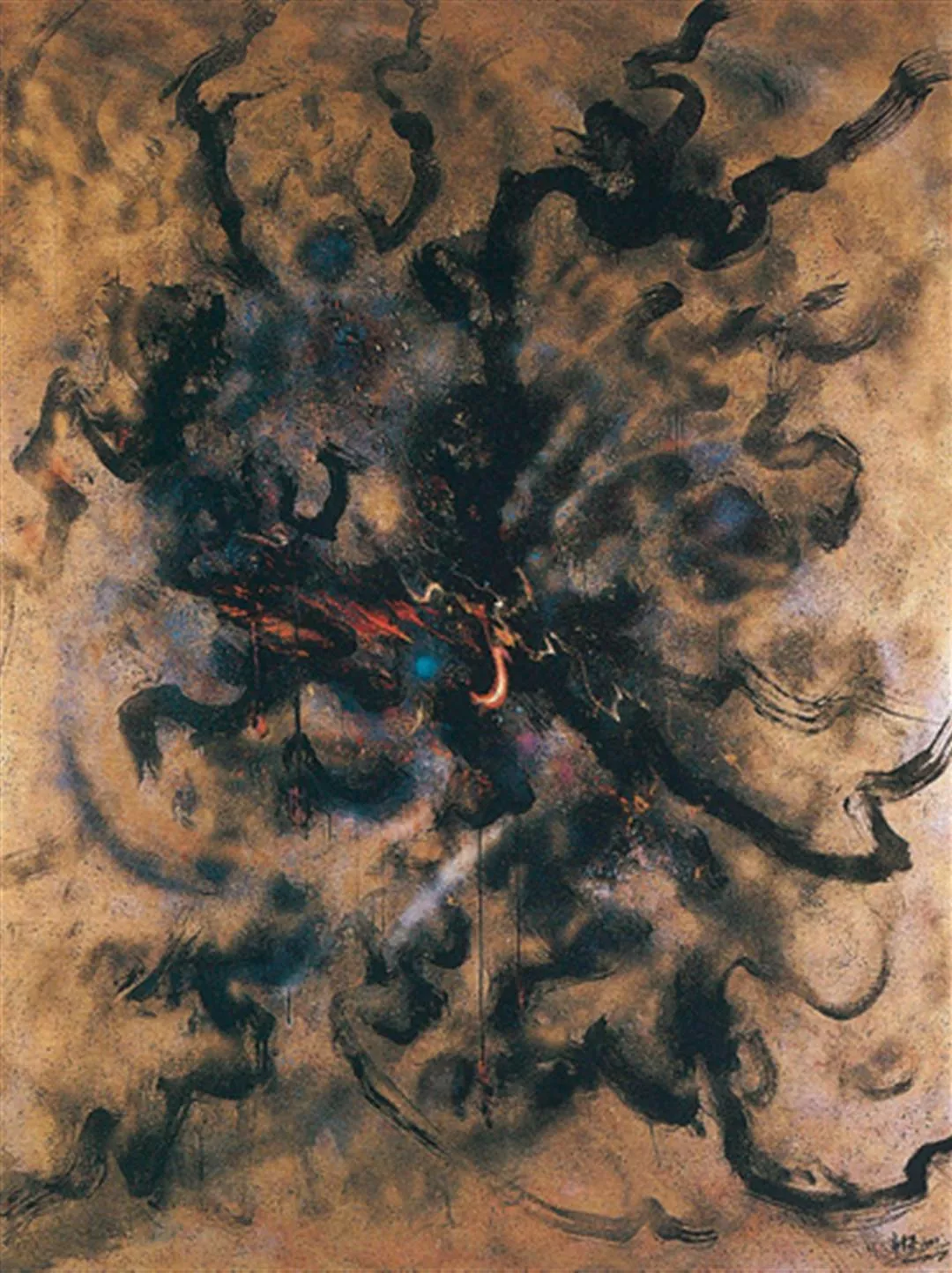
Space Exploration and Sacrifice, painted in response to the 1986 Challenger tragedy in which the American space shuttle exploded 73 seconds after takeoff, used thick, disorderly lines to convey emotional turmoil. The style was described by one critic as "frenzied abstraction."
The war was over a few months later, and Kuo worked briefly at the Chiayi Agricultural Experiment Station before transferring back two years later to teach at his alma mater. In 1950, when a coworker told him that National Taiwan Normal University had established a fine arts department, he used all of his time away from class to prepare his application. After passing the entrance exam, he moved to Taipei the summer before matriculating so as to begin studying sketching with Professor Li Shi-chiao at his studio. By the time the semester started, he had developed a solid foundation in the subject.
He disapproves of the oft-heard opinion so flippantly bandied about in recent years that modern art has little use for sketching; on the contrary, he feels that sketching provides an indispensible foundation for both abstract and realistic art.
While at NTNU, he was influenced by another teacher, Professor Liao Chi-chun. In March of 1953 he began serving as Liao's teaching assistant at his Yunhe Studio. During this time Kuo was able to distance himself from the romanticism of classical painting. In fact, he and his teacher once created paintings on the same piece of plywood, which created a sensation in artistic circles.
Since Taiwan in those days was not materially well off, canvases for oil painting had to be imported. Kuo occasionally made use of plywood as a frugal substitute. Once when he had just completed a still life, Professor Liao entered the studio looking for canvas to begin painting. Unable to find anything suitable, he used the reverse side of Kuo's finished still life to paint an autumn vignette of a small street near NTNU. Kuo was so charmed by this "reversible" painting that he took it with him on all his travels, including Little Kinmen, where he did his military service, or while studying in Japan.
In 1954, the fourth-year art students at NTNU took a class trip to Mt. Ali to paint nature scenes to present at a school exhibition. Kuo and classmate Guo Yulun were unable to make the trip and were thus prevented from participating in the exhibition. Frustrated, the pair applied to put on a joint exhibition on their own, which, though ultimately denied, nonetheless planted a seed in their minds that would later bear fruit.

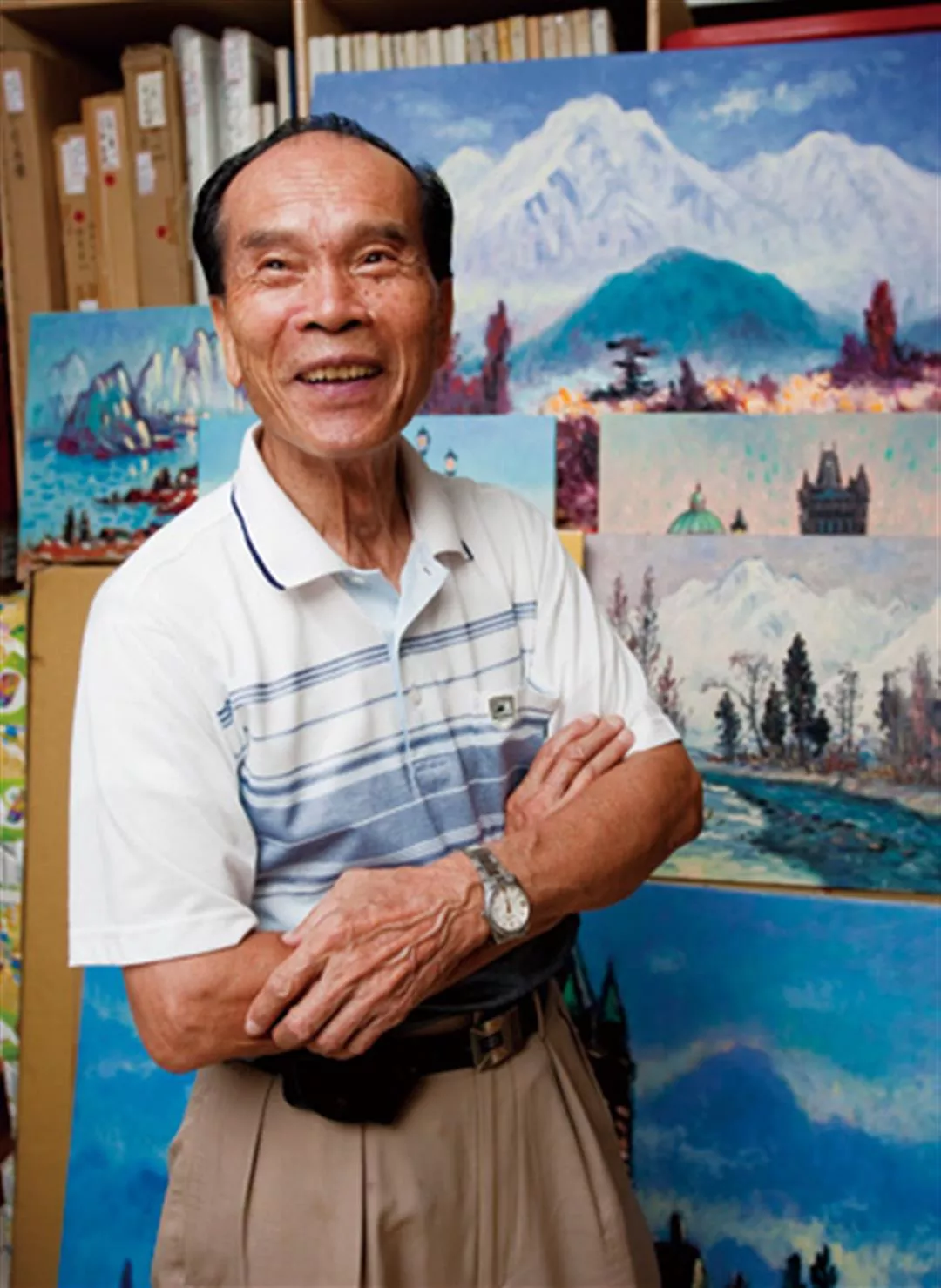
One of the elder statesmen of Taiwanese painting, Kuo Tong-jong founded the Fifth Moon Group back in 1956.The group was highly influential in introducing avant-garde genres to Taiwan.
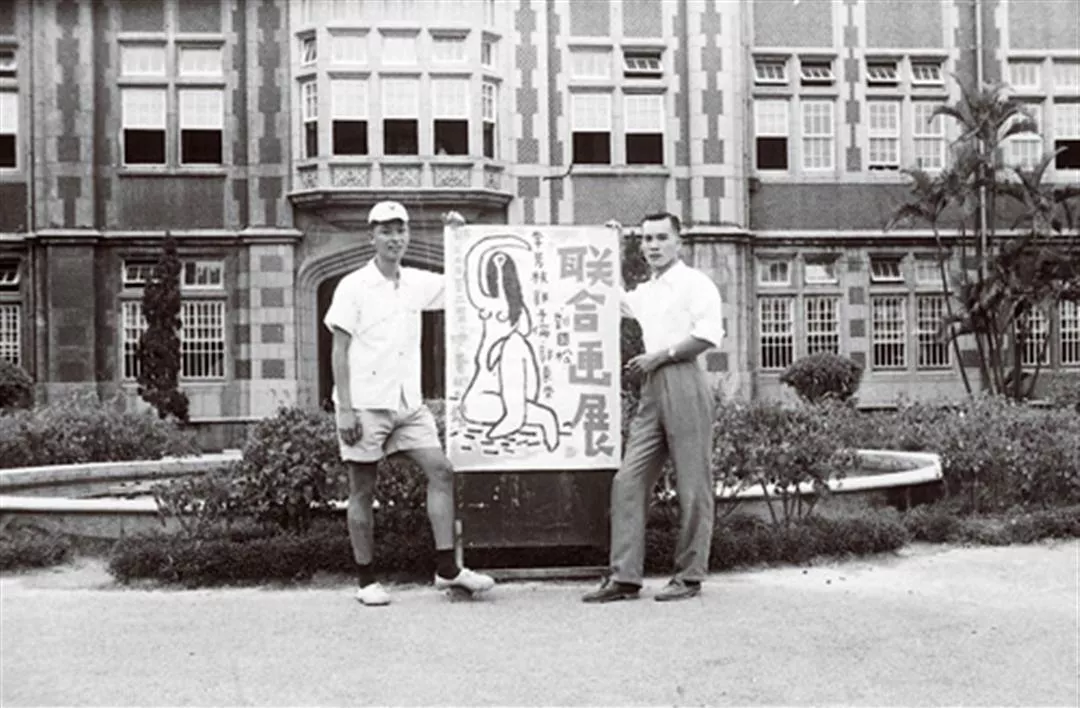
Kuo already had his post at Yunhe Studio; later on, Liu Kuo-sung and Guo Yulun began living there, as well. The three young artists later decided to invite a fourth individual, Li Fang-chi, to join them, and in 1956 they put on a four-person exhibition at the NTNU Fine Arts Department. It was at this event that Kuo Tong-jong premiered his abstract painting Contemplation, which has since been described as the first abstract work by a Taiwanese artist to be publicly exhibited.
Most art historians attribute the first abstract painting to Russian Wassily Kandinsky (1866-1944) in 1911. In Taiwan, the breakthrough didn't take place until 1953, and it was enabled by the visit of Koji Ogino, who had come as a spokesman for the Pentel Company, a Japanese art supplier. Ogino composed an abstract work at a workshop in the presence of mesmerized young artists, and in that moment, a new age of Taiwanese artistic expression was born. In a sense, Ogino could rightly be called one of the progenitors of Taiwanese abstract art. At this same time, Zhao Wuji, a noted abstractionist, was studying in Paris. The years 1955-1960 witnessed many young artists venturing into the abstract realm.
"Abstraction was in vogue throughout the world-of course we all wanted to try it for ourselves!" Kuo recalls. Abstract painting is particularly able to convey the mood of its creator, and at the same time, its ambiguous quality opens it up to variable interpretation. These were the reasons that attracted him to the genre.
In 1956, with the encouragement of Professor Liao, Kuo and his three co-exhibitors decided to form an artistic fraternity with the four of them as core members. Drawing inspiration from the adventurous spirit of the French "Salon de Mai," the group accordingly took the name "Fifth Moon Group," and vowed to hold exhibits annually every May. In 1957, they invited a pair from that year's graduating class, Chen Jingrong and Zheng Qiongjuan, to exhibit with them at the group's inaugural show, held at Zhongshan Hall.
Kuo reflects back on their founding purpose: "When we started the group, our artistic motives were very pure. Everyone encouraged one another. We were all trying to push ourselves creatively while also expressing the zeitgeist of our generation. At the same time, we were aware of an important responsibility, namely to create art that was uniquely ours, a modern artistic path that could be said to be uniquely Taiwanese." The output of the group was by no means homogenous, but they were conjoined by shared ideals, and also by the agreement to make oil painting their primarily vehicle.
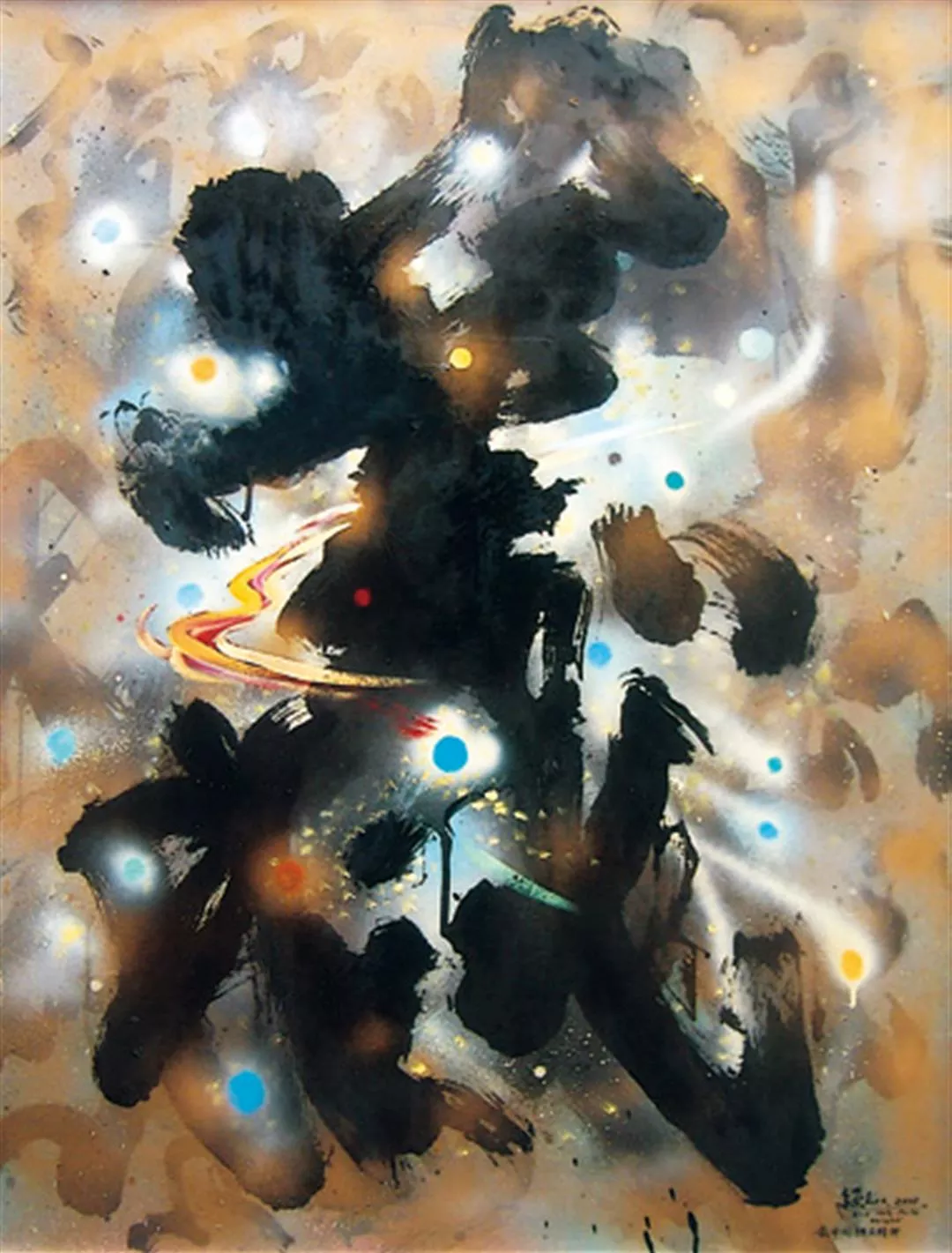
Independent Amidst Chaos (2004) makes use of abstract calligraphy to express the concern Kuo, an old man who had resettled in his native land after years abroad, felt watching the events of that year's presidential election.

He well remembers the strenuous objections of his parents when he told them he intended to forsake the steady income of his job in favor of a precarious life as an artist. Taiwan at that time was extremely conservative, and it was typical for his parents to worry about their son's livelihood. Even though NTNU charged no tuition, oil and paint were exorbitantly priced. He recalls that when he was assigned to teach at Taichung Second Senior High School after graduation, his monthly salary was NT$410, yet a small tube of paint cost NT$17!
Fortunately for Kuo, when he was studying in Taipei, Jiang Jingquan. the proprietor of Taipei's first ever art supplies store, Scholastic Art Store, became his ardent supporter. Jiang gave him the paints he needed without charging him up front, instead deducting the cost of the supplies from the sales of his paintings, which Jiang displayed inside the shop. Competitions both at and outside of school, besides affording opportunity to obtain recognition for his talent, were also a way to win free art supplies-this was, in fact, his primary motivation for participating in the first place.
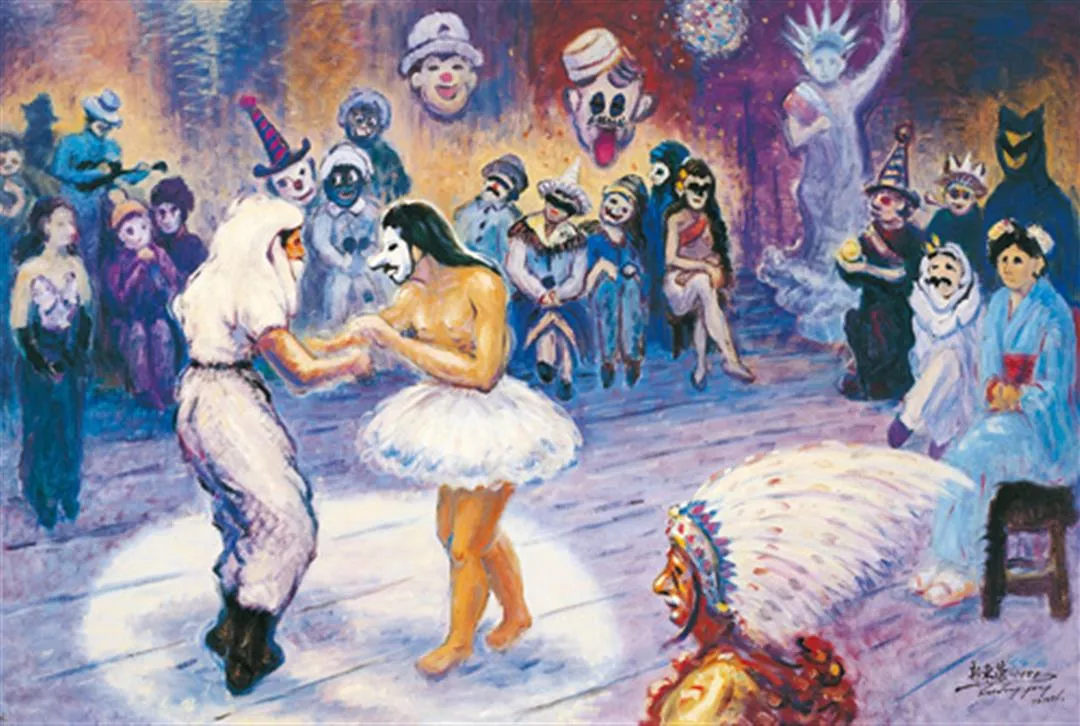
In 1955, Kuo graduated at the top of his class. That same year his work NTNU Costume Party won an award at the Tai-Yang Art Exhibition. Fine arts departments throughout Taiwan traditionally hold an annual costume party on March 25. Kuo's painting evokes the event with a pair of graceful dancers under a spotlight who are encircled by a crowd of around 20 onlookers whose masked or painted faces impart a creepy ambiguity. A profound human drama appears on the cusp of unfolding, and even the clown masks hanging on the wall seem to play a part in the masquerade.

One of the elder statesmen of Taiwanese painting, Kuo Tong-jong founded the Fifth Moon Group back in 1956.The group was highly influential in introducing avant-garde genres to Taiwan.
After graduation Kuo passed the qualifying examination to become an army reserve officer. While training at political staff school, in a confessional essay used to assess orthodoxy of thought he held forth frankly on his dim view of the February 28 Incident, the White Terror, and the imposition of martial law. He also fumed about how Japan had arisen from the ashes of defeat and was rebuilding itself as a nation while Taiwan stagnated amidst internecine strife.
Unamused by his candor, his superiors included him in the first group sent off to the dangerous "front-line" post of Huangcuo on the island of Little Kinmen. It was 1956, the time of the June 24 Artillery Battle. One time he emerged from a bomb shelter after an attack to find that the upper torso of the boy he had been chatting with a moment earlier had been blown to smithereens. The soldiers who had been bathing at a nearby well had fallen under the maelstrom. Yet the official cover-up reported that only two cows were killed in the attack.
Seeing the littered remains of his comrades made Kuo think back to the execution of Chen Cheng-po.
Chen Cheng-po was a well-known artist from Kuo's hometown of Chiayi, who in fact made his home not far from Kuo's own childhood residence. "At that time, there was a ditch near Zhongzheng Road that ran from the park past the post office and ran westward behind my house. The kitchen of our house was close to the ditch, and my mom said that Chen Cheng-po once stood on the other side of the ditch and painted my aunt cooking," he recalls.
When the anti-KMT uprising broke out on February 28, 1947, Chen volunteered to mediate between the government and the protesters. But the government regarded him as a traitor. They put him in a truck with other "troublemakers" and paraded them in front of the citizens of Chiayi. Kuo joined the crowd that formed behind the truck as it made its way over to the train station. At the train station he saw Chen and the others executed, their bodies left exposed to serve as an example. Kuo was just barely 20 at the time, and the shock of the transition-the change in government, gnawing questions of identity, the harsh governance of the KMT, and the sudden insistence on Mandarin Chinese-left a formidable, lifelong impression.
He remembers the bedraggled appearance and crass manners of the victorious Chinese troops at the war's end in 1945-such a sharp contrast with the solemn dignity projected by Japanese troops. At that time he was excited by the thought of Taiwan returning to Chinese rule. He exhorted everyone to save their money so as to allow the KMT army to eat better and wear better clothes, so they could obtain a measure of dignity equal to that of the Japanese troops. But the gunshots of February 28 dashed his patriotic dreams to pieces.

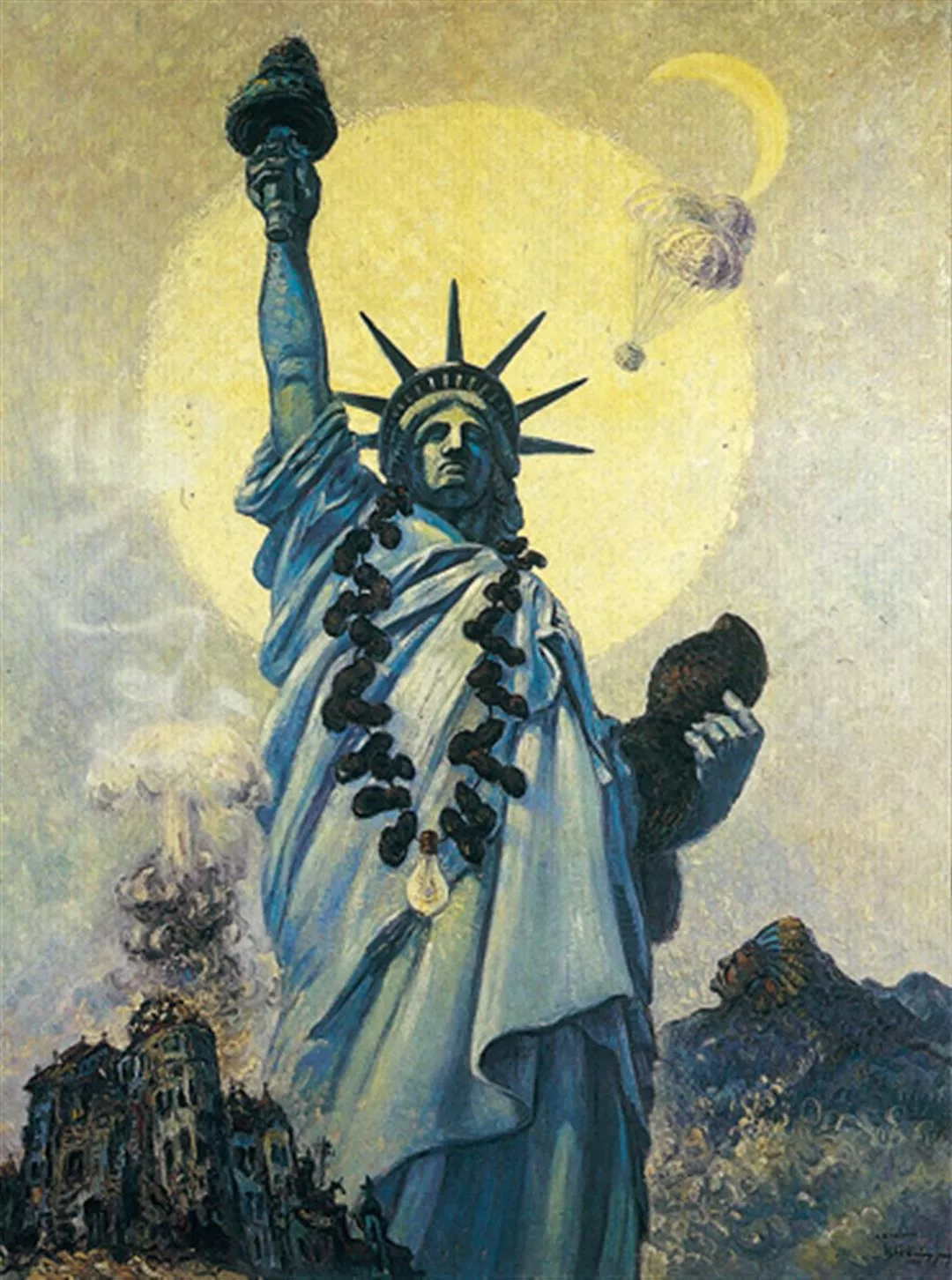
Public Harm/Public Good 200 Years (1976) was Kuo's evaluation of America's positive and negative contributions to humanity.
With his fluency in Japanese, Kuo was anxious to broaden his artistic horizons in Japan. In 1961, a distinguished local citizen, Dr. Lin Qizhang, helped him organize a private fundraising exhibition. He ended up selling 22 out of 100 oil paintings, yielding more than NT$20,000, an impressive sum considering the fact that his monthly salary as a teacher was only NT$500 or so. The exhibition demonstrated the considerable willingness of the Chiayi citizenry to further a promising local lad's career.
His wish was finally granted in April of 1962 when he embarked by boat to study at Japan's Musashino Art University.
When Kuo first arrived in Japan, he frequented all of the art museums. Seeing original Western masterworks up close was a mind-blowing experience that allowed him to feel their power and profundity to a far greater degree than simply seeing facsimiles reproduced in an art book. He was unprepared for the high cost of living in Tokyo, however, and impending poverty derailed his study plans within the first six months of his stay. Just when it appeared that all was lost, he landed a position at Tokyo Chinese School. Over time his rectitude and integrity-to say nothing of his fine teaching-won the trust of the school board, who gradually promoted him from teacher to administrative director.
Regular income made it possible for him to resume his studies. In 1966 he graduated from Waseda University with a master's in Western Art History. In 1973, he earned a second master's degree from Tokyo University of the Arts, this time in oil painting materials and techniques.
While at Tokyo University of the Arts, he participated in a restoration project of a Meiji-era mural adorning the State Guesthouse. A Japanese teacher told him that it was important to mix the paints 200 times before application. Any less and the consistency of the paint would be uneven, causing it to crack and peel in the long term. No sooner had the instructor finished his warning than he proceeded to mix the paint 200 times, giving full proof of Japanese painters' discipline and deep understanding of their materials.

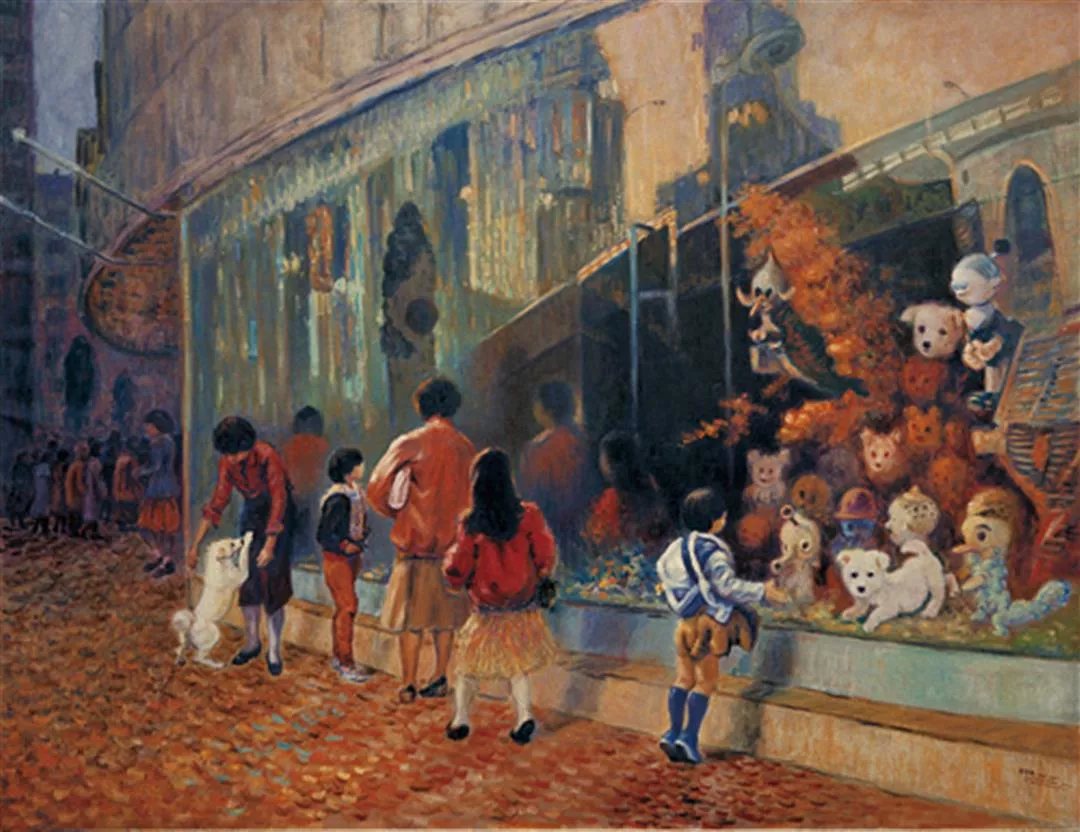
Childhood Desires (1985) won another Nipputen award.
While in Japan, Kuo frequently changed the subjects of his paintings to reflect the changing times. Life experience and the issues of the day usually provided the inspiration, but the techniques he employed to express them varied considerably. For him, artistic value is wedded to content, not whether the outward manifestation is abstract or concrete. He maintains that artists should be open to experiment. "Style should flow directly from the subject itself. The artist should never feel pressured to sacrifice his own feelings in order to cater to contemporary trends," he says.
He has never understood how some artists explore the same topic their entire lives. For his part, Kuo can't remain unaffected by the turmoil in the world around him; events like the Korean War or the Vietnam War all entered his consciousness and found expression in his paintings.
For instance, in 1973, when Apollo 11 successfully landed on the moon, the world was awed by America's accomplishment. Yet at the same time, the US was bogged down in the Vietnam War, which was becoming increasingly unpopular at home. Meanwhile, drug use was becoming rampant amongst the GIs fighting the war as they sought refuge from their tormented reality. Smugly contented with their country's superpower status, American citizens lacked steadfastness in the face of adversity, which contributed to the eventual defeat.
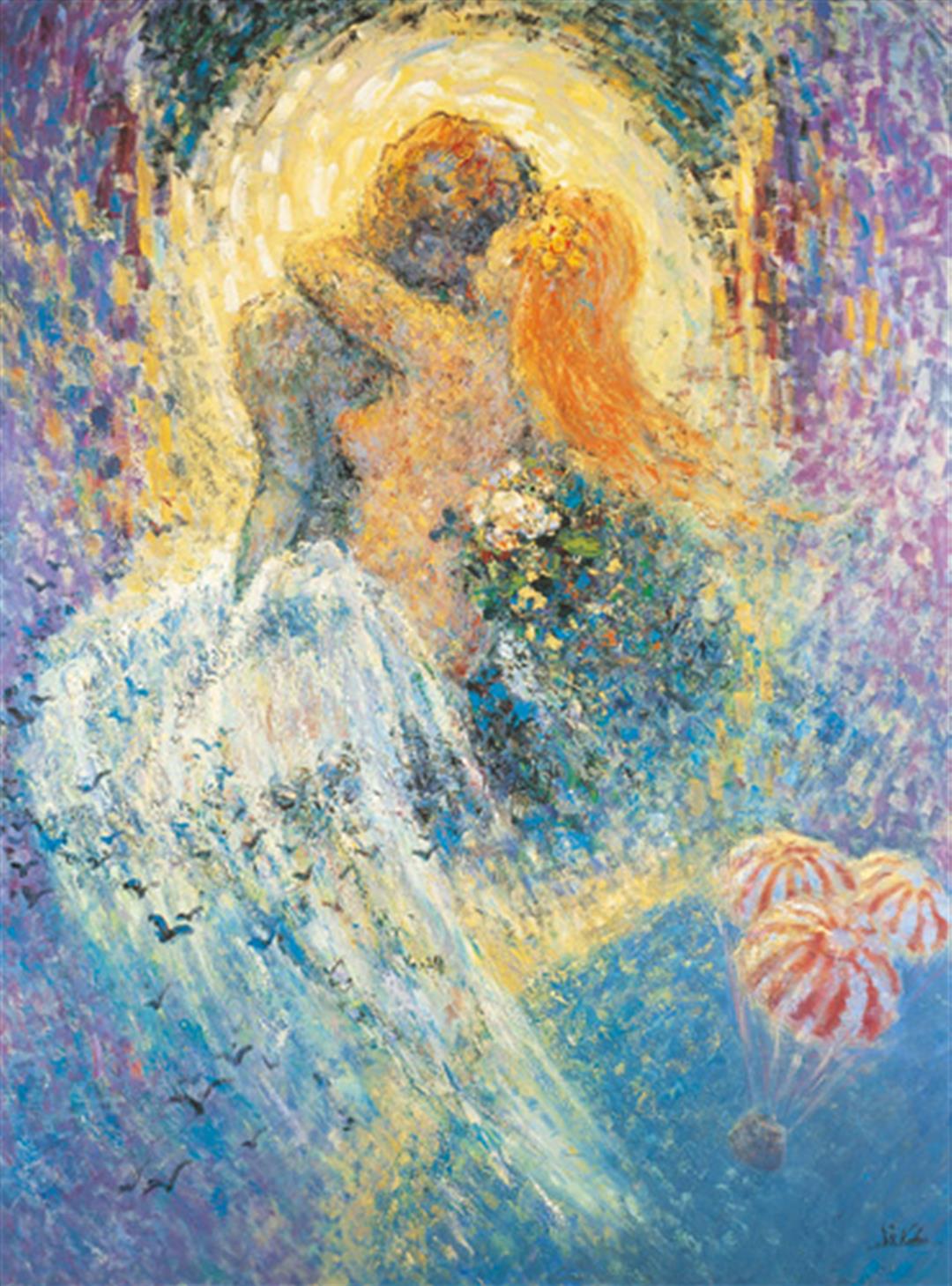
That same year, Kuo painted Challenging Apollo 11, a large-scale, colorful, romantic work. At canvas center painted in delicate brushstrokes is a couple locked in a passionate kiss. But the painting's lower right-hand corner, away from the rapturous focal point, contains the auteur's message: a space capsule parachuting downward reminds Taiwanese, at that time only recently ejected from UN membership, that in those days of international turmoil, hard work, not material gratification, would show the way to prosperity. The flock of birds soaring majestically in the lower left-hand corner embodies Kuo's benediction for the Taiwanese people and his hope for world peace.

NTNU Costume Party, painted in 1955, received the Tai-Yang Award.
Another example of Kuo's art-as-criticism is his 1976 piece Public Harm, Public Good 200 Years. 1976 was the bicentennial of the United States and also the year in which Japanese prime minister Kakuei Tanaka was sentenced to prison for accepting ¥500 million in bribes from the American aerospace manufacturer Lockheed. In the painting, the Statue of Liberty is carrying a peanut in place of the book; around her neck is a string of peanuts, each peanut representing a sum of ¥1 million of ill-gotten cash. A bust of an American Indian in the lower right-hand corner reminds the viewer of the brutal persecution they suffered at the hands of the white man. At lower left, a mushroom cloud recalls the destruction of tens of thousands of innocent lives at Hiroshima. These all speak to American abuses.
Representing positive contribution is the pendant dangling in front of the Statue of Liberty-Edison's light bulb. The Apollo 11 spacecraft also appears in the upper right-hand corner, and it, as well as the former, celebrates the enrichment of human civilization through beneficial technology. A gloomy dark green dominates the composition of this work which, in a sense, is a report card on America's net impact on the world.
In 1986, the American space shuttle Challenger exploded 73 seconds after takeoff, instantly claiming the lives of the seven astronauts on board. When Kuo saw the relayed broadcast of the tragedy, he was shocked; his grief knew no words. In Space Exploration and Sacrifice he made use of familiar calligraphy, which he rendered with thick, disorderly black lines to convey his tangled emotions. On top of that he added repeated layers of spray paint to highlight the varying degrees of shade in the lines, evoking the plumes of smoke and blazing light of the explosion. That same year he revisited the same technique to create The Universe Mocks Human War, and Dream of Two Earths, both of which were described by art critics as "frenzied abstraction."

In 1956, Kuo Tong-jong (right) and three colleagues put on a four-man exhibition at the NTNU Fine Arts Department.
The year he was set to matriculate at Tokyo University of the Arts, his employer, the Tokyo Chinese School, was reluctant to lose him. They eventually relented, but Kuo promised to return once he had obtained his degree. Fulfilling his promise kept him in Japan for many years, all the way up to his retirement in 1989, at which time he returned to Taiwan to teach at the National Academy of Arts (now National Taiwan University of Arts). In 1991, he restarted the Fifth Moon Group after more than 20 years of inactivity, and that year they held a commemorative 30-year retrospective exhibit spanning the years 1960-1990.
When the Fifth Moon Group was established, Kuo had the notion of adding the two top art students from each graduating class at NTNU. Over time, the organization would expand-in 50 years there would be 100 outstanding members-to the point where it must be the greatest artists collective in Taiwan. The dream never panned out exactly, but in the meantime, the original members have created prolifically and carried the mantle of leadership well, and Kuo hopes that the younger generation will extend their creative spirit into the future.

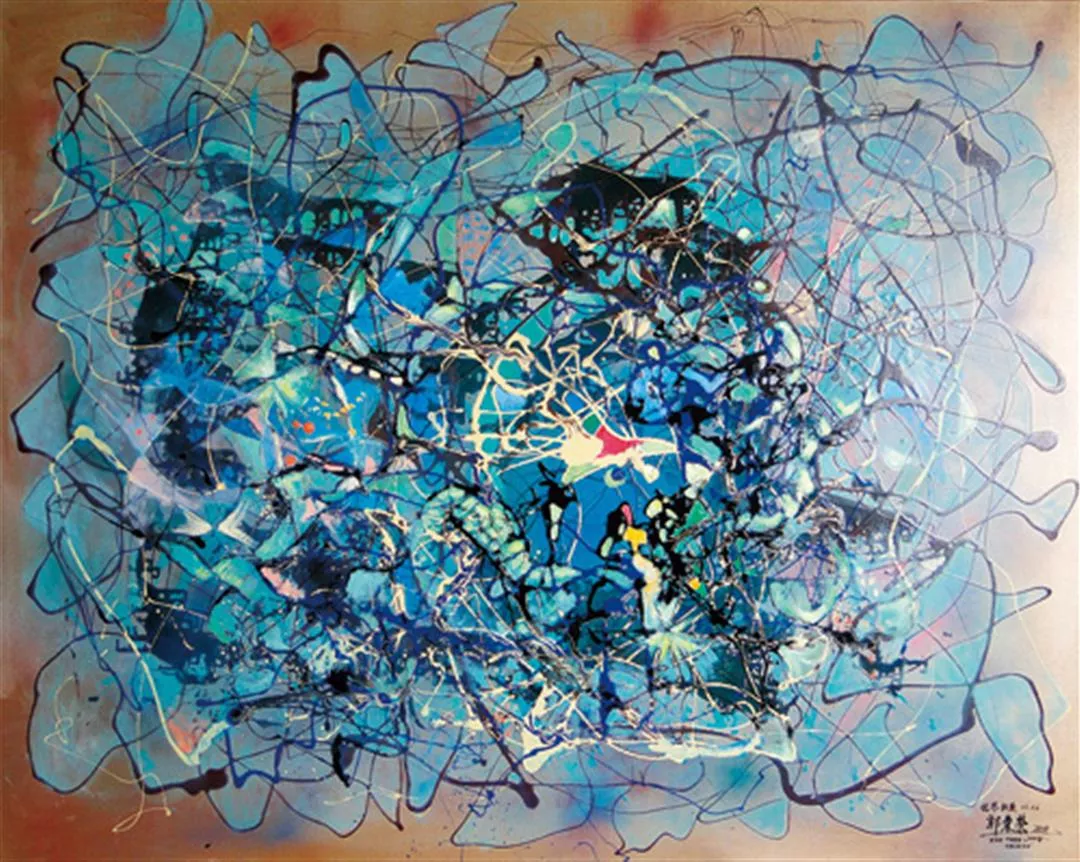
"World Change" series, No. 26. The "World Change" series, begun in 2009, reflects the influence of Jackson Pollock in the use of other painting tools in place of the brush. Spontaneous layers of drops and patches create a kaleidoscope of line and color.
In 1998, Kuo took a cue from Pollock and put his paintbrush aside in favor of other implements. He used a spray gun to put down a foundation and followed up by squeezing paint from a tube onto the canvas. The "Sulfur Mountain Love" series that resulted were mercurial works boasting dazzling interplay of color.
During the presidential elections two years later, he took a stab at postmodern pastiche techniques. In the "2000 Presidential Election" series, he took photographs of the candidates and textual content related to the campaign and pasted them on the canvas, and then wrote a number of highly controversial statements onto the works as a final touch. Former NTNU Institute of Fine Arts chairman Wang Zhexiong praised the series as follows: "The tangled background lines evoke the complexity of the election, both its exciting and its chaotic aspects. The work also reveals Kuo as a trenchant chronicler of contemporary events."
2008 was another year of political transition in Taiwan. The following year the US elected its first non-white president. Ice shelves continued to melt and crack at both the North and South Poles. The El Nino phenomenon wreaked frequent havoc on nations around the world. Not only was the world politically in a state of flux, the environment was deteriorating. People themselves were more complex packages than before. Kuo encapsulated his wishes for a benign future for mankind in his "World Change" series. He composed these works in drips and drops, first sprinkling a layer of paint on the canvas which randomly combine and connect to form small blocks of color or lines. He then applied color swatches in a more deliberate fashion, and followed that by using a painter's knife to pour on lines of black droplets. The spontaneously layered patches and drops yield a kaleidoscope of color and line intended to lead the viewer into a beautiful and fantastical dreamscape.
The twin prerogatives of timeliness and creativity have made Kuo an artistic chameleon. Not beholden to any particular style, he flits between abstraction and realism, or when the fancy seizes him, combinations of the two. He boldly mixes Chinese characters with Western painting methods. He firmly maintains that "art needs to express zeitgeist in order to be fresh." That was why Picasso was always inventing and reinventing himself.
Though the ever protean Kuo has reached the age of 83, he'll continue using his art to both express his concern for the world and to create lasting beauty.