Tea in China, Taiwan Style--Chun Shui Tang
Chang Chiung-fang / photos Jimmy Lin / tr. by Scott Gregory
December 2006


Over the past decade, Taiwanese tea merchants and producers have been setting their sights on China. China is the homeland of tea and the world's second-largest producer of it, so Taiwanese have a tough battle there. But Taiwan's tea-drinking culture today still bests China's, and wherever Taiwanese tea goes, it brings with it Taiwanese values, cultural tastes, and lifestyles.
Of Taiwanese teahouses, Chun Shui Tang is the one with the most authentic Taiwanese feel. It's also the originator of bubble tea and pearl milk tea. Now it's setting up shop on the mainland, and it's making waves.
Around six months ago, sharp-eyed Taiwanese businessmen and their families were surprised by the sight of Taiwan's famed Chun Shui Tang on Shanghai's trendy Huaihai Middle Road.
Word spread quickly among the local Taiwanese expat community. But they wondered--could this old standard of Taiwan-style tea culture make it in Shanghai, or would it be lost among all of Huaihai Middle Road's name-brand shops?
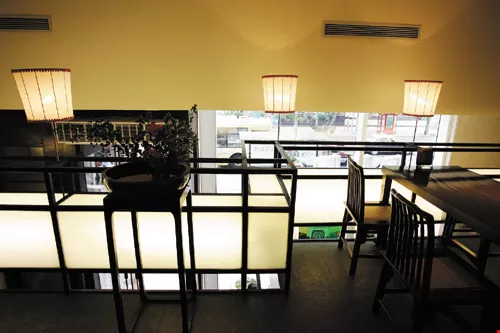
Taiwan's own Chun Shui Tang stands as an oasis of quiet among the bustle of Shanghai's Huaihai Middle Road.
A rebirth of tea
Since the 1980s, Taiwan has not only created its own native tea culture but has also been reinvigorating the mainland's tea industry, which was hard hit by the Cultural Revolution. A tea renaissance has been forming.
In cosmopolitan Shanghai, Taiwanese have opened several new-style teahouses. With RBT and Forest of Flowers, which opened a few years ago, the more recently opened Chamate, and now Chun Shui Tang, which opened in Shanghai in June of this year, a new kind of tea culture has been coming in waves.
When the lanterns are set out in the evening, Chun Shui Tang is at its busiest. People sit outside, and all the tables inside are taken. Small groups of office workers relax after a long day with some tea and a meal.
Chun Shui Tang, which has been open in Taiwan for 24 years and has 24 shops around the island, didn't stress its background when it came to Shanghai.
"We didn't go around underlining the word 'Taiwan,' but from the refinement of the decor, the menu, and the service, it's easy to tell that it's not run by locals," says project manager Erica Liao.
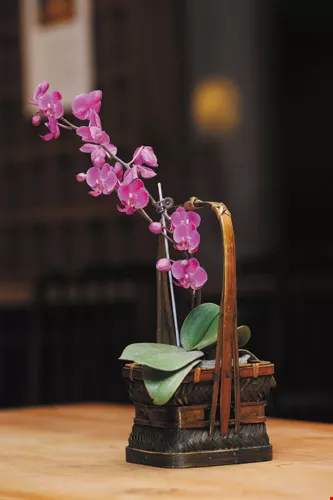
Chun Shui Tang's flagship Shanghai store, surrounded by Starbucks outlets, is designed in a style that mixes a traditional lyricism with contemporary elements. It's decorated with seasonal flowers, reproductions of famous paintings, and interesting curios. Chun Shui Tang has always sought to bring to life the sort of teahouse depicted in literary works like the Mengliang Lu of the Song Dynasty.
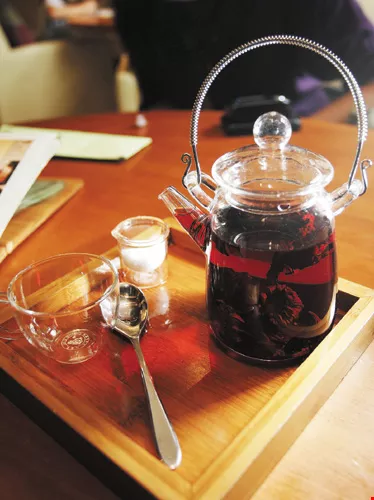
Chun Shui Tang has positioned itself as a "cultured" teahouse, so naturally it features Taiwan's "literati tea" in a single cup, and "kung-fu tea" served from a pot. Of the literati tea, in addition to the most expensive Taiwanese high-mountain oolong (RMB68 per cup), famed Chinese varieties such as Keemun black, Xihu longjing, Anxi tieguanyin, Wuyi yancha, Suzhou biluochun, and Yunnanese pu-erh are all on offer. As for kung-fu tea, there are selections including high-mountain oolong, shuishen, guanyin, and iron luohan. The prices are double that of the literati tea, with the imported oolong going for RMB188 per pot.
"The Taiwanese tea we sell is high-mountain oolong from Taiwan's central mountains. It's well-received," says Liao. Northern Chinese like flower tea, and while Shanghainese used to prefer green tea, now the Anxi tieguanyin is the most popular there.
In addition, there are many kinds of cold drinks on offer, such as flower-fruit tea, fruit tea, milk tea, black tea, and everything else one could want. Chun Shui Tang even has occasional promotions on cups of roasted oolong and tieguanyin to go.
"The steam of tea wafts through the air / The scent of orchid powder fills the room / Brewed to perfection, it's no lie / Dismount your horse and try."--
Setting trends
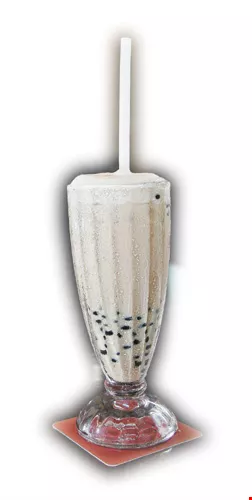
Taiwan's tea culture isn't limited to refined kung-fu tea--bubble tea and pearl milk tea are emblematic Taiwanese creations. These were created by Chun Shui Tang in 1983 and 1987. They became sensations in Taiwan, and now Chun Shui Tang is bringing them to the mainland.
Actually, other merchants have been selling those Taiwanese creations in China for as long as five years, but latecomer Chun Shui Tang is the true originator.
In 1983, Chun Shui Tang CEO Liu Han-chieh opened Yanghsien Tea--Chun Shui Tang's forerunner--in Taichung. It was a shop that sold tealeaves and utensils. His inspiration for bubble tea came while visiting a coffee shop in Osaka, Japan. He noticed customers drinking cold-blended coffee drinks.
Liu thought to himself, on such a hot day why can one get cold coffee but not cold tea? He bought a cocktail mixing machine and blended hot black tea with sugar and ice. The result was a thirst-quenching iced black tea with a fine foam on top. Now you can find this drink just about anywhere in Taiwan.
Bubble tea kicked off the era of cold tea drinks in Taiwan and introduced tea drinking to a new generation.
As students from nearby Tunghai and Feng Chia universities poured in, Liu's business began to take off. He expanded from Taichung all around Taiwan, and soon the mixing machines could be seen shaking away all over the island. Cocktail glasses became a fun way for kids to enjoy a new style of tea drinking.
Pearl milk tea was serendipitously created by Lin Hsiu-hui, a Chun Shui Tang manager.
Lin had always liked eating tapioca balls, and would often bring them in to the store to share with her co-workers. One day she was suddenly inspired to mix them into the milk tea that they sold, and discovered that the tastes went together very well. She had her co-workers try it, and they all agreed that tapioca balls and milk tea were a perfect match. Without even getting an OK from the boss, they began selling their creation in the shop, giving it the memorable name "pearl milk tea."
After selling it on the sly for a week and seeing the positive reactions of the customers, Lin got up the nerve to ask the boss to try it. Just as was the case with bubble tea, pearl milk tea was a sensation. It came to be considered the quintessential drink of the new Taiwanese cold tea craze, and quickly spread to Chinese communities throughout the world.
"The steam of tea wafts through the air / The scent of orchid powder fills the room / Brewed to perfection, it's no lie / Dismount your horse and try."--
Different tastes
Though Chun Shui Tang has been an innovator in Taiwan, it is late to the game in China. Liao says that in previous years, Chun Shui Tang was busy expanding in Taiwan and didn't have the extra resources to move across the strait. They decided to open this year because they felt the time was right and they found a good partner. Chun Shui Tang is working with the Jollibee Foods Corporation, a top-100 company in the Philippines which purchased the Taiwanese restaurant chain Yungho Tawang, using the platform Jollibee has created to prepare for a quick move into the China market.
In addition to Shanghai, Chun Shui Tang plans to open dozens of stores throughout China within the next five years, says the company's China market analyst Chen Hsing-yuan. Locations being considered include areas rich in local tea culture such as Beijing, Jiangsu, Anhui, Zhejiang, Guangdong and Fujian.
Currently, the Shanghai branch has five Taiwanese employees, two men and three women. They are young, single and highly capable. In the future, they will be on the front lines of Chun Shui Tang's China expansion efforts.
After coming to Shanghai, Chun Shui Tang found it had to adjust its menu to local tastes. For example, Taiwanese tend to eat less rice with a meal. In China, they had to serve larger portions of rice. Taiwanese tend to place importance on eating lighter, healthy fare, while mainlanders like stronger flavors.
Liao says that a market analysis of half a year of business shows that while in its Taiwanese shops many more people come for tea than to eat a meal, the reverse is true in Shanghai. The same was true at Chamate stores. In one respect this is a reflection of cultural differences, but it is also evidence that there is much room for Taiwanese tea culture to expand.
Chun Shui Tang doesn't only sell tea--it sells the Taiwanese spirit and culture. Should it be able to expand from Shanghai to the rest of China, it will not only represent a successful business enterprise but also a weather vane of cross-strait cultural fusion.
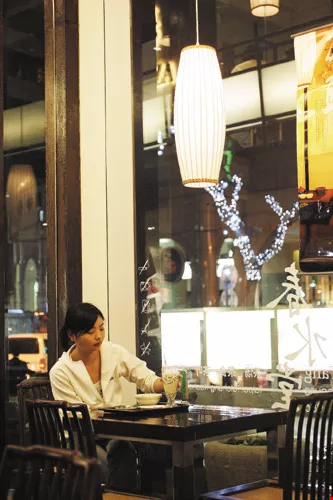
Fine teas, an elegant atmosphere, and gourmet foods--Chun Shui Tang presents the Taiwanese take on tea culture.
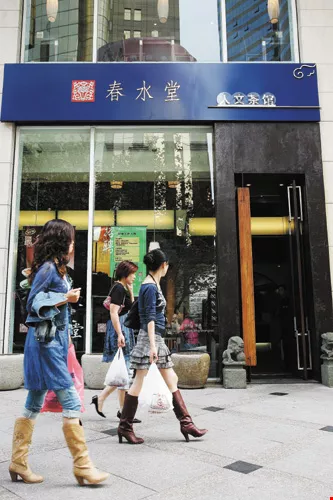
Taiwan's own Chun Shui Tang stands as an oasis of quiet among the bustle of Shanghai's Huaihai Middle Road.
@List.JPG?w=522&h=410&mode=crop&format=webp&quality=80)

@List.jpg?w=522&h=410&mode=crop&format=webp&quality=80)


