"Neither Sleet Nor Snow"--The Seoul Overseas Chinese Elementary School
Ventine Tsai / photos Vincent Chang / tr. by Charles H. Wagamon, Jr.
April 1993
It is said that Korea's ethnic Chinese are most patriotic, as evidenced by their 84-year-old Chinese-language school system, where three generations have been educated. In the past, when flag ceremonies were at different times in primary and secondary schools, the national anthem was sung four times daily, and even the shoeshine boys nearby sang upon hearing it!
Nowadays, with the breaking of diplomatic links, the flag no longer flies, due to pressure from the adjacent Communist Chinese embassy. More worrisome yet (to teachers and parents): will they still have freedom to choose their schools and curricula?
Why have indigenous Chinese long been kept from mixing with Korean society around them? Given an unstable, even treacherous, international situation, what course should they follow?
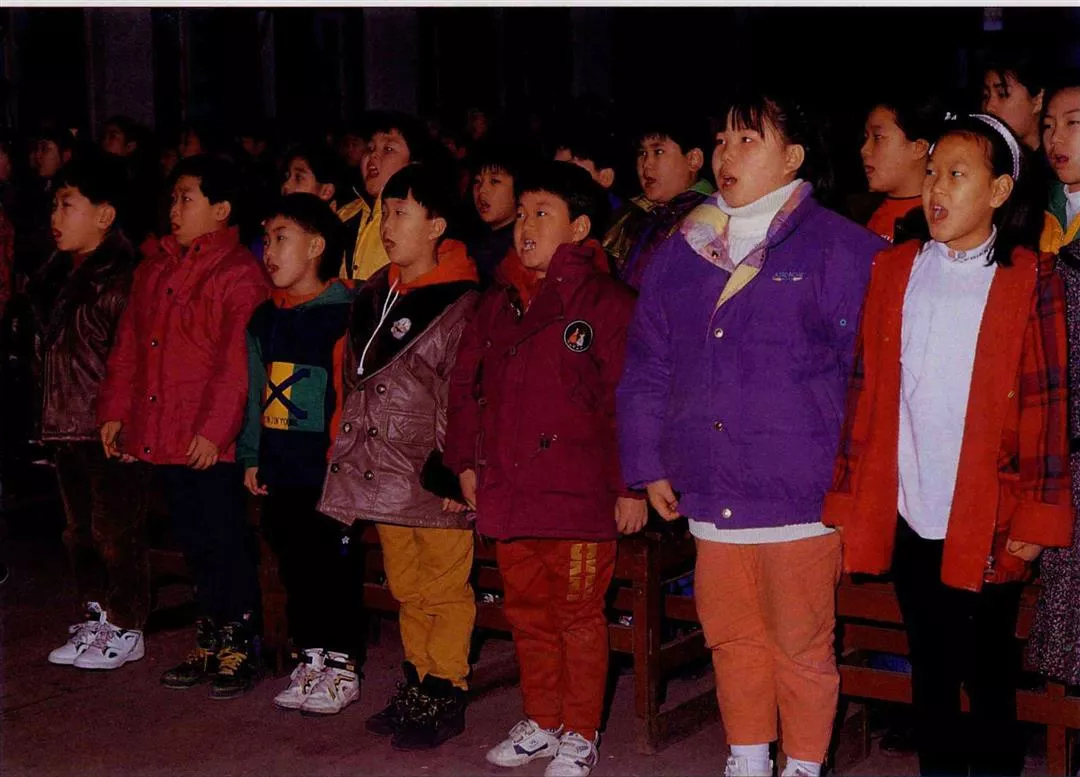
"The Han River flows east to west, passes before the eyes of the southern mountains; good sons and daughters of China carry on in neighboring countries. Students make a concerted effort, and their motherland applauds them. Friends and relatives anticipate their return to the ancestral home, where they will clean up the old mountains and rivers. When their education is complete, they will refurbish our homeland." Opening ceremonies for the second term of the 1992-93 academic year saw children singing the alma mater loudly; it seemed to ring out particularly clear in the icy weather.

At opening ceremonies for the second semester of the 1992-93 academic year, children sing their school song inside the auditorium; outside Chinese community leaders sing "San Min Chu I" and hoist our national flag one last time.
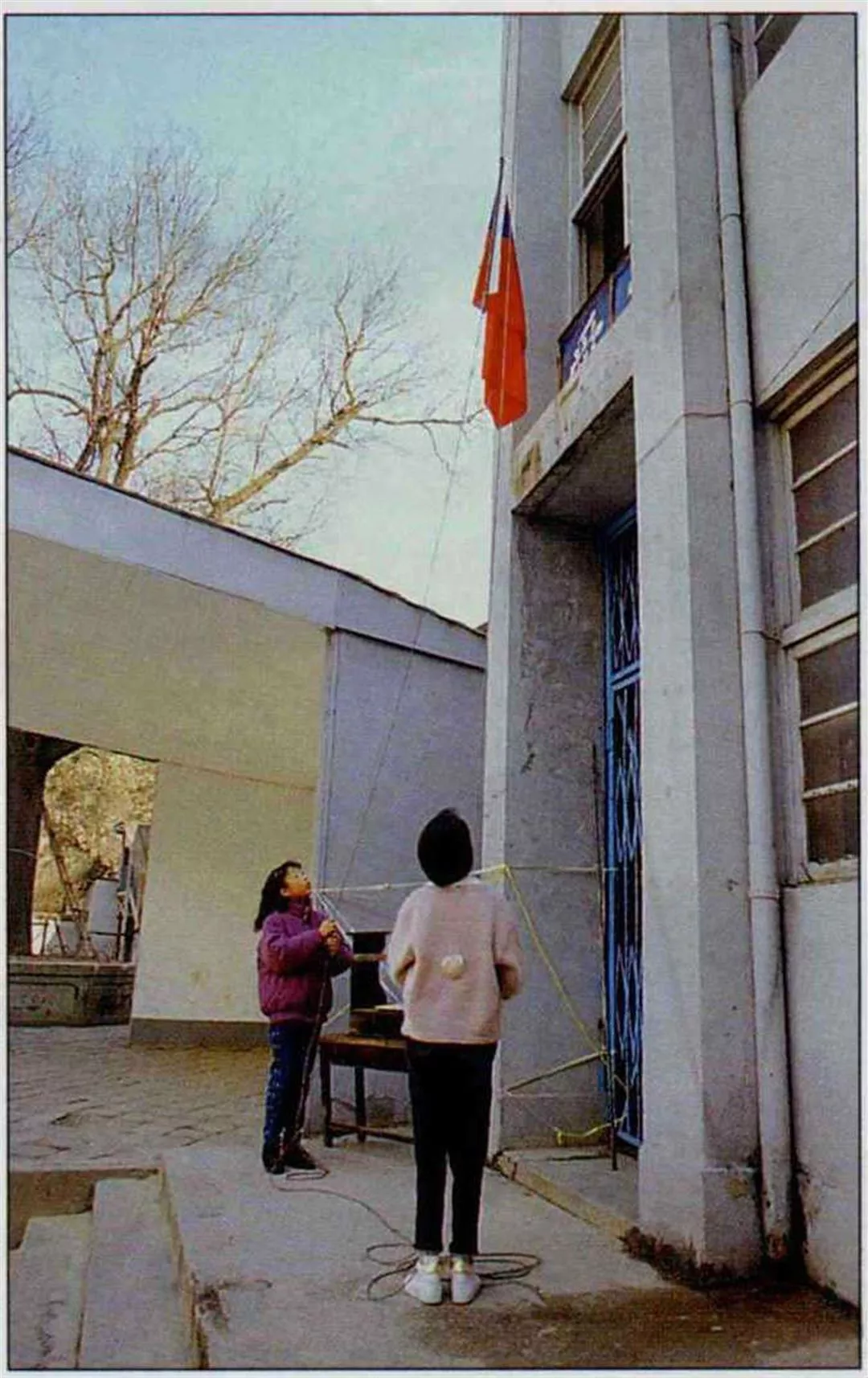
As always, when the MC says, "Everyone stand!" naughty kids habitually sing the national anthem. However, a new twist has been added: the flag is no longer raised over the field outside. Instead, everyone faces the flag and portrait of Dr. Sun Yat-sen inside the auditorium.
At the speaker's platform, after school principal Kuo Shih-jung has finished with some announcements, he makes an attempt to inform us (in as normal a voice as possible) that as of this past August, Taiwan and South Korea have officially severed diplomatic relations, meaning that henceforth our twelve-rayed sun emblem may not be flown over the school or above meetings. "From now on we can hold a solemn flag ceremony once a week in the auditorium. Students, remember: no more flag raising. . ." Twenty-year veteran teacher Ying Yao-li murmurs, "We've seen the national banner wave every day since childhood; this is a kind of freedom."
Out on the playground the children chase after one another, asking just what "severance of diplomatic ties" is and why the flag must not be hoisted anymore. One of the bigger kids says, "It means we're not good friends now," but will this ten-year-old truly grasp the enormously complex global situation? If you raise your head, you see that at the former embassy next door the white sun on the blue field of a red flag has been removed.

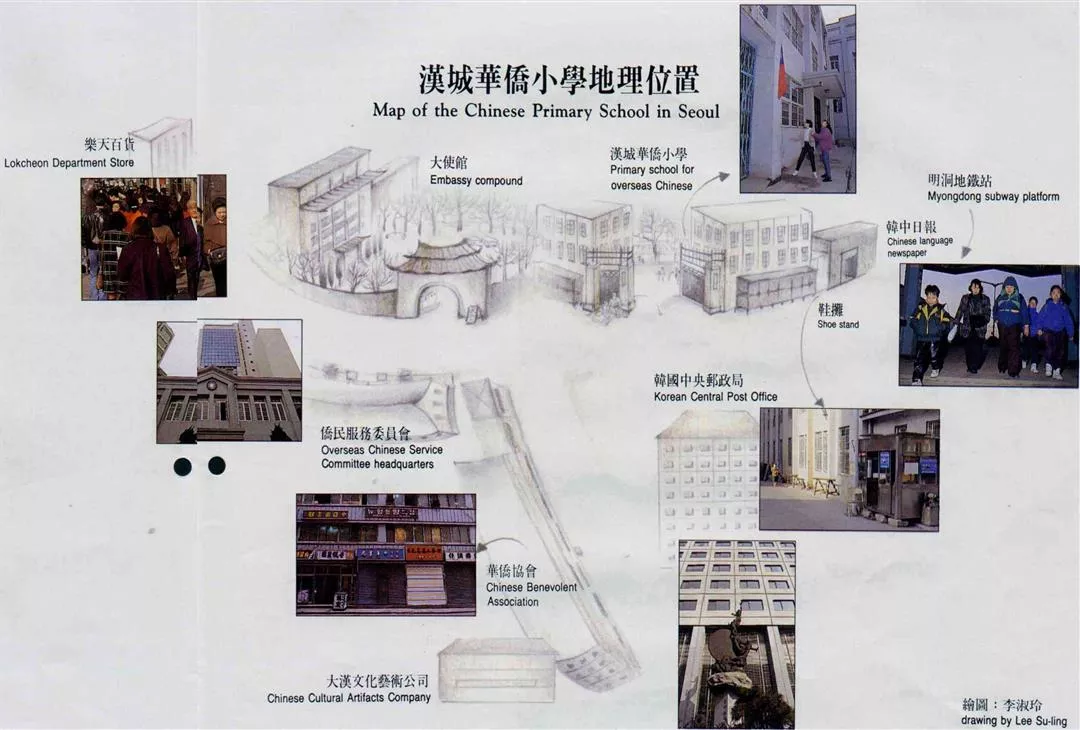
An elementary school in Myong-Dong District, the heart of downtown Seoul. Second to none, the area includes Lotte Shopping Center, Shinsaegae and Midopa Department Stores, City Hall and the Central Post Office. Plus, our school and embassy were so close that it was, in the words of some teachers, "like one's eye viewing one's nose."
Seoul's Primary School for Overseas Chinese was established two years prior to the Hsinhai Revolution and is now in its 84th year. Third generation classmates are everywhere, and Principal Kuo laughs: "The kids, along with their teachers and parents, are all students of mine. I myself attended grade school here." And in the parents' lounge, one grandmother raises her hand while she waits for classes to let out says, "I'm 72 years old and once studied here as well. At that time we wore blue chi-pao read books inside the embassy!"
Before 1973 the primary and secondary students began classes at the same time. Now that the parents have been through grades 1-12 under the same roof, the elementary and junior/senior high schoolers have separate daily flag ceremonies, with the national anthem resounding four times. On one occasion a teacher came out of the gate after classes ended. While having his shoes polished, he discovered that the shoeshine was humming "San Min Chu I."
Adjacent to the school is the embassy; other community organizations are within 50 steps, and the playground makes an ideal activity center for such events as the annual Double Tenth morning rituals, which are followed by primary school athletic contests in the afternoon. When the festivities are concluded, they go to the neighborhood Chinese restaurants and have noodles; all this hooplah is true not only of Double Tenth but also Youth Day, Children's Day and Overseas Chinese Day.

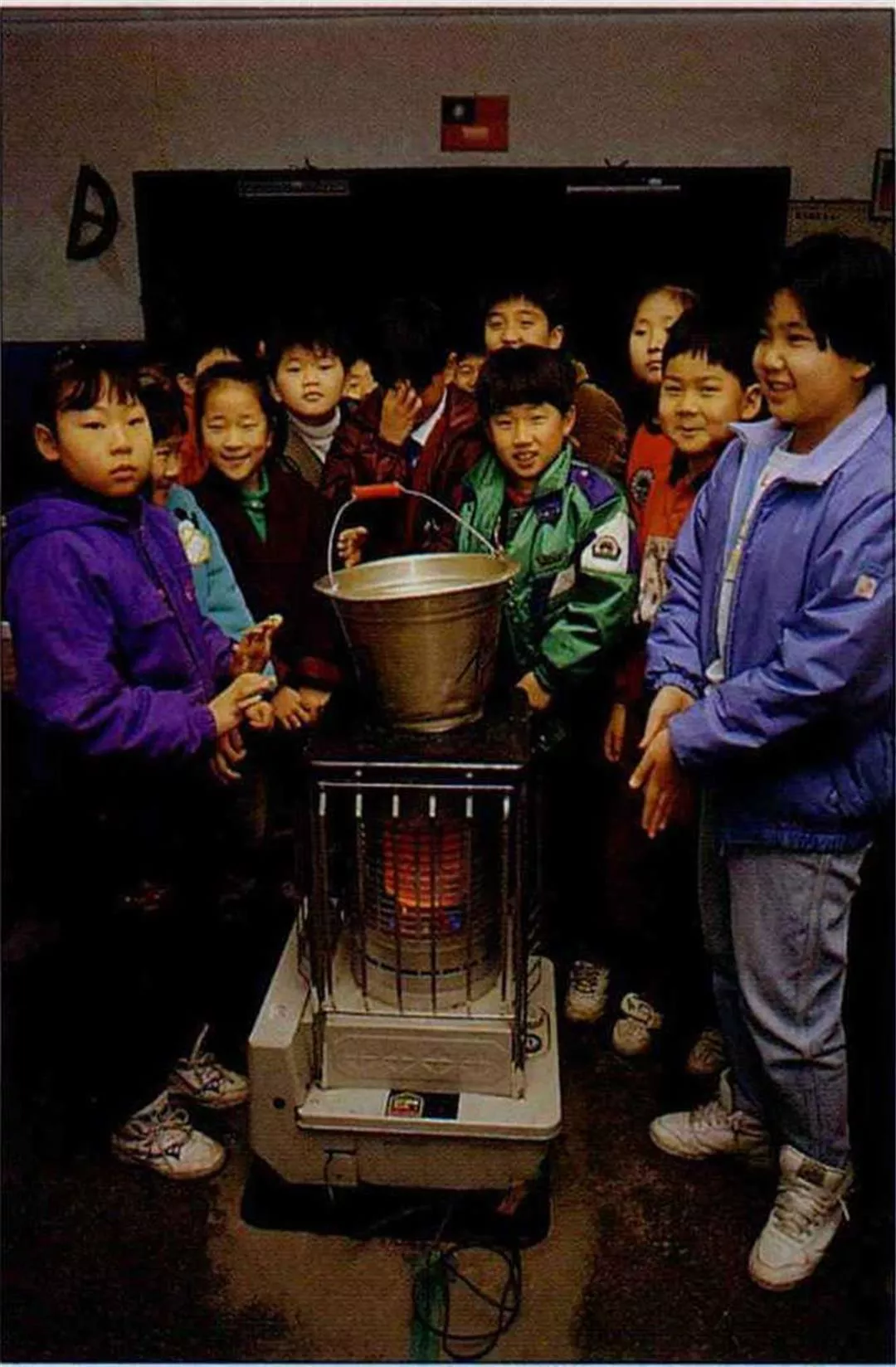
Northerly latitude and cold climate mean half of each school year is spent with a furnace going all day in every classroom. The water bucket atop the stove prevents air from becoming too dry and provides a place to boil water.
Since August 1992 Taiwan and Korea no longer recognize each other. The Seoul government, in accordance with international law, transferred the embassy to the Communist Chinese, which left the adjoining school, the facing Kuomintang headquarters, and the nearby Overseas Chinese Association buildings with an uncertain future.
As of August 24th, our embassy flag was lowered for the last time, and in February 1993 the Korean authorities, under pressure from Beijing, demanded that the Overseas Chinese Services and our school do likewise. This had already been done quietly while winter vacation was on, but when classes resumed for the spring semester, flying our national banner turned into a thorny, three-cornered issue between Seoul, Beijing and Taipei. Reporters came from each place to interview the children for their slants on this story amid the confusion, and we resented interference. "We will protect both our children and ourselves!" proclaimed the teachers, somewhat angrily.
Faced with diplomatic severance, the ethnic Chinese had many lingering fears to boot. Naturally, they miss raising the flag, but would raising it prompt Korea to expel the overseas Chinese? Will China expropriate our school or interfere with the curriculum? Such questions are being discussed by teachers, parents and administrators, among others.

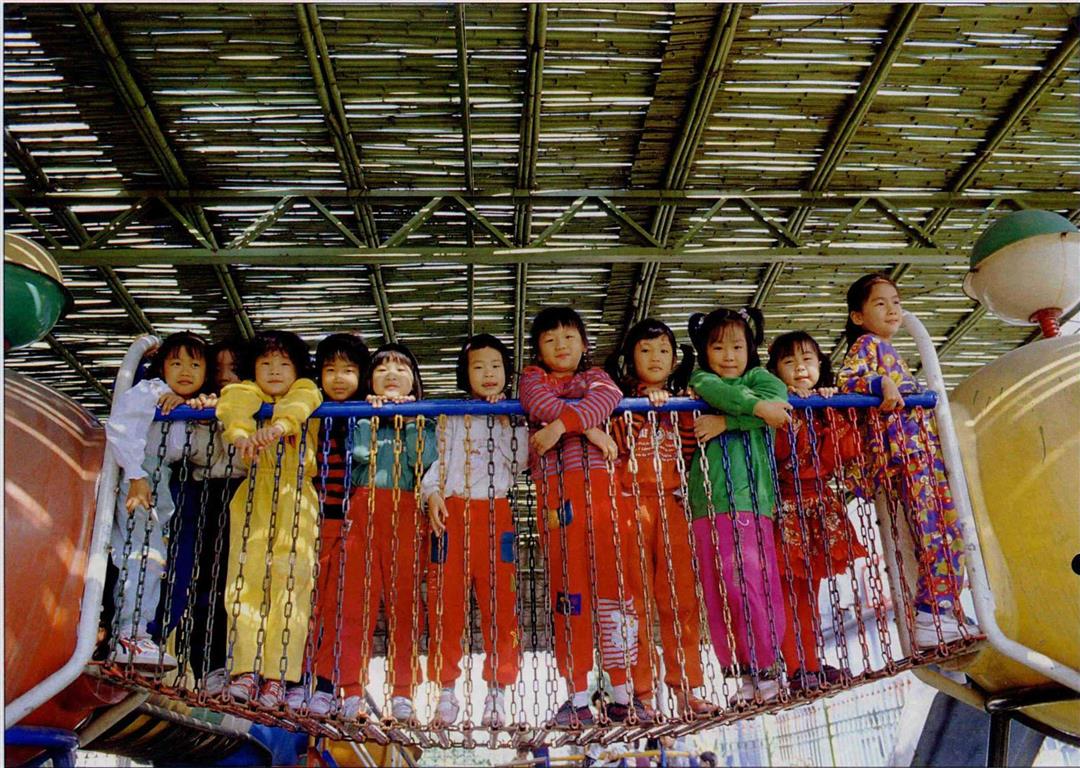
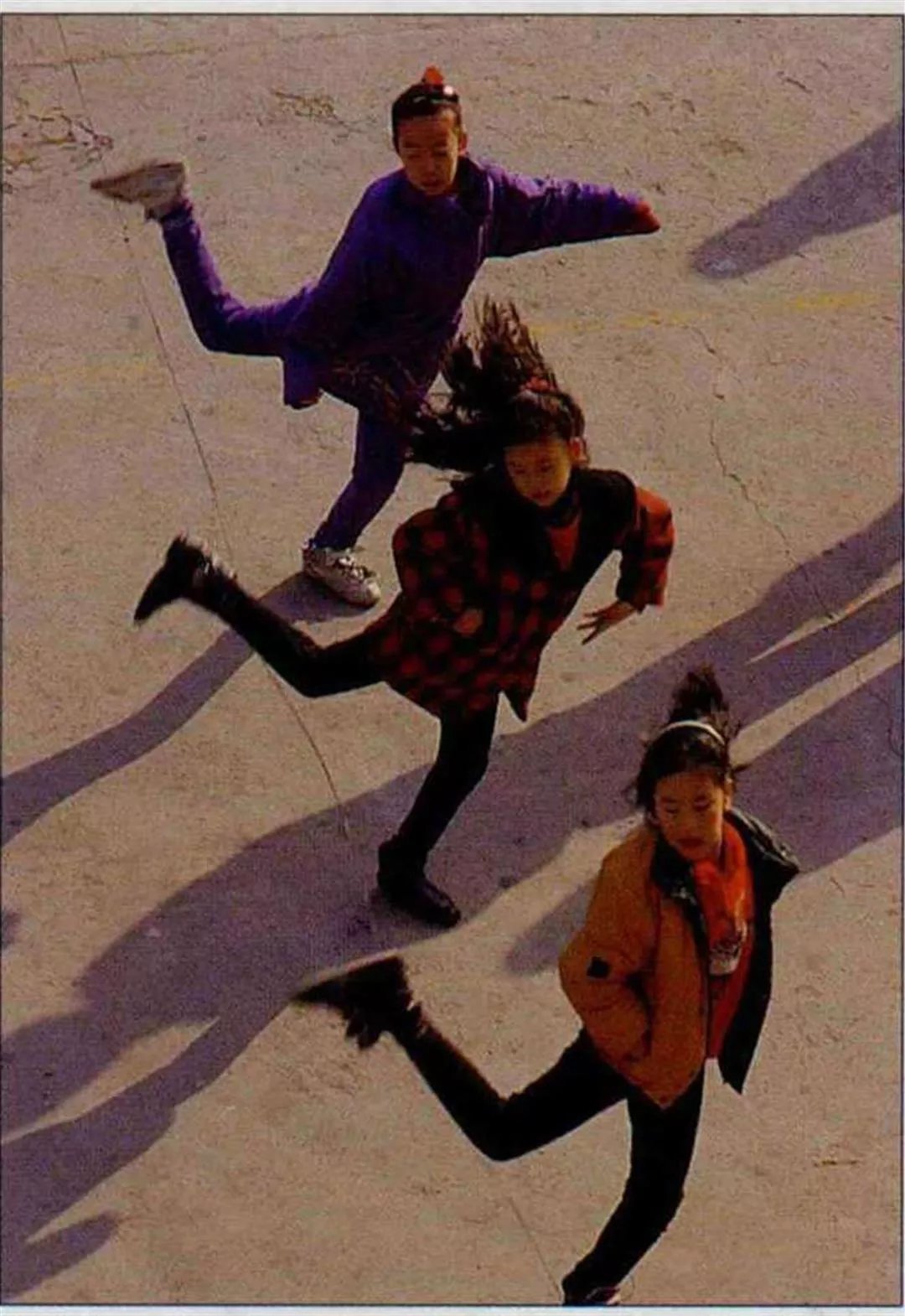
Second-generation parents send children for Chinese-language primary schooling, but the Korean tongue dominates a game of Jump-rope.
The adults' debate has become the children's dilemma. Fifth grader Yu Shu-chin asked her mother, "Will we still be allowed to read Chinese books?" Worried that she would not, she asked, "Do I have to go to America to study, like elder sister Hsiao-ting?" Her younger sister echoed classmates' concern: "Will we have to move to Shincheon (a housing project in Seoul's Gong-Yaen District)?" The word is that if the elementary school is not allowed to stay open, classes will be transferred to the junior-senior high; many parents are already weighing the pros and cons of moving to the latter's vicinity for the convenience of their children.
Beleaguered by such doubts, kids draw comfort from parental assurances, but what about the parents themselves? "We are at a loss," says a worried Kung Fan-o. "If the place doesn't continue and we can't muster enough clout to set up a new one, it would force the kids to relocate in the high school, where space would pose a problem. They want us to take down the flag today; will they demand a change in class materials tomorrow?"
Tong Kuang-yu, director of the Student-Parent Council stated flatly: "What it will be like on down the road, we honestly don't know! We only hope the children's education won't be hamstrung."

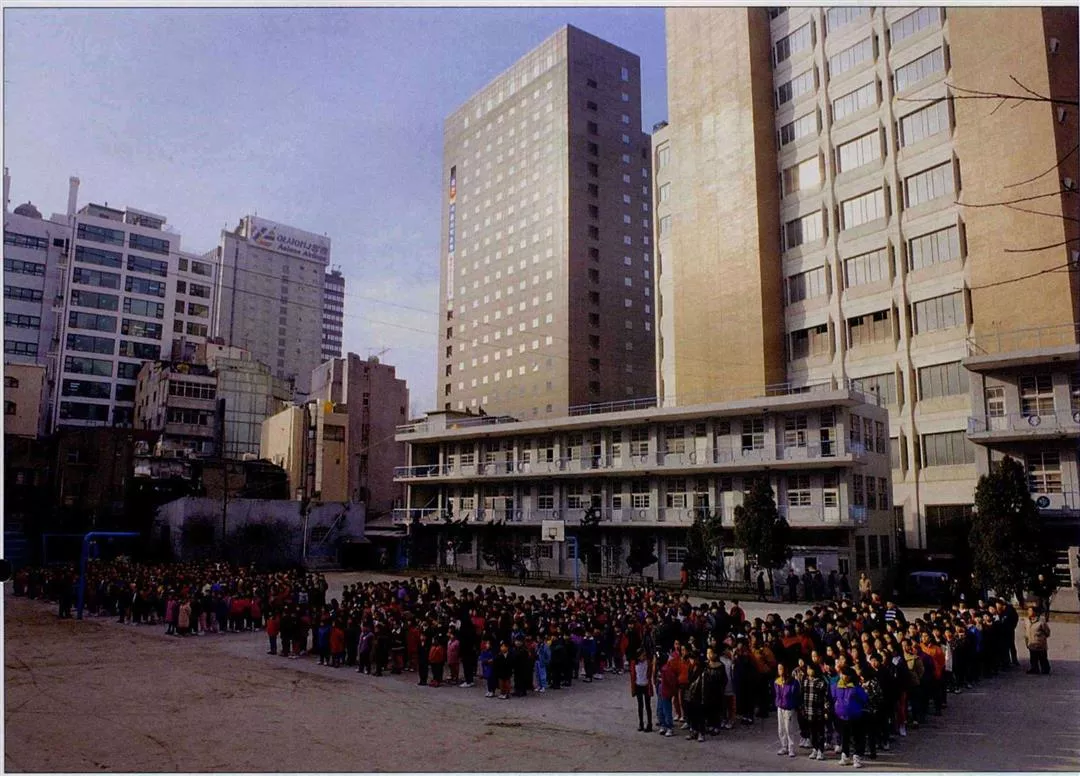
In the Myongdong District, most prosperous in Seoul, surrounded by skyscrapers, will the future be like the present, with freedom to choose our own curriculum?
Lack of a sense of belonging to this country is a constant, albeit hidden, pain for Korea's Chinese residents. The first generation crossed the sea to live here, anticipating a glorious return to their ancestral homes. By the time a second generation was born, Mainland China had fallen, but these Chinese believed that to be only temporary and were unwilling to take on a Korean identity.
In fact, overseas Chinese who become naturalized Koreans not only are restricted in property ownership; they also must have two Korean guarantors. Worst of all is Korea's prohibition against dual nationality; most overseas Chinese are averse to relinquishing their Chinese heritage.
Plus, while the government keeps its hands off their education, opportunities for advancement by "foreigners" are kept on a tight leash--e.g., they may not take a civil service exam required to become a public official, judge or CPA; the ladder to private business leadership has a number of invisible barriers. If they establish their own firm, foreigners may not invest more than 49% of the capital. Nor may they own more than 7,200 square feet of land--and this only because of the 1967 revised statute that allowed them to own any at all. Impact of this direct attack on outsiders is bound to be felt by Korea's largest ethnic minority.
Hence, aside from managing small restaurants, Chinese native to Korea by and large have a feeling of stymied ambitions. Coupled with the innate stubbornness of Shantung, this has prevented their assimilation into mainstream society. Second and third generation people are similarly unwilling to sink roots. They hesitate to move again, yet they ponder it, as manifested by the decline in their population from 40,000 in the 1960s to the present 22,000 or so.

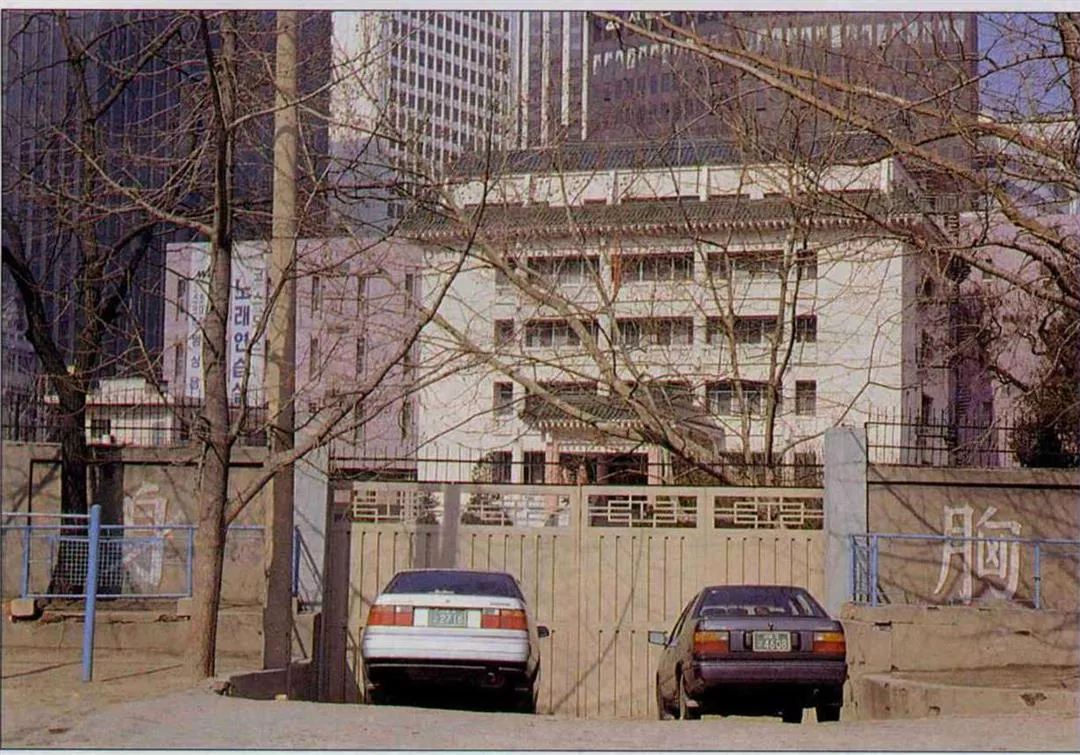
The Chinese Primary School and erstwhile embassy are separated by one wall.
In this land, putting down roots is particularly hard. For this reason, education has become something that Chinese people place their hopes in and identify with. Chinese education in Korea has always been praised anywhere in the world where Chinese gather. Their population may be small, but their schools are proportionately numerous.
Chung Shan Elementary School was established for overseas Chinese in 1901, the one in Seoul eight years later. Following them were: Suweon's Chung Cheng Elementary, which started as one classroom in a restaurant; Kwaengju's Overseas Chinese Primary School, which began as a straw hut in a garden; and Cheju Island Elementary, farthest to the south, built entirely with the donations of indigenous Chinese volunteers.
In the 1960s, having lived through the Korean War, penniless Chinese began to grasp intuitively that education is a commodity no one can take away. With the loss of the mainland, it became impossible to send one's children back there for an education. Thus overseas Chinese schools began to proliferate like budding plants after a spring rain. At that time there were 53 elementary and four junior high schools for overseas Chinese in all of Korea.
Then, too, the Korean government not only maintained diplomatic ties with ours for four decades but also took a hard-line. anti-communist stance by our side. So the development of overseas Chinese in Korea proceeded much more smoothly than for their counterparts in Southeast Asia. What's different is that, unlike ethnic Chinese elsewhere, these children and their parents in Korea carried only Taiwan passports and had classroom materials identical to those in Taiwan. This afforded them a competitive edge when returning to their homeland for advanced education.
Mental ties to the motherland remain, and the government imposes few restrictions. After second-generation students graduated from high school, spurred on by parental encouragement and low tuition costs, they returned to Taiwan for further education. By the end of the 1980s, as many as 80 percent were still doing so.

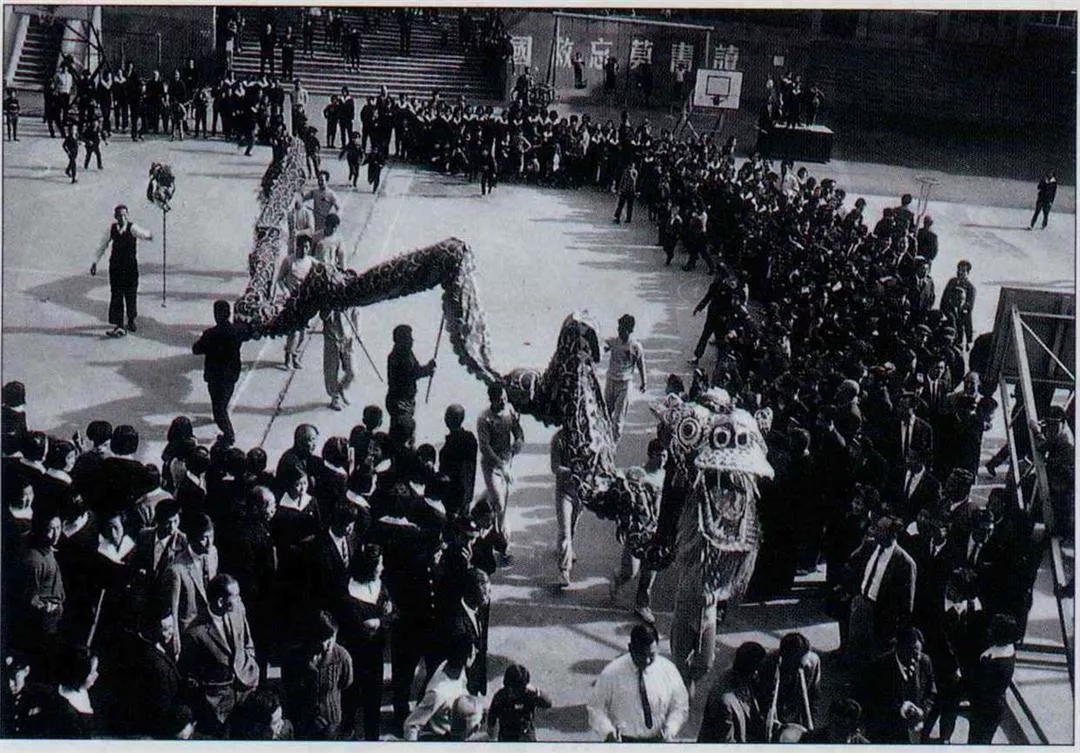
A huge morning gala marks Double Tenth Day each year; a sports meet follows in the afternoon, drawing crowds of enthused overseas Chinese to the school grounds. Pictured is the 1977 festival. (photo courtesy of Chin Yu-kwang).
Born away from home, growing to maturity in an alien country for two or three generations, it is anything but easy to maintain one's Chinese ethnicity.
"As for compatriots back home, reaching school age and enrolling in primary school comes naturally; for overseas Chinese it exacts a high price," emphasizes Tsao Chi-jen, a Korean-born Chinese reporter for the China Times' branch office in Seoul.
For most pupils at Seoul's primary school, commuting is a daily ordeal, and some parents move to the neighborhood purely for the sake of their children. In other locales students have to live in the school. Third generation Tung Wen-chang remembers a four-hour sojourn each way to the nearest one in Taegu. Her parents at last had no choice but to let their seven-year-old live there. And in the mini-schools of five to seven persons, teachers can not help living and eating with their students.
There is no comparison between the primary schools for overseas Chinese and those set up by the government. With no state funding, the former have to charge five times as much tuition. The registration fee now stands at W110,000. When added to the classroom energy costs for all four terms, this increases the total bill to W450,000 (more than NT$15,000), over twice as much as at junior and senior high.
At private schools all costs for teachers' salaries, furniture and equipment are paid out of students' tuition. Given the Seoul regime's instability during the 1970s, the number of ethnic Chinese in Korea dwindled (many left for America or Taiwan), as did the number of such schools (to 31). The student population at the Seoul elementary school likewise fell from 29 classes to 14, and student numbers went from doubled in to "more and more empty classrooms," as the principal laughed bitterly. This brought a decline in revenue, which made the schools hard pressed for maintenance funds. Not only were the furniture and fixtures too old, but the three-storey First Building (erected in 1948), along with the Second and Third, were declared nonusable and the creaks and groans of the auditorium's wooden staircase were plainly heard. Similarly, teachers had no insurance and a mere NT$20,000 salary, so their principal raised no objections when they moonlighted at tutoring Chinese or other jobs.

drawing by Lee Su-ling.
Development for those who remained in Korea was an uphill battle, but second generation parents, confronted with nuances of the society around them, began trying a new tack. Their parents would not permit them to use the Korean language, but the Chinese community is faced with ruin. With the constant emigration of their neighbors and their children watching Korean TV programs and commercials every day, third and fourth generation children can never match their parents' fluency in Chinese.
Out on the playground, Korean is the tongue used for every game of baseball and jump rope. And in the vast majority of "Chung-Han" (mixed marriage) households, the switch is being made from Chinese to Korean. First grade teacher Hu Wen-ai points out that the incoming pupils must use a combination of Korean and the Shantung dialect in order to get along in class. Another common occurrence is students' not recognizing the Chinese word for "apple" (which they eat daily). If the Korean word is used (which literally translates as "fool"), they understand immediately.
This downgrade in language proficiency, along with less favorable conditions for ethnic Chinese, has reduced the ratio of those returning to Taiwan for higher learning from 80 percent to 50 percent. Now that speaking and listening in the Korean language is no longer an obstacle, half of these Chinese kids will opt for advanced education in Korea. However, writing is still a weak point. What is more, over their 12 years of schooling, they will come across terms in the textbook such as lichee, pipa, etc., for which there is no historical equivalent in Korea, and this will cause them to perceive their life there as one in a foreign land. Will their education that calls to mind the homeland cause them a dual embarrassment? The breaking of diplomatic relations gives rise to other concerns. For example, their carrying Taiwan passports will lead to problems when they apply for local schools or scholarships.
A turbulent semester:"The times are changing, and we must adjust. The children themselves will have to decide whether to return to Taiwan, remain in Korea or set out for America," declared matriarch Chang Shu-chen of the changes in young minds. In bygone days parents offered their children one and only one path: returning to Taiwan. They did not believe that children should know Korea's language and become accustomed to its lifestyle. With a heavy heart she says, "We no longer think of the children being educated this way." If half of them stay in Korea, they will have to compete with the locals for money, perhaps even outdo them, so as to obtain opportunities.
School is in session, and after the din has died away, the students will be back to business as usual and will in natural science class be able to tell how many triangles and quadrangles are in the national flag. In math class they will calculate how many colors it has; in art class, they will paint its colors, in music, sing the national anthem.
Outside the classroom the snow is flying and the workmates yell, "Look at the dog at the embassy wall. He's coming to school."
[Picture Caption]
P.117
At opening ceremonies for the second semester of the 1992-93 academic year, children sing their school song inside the auditorium; outside Chinese community leaders sing "San Min Chu I" and hoist our national flag one last time.
P.118
Northerly latitude and cold climate mean half of each school year is spent with a furnace going all day in every classroom. The water bucket atop the stove prevents air from becoming too dry and provides a place to boil water.
P.118
Second-generation parents send children for Chinese-language primary schooling, but the Korean tongue dominates a game of jump-rope.
P.119
In the Myongdong District, most prosperous in Seoul, surrounded by skyscrapers, will the future be like the present, with freedom to choose our own curriculum?
P.120
The Chinese Primary School and erstwhile embassy are separated by one wall.
P.120
A huge morning gala marks Double Tenth Day each year; a sports meet follows in the afternoon, drawing crowds of enthused overseas Chinese to the school grounds. Pictured is the 1977 festival. (photo courtesy of Chin Yu-kwang).
P.121
Map of the Chinese Primary School in Seoul
Lokcheon Department Store
Embassy compound
Primary school for overseas Chinese
Myongdong subway platform
Chinese language newspaper
Shoe stand
Korean Central Post Office
Overseas Chinese Service Committee headquarters
Chinese Benevolent Association
Chinese Cultural Artifacts Company
drawing by Lee Su-ling
P.122
Owner of grocery featuring Shantung baked wheat cakes says the kids no longer even recognize such things.