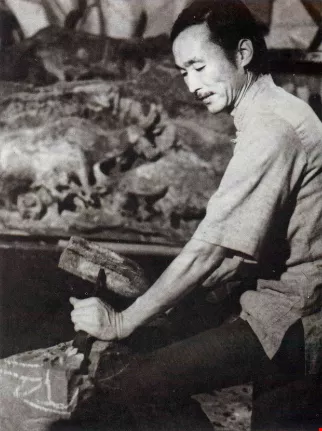
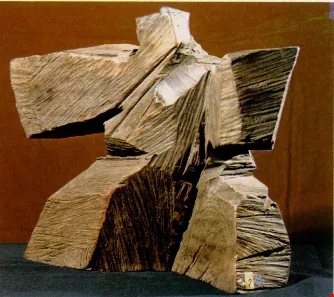
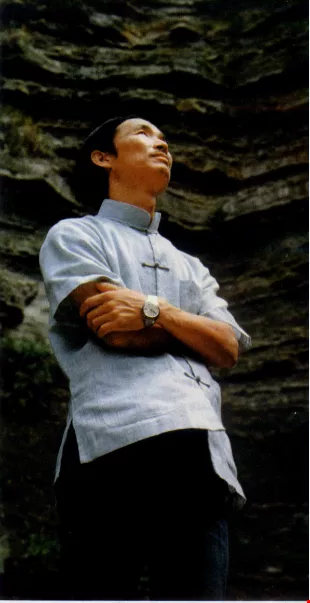
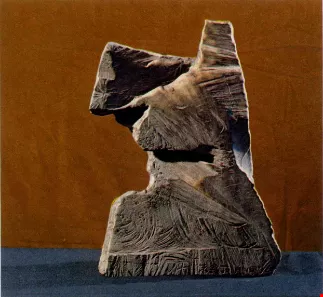
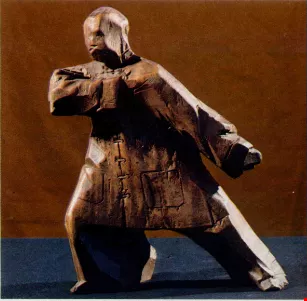
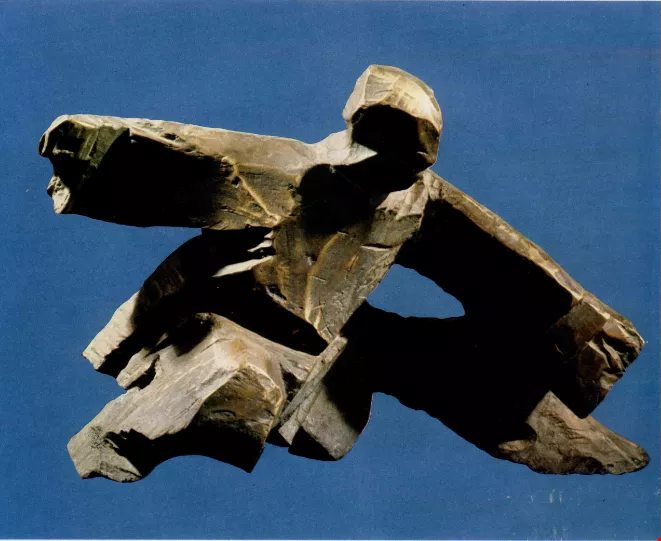
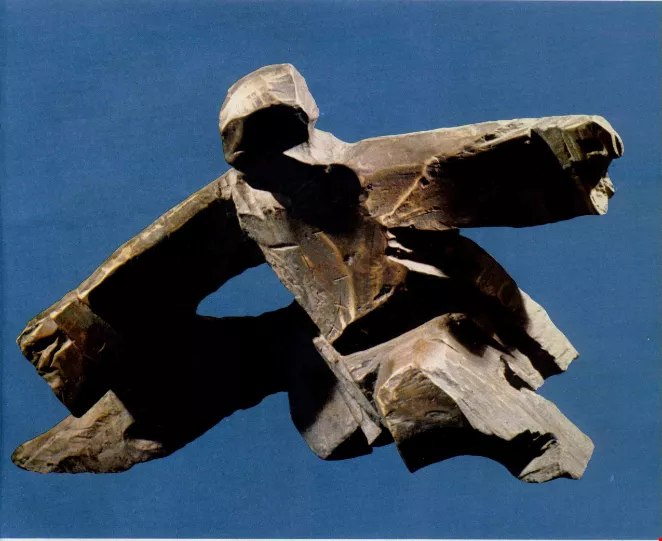
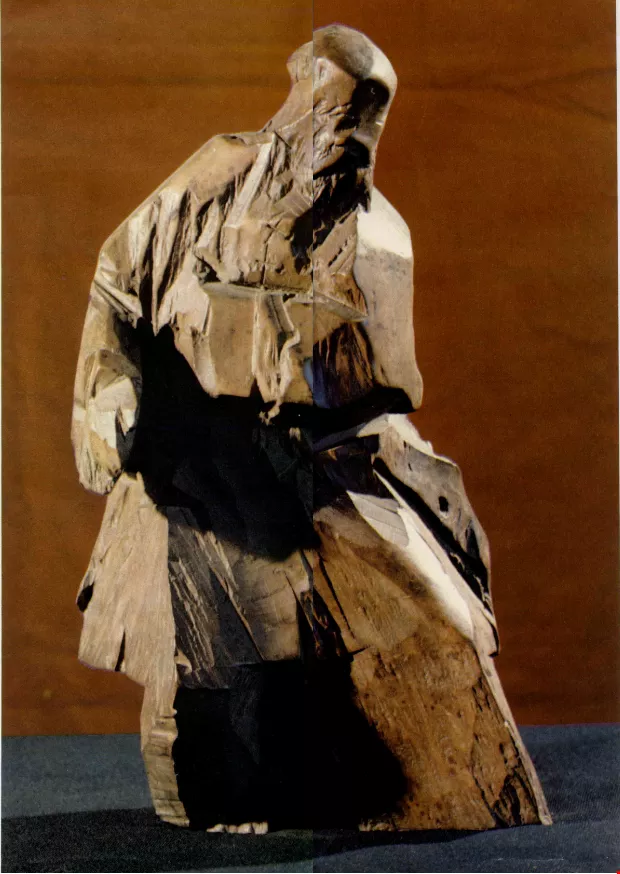
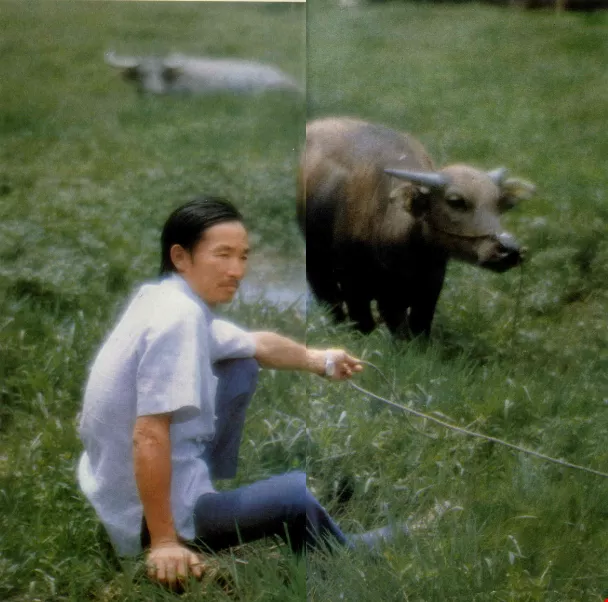
Ju Ming has devoted 27 of his 42 years to the art of wood-carving. But the most memorable moment of his career came only recently, in 1976, when he held a one-man art exhibition at the National History Museum in Taipei, and finally won recognition as a major artist. Thousands of people from all walks of life went to visit the exhibition, and some critics described him as the greatest wood carver since the Yuan Dynasty. They said he had given a fresh, modern expression to the tradition of Chinese wood-carving. Almost everyone seems to have been moved by Ju's work. A teacher from the Chienkuo High School in Taipei said he was so awed by a carving of Confucius that he felt he should kneel down to pay his respects to the sage. "This was a real representation of Confucius; not just the man, but the spirit of the school he founded as well." The simple cuts of the knife and stressed loose robe give the viewer a feeling of dignity and respect. Asked why he made the sleeves and folds of the sage's garment so big, Ju said: "I wanted to give the impression they are filled with the Four Books (The Great Learning, the Doctrine of the Mean, the Analects and the Book of Mencius) and the Five Classics (the Confucian Canon comprising the Book of Changes, the Book of Odes, the Book of History, the Book of Rites and the Spring and Autumn Annals). Another of Ju's most impressive works, "The Oxcart" reminds many old people of the hard life they had in the countryside in the past. This large wooden sculpture (173 cm. x 75 cm.) portrays a water buffalo struggling to pull a heavy cart up a muddy slope with the farmers clambering alongside trying to help. There is a surface realism which exactly describes village life in the past, and an innate symbolism which expresses the weight of the burden and the exertion of animal and man. At the exhibition, many country people could be seen touching the carving reverently, and telling their grandchildren: "This is just how we strived to make a living when we were young." Ju explains that his childhood spent as a poor cattle tender gave him an insight into the hardships of farm life. Further success for Ju Ming in 1976 came when he was awarded the national arts award for his "Ox Cart" piece, and also elected by the Republic of China Jaycees as one of the 10 "outstanding young men." Born in Tunghsiao, Miaoli, Ju moved with his family to a nearby mountain area when he was seven years old to escape from Allied bombing raids. Each day he would lead the buffaloes out to pasture, clean them and chase the flies away before bringing them home at night. In this way, he came to understand the buffalo's temperament, and like most farmers, developed a deep respect for the animal. He was particularly impressed by the buffalo's patience; pulling heavy carts, ploughing the fields, and performing other arduous tasks all its life without complaining. He remembers with affection how the buffalo would submerge itself in the water, leaving only two curved horns sticking out. Whenever he drew a water buffalo, he was sure to be rated first in arts class. As he developed, Ju started to take an interest in sketching portraits of heroes from Chinese legends and folk tales, such as the loyal and righteous Kuan Kung, a hero of the Romance of the Three Kingdoms. At the age of 15, he became an apprentice of Master Li Chin-chuan, a woodcarver often commissioned to make decorations for the local temple, and so began his long career in this field. As he progressed in his tutelage, he one day ventured to ask his master if his work was good enough to be entered in an exhibition. Came the stern reply: "Only when your work is as good as Huang Tu-shui's can you dream of such a thing." Ju wondered how he could achieve such a pinnacle, since Huang was the greatest artist of his time. The first thing, he decided, was to find a new teacher, after three years' apprenticeship with Master Li. At the age of 32, he first met his idol, Yuyu Yang, a famous Taipei sculptor. After seeing two of Ju's works. "Girl Playing in the Sand" (with Ju's wife as model) and a bust of his mother, Yang immediately impressed by the young artist's technique. Ju became Yang's disciple without having to undergo the kowtow ceremony which would have been required in former times. The new association was a turning point in Ju's life. The master's instructions, together with Ju's skill and long years of experience, brought a new level of awareness. More successes were to follow. Ju Ming held a one-man exhibition at the Tokyo Central Museum of Arts in January 1977, and the 28 kung fu statues he displayed won wide admiration in Japanese art circles. These statues are a direct result of Ju taking up Tai Chi Chuan, or Chinese shadow boxing, under the urging of his mentor, to improve his physique and give him a deeper appreciation of the profundities of Chinese culture. Tai Chi Chuan provides a bridge between the confines of individual experience and the vastly broader environment of nature. It imitates the various offensive and defensive postures of animals and takes man back to the primitive ages when he had to deal with the challenges of nature. It teaches adaptation to all situations: emptiness and fullness, rigidity and flexibility, catching and releasing, taking and giving, and movement and stillness. It shows the individual how to coordinate his life with the natural rhythm of the universe, and is, in short, a simple way back to nature. Robert Stevens, Ju Ming's young American student, said Ju taught him that he could not master Chinese wood-carving without first understanding Chinese history and lifestyles. Consequently, Robert moved into the master's house, where Ju looked after him if he were one of his own children. "My fingers were bleeding for three months as I learned to carve with a knife. But I discovered that simplicity and naturalness are essential to art. The influence of Chinese artistic traditions will remain with me for the rest of my life," he said.




@List.jpg?w=522&h=410&mode=crop&format=webp&quality=80)

@List.jpg?w=522&h=410&mode=crop&format=webp&quality=80)


