On the Crest of a Silvery Wave--Daniel Lee and Apex Medical Corporation
Laura Li / tr. by Phil Newell Layout by Lee Su-ling
August 2001


Do you have to sell dreams made of virtual reality, or communications devices out of science fiction, in order to be considered part of the "nobility" of new technology? In fact, technology originates in human concerns, and is part of the effort to improve the human condition. This is exemplified by Apex, the world's largest maker of alternating pressure pump mattresses and rollators, which this year was awarded a Symbol of Excellence Award by the Ministry of Economic Affairs for its aerosol therapy devices and pump mattresses. As a "little giant" among manufacturers of medical equipment in Taiwan, Apex is a model for other small enterprises looking to transform themselves and upgrade to a higher level of operations.
Families with long-term bedridden individuals most fear the onset of bedsores in the patient. It would be a huge blessing for caregivers to have some kind of mattress which allowed the free flow of air, kept the patient dry, and stimulated blood circulation. That's where Apex comes in. This company is the largest producer of alternating pressure pump mattresses in the world, with annual production of more than 200,000 beds. The holder of 35 patents in Taiwan and abroad, Apex, under its own brand names Apex and Best Care, has a sales network extending to more than 60 countries around the world.
So how did company chairman Daniel Lee, now 43, a graduate of Tanshui Junior College of Industry and Commerce, get into the medical equipment business which is, after all, far from the sexiest of industries these days?
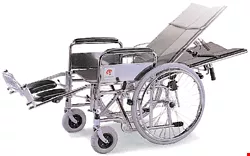
Lee recalls that after he finished his military service in 1978, he went to work at Comfort Orthopedic, a company founded by his uncle Lee Mao-shun. Comfort, a manufacturer of wheelchairs, started out as a small family-run enterprise, with half the work done by hand. Eventually the company expanded to over 100 employees with a fully automated production line turning out more wheelchairs than any other company in Southeast Asia.
In his seven years at Comfort Orthopedic, Daniel Lee was involved in every aspect of work on both the production floor and in sales. He spent half of every year out of the country, attending trade shows and visiting customers, and as a result, received a very solid grounding in how the international health-care market operates.
Silver into gold
After leaving Comfort, Lee went into business on his own, turning his talents to the wider field of home care. "In Western countries, people over 65 account for 15% of the population, and the number is growing fast. In Taiwan, already 11% of the population is over 65, and it is estimated that by 2025 the figure will exceed 20%!" Lee could see where things were headed over a decade ago, and decided to stake his claim to a piece of this growing pie.
Lee points out that the aging of society inevitably carries with it rising medical expenditures. US statistics indicate that it costs about US$800 per day for a patient to stay in hospital, versus about US$88 per day for home care. Given cost considerations, it is likely that home care will become the mainstream in the future.
Home care requires lots of specialized equipment. Needed products range from the small (for example, eating utensils for stroke victims paralyzed on one side of the body) to the very large (suction pumps or electric wheelchairs). There are in fact tens of thousands of different products in this field. The production requirements-low volume, high variety-are just right for Taiwan's flexible, adaptive small enterprises.
Moreover, medical equipment does not require any unique technology. It is more about integrating existing knowledge from mechanical engineering, optics, physiology, and information processing. Taiwan firms in this industry are mainly small enterprises operating at the low to middle end, with not very high technology content. Moreover, the tech people involved come from a diverse range of areas of specialization, which helps in terms of integrating technologies and developing new products.
It had not escaped notice that the future looks so profitable in the medical supply industry and that its production characteristics suit Taiwan. More than a decade ago, at the time of the Six-Year National Development Plan, the government listed medical equipment (along with the likes of precision machinery and the aerospace industry) as one of the "ten industries of the future." Consequently the government invested huge sums of money in research and development and did much to help the industry along. Last year Taiwan earned more than US$400 million from exports of medical equipment, an increase of 10% over the previous year.
The medical equipment industry is not subject to dramatic ups and downs. Product cycles are long, and there are niches where goods of all levels can survive. As the information industry goes into deep freeze and the myth of the new economy disintegrates, medical equipment may offer a new direction toward which Taiwan enterprises can turn.
Mr. Question
However, says Daniel Lee, the medical equipment industry has some very special features. For one thing, since the stakes are life and death, products must meet all kinds of government safety specifications. Also, you have to get acceptance from insurers in the countries where products will be marketed, so that they can be covered by insurance payments. You must also invest a huge amount of time visiting hospitals to get doctors' expert endorsement of your products, or else you cannot sell them to hospitals, no matter how good they may be.
Lee, who says he don't know much 'bout technology, is nonetheless a master international salesman. In the past, on his frequent business trips abroad, when he met with clients he would never be in a hurry to talk prices or orders. Instead, he always asked a slew of questions about local medical practices, insurance regulations, and market conditions, earning the sobriquet "Mr. Question" from customers. He became familiar with all the unique aspects of each medical market. Today Apex adopts a two-track policy. For the wealthier countries of Europe and North America, the company does production for other brands. In Taiwan, Southeast Asia, and Latin America, the company mainly sells under its own labels, thereby developing experience in international marketing.
Division of labor
When Apex was first founded in 1990, it was a trading company, finding suitable factories in Taiwan to manufacture what buyers abroad needed, operating under the standard "division of production and sales" model typical of small enterprises in Taiwan. Even today, Apex only has a single factory of its own (located in Chiayi, making low-tech tube products). The rest of its products are made by three plants that work in cooperation with the firm. However, after a decade of cooperation, these factories now produce exclusively for Apex, and they even print "Apex" on their name cards. The companies have become an organic whole, growing together, which has been one of the keys to Apex's success.
Apex's current product lines can be divided into four basic categories. Production of one category, simple walkers and rollators, was moved to Shanghai early this year. Taiwan retains pump mattresses, low-frequency transcutaneous electrical nerve stimulation (TENS) devices, and the newest and most promising product, aerosol therapy devices.
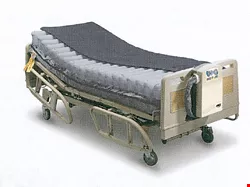
Apex's major product at the moment, the alternating pressure pump mattress, is aimed at preventing bedsores, a real nightmare for bedridden patients. Bedsores result from hard mattresses causing parts of the body that bear the most weight (such as the buttocks and the shoulders) to be deprived of oxygen and consequently suffer necrosis (i.e. tissue death). This is accompanied by ulceration, suppuration and infestation, from which recovery is very difficult.
The pump mattress comprises 16 polyurethane air bags, with control lines running below and connected to an electrical pump. The air bags are divided into two groups, in which the air is automatically changed every four minutes. As the bags in one group deflate and contract, those in the other are inflated and expand. This pattern equalizes pressure on all parts of the patient's body. The beds also periodically adopt a certain angle of tilt, which is equivalent to turning the patient over, thereby effectively preventing bedsores. Apex holds patents for the pressure regulation controls and low pressure alarms used in the apparatus.
Elaine Chao of Tai-Hsin International, which manufactures the beds for Apex, relates that they are in the process of developing an even more high-tech version. Digital signals will be used to microadjust the pressure at various points, while precision semiconductor sensor technology monitors the patient and the pressure on all parts of the body. Besides being useful for paralyzed patients, such a device could also make micro-adjustments suitable for victims of burns and spinal injuries.
Aerosol helper
In addition to pump mattresses, Apex also is pushing ahead with development of new product lines. In this respect, like many small enterprises, Apex has received a great deal of help from Taiwan's most important treasure chest of knowledge for industrial upgrading: the Industrial Technology Research Institute (ITRI).
In 1996, ITRI's Center for Measurement Standards came up with two major development programs. One was for ultrasonic medical equipment, and the other for physiological monitoring systems. These two core technologies could then be extended to products like computerized tomography (CT) scanners, electrocardiograms, and vital-sign monitors. The effort turned out to be frustrating, because huge multinationals like Whirlpool, Siemens, and GE were already dominating this field. However, though neither of the plans succeeded in a commercial sense, the research team came away with a very solid grounding in the relevant technologies.
Apex, which was in on these programs from the beginning, saw correctly that members of the ITRI research team really knew their way around aerosol therapy technology. Last year Daniel Lee brought nine members from the team over to Apex, and established an R&D department for new products.
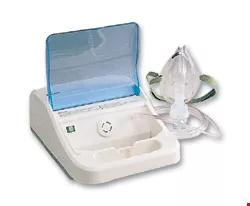
"The respiratory therapy market is many times larger than that for pump mattresses," explains Lee. Children with asthma and elderly people with lung problems all could use respiratory therapy devices. Moreover, this type of apparatus requires a high level of technology, so working on it would also raise Apex's overall technical level. The ultrasonic nebulizer that won a Symbol of Excellence Award this year boasts nebulized particles of only 0.5 to 5.0 microns in size, with excellent spatial distribution. Apex expects to introduce sleep therapy products at trade shows beginning in October of this year. Such devices will monitor a patient's breathing at specified times and supply oxygen when needed. This is a big step in Apex's goal of moving into the biotechnology health care industry.
With a strong tech team, in the future Apex can extend its product lines further, in the direction of things like biochips and remote treatment using computers. However, Daniel Lee admits, health care requires huge investments in basic research. Taiwan's knowledge base is clearly inadequate. Just as in the information industry in the old days, it will be necessary to attract overseas Chinese back to Taiwan. Recently Apex set up a factory in mainland China. Because the mainland has been very successful in developing particular technologies, Lee is considering recruiting specialists from the PRC.
Apex has already filed for a number of patents in the PRC and many of its products have passed the required tests to meet mainland standards. Lee believes that in the future the PRC will become Apex's home market. "The two sides of the Taiwan Strait share the same cultural background and ethnicity, with similar physiques, similar habits, and even, in many places, similar climates. Products that Apex develops in Taiwan are also suitable for the mainland." Regardless of whether Apex goes with its own brand names there, or cooperates with foreign corporations, the outlook is very good.
Humanistic industry
For Daniel Lee, a son of the soil from Shuishang Rural Township in Chiayi County, being in the medical equipment business has been profitable in more ways than just the financial. It has given him insights into life, aging, illness, and death.
Lee notes that the medical market in each country reflects local social welfare policies and the local humanitarian ethic. In some countries in Europe, for example, when a patient leaves the hospital and begins receiving home care, he or she only needs a certificate from the doctor that a pump mattress is required for home use, and insurance will pick up the tab. Moreover, home care personnel visit the patient at home free of charge, courtesy of the government, and workers will make any alterations (for example enlarging a bathroom) necessary to create an obstacle-free environment.
Looking at Taiwan, on the other hand, insurance does not cover home care items, or at most gives NT$10,000. In fact, there is not even any effort to get information about home-care products to caregivers, as a result of which many elderly patients are unable to live independently or suffer unnecessary deterioration in their health. There is simply not a great deal of effort devoted to accommodating the ill in Taiwan. For example, though Apex rollators are in use around the world, traffic in Taiwan is so bad and drivers so inconsiderate that these aids to mobility are impractical here.
Lee, who back in junior college was the president of the student philosophy society, has his own views on life. In the 11 years since the founding of his own company, Apex has always had a two-day weekend policy, has never had time cards, has used flexitime, and every year has taken employees and their families on an overseas trip. Even today, Daniel Lee does not carry a mobile phone, refuses business-related "social" events on weekends and holidays, and focuses on spending time with his family. "Human nature" has always been his focal point.
As the director of the Welfare Organization for the Elderly, at activities Lee is the only young person to be seen weaving in and out among the grey-haired crowd. For Lee, giving elderly people the chance to have a comfortable, safe, and dignified autumn of their lives is not only a business, it is a mission.
p.087
Daniel Lee, founder of Apex Medical Corporation, says that considering the aging of the world's population, demand for home care equipment will not slow down. There is considerable room for technical upgrading, so this industry is very suitable for Taiwan.
p.089
From simple canes to wheelchairs to pump mattresses to aerosol therapy devices, Apex has smoothly climbed the ladder of industrial upgrading.
p.088
(facing page) If we want to make it possible for elderly people to live independent, dignified lives, they need not only good health care equipment, but an obstacle-free environment.
(photo by Hsueh Chi-kuang)
p.090
Building up from a three-person mini-company to the recent application for a listing on the Taiwan stock exchange, Daniel Lee has been devoted to his firm, but has been even more devoted to his family. (courtesy of Daniel Lee)