A World Apart--The Discreet Charm of the Wugu Wetlands
Coral Lee / photos courtesy of Zhang Guanying / tr. by Phil Newell
May 2009


The Wugu Wetland Ecological Park, located diagonally across the Danshui River from Guandu, is the least known of the five wetlands areas along the waterway. But this wild green space that abuts an industrial park has a turbulent history.
Today, under the stewardship of the non-governmental Society of Wilderness, it is teeming with life. Birds fly in and out of the reeds, and crabs cavort about the mudflats. This rich and diverse ecology may well be the finest nature classroom in all of Greater Taipei.
Heading from Guandu toward Danshui along the east (right) bank of the Danshui River, if you cross over to the opposite side at the Guandu Bridge, then turn right, you will find yourself at the "Bali Left Bank," which almost everyone has heard of. If you were to turn left, after a ride of about 10 minutes by bicycle you would reach the Wugu Wetland Ecological Park.
A sheet of lustrous green-about 400 meters wide and disappearing into the distance-dazzles the eye. Just over the dike that runs along the west side of the greenbelt, there are ranks of high-rise apartment blocks. It turns out that the wetlands are right in the middle of the Erchong Flood Diversion Channel.
The channel, built in 1982, is an enormous manmade branch of the Danshui River (see map, p. 33). The Dahan and Xindian rivers, which feed into the Danshui, converge in the area between Banqiao and Wanhua. There the waterway broadens and turns to the east. However, approaching the Taipei Bridge the riverbed rapidly shrinks to only half as wide. This creates a bottleneck that prevents the river from quickly draining off water from heavy rains, a situation which used to cause a great deal of flooding. Thus the government decided to cut a flood diversion channel on the left bank where the two rivers converge, to run north 7.7. kilometers before rejoining the Danshui at Zhouhou Village in Wugu Township, Taipei County.
There are no buildings or structures in this enormous channel of 424 hectares, 16 times the size of Da'an Forest Park (Taipei City's main park). Instead, within the area-defined by high dikes on both sides-there are cycling paths, parks, basketball courts, baseball fields, and other facilities. Most of the time it serves as a sports and recreational space for citizens, but when typhoons come it turns into a tumbling river that carries off excess water. It can also siphon off seawater that flows up the Danshui River when tides are running especially high.
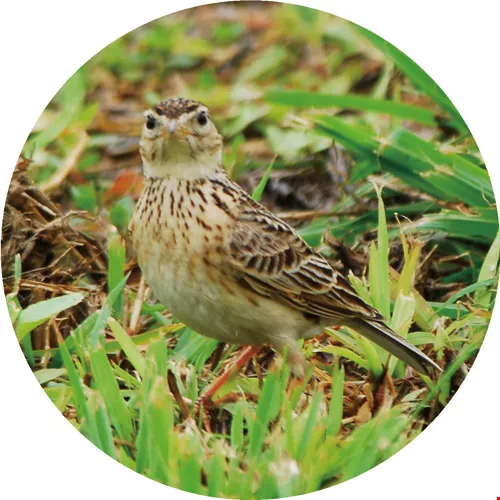
Oriental skylark
From farmland to wetland
The Wugu wetlands by no means became wetlands only because of the construction of the Erchong Flood Diversion Channel. Originally there was a bend in the Danshui River here, and, as a result of the slowing of the current, fertile soil accumulated into a plain. Two hundred years ago settlers from the Quanzhou region of Fujian Province in mainland China turned this into productive farmland. In the Japanese occupation era (1895-1945) and the early period after Retrocession (1945), this was a major food basket for the Taipei region, producing rice and large, sweet tangerines that were not only popular in northern Taiwan but were also exported.
All good things, however, must come to an end. In 1963 Typhoon Gloria dumped record volumes of rain on Taiwan-more than 1000 millimeters per day was recorded in the upper part of the Danshui River-leaving Taipei City and parts of Taipei County under water for three days and more than 300 people dead or missing across the island. The government concluded that the main reason for the flooding was that the narrows of the Danshui near Guandu created such a bottleneck that excess water could not drain quickly enough. They thus did what they thought to be the courageous thing to do: They decided to dynamite the mountains on both banks near Guandu, something the Japanese had repeatedly considered doing but never carried through, thereby broadening the river to a width of 100 meters.
Unexpectedly, after these narrows were dynamited in 1964, the next year another typhoon pushed seawater upriver, inundating Bali and Guandu, including three-fourths of Zhouhou, where the water stayed even after the main flood subsided. Thereafter, the coincidence of heavy rains and high seas would lead to more floods, and anyway the twice-daily rise and fall of the tide, combined with land subsidence due to excess extraction of groundwater, led to salination of the local water and soil, and turned this farmland into swampland.
In 1968, the government announced a flood control plan for Northern Taiwan, under which what is today the Wugu wetlands area was classified as a "grade one flood plain." All construction or alteration of any kind was forbidden in the area. Without human destructiveness, the creatures of the wetlands steadily increased in number and variety, and by the early 1980s the area was flourishing with life. Birdwatchers recorded 4800 waterfowl of 80 or 90 different species and the wetland was rated with Guandu as one of the two most habitable areas for waterfowl in all of northern Taiwan.
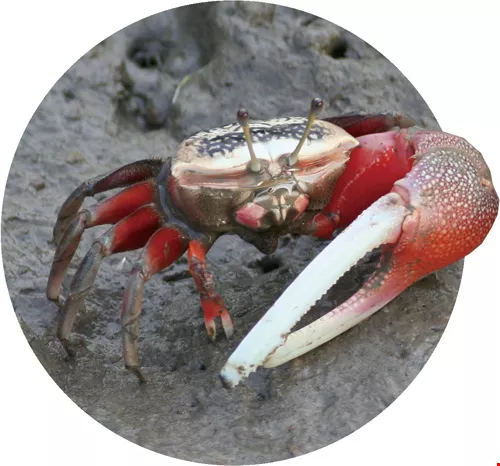
Fiddler crab
From wetland to wasteland
But in the 1980s, the beautiful scenery featuring herons and ducks and small boats everywhere gradually changed following the construction of the Erchong Flood Diversion Channel and the development of an industrial park just outside the dike.
Due to lax government oversight of the channel's construction, the contractors dumped waste soil into the wetlands, sharply reducing the size of the habitat, while the Wugu Industrial Park, just a concrete wall away, was pumping in polluted black wastewater. By the 1990s, the wetlands were stagnant and lifeless. Crabs and low-habitat creatures either died off or fled for their lives, migratory birds moved elsewhere, and in this broad expanse of space all that was left was garbage, filth, and a foul odor.
The attractive appearance of the Erchong Flood Diversion Channel today dates back only to a 1997 project undertaken by Taipei County, subsidized by the Environmental Protection Administration to the tune of NT$3 billion. After five years of labor, by 2002 the channel had been completely transformed. The long stretch of green extending off into the distance is a relaxing and restful sight. When there are people milling about, playing sports and just hanging out, it looks like a weekend in New York's Central Park.
The Wugu wetlands, occupying 92 hectares at the northern tip of this green belt, attracted the attention of the Society of Wilderness because of their unique geographic and environmental conditions, and in 2004 the SoW "adopted" the area and began to manage it.
As early as 1998, You Yii-der, an associate professor in the Graduate Institute of Environmental Engineering at National Taiwan University-working under a commission from the government as part of the beautification project for the flood diversion channel-mobilized over 20 faculty and students to do a comprehensive ecological survey and environmental assessment of this area. They argued that, as the Wugu wetlands are contiguous with the Guandu Nature Park to the north and the Hua-Jiang Wild Duck Nature Park (near the Huajiang Bridge) to the south, they should be better preserved as an important corridor for wildlife movement.
The researchers also pointed out that some sections of the river in this area are tidal, with a mix of seawater and freshwater, thus providing a rich variety of habitats and acting as a living environmental classroom. They recommended classifying this district as a "wetlands ecological area," but unfortunately the government, which was emphasizing recreational land use rather than conservation, ultimately did not accept this recommendation.
The SoW, which has been working for habitat preservation for many years, also noted the importance of the Wugu wetlands, so they gathered together area groups specializing in local culture and history, the Taipei Wild Bird Society, and other organizations to form the Diversion Channel Conservation Front (DCCF). They began actively lobbying the county government to manage the wetlands area in a manner more in accord with environmental thinking, and to reduce manmade facilities to a minimum, until finally the county rezoned 92 hectares. Then the SoW stepped up to take responsibility on itself by adopting the wetlands.
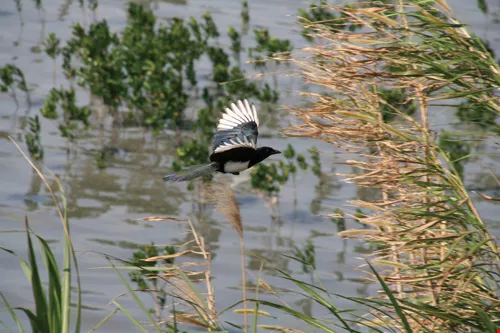
One can see many kinds of waterfowl in the Wugu wetlands, including many types of sandpipers, ducks, and egrets, and land birds such as the kingfisher, barn swallow, and magpie.
Who says ordinary is boring?
"Wugu is quite unspectacular as far as wetlands go," says DCCF deputy executive director Chen Yung-ming, who has been birdwatching in the Wugu area for more than three decades. The Wugu wetlands have no "marquee" feature, and each subzone is quite ordinary in itself.
Ain't that the truth! When you look down over the whole Wugu wetlands from the roof of a nearby high-rise, you see that they are composed of reedbeds, grassy marshland, scrubland, ponds, and ditches. They have none of the romance of the "Bali Left Bank," and none of the bragging rights of having "the -est in the world" for anything, as Zhuwei has "the largest mangrove forest in the world." Wugu also lacks the lovely sight of countless birds active in and around the water that characterizes the Hua-Jiang Wild Duck Nature Park. "Ordinary and unspectacular" is indeed Wugu's first impression.
But there's a lot more to it than that. The wetlands occupy a lot of space, and cycling is the best option for really experiencing this place. The five sub-areas running north to south all have their own features and ambience.
At the northern end, on the banks of the Danshui River, is the Shuhong (Diversion Channel) Ecological Park. It is the best place to observe estuarine ecology. When the tide goes out, you can admire nature's canvas: flocks of birds searching for food in the exposed sand, or, if the weather is not too cold, tens of thousands of mudskippers pirouetting about. From the high ground here you can also see the Guandu narrows, and imagine far back to the dreadful sight of huge numbers of freshwater crustaceans and fish dying en masse as the dynamiting of the mountains on both sides opened up the area to an influx of seawater.
Heading south from the estuary, there is a marsh habitat created by the SoW. Previously there was nothing here except some grass fields, but the SoW opened channels to bring in tidal water and dug several ponds, and now it has become home and/or restaurant to many forms of life. On the mudflats next to the ponds, at low tide thousands of fiddler crabs come out to strut their stuff. If you just kneel by the pools of water you can see with the naked eye their gourmandizing, as well as the fascinating and entertaining sight of their building "chimneys" at the mouths of their holes in the sand.
If you are lucky, you can also see the impressive sight of a kingfisher, a permanent local resident, as it leaps from a branch to plunge down and snatch fish from a pond, and you will understand why these birds are nicknamed "fishdogs." It's very moving to see a kingfisher settle on a mangrove tree in the water, its body covered with interwoven sky-blue, dark-green, and orange-red feathers, against a backdrop of a grassy marsh.
To get to "Channel-Side Park," you have to go via heavily trafficked Shuhong First Road. Yet even alongside this busy motorway are pixie-like Oriental skylarks and yellow wagtails strolling around searching for food amidst the tiny wildflowers in the sunshine. Seeing this little world, you get a sudden feeling of release, as if the noise and bustle had nothing to do with you in the least. Channel-Side Park itself is somewhat hidden, separated from the bicycle trail by reeds. Few cyclists enter here, so it is quiet and simple, a secret garden for observing nature.
Looking down from the bridge you can get an unobstructed view of the Wenzi Channel in the Wugu wetlands. The water is murky, polluted, and lifeless, testimony to wastewater dumping by factories upstream. Chen Yung-ming says that many years ago the SoW planned to use reeds to cleanse the water, but because the area they planted with reeds was too small, the project failed. The Wenzi Channel was once a water playground for local kids, so the contrast between past and present is rather saddening.
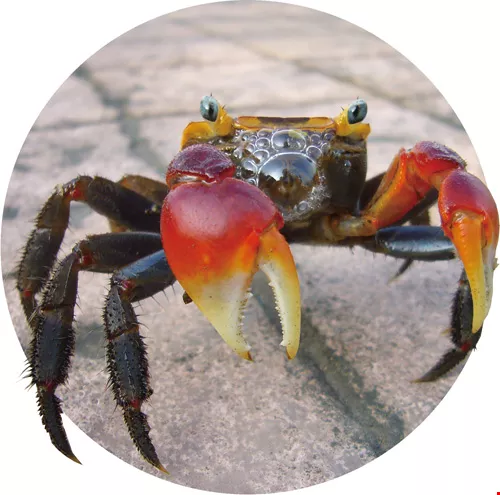
At the Wugu wetlands you can easily observe crabs on the sand as they search for food and seek mates; it is probably the favorite thing to do here for kids. Mudskippers, with their protruding eyes that see in all directions, are very territorial.
Surprises everywhere
Channel-Side Park has two manmade freshwater ponds-North Pond and South Pond-that are unaffected by ocean tides. At dusk you can come here and admire the tufted ducks or little grebes playing in the marsh; with the sunlight glinting off the water, it's an intoxicating scene.
Strolling along the water channel, on both sides are a variety of long- and short-stemmed medicinal plants, including para grass, Japanese dock, and barbat skullcap. You can see all kinds of birds on parade: Here comes a crested myna with its shiny black wings; now a small flock of adorable little yellow wagtails, like a chorus line sweeping across the sky; then the white egret majestically spreading its wings to take flight.... Just before dark you can also remark groups of barn swallows circling as they report for "evening roll call" before gliding off into the nearby reeds to spend the night.
The "Great Reedbed" covers more than 20 hectares, making it the largest single-species reedbed in northern Taiwan. Chen Yung-ming, whose nickname is "Black Heron," tells us that this area's appearance changes with the seasons and time of day (especially dawn and dusk). The broad expanse of reeds makes a great place to hide, so all kinds of waterfowl come here at night to rest. This is also a way station for flocks of swallows heading south. Each year in late August, for the 20 minutes before the sun sets, you can see an amazing sight: tens of thousands of swallows criss-crossing the sky and virtually blocking out the light.
After two-plus hours of cycling and walking, you are amazed to discover that life flourishes in this "ordinary and unspectacular" wetland. Taipei residents in their concrete jungle are lucky to have this patch of wilderness. Of course, the credit for that belongs in large part to the SoW and other concerned individuals.
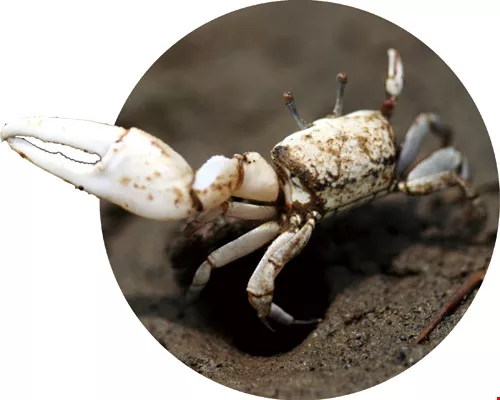
Fiddler crab
Invasion of the mangrove trees
SoW deputy director Lai Jung-hsiao, a prime mover behind the scenes of the Wugu wetlands, says that their adoption involves three aspects: education, rehabilitation, and conservation.
Rehabilitation work is very demanding and doesn't get a lot of plaudits. Though the ecological park and the North and South ponds are successful examples, the attempt to bring fireflies to the area around the Channel-Side Park instructional platform was a failure. Because the water quality there is poor, the winds strong, and the sunlight too intense, fireflies were unable to survive. So the DCCF changed the plan, and planted the area with Hygrophila pogonocalyx, Chinese water chestnut, and other water plants designed to attract a wide variety of insects. As an unexpected reward for their efforts, an endangered damselfly species, the four-spot midget (Mortonagrion hirosei) has turned up in the area. To date it has been found nowhere else in Taiwan.
Conservation is a matter of ceaseless vigilance. For example, if the beach that provides a habitat for birds is invaded by reeds, it will gradually turn into solid land, so volunteers have to be mobilized to clear the reeds away. It is also essential to try to persuade people not to catch the mussels of the species Anodonta woodiana that live in the ponds for barbecues; otherwise the rose bitterling, a freshwater fish endemic to Taiwan which is symbiotic with the mussels (it lays and fertilizes its eggs in the mussels, and mussels hatch them into adult fish), will be wiped out-again-almost as soon as it has reentered these waters.
Right now the thorniest conservation challenge is how to stop the protected mangrove species Kandelia obovata from running rampant. Chen Yung-ming points out that appropriate numbers of these mangrove trees can serve as a first line of defense for dikes, and as a natural water filter. But if they become too abundant it will be an ecological disaster.
Because of dams along the upstream part of the Danshui River, the volume of water flowing down is limited, which means that salt water from the ocean finds more opportunity to extend further upstream. Added to this is the fact that kandelia are very vigorous plants-their propagules have merely to float to a new location and it is not long before the trees are taking over the whole territory, ultimately turning the mud and sand into solid land, thereby narrowing the riverbed. DCCF members have discovered that the number of migratory shorebirds of the family Scolopacidae in the Luti Ecological Zone on the banks of the Danshui's main riverbed has declined year after year, which is really worrying.
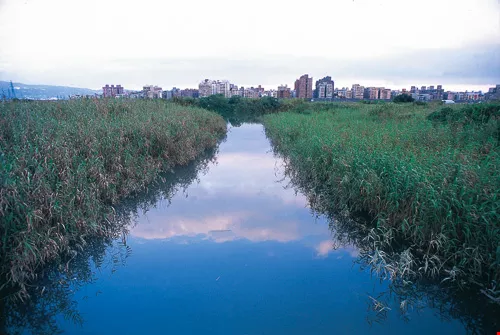
The Wugu wetlands, located at the northern end of the Erchong Flood Diversion Channel, offer a variety of environments. There are not only marshes but also meadows, abundant plant life, and other ecological settings. The wetlands are like a back garden for Taipei.The photo shows the Channel-Side Park.
Bring back the black kites!
The Wugu wetlands are not on the main riverbed, so the growth of kandelia is not as serious here, but from time to time there are still traces of these mangroves along the Wenzi Channel. Recently it was discovered that white-spotted longhorned beetles lay their eggs on kandelia, and after the insects mature they eat right through their host. Thus these beetles may be useful in halting the rapid spread of the mangroves, and the DCCF has recently been experimenting with scattering the seeds of chinaberry trees in the area of the kandelia to try to attract some longhorned beetles to literally chew up the invaders.
Through various kinds of rehabilitation and conservation measures, the goal of the SoW is to "bring the black kite back to Wugu." Lai Jung-hsiao says that in the late 1970s there were perhaps 30 or even as many as 50 of these impressive dark birds coming out to hunt for food, but they had completely disappeared by the late 1980s. He sincerely hopes that more people will show their concern for and protect the environment so that Wugu can once again look the way it once did, and the black kite can once again circle through its blue skies!
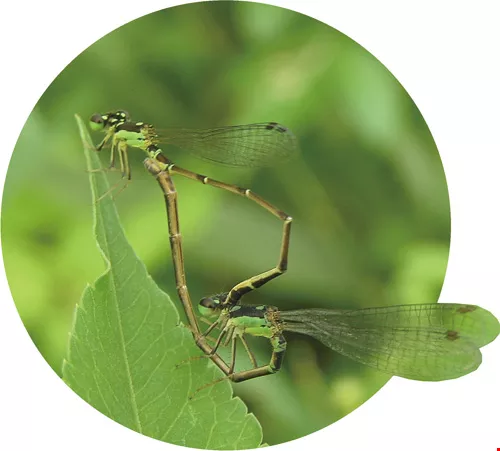
Four-spot midget damselfly
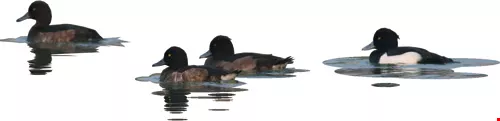
Tufted duck
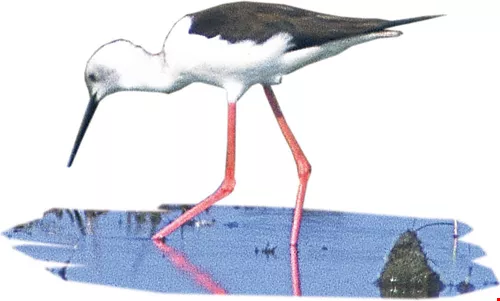
Black-winged stilt
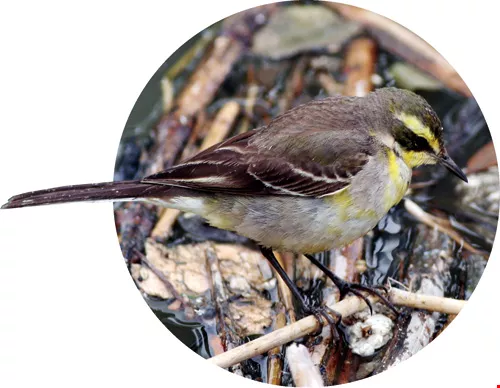
Yellow wagtail
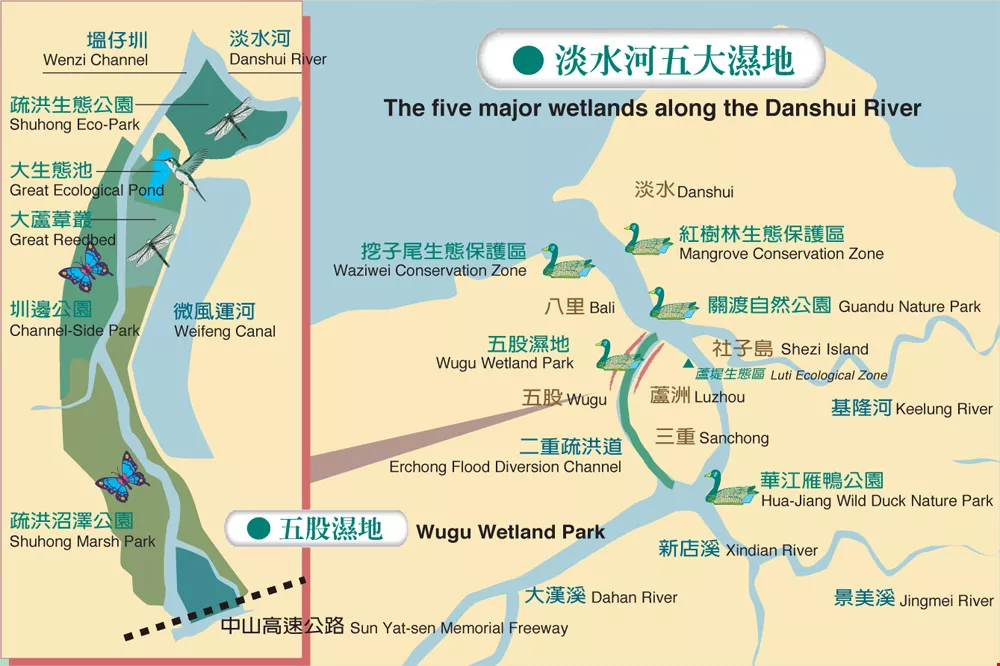
The five major wetlands along the Danshui River
.jpg?w=1080&mode=crop&format=webp&quality=80)
At the Wugu wetlands you can easily observe crabs on the sand as they search for food and seek mates; it is probably the favorite thing to do here for kids. Mudskippers, with their protruding eyes that see in all directions, are very territorial.
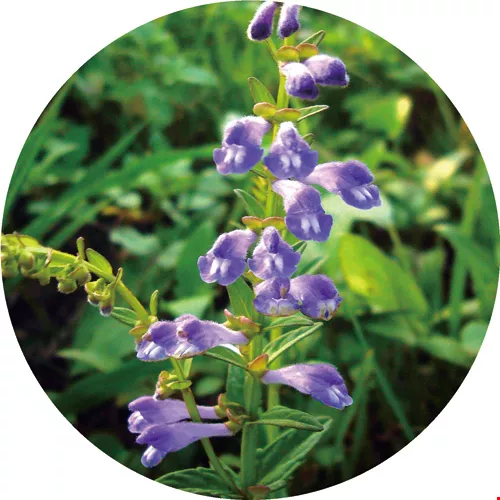
Barbat skullcap
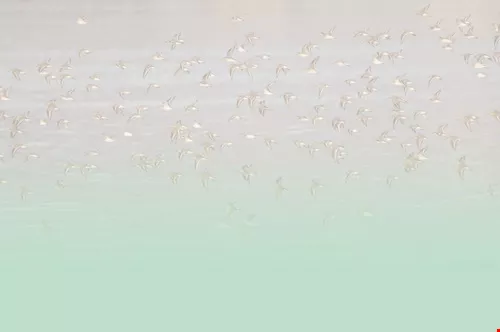
Spring and autumn are the seasons that bring the most migratory birds through Taiwan. It is common to see thousands of dunlin flocking over the Luti sandflats or searching for food in the sand when the tide recedes.
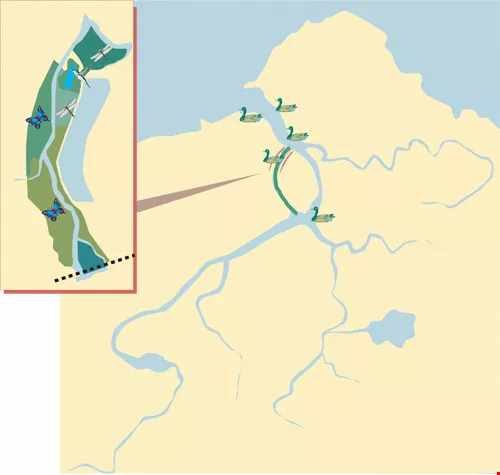
The five major wetlands along the Danshui River
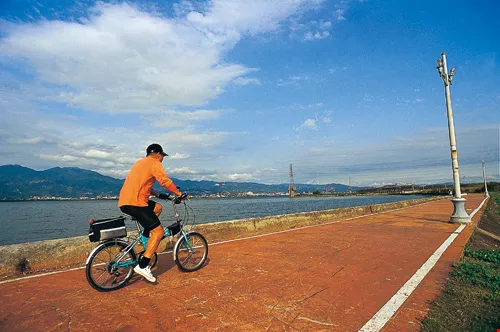
A long dike that runs upstream along the Danshui River as far as Luzhou offers excellent views of the river scenery; there is also fine birdwatching to be had at the Luti sandflats.
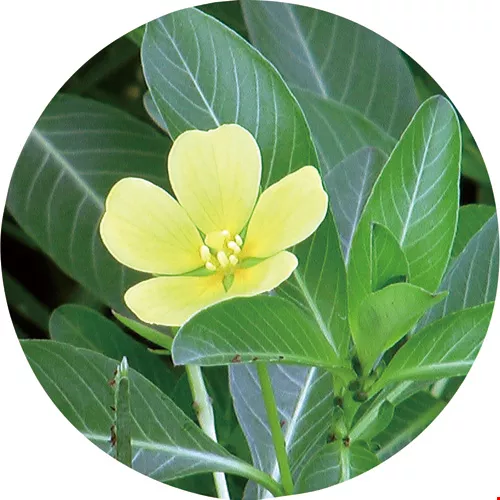
Primrose-willow


@List.jpg?w=522&h=410&mode=crop&format=webp&quality=80)


