Getting to a Win-Win Situation--Business and Environmental Protection
Laura Li / photos Vincent Chang / tr. by Phil Newell
April 1993


Are environmental protection costs really the "leading killer" of industry? Some industrialists gnash their teeth when the topic comes around to environmental fines, but a few others have quietly gotten on board the "environmental train" and have discovered many advantages in doing so. The phenomenon of a "win-win" situation between industry and environmental protection has begun, here and there, to take root in the local business community. Perhaps rebuilding "the elegant ocean and the beautiful island" isn't just a remote dream?
Both environmentalists and businessmen once believed in the theory that "economic development and environmental protection cannot stand together."
In contrast, today something of a consensus has taken shape around such concepts as, "the economy and environmental protection are two sides of the same coin" or "embark upon environmental protection from the perspective of economics. " Following wave after wave of international environmental protection, Taiwan enterprises are now facing a turning point in the pursuit of a balance between ecology and economy.
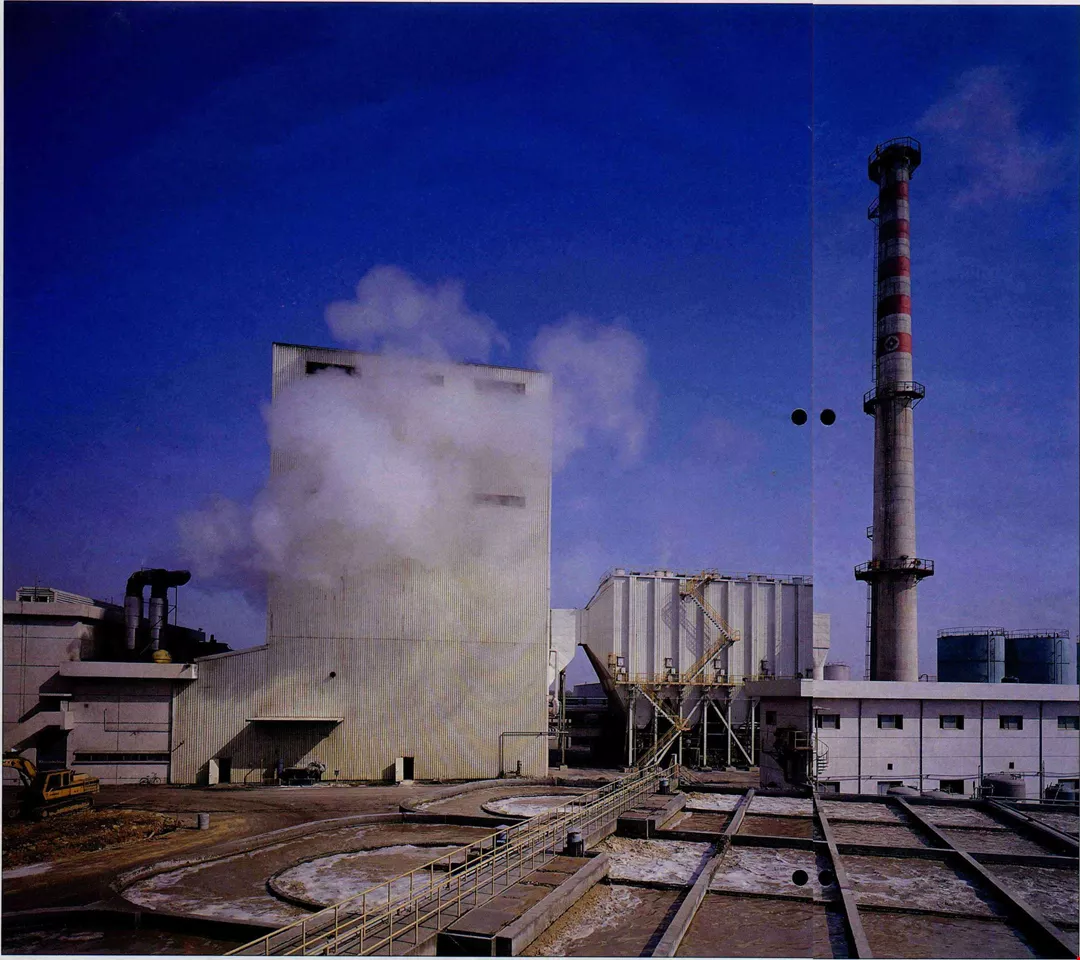
Although the investment for environmental protection facilities is large, there are also visible returns in economic efficiency. The photo shows the waste water treatment system (lower right) and the cogeneration equipment (which combines steam and power in a single fueling process) (middle left) at the Yuen Foong Yu Paper Manufacturing Company. (photo courtesy of Yuen Foong Yu)
If you don't do environmental protection, you have no right to exist:
Of course, this transformation first required an extended period of pain, as local town and village protests and compensation cases for harm inflicted on the public have occurred one after another. In 1987, the Li Chang-jung chemical company in Hsinchu was besieged by protesters, and in the end had to close the factory. Then there was the Linyuan incident in Kao-hsiung in 1988, in which China Petroleum was forced to pay the incredible sum of nearly NT$500 million in resolution costs.
For each case of harm to the public, the image of the business community gets a little worse. For business, and especially those companies that aspire to unsullied name-brands reputations, this pressure has already become what they fear most. It is also a major factor compelling them to invest in environmental protection.
Environmental fines are another pragmatic consideration. Even President Enterprises, which has been named by the media three consecutive times as the "Corporation with the Number One Reputation," admits that, "It would be impossible to say that we've never been fined."
In particular, because Taiwan is small and crowded, and industry is packed in tightly, laws and regulations on industrial waste are sometimes made even more stringent than in most European or North American countries, and the standards are being raised every year. If enterprises don't want to be caught in the position of "running hard just to stay in place" at the minimum acceptable standards, the best thing for them to do is to see environmental protection as a separate matter, which should be done thoroughly and resolved once and for all.
"In the last two years, when strict inspection and closures of polluting plants began, even some of the best-known companies were coming to the Environmental Protection Administration to protest fines of NT$80-100,000 a day," describes one EPA staffer. Protest as they may, business chieftains know that the environmental consciousness of local citizens will no longer tolerate industries that continue to pollute. If they want to stay in Taiwan, they'd better clean up their act.
Nevertheless, at first glance it seems that investment in environmental protection is a bottomless pit. The amount of environmental protection information most industrialists get is particularly limited, and they are not willing to invest a large amount all at once. They are even more afraid of making large-scale changes; therefore, they end up rushing around trying to improve air emissions when they get an air pollution fine one day and then to improve their waste water when the citation comes for that the next day. They get worried and agitated about their smokestacks and water pipes every day, but that doesn't necessarily reduce the number of fines.
"In the past, it wasn't only the boss who hated to hear the words 'environmental protection.' Even the staff in the manufacturing divisions would despise those in the environmental protection sections, thinking that the latter knew nothing about making money, only about spending it," says Yao Kuan-mu, an advisor to the Environmental Protection Administration.
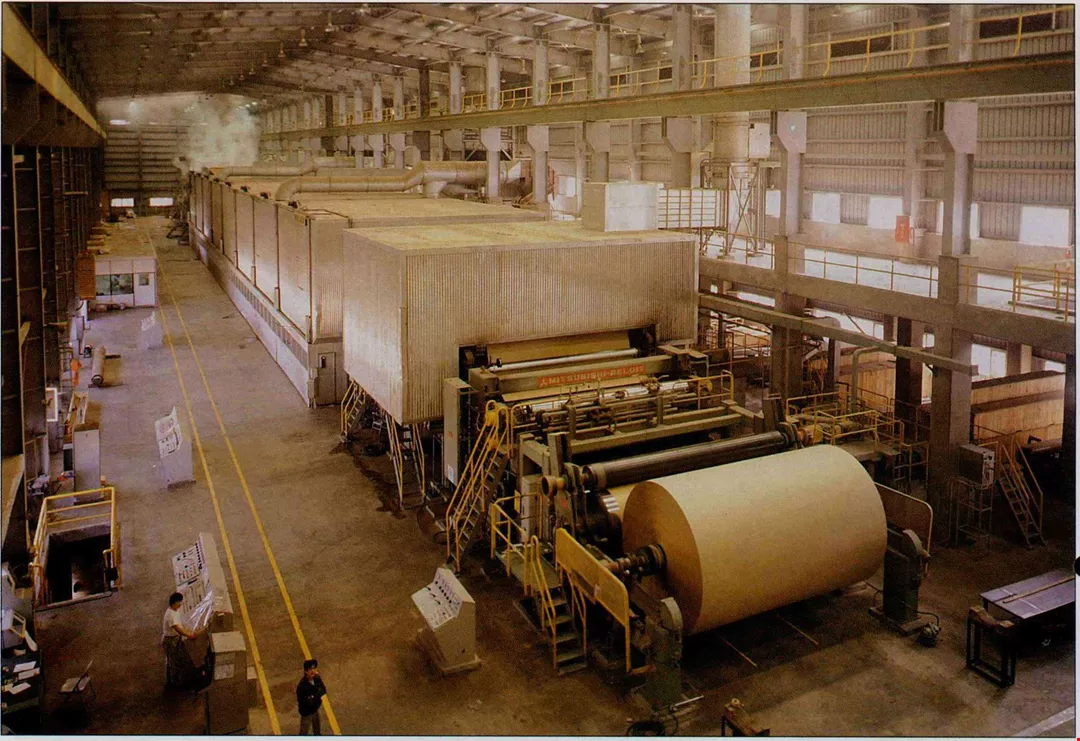
Does it take 300 tons of water to produce one ton of paper? Great improvements on this level of consumption have already been made through water recycling and paper fiber recovery. (photo courtesty of Yuen Foong Yu)
Laundering profits:
"The pollution prevention technique of 'treating the head when the head hurts, treating the feet when the feet hurt,'--that is, of only dealing with the end product--often ends up costing a lot of money yet is the least efficient," says C.F. Lin, manager of the Environmental Project Group at the CTCI Corporation, an environmental engineering firm with hundreds of engineers. Like anything else, environmental protection work requires a "prudent start" with comprehensive planning. The only way to get to the root of the problem is to begin by improving raw materials and the manufacturing process.
Yet besides solving the basic problem, many enterprises discover after being forced to undertake environmental protection that they have reaped the unexpected reward of higher efficiency. Some industrialists, when talking about their own efforts in environmental protection, will not stress how many millions of dollars they had to spend on waste water treatment facilities or an incinerator; on the contrary, they chat happily about "how much we saved in production costs over one year because of this." It seems that when you get into it, investment in environmental protection also has its economic attractions.
Paper manufacturing is a case in point. Manufacturing one ton of paper takes, on average, from 300-350 tons of water. And the higher the quality of the paper, the whiter it is, the more water is required. "It's just like washing clothes. You have to divide the pulp up into many stages as you wash it," explains Huang Shou-tsu, a senior project manager at the Yuen Foong Yu Paper Manufacturing Company.
It need not be emphasized that this method of washing consumes vast amounts of water, it also produces a similar amount of waste water which includes paper pulp fibers. "The pollutants in the water are in fact the raw materials for paper manufacturing, bought with good money. Isn't it a pity just to let them get washed down the drain?" Huang queries.
For environmental protection and for economic considerations, Yuen Foong Yu opted to alter their production process.
"To wash clean clothes, of course one puts them in clean water. But couldn't you use slightly dirty water to clean very dirty clothes?" Once this viewpoint had made the rounds, Yuen Foong Yu began to use the water from the latter stages of washing of previous batches to do the initial rinsing of the following batch. They also brought in fiber recycling technology to keep waste water emission to a minimum.
Employing the concepts of environmentally friendly utilization and recycling, Yuen Foong Yu's Cheng Kung plant had by the second half of last year manufactured one ton of paper with only 20 tons of waste water (though the production process still required 300 tons of water). They thus saved a great deal in water costs and in waste water treatment fees (which are NT$4-5 per ton). At the same time, Huang Shou-tsu points out, each ton of untreated waste water includes about one kilogram of paper pulp fiber; today, with recycling, not only is the water quality up to standards, but they have raised economic efficiency as well.
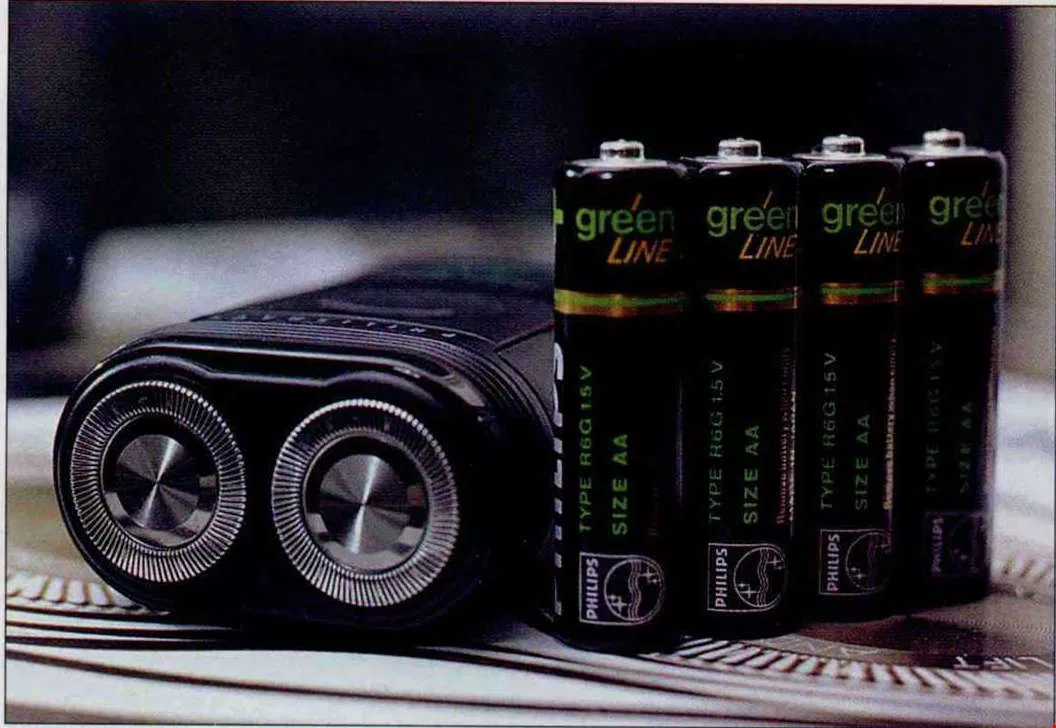
If the mercury from batteries leaks out, this is very harmful to the environment. Mercury-free "green batteries" are already becoming popular.
Clean is green:
"In fact there's a fine line between raw materials and pollutants," says Lin Chih-sen of the pollution prevention office at the Industrial Development Bureau. In the past, when there was no environmental pressure, raw materials could be replenished anytime, and waste water could be dumped wherever one chose. This became habitual for everyone, and no one wondered what was being wasted in all this. Today, with the concept of "reducing waste in the production process," people have only started looking carefully. They are startled at what they find.
Composite leather is a good example.
Taiwan is a bastion of artificial leather manufacturing. Its manmade leather shoes, purses, and clothing are sold around the globe. Of these, the top-level "breathable" imitation leather is especially popular. Yao Kuan-mu explains that the "pores" in imitation leather are made by the use of a chemical solvent called DMF. DMF dissolves easily in water; it thus separates from the leather when placed in water, leaving tiny holes that make optimum pores.
However, DMF is highly polluting, and handling it had been a big problem for those in the industry. Under environmental pressure, they brought in waste water recycling and remanufacturing equipment. They discovered that recycling results were excellent, with a recovery rate of over 90%.
"The market price of one kilo of DMF is NT$40. The twenty-two factories in Taiwan can recover more than 20,000 tons a year. Even after deducting costs, they still end up saving hundreds of millions of NT dollars," figures Director Chou Chien-chung of the Composite Leather Industrial Association. Right now Taiwan has 15 sets of the necessary equipment. One set costs anywhere from NT$10 million to more than NT$100 million. Although the initial investment is huge, it can be recovered within two to three years, and everything after that is clean profit. And all the while, this equipment, which was installed for environmental reasons but has ended up being a useful device for regenerating raw materials, has not caused the international competitiveness of Taiwan's composite leather industry to suffer at any time.
Of course, there are countless varieties of products, each with different raw materials and production processes. They aren't necessarily like paper or imitation leather, which both have currently available pollutant (raw material) recovery and reproduction technology that is also economically efficient. So there are now tens of thousands of researchers around the globe working on this very problem. Fortunately, besides recovery and reuse, raising the efficiency of chemical reactions is another feasible alternative.
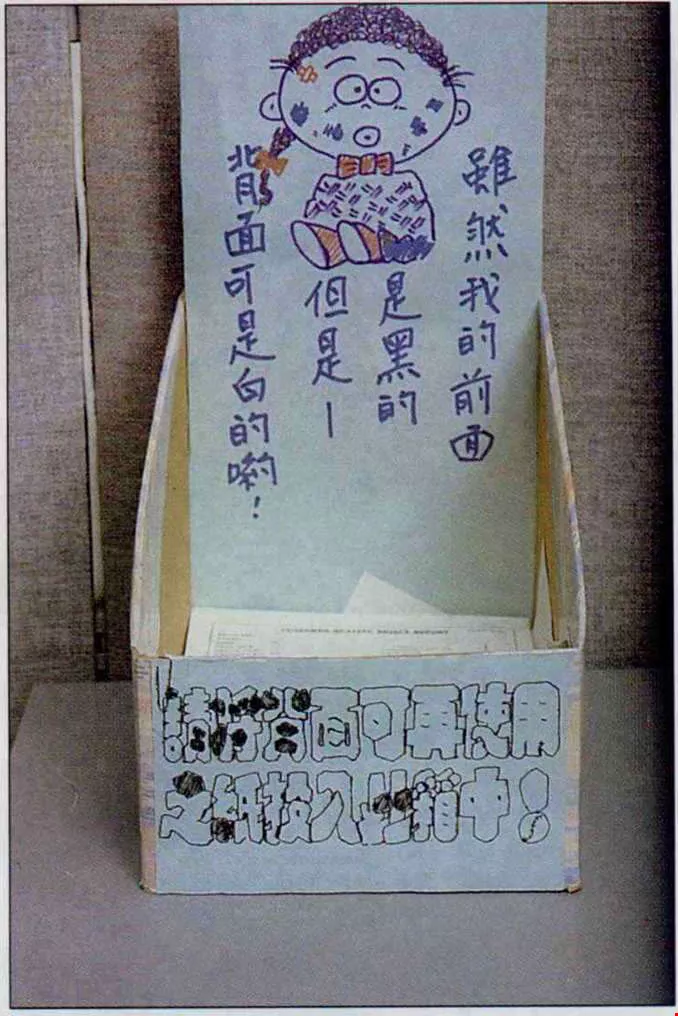
If you just invest a bit of effort, "office environmentalism" like using both sides of a piece of paper or recycling is really not that hard.
Better reaction to waste:
A classic example is Chi Mei Corporation, the world's largest producer of ABS (a composite resin). Liu Kuang-hung, general manager of the Environmental Protection Division at Chi Mei, states that ABS is made up from three individual petrochemical raw materials. These three materials are mixed together in the reactor. Whatever fails to blend in is emitted in the form of pollution and accumulates on the walls of the reactor, increasing clean-up costs.
After research and development, Chi Mei tried slightly adjusting the equipment and the production process and also improved the design of the mixing device. This allowed the three materials to spread more evenly, raising the efficiency of the reaction.
"There wasn't much of an investment in equipment, but in one year we added more than NT$10 million dollars in product value," points out Liu. Still, the monthly expense for handling pollutants at Chi Mei still comes to NT$8 million per year, so researching further how to reduce wastes is a primary task.
Results are best when working from the major production process. And each and every marginal new environmental protection trick has potential to make money.
"In the past, when a barrel of dye was almost used up, the employees would quite naturally just wash it out with water and dump it out. Today, to reduce pollution, we can put grey dyes in the white dye barrel or darker dyes into the light colored dye barrels. . . it adds up over time. We not only reduce waste water, we save on dye costs," says W.K. Yang, associate chief engineer in Energy and Environmental Engineering at Chung Shing Textile Company.
Yang describes his attitude as being like "a soldier sent to capture bandits." He continually wracks his brain inspecting the production process, wondering, "Where are there still places pollutants get through? Where can we save a little bit more?" Beginning with the "turn off the lights when you leave the room" campaign two years ago, in 1991 Chung Shing saved NT$42 million over 1990 in energy costs alone (water, electricity, and fuel). They saved more than another NT$15 million in 1992.
More importantly, making these environmental demands and eliminating the habit of "using things without thinking" turns out to be, quite intangibly, excellent training in raising worker quality. For factory managers, environmental protection forces them to reexamine their entire production process in a fresh light and can stimulate creative thinking. At the same time, reducing pollution in the plant can increase worker morale, reduce the rate of absenteeism from illness, and be of help to increasing productivity.
In fact, outside the production line, environmental profits can be found in the whole plant area and in the offices.
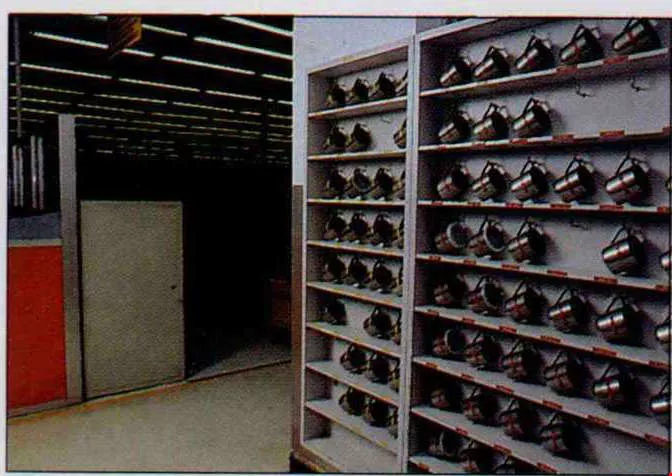
Giving each employee a rust-proof steel cup, adding an aluminum can crusher, putting reports on recycled paper.... drop by drop, Texas Instruments Taiwan is doing all it can for the environment.
Cashing in on waste:
Take for example the Taiwan branch of the well-known American semiconductor firm Texas Instruments. They are quite proud of their "one water, three uses" idea. "Not all the water used in the factory is polluted," notes Stanley Chen, manager of environmental protection work. Cold water used in the instruments can be recovered and used as cold water in the air conditioning system, and then be recovered again for use in the plant's toilets.
By the same logic, all the wastes produced anywhere on the plant site -- plastic containers, metals, paper and cardboard boxes, and other so-called "resource garbage"--are all targets of active recycling efforts. "If you can buy it, we'll collect it," affirms Chen.
Texas Instruments Taiwan collected more than 400 tons of resource garbage last year, turning it into more than NT$9 million. But the money is not the main point. What's important is that all the employees in the plant can share in the honor and sense of accomplishment because "we are all doing all we can for the environment."
Beyond reusing "resource garbage," smart operators go a step further and turn trash into cash.
The Taiwan Cork Company is the best model. This company located in Kaohsiung originally made badminton racquet heads, whose main raw material is cork. Not only does cork have to be imported from abroad, it is even more troublesome to deal with the waste after the wood is processed. Eventually, with the help of the petrochemical labs at the Industrial Technology Research Institute, they spent over NT$20 million in development and production costs to create a heat-resistant plate, made of cork waste, for automobile engines. At present, for every NT$40 million worth of badminton racquets they produce, the waste material can be processed into NT$80 million in heat-resistant plates!
"One man's waste is another man's precious gem," adds Hsieh Ching-shu, director of the Office of Environmental Protection in the Industrial Affairs Department of President Enterprises. Many President food products include beans; in the past, most of the dregs were sold to fodder factories. In the past two years, with a new fad for high-fiber foods, the soybean dregs have gone someplace with even higher value added--they are sold to high fiber cracker manufacturers.
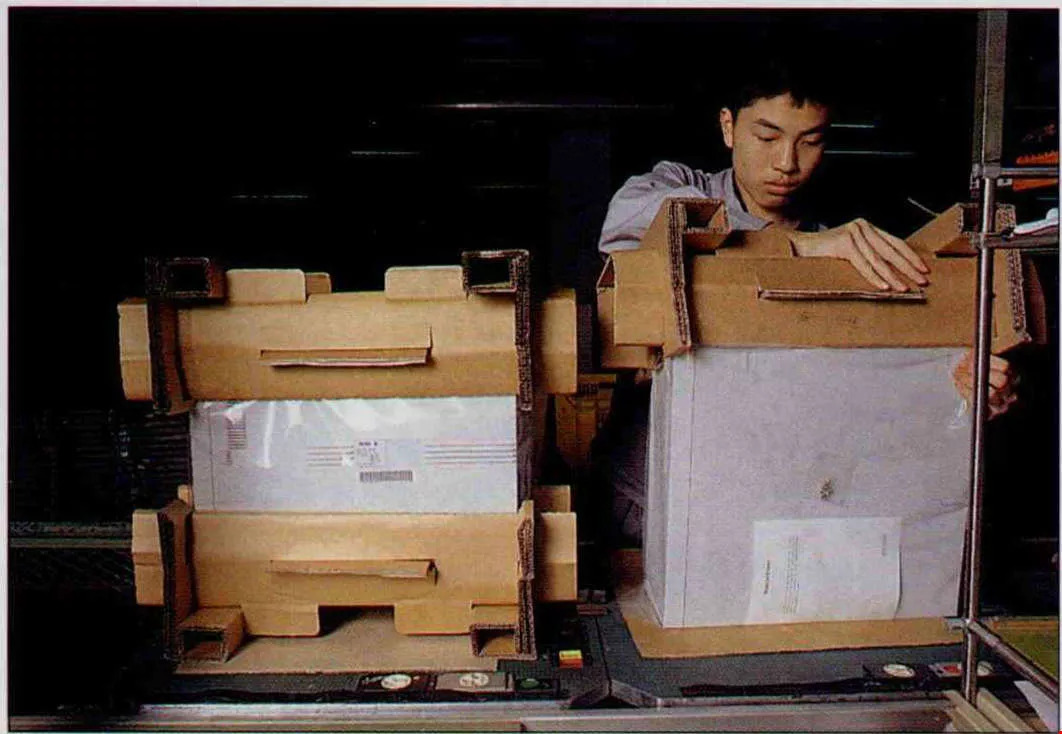
Using specially made, recycled, corrugated paper to replace styrofoam in packing is environmentally friendly, and, because it is lighter and takes up less space, also Saves on transportation costs.
Looking for balance:
"Make money with environmental protection." This is surely the dream of most industrialists. Naturally, in practice, there are indeed times when the two clash. For example, many companies use boilers, and the effectiveness relies on the proportion of air to fuel. Peng Ching-dar, manager of the R&D Department at the Yangmei Chemical Fiber Factory for Chung Shing Textiles, points out that in order to achieve the environmental ideal of no visible smoke, the only way is to raise the amount of air brought into the boiler as much as possible. But if the wind volume gets too great, the heat will be carried off, lowering burning efficiency.
Fortunately, when it is not possible to have a clear-cut "win-win" situation, many companies are quite willing to look for a balance. A case in point is the Hostan, a joint venture between HCG and a US firm to produce the "Dream" line of water faucets.
"The faucets packaged at the Hostan factory are wrapped in paper when sent to sales agents. But for shipment of semifinished products between our affiliated factories, we choose styrofoam," explains Chen Shang-hsien, manager of R&D at Hostan. Consumers are too spread out, and there is no way to insure recovery of the packaging, so they use paper products, which are less damaging to the environment. But for what gets used in the company's own production process, because the styrofoam can definitely be recovered and reused, "on average we can use one set of styrofoam packaging 300 times." It turns out this is even more environmentally efficient than paper, so it has been retained. This approach weighs both environmental responsibility and cost-effectiveness.
"The basic thinking behind environmental protection is very simple--reduce, reuse, recover, recycle," says Yao Kuan-mu, illustrating with the four R's. And these basic principles fit in quite well with the deep-rooted Chinese traditions of thrift and of cherishing what one has. Thus it is especially easy for businessmen to accept them.
Nevertheless, if you really want the concept of environmental protection to take firm root, the ultimate determinant of whether business will attain "a win-win situation between economy and ecology" is the consumer.
Green consumption: midwife to environmental protection:
Beginning in January of this year, Acer Computers stopped using dyed pure white computer packaging and greatly reduced the brightly colored print adorning the outside. The thick owner's manuals that had accompanied each unit are now done as software, so that the consumer can read them right off the monitor.
"White boxes have to be bleached, which creates pollution. And printed manuals consume a great deal of paper. So we can save, and it's good for the environment, too," points out Chen Chun-chieh, quality control manager at Acer. However, though "plain and simple" might be good for nature, how will the sales agents react? Will the change affect sales? Chen himself cannot avoid voicing some concern.
On the other hand, Yuen Foong Yu's recycled paper is a positive example of a much desired environmentally friendly product that consumers have affirmed.
Because recycled paper is manufactured mainly from recovered discarded paper, not only does it not require cutting down additional trees, in the production process it produces 75% less air pollution and 35% less water pollution. Thus Yuen Foong Yu was in the lead in putting it out as early as 1985.
Regrettably, at that time environmental protection had yet to catch on, and most people had no interest in the rougher, darker recycled paper. For the first five years after it had come out, "it only sold an average of 48 tons per year," and even the sales agents weren't willing to accept the stuff.
So it is all to the good that, as environmental protection consciousness has become widespread, sales of recycled paper have steadily increased. The last three years have seen three leaps forward, and monthly sales are now up to 700 tons. Although the production line is still not being used to capacity, the future is promising. Moreover, it is expected that this will be the first product to receive the "Environmental Protection Label." Most importantly, Yuen Foong Yu's corporate image has been boosted considerably, something which could never have been achieved just by spending money on advertising.
Environmental environment needs upgrading:
Environmentally friendly products are the wave of the future. For example, Acer, which already has a sound foundation in Germany and Holland, in order to meet European environmental regulations, began a year and a half ago to offer a personal computer which "doesn't use a single screw," but is fit together out of molded parts. A consumer could take it apart easily in a minute and place it in the recycling bin. The styrofoam packing material has been completely replaced by recycled paper.
"If we didn't design it this way, it would be labelled as a product of 'low recyclability' by local governments, and a high recycling handling tax would be added. It might also be boycotted by consumers," points out Chen Chun-chieh. How sad that the regulations over here are not so extensive, so that factories cannot be compelled to find the common ground between environmental and commercial considerations. But that such a trend is already taking shape is indubitable.
"Recycled, energy-saving, recoverable, low polluting" were once merely ideals. Now they are pragmatic--whether from the point of view of environmental fines or sales. To go a step further, environmental pressures have generated new technologies which increase productivity and lower costs and have even given birth to the whole environmental protection industry. A "win-win situation" between ecology and economy is already becoming a necessity for industry. If we want to achieve this situation, the government must stringently enforce the law and consumers must draw careful distinctions. After all, the planet belongs to everybody, doesn't it?
[Picture Caption]
p.98
Although the investment for environmental protection facilities is large, there are also visible returns in economic efficiency. The photo shows the waste water treatment system (lower right) and the cogeneration equipment (which combines steam and power in a single fueling process) (middle left) at the Yuen Foong Yu Paper Manufacturing Company. (photo courtesy of Yuen Foong Yu)
p.100
Does it take 300 tons of water to produce one ton of paper? Great improvements on this level of consumption have already been made through water recycling and paper fiber recovery. (photo courtesty of Yuen Foong Yu)
p.101
If the mercury from batteries leaks out, this is very harmful to the environment. Mercury-free "green batteries" are already becoming popular.
p.102
If you just invest a bit of effort, "office environmentalism" like using both sides of a piece of paper or recycling is really not that hard.
p.103
Giving each employee a rust-proof steel cup, adding an aluminum can crusher, putting reports on recycled paper.... drop by drop, Texas Instruments Taiwan is doing all it can for the environment.
p.104
Using specially made, recycled, corrugated paper to replace styrofoam in packing is environmentally friendly, and, because it is lighter and takes up less space, also saves on transportation costs.
p.105
Computer manufacture employing molded part assembly that does not use a single screw can meet the ever-stringent European home electronics and computer recycling standards.


@List.jpg?w=522&h=410&mode=crop&format=webp&quality=80)


