Here Come the Mainland Tourists!
Teng Sue-feng / photos Hsueh Chi-kuang / tr. by Phil Newell
August 2008


"Koujiao is their word for kou-xiangtang [chewing gum], tudou means potatoes-definitely not peanuts like it means in Taiwan! A jiudian is a hotel or restaurant for them even though it refers to a girly bar here, the word we use for calculator means desktop computer to them...."
In a training class for tour guides sponsored by the Tourism Bureau of the Ministry of Transportation and Communications, the teacher is trying to familiarize guides with differences in common terms used in the Chinese spoken in mainland China as opposed to that spoken in Taiwan, to avoid misunderstandings. Guides will certainly be able to make their charges feel more at home if they can casually drop in a few mainland colloquialisms when addressing the first groups of mainland tourists to come to Taiwan under recent policy revisions.
In order to make mainland Chinese tourists-who have already become the goose that lays the golden egg in the global travel industry-feel welcome in Taiwan, businesspeople here are charging their batteries and boning up on their studies. Government agencies, meanwhile, are tightening up inspections of facilities at key tourist attractions. Premier Liu Chao-shiuan personally made a circuit of Sun Moon Lake, even including an unscheduled inspection of the public toilets. He expressed the hope that visitors to Sun Moon Lake would leave with the feeling that no description could match the feeling of actually being there and seeing it for oneself.
As it spruces up to greet the expected influx of cross-strait tourists, Taiwan is essentially doing a complete "physical exam" of its travel experience. In opening the front door and trying to make itself the ideal host, what is the impression that Taiwan wants to leave on mainland visitors?
The bells ringing in the international tourism industry have one clear meaning: The gloves are off in the battle to attract visitors from mainland China!
On June 19, US secretary of commerce Carlos Gutierrez held a cruise-boat dinner in Washington DC, giving the red-carpet treatment to the first 240 mainland Chinese tourists allowed to travel in the States purely for recreation, in the hopes of leaving these honored guests with a good impression of the US.
In the past, mainland China only allowed its citizens to visit the US for study, family reunions, or business. But last year, mainland China and the US signed a new memorandum on opening up travel for purely touristic purposes. It is hoped that by 2011 the number of mainland Chinese visitors will rise from the current level of 250,000 per year to 600,000. Though these numbers still are not big, the openhandedness of these tourists makes them hard to ignore. According to US Commerce Department statistics, Chinese visitors spend an average of US$6000 (about NT$180,000) per person, the highest of any country.
Bring 'em on!
2003: Mainland China becomes the number-one source country for tourists visiting countries in Asia.
2004: Mainland China signs a tour-group agreement with 12 EU countries. The fact that Europe is distant and expensive does not deter newly wealthy Chinese. Average spending per mainland Chinese tourist in France is US$3000, three times higher than the average for visitors from other European countries.
2005: Mainland Chinese make 31 million trips abroad. Their top ten destinations are Hong Kong, Macao, Japan, Vietnam, South Korea, Russia, Thailand, the USA, Singapore, and Malaysia. Except for the States, all are close-by Asian neighbors. Hong Kong accounts for 13.52 million of these journeys, and Macao for another 8.47 million, so that the two destinations combined account for 71% of all trips. Total spending by Chinese on overseas travel is US$21.8 billion, seventh highest in the world.
In contrast to these countries, Taiwan has been left out of this mainland tourism craze because of the political enmity between the two sides over the past eight years. But now, Taiwan, sharing the same language and ethnicity, and separated by only a strait, is positioning itself to earn mainland Chinese tourist dollars. Now that there has been a thaw between the two sides, in June the two "unofficial" bodies that handle contacts between mainland China and Taiwan-the Association for Relations Across the Taiwan Strait (ARATS) and the Straits Exchange Foundation (SEF)-reached an agreement allowing, for the first time, mainland tour groups to travel directly to Taiwan. (Previously mainland Chinese tourists could visit Taiwan only through third countries, and numerous restrictions kept the numbers to a minimum.)
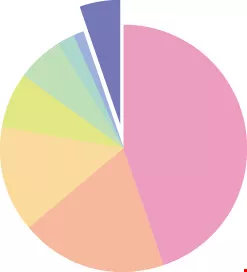
In early July, the Central University of Finance and Economics in Beijing conducted a phone survey of the preferences of a sample of residents of that city about their attitudes toward travel to Taiwan. Of the 1000 valid interviews, an amazing 62% of respondents expressed a desire to visit Taiwan, with 14% saying they would like to visit right away this year and another 14% saying they would like to visit next year .
Another question asked respondents where they would choose to go among Hong Kong, Macao, and Taiwan if they were allowed to choose freely. Hong Kong and Taiwan were each chosen by one-third of the respondents; only 5% opted for Macao and another 22% answered "not sure."
As pointed out in a special travel guide to Taiwan published in Shanghai in July by Zhang Mingqing, the vice-chairman of ARATS: "For mainland Chinese compatriots, Taiwan is a treasure island with a dreamlike unreality, but they do not understand her in a complete way. Finally, under the rays of the early summer sun, the frozen-over Taiwan Strait is turning into abundant spring waters." The opening up of travel to Taiwan for mainland tourists will show Taiwan's true features, after 400 years of being cut off by the imperial ban on sea travel, colonialism, and the Chinese Civil War.
Now the question becomes: What will Taiwan's tourism industry, which has been waiting with such anticipation for this development for so long, do to attract mainland travelers?
Yao Ta-kuang, chairman of the Travel Agent Association of Taiwan, points out that Taiwan is safe, offers convenient transportation (both Taipei and Kaohsiung have metro systems), has great food and stylish coffee shops, and, with every kind of boutique imaginable, offers shopping that can match that in Hong Kong. "Last year mainland Chinese made 40 million trips abroad. If even just 1 million of them come to Taiwan, we can keep the industry going for generations," he says, bubbling with confidence.
Even these prospects are not ambitious enough for some. "Macao is only the size of Yungho City in Taipei County, but last year drew 27 million visitors, 15 million from mainland China alone. Based on Ma Ying-jeou's campaign promise to allow 10,000 mainland tourists per day to enter Taiwan within four years, that would only be 3.65 million in a year. So the pace of opening up is still way too slow!" argues Eric Wu, director of the Taiwan Tour Guide Association. Taiwan could also develop the gambling industry as Macao has done, and in fact Penghu, Miaoli, Nantou and Chiayi are all trying to get permission to set up casinos. If gambling is legalized, there will be even more to attract mainland travelers.
"Taiwan is rich in natural beauty. In the morning you can see the sun rise over the Pacific Ocean, and in the afternoon be in the mountains to gaze at the sea of clouds. So much diversity within a few hours is really enticing. In fact, there is so much to see that, when you consider that it still isn't that easy for mainlanders to come to Taiwan, people will want to see everything in one trip. Right now only tour groups are allowed, not individual travelers, so that visitors be limited to eight- or ten-day itineraries. The result will be a situation like it was when Taiwanese tourists visited Europe 15 years ago, seeing 15 countries in ten days. Tourism in the first phase will have a 'grand tour' character of racing through sites one after another," says Todd Hsiao, director of ezTravel, Taiwan's largest online tour company.

Ask for 3000, get 1000?
The conditions for cross-strait tourism are ripe, but it is not really certain how many visitors will come, or will be allowed to come. Because each side has its own ambitions, both are proceeding with caution.
At a conference between the "Pathfinder" group representing the mainland tour industry and representatives of Taiwan's tourism industry, Yao Ta-kuang called on mainland China's Cross-Straits Tourism Exchange Association (CTEA) to earnestly implement the ARATS-SEF agreement and allow the full quota of 3000 persons per day to come to Taiwan, so as not to disappoint the expectations on this side of the strait. "If there really is no market, and nobody wants to come, then it will be up to our side to carefully reassess where we have gone wrong and whether our service industry is too weak. But I hope that it doesn't turn out that 3000 people per day want to come, but only 1000 are allowed," says Yao.
Nonetheless, CTEA vice secretary-general Fan Guishan, who led the Pathfinder group to Taiwan in mid-June, has said that in the early period of mainland tourism to Taiwan, there will be a limit of 1000 people per day. He said that it was necessary to proceed in an orderly manner, work only through trustworthy tour operators, and prevent cutthroat price competition, in order to carefully nurture the seedling into a healthy tree.
There is reason for caution on the mainland side. From the mainland's point of view, allowing tourists to come is not only throwing a bone to Taiwan's economy, but even more importantly should promote amity between the two sides. Therefore the mainland side, like the male in an arranged introduction with the aim of marriage, wants to have its act together, because if mainland tourists make a bad first impression, it will be almost impossible to make up for it later on.
Thus many articles have appeared in the mainland media calling for mainland tourists to Taiwan to keep up a good image and be careful in their behavior. Zhou Dongfei, in a piece appearing in the Chinese-language International Herald Leader, wrote that "tourism to Taiwan will be a major test of the character and image of travelers from the mainland."
"If we honestly ask ourselves, we have to admit that some negative evaluations of Chinese tourists have already appeared. In a survey of the hotel industry in Europe regarding visitors from around the world, Chinese tourists were ranked third from the bottom. The fact that there are signs specially in Chinese saying things like 'the garbage can is here' and 'please flush after using the toilet' is enough to make one blush with shame," states Zhou. Among the "uncivilized" behaviors that are widely considered characteristic of Chinese tourists are spitting in public places, making huge amounts of noise, pushing in front to grab empty seats, taking off shirts or shoes in public places to cool off, and even allowing their children to urinate or defecate right on the street.
With this in mind, Chinese officialdom has decided to screen would-be visitors to Taiwan. In the first phase, only people from the relatively cosmopolitan 13 coastal provinces or municipalities of Beijing, Shanghai, Shandong, Jiangsu, Zhejiang, Guangdong, and so on, will be allowed to take part. Applicants must not only have regular, respectable employment, but must prove that they have the equivalent of at least NT$200,000 in the bank.
Who will gain?
Looking at things from the Taiwan side, there are also both hopes for gains and fears of embarrassment. On the one hand, the local tourism industry is in a slump, and needs to be reinvigorated. On the other hand, the experiences of the few mainland tourists able to visit hitherto have produced the shameful saying: "Failure to visit Taiwan in one's lifetime will be something to regret, but if you actually visit you'll regret it for the rest of your life!"
Looking first at the potentially positive economic impact of tourism, the first point to make is that recently, with rising prices and global inflation, people have been tightening their belts and closing their purses. In Taiwan, hotel occupancy rates and attendance at theme parks have plummeted.
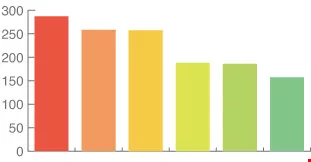
There are sound reasons to hope that mainland tourism will be able to live up to expectations that it will re-energize Taiwan's travel industry. According to A Survey of Spending and Activities by Tourists to Taiwan in 2007, issued by the Tourism Bureau, last year mainland visitors spent an average of US$258 per day. This put them second only to guests from Korea (US$287) and ahead even of the single largest source country for number of tourists to Taiwan-Japan (US$257). So their spending power is nothing to sneeze at.
If we calculate on the basis of 11-day, ten-night group tours, at 1000 arrivals per day (or 360,000 per year), even assuming a moderate level of NT$40,000 per person in tour fees alone (excluding personal expenditures), then we're talking about a market worth about NT$10 billion. If the number of arrivals were to go up to 3000 per day, the market would be worth NT$30 billion (about US$1 billion)!
Will this be enough?
Taiwan has roughly 2800 travel agencies in all. To preempt cutthroat competition, the Tourism Bureau set criteria to limit the number of agencies who can handle mainland tour groups. Nonetheless, although only 172 have been approved so far, compared to the designated 33 agencies on the mainland side, there are still a lot more monks than there is rice gruel to go around. If the number of visitors does not reach expectations, even NT$10 billion a year in business may not be enough to keep all the qualified travel agencies busy.
Moreover, over the past decade, like the boy who cried wolf, there has been talk of imminent opening to mainland tourism year in and year out. The industry has thus invested a great deal of money in expectation, and, to change zoological metaphors, now that they are on the tiger's back, they can't get off without being eaten alive. For instance, tourist hotels have been popping up like mushrooms after a spring rain. In Taipei City alone, ten hotels will be completed within the next two years, adding capacity of over 2000 additional beds, at a total investment of NT$96.8 billion.
Shop talk
Not only has there been massive new hotel construction, but businesses in the leading tourist spots have also invested millions in redecorating their facilities and storefronts with a keen eye out for mainland tourists.
Take for example the shops on Alishan (Mt. Ali), a real favorite with mainland visitors because of its high mountain tea. Shop owners have spent millions remodeling in preparation, but it may all be to no avail. Because there have long been restrictions on construction on Alishan, the hotels there are small and of uneven quality, with less than 20 rooms each. Most travel agencies only arrange for brief day trips up the mountain rather than having groups spend the night there.
Further adding to concerns that Alishan businesses may not make much money off of these "fly-by-day" visitors is the fact that the Tourism Bureau requires travel agencies to take mainland tourists only to designated shops, to try to ensure postive shopping experiences. Beginning last year the Travel Quality Assurance Association (TQAA) began promoting a shopping quality control system, placing a label of guaranteed quality on the goods of shops that volunteer to be evaluated. The main evaluation criteria include whether or not the label price is reasonable, whether items can be returned or replaced, and the safety standards of the shopping location. However, as of July only 160 shops had applied to be evaluated, a tiny fraction of the tens of thousands of stores in Taiwan.
There is reason for concern that shopping experiences could leave both tourists and hosts with a bad taste in their mouths.
In mid-June, the Tourism Bureau organized a group with the Consumer Protection Commission, the Department of Health, and the TQAA, which traveled to Alishan, Sun Moon Lake, Kenting, Kaohsiung, Taitung, and Hualien to investigate local tourism conditions. They discovered that for high-priced items like tea leaves, deer antler, and lingzhi medicinal fungus, as well as in shops selling marble or jewelry items, the travel agencies were taking an excessively high commission (30-50%). They also found that actual selling prices were, after bargaining, only 20-50% of the marked prices, creating conditions for tourists to get drawn into acrimonious haggling or end up feeling cheated.
On the other hand, "The most common complaint among shopkeepers on Alishan was that mainland tourists were exceptionally good at haggling, often offering only 20% of the marked price. Shops are left with little choice but to quote outrageously high initial prices, so in fact the vast majority of owners approve of a system of no deviation from marked prices," says TQAA inspector Chen Heng-chuan
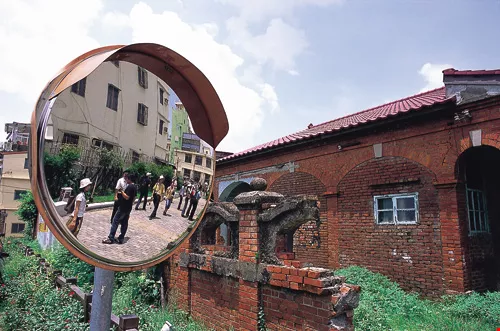
Mainland China may have more grand natural scenery and experimental modern architecture than Taiwan, but Taiwan's attractiveness lies in its lifestyles; it is a place that well repays taking your time and exploring small corners. The photo shows an abandoned pineapple factory in Chiutientang, Kaohsiung County.
Shave your own beard
Leaving aside monetary issues, is Taiwan truly ready to show mainland tourists an impressive time?
At the Pathfinder conference, mainland firms pointed out that Taiwan's criteria for classifying hotels by number of stars are not the same as the international system, so they don't have a reliable basis for judging prices and service. There are also likely to be problems resulting from a shortage of parking spaces and public restrooms at some scenic spots.
Individual sites popular with mainland tourists also have problems. Take for example the Alishan Mountain Railway, touted on the ezTravel website as worthy of designation as a World Heritage Site. Starting in the Chiayi Plain, the train climbs up to a height of 2216 meters on Mt. Ali on a 71.4-kilometer, three-hour-and-20-minute journey that passes through tropical, subtropical, and temperate forests, like a time machine traveling through Taiwan's geologic history. It truly is a wonder. But the forest railway was turned over to private operators in June, and disputes over the unequal sharing of benefits have led to sabotage of the tracks, causing three derailments in one month.
At this critical moment, tourism facilities across Taiwan are being exposed to magnified scrutiny.
In the past, some travel companies in Taiwan offered super-cheap rates to mainland Chinese tourists already on tours to third countries to make a detour to Taiwan. Unfortunately, this resulted in endless complaints over low-grade food and accommodations, or of itineraries puffed up with extra days that were in fact nothing more than compulsory shopping trips to stores that gave tour operators a cut. To put an end to these objectionable practices, the Tourism Bureau has set strict requirements that the cost charged for a tour cannot be lower than US$80 (NT$2400) per day.
As Yao Ta-kuang told his colleagues from the mainland tourism industry, "We are strongly in favor of upholding the 'three standards' for tours: high in income, high in quality, and high in substance. In the future," he cautioned, "when negotiating with a Taiwanese firm, if that firm proposes a price of less than US$80 per day, please don't accept it. The Tourism Bureau will intervene with administrative measures to terminate such low-price operations, and the Travel Agent Association will play the 'bad cop' and make its influence felt to stamp out these practices."
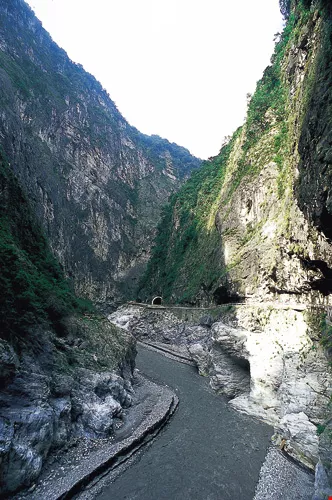
It has taken millions of years of geologic activity to carve out Taroko Gorge; visitors never fail to be impressed.
Soft power
No matter what line of business they are in, everyone is hoping to take this opportunity to reshape the image of tourism to Taiwan. But what, after all, does Taiwan have to offer that is unique from, and superior to, other places?
"In many respects-from cultural artifacts to depth of history to natural wonders to modern architecture-the mainland has the advantage over Taiwan," says Stanley Yen, chairman of the Landis Taipei Hotel and former head of the ROC Tourism Association, in his new book, Future Vision. For example, if you compare Mt. Ali to Huangshan (Mt. Huang) in mainland China, the most you can say is that each has certain features of its own. You can't say one is uniquely superior to the other. So what does Taiwan have, in his opinion? "Culture is absolutely the key to Taiwan's value-added for international tourism."
Cultural critic Lin Ku-fang once organized a tour for a group of visiting mainland artists and writers that was very thought-provoking and moving from a cultural point of view.
First they visited the Tsu Hang Temple in the Taipei suburb of Hsichih to see the preserved body of a Buddhist monk named Tsu Hang who passed away in 1954. Many of the mainlanders, brought up under mainland China's official policy of atheism, under which the preserved bodies of many Buddhist holy men were destroyed during the Cultural Revolution, were so moved at the sight of Tsu Hang that they instantly fell to their knees.
Next came a trip to the Koo Foundation Sun Yat-sen Cancer Center in Peitou. The visiting mainlanders were especially impressed by the meticulous care, respect, and protection of privacy for terminally ill patients, for whom the hospital has special hospice rooms.
After that they went to see shows by the Performance Workshop and U Theatre. Many of the mainlanders found the techniques used by U Theatre-such as meditation and taijiquan to put performers in the proper frame of mind-to demonstrate an even greater cultural depth than the famed displays of Chinese martial arts at the Shaolin Temple in mainland China.
Finally Lin Ku-fang took his guests to the Hillside Garden-renowned for its refined cuisine-on Mt. Yangming, and the meal ended with Taiwanese tea, putting a perfect final touch to the day. "Figuring out how to transmit the cultural significance of these sights so that visitors can understand what makes them so precious is more important than material objects," concludes Lin.
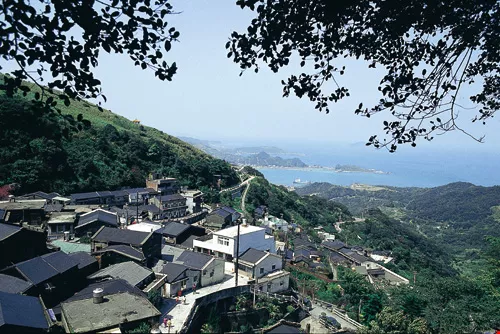
The town of Chiufen, rich in culture and history, is a favorite place for movie directors seeking nostalgic settings. The streets are lined with small eateries and the fragrance of tea fills the air; it is a classic example of a town living in the slow lane.
This place rocks!
Yao Ta-kuang especially likes Stanley Yen's suggestion that Taiwan build a pop music museum. One area could be specially dedicated to the late Teresa Teng (a Taiwan native), whose songs swept the entire Chinese-speaking world in the early days; fans could not only pay homage to this beloved idol, but could also learn about her career path and her works. Another area could be dedicated to Tsai Chin, a Taiwanese songstress whose show in the style of 1930s Shanghai was such a hit in contemporary Shanghai that it ran for 57 performances. Young Taiwanese artists like A-Mei, Jay Chou, and Jolin Tsai could also be included, and products related to museum themes could be sold. In this way Taiwan could stake its claim to being the leader in the Chinese-language pop music scene.
"New York has Broadway, Thailand has transvestite shows, but we don't have any distinctive regular shows for audiences of say 800-1,000 people, which you could be sure will be around six months from now so that people can make definite plans to include them in a travel itinerary," says Yao. He suggests that that the government could turn management of city and county cultural centers over to the private sector, and Taiwanese music revues, political satire shows, Aboriginal performances, and the like could be turned into regular events for cultural tourism.
Food would certainly be one of the features of Taiwan most likely to appeal to visitors. Last year, the Hong Kong gourmets Cai Lan and Leung Man-to brought several tour groups to Taiwan. They trooped to Ilan, Hualien, and Taitung to taste authentic traditional Taiwanese and Aboriginal cuisine, never failing to elicit hearty praise from the satisfied diners.
Wayne Liu, director of the International Affairs Division of the Tourism Bureau, who accompanied the Pathfinder group on their circuit of Taiwan, says that travel is all about experiences. When arranging meals for visitors, you shouldn't take them to fancy restaurants serving Cantonese, Zhejiang, or Sichuan food, but should let them find out how tasty the cuisine of ordinary Taiwanese life can be. When the Pathfinder group tried things like the mahi-mahi fishball soup in the harbor town of Nanfang-ao, or the oyster omelets and "cat and mouse noodles" at the Temple Front night market in Changhua, they were invariably amazed.
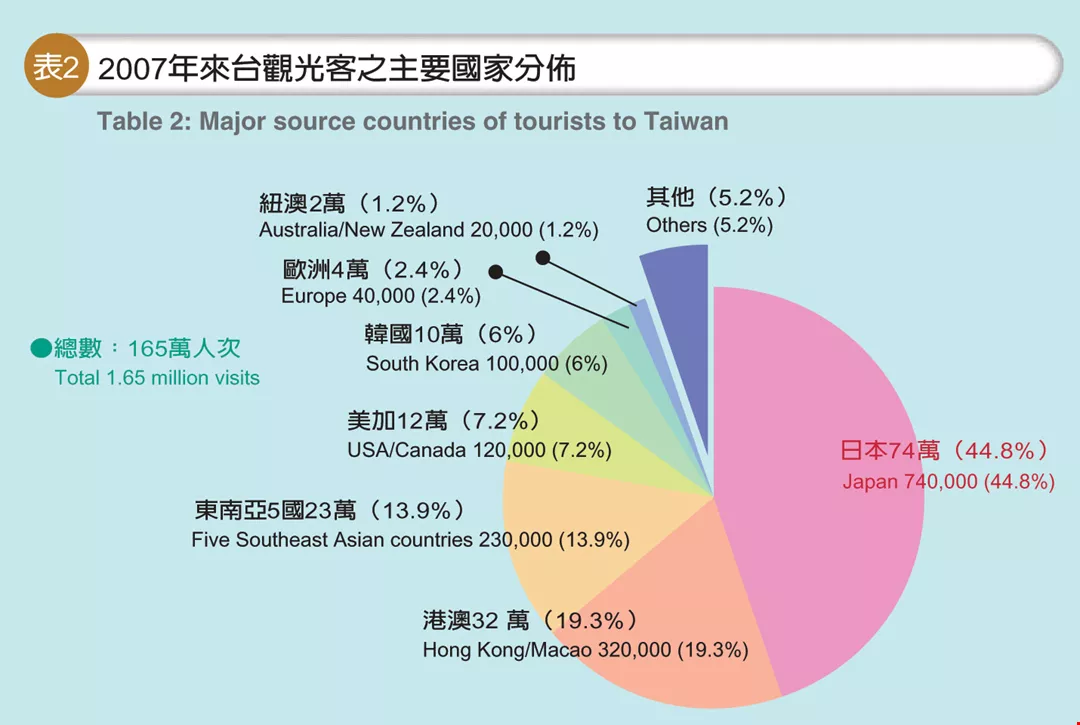
Table 2: Major source countries of tourists to Taiwan
Beauty in the alleyways
"Friends from mainland China often say straight out that compared to Shanghai and Beijing, the skyline is much shorter, the roads are narrower, and there are still quite a few dilapidated structures. But we ourselves know that these are not where Taiwan's attractiveness and value are to be found," says Stanley Yen. We have cultural substance that has been tempered over time. For example, people say how much they love the "slowness" of life in Taipei, and how "people line up in a relaxed and casual way, not pushing forward or getting pushed, and without worrying that someone will try to cut in line."
Or look at what happens when mainland tourists visit the Presidential Palace. The guide gives a spiel about all the presidents in ROC history, and when she concludes, "anyone of age 40 or above who is a citizen of the ROC has the opportunity to have his portrait come next in line after Ma Ying-jeou," you can see the admiration and envy on the faces of the visitors. They also get first-hand exposure to Taiwanese freedom and democracy from the political talk shows that they love to watch at night in their hotel rooms.
Taiwan does not lack features of unique appeal, but Stanley Yen has a word of warning. The first generation of mainland tourists, who will probably be raced through Taiwan from one destination to the next on tight schedules, are unlikely to have the time to be deeply touched. It will be future travellers, with no time limitations or prearranged destinations, who will have the leisure to explore the side streets and back alleys of Taiwan. There they will find Taiwan's true pleasures, cultural character, and human warmth.
"Tourism means opening your door wide in welcome, making friends with the outside world." Everything from the smiles of customs officials checking their documents, to the attitudes of shop employees and taxi drivers, to the warmth of ordinary citizens, will contribute to making mainland tourists-who after all are ethnically and linguistically the same as Taiwanese-feel right at home. Everyone in Taiwan, including you and me, is an ambassador in cross-strait people-to-people diplomacy. Now is the time to start learning how to be the perfect host!
| Item | 2005 | 2006 | 2007 |
| Number of visitors to Taiwan | 338 million | 352 million | 372 million |
| Foreign exchange income from tourism | US$4.977 billion | US$5.136 billion | US$5.214 billion |
| Spending per person per trip | US$1,473 | US$1,459 | US$1,403 |
| Average number of nights stayed | 7.10 nights | 6.92 nights | 6.52 nights |
| Spending per person per day | US$207.50 | US$210.87 | US$215.21 |
| Visitors coming purely as tourists | 1.38 million | 1.51 million | 1.65 million |
| Spending per tourist per day | US$267.02 | US$245.47 | US$245.49 |
| Number of business visitors | 940,000 | 950,000 | 930,000 |
| Spending by people on business | US$175.26 | US$194.10 | US$204.80 |
Source: Tourism Bureau
| Rannk | Favorite Spot | % |
| 1 | Toroko Gorge, Tienhsiang | 39.87 |
| 2 | Kenting National Park | 39.02 |
| 3 | Sun Moon Lake | 34.94 |
| 4 | Chiufen | 34.17 |
| 5 | Yeliu | 32.24 |
| 6 | Maokong, Mucha | 27.27 |
| 7 | Chihpen | 23.91 |
| 8 | Tanshui | 23.79 |
| 9 | Wulai | 23.15 |
| 10 | National Palace Museum | 22.63 |
Unit: %
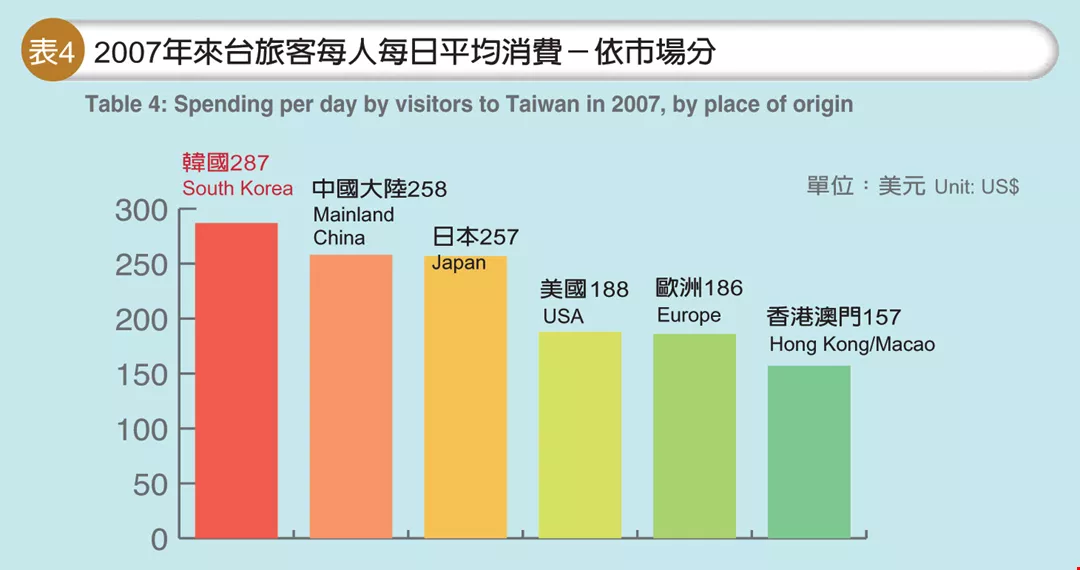
Table 4: Spending per day by visitors to Taiwan in 2007, by place of origin
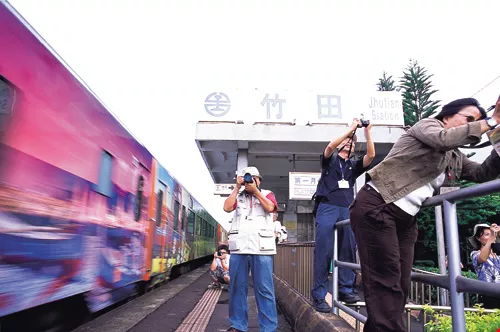
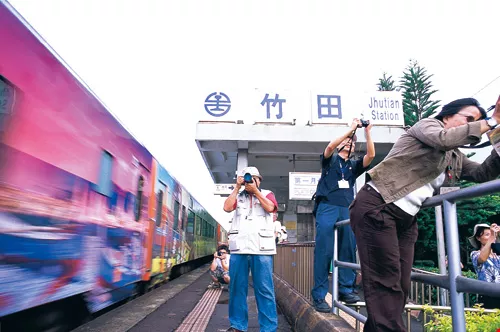
It will soon become a common sight at Taiwan's tourist attractions to see groups of mainland Chinese tourists taking commemorative snaps. This photo was taken at the Chutien Station on the southern link railway in Pingtung.
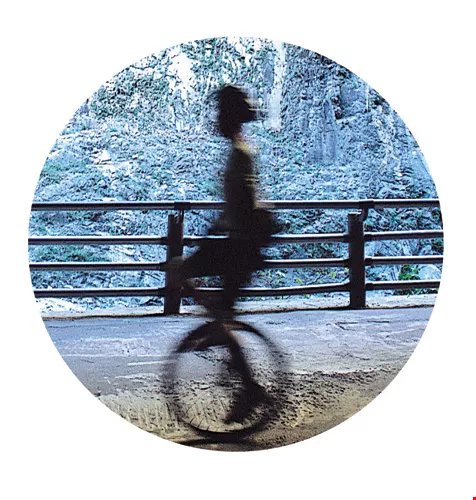
It has taken millions of years of geologic activity to carve out Taroko Gorge; visitors never fail to be impressed.

@List.jpg?w=522&h=410&mode=crop&format=webp&quality=80)


