Remade in Taiwan--Changing Taiwan's Product Quality Image
Elaine Chen / photos Hsueh Chi-kuang / tr. by Brent Heinrich
June 1994


Ten years ago, a lot of American bicycle repair shops hung out signs saying: We do not repair bikes from Taiwan. Businessmen tried hard to avoid being identified with the "Made in Taiwan" label, and often used tear away labels on exported products. Today, Giant, a manufacturer of bicycles, not only proudly displays the MIT label, it even has a small national flag next to it.
The image of "Made in Taiwan" is already changing direction, but has not yet fully turned the corner. One reason is that the government is actively promoting a campaign to improve national product image, in hopes of achieving a "bloodless revolution for the Made in Taiwan image." Secondly, and more importantly, enterprises are investing a lot more in research and development.
In recent years, the amount spent by Taiwan enterprises on R&D has surpassed 1% of total turnover, and large companies like Acer and Philips Taiwan are spending from three to five percent.
In fact, Taiwan has excellent potential for R&D. Compared to workers in the PRC and Southeast Asia, labor in Taiwan is already too expensive. But compared to research personnel in the US, Europe, and Japan, Taiwan has abundant and inexpensive researchers. According to statistics of the National Science Council, in recent years the proportion of R&D personnel to total population in Taiwan has already surpassed that of Korea, England, and France, and trails only the US, Japan, and Germany.
What's more, an extremely high ratio of Chinese overseas have worked in R&D engineering. For example, there are 30,000 people at the Bell Laboratories, of whom 6,000 are Chinese. In Silicon Valley, as many as one-third of the engineers are Chinese. In recent years many of these personnel have come back to Taiwan, and there are even associations here of former Bell and IBM employees.
In fact Taiwan cannot afford not to do R&D. Taiwan was once a major center of offshore OEM manufacturing of products that sell under other companies' labels, Facing rising labor costs it is now imperative to develop Taiwan's own name brands and make higher value-added products. To do this, companies must do their own R&D. Further, given the fact that many domestic manufacturers are investing abroad and moving overseas, creating a potential crisis of deindustrialization, the government is calling for enterprises to "Keep their roots in Taiwan." Keeping their roots on Taiwan means doing R&D in Taiwan. If the headquarters is in Taiwan and controls the technology, then it is not so important where the actual manufacturing is done.
Therefore, the R&D experience of the Taiwan companies making superior products is especially precious--they are at the forefront of the effort to bring Taiwan to a new situation. Their experience is another "Taiwan experience" worth recording.
The star of the film Fatal Attraction steps out into a rainy bluster and hurriedly opens the umbrella in his hand. It instantly flips inside out, and the starlet at his side sardonically comments, "Made in Taiwan!"
A recent Gallup poll indicated that consumers consider products made in Taiwan to be inferior to those made in mainland China. Is the poll reflecting the sentiments of the movie? Or is there a problem with both poll and film?
A group of dancers all wearing flowery skirts, hands clutching fans, feet sporting wooden sandals, dances on the stage in Taipei City's International Conference Center. Nearly a hundred pairs of wood clogs suddenly bouncing onto stage in unison is truly enough to rattle one's heart. The audience below the stage is drawn into a time tunnel-back to the 1950s, when the Queen of Cotton Sales Exhibition (featuring ready-made clothing) could single-handedly take a town by storm; to the 1960s, when female laborers devoted their youth in the export processing zone; to the 1970s when men used their small savings to start up businesses; straight up to the 1990s, when technology has completely taken off. Ahl Achieving the Taiwan of today was no easy thing!
Finally the moment arrives for the "Gold National Awards of Excellence," the highest honor of the Second Annual Celebration of Excellence Awards Ceremony. Representatives from eight enterprises mount the stage to claim their awards.
"I feel like I'm about to cry!" said Eddy Liao, director of Giant Manufacturing Company's Research and Development Center, who had taken a specially arranged tour bus from Tachia in Taichung County to Taipei for the event. With no effort to conceal the emotion of the event, he exclaimed, "It's like seeing my own baby winning a blue ribbon in school. All the pain and toil we went through has finally paid off."
Just as everyone was celebrating this "Oscar of the Manufacturing World," an event took place which saddened more than a few individuals--according to a foreign media report, Gallup had conducted a survey of the twelve major export manufacturing countries' images. Results placed Taiwan in tenth place, behind mainland China, bettering only Mexico and Russia.
"Mainland China better than Taiwan--that's the biggest joke in the world," China Productivity Center Quality Project Department Manager Peter Chiu expressed with some agitation. Many European and American brand name companies actually do set up factories on the mainland, but the mainland still has the problem of making several important individual components that cannot "fit the set." Many of the firms that led the way to investment on the mainland have faced setbacks. Taiwan, on the other hand, is going nowhere but up. Since the appreciation of the yen, several joint venture operations for Japanese components suppliers are receiving countless orders. For example, Canon camera company research and development center has been moved to Tantzu in Taichung County. The Taiwanese supplier of paper woofers and tweeters for Matsushita of Japan is number one in the world. These all serve as incontrovertible proof of the quality that Taiwan's manufacturing has achieved.
"Believing everything you read is worse than not reading at all," concurs Hung Min-chang, chairman of the Proton Corporation and director of the Association of Symbol of Excellence Winners. The mere fact that Taiwan's products no longer occupy the cheap end of the American market is a fitting statement about whether the Gallup poll is accurate or not.
Faced with a number of perplexing inquiries, Gallup's Taiwan affiliate Ting Tin-yu explains that at Chinese New Year last year when the results of the survey came out, he also "could not believe it." But he points out that doing a worldwide survey of this kind costs at least US$500,000. "Gallup has neither the interest nor the motive to spend that much money just to make a mess of Taiwan."
He believes, firstly, that Taiwan rarely receives attention on the international stage and, secondly, that less developed nations such as India and Pakistan almost never import Taiwan's products. The results of the survey would obviously favor mainland China. Ting himself has sent a response to the Gallup headquarters, suggesting that next year the survey should analyze country and products separately, so that the interviewees do not confuse the two images. "But we should take the poll's opinion as a warning. We shouldn't lock ourselves up in an ivory tower. Who knows if we won't lose the race like the hare lost to the tortoise?"
To be objective, industries on both sides of the Taiwan Strait have their strong suits. Because of this, Philips Taiwan Executive Vice-president Cheng Cheng-wen thinks that the Gallup poll ought to distinguish between types of industry. He cites as examples personal computers and related products, bicycles and tennis rackets, which have already established "Made in Taiwan" as a world-class standard.
"Taiwan's problem does not lie in its reality; its reality is fine. The problem lies in its image," states David Lightle, general consultant for the Image Enhancement Plan of the China External Trade Development Council (CETRA). Foreign comsumers' knowledge of Taiwan's products is still lagging a bit behind. "But to change the product image can't be impossible. Japan did it in their day; Taiwan should be able to, too."
In contrast to the reaction of some ROC citizens, CETRA Secretary General Ronie H.K. Huang accepts the Gallup poll results. "This is a big blow to CETRA, but it also helps us grasp our predicament. Working on our image is not something that will see results in three or five years. It will have to accumulate over a long period of time." He emphasizes that because of financial pressures in the past years, however, the new Made in Taiwan image-boosting media campaign concentrated on Europe, the US and Japan, the main markets for Taiwan products, and only appealed to the upper classes in those societies. This is largely different from the global general public that Gallup aimed at.
Confirming these assertions is the survey sponsored by Time magazine, aimed at European CEOs, which found that the ROC product quality image had greatly improved. In 1988, the ratings Taiwan received were 50% behind Holland. Last year, they were only behind by 9%. The gap behind Japan also narrowed from 71% to 28%. Whereas Taiwan had previously lost to Korea by 6.4%, it turned around and exceeded Korea by 30%.
"Those elites get a fast grasp of information. They know the important changes in international industry," observed China Productivity Center Vice President Ben Wan. Those people are society's opinion leaders. They will gradually direct the values of the whole society.
Why should we go to all the trouble of changing the image of Made in Taiwan? The government has spent huge amounts of tax money--NT$1 billion in five years--on advertisements in magazines like Time and Forbes, and their results have only benefited a limited number of prize-winning companies. Naturally, this has introduced doubts in some people's minds.
"We encourage companies to leave their roots in Taiwan, and the government is trying to build up a favorable environment in Taiwan to keep companies grounded here," says Catherine Hwang, manager of CETRA's Symbol of Excellence section. But image is expensive stuff. In the Taiwan of ten years ago, when the national industry did not have a solid enough foundation, that products found markets at all was fortuitous enough. Today the relevant issue is how to stand up firmly on the foundation. "In the past, people from the Middle East, when doing business with Taiwan, dickered for a 20% discount before they even saw the product. Today we try to promote our image with a view to changing such situations."
In order to demonstrate concrete facts rather than merely announcing that Taiwan's products have changed, CETRA has begun holding competitions to enhance the national product image since last year. "We use those products whose quality design and functions lead the field as the subject of our promotions. Only in this way can we let people who watch the commercials get a concrete impression," explained Ronie Huang.
However, if we look closely at the last two years' winning companies, it seems that the panel of judges favor high-tech products. Inevitably, some traditional industries tend to have a sense of loss.
"I think CETRA's strategies are correct," Ben Wan affirms, but he acknowledges that the product awards are only one link in the overall chain of Taiwan product quality image activities. The point under consideration is how to exert the biggest effect out of limited resources. "So the ones they end up selecting are no other than the companies that already enjoy fame and can help carry the image of Made in Taiwan. They may also choose products which can exert a 'pendulum effect,' pushing the stereotypical image that foreign consumers hold of Taiwan in the opposite direction. This kind of product tends to be high tech."
He points out that Taiwan's ready-made clothes and umbrellas have tried quite hard. In reality, a cheap image molded over several decades has already settled in place, and it is not easy to catch people's attention. Employing a brand new strategy is probably a surer route to succeess. Once the Made in Taiwan image gets a face lift, the stature of the other industries will be elevated in its wake.
"It was beyond our expectation that the motto 'It's very well made in Taiwan' would win international attention so quickly," says Ronie Huang with a grin. Last year Japan's Bridgestone Corporation made the decision to purchase OEM products (finished products made under one brand by a different company) from abroad, and they considered several companies. The suggestion was made to buy from the Merida Industry Company, which had just been nominated for the National Award of Excellence. Their reason was that Merida had been endorsed by the nation; their quality should be trustworthy. "The deal wasn't big, but it was a significant step toward invading the Japanese market."
The victory report was not limited to this. Last year, Sino-pen Stationery Company, which was also nominated for the prize, scored a Japanese order when they joined the Taiwan products exhibition held by CETRA at the Mitsukoshi Department Store in Japan. More businessmen expressed that when they used the motto to appeal to the commercial viewers within the nation, their sales volume increased dramatically. Tera Electronics Company, makers of televisions, dehumidifiers, electronic dictionaries, etc., increased their domestic sales by 20% within a few months. Such brands have become very popular with consumers.
What is noteworthy is that now many countries are conducting image campaigns for their national products. "Buy Made in the USA" and "Buy Australia Made" are recent examples. Obviously, the product image war has reached the local level. "If nationals don't buy their own products, will foreigners believe in your quality?" poses Tomming Lai, chairman of United Advertising Company and advertising lecturer at National Chengchih University.
The phenomenon of ROC nationals not investing faith in ROC products indeed exists. One often hears stories of people from Taiwan traveling abroad for a shopping excursion and purchasing goods that they later find out were originally made in Taiwan. In fact, the consumers are not to blame. Manufacturers must bear the greatest responsibility.
"If you ask Taiwan's consumers whether Taiwan's products are good or not, the answer inevitably will be, 'Not good!'" Merida Industry Company Senior Vice President Grace Tseng says frankly. "Why? Because in the past, all our good products were exported. Only inferior goods that failed inspection were sold domestically."
Therefore, Hung Ming-chang believes that if we want to change the Made in Taiwan image, we cannot be concerned exclusively about the overseas markets. We should try even harder to win favor from domestic consumers. He observes that Japanese people are very fond of their national products, because their national character is extremely particular, and they want nothing second to perfection. Only Japanese manufacturers can meet their demands. "Today Taiwan's consumers have a high expectation, too. We should turn Taiwan into an experimental zone for product development. Once consumers inside the zone accept a product, we can break into foreign markets as a matter of course."
Besides being helpful for sales, even more surprising is that the Celebration of Excellence Awards, which are held in order to promote Taiwan's product image, also have created a vogue among manufacturers for research and development.
Kunnan Lo, chairman of the Pro Kennex Corporation, indicated at this year's Celebration of Excellence Awards Ceremony that he never attends the Export Honor Awards, because that is a recognition of sales volume. But for the successive two years the Celebration of Excellence Awards, he has made it a point to come on to the platform to accept an award, because good products symbolize a company's future. "Many manufacturers are already preparing for next year's items to enter in the competition."
"For us R&D personnel, this is a big encouragement," says Philips Electronics Project Manager Charles Hsieh. The research and development department is a money sponge in the company, unlike sales units, where the contribution to the company can be clearly observed. "At last we have a competitive arena to display our talents."
In the aura of benign competition, "for the last two years, the quality of Taiwan's products has seen a lot of progress," expresses Otto Lin, former president of the Industrial Technology Research Institute, who has been invited to serve as a judge in the National Product Awards for the past two years. Last year was the first time that such an event was held. As a result, all sorts of manufacturers participated. This year, we had fewer applicants, but each item was well prepared. Obviously, everybody has come to know that this is an extremely competitive affair. Their attitudes became more prudent.
In the meantime, when "It's very well made in Taiwan" has been flaunted in a powerful international image advertisement campaign, and the industrial sector is making an effort to improve the Taiwan image, there is a force which affects the image of Taiwan in a negative sense--international environmental organizations.
Do you remember that television commercial made by Britain's Environmental Investigation Agency that criticized Taiwan's involvement in the killing of rhinos? The beginning of the commercial shows a TV with the mark "Made in Taiwan."All of a sudden, "Taiwan" metamorphoses into "Diewan." Then, blood bursts out from the seams of the television monitor.
Last year Britain's Environmental Investigation Agency, the United States' Earth Island Institute and the US-based Animal Welfare Institute co-published a book entitled Taiwan Kills Rhinos with Your Money: Why You Should Boycott Goods Made in Taiwan. The campaign against Taiwan's helping to wipe out endangered wildlife informed international consumers of the role Taiwan plays in wildlife trade and tried to unite consumers and manufacturers to work hand-in-hand to boycott Taiwan's products. They also petitioned the European Community and the United States to decrease Taiwan's trade quotas.
Those companies that appeared on their boycott list included Acer, Philips (Taiwan's number two export company), Tatung, and Kennex tennis backets, athletic shoes, bicycles and parts.
Faced with blacklisting, the Giant Company takes strong objection. "The frames of our bicycles aren't made of tiger bone. Riding our bicycles doesn't cause air pollution. In fact, our bikes draw people closer to nature. We feel that this is very unfair and we're quite regretful."
"Every rabbit has a head. Every debt has a debtor. What is the connection between computers and killing rhinoceroses?" asks Catherine Hwang with dissatisfaction. She believes that this is the byproduct of Taiwan's prosperity.
Grace Tseng's opinion is coincidentally similar. "If you want to strike someone, hit them where it counts. Taiwan's product image had risen to such a high level, but today it has been turned into a conservationist scapegoat."
Although currently the Conference on International Trade in Endangered Species (CITES) has only given Taiwan an eight months inspection period, the Pelly Amendment only imposes sanctions upon the ROC's animal products. It can be said that the opposition activities of conservationist groups have not created any concrete injuries to the Taiwan product image, "but when consumers see commercials in which they uncover Taiwan killing wild animals, a psychological impression has already been made. It's hard to predict when it will surface!" Ronie Huang says with an air of melancholy.
"A country's product image definitely has an intimate relationship with its national image. If we cannot react and improve, the blood flowing down that animal's back is going to be the blood flowing out of Taiwan's economy," Ben Wan says with grief.
He explains that for today's consumers in developed nations, conservation has already been established as a mainstream value. Especially sensitive consumers will not feel good about buying Taiwan products if their impression of Taiwan has already been spoiled.
"We have unquestionably already become victims," says Stan Shih, chairman of the board of Acer Computer Corporation. Last year some international conservationist organizations initiated a campaign in which members wrote to Acer protesting Taiwan people killing tigers, and encouraging a boycott of Acer products. "Today people in foreign countries have these kinds of criticisms, and we definitely are not complaining. Our country is one big community, and no individual can absolve himself of guilt when something happens," he says.
Nevertheless, Stan Shih still holds a positive attitude when looking at this question. "Taiwan does not emphasize conservation, it's true. But it's best if a naughty child mends its ways. Other people will take you as a model to be studied, just as we have overcome the stigma of being the Pirate Kingdom."
And how should we react? When other people base their idea of the ROC upon conservation and ecology, Taiwan product advertisements are endlessly telling them, "Taiwan products really are very well made." Will this not disgust them and convince them that the people of Taiwan are merely economic animals?
Ronie Huang believes that the Taiwan product image campaign is incapable of solving Taiwan's conservation problems. This requires that relevant government agencies produce quantifiable achievements, "just like we pull out the results of Taiwan's products as proof."
"I think that in the future the standard for critiquing Taiwan's products can still enhance the demands for green production," says Ben Wan. Right now we have not done enough. We should not respond with advertising; we should respond internally with hard work.
Actually, the environmental issue is only one part of the national image question. This fashion may be a momentary one. "Consumers will still be willing to buy things that are both cheap and good," Cheng Cheng-wen asserts. "The biggest question is whether this country is in step with world trends. Otherwise, it will be difficult to become an international economic entity, creating products that are in step with the world."
Startek Engineering Corporation founder Hsu Wen-hsing Observes:"The image of the whole country still depends on us. There are only us few manufacturers going out to wage battle. It's really grueling."
A single soldier engaging in combat can never rewrite history. Everyone must join in as support troops, moving the battle front forward. The bloodless revolution "made in Taiwan" has nearly been achieved.
[Picture Caption]
p.8
Giant bicycles has won an Award for Excellence two years running. They have specially placed the awards on public display in the main lobby of their headquarters.
p.9
The China External Trade Development Corporation is trying to take advantage of the name recognition already achieved by some Taiwan products abroad to improve the image of all Taiwan products. (photo courtesy of CETRA)
p.10
The Gallup Worldwide Quality Poll Overall Gallup Quality Score Rankings:
Note: Total survey sample size > 20,000.
Interviews worldwide Nationwide
probability samples except as noted:
(1) data from Germany do not include former GDR, (2) interviewing in India
excludes rural and low social class respondents.
Source: The Gallup Organization
Product Image Survey ROC against European and Asian Competitors
*This survey was originally conducted under commission of Time magazine by European Research and Data, Ltd.
p.12
(left, right) Taiwan's image has been damaged by its problems with conservation of animals. Some say that in the future the best Taiwan products should cultivate a "greener" image. (advertisement at right courtesy of Philips Taiwan)
p.14
Companies striving to build up their image need the support of people in Taiwan. (drawing by Lee Suling)
p.15
It is hoped that Taiwan's international image can be transformed from an ugly caterpillar into a beautiful butterfly. (photo by Ko Hsi-chieh)
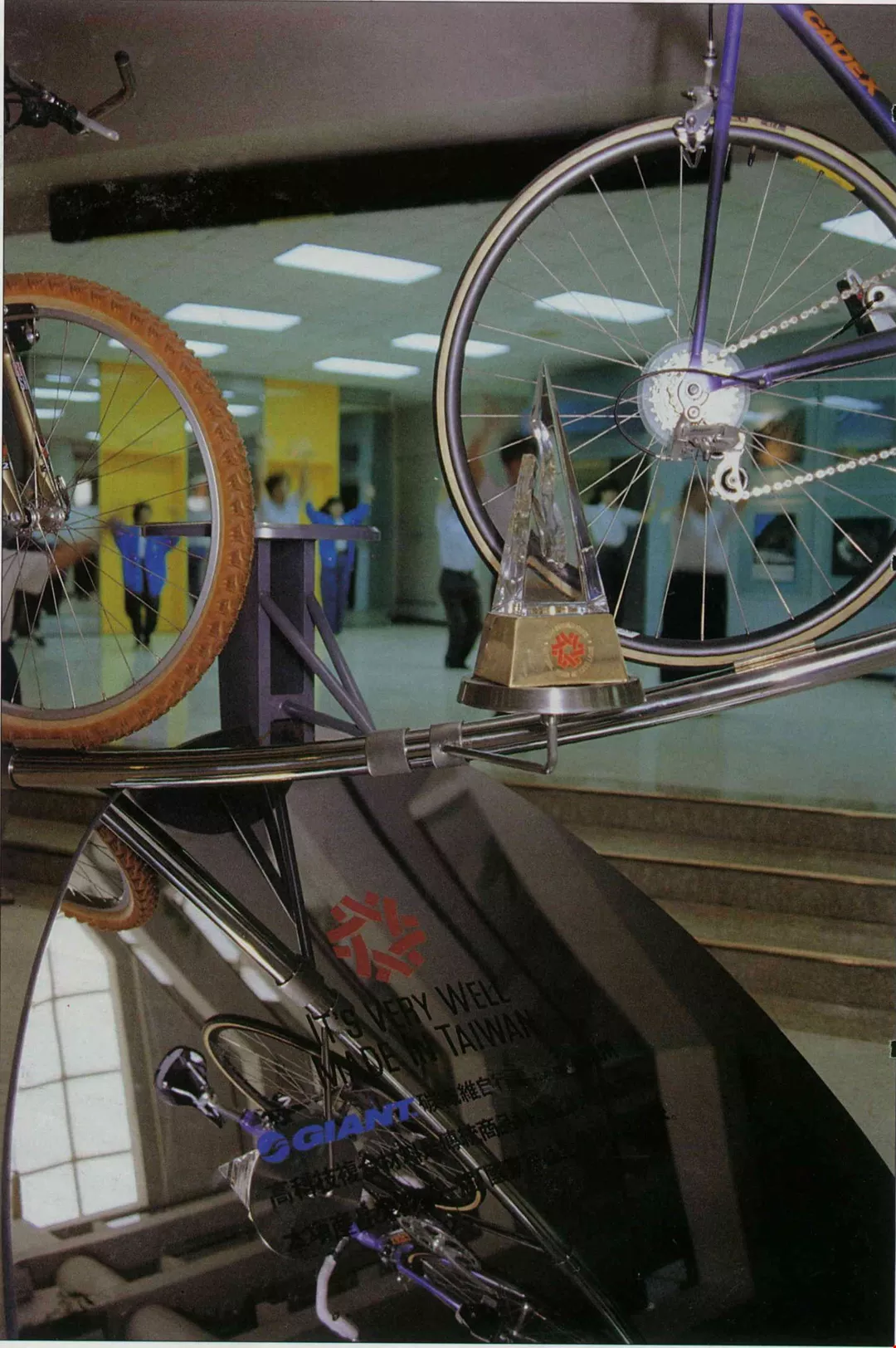
Giant bicycles has won an Award for Excellence two years running. They have specially placed the awards on public display in the main lobby of their headquarters.
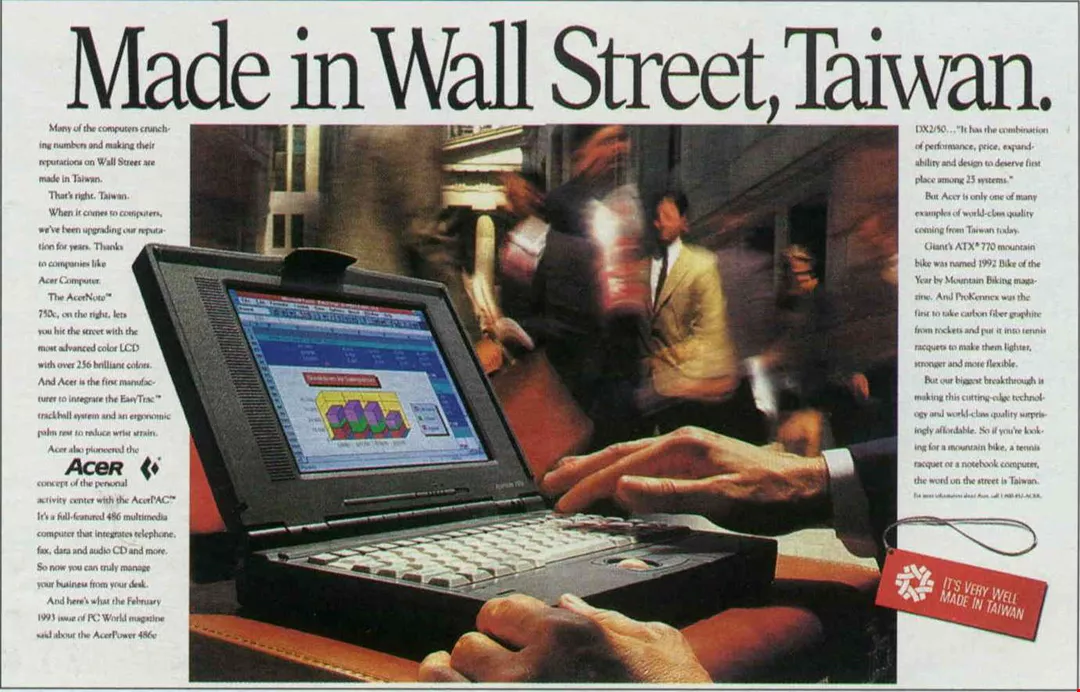
The China External Trade Development Corporation is trying to take advantage of the name recognition already achieved by some Taiwan products abroad to improve the image of all Taiwan products. (photo courtesy of CETRA)
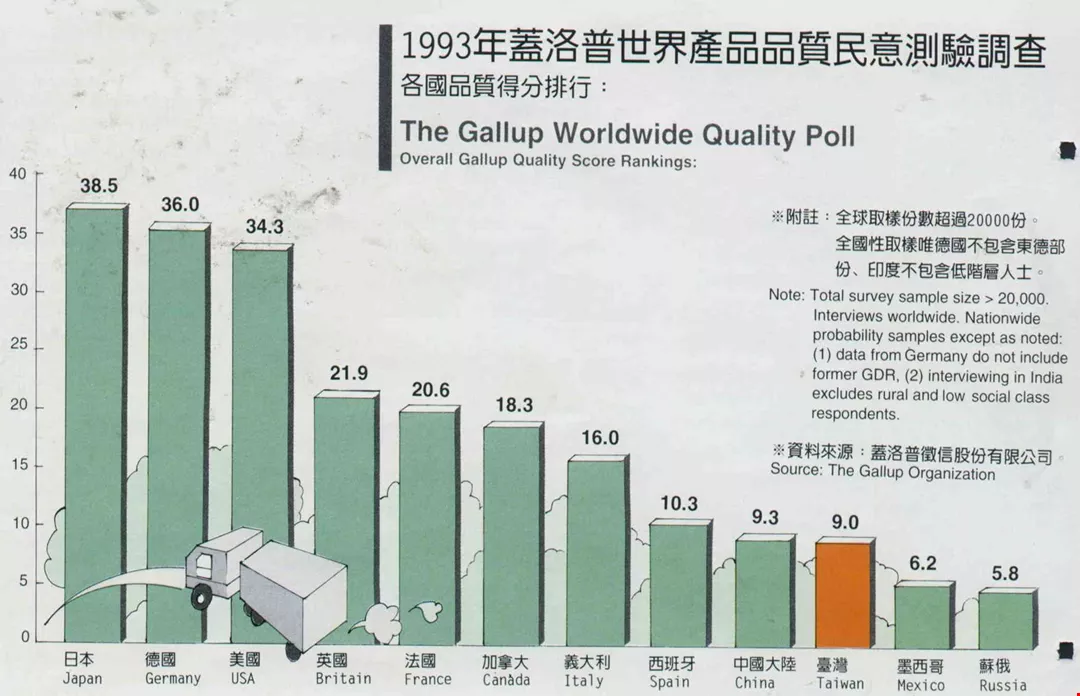
The Gallup Worldwide Quality Poll Overall Gallup Quality Score Rankings: Note: Total survey sample size > 20,000. Interviews worldwide Nationwide probability samples except as noted: (1) data from Germany do not include former GDR, (2) interviewing in India excludes rural and low social class respondents. Source: The Gallup Organization.
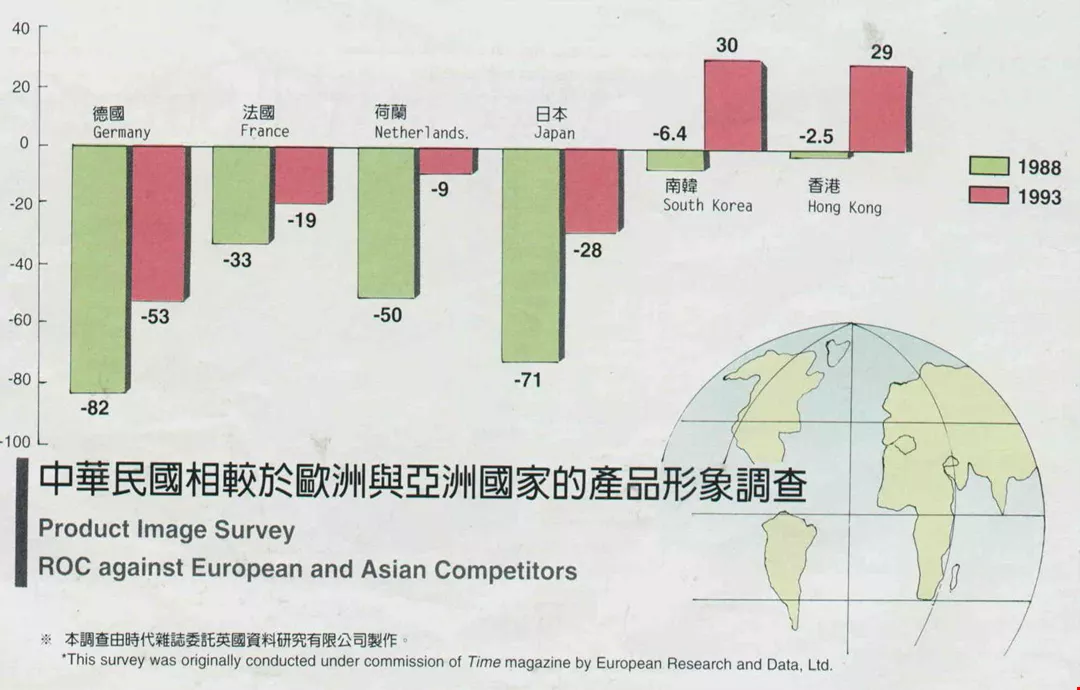
Product Image Survey ROC against European and Asian Competitors *This survey was originally conducted under commission of Time magazine by European Research and Data, Ltd.
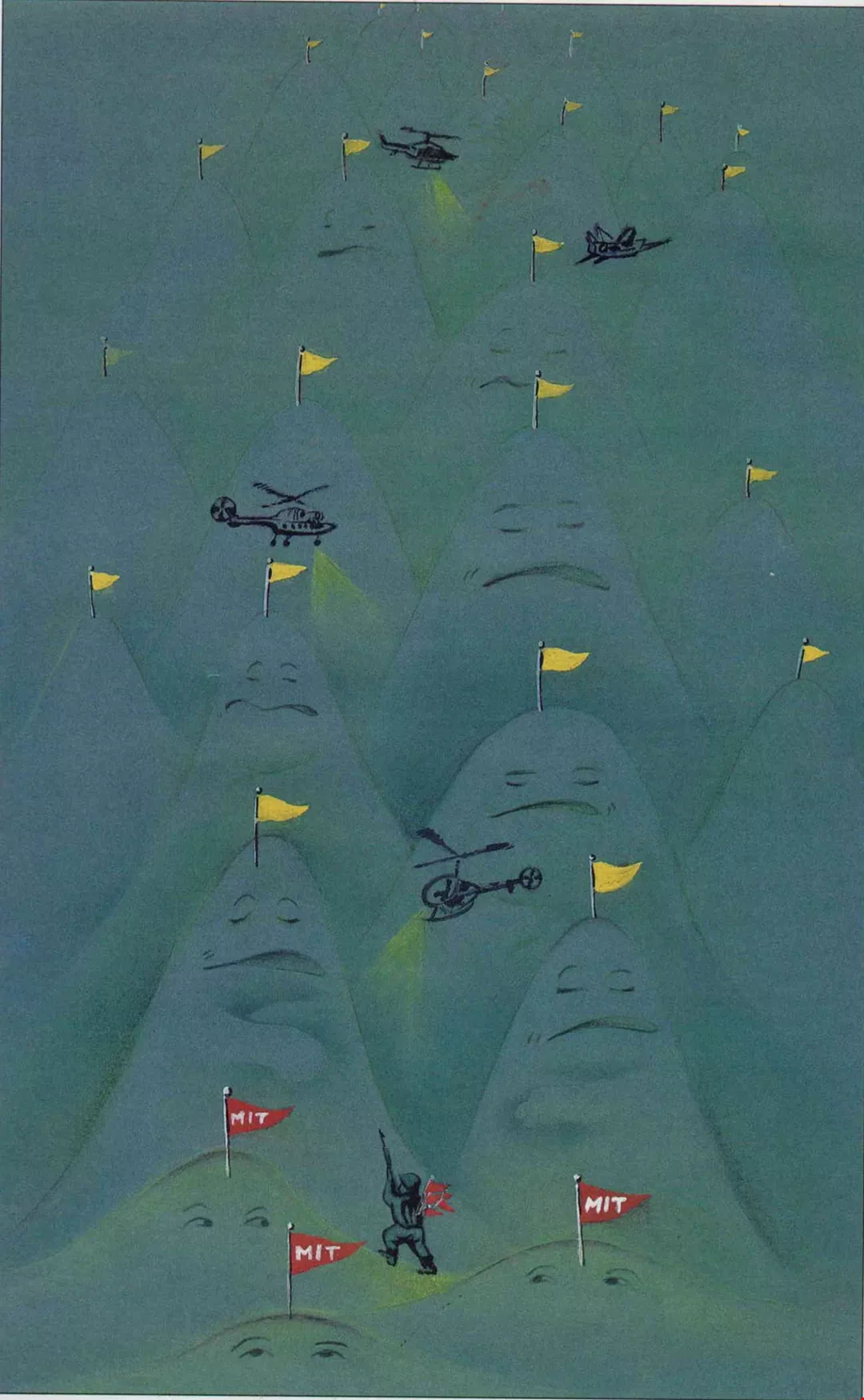
Companies striving to build up their image need the support of people in Taiwan. (drawing by Lee Suling)
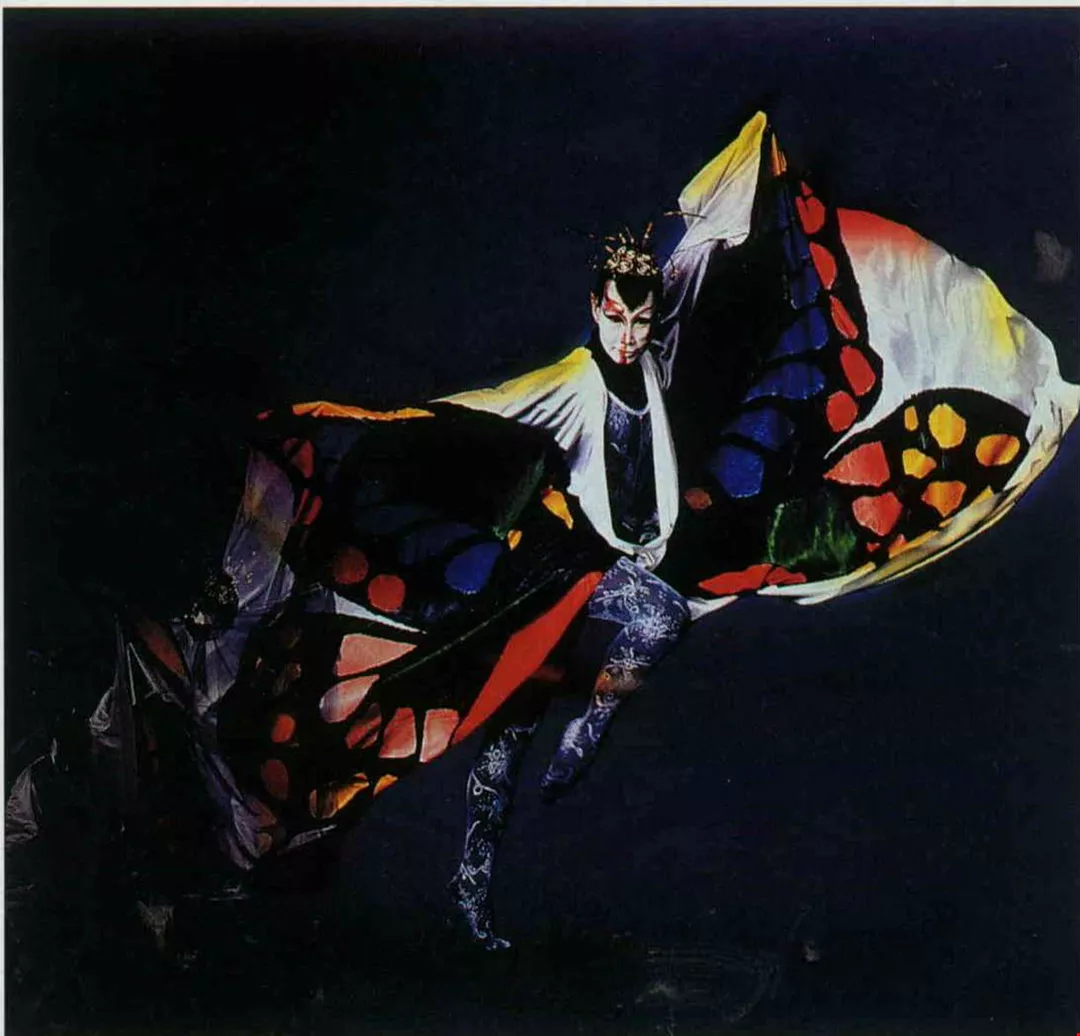
It is hoped that Taiwan's international image can be transformed from an ugly caterpillar into a beautiful butterfly. (photo by Ko Hsi-chieh)
@List.jpg?w=522&h=410&mode=crop&format=webp&quality=80)


