

Mention second-hand clothing and most people will immediately picture cheap and nasty flea markets or charity shops. But if they can get past these preconceptions and take a look on the famous second-hand clothing websites, they'll find last season's Burberry handbags for a mere NT$18,000, LV products going for NT$10-20,000, and a host of other trendy labels at cut-price rates. High-grade second-hand clothing has been a boom industry in the midst of this economic downturn, but you need to learn the tips and tricks of buying and selling second-hand to fully enjoy these great bargains!
High-grade second-hand goods are nothing new to Ms. Chou, who is well versed in popular culture. When she came back to Taiwan from abroad six years ago, she would spend time looking around the second-hand shops of the alleys of eastern Taipei. Back then, though she still hadn't summoned up the courage to actually buy any second-hand things, partly because the stores only had a small range to choose from, and partly because those things the stores did have were generally only 20-30% cheaper than buying new.
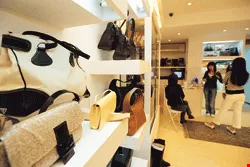
Looking for a real bargain in a second-hand shop can really feel like an adventure, and you can find great deals. But running into someone you know may be embarrasing.
You scratch my back...
The days when it was necessary to keep a low profile when visiting second-hand shops are well and truly gone, and online auction sites have hit the big time, so the youth today have gone from regarding buying and selling online as a novelty to seeing it as just another option. That's good news for second-hand shops, which have gone from being secreted away in dingy alleys, dark corners of large buildings, and basements to lining main streets, sitting clearly alongside department stores and shops dedicated to trendy labels, fighting new with old.
Two years ago, Chan Man-chi and her sister joined the fight, opening two stores in eastern Taipei. Their second store, Relove Second Hand, sits next to Breeze Center, catching the attention of many walk-by customers in the mood for a bit of a treasure hunt.
Chan says most of her customers are "women in their 30s or 40s," mostly professionals-doctors, lawyers, managers, and the self-employed-who have a good knowledge of labels and aren't stingy with their cash. These women know what they want; they don't just blindly bumble about hoping to hit on something. Young people are another big source of customers, but they don't spend nearly as much and don't come back very often, making them most definitely "irregular customers."
The Chans' two stores earn around NT$1 million a month each, and their sourcing of stock is a simple matter, with over a dozen friends supplying them with stock since they opened.
"We don't buy from unknowns-we stick to working with friends," says Chan. "Running a second-hand shop based on brand names, the thing we're most concerned about is the possibility of being sold counterfeit goods, especially given that counterfeiting techniques are getting more and more refined. We do our utmost to keep ourselves right away from that scene."
When they first opened shop, Chan remembers, they already had several loyal suppliers thanks to her older sister, who had more than ten years' experience working with designer distribution outlets. The elder Chan had found in her years that some of the big spenders kept just buying more and more clothes, more bags, more shoes... virtually filling entire rooms with their things. They couldn't bear to just give away all those well-cared-for clothes and accessories, and the very idea of throwing them out was just heartbreaking. But if they could sell them on to someone they knew, they could be sure their old things would be put to good use once more. What's more, it was a way of making room for more new things, and let them buy those new things without as much financial strain. And it was through these fashionistas that the Chan sisters managed to get enough stock to open their first second-hand shop with minimal capital outlay.
"Our prices are more or less dictated by the sellers, along with our own suggestions according to the condition of the goods and when they were made," says Chan Man-chi. For particularly popular accessories-anything in fashion or by a big-name designer label-second-hand prices don't differ too much from brand new. For last season's items, though, prices are usually 20-30% lower. Then, for pieces a few months older still, the Chans will generally offer even lower prices, in line with the lower demand. If they're much older than that, the Chans simply won't take them on.
"We hold special offers at the change of seasons or for store anniversaries, to bring in new customers," says Chan, who admits that despite the increasing popularity of second-hand shops, a lot of consumers cling to old misconceptions about buying second-hand, and still need to be shown the light. It seems like many people think second-hand clothing should be sold at bargain prices no matter what it is, while others think it must be left over from the estate of someone who has passed on. Still more question why they should even want to buy other people's used things, and are hesitant to put on clothes when they don't know where they've been.
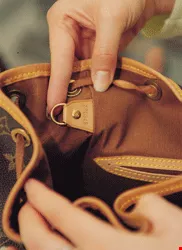
When shopping for big-name second-hand clothing, any customer's biggest fear is that they'll end up with a fake. If you do go shopping, be sure to check carefully to make sure what you're buying is authentic.
Second-hand hits the mainstream
"It used to be that second-hand clothes were things that people had worn, thrown in a closet for a few years, and then finally dragged down to a second-hand shop since they couldn't bear to throw them out. But recently there's been more of a trend toward things from recent seasons and styles, with people bringing in clothes from the season that has just passed. It seems to me that people are feeling the pressure to keep up with the latest styles even more these days," says Chi Ya-fan, who first opened her store Chiayuan ten years ago, and is considered a pioneer in the Taiwanese second-hand clothing industry. Now the general public are clamoring for name-brand second-hand goods. Having thrown off its hippy stigma, second-hand clothing has now launched itself into the fashion mainstream.
However Chi herself still holds true to the old ideals and refuses to compromise and go mainstream. To this day, her store still has its home in a nondescript basement. As well as cheap rent and the drop-in customers that the place brings in, her location offers customers a comparatively secluded, private shopping experience.
"Generally, first-time customers just come in for a look around, and sometimes seem to have trouble appreciating the value of name-brand products. Some even start acting up, which can ruin the whole shopping experience for other people in the store," says Chi. She gives the example of young customers who seem to expect a department-store shopping experience and react either disdainfully or disappointedly when they find the relatively small collection on display. Other customers just can't get over the idea of wearing clothes or shoes that other people have already worn, and complain loudly. Then there are those who don't understand the pricing system-how prices naturally are higher for goods that were limited runs or more popular-but still try and haggle for cheaper prices. And that's only a short list.
"Everyone who knows about this place is either a long-time customer, or was introduced by a long-time customer, and most book shopping time so they can get complete privacy," says Chi. By far the majority of her clients are still nervous about being seen going into a second-hand shop, because they are on the whole financially independent women aged 35 to 50, who have the means to buy from high-class stores but budget very carefully, hoping to stretch their money even further and buy more things they enjoy. They might bring along likeminded friends, but they would still rather people didn't find out they shop at places like that.
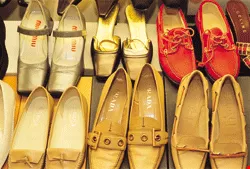
Shoes, shoes, everywhere! A lot of people find out once they've taken them home that the shoes don't fit-they didn't even try them on in the store before buying them! But for reasons of hygiene, second-hand shoes do not easily find new owners.
Putting it on?
When she started her store, Chi Ya-fan took the plunge with the help of her friends. "At the time, I was torn between ordinary work and starting my own business, but thanks to the help of my friends, who rented out the property and supplied stock, I didn't have to worry about the possibility of failure." Back then, ten years ago, Chi was managing a boutique called Hsiaoya when out of the blue some long-time customers and friends of hers who were heading overseas mentioned they wished they had somewhere they could offload some of their valuable clothes, which got her thinking about opening her own store for just that purpose.
As Chi says, second-hand shops were already seen as another sales avenue overseas, as well as providing shopaholics somewhere to offload some of their stash. But in Taiwan, where the market for big names was still in its infancy, it was still unclear if there would be a market for these same brands second-hand. But she was inspired by the way the Japanese were mad for label-brand clothing, and in particular how many of them who couldn't afford to buy that kind of thing brand new were happy to buy them second hand at a lower price. She decided that since the Taiwanese market tends to follow Japanese trends, perhaps Taiwanese consumers would take to second-hand shopping like the Japanese had.
Despite having been witness to the booming development of the current fad for second-hand goods-from the opening of chain stores through to the establishment of stores dedicated to celebrities' second-hand clothing, or to limited-run clothes-and now seeing it percolate to central and southern Taiwan, Chi is not optimistic. Bluntly, she remarks that she doesn't see a much of a future for second-hand stores that try to play with the big boys of the fashion industry.
"People see these places in the media and go have a look for the 'cool' factor. But bargain hunting and label chasing are hardly compatible mindsets, and it won't take much to disappoint those people. You could say that while the second-hand market seems to be flourishing, it's really more of a forced growth, and isn't really representative of what consumers want," says Chi. For her, the electronic and print media have blown the phenomenon out of proportion-there are even magazines devoted to second-hand fashion now. She doubts the industry can maintain the stock and supply levels needed to keep up, adding that if they can't ensure a steady flow of stock from this season and last, they'll end up flooded by counterfeit goods and lose consumer trust.
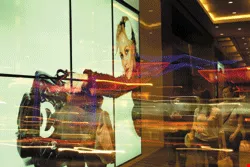
We may already have enough material possessions around us, but still we succumb to the temptation to buy more. Whether what you buy is pre-loved or brand new, you should take good care of it!
Big sales, small margins
Although some old hands in the second-hand clothing market may have their doubts, the performance of newcomers to the industry is looking good. One example is Wang Hsiao-wei, who runs Taiwan's first second-hand store to implement a computerized stock control system, Treasure. According to Wang, because the amount they sell is so great, some kind of inventory management is utterly essential. "The pricing scheme here has been made more transparent by this-our profit margin is a flat 20%, so there can be no disputes over valuation between seller and shopkeeper," says Wang. The power behind Treasure's throne is actually Wang's aunt, who used to sell clothes and accessories to second-hand stores. Feeling cheated that shopkeepers were selling her things for anything up to four times what they paid her for them, she decided to open her own store.
Two years ago Wang, who grew up watching her aunt buy piles of name brand items, went into business with her aunt-who had just resigned from her job at a technology firm. When they first started, their stock basically comprised what her aunt had accumulated over the previous 18 years, along with things from former colleagues and the wives of the owners of newly-established tech firms, several items of which are still in stock today. In early March this year, Wang opened a second location next to one of the Taipei branches of the Sogo department store, and she still has more stock coming in.
Total monthly turnover for the two Treasure branches can be as high as NT$3 million. Wang believes it's a result of their "high volumes, small profit margins": "With the media spotlight on this trend, customers virtually flock in, with a lot coming in to look for a bargain, or to find limited-run or out-of-production things. So as long as we keep up a steady supply of goods, our profits will be pretty good," she says.
Still, like Chi Ya-fan, Wang also believes that consumers need to be "re-educated" about the second-hand market. Some customers, she says, seem to think they are above second-hand shopping, and are doing Chi a favor by gracing her store with their presence. This makes them both rude and surprisingly picky. On top of this, most consumers only really know about the brands available on the Taiwan market; when it comes to European labels that haven't been imported by stores, and that people are unfamiliar with, few are interested.
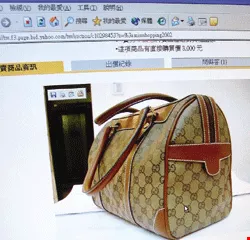
The Internet has given businesses the ability to reach virtually the entire planet, and cyber-stores can be open for business 24 hours a day, seven days a week. A prime example of this is online auction sites, where customers can have their choice of tens of thousands of different, high-quality items. (photo by Jimmy Lin)
Too much of a good thing?
On a positive note, this wave of popularity for second-hand goods is getting more people into the industry, and has led to the establishment of magazine "guidebooks" to second-hand shopping, making pricing less arbitrary. Although some in the industry think this is giving customers too much power over pricing, and will eventually result in petty price wars and a situation where fake goods are sold alongside genuine items, not to mention exploitation of sellers, for others guidebooks are just another step to regulating the market, making trading safer, which is worth encouraging.
Moreover, although the clientele of second-hand shops is still dominated by middle-aged, financially independent women, one can't discount the up-and-coming younger generation as potentially good customers. "A lot of young people just swipe their cards until they can't swipe any more, and still they want more," says Chan Man-chi, herself a member of Generation X. People of that younger generation don't necessarily have the same buying power, and of course credit cards can only go so far, so when it comes time to pay up, they often end up splitting the cost across several cards.
"Since some people can't pay off their cards, they resort to selling back the second-hand things they've just bought, or exchange them for something else and pay the balance." This cycle has brought into being a class of "second-hand sharks," people with sharp minds when it comes to shopping, who seek to profit by buying from one second-hand store and then reselling to others.
Looking to the future, will the price-cutting tactics of the second-hand goods market be able to survive a global economic bounce-back?
"Thanks to the economic bubble bursting and the growing influence of globalization, the gap between rich and poor can only increase, so there'll always be a need for second-hand shops," says Chi Ya-fan. But she declines to predict the direction the market will take in future, or whether it will continue to grow. Could this just be another Portuguese-egg-tart-style fad? Perhaps. But there will still likely be a market for second-hand goods.
In the words of Wang Hsiao-wei: "The day labels vanish is the day the second-hand market collapses." Until that day arrives, there'll always people digging around in the hope of finding treasure.
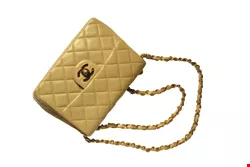
The emphasis of these second-hand name-brand stores is purely on big label clothing. Every piece is guaranteed to be top quality, and the clientele is just as high class as that of the popular boutiques. Even the storefronts are top of the range.
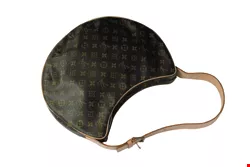
Looking for a real bargain in a second-hand shop can really feel like an adventure, and you can find great deals. But running into someone you know may be embarrasing.

@List.jpg?w=522&h=410&mode=crop&format=webp&quality=80)


