The Battle Over Digital Music
Chang Shih-lun / photos Yang Hung-hsi / tr. by Minn Song
December 2005


The world's hottest technology product right now is undoubtedly Apple Computer's iPod digital music player. In early 2005, global sales of the iPod passed 10 million units, not only spurring numerous vendors to aggressively pursue development of their own digital music players, but also pushing traditional record companies to enter the digital music market. Currently, there are more than 230 legal music websites around the world, and it is forecast that they will account for more than US$700 million in sales for the entire year 2005, with sales set to grow by more than 200% annually.
In contrast to the plentiful business opportunities abroad, Taiwan is currently limited to just one legal digital music platform, and the International Federation of the Phonographic Industry (IFPI), which represents recording industry interests, has in recent years aggressively pursued legal claims against online music sites ezPeer and Kuro for infringing on copyrights. Before business opportunities for digital music could emerge in Taiwan, the local industry has become enmeshed in legal disputes.
Just what are the challenges that digital technology presents to Taiwan's record companies? What are the pros and cons for recording artists of the culture of downloading? With the arrival of the digital era, can online sharing and copyright coexist?
Open the entertainment section of the newspaper, and it's apparent that the golden age of Taiwan's recording industry has passed. The advent of digital music has changed consumers' listening habits, and severely disrupted the record companies' means of earning profits.

An industry in decline
IFPI Taiwan secretary-general Robin Lee notes that 1997 marked the peak of Taiwan's recording industry. Because the proliferation of pirated CDs had been brought under control, sales of legitimate CDs reached NT$12.3 billion, a figure second in Asia only to that of Japan's industry. However, sales subsequently reversed, declining steadily until they hit N$4.5 billion in 2004. "The most important reason was the emergence of online piracy," Lee asserts.
Over time, piracy has taken on different forms. In the 1970s, most pirated music on Taiwan's market was in the form of unauthorized counterfeit records. In the 1980s, pirated cassette tapes were most prevalent. In 1990s, CDs sold in night markets became the mainstream for pirated music, with criminal gangs controlling the business behind the scenes. In the late 1990s, as broadband networks and CD burning technology became widespread, the mainstays of piracy gradually shifted from small companies to one-person operations--particularly economically constrained but music-loving students.
Of all the various forms of online sharing of digital files, the most popular as well as the most controversial is peer-to-peer (P2P) networking. In a P2P network, every participant is an autonomous node, with each user downloading directly from other users' file directories rather than from a small number of centralized servers. ezPeer and Kuro, two Internet companies that in recent years have been accused by the IFPI of copyright infringement, use just such a P2P approach. The companies assert that they merely provide a platform, as the users are the ones providing the actual shared files.

In contrast to the continuing decline in mainstream CD sales, the number of band rehearsal rooms in Taiwan has grown rapidly in recent years. The photograph shows indie rock group Peppermint rehearsing.
Legal battles
ezPeer and Kuro were established in 2000, and collect fixed monthly subscription fees for unlimited downloads. ezPeer boasts 300,000 members, with annual revenues of close to NT$360 million, while Kuro has 500,000 members and revenues of close to NT$600 million. They are the digital music platforms with the largest number of users in Taiwan. However, because much of the content exchanged by members consists of music files that are not licensed for such use, the companies became the target of the IFPI's repeated lawsuits.
In 2005, the courts found ezPeer innocent, and Kuro guilty, of copyright infringement charges. That similar business models could lead to completely opposed verdicts makes it evident that there is no legal consensus on the copyright disputes over such online music. Both cases are currently under appeal.
Lee states that the IFPI approached the companies on numerous occasions, hoping to jointly introduce a legal payment mechanism. However, the companies were not willing to regularly provide transparent download records, and would not allow preemptive action to prevent the distribution of copyright-infringing files. They were also unwilling to accept the record companies' download fee of roughly NT$30 per song.
The ever-expanding ranks of digital music users, and hot-selling MP3 players, make it evident that whether record companies like it or not, the era of online "non-physical" music products has arrived.

Online and off
KKBOX, founded in July 2004, whose business is based on streaming music, is currently Taiwan's only legal platform for paid music services.
KKBOX vice general manager William Lai states that his company chose to use streaming as the basis for its business because although P2P is convenient, it is legally too ambiguous. Because streaming does not involve downloading, it is less controversial. KKBOX spent a year negotiating copyright issues with 40 record companies including EMI, and finally was successful in building a legal digital music platform.
KKBOX, which charges NT$149 per month for unlimited amounts of streamed music, currently maintains between 60,000 and 85,000 paid members, and is growing steadily by more than 3,000 people per month. After Kuro's guilty verdict, and the possibility that damages could be applied to individual members, many users are migrating to KKBOX, leading to a three-fold increase in the latter's membership. In October 2005, KKBOX broke even for the first time, and projects that in 2006 it will become profitable, making its prospects bright. Lai stresses that Taiwan does not lack the potential for successful legal vendors. If the price is reasonable, most consumers will opt for legal services.

Taking back control
Companies speak of music downloads only in business terms, but in fact the relationship between music downloading and Internet technology should not be discussed only from a commercial perspective.
While many firms attribute the recent decline in the fortunes of Taiwan's record companies to the spread of MP3 files, Ho Tung-hung, an assistant professor in the Department of Sociology at Fo Guang University who once worked at a record company and whose research focuses on the sociology of music, points out that the recording industry has always had boom-and-bust cycles, and the public's buying habits change as technology develops. "To blame the recording industry's slump entirely on MP3 downloading is unfair," he says.
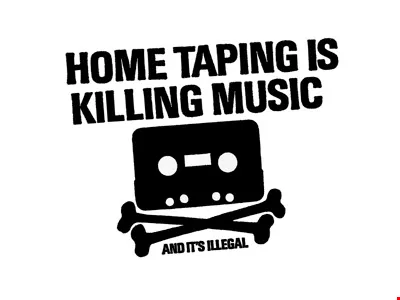
Examples of record company unease with new technology are not difficult to find in pop music history. In the early 1980s, the popularity of new products such as cassette recorders and Sony Walkman portable stereos made producing mix tapes of favorite music or recording radio programs quite popular among young people. An alarmed British recording industry launched a campaign at the time called "Home Taping Is Killing Music," warning that unfettered exchange of homemade tapes would result in the death of the music industry. This claim strongly echoes the defensive posture of today's recording industry in the face of MP3s and Internet downloading.
"However, we can foresee that just as cassette tapes not only failed to destroy the recording industry, but in fact expanded the population of listeners, the claim that music downloads will wreck the music industry is an exaggeration," says Ho.
In recent years, a number of studies conducted abroad have shown that the people who download the most MP3 files also tend to spend the most on music products. Although there are sure to be those who are unwilling to spend large amounts on CD albums, and will content themselves with poorer-quality downloaded music, most users download music only to listen before deciding whether to make a purchase--behavior that can be likened to listening to a radio program or watching music videos.
Hence Ho sees the downloading craze that has swept the world in recent years as a cultural movement by users to reclaim autonomy from record companies. He considers IFPI's equating the amount of downloaded music to the volume of lost sales to be illogical: "The record companies cannot prove that music downloaders would otherwise have purchased physical goods. If there were no opportunity to download, these music lovers would not have a chance to listen to music before buying, but would have to passively accept the publicity that the record companies provide through the media in the form of favored songs--a practice that damages diversity in musical culture."
How then are Internet downloads and CD sales related? As a music industry researcher himself, Ho points to a lack of systematic research that bears on this question. However, he says with frustration, while the recording industry is eager to commercialize music on the Internet, "it fails to see the opportunities that the Internet provides for connecting with music lovers and expanding their numbers."

Live music events such as Formoz and the Ho-Hai-Yan Rock Festival have gradually gained popularity, demonstrating that Taiwan's market for musical performance has much room for growth.
New indie forum
In fact, the popularity of MP3s provides an excellent avenue for independent artists without the resources to promote their music otherwise. Rock group Peppermint, started seven years ago, has released two albums, and their music is often circulated around the Internet.
Drummer Zheng Gaetan says that the group does not mind its music being downloaded for free and then distributed. That's because rock fans are highly loyal, and are cognizant of the music's cultural value. As a result, most who download the group's work are not deterred from buying it. For musicians who cannot afford to promote songs, downloadable MP3 files provide a way around the steep barriers to entry for media publicity, and as such are a good means of increasing name recognition, publicizing information about performances, and expanding their audience. In fact, in other countries, only the small number of superstar singers at the very pinnacle of the music business can make a living from CD royalties. The vast majority of recording artists must rely on live performances as their main source of income.
The most successful example of the embrace of Internet music downloads has to be Grammy-winning American group Wilco. After completing their Yankee Hotel Foxtrot album, they learned that the record company did not consider the work commercial enough, declining to issue it. Insisting on their creative ideals, Wilco canceled their contract with the record company, and instead shared the album on the Internet with their fans. Unexpectedly, their move ignited a craze, and in the end another record company was motivated to buy the copyright at three times the original price and subsequently issue the album. Even more encouraging for recording artists and record companies was the fact that the free listening provided over the Internet did not affect eventual sales of the CD, which topped 500,000 copies, making it Wilco's best-selling work ever.
Today, each time before Wilco issues a new work, music fans will first share MP3s of the songs. Many fans, after downloading song files, make donations to the charity organizations designated by the group. Wilco's lead vocalist Jeff Tweedy says that music is not something that is merely performed. To live, it needs the active participation of the listener. The band regards those who listen to their music as collaborators in the creative endeavor. To treat one's audience like thieves is absurd.
A shared culture
The example of Wilco shows that Internet downloading need not hurt musicians, but may serve as a good alternative form of publicity. As for Taiwan, the first album that fans were encouraged to freely share, Jesus Rocks, was released in 2004.
Joy Topper, Hsiao Fu-teh, Aadia's, and Biung contributed to making the album, which was the first musical work in Taiwan to adopt Creative Commons (CC) licensing, allowing fans to copy the music, burn it to CD, modify it, and distribute it in MP3 or other formats, under the condition that the licensors' names are retained and no commercial use is made. With no legal issues involved, users have no need to first obtain permission from the musicians before using the music in the ways allowed by the CC license.
At the same time as releasing Jesus Rocks under a CC license, they also released it as a traditional CD sold through brick-and-mortar channels. In the year since its release, more than 6,000 copies have been sold--a solid sales record for an independent release in Taiwan's relatively small market. Joy Topper therefore believes that not only does online music sharing not adversely affect CD sales, it also gives more people the opportunity to hear their work.
Singer Lim Giong, once popular throughout Taiwan for his song "Onward," also supports the communal spirit of the CC license. Lim, who in recent years has devoted himself to creating electronic music, samples various types of previously recorded sound during the production process. However, with the strict copyright regime that prevails, any sampling requires payment of substantial royalties, forming an invisible obstacle to creative latitude. Fortunately, artists can now select CC-licensed music for use as mixing materials, and are no longer compelled to spend large sums on copyrights. "CC is a virtuous cycle that benefits both others and oneself," says Lim. He is also considering releasing future works under a CC license.
As a veteran creative artist, Lim has some stern criticism for Taiwan's recording industry: "They are always saying they want to protect artists' rights, but I only receive NT$1000-plus in royalties each year. Many of my friends advise me to go ahead and terminate my contract. If I did that and bought the copyright, then released my work under a CC license, that would be more meaningful." Lim says frankly that in the current legal battles over digital music, record companies are mainly protecting their own interests, while musicians may end up gaining nothing. "The essence of creative works is communication," Lim says. "CC licensing's communal spirit of freeing up part of the copyright is consistent with this principle, so I am very supportive."

Lim Giong (left), who has released albums through mainstream record companies, and Joy Topper (right), are both supporters of the Creative Commons licensing concept, actively promoting the idea that creative works are communal property.
Unlimited possibilities
CC licensing's spirit of sharing may be admirable, but in a capitalist society, it is difficult for such an idea to become the mainstream. As for the future of digital music, IFPI's straight-talking Lee says, "Sun Yat-sen's one-world idea is just an abstract ideal. As long as people exist, there will be stealing."
Lim, with his affirmation of the CC concept, believes that all creative works are built on the base of those who have come before. "Since we gain from society, we should give back to society, and this idea that creative works are communal property is especially important in the digital era," he says.
While music downloading presents a challenge to sales of traditional music products, a musical culture that values the sense of immediacy provided by live performances is gradually gathering strength. Fo Guang University's Ho therefore believes that faced by the onslaught of digital technologies, music industry companies should not limit their business ideas to only album sales. They must expand their conception of the music business in order to adapt to this new revolution.
For musicians, this is the worst of times, but perhaps also the best of times. That is because although the situation may be chaotic and uncertain, the future promises unlimited possibilities. Looking ahead, the only thing that is sure is that the musical world of tomorrow will be very different from today's.

Creative Commons Licensing
In the Internet age, the notion of "resource shar-ing" has become widely accepted. However, traditional copyright law assumes that the copyright holder reserves all rights. As a result, online behaviors such as downloading data, saving documents, and modifying program code all have the potential to violate copyright.
With this situation in mind, some legal experts in the United States established the Creative Commons organization, and proposed the concept of "some rights reserved" to provide a basis for authors to offer their works for public use, subject to certain conditions.
The Creative Commons concept, abbreviated as CC, is based on the idea that all humanity's intellectual advances and creative works are communal property, and this collective ownership should not be superceded by commercial interests. Therefore, so long as a user conforms to the particular form of CC chosen by the author, he can freely use a CC-licensed work without obtaining permission. A CC license comprises four elements--retention of the licensor's original attribution, non-commercial use, distribution in the original manner, and prohibition on modification of the work. The author can offer his work under a CC license subject to the conditions he deems appropriate.
Currently, the CC concept is being promoted in more than 30 countries around the world. The Institute of Information Science at Academia Sinica is the major force behind efforts to popularize CC licensing in Taiwan. Chuang Tyng-ruey, deputy director of the institute, states that using a CC license does not mean that copyright is being relinquished, but rather gives the author control over how his work is licensed, while allowing a degree of communal ownership. Chuang believes that the incorporating of older elements into new works is characteristic of contemporary culture, "so that it is difficult for anything to be completely original. All culture is therefore remix culture. CC recognizes this characteristic of our times, and encourages authors of creative works to use the licensing mechanism to make more works available for use by more people, stimulating vigorous cultural development."

Widespread CD piracy in Taiwan led the IFPI to organize the "March Against Piracy" in 2002. Numerous celebrity entertainers took to the streets, calling on the public to join the fight against piracy.

Lim Giong (left), who has released albums through mainstream record companies, and Joy Topper (right), are both supporters of the Creative Commons licensing concept, actively promoting the idea that creative works are communal property.

As progress continues, listeners' buying habits have also changed. In addition to traditional channels for purchasing albums, online platforms have become an important source of music. Downloaded music can be burned to optical disks, or transferred to portable audio players for listening on the go.

As progress continues, listeners' buying habits have also changed. In addition to traditional channels for purchasing albums, online platforms have become an important source of music. Downloaded music can be burned to optical disks, or transferred to portable audio players for listening on the go.

The advance of digital technology has had a negative impact on the CD format. The prodigious content on a CD album can now be easily converted into MP3 files and then carried anywhere.

Widespread CD piracy in Taiwan led the IFPI to organize the "March Against Piracy" in 2002. Numerous celebrity entertainers took to the streets, calling on the public to join the fight against piracy.


