

As its proprietor is surnamed Chuo, friends call him Zhuoye in Taiwanese, hence the name of this charming homestay in the mountains of Sanyi in Miaoli County, Zhuo Ye Cottage. The architecture is modeled after the bamboo bungalows and wooden buildings that predominated Taiwanese farming communities in the 1960s, which fully realizes the small village theme that the Chuos sought to create. Add to it the superior landscaping and it's easy to explain how it became one of the most popular homestays in Sanyi.
The land that Zhuo Ye Cottage now occupies was originally terraced fields. Though Mr. and Mrs. Chuo Ming-pang fell in love with the scenery from the moment they saw it, they were initially discouraged by the high asking price. Several months later, friends called to say they had spotted a fledgling owl in the area, and it was ultimately the Chuos' excitement for the region's abundant ecological endowment that made them recognize they could no longer let cost stand in the way of their dreams. They paid more than NT$4 million for the 6000-square-meter tract of mountain forest and then put another NT$10 million into construction.
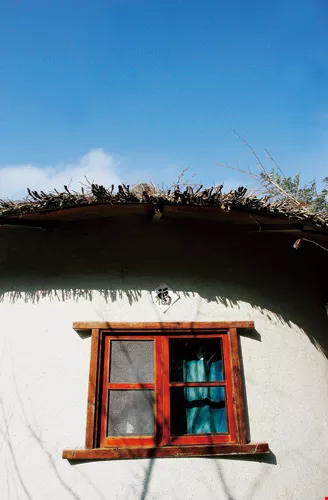
The most popular accommodations at Zhuo Ye Cottage are the traditional gutingpen (left), which are modeled after traditional barns. With their rounded shape and slender bamboo roofs, they are a vivid snapshot of Taiwan's past. The colorful wooden doll shown at right is a creation from a joint tour with a local woodworking studio.
Tribute to the past
Chuo Ming-pang grew up in the countryside of Tachia in Taichung County. As a landscape architect, he spent most of his career working amidst the hustle and bustle of the city when finally, when his age reached the half-century mark, he began to yearn for a return to the simpler village life of his youth. And so he began work on a place that would bring those memories back to life.
He planted grasses and flowers on the mountain slopes and built small bridges overarching little streams. The little wooden houses are broken up by clusters of bamboo, maple trees, and other low-elevation tree species. Although the structure of the wooden buildings is steel-reinforced concrete, the window frames and porches are made of wood, and the roofs are covered with bamboo strips, allowing each building to retain the flavor of Taiwan's traditional farming villages.
Another kind of house takes its inspiration from the traditional Taiwanese round barns. The frame is made of circles of woven bamboo finished with cement and paint, which is then topped with a roof of slender bamboo. With its one-bedroom, one-living-room floor plan it accommodates four to six people. When guests retire for the evening, they have to thread their way through a small rounded entrance connecting the living and sleeping areas to access the specially designed round bed. The fascinating design has made the model extremely popular with customers.
Chuo says that he places great emphasis on creating a comfortable environment. Accordingly, each of the units has its own corridor and deck in order to preserve personal space for guests, yet still allow for social interaction. "Every guest is like a member of our little village. I want everyone to be able to soak up the natural mountain life, as well as enjoy the relaxed pace and warm community feeling that country life used to be all about," he says.
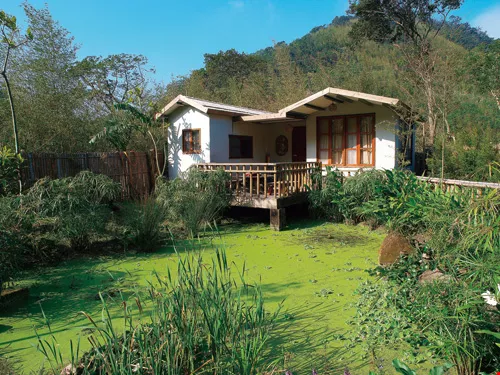
Zhuo Ye Cottage is made up of individual wooden cottages. Each one has its own porch and corridor, which affords the resident guest a certain amount of privacy. The consummate landscaping furthers the sense of repose.
Maintaining balance
The Chuo family runs Zhuo Ye Cottage according to what they term the three "qualities" of farm life: quality of lifestyle, production, and ecosystem. To implement these precepts, Chuo Ming-pang has insisted on using only organic methods in cultivating the plants and vegetables. He is similarly principled about not interfering in the ecological balance of his land. For instance, in the first two years of operation, caterpillars laid waste to practically all of the maple leaves, yet Chuo refrained from using pesticides or fertilizer; by the third year birds and other predators appeared in droves to feast upon the bugs, setting into motion a food chain that helped the trees flourish without disturbing the natural order.
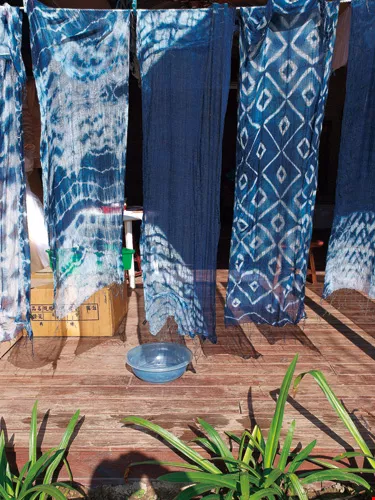
Chuo also opened a workshop to promote interest in traditional indigo dyeing. Using dyes they make from the indigo plants they themselves gather, guests create their own scarves, shawls, backpacks and other objects, giving them a taste of rural modes of production. The one cafeteria is vegetarian, and its self-serve, all-you-can-eat hotpot gives visitors the chance to sample scrumptious mushrooms and veggies from Chuo's onsite gardens. In fact, the fresh ingredients and savory broth have been known to attract visitors who come from far away, not to reside, but strictly for the good eats.
Chuo's business philosophy is at odds with the preponderance of places that seek to attract customers with European-style architecture. On the contrary, he believes that for a place to achieve individuality, it has to reflect both the local culture the particular tastes of those who manage it.
"Zhuo Ye Cottage evokes a quintessentially Taiwanese flavor. A lot of our elderly guests find the experience very emotional, and when I think of that, I know I'm doing something meaningful," says Chuo.
The quaint, outdoorsy Zhuo Ye Cottage is close to strawberry farms. Every winter, with the assistance of local farmers, they put together a strawberry-picking trip that is very popular.
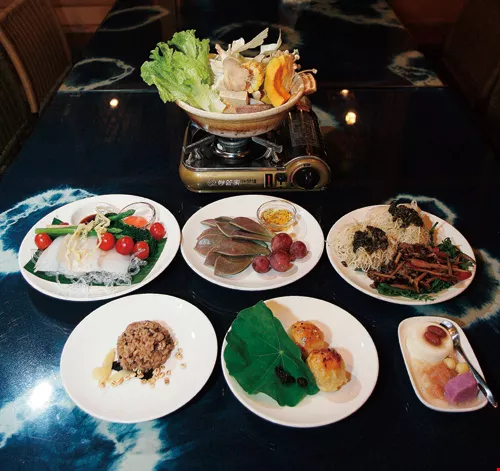
At Zhuo Ye Cottage, one can dine on delicious all-you-can-eat vegetarian hotpot that has six main vegetable offerings, accompanied by unlimited beverages and desserts for only NT$399.

The most popular accommodations at Zhuo Ye Cottage are the traditional gutingpen (left), which are modeled after traditional barns. With their rounded shape and slender bamboo roofs, they are a vivid snapshot of Taiwan's past. The colorful wooden doll shown at right is a creation from a joint tour with a local woodworking studio.

@List.jpg?w=522&h=410&mode=crop&format=webp&quality=80)


