The Man Behind M-Taiwan:An Interview with H.T. Kung
interview by Vito Lee / photos Chuang Kung-ju / tr. by Paul Frank
August 2005


Two years ago Dr. Kung Hsiang-tsung (H.T. Kung), a fellow of the Academia Sinica, proposed the Integrated Beyond 3rd Generation (iB3G) Dual-Network program. The government immediately took an interest and presented the M-Taiwan (Mobile Taiwan) plan, which aims to create Taiwan's third flagship industry, after semiconductors and LCDs, and improve the quality of Taiwan's information network.
Kung is a computer science expert and Harvard University's William H. Gates Professor. He has more than 100 articles and patents to his name.
During a trip to Taiwan that was difficult to arrange given his busy schedule, Dr. Kung agreed to be interviewed by Sinorama. He talked about the transformation of the wireless industry in the last two years, as well as the key factors that will affect the future development of the M-Taiwan plan.
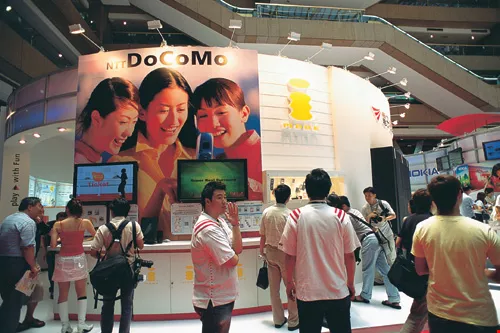
Offering everything from cute ring tones to rich shopping menus, after achieving domestic success at home, Japan's biggest mobile communications services company, NTT DoCoMo, took a "holistic exporting" approach to other countries. It would be worth Taiwan entrepreneurs studying the company's development experience.
Q: When the government approved your dual-network concept, you went on to propose the M-Taiwan plan. How did you come up with the idea in the first place?
A: It took only a month or so for the idea to take shape. I didn't spend a long time thinking about it. It was quite a natural development, because the integration of cellphones and wireless networks is a technological step we have to take, and is also something for which Taiwan is ideally suited.
At the time, Minister without Portfolio Tsai Ching-yen, whose brief is the development of science and technology, liked my idea very much. As a matter of fact, just about everyone who has thought seriously about our future communication environment endorsed the idea. The only doubts came from industry, but now they are gradually warming up to the idea. Q-ware Systems and Services Corporation has raised more than NT$3 billion to set up a wireless network in Taipei and numerous cell-phone manufacturers have invested in dual-network cellphones. This shows that industry is changing the way it thinks about this technology.
Q: Wireless technology is developing at a very rapid pace. What's been the trend over the past couple of years?
A: Two years ago, WLAN (wireless local area network) technology had not caught on yet. At the time, a wireless information network that could conveniently transmit large amounts of information wasn't even on the horizon. Today, thanks to WLAN and WiMAX (Worldwide Interoperability for Microwave Access), a basic wireless network has already taken shape. That's the biggest change.
But many other problems still need to be tackled. WLANs consume a lot of power, and thus far none of the power supplies for dual-network cellphones on the market are ideal. Moreover, many related accessories are not exactly small and remain too expensive, which is why they haven't become very popular. We still need to solve these problems.
Q: The integrated dual network is M-Taiwan's flagship program. What has been its achievement so far?
A: The main thing we've done is to set up the integrated dual-network office and demonstration projects in various locations as open models for practical application. Some businesses can clearly see that these things are worth doing, but they are afraid. Once you have a partner, you can overcome your fear of future uncertainty. The government must show its ability to lead. Especially in this field, you cannot follow other countries' lead. You have to take the initiative and establish a basic infrastructure.
We have projects in various localities, the biggest of which is in Taipei City. But even in Taipei we've only installed hardware. Software and services still need to be developed.
Q: After Taipei and Kaohsiung, we are now seeing wireless city projects being launched in other countries. What's different about how they are proceeding? What are Taipei's advantages?
A: Philadelphia, Pennsylvania, has recently shown great dynamism in this area. So has Austin, Texas, but neither city has a project as big as the one in Taipei.
Philadelphia's project covers a smaller area than Taipei's, and its main objective is to strengthen public security, reduce the digital divide, and enable government agencies to communicate more easily. That's not exactly what Taipei is doing; it's closer to Kaohsiung's public wireless platform. In Taipei, the goal is to give citizens rather than the government access to the network.
Q: By the end of 2005, Taipei's wireless network will be accessible to 90% of the population, but the present wireless network utilization ratio is only 10%. What's the problem?
A: Taipei is a very interesting model. The original concept was meant to meet the needs of citizens, but right now we don't know how far the whole network will develop in the future.
I'm not too worried that not enough people are logging on to the network at present. It's just a question of time. Moreover, there's no point in setting up APs (access points) on subway lines. Unless everyone carries a dual-network cellphone on the street, who is going to use a notebook computer in the subway? This first step was not a good move.
During the second and third stages, things will improve. Our most important task is to make available a greater number of interesting online services and applications. We probably haven't even imagined future applications.
Q: Looking at the potential of the integrated dual network, numerous other networks--including fixed networks, wireless Internet telephony, and cable TV--will also play an important role. Can you predict what the future holds?
A: To be honest, in this field you can't really make predictions. Many old models have been blown away. Phone companies' voice services are just one example. Ten years ago, long-distance calling was their most profitable business, but today it's a big money loser. In the next ten years, nobody is going to invest money in voice transmission. There may still be money to be made from cellphones, but there's no money left in fixed networks. So fixed networks have to change. Telecommunications businesses are relying less and less on income from voice telephony. Instead, they're offering their customers ADSL.
If we look back at how computers have developed, we find that the new has displaced the old every time. Market protectionism is bad for the consumer. It makes developing new services that better serve consumers almost impossible.
Q: Taiwan is one of the few countries that is developing wireless applications on a national scale. In neighboring Japan, the catchword is U-Japan (U stands for ubiquitous). How does this concept differ from the M-Taiwan plan?
A: The U-Japan concept stresses the utility of sensors, has greater permeability, and aims to become a more integral part of daily life than the mobile concept. Compared with the M-Taiwan plan, the U-Japan plan is more focused on daily life, such as at-home care, monitoring a bedridden patient's physiological condition, or various aspects of the living environment.
The U-Japan and M-Taiwan projects have to tackle very similar problems. Equipment needs to be made smaller and more user-friendly, and services need to be improved in terms of connectivity and content.
Q: When cities and companies compete, what's the deciding factor? How long is it going to take before we can see the trend of the future and the winners and losers?
A: Dual-network cellphones are the indicator of whether the integrated dual network will go from being an available application to being widely used in everyday life. But as yet, dual-network cellphones are not sufficiently widespread. Taking a variety of factors into consideration, In-Stat, a market research firm, predicts that in 2007 dual-network cellphones will really take off. I tend to agree with this view. Probably within three years, we will see whether cities or industry will have taken the lead.
Then there is WiMAX, which is very similar to the current WiFi, but has a wider range. Seeing the opportunities presented by this technology, many governments have begun issuing new licenses, which is a very good thing, because obtaining a license is not easy. In the past they were all given to phone companies. But overseas, licenses are now being given to data services companies.
Although Taiwan is the world leader in WiFi manufacture, we are almost two years behind other countries, such as the US, Japan, and South Korea, in the manufacture of WiMAX chips. And other than chip manufacture, for WiMAX systems Taiwan is completely dependent on foreign manufacturers. One of the goals of the M-Taiwan plan is that once Taiwan's wireless network services mature, and a wide variety of services become available, this will spur on the local chip and equipment manufacturing industries.
Q: The development of WiMAX is the biggest trend in wireless networks. What ought to be our next move?
A: First of all, we need to lose no time in promoting the development of WiMAX and assigning frequencies to data services companies. In the past, Taiwan's data services were all controlled by traditional telecommunications companies, such as Chunghwa Tel-ecom. The market was pretty closed, and norms were also restrictive. These big companies even called the shots when circuits were being installed. It was very similar to how WiFi was sold. In the future, network building should not be monopolized. More companies that provide applications and data services ought to be allowed to easily join and use the integrated dual network. Afterward, because network technologies will be standardized, they will be interconnected. In other words, Taiwan should not be focusing on 3G cellphones, which is what these companies are doing.
Nor should Taiwan just make WLAN chips in the future. It should also make equipment and provide services. You could say that the integrated dual network program developed and promoted in the last couple of years is just a small-scale project. The M-Taiwan plan we are embarking on now is an all-out campaign. Equipment manufacturers, content providers, the telecommunications industry, the Science and Technology Advisory Group of the Ministry of Economic Affairs, and the Directorate-General of Telecommunications of the Ministry of Transportation and Communications are sparing no effort to mobilize their resources. The Institute for Information Industry and the Industrial Technology Research Institute are also contributing. We should be coming out with a new blueprint by September.
Taiwan is an excellent laboratory for the project. If M-Taiwan proves to be a success, many industries will benefit. Taiwanese industries will no longer need to move overseas, but will upgrade more rapidly.
Q: Will Taiwan's telecom companies obstruct or assist the development of M-Taiwan?
A: For more than a decade, most of Taiwan's technological and scientific transformation has been concentrated in the communications industry. But Taiwan lags far behind Japan and South Korea in creating new services, and the reason for this is that Taiwan's monopolies haven't been smashed. Japan's NTT was privatized 20 years ago, but Taiwan hasn't even done this much.
In an environment of fair competition, the threshold for joining the platform will naturally be lowered. Only then will we see a diversification of services. For example, with Japan's DoCoMo you only pay once and you can use all their services whenever you like. Consumers were willing to pay a fee, and all the services followed.
If Taiwan wants to provide content, the environment--the competitive environment, that is--needs to be improved first. Appropriate laws and regulations need to be passed and bandwidth needs to be distributed fairly. I think that WiMAX ought to be opened to private enterprise and the public. In addition, when the current free-to-air TV frequencies are no longer needed after the switch to digital TV, they should be made available to data services companies.
Q: Ways to gain access to information keep evolving. Does this mean that the way humanity manages knowledge is also evolving?
A: It certainly does. Nowadays, the first thing everybody does when they are looking for information is to check Google. It's the same all over the world. Harvard University, where I teach, has concluded an agreement with Google to digitize and make available on the Web all the holdings in the Harvard University library system which are not copyright protected. Everyone knows this is a very important development, but there's no telling what impact it will have in the future.
These subtle changes may be difficult to perceive in Taiwan, but if we are all alert to them and lay the groundwork, we will be ready to welcome the new era.


