The Same Old Spiel on a Brand New Channel
Peng Shu-ching / photos Shih Wei-kang / tr. by Jonathan Barnard
August 1994


Home shopping networks have only been making their pitches on Taiwan's cable stations for three years. According to the estimates of more than 40 companies in the field, yearly sales now amount to about NT$1 billion, reaching NT$200 million on a good month. As for the future, the sky's the limit!
Home shopping networks have a long history abroad, where their salesmen peddle a wide variety of products. In comparison, Taiwan's salesmen on-the-tube, who hawk mostly household goods, are greenhorns. But peppering their speech with Taiwanese slang to attract local customers, the salesmen give these shows a style found nowhere else on TV. It's performance style inherited from those kungfu-performing salesmen of years past that might be called "the oldest of language arts."
Lin Chin-hsien, who used to sell in night markets and now gathers materials about Taiwanese songs and the Taiwanese language, says, "This ancient art of hawking goods is a great Chinese tradition. In days past itinerant salesmen-cum-performers would gather in front of temples to peddle their wares, making either the hard sell with death defying stunts or the soft sell. The hard sell might mean putting knives or swords down their throats, whereas the soft sell would mean putting on skits or singing. The songs were often those urging good behavior."
From the temple fairs and markets frequented by the potion pedlars of yesteryear, to the department stores and supermarkets of a later era, to the home shopping networks on cable today, salesmen have been making pitches peppered with interesting local expressions and slang (mostly in Taiwanese). These give the new sales programs a distinctly grassroots and down-home feeling.
In the early days, salesmen would shout out vivid and funny rhymed lines in Taiwanese and give a deft performance of operating the product to attract crowds in the market. Now that this "sales kungfu" is on television, has it lost any of its original flavor?
(Drawing by Tsai Chih-pen)
An ancient art
"Some basic principles don't change. For example, 'Get a good position and you're half way; get it decorated right and that's half the ball game.' This means that if you get a good location, it won't be nearly so taxing to make a sales spiel. Then you'll naturally have more energy the more you speak, and you'll be half way to closing a sale," says Chen Chao-yang, who has peddled products for more than a decade. Three years ago, before the home shopping networks, Chen was interviewed on Broadcasting Corporation of China's "All Over Town" show. He's the doyen of Taiwan's home-shopping salesmen.
Chen uses the metaphor of flowers blooming and fruit ripening to explain the entire sales process, from making the pitch to closing the deal: "In the business we have an expression. 'flowers bloom, and the fruit ripens, is admired, and drops its seed.' We're talking about how to attract people's attention, how to get them interested in the product (the flower blooms). Then you make comparisons with a similar product to show how yours is cheaper and better (admiring the fruit). Finally you get the customer to part with his money happily, feeling not that he was spending money but rather that he was getting the better end of a deal (becoming fruit, dropping the seed)."
These "four points of an itinerant salesman" are in fact the "washing kungfu" passed down by the wandering salesman of days past; others have called it "poison nerves. " Lin Chin-hsien explains that "washing" means cleaning the ears of customer after customer (and presumably pulling the wool over them too) until you reach your sales goal. "Poison nerves" also carries with it the same idea of brainwashing customers.
The truth is that there isn't much difference between this idea and the approach outlined in current books about sales strategy. Both aim at attracting people's attention, gaining the customer's trust, and then moving in for the kill.
"There are good and bad versions of this kungfu, and good and bad people working the field," Chen says. "It's most important to keep perfecting your craft. You can't just study one way of doing it and never change." Chen believes that success in this field only comes with wisdom, experience and hard work. Li Wen-fang, a salesman for more than a decade, emphasizes the importance of "sincerity." "Getting the customer to put his faith in you is paramount."
Shen Min-chieh, yet another salesman, says, "You've got to completely understand a product before you can offer customers a thorough and practical introduction." Customers have called the sales channel, complimenting the salesmen, "The way you operate the product on TV is truly amazing, but why is it that it's a completely different experience for me at home?" Shen Min-chieh says, "We're really not pulling a fast one; it's just that I'm very familiar with how to use it."
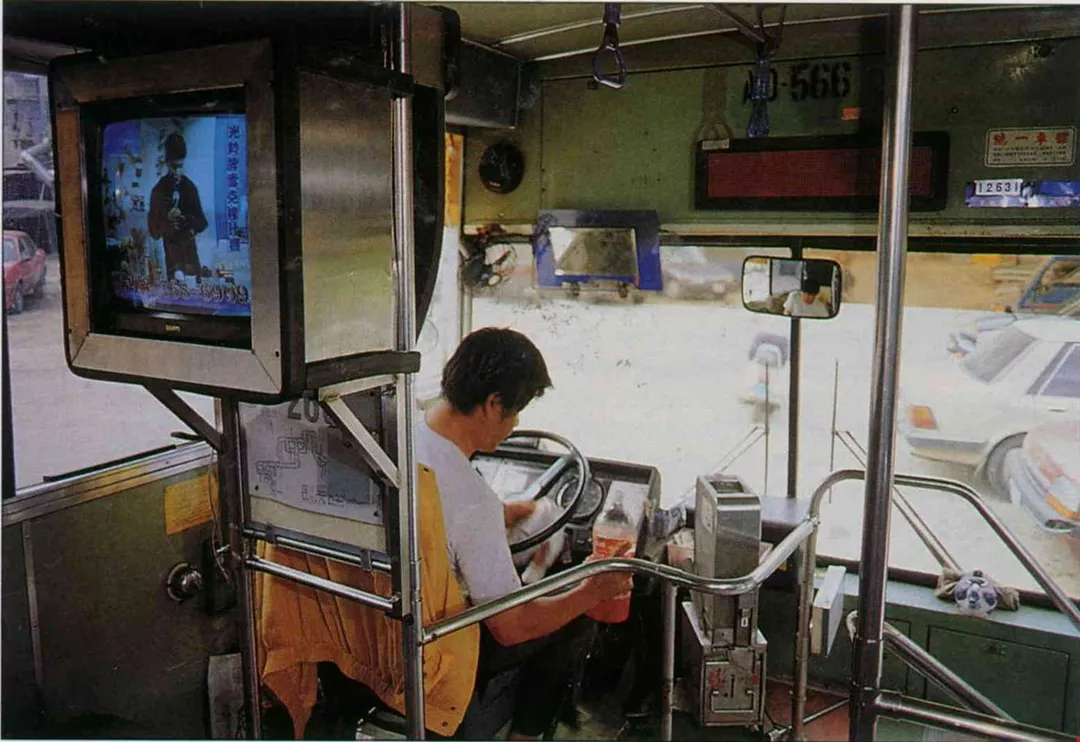
Billing themselves as "sellers without stores," the cable home shopping networks are booming, being watched in even the most unlikely places.
Hot stand-up routines
Besides confirming the operating skills of the salesmen, the public is also interested in their slick talk. From a family of loyal home shopping viewers, Chang Ching-wen goes so far as imitating the lines he hears more often. "My younger brother the law student is a master at imitating them!"
Where indeed did they get these lines?
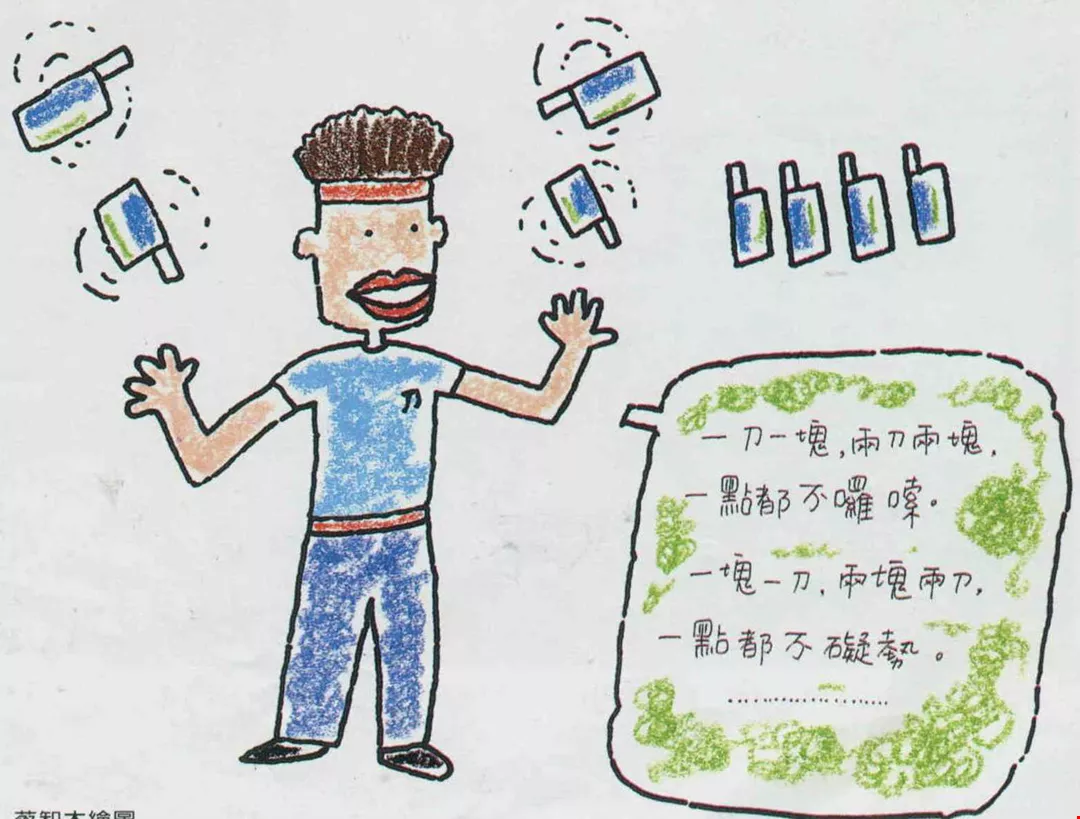
"Take the example of selling a paring knife. We say, 'One cut, one chunk; two chunks, two cuts--no ands, ifs or buts.' Others say 'one chunk, one cut; two cuts, two chunks--you needn't live like monks.' Depending on whether 'chunk' or 'knife' is up front, the rhyme will be different," says Chen Chao-yang, who emphasizes the importance of adapting quickly to changing circumstances.
"Sometimes in order to raise the value of a product, I've got to appeal to citizens' patriotism. For instance, when I sell fruit juicers I say, 'This juicer, recipient of a gold medal from the ROC government, is in a class by itself. Just take my word for it, and don't waste your energy debating it, 'cause life is short: World-famous brand name juicers cost NT$5000 a piece, but do foreigners drink soy milk? In Japan they don't raise guavas. But Taiwan is another story altogether. Taiwan is Formosa, the beautiful isle. It's a fairy tale island that has fruit all four seasons of the year. In foreign countries there's not the variety of fruit that we have here in Taiwan, and so the products they design aren't suitable for us to use. Fruit juicers designed by Chinese are best for Chinese users. The moon isn't any bigger abroad!' " Chen Chao-yang says this smoothly and quickly, almost without stopping to catch his breath.
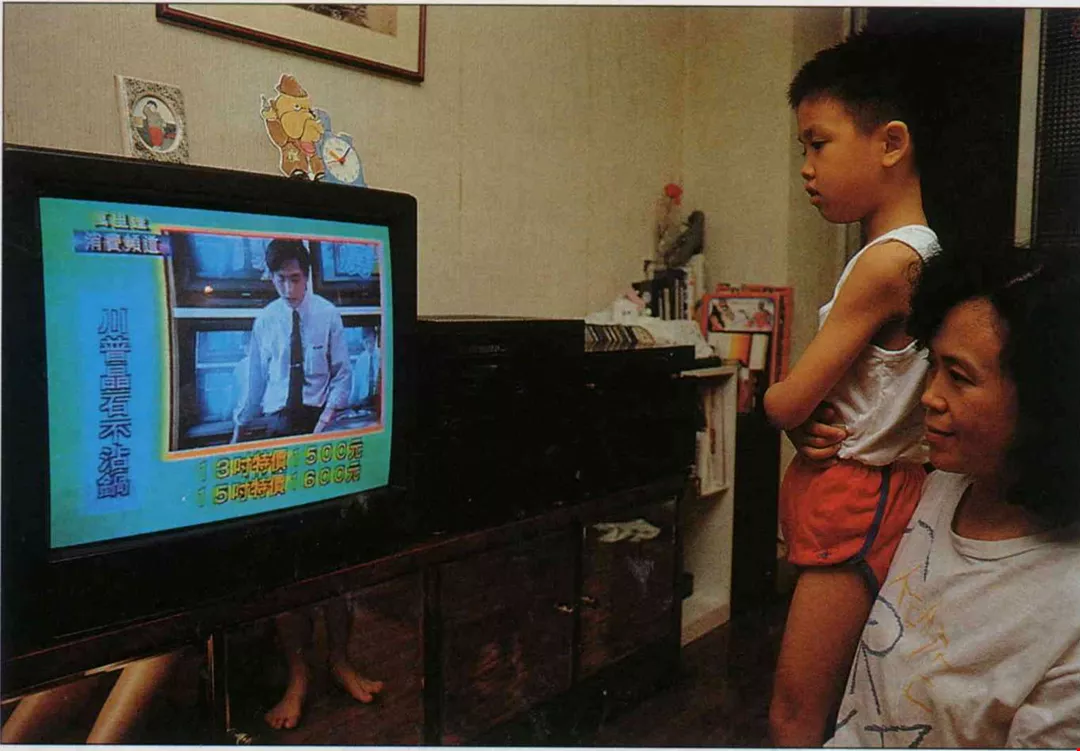
With only a three-year history in Taiwan, the home shopping networks are changing the meaning of the sales maxim "seeing is believing.".
The wind is blowing
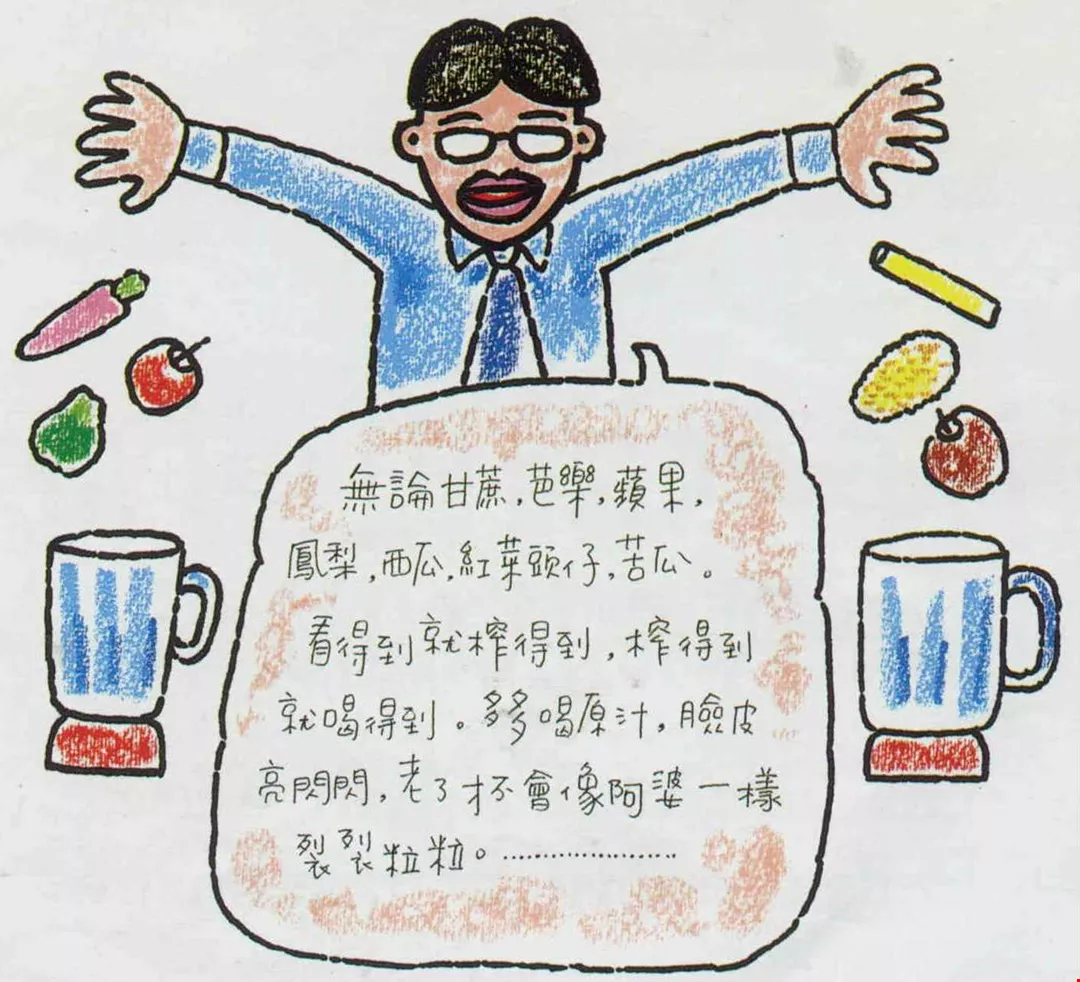
He continues, "Whether sugar cane, guava, apples, pineapple, watermelon, carrots, bitter melon--if you can see it, you can squeeze it. Drink more fresh juice and your face will become bright and shiny and when you grow old you won't be covered with wrinkles. Great wealth is nothing compared to great health; only a healthy body guarantees nuptial bliss. People say, 'if you're eating fish or meat, chicken or duck--you've got to have some vegetables to go with it.' Modern people have no worries: they eat well, don't have to work hard, sleep as much as they like and eat so much they look like Weebles--they'll wobble but they won't fall down."
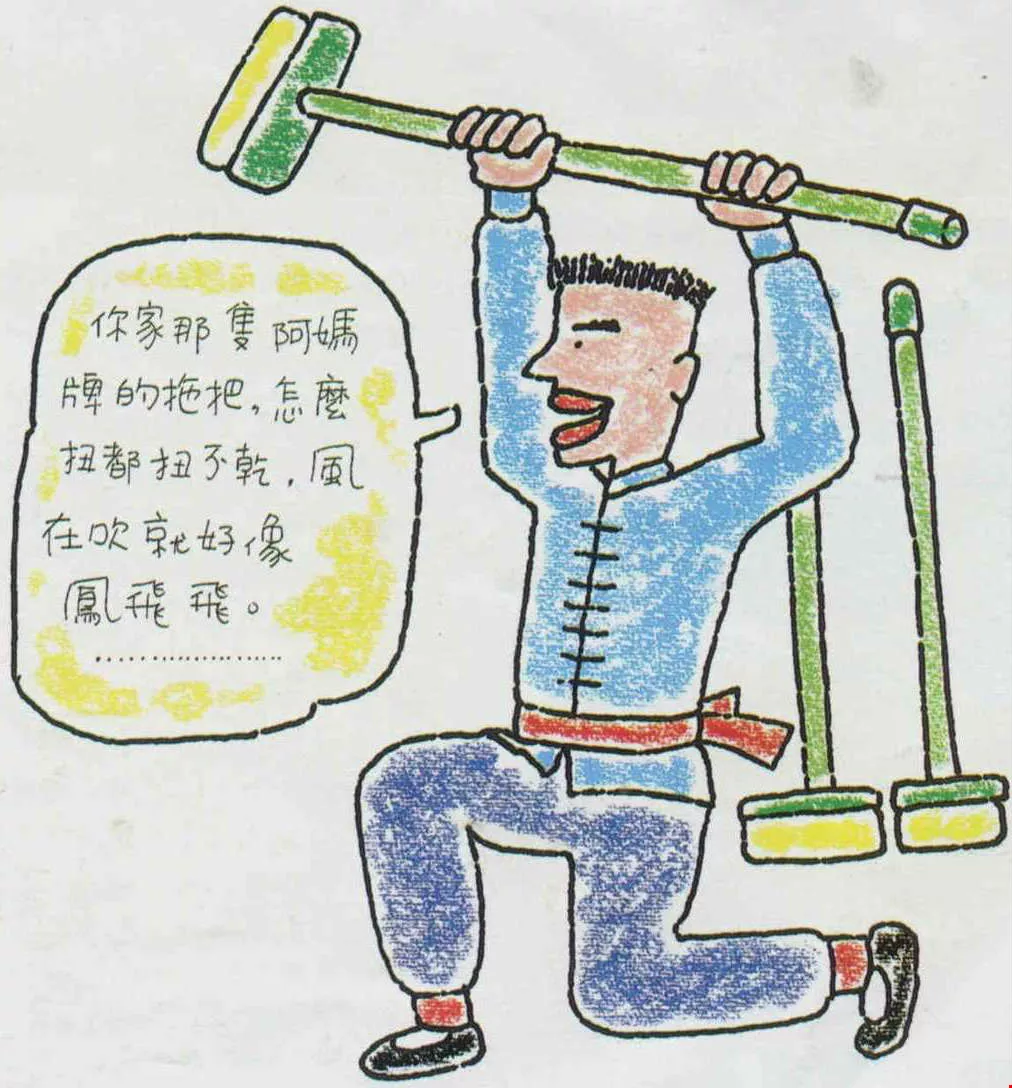
"Some lines are a lot of fun but don't have any meaning, "says Tseng Kuo-chih. "Take selling mops. We say, 'That grandmother brand of mop in your home. However you squeeze it, it won't squeeze dry, and the wind is blowing like Captain Bly.'"
"We learned a lot of jargon from the older generation, and there are also those we thought of ourselves. Someone thinks of a line; someone else adds a line, and the whole thing put together becomes a new jingle," says Chen Chao-yang. Li Wen-fang, on the other hand, says, "It's studied from the customers. Because as soon as someone asks a question, you start talking, and after a while you start rhyming naturally."
And don't forget about the after-sales lines. Chen Chao-yang gives an example, "People have to have an identity card; when you're buying something you want a guarantee. Don't loose the guarantee! Losing it is like losing your passport overseas, you won't have anyone to go to!" He adds mischievously, "When you go back don't forget to put it in the middle of your altar table." And for the bits that involve specialized knowledge, you've got to go and do some research. For example, for spiels about medicine, you can say, "The Chinese medical doctor who lives next door taught me. . ." or "People over 50 years of age all know. . . ." By quoting authorities in this way, you'll raise your level of credibility. "In the field it's called 'stepping out of the spotlight,' " Chen Chao-yang says.
(Drawing by Tsai Chih-pen)
Traditional sales, high-tech equipment
In comparison, selling on television is much easier. The heat of summer and cold of winter pose less of a threat, and you needn't run yourself ragged going to markets all over the place. "In order to save time the home shopping networks dispense with the opening formalities," Chen says. "It's good enough just to introduce the functions of the product. But to get those impulsive customers, you've got to give a fantastic performance."
But many salesmen have more scruples about what they say on television. Tseng Kuo-chih believes that sales pitches on the tube are more conservative and formal. Salesmen feel ill-inclined to make jokes on sensitive topics like politics. "Even what they wear is different," notes Chen Chao-yang. "No one minds flip-flops in the vegetable market, but on television you may have to wear a suit and tie. And what you say has got to be more professional in nature."
"Customers outside can ask stupid questions until you just can't take it anymore." Chen relates. "It gets to the point where you'll say, 'Just pick up your basket and scram! You already have so many children, but you're still so foolish!'"
And Li Wen-fang has another line for sticking it to the customer: "You fork out so much for these expensive clothes, and you're not willing to put out small change for this product. Dumb." Selling on TV lacks this playful needling and sarcastic scolding of the customer.
Though that feeling of first-hand contact with the customers may be missing, recording for television does have its advantages. "What we really can't stand is getting cut off half-way, but when we're taping we can touch things up with editing and other post-production techniques. Unless the salesman can't continue, the director won't often ask him to stop," Chen Chao-yang says. Tseng Kuo-chih points out that there are rarely rehearsals before taping. ''If you rehearse, you won't act natural."
Of course, for these master salesmen, there's a great difference between speaking to a camera and a big crowd of people. Li Wen-fang says, "At first I wasn't accustomed to it--having to imagine people where none were to be seen. But after being nervous for the first several times, it was OK." Others simply can't talk to a machine. Chen Chao-yang says, "Some of my friends have been selling the same products for many decades on the street. They've got a lot of experience and are slick talkers. But when they get into the studio to tape a ten-minute segment, ten hours won't be enough." How can you eliminate the fear of facing the camera? Chen Chao-yang has come up with this method: "Just think of your audience as hundreds of thousands of the nation's citizens, and then you won't be scared!"
As for interesting studio anecdotes, Li says that a cameraman once dropped the camera when laughing at one of his jokes. Tseng Kuo-chih says that one time he was speaking so fast that he said "a paring knife" instead of "a cooking skillet" and didn't even notice.
"With the traditional way of hawking goods, it's easier to gain emotional control over the audience and stir up their acquisitive desires. Many products rely on this for their existence," Chen says. But other companies, choosing a more restrained foreign method that puts the emphasis on display, think that all that razzle dazzle is going the way of the dinosaurs. What indeed does the future hold for those who make their sales pitches on the tube? We'll have to wait and see how the salesmen do.
[Picture Caption]
P.38
The slick-talking traveling salesman makes his listeners laugh--and feel they can't do without the product he's peddling. (photo by Chen Yen-tang)
P.39
(Drawing by Tsai Chih-pen)
P.40
Billing themselves as "sellers without stores," the cable home shopping networks are booming, being watched in even the most unlikely places.
P.40
With only a three-year history in Taiwan, the home shopping networks are changing the meaning of the sales maxim "seeing is believing."
P.42
The new product exhibitions held from time to time at department stores help small firms save big on advertising.
P.43
(Drawing by Tsai Chih-pen)
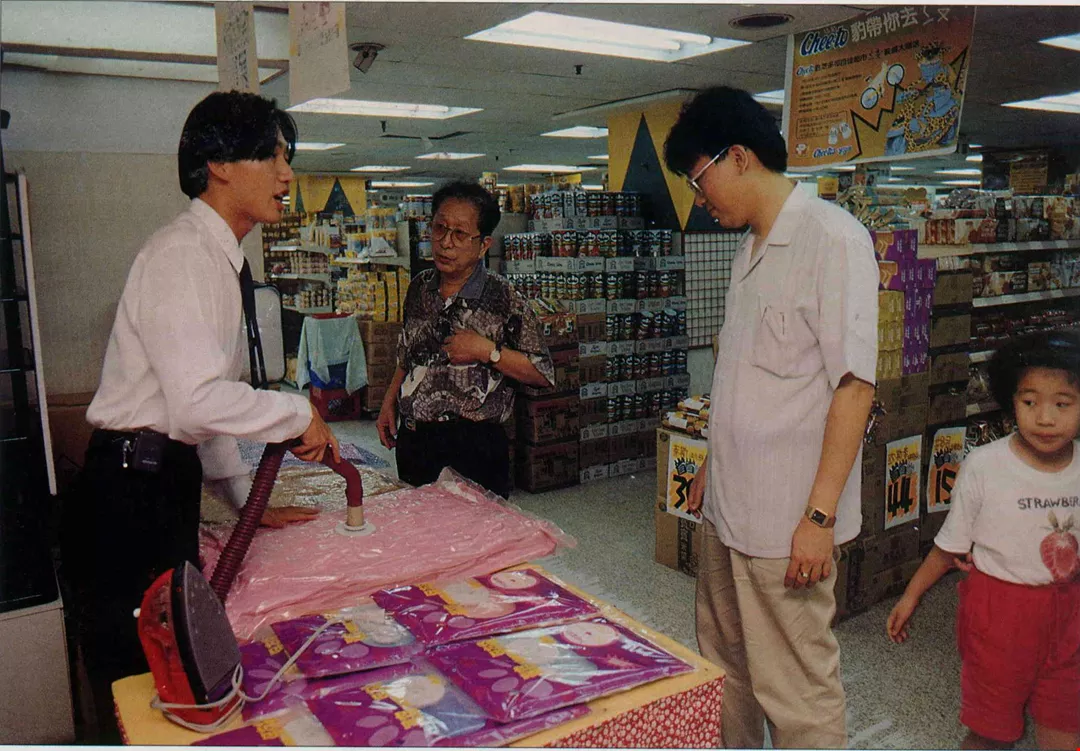
The new product exhibitions held from time to time at department stores help small firms save big on advertising.
(Drawing by Tsai Chih-pen)


@List.jpg?w=522&h=410&mode=crop&format=webp&quality=80)


