A data scientist’s awakening in the fields
A data scientist by training, Wu previously worked at Taiwan’s Institute for Information Industry on data projects for environmental protection, law enforcement, and other fields. In 2017, he launched his first startup, applying data analysis to online marketing. Although his firm’s technology was ahead of its time, the market was not yet ready and the venture came to an end.
Rather than retreat, Wu headed into the fields. He wanted to address a longstanding problem in agriculture: the lack of systematic data and the industry’s heavy reliance on experience. He visited farms across Taiwan and even tried farming himself. Although the vegetables he planted all “bit the dust,” those setbacks gave him a clearer understanding of what farmers actually needed.
In its early years, DataYoo experimented with field sensors and weather stations. But for overseas clients often managing 10,000 hectares or more, the costs made large-scale adoption of such hardware impractical.
In 2021, Wu joined a US space accelerator program, initially aiming to develop a chip for growing crops beyond Earth. There, he found that the space industry’s main focus was not colonizing other planets but using low-Earth-orbit satellites to observe Earth. When the number of satellites worldwide surged in 2023, he believed the time was right to pursue a “hardware-free” business model, using AI to interpret satellite spectral data.

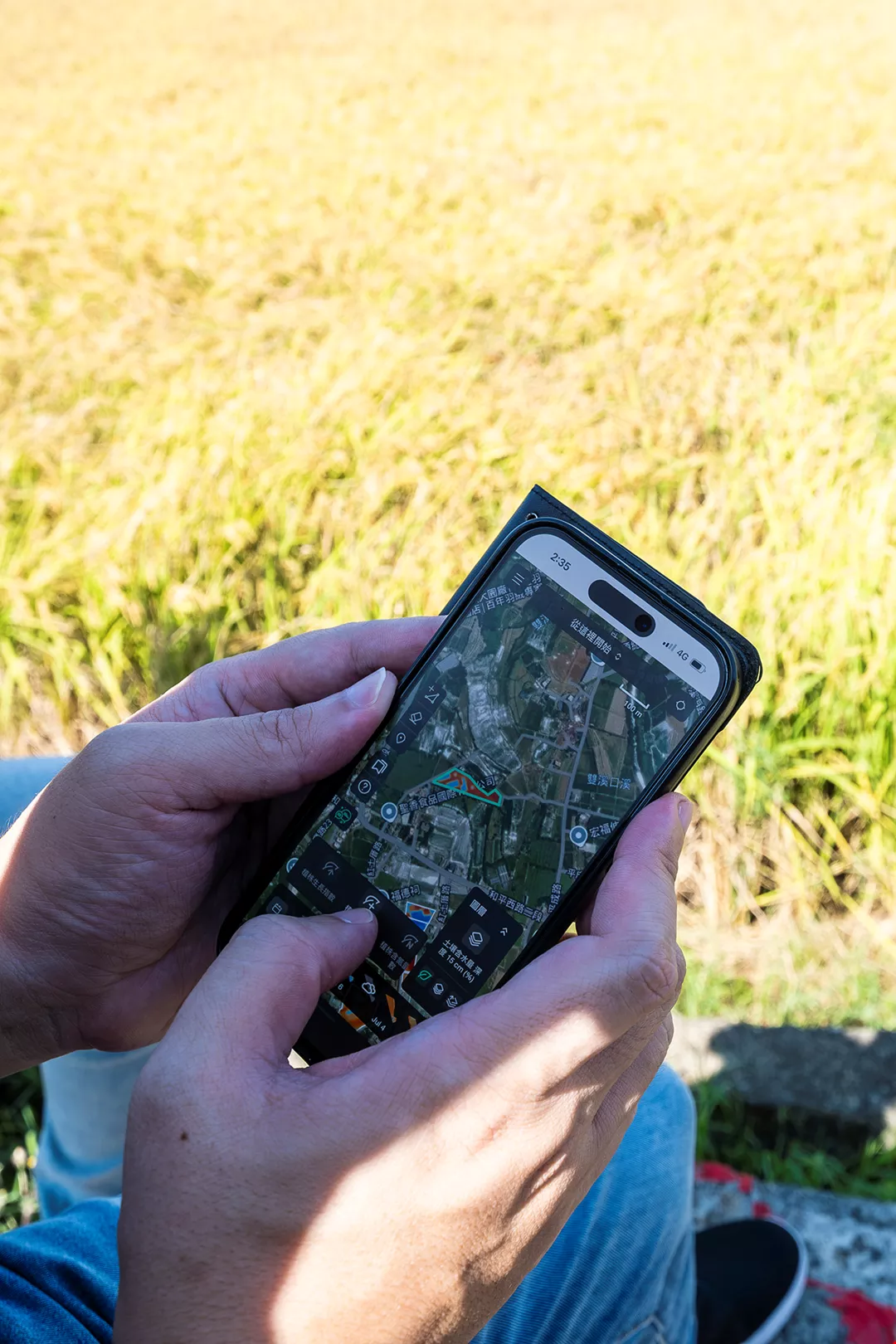
Farmers can use FarmiSpace on their phones or computers; its AI turns satellite spectral data into practical information that they require for cultivation.