Font of creativity
"In studying, one gains something every day. In pursuing the Tao, one loses something every day until nothing is done. Nothing is done so nothing is left undone." Recently I read this sentence in Laozi's Dao De Jing and wrote it next to my desk. I think it's an interesting sentence when talking about learning the basics.
Usually when you study something, you're supposed to gain more and more each day--like learning singing, painting, architecture, yoga, or even science. From the time we are children, we "gain something every day," whether it's knowledge or technique we are accumulating. From a Bachelor's to a Master's to a PhD, we go up and up, becoming more and more specialized. But with practicing the Tao, it's the opposite--"losing something every day," having less and less every day until there's nothing. The ultimate goal is not-doing. Not-doing doesn't mean not taking any action, but rather that since you don't seek or scheme after anything, you are more able to spontaneously follow your nature in everything you do. You could call it inner liberation or enlightenment--it's the same.
Whether you're a dancer, an architect, or a painter, if you are always seeking external things and hoping to attain things, then that really doesn't help you achieve harmony with yourself or allow you to release that kind of creativity everyone talks about. So if you think of creativity as a "Tao," it will be at a more spiritual, inner level, and practice is the way to lose something.
What do you want to lose? From a Buddhist perspective, you want to lose attachments and ego--lose the thought "I want!" Then, continuing from a Buddhist perspective, how is it that you can do anything? It's because everyone has the intrinsic Buddha-nature.
Modern society, with its materialism and utilitarianism, is more focused on external things. We are accustomed to relying on external things such as status, wealth, or influence, to judge a person's success. Maybe everyone is too fixated on the gaining part of the equation and has forgotten about the internal practice of losing, so it's difficult for them to really shine out.
Our minds are too busy, overstimulated and aggravated by too much information and too many events, always rushing to react with hardly any time to rest. After being bombarded like that, it's tougher to present your inner self. So all you have to do is find a way not to be so busy and tense, and your innate wisdom will resolve many things for you. Theoretically, you could find answers to all your questions.
Also, if you are always rushing around, you will miss a lot of the scenery along the way. That's because as soon as we get anxious about something, our minds become more closed. Only when we open ourselves do we discover that many things are speaking to us. That's actually like the words of Laozi: "In pursuing the Tao, one loses something every day," and "Stop studying and be without worry." The fewer attachments you have, the more your mind will open and the more you will be able to take in resources. You will be able to make connections that others are unable to see--things will represent deep metaphors to you and act as a source for your creations.
I'm lucky to be in architecture, for to me it's not just a profession, but an important, inseparable part of my life. The buildings I have designed clearly reflect all the stages of my life. When I look back at my works, I can see mistakes, as well as some surprisingly good points. As people grow, they show some of their life's problems, quests, and answers in their works. Architecture is like this, as is painting or writing novels.
Is this a kind of "Tao"? I can't say. But I'm sure that it is a path. I hope it leads to somewhere bright, and not a dead end.
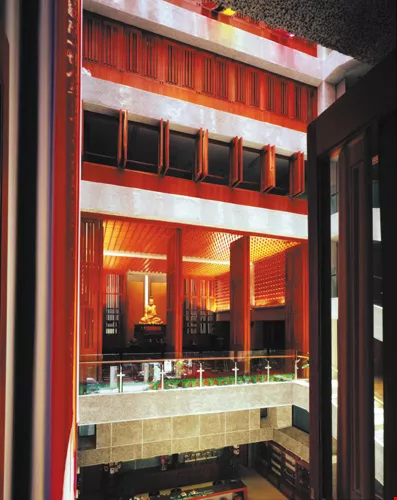
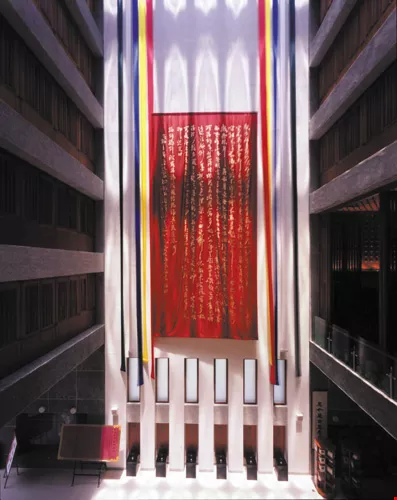
Yao Jen-hsi studied Western-style architecture, but in recent years, his works have shown an Eastern twist. His Yanghuei Lyceum, modeled after Chinese Buddhist temples, won the 1999 Taiwan Architecture Prize.
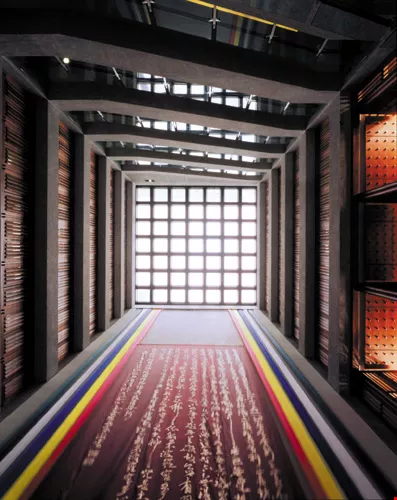
Yao Jen-hsi studied Western-style architecture, but in recent years, his works have shown an Eastern twist. His Yanghuei Lyceum, modeled after Chinese Buddhist temples, won the 1999 Taiwan Architecture Prize.
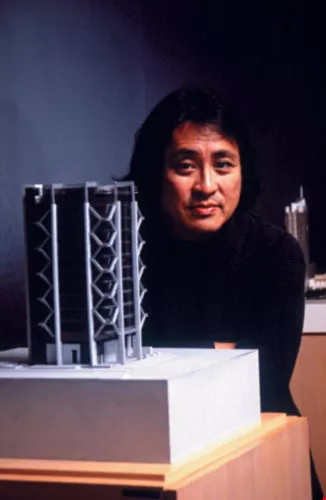
Yao Jen-hsi is thought of as an architect, but he is also a pious Tibetan Buddhist practitioner. His faith and his craft support one another.





@List.jpg?w=522&h=410&mode=crop&format=webp&quality=80)


