SunnyHills: Legendary Pineapple Cakes of Baguashan
Chang Chiung-fang / photos courtesy of SunnyHills / tr. by Chris Nelson
July 2012


When vacationing in Taiwan, what would make a great gift for friends back home? How about a treat with a distinctively Taiwanese flavor? How about pineapple cakes?
In recent years, pineapple cakes have won the distinction of being Taiwan’s number-one tourist gift. Within five years, annual sales soared from NT$3 billion to NT$25 billion, a favorite among visitors from mainland China and Hong Kong.
Following a growing trend in which pineapple cake makers substituted winter melon for pineapple in their fillings, SunnyHills made a bold move in 2009 by using 100% indigenous Taiwanese pineapples. Thanks to the natural qualities of these cakes, the company unwittingly gave rise to an indigenous pineapple cake craze.
In three short years, as if building the pyramids, SunnyHills set an example for Taiwanese agribusiness cake by cake, taking the farming economy of their remote village to unprecedented heights. Thus began the legend of Baguashan’s pineapple cakes.
Every weekend, Nantou County Route 139 becomes jammed near Bagua Road, Baguashan. The cause of this congestion is an unassuming sanheyuan courtyard residence: SunnyHills’ headquarters and production center. They all come from afar for the same reason: pineapple cakes.
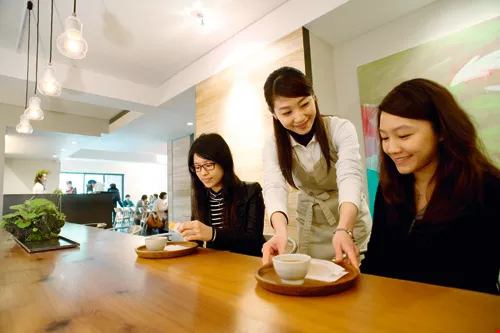
(right photo by Chuang Kung-ju) Setting a cup of hot tea and a pineapple cake before a guest is the epitome of Taiwanese hospitality. Shown below is SunnyHills’ retail outlet on Taipei’s Minsheng East Road.
All four of SunnyHills’ founders hail from a Baguashan farming family. Just like the brand name, they’re hospitable yet modest, unsophisticated yet gentle; just like the pineapple cakes they make, they give you warm, homey feeling.
“Our products are simple; there’s nothing special about them.” “SunnyHills is still in a dreaming stage. We don’t have any accomplishments worth speaking of. There’s no call to go tooting our horn.” For reasons such as these, the founders stayed quietly in Baguashan.
SunnyHills has positioned itself as an agribusiness focusing on Taiwanese farm products and aiming to elevate the worth of local agriculture. Founded in 2008, the company manufactured its first pineapple cake in 2009. Over the three years since, they have transformed Taiwan’s rapidly vanishing indigenous pineapples into a high-grade cash crop.
Chairman Hsu Sheng-ming notes that indigenous pineapples ferment easily, so they’re not easy to store; most are processed for canning. Now that indigenous pineapple cakes have hit it big, farmers have begun to grow these pineapple in droves, the price rising from around NT$8 per kilogram to about NT$17.
Besides changing the fate of indigenous pineapples, invigorating the local industry and creating business opportunities for the rural town, these developments have also improved the economic prospects of the Baguashan area. SunnyHills now has 210 local employees, the eldest among them 80 years old.
“To start a company in our hometown and grow together with family and Baguashan residents is my greatest achievement over these three years,” says company chairman Hsu Sheng-ming.
Interestingly, of the four founders, only 65-year-old Lan Sha-chung has a background in dessert making; the other three didn’t just lack an understanding of business strategy, they were complete outsiders to the food industry.
Forty-something company chairman Hsu Sheng-ming used to grow tea in Baguashan. But in 2007, when his tea became unmarketable under price competition from imports, he decided to switch to a path unknown to him. He sought the help of his brother Michael Sheu, who runs a technology company in Taipei, his uncle Lan Sha-chung, who had retired from the pastry industry, and his cousin Lan Hung-jen, who had moved back from the big city and was looking for work. The foursome, who had no understanding of branding, invested NT$80 million in capital under the guidance of Andre Hsieh, a former Ogilvy identity management consultant, and decided to take an unusual entrepreneurial road.
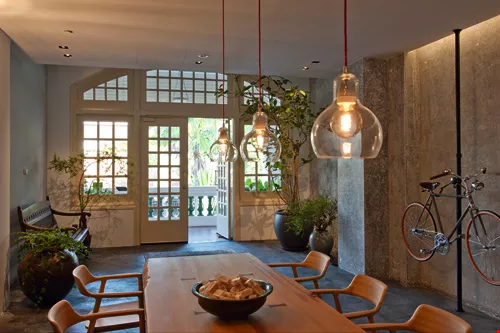
SunnyHills’ next step is to go international. The photo shows their first overseas outlet, which opened last year at Raffles Hotel Singapore.
Hsieh, an old acquaintance of Michael Sheu, overruled proposals of making dorayaki, honey cakes, or longan cakes by suggesting making pineapple cakes with local Baguashan pineapples, and to stand out from the crown by using indigenous pineapples.
Once they decided to pursue this road less traveled, everything, including naming, specs, fillings and packaging, had to depart from tradition. But this is easier said than done: there were numerous risks faced by taking this route.
The brand name SunnyHills was a bold experiment.
The SunnyHills name, conceived by Hsieh, has little to do with pineapple cakes. When he asked the founders what they thought, they responded that it was an unusual name; it just didn’t sit right. But they couldn’t come up with a good enough reason to reject it, and decided to bite the bullet and use it.
“The name has both feeling and image,” says Hsieh. His greatest impression upon first arriving in Baguashan had been how sunny this hilly area was. “Each evening, the country folk would move benches to the grain drying yards for dinner, the ground giving out the heat stored up from the day’s sunshine. The people living in these hills are also sunny and hospitable in character, unlike the exaggerated friendliness of urban salespeople. It’s a reserved geniality. Hence, SunnyHills.” These concrete and abstract feelings serendipitously inspired Hsieh to think up the SunnyHills brand name.
As for the indigenous pineapple cakes, they had to break from tradition in ingredients, dimensions and packaging.
Some have said: “If you don’t understand [Chanel] No. 5, you don’t understand perfume; if you don’t understand No. 2, you don’t understand pineapples.”
SunnyHills used the Kaiying No. 2 and 3 cultivars of indigenous pineapple “because they are tart and fruity,” says Lan Sha-chung. SunnyHills pineapple cakes are sweetened only with maltose, to adjust their sweetness to about 40 degrees Brix. As for the acidity, no additives are mixed with the raw materials, so the results vary seasonally. Therefore, the pineapple cakes are tarter in the winter and sweeter in the summer.
Lan Sha-chung reveals that to attain an excellent mouthfeel, he first ices down the crusts, making them harder. In the beginning he worked until his hands hurt, but now, thankfully, the process is semi-mechanized and much easier. Currently the company produces 50,000 pineapple cakes a day. But since no artificial flavorings, colors or preservatives are added, they have a shelf life of just 15 days; thus they ship them the day they are made, to maintain freshness.
“When it comes to pineapple cakes, fresher doesn’t mean better,” says food industry old hand Lan Sha-chung: their texture is at its moistest after three days.
Unlike the four-centimeter-long, 35-gram standard of most pineapple cakes on the market, SunnyHills pineapple cakes are significantly different at 6 × 3 × 2.5 cm and 50 g. Today these dimensions have become something of a standard for cakes made of indigenous pineapples. What most don’t realize is that Michael Sheu came up with this tradition-breaking form from a pack of cigarettes.
“Men, after all, are unrefined, not thinking about bite sizes or cost issues,” laughs consultant Andre Hsieh.
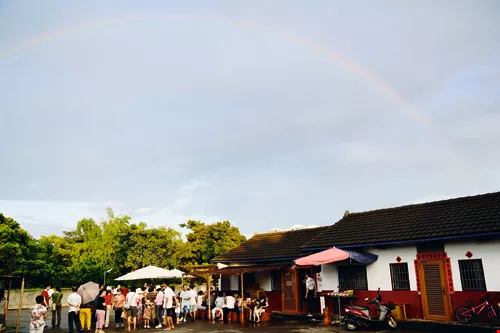
In their own sanheyuan courtyard homestead on Nantou’s Baguashan, four farm boys used the abundant pineapples of their local area to create a legend in Taiwanese agricultural enterprise.
Miraculously, SunnyHills has thrived pretty much solely on making indigenous pineapple cakes, selling 8 million cakes last year for NT$300 million in revenues.
“Perhaps it was issues like the tainted milk scandal and concerns about food additives that helped bring us success,” says Hsu Sheng-ming.
Andre Hsieh maintains that there were no serendipitous factors in SunnyHills’ success: it was just honesty.
“Feelings and nature are SunnyHills’ objective and values,” says Hsieh. Whether it’s at the company’s headquarters at the Nantou sanheyuan or their retail stores in Taipei and Singapore, SunnyHills treats anyone who shows up as a potential customer, first presenting them with a cup of hot tea and a pineapple cake, but never asking them if they’re buying or how much.
In one year, 300,000 cakes, costing nearly NT$10 million, are consumed through such free samples. “Unlike most pineapple cake shops which pay 40–60% commissions to tour companies, we prefer inviting visitors for samples, and they’ll buy if they like them,” says Michael Sheu, stating his business philosophy.
“The mission of agribusiness is to maximize the value of farm products,” says Sheu. The greatest cost outlay in the food industry isn’t raw materials, but marketing and advertising costs. SunnyHills is adept at using the power of online sales and delivery, relying on word of mouth. This saves the company a great deal in marketing expenses so that they have the means to share profits with farmers and employees.

(right photo by Chuang Kung-ju) Setting a cup of hot tea and a pineapple cake before a guest is the epitome of Taiwanese hospitality. Shown below is SunnyHills’ retail outlet on Taipei’s Minsheng East Road.
June is peak season for Taiwan’s indigenous pineapple production. One sweltering afternoon, SunnyHills’ founders gathered at the firm’s retail outlet on Taipei’s Minsheng East Road, holding a press conference to introduce the company’s next product after pineapple cakes: pineapple juice.
Like pineapple cakes, the quality of pineapple juice is easy to see at a glance.
Pineapple juice is a byproduct of pineapple cake manufacture. Back when production volume was lower, there was little value in marketing this product. But now that they use more pineapple, they expect an output of 1 million 750-milliliter bottles for 2012. Lan Sha-chung tells us that after two hours of slow cooking, the pineapple juice is like a finely crafted essence.
Besides pineapple juice, SunnyHills has announced the upcoming release of yet another product: angel’s food cake. Says Michael Sheu, pineapple cakes are made with egg yolks, and in the past they sold off the unused egg whites cheaply. Now, by adding pineapple juice and cores to the whites, they can make angel’s food cakes. However, due to low output, they’re available only on a limited, seasonal basis, and only in Nantou.
And what agricultural product will SunnyHills release after that?
Hsu Sheng-ming notes that pineapples are usually grown on hillsides and so are resistant to typhoons and flooding; they therefore offer the steadiest supply. With other fruits, a single typhoon can dramatically upset supply, so they’re currently making careful assessments.
One thing’s for certain: SunnyHills will adhere to its original pledge not to open a factory overseas and not to use imported ingredients. “We just want to make Taiwanese stuff,” Hsu Sheng-ming assures us.

In their own sanheyuan courtyard homestead on Nantou’s Baguashan, four farm boys used the abundant pineapples of their local area to create a legend in Taiwanese agricultural enterprise.
After SunnyHills burst onto the scene, indigenous pineapple cake imitators like Shimmer Forest and Smile Pineapple, also starting with “S,” started to pop up in Baguashan. Regarding these copycats, Michael Sheu expresses optimism and open-mindedness, because it has always been SunnyHills’ entrepreneurial goal to drive hometown economic growth by using hometown agricultural products. “It’s a good thing if more people discover the value of agribusiness,” he exclaims.
But to avoid destructive competition on this small island, SunnyHills’ next step was to go international.
To prepare for expansion overseas, in March 2011 the company opened a factory in Nangang Industrial Park, 10 minutes’ drive from the sanheyuan, moving part of the company’s manufacturing here.
Last August, thanks to a reliable contact in Singapore, they opened an outlet in the 125-year-old Raffles Hotel. Sales have been pretty impressive, at about 4,000 to 5,000 cakes a day.
Next, SunnyHills entered the mainland Chinese market with an outlet opening in Shanghai in July which will initially apply the online ordering and delivery model. Another overseas retail store in Tokyo’s Omotesando neighborhood is scheduled to open in July 2013.
“It’s not easy to get a foot in the door,” remarks Michael Sheu. Japan is a place where desserts are popular, and Tokyo in particular is a stronghold. To get a foothold in this place one must stand on the shoulders of giants; as such the company didn’t hesitate to spend NT$200 million to commission renowned Japanese designer Kengo Kuma to decorate the shopfront, seeking an out-of-the-ordinary, eye-grabbing look. And next in the pipeline are Beijing, Shenzhen and Hong Kong.
In three short years, word of Baguashan pineapple cakes has spread from this small part of Taiwan outward to distant lands. Whether such traces of warmth and hominess will have universal appeal will soon be known.
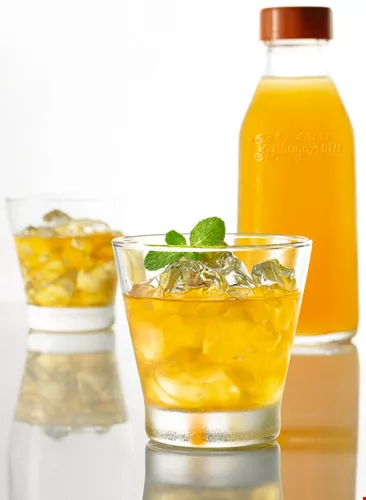
New product: pineapple juice
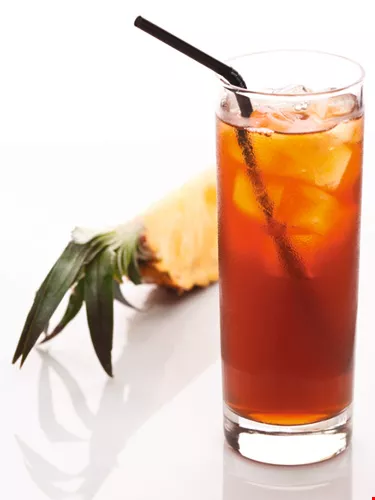
Pineapple-juice cocktail
@List.jpg?w=522&h=410&mode=crop&format=webp&quality=80)


