Rebranding Tatung--An Old Favorite Makes a Comeback
Yang Ling-yuan / photos Jimmy Lin / tr. by Scott Gregory
September 2008


A generation of Taiwanese grew up with Tatung, a company once synonymous with household electronics in Taiwan, but the brand was nearly forgotten as it turned to contract manufacturing work. Now that thin margins are eating into that business, Tatung is looking to rebuild the value of its brand. From its first computer, LCD television, and mobile phone to its complete digital home solutions, Tatung is ready to win back the reputation it bragged of in its old jingle: "Tatung, Tatung / Local products are the best!"
The company, which will celebrate the 90th anniversary of its founding in November, has had its ups and downs through the years. Last year, it netted NT$3.57 billion after taxes, but this year it has set its profit goal at NT$10 billion. It hopes to double its market value and reach NT$1 trillion within ten years. How will Tatung accomplish this "mission impossible"?
Located on a leafy section of Taipei's Chungshan North Road, Tatung's headquarters is a unique old building faced with green tiles. It stands out amid the modernist "glass curtain" style buildings that surround it.
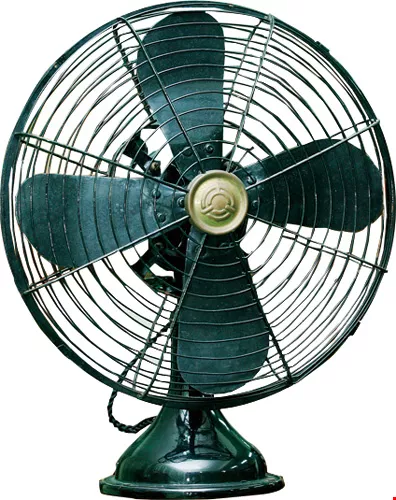
(below) The first Tatung electric fan was made entirely of steel. Its grill was tied by hand to its base with metal wire. On later fans, clips held the grill in place. They were unavailable for a long time until ten years ago when, during a wave of retro chic, they were reintroduced.
Beginnings in buildings
Most people don't realize that Tatung started out building houses. In 1918, the year that World War I ended, Lin Shang-chih founded the company that would become Tatung: Hsiehchih. Taiwan was under Japanese colonial rule at that time, and most of the important construction businesses were owned by Japanese people. There were only three factories run by Taiwanese. Hsiehchih worked on many projects, including schools, government offices, hospitals, bridges, factories, and airport runways. The still-impressive Executive Yuan building, which is now a national historic monument, was built by Hsiehchih 68 years ago and was the company's crowning achievement.
"In 1926, Hsiehchih was in charge of building an embankment for the Hsintien River along what is now Shuiyuan Road. The project took two years, and through heat, cold, and even typhoons, my grandfather Lin Shang-chih was always there directing it," says Lin Wei-shan, president and CEO of Tatung. He says that his grandfather's dedication to his work impressed the Japanese, who awarded his company more and more work.
In 1939, as the Pacific War loomed, Hsiehchih founded Tatung Steel to ensure its supply of rebar and other building materials. When the ROC government moved to Taiwan after the war, the company changed its name to Tatung Steel Machinery and assisted the government in restoring 577 train cars that had been bombed by American forces.
Lin Ting-sheng had just taken over the family business from his father at age 25. Actually, he hoped to take this opportunity to transition into the business of manufacturing train cars. The bid was unsuccessful and left him in debt, but the government deeply appreciated his efforts and he became one of the top local businessmen.
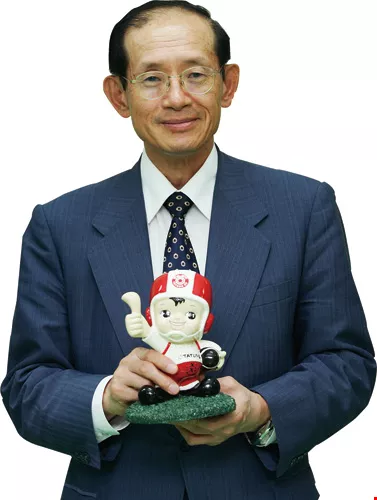
In a shareholders' meeting in June, CEO Lin Wei-shan said that beginning next year the Tatung group will set a target of 25% annual growth and NT$10 billion in income every year. It will also work to restore the prestige of the Tatung brand.
Local hero
Later, Lin Ting-sheng switched tracks again. He was elected an industry and mining legislator and head of electronics and machinery industry associations, and also oriented the company toward household appliances and heavy electric machinery. Main products included self-branded electric fans, electric meters for Toshiba, and motors for Westinghouse.
The change came at just the right time, as the 1950s were Taiwan's era of "import substitution." In order to save its foreign reserves, the government levied heavy taxes on imported goods and encouraged local, private production of substitutes. Electric fans were one of the important items targeted.
In 1949, the first round, stocky Tatung fan-nicknamed the "Iron Fan Princess"-was produced. It was the pride of the Taiwanese electrical appliance industry for 30 years. At the time there was no automated assembly line, and the fans were put together blade by blade, screw by screw, by workers. Only one or two hundred could be produced in a day, and they were not cheap. One went for the price of a tael of gold, but customers lined up to purchase them.
For the next 20 years, Tatung products such as electric rice cookers, radios, refrigerators, televisions, and air conditioners continued to appear on the market. They gained a reputation as inexpensive, attractive, and durable products, and completely shattered the old impression that only imports were of good quality. As a Taiwanese company, they were also the pride of the nation.
With government policies supporting domestic industries, Tatung received benefits such as American assistance and industrial protection. The jingle that sang out "Tatung, Tatung / Local products are the best!" was heard all over the island, and Tatung Boy, the football-playing company mascot, became a forerunner of the figurine mania now sweeping Taiwan.

Tatung was the first Taiwanese company to put out a mascot figurine. Debuted in 1969, Tatung Boy has been a familiar sight to consumers for nearly 40 years now. Collectors pay top dollar for the figurines-the first ones go for as much as NT$300,000.
Export pioneer
Tatung wasn't successful just in Taiwan. In the 1960s, when American aid to Taiwan dried up, Tatung again received help from government policies and began exporting. First, it began selling its fans in the Philippines, and then it went on to other Southeast Asian countries and America. The New York Times even featured a special report on Tatung electric fans as a sign of advancements in Taiwan's industry. In 1962, Tatung became one of the first 16 companies to go public in Taiwan. In 1970, it won the honor of being Taiwan's most profitable private-sector company. In 1972, it became a Taiwanese pioneer of globalization by setting up subsidiaries in Singapore and America that did small-scale manufacturing.
That was also the year in which Lin Wei-shan, the third generation of Lins to run the company, took the reins. Both father and son saw the dawning of the information age and began to shift focus away from household appliances. They began bringing in foreign technology, collaborating with major international IT players such as IBM and setting their sights on developing high-tech products. They also became agents for minicomputer systems and networking equipment.
After transitioning into the IT industry, Tatung has for the past 30 years continually adjusted its direction and pace. Though it tried to develop its own brand of computers, the tech industry proved to be too different from the home appliance industry. Tech relied on exporting, and the very localized Tatung had difficulty building up an international brand. It gave up and went into "OEM" contract manufacturing.
Years ago, Tatung manufactured motherboards for HP and Compaq as well as monitors for IBM. Its subsidiary Taiwan Telecommunication Industry Company (TTIC) has made American-style payphones for AT&T and plasma and LCD TVs for American and Japanese companies such as HP, JVC, and Wal-Mart. In recent years, it has also signed deals to manufacture desktop computers for the Chinese company Haier. It now touches on all areas digital.
Building a "television kingdom"
Tatung was the number-one exporter of electronics in Taiwan until 1980, when it started to slip. Domestically, the home appliance market was close to the saturation point. Also, seeking to alleviate their trade imbalance, the Americans requested that the Taiwanese market be opened up, and American, Japanese, and Korean companies moved in. Tatung's OEM orders suffered as well due to a stronger NT dollar. The golden days of Tatung were coming to an end, and it would be difficult to turn things around.
However, the opportunities taken and the vision from those times kept Tatung in four main areas-consumer electronics, home appliances, heavy electrical machinery, and electric wires and cables. It has success in each of them. Within the Tatung group are seven publicly traded companies, most notably the venerable Chunghwa Picture Tubes and the new Green Energy
Technology Inc (GET).
"Tatung was the first Taiwanese company to enter the CRT monitor business," says Lin Wei-shan. Chunghwa Picture Tubes was founded in 1971 and became a major behind-the-scenes force in turning Taiwan into the world's "television kingdom." In 1997, it licensed TFT-LCD and PDP technology from Mitsubishi and entered the next generation of televisions.
Chunghwa Picture Tubes opened a factory in Scotland in 1997 and even invited the Queen to cut the ribbon at the opening ceremony. Those were its glory days. Operations have not always gone smoothly, though. It lost money for 16 years in a row after it was founded and its shareholders gave up on it. Only Tatung remained behind it. After 28 years, Chunghwa Picture Tubes finally found success-it became the world's most important supplier of picture tubes and Taiwan's first manufacturer of large TFT-LCD screens, with production lines around the globe. In recent years it has been Tatung's most profitable subsidiary, taking in NT$8.4 billion after tax last year.
New era, new energy sources
GET is an energy company founded in 2004 through investment by Tatung subsidiary San Chih Semiconductor. Its main product is the type of silicon wafer used in solar cells.
Compared to the tribulations undergone by Chunghwa Picture Tubes, GET has had an easy ride. Two years ago Morningstar underwrote its successful IPO, and its revenues are more than NT$10 billion. GET manufactures monocrystalline and multicrystalline silicon solar wafers, thin film solar cells, and other such products, and is one of Taiwan's top three solar energy companies.
GET estimates that it will be able to increase its number of silicon crystal growing furnaces to 80 by the end of the year and reach an annual production of 200 megawatts. This puts it among the world's top five largest producers of silicon wafers for solar cells. Last year it built a generation 8.5 thin-film solar line with the American company Applied Materials, Taiwan's first plant capable of making ultra-large 5.7-square-meter substrate solar modules.
Lin says, "Innovation, conservation, new energy sources, and health are the most important directions for the company's future." Examples of positive developments made by Tatung in recent years are GET's thin film and silicon wafers, San Chih Semiconductor's sapphire wafers, Forward Electronics' LED packaging, Laster Tech's lighting modules, and Apollo's solar cells. All of these are green enterprises related to energy conservation or developing new energy sources.
In order to meet the green ideals of energy conservation, environmental protection, and health, Tatung has been working to improve an old area of expertise-electric cables. All of its products contain very low levels of lead and no cadmium. They give off minimal emissions when manufactured and are of low toxicity. In the list of green consumer products put out this year by the Environmental Protection Administration, Tatung had 245 listed items, more than any other company.
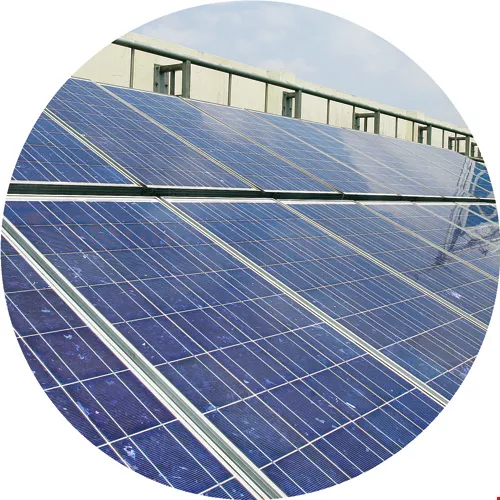
When GET was founded four years ago, it was one of only two Taiwanese companies that could produce silicon wafers for solar cells. Now there are more than 20 such companies. The company now takes in NT$5 billion a year and has an ambitious plan to double that.
Engineering and education
In times of oil shortages and growing interest in lowering carbon emissions, GET arrived on the scene at the right time. However, the man at the helm, CEO Lin Ho-lung, is also a key element in the company's success.
Lin was previously a professor of materials at Tatung University (formerly known as Tatung College of Engineering and Tatung Engineering Junior College). His critical thinking broke a new path for the previously underachieving San Chih Semiconductor. He transformed his academic acumen into industrial power and large profits. He was the toast of the industry and proof that Tatung's system of cultivating its human resources over the long term is worth the trouble.
Tatung Engineering Junior College, established in 1956, was the first of Taiwan's colleges opened by major corporations and a pioneer in cooperation between industry and academe. It was one of the achievements of which Lin Ting-sheng, who was pleased to call himself "professor-chancellor-CEO," was most proud. He even assigned Adam Smith's The Wealth of Nations along with the Confucian classics. He taught until the age of 80, and ran Tatung for a record 64 years.
In addition to green technology, Tatung has been moving into telecommunications in what is a brave move for such a venerable brand.
Tatung only became licensed to provide Wireless ADSL or WiMAX-the "last mile" of the fixed network-in 2007. Not only did it invest NT$100 million in the business, set up Tatung InfoComm, and begin installing base stations, it also started developing earphones and media players to be used in broadband mobile phones used with WiMAX service. In the future, Tatung System Technologies, which provides IT services, will come together with Tatung InfoComm, which is responsible for end products, and the group's telecommunications business will be complete.
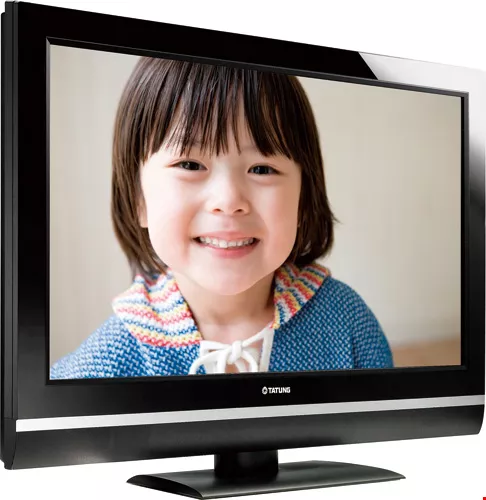
Though LCD TVs dominate the market, plasma TVs are catching up thanks to Tatung's low prices for components. Now brands from all around the world are producing bargain LCD and plasma televisions.
Brands and channels
As for its original business, as margins become smaller and smaller in the OEM business, branding and channels are Tatung's great hopes.
Actually, as a giant of household appliances, Tatung as early as the 1950s ran the nation's first consumer service centers that dealt directly with the public, operating under Lin Ting-shen's slogan, "With one phone call, service comes to you." But trapped in conservative business plans, it couldn't compete in other channels and missed many opportunities.
In 2006, to combat pressure from deep discounters, Tatung invested hundreds of millions of NT dollars in converting its service centers into bright, modern one-stop electronics stores that carry many brands. It met its goal of opening 100 stores within a year, putting it on the level of consumer electronics giants TKEC and eLife Mall.
To most consumers, Tatung's digital products are of decent quality and are competitive in price. It's just that the company needs to heighten its brand image and improve its customer service. Its converted stores offer low prices, a more youthful image, and a more dynamic supply. Also, they are sponsoring the Brother Elephants baseball team. Tatung hopes that these moves will raise its brand awareness among young people.
To enter the personal digital media market, Tatung opened a multimedia department nine years ago. Four years ago, it introduced a new brand, Elio, and promoted its line of music players that display photo albums, and collaborated with Microsoft on a portable multimedia device that gained international popularity. However, due to competing incompatible media formats, that market is stagnant.
In the home audio and video department, Tatung has been trying to capture the domestic market and take advantage of the trend toward flat screens. However, in contrast to the traditional CRT TVs, flat-screen TVs are still in a state of flux in terms of both technology and price. The major Japanese, Korean, and Taiwanese companies are in heated competition, making it tough for Tatung to catch up.
This year, Taiwan's LCD TV market is estimated to surpass 1 million units in sales, with Tatung holding 20% of that market. Tatung was the champion in the first quarter, selling 50,000 sets. At the same time, it has been entering the plasma TV market with low prices. The results of that move are yet to be seen.
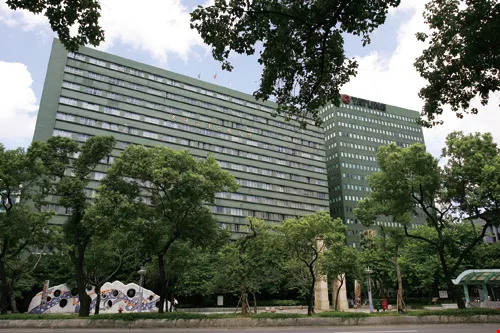
With more than 1.5 million square meters of land, Tatung holds a lot of prime real estate. In recent years it has been actively putting its properties to use, building factories and upscale residences as well as other investment projects. These activities have added NT$53 billion to Tatung's market value. Pictured here is Tatung's headquarters building
Seeking a new image
"In addition to new brands and new products, Tatung's renowned rice cookers are set to enter the Southeast Asian market and then the global market," says Lin Wei-shan. He has always lamented that though 3 billion of the world's 6 billion people eat rice as a staple, Tatung's rice cookers are only dominant among the world's ethnic Chinese. In the future, once Tatung's LCD TVs break into the Thai market, the rice cookers will follow.
"Compared to Indians, who cook rice in a pot, Thai people are more apt to use an electric rice cooker," Lin says. The improved Tatung rice cooker will heat rice directly rather than indirectly. To show its intentions, the company has put out a clean, modern-looking gray rice cooker that won the German iF Design Award.
From Lin's feelings toward the rice cooker, the importance this classic brand places on its history and its cherishing of its past glory are evident. And on the eve of its 90th anniversary, the world is waiting to see how Tatung will redefine itself for a new era.
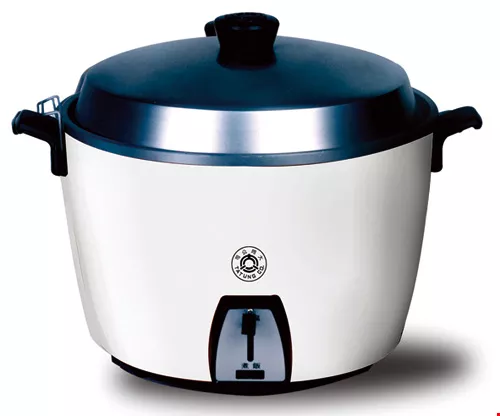
(facing page, bottom) Tatung began making rice cookers 48 years ago, and now it is its signature product. They have been redesigned in recent years but the basic shape hasn't changed. It's a testament to the company's sense of its own history.
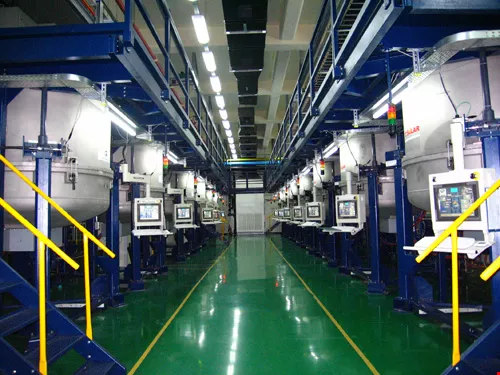
(facing page) GET looks to become one of the world's top five silicon wafer producers. It is currently planning to raise its output with a new production line of crystal growing furnaces with 450 kilogram capacity. Pictured is a furnace with 270 kg capacity.

@List.jpg?w=522&h=410&mode=crop&format=webp&quality=80)


