Dongguan Gets Down to BusinessTaiwan Firms Embrace a Cantonese Boomtown
Jackie Chen / photos Diago Chiu / tr. by Jonathan Barnard
February 2000


From Hong Kong's airport, you can go straight to Dongguan on a Global Express bus. With 27 departures a day, these buses run by a Taiwan firm out of Dongguan take Taiwan expats to their adopted home, which boasts the largest concentration of Taiwan firms in the PRC.
Invoking the Taiwanese business battle cry of "victory to those who strive the hardest," 20,000-30,000 Taiwan expats in Dongguan have in little more than a decade turned a county of banana and lichee plantations into a big city with exports behind only Shenzhen's and Shanghai's. How has Dongguan, this rising economic star, done it? What mix of sad and happy tales about Taiwan firms does this city have to tell?
It's 10:00 at night, but the city of Dongguan in Guangdong Province is still hopping. Cars clocking 80 kilometers an hour zip along roads that reveal hardly a trace of the farming villages that they linked not long ago. Taiwanese business people here run their factories like they drive their cars, in high gear. The factories are lit up at night for overtime shifts. "We don't take much of a break for the Chinese New Year's holidays," says Andrew Yeh, chairman of Dongguan's Powin Electric, which makes cable for the telecoms industry. "By the morning of the third day we start up again with three shifts, just like any other day. We can't keep up with our orders and have got to squeeze five days of work into every 24 hours."
In the busy Fucheng district, you find the Taiwanese bars, covered from door to rooftop with flashing lights. The lights, like the karaoke singing within them, pulsate until dawn no matter the season.
Inside there is a raucous crowd. A Taiwanese businessman down from Harbin boasts that his auto plant up in the northeast sits on a lot as vast as Taipei City and has a green light to sell on the domestic market. In another room a Taiwanese businessman based in Dongguan carouses with a party cadre from Yunnan who is trying to attract investment. Ju Gao-jeng, a former ROC legislator who now has an academic post in Beijing, is talking to a reporter from Taipei about the ROC presidential elections-a hot topic of conversation on both sides of the Taiwan strait. Amid all the merrymaking, one gets a sense of what Shanghai must have been like in the thirties. In Dongguan at the turn of the 21st century, however, it is the Taiwanese business people who have been playing the leading roles.
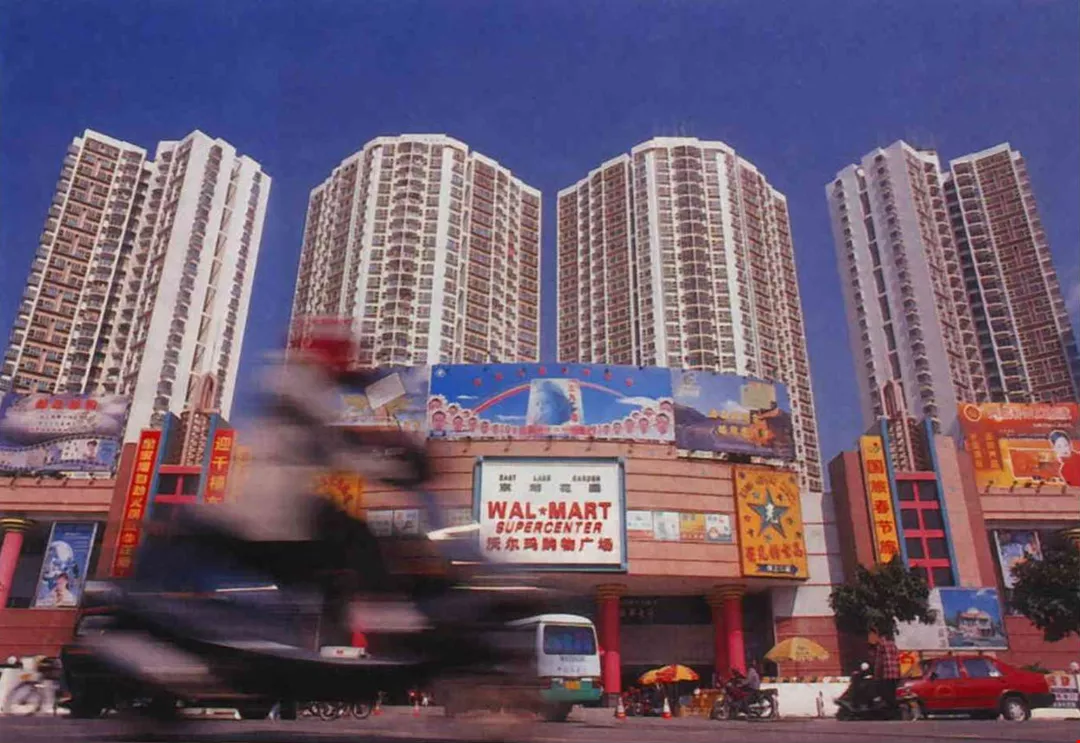
Taiwan firms have turned Dongguan into an economic powerhouse of southern mainland China. The photo shows the site of a future school for the children of Taiwanese expats.
Before the 21st century had even arrived, a bright economic star had risen over southern China. Ever since economic reforms accelerated on the mainland when Deng Xiaoping made a tour of the south in early 1992, four southern Cantonese cities-Zhongshan, Dongguan, Shunde, and Nanhai-have earned a reputation as the "four tigers" of Guangdong Province. Dongguan leads the pack. "The year before last its total exports were third on the mainland, trailing only Shenzhen's and Shanghai's," says Jiang Suwu, a graduate of Wuhan University's Chinese department who came south to work in the planning department of a Taiwan firm in Dongguan. "It had more than 15,000 foreign, Taiwan, and Hong Kong firms, and economic growth for that year reached 26%."
In ancient times Dongguan was covered with lichee plantations whose fruit was favored by the imperial consort Yang Guifei. Just a little more than a decade ago Dongguan was still a largely agricultural area, its landscape a patchwork of rice paddies and corn fields. It has since been completely made over into a "boundless industrial park" with an area of 2,520 square kilometers, a population of more than 5 million, and more than 3,000 Taiwan firms.
Chang Han-wen, the chairman of the Taiwan Business Association of Dongguan (TBAD), says that development started in the late 1980s. Hong Kong firms, with their proximity and fluent Cantonese (also the local dialect in Dongguan), were first. The Taiwanese, first coming about 1989, followed. Each arrival seemed to bring many more on its heels. Taiwan firms are now the most important source of foreign investment in Dongguan. Consider the booming electronics industry. Eighty percent of Dongguan's 1,800 computer-related companies are from Taiwan, Hong Kong and Macau. In terms of production value, they account for at least half of this RMB 50 billion local industry.
Dongguan holds the highest concentration of Taiwan firms anywhere on the mainland. According to TBAD statistics, there are now 30,000 Taiwanese companies on the mainland, (official PRC statistics, which include service-industry firms, put the number at 45,000). Guangdong Province can boast one-third of the total, of which 3,200 are in Dongguan. Most of these are telecom, cable, plastics, shoes, electronics and electric machinery companies.
Why has Dongguan been such a magnet for Taiwan firms? Kao Wen-lai points out that Dongguan is strategically located between Shenzhen and Guangzhou (Canton) and accessible to the entire Pearl River delta. It is three hours by car to Hong Kong and one and a half hours by boat to Humen. When compared to Shenzhen, moreover, land and labor in Dongguan are cheap. "The local cadres have been smart, providing all manner of land and tax incentives," says Chen Ming-chih, TBAD's secretary general.
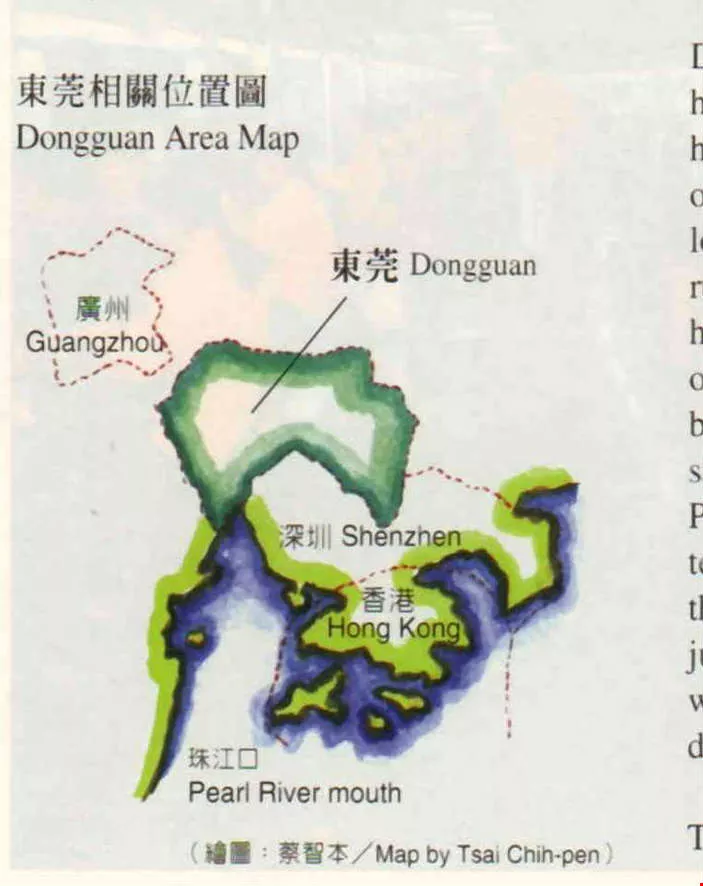
Dongguan Area Map Pearl River mouth Map by Tsai Chih-pen.
One afternoon in the days before the Chinese New Year, Chinese businessmen wearing suits arrived at the People's Government administration building in Dongguan's Qishi district.
After a long wait, they sat down at a table to negotiate with Qishi's Communist Party secretary, the district chief, and various staff from its foreign economic office. Qishi's factory rents, electricity charges and land leases were all focuses of discussion. TBAD, as is frequently the case, introduced the two parties. "The factory rent was set at RMB 8.00 (about NT$32) a square meter. The electricity charge was RMB .87 a kilowatt hour, and there were various tax incentives," explains Wang Jung-tuo, who notes there is still room for negotiation. All in all, it was a very attractive package.
In 1990, Wang went to Malaysia thinking about opening a factory there, but he discovered that Malaysia's market was much smaller than the mainland's and its labor costs twice as high. The style of life was too different there, there was a language divide, and the roads were poor. The mainland was a much better fit for him and his printed circuit boards company. Now, little more than a decade later, its 20-30 workers have grown to 2,000. The company is once again preparing to expand its physical plant. He acknowledges that it was a risky move to come to mainland China, but "if you're going to die, you might as well die among your own people." He traces his ancestry to Guangdong and affirms that his decision to set up in mainland China "involves ethnic pride."
Although low land and labor costs are Dongguan's main attractions, Taiwan firms also choose the locale for the networks of people and producers that have been built up among Taiwanese in Dongguan over the last ten years. These two kinds of networks, says H.D. Yeh-who served as TBAD's president for two terms-were instrumental in creating the "Taiwanese economic miracle."
H.D. Yeh points out that competition in the 21st century is all about speed. When customers in America make purchase orders, the whole process, including drawing up the contract and manufacturing the goods, requires four months. But Taiwanese firms can deliver in 15 days. "There are two keys," he says. "One is that all the upstream and downstream factories are here. You can assemble a computer completely from parts made within 50 kilometers." And the second key is that when you deal with Taiwanese companies, you don't have to endure a long contract process. Everything starts rolling with a single telephone call. Taiwanese business people are always playing golf, singing karaoke or chewing betel nut together. "Everyone is always asking how everyone else is doing-it's a way of networking and building up good relations," Yeh says.
Andrew Yeh recalls that when the company first set up in Dongguan in 1990, "Even screws had to be brought in from Taiwan." But now the company sources virtually all of the necessary raw materials and parts on the mainland and is reliant for very little on Taiwan. "What does industrial emigration entail? Usually it means downstream industries coming first, forcing the mid-stream industries to follow," says SylviaYang, deputy chairperson of TBAD's women's division.
And in Dongguan downstream Taiwan firms have expanded into the mid-stream, becoming more vertically integrated. Tahsin Printing only made paper boxes in Taiwan but when they set up a plant in Dongguan they discovered that it was hard to obtain the paper rolls they needed and thus learned how to make them themselves. Now the company makes paper boxes both from rolled paper and from colored flat paper.
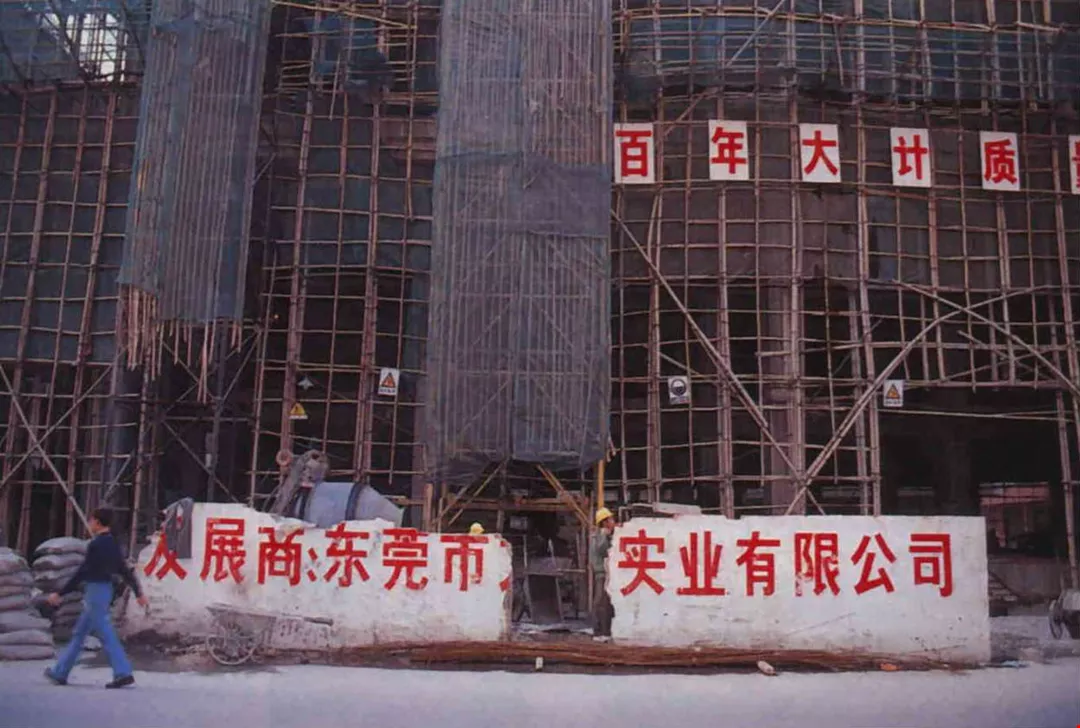
Development breeds development, growth stimulates growth. Dongguan has already been transformed from a sleepy town of lichee plantations to an industrial city, and building sites are everywhere the eye turns. Dongguan's potential is startling.
Many companies have expanded into new business realms in Dongguan. A frequently cited example is Primax, H.D. Yeh's electronics firm. The company rented a factory in Dongguan in 1989 and at first produced labor-intensive power surge protectors. After three years, they began in 1992 to invest massively on the mainland, establishing computer mouse production lines. Thereafter, Primax launched new products every year: cellular phone parts, overhead projectors, paper shredders, scanners . . . Constantly expanding its product lines and production capacity, Primax expanded from a single Dongguan plant with 25 workers in 1989 to its current nine factories and 4,000-plus workforce. Primax's performance, H.D. Yeh notes, pushed its mother company in Taiwan to go public seven years ago. Primax is one of the few Taiwan electronics companies with a definite "China orientation." "It doesn't cost much to set up a factory in mainland China, and shipping times are stable. These are helpful to the mother company both in terms of controlling costs and filling large orders," says Yeh.
Dongguan Hsu Fu Chi Foods, which sells candy, cakes and candied fruit in the mainland domestic market, is another good example. They began production there in 1992, formally opening their own plant in Dongguan in 1994. The company now has three factories in Dongguan, with a combined area of 120,000 square meters, that produce 200 tons of candy, 70 tons of Chinese-style cakes, and 180 tons of gelatin and pudding a day. "We produce 300-500 container loads of food a month. You can find our cakes in supermarkets all the way from Guangzhou to Tibet." Norman Hsu, the company's vice president, says that after one invests on the mainland, layouts of Taiwan factories seem exceedingly cramped. "There's a totally different sense of space."
"Dongguan is by itself one-thirteenth the size of Taiwan," notes Chen Ming-chih, secretary general of the Taiwan Business Association. In Dongguan factories are more than ten times the size of similar plants in Taiwan. One factory building at the Talingshan furniture plant is 380 meters long.
Walking the perimeter of a leading electronics plant in Qishi is "like playing four holes of golf." Like soldiers, workers often have to take different shifts in the cafeteria. The Pouchen shoe plant, Dongguan's largest, employs 100,000. The compound has a nursery, hospital and an operating room. "We always jokingly refer to it as Fort Pouchen," saysYeh.
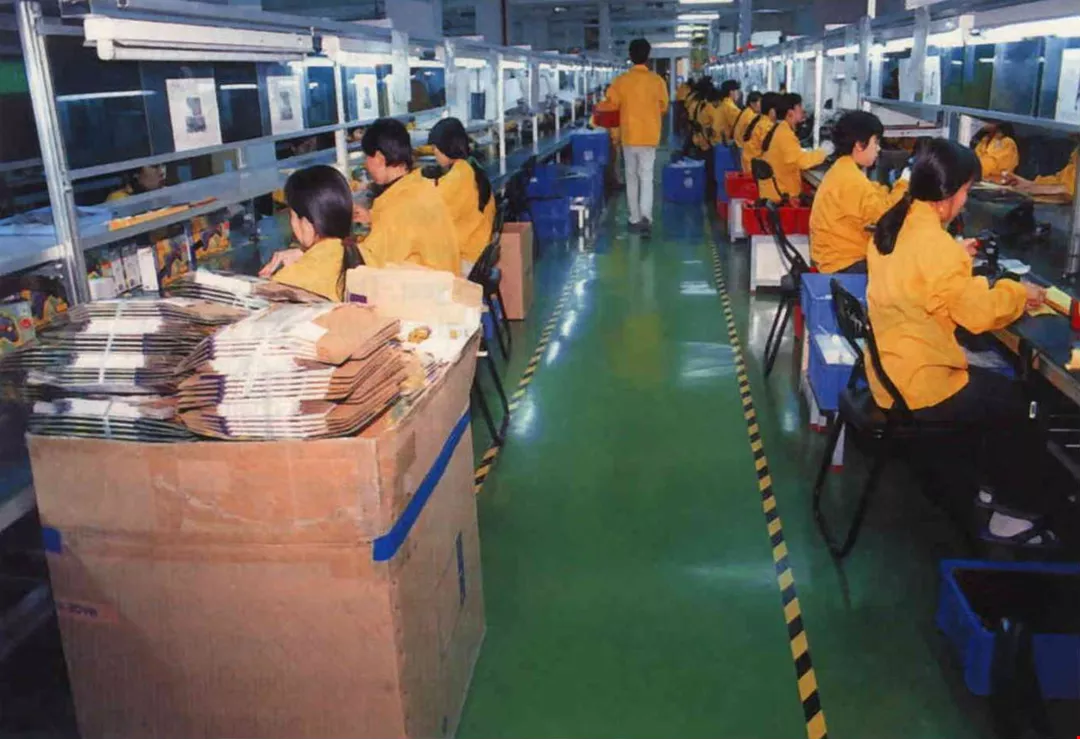
The telecom industry is one of Dongguan's hottest. Primax, which makes computer mice and overhead projectors, has top-notch production equipment. The efficiency of Dongguan's factories is one of the reasons Taiwan firms choose to set up there.
Although the Taiwan firms in Dongguan have left home, their success can largely be attributed to an ethos they transplanted from Taiwan-that "victory goes to those who strive the hardest."
"In Taiwan, we used to take the children somewhere fun on weekends and holidays," says Chang Mei-liang of TBAD's women's division. But since she's moved the factory, "there hasn't been a single meal the whole family has eaten together." If you want to open a plant on the mainland, you're going to have to sacrifice family intimacy.
"In Taiwan, a boss just has to set the factory's basic course and at the very most supervise the executives," explains Sylvia Yang, the women's division's deputy chairperson. "But on the mainland, a boss has to supervise everything: customs, tax payments, workers' disputes, meal preparation. . . . There's always the feeling that everyone will start to slack off once the boss leaves."
All the job-related pressures and evenings out with fellow Taiwanese business people or Communist Party cadres result in ill health for many Taiwan business people on the mainland. One of Chen's tasks as chairperson of TBAD is to handle funeral arrangements for Taiwanese business people there. "Many of them die suddenly," he says. The association has been trying to promote healthier lifestyles. "Instead of just going out to karaoke bars and drinking, why not play golf too," recommends H.D. Yeh. Dongguan has four or five golf courses within city limits. About 1,000 people play every day, and 80-90% of them are Taiwanese.
The Taiwanese entrepreneurial spirit has blossomed here by processing goods for export through Hong Kong in addition to making the most of connections between local Taiwan firms. With 3,000 Taiwan-owned businesses here, and 10-20,000 Taiwanese business people and their dependants coming in and out every day, the Dong-guan area has already developed an economic circle in which Taiwan firms can conduct most of their business among themselves.
In the vibrant district of Houjian, there is an area that locals call Taiwan Town. A casual look around reveals shop signs familiar to any Taiwanese: Taichung Goose, Ah-shui Shih's Pig Knuckle Kingdom, Yungho Soy Milk, the Mantu Hair Salon. . . . and most of the customers are Taiwanese. Restaurants serve up authentic Taiwanese fare like "pineapples and bitter melon chicken" and "sesame oil chicken." In November 1998 Global Express, a Taiwan firm, even opened up a shuttle bus to Hong Kong's airport.
Global Express serves as a good example of Taiwanese corporate agility. Originally, arrivals from Taiwan en route to Dongguan had to board buses run by a Hong Kong-based and mainland-financed travel agency. "But we felt that the service left something to be desired, and that a lot of time would always be wasted while holders of 'Taiwanese Compatriot Visas' cleared customs," notes David Chang, Global Travel Holding's executive director. Two years ago, this Taiwanese travel agency began to talk with the mainland customs and border inspection agencies and negotiated a deal to get the route. "We tell Taiwanese business people that riding our buses is safe, the service is good, and that it makes the trip through customs easy."
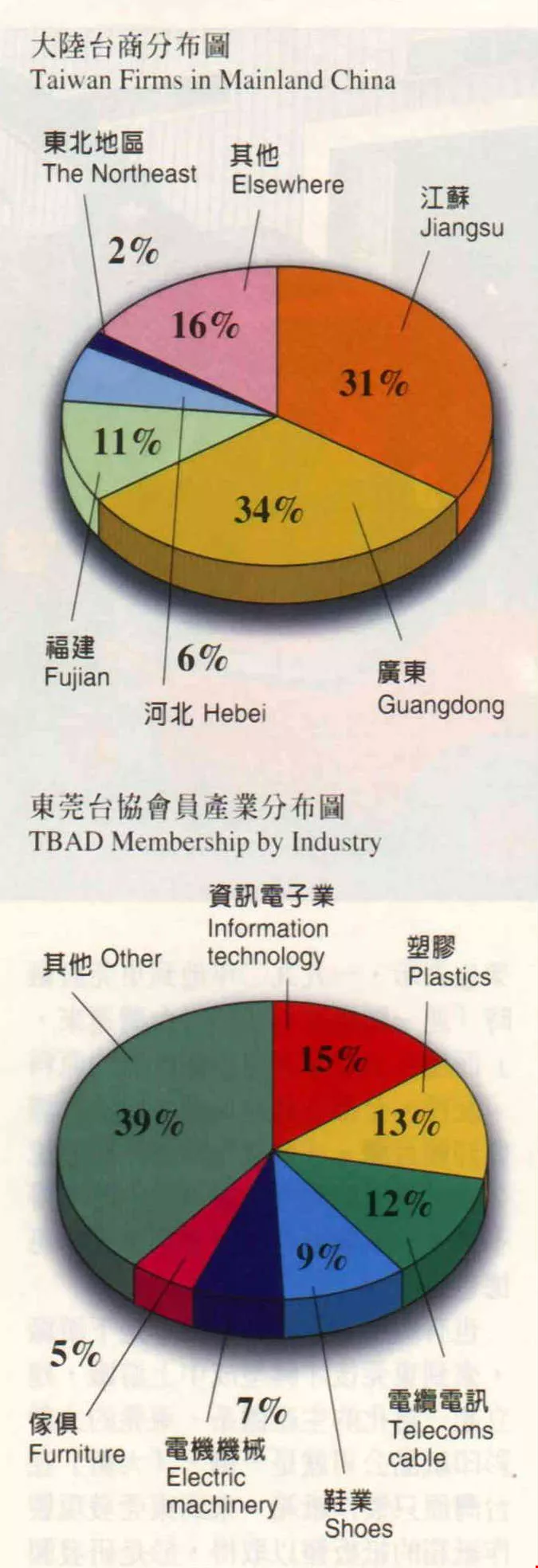
Taiwan Firms in Mainland China TBAD Membership by Industry.
As soon as you're through customs at Hong Kong, you see them: women draped with beauty pageant-like sashes with the Chinese characters for "Global Travel" emblazoned across them. Pushing small luggage carts, they lead customers to the buses. They have become a "must-see" tourist sight for Taiwanese visitors to Dongguan. "At first we thought of talking with Hong Kong airport about renting a counter," explains Chang. "But for just one-fourth of a six square-meter booth, the rent comes to HK$200,000." So the company thought that instead of spending that much money on a booth it made more sense to lower operating costs and pass these along in the form of lower fares for its customers. They never expected that the luggage carts would in fact make it much easier for customers to find them in sprawling Hong Kong airport and would become an easily recognizable company trademark. "Now mainland Chinese travel agencies have started copying the way we use the carts," says Chang, laughing. Since Global buses started plying this route in November 1988, daily bus departures have risen from 4 to 27, with over 20,000 riders a month. Global plans to introduce new services, including car rentals and plane ticket reservations and confirmations.
Dongguan appears to have a bright future. "The Taiwan firms here now are powerful enough to get two or three members of the Legislative Yuan to represent their interests," holds one senior reporter. Although TBAD's Yeh believes that investment prospects on the mainland are good, he does acknowledge the precariousness of their position in hostile territory. Taiwan business interests cannot put down their guard.
Because of Taiwan's experience with rapid modernization, many CCP cadres have sought employment with Taiwanese firms, hoping to learn from the masters. At the first opportunity, however, they leave to set up shop for themselves. "The student then challenges the master," explains Sylvia Yang, detailing how these mainland upstarts go on to compete with the very Taiwan firms that taught them all they know. This scenario should be familiar to Taiwanese. "It happens in Taiwan too." Apart from keeping up their guard, it is even more important that Taiwan firms raise their productivity and technological level. "Many manufacturers, even those in mainland China, will not survive," says Yeh.
Taiwan firms find it difficult to adjust to the instability of the mainland's investment environment, as well as the laws there that seemingly change overnight. The year before last the mainland announced a new tax system, under which raw materials imported by foreign firms would be taxed at a rate of 17%, with 9% being returned to the manufacturer when finished goods were exported. "When I went to Beijing to negotiate," recalls Yeh, "I asked cadres in the foreign trade office to consider the impact of the tax on the electronics industry. Profit margins are at best 3-5%. How can manufacturers afford to pay a 17% import tax?"
In June of last year the PRC authorities announced the "Document #35" rules. These stipulated that companies would be given grades according to the quantity of their exports and their records of breaking customs regulations. Those meriting only a B would have to offer a deposit of 40-50% against the value of their raw material imports. This terrified Taiwan firms in Dongguan. According to TBAD's statistics, 75% of the Taiwanese firms were given Bs. The announcement caused quite a stir, but its effect on Taiwanese investment is as yet unclear.
In August of last year, as the mainland customs authorities took aggressive moves against smuggling, 12 Taiwan business people in Dongguan were detained. The charges ran the gamut from not filling out proper forms to purchasing phony export contracts and trying to pass them off to customs. Seven business people were arrested and charged with smuggling and are still in jail. "I'm constantly thinking about them. I'm meditating and have gone vegetarian, but I'm still not at peace," Yeh says. On the mainland, the highest penalty for smuggling is death. "Last year the mainland sent nine customs officers to the firing squad," notes Yeh. The fate of these Taiwanese businessmen will depend entirely on the mainland's political climate.
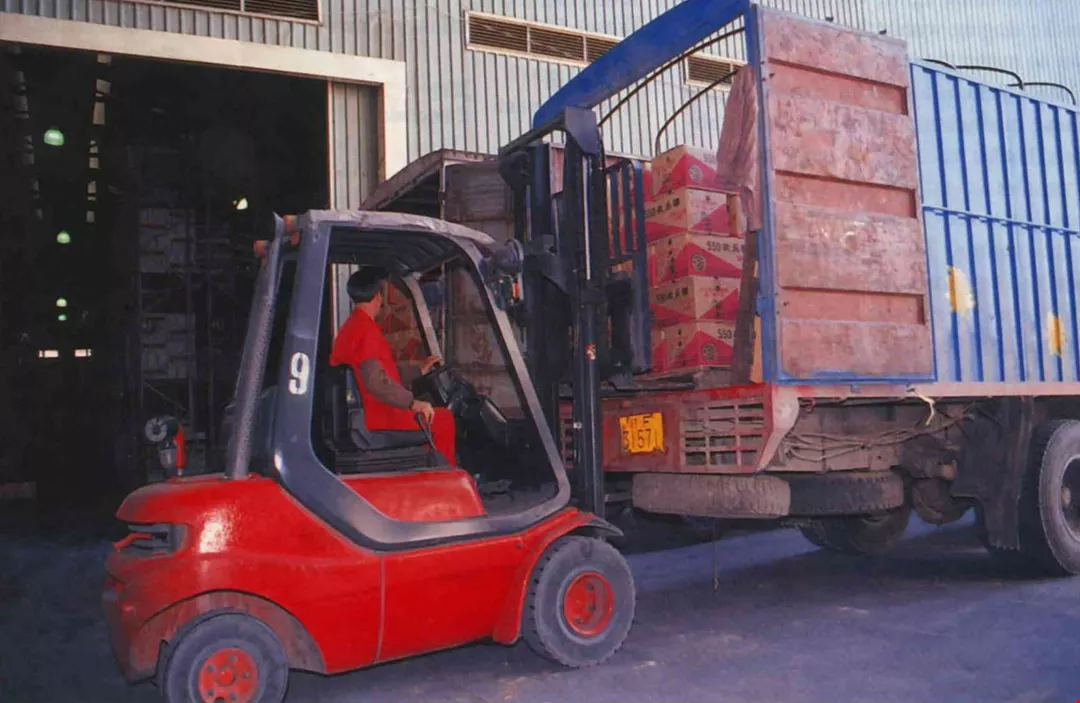
BVI Hsu Fu Chi, which makes cakes and candy, produces 300-500 container loads a month. (facing page) The company's vice president Norman Hsu says that the PRC has abundant natural resources and a large domestic market. The food products industry on the mainland is in the middle of a boom.
Whether its arrival was by accident or design, a new age for Taiwanese firms in Dongguan is here. It is a far cry from the days when Taiwan firms enjoyed tremendous advantages. From the various revisions to trade law adopted by the PRC last year, Chang Han-wen extrapolates that the PRC both wants to protect its uncompetitive state firms and turn from low-tech processing to high-tech production. "This is because state enterprises pressure the government with appeals about their right to survival," Yeh says.
When foreign firms in the mainland are confronted with threats to their safety and property, "Hong Kong can count on the cooperation of the government, US and Japanese businesses can turn to their ambassadors, but what can Taiwan firms do?" asks Yeh. In Dongguan they can help each other. Currently, more than 80% of the 3,000 Taiwanese firms in Dongguan have joined TBAD. TBAD has 29 local branches in Dongguan and is, moreover, the only Taiwan business association in mainland China with a women's division. Major companies listed on the TAIEX, including Lite-on Electronics and Delta Electronics, are members of TBAD. It is the largest and strongest of all Taiwan business groups on the mainland both in terms of organization and operations.
Many Taiwanese believe that at a time of cross-strait tension, Taiwan firms have made their own decisions to invest in the mainland and therefore should bear the risk themselves too. And by investing their money, technology and so forth on the mainland, are they not to some degree abandoning Taiwan?
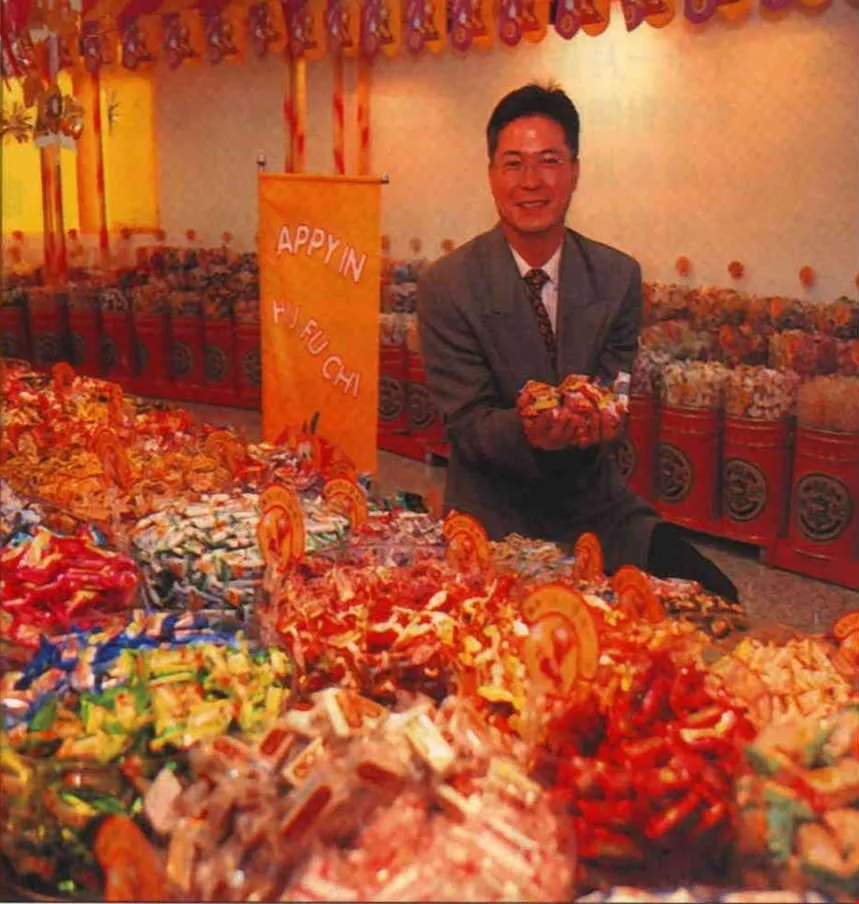
The company's vice president Norman Hsu says that the PRC has abundant natural resources and a large domestic market. The food products industry on the mainland is in the middle of a boom.
TBAD takes issue with this view. H.D. Yeh points out that in 1998 Taiwan had an overall trade surplus of US$5.9 billion, and a surplus of US$12.76 billion with mainland China. If not for its trade with the PRC, therefore, Taiwan would have had a trade deficit. "We make our money here, but we pay taxes in Taiwan, and most of our families and children do most of their consumer spending in Taiwan," insists TBAD chairperson Chang Mei-liang. Chang notes that after the major earthquake in Taiwan on September 21, Taiwan business associations throughout mainland China contributed NT$60 million. TBAD contributed NT$30 million all by itself. Hence, he argues that it's very unfair to say that Taiwanese businesses in the mainland aren't contributing to Taiwan.
The question is, how should the ROC government view Taiwan firms in the mainland? And for that matter how is the PRC government looking at the Taiwanese in Dongguan?
TBAD's spiritual leader H.D. Yeh often goes to Beijing to represent Taiwan firms in negotiations with the government. Once, in the presence of many Communist Party cadres, a high-ranking official of the State Council's Taiwan Affairs Office asked him this question: "You've gathered so many Taiwan firms in Dongguan and stirred up such enthusiasm among them-but for what purpose?" It threw him for a loop. Yeh is still trying to figure out what the mainland authorities think of TBAD.
For Taiwan firms in Dongguan, investing in mainland China is a road of no return. "In recent years many Taiwan business people have also tried to invest in Vietnam, only later to close their factories there," says Chang Han-wen. Mainland China shares the same language as Taiwan and it offers attractive investment conditions. It would be surprising if it didn't attract Taiwan firms that are eager to set up offshore. Amid the cross-strait political standoff, one can expect that Taiwan firms in Dongguan will continue to live out this exciting tale of gain and loss.
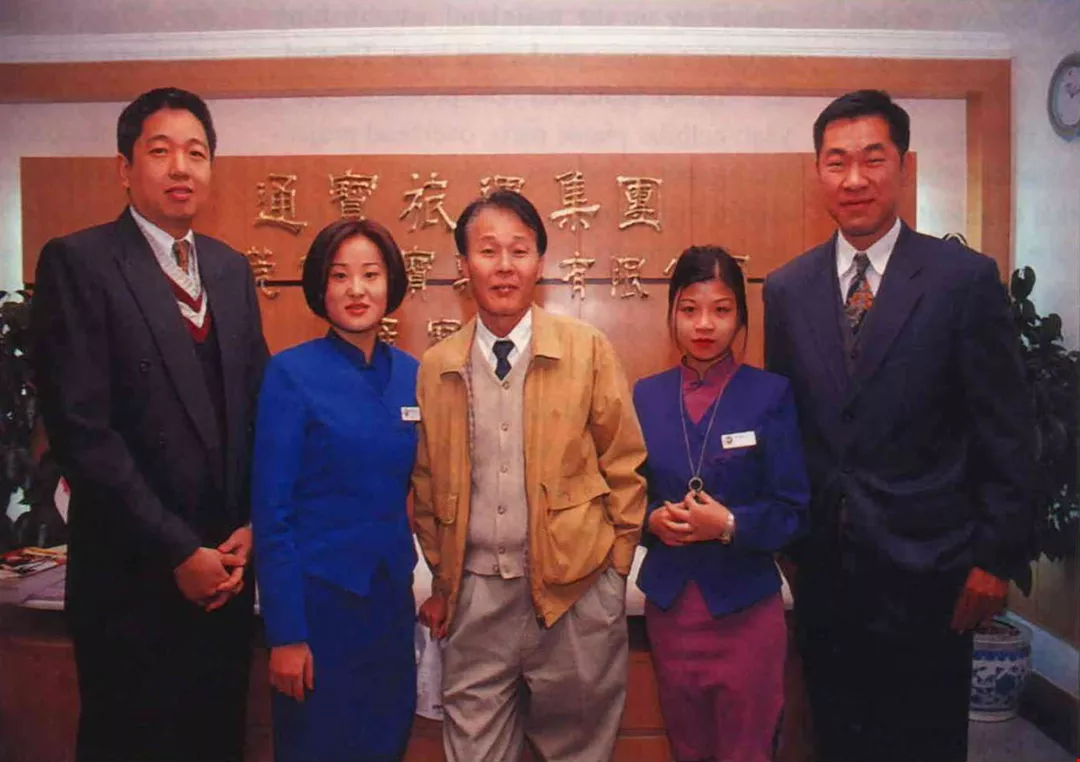
Quite a few of the top executives of Global Travel come from China Airlines, and even the uniforms of the two companies look very similar. The man in the center is David Chang, the company's executive director.
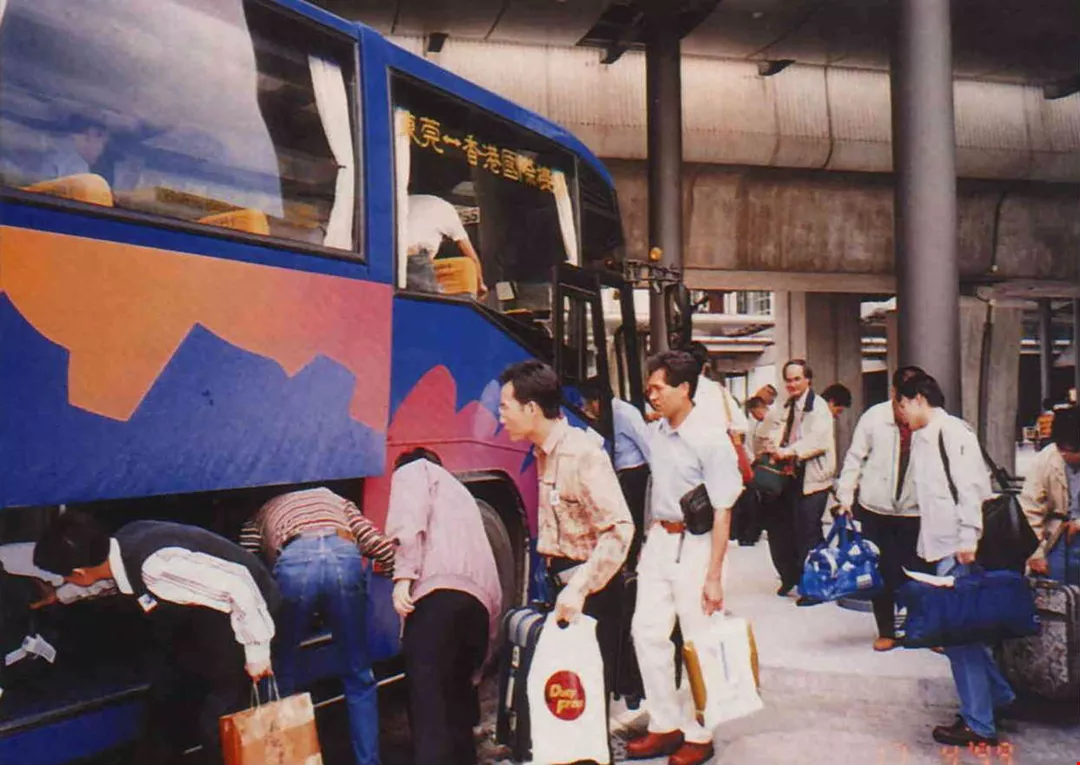
Most of the riders on the Global Express buses are Taiwan business people. Who can really understand their feelings of exile? (courtesy of Global Express)
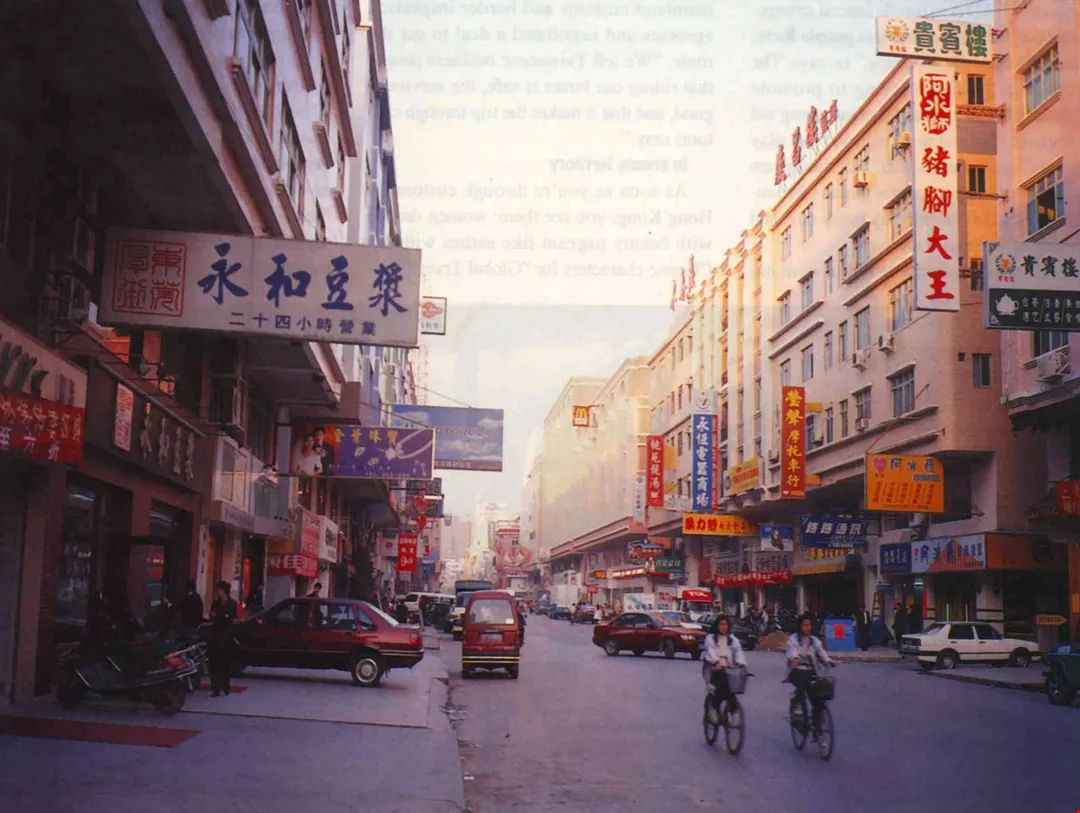
The bustling Houjie district is known as "Taiwan Town." When travelers from Taiwan come here, they are sure to get a taste of home just by looking at the shop signs.


