Sheico: Taiwan’s Marine Marvel
Lin Hsin-ching / photos Chuang Kung-ju / tr. by Geof Aberhart
April 2014


From surfing and scuba diving to river tracing and kayaking, watersports have enjoyed a boom in popularity around the world in recent years. But before you can dive in, you need to prepare with specialist gear that will keep you warm and safe. Several of the brands most popular with enthusiasts are actually the products of a Taiwanese company that accounts for some 65% of the global wetsuit market: Sheico.
Even 17 years ago Sheico was already the globally dominant force in watersports clothing manufacture, and they have remained so since. The nine leading wetsuit brands are all dedicated clients. So how did Sheico grow from their humble beginnings as a roadside stall in Luodong, Yilan, into a world-leading, multi-billion-dollar powerhouse?
Yilan County is known for its spectacular scenery and unpolluted tourism resources. But don’t let the absence of pollution fool you into thinking that means there’s no valuable industry. On the contrary, nestled among the rice paddies of Wujie Township is an unassuming world leader—Sheico, the world’s largest wetsuit manufacturer both in scale and in market share.
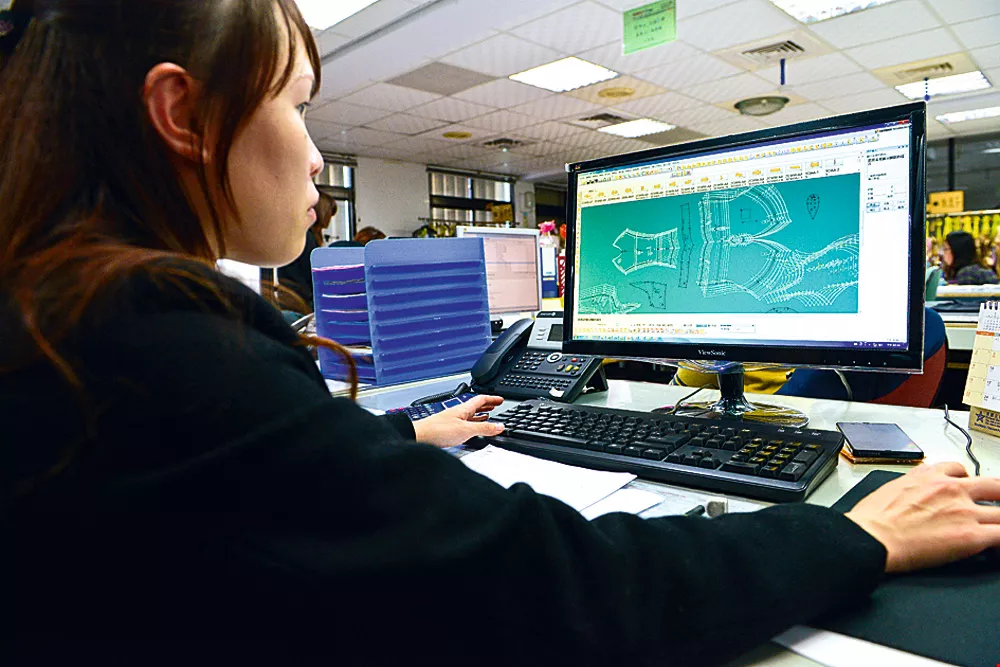
Sheico’s core materials research and production is focused in their Yilan headquarters, and has been crucial in the company dominating the wetsuit market.
Sheico’s founder Shiue Pi-goong was born and raised in Luodong. In 1950, at the age of 20, he left a hard-won position at Yilan’s Xiaowei Elementary School and began selling canvas shoes bought from Taipei at a roadside stall to help his mother feed their family of 11.
Blessed with a head for business, Shiue soon spotted an opportunity to expand from just canvas shoes. Yilan is a rainy place, so there would obviously be a market for boots and raincoats. With the lumber industry still booming on Mt. Taiping, Shiue saw an especially promising opening, and headed up the mountain himself to hawk Japanese-style workboots known as “tabi” to the relatively well-off lumberers.
Step by step, Shiue’s business began growing, soon outgrowing the stall and moving into an actual store. By 1966 the company had expanded so much that he purchased a disused sugar factory in Wujie’s Erjie Village, and the site is still home to the company today. The establishment of Sheico’s first factory operation in that building marked the end of Sheico the retailer and the beginning of Sheico the manufacturer.
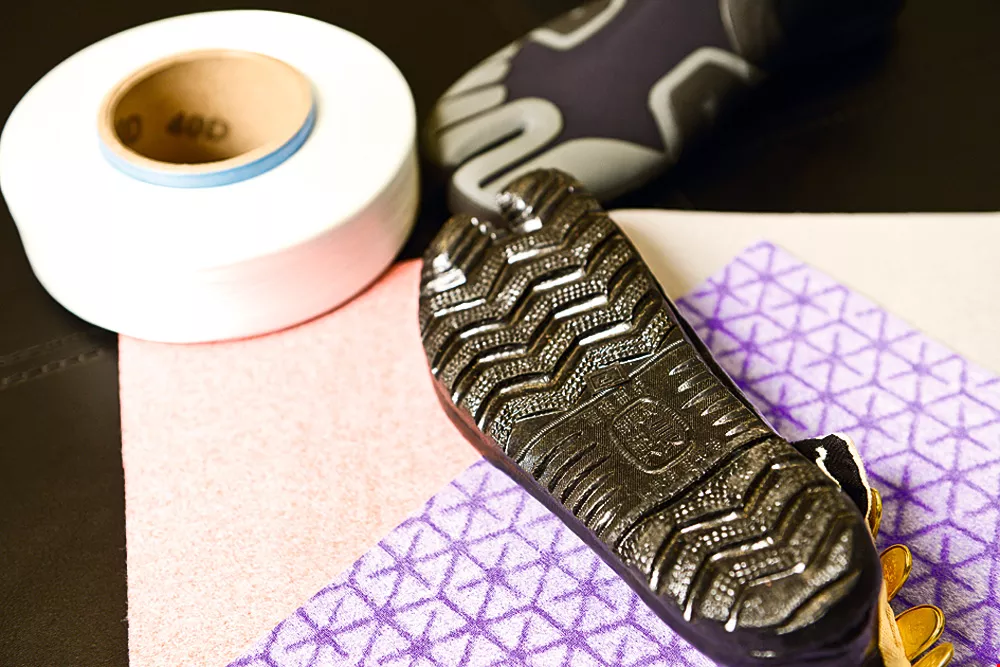
Sheico took inspiration from Japanese-style “tabi” workboots, even incorporating design elements into their diving boots.
In their early days, Sheico focused on raincoats, rain boots, and workboots for farmers and lumberers. By 1979, their hold on the raingear market in eastern Taiwan was solid, but Sheico were beginning to feel the pinch from other big competitors. In fact, some stores in western Taiwan would even flat-out refuse to stock Sheico’s products.
Shiue Pi-goong knew that the only way for the company to break free of this stranglehold would be to turn their attention to the international market. If they were going to do that, though, they’d need something a little more enticing than rain boots.
As it happened, Shiue’s eldest son Shiue Chih-cheng had just been to Munich to attend a sports goods expo and had brought back with him a pair of diving boots. The family gathered around, struck by how similar these boots were to what Sheico already made.
Although diving boots use insulating neoprene in addition to rubber, the production process is essentially the same. The only problem would be finding the neoprene. At the time, virtually all the neoprene used in the wetsuit industry was sourced from Japan, so the elder Shiue, a Japanese speaker, headed over himself. Having convinced a Japanese supplier to work with them, Sheico went through a series of tests and adjustments before finally producing an acceptable diving boot.
At the end of 1979, Sheico received an order from Japan for 500 pairs of diving boots, worth a total of US$3,000. This marked the company’s first real step into the international market.
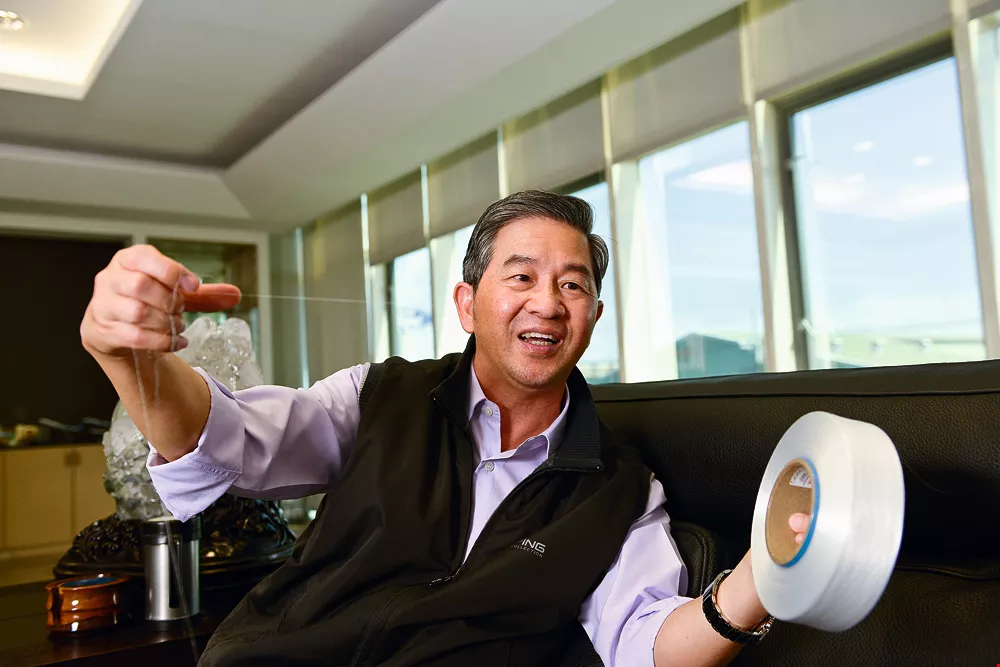
Sheico general manager Min Shiue plans to lead the company in building on its niche in elastic fibers to move into the much bigger functional sportswear market.
As orders continued to grow, Sheico grew too, expanding from diving boots into diving gloves and wetsuits, leaving behind the low-profit world of raingear.
However, just as it looked like it was clear skies ahead, Sheico found that they were in danger of running short on materials.
“The production of neoprene, the key ingredient, was concentrated in Japan. If they wanted to raise the price, they raised it. If they felt like taking their time shipping our neoprene, then our products would be late. There was nothing we could do,” says second son and Sheico general manager Min Shiue, still obviously annoyed.
To help the company get things under control, the younger Shiue, fresh out of military service, made some suggestions to his father about how they could develop their own neoprene.
Doing so turned out to be easier said than done, though, especially for an economics graduate like Min Shiue. Just as determined as his father, he stuck at it, and after attending lectures by people from rubber industry associations, technical institutes, and even DuPont, he was able to get the fundamentals down. After work, he would hide away in the lab, testing new formulations.
Just as he was completely immersed in this work, though, tragedy struck as the little finger on his left hand was cut off in a machine for making shoe trees. Doctors sewed the finger onto his belly, keeping it attached to his body so the natural healing process could help the finger regrow the missing flesh. Throughout these many months Shiue continued his work in the lab, despite only being able to use the one hand.
After three and a half years of hard work, Shiue was finally successful in developing a new neoprene fabric, and had done so without spending a cent on technology from abroad.
A one-stop shopSheico’s capability to produce its own neoprene is what led to it becoming the first wetsuit manufacturer to have up-, mid-, and downstream production all in-house in 1986. With their products receiving rave reviews for their reasonable prices and high quality, the company saw orders begin to boom.
In 1988, with their production lines approaching capacity, Sheico began looking to expand their facilities abroad, eventually opening plants in Thailand, mainland China, and Cambodia.
Today Sheico own a total of 11 plants at home and abroad, with the overseas plants mostly involved in the labor-intensive final steps of production. In Yilan, Sheico have their headquarters and three plants focused on development and design of core materials like wetsuit rubbers, functional fabrics, and elastic fibers. The company employs over 9,000 people abroad and 958 in Taiwan, with most of the latter employed in the Yilan plants.
One big happy familyOf course, no business ever has everything go in their favor, and sometimes those problems can be life or death for the company.
In September 1996, Sheico’s Yilan headquarters were the victim of arson attacks two days running, with virtually all of their plant and machinery destroyed. With Sheico feeling the burn, their competitors were already beginning to circle the prospective corpse.
Acting quickly, Min Shiue explained everything to the company’s clients, while his father sped to the bank to discuss financing options. The pair were also ready to pay whatever price was necessary to get the company back to normal as quickly as possible, including purchasing second-hand equipment.
With astonishing speed, Sheico was soon back on its feet, getting back to business as usual just three months after the fires.
It wasn’t only the decisive action of management that helped Sheico recover—the unwavering support of the staff was also crucial. In fact, soon after the fires the staff wrote a collective letter to the senior Shiue expressing their willingness to take a 20% pay cut for three months to help the company safely navigate the storm.
The sentiment brought Shiue Pi-goong to tears, as well as making him more determined than ever to make sure his staff were treated right. Despite their offer, he continued to keep the staff at full pay, and even added an extra two weeks’ pay to their annual bonuses the following year to thank them for their hard work during that troubled time.
Since then, Sheico has become one of the best places to work in Yilan. Part of this is the pay and benefits, which are better than the industry average. Sheico instituted five-day workweeks well before it was legally required, and even offers staff nine days of summer and winter leave each year, giving them the chance to go on vacation with their families.
The top is just the beginningRising from the ashes like a phoenix, Sheico went on to enjoy continued growth, becoming the world’s top manufacturer of wetsuits in 1997. At that time, Sheico enjoyed a 30% market share; today, that number is 65%.
Today the reins of Sheico are in the hands of the R&D-focused Min Shiue. Under his leadership, the company has progressed from contract manufacturing to original design manufacturing, becoming a strategic partner to the brands they help design new products for. In the last two years, Sheico have begun laying plans for adding some turf to their surf, building on their research into elastic fibers to break into the even more demanding market of functional sportswear.
Although they are already world leaders, it seems like the top is only the beginning for Sheico. Time and again the company have proven ready and able to surpass themselves, and perhaps it is that drive that has been crucial to their domination of the wetsuit market.


