Alex Chiang and the Taiwan Complementary and Alternative Medical Corporation
Yang Ling-yuan / photos Hsueh Chi-kuang / tr. by Scott Williams
March 2009


Nearly two years ago, 55-year-old Hong Kewen suffered a sudden stroke that left him paralyzed on his right side. A year and a half of physical therapy enabled him to regain function in his right leg, but his control over his right hand and arm remained poor-he couldn't unclench his fingers nor lift his arm to the steering wheel of his car. "My physical therapist said that he couldn't do any more for me," recalls Hong, "so I went looking for other forms of therapy."
He first tried folk remedies such as electrotherapy and acupuncture, but saw only temporary improvement. Then, at the recommendation of a friend, he went to the clinic of the Taiwan Complementary and Alternative Medical Corporation (TCAMC), Taipei's marquee clinic for integrated medicine, where he had his first experience with naturopathic medicine. "The doctor recommended that I undergo homeopathic flower-essence therapy," says Hong. "A little more than three months after beginning treatment, I could spread my fingers and move them around."
In the early stages of Hong's naturopathic treatment, he tired easily and slept a lot, but felt relaxed and comfortable. "According to the doctor, that indicated I'd taken a turn for the better," says Hong. Though he knows flower-essence therapy to be effective for some problems, Hong, who suffers from diabetes, doesn't believe naturopathy can treat severe congenital conditions. "If natural medicine could treat diabetes, someone would have won a Nobel Prize a long time ago," he reasons.
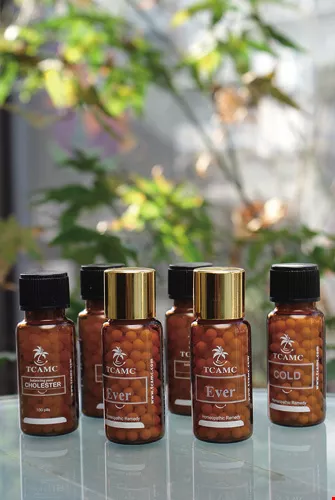
Patients undergoing homeopathic treatments make use of natural extracts. These aren't medicines per se, but carry information on curing similar symptoms, and are often administered as a lozenge.
Not just a fish dealer
The brown wooden building wedged between two Shilin sidestreets stands in stark contrast to the white apartment buildings that surround it. Walking into the TCAMC clinic, the Chinese name of which honors the pioneering 19th-century German founder of homeopathic medicine, Samuel Hanhemann, patients enter a soothing sunlit waiting area featuring high ceilings and skylights.
"It was originally a private villa," says clinic-founder Alex Chiang. "When the owner moved out in response to the acquisition of a part of the property to widen the street, we ended up with a place to perch." Alex Chiang doesn't have a medical background; he's an electrical engineer who helped build Taiwan's first fiber-optic fixed network. But his older brother, Dr. Chiang Shou-shan, is a nephrologist who has become known for dealing in toxin-free fish. It was a request from his brother that led him to this new field.
Dr. Chiang has worked in internal medicine for many years and encountered innumerable patients seeking treatment for exhaustion and low-back pain for which exhaustive testing failed to find a cause. Such puzzles have fostered Dr. Chiang's long interest in new medical trends and treatment modalities. When alternative medicine began to attract attention in the international medical community, Dr. Chiang became curious. Asking his younger brother to gather data for him, Dr. Chiang himself visited pioneering local alternative medicine clinics, and gradually began developing a sense of what naturopathic medicine looked like in practice in Taiwan.
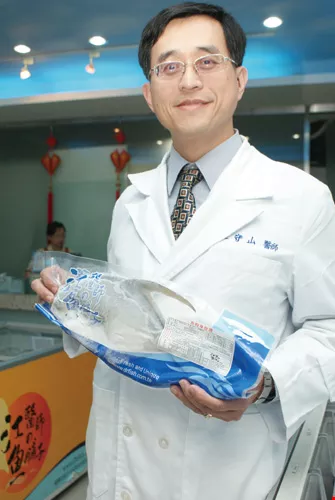
Known for promoting the consumption of toxin-free fish, nephrologist Dr. Chiang Shou-shan is well aware of the shortcomings of Western medicine, and has, with his younger brother, begun promoting the teachings of Samuel Hanhemann.
The CHMA
The younger Chiang's ideal clinic would provide Taiwanese patients with a plethora of naturopathic treatment options, everything from homeopathy, chiropractic, Chinese and Western herbal medicine, and orthomolecular medicine to even indoor-toxin prevention.
"By running the business and feeling our way a little bit, we gradually hit upon our present treatment model," says Chiang. Because Taiwan doesn't have any placement services for naturopathic practitioners, Chiang searched for clinicians by placing a notice online and directly contacting members of the alumni associations of the US's seven largest schools of naturopathic medicine and practitioners holding either US or European licenses. Unfortunately, the many legal hurdles Taiwan has in place kept interest low. To date, Chiang has found only three doctors willing to return to Taiwan to practice.
"We've been in business for more than seven years," says Chiang. "In that time, most of our patients have been individuals suffering from depression, bipolarity, insomnia, allergies, auto-immune disorders, and other issues that Western medicine has difficulty resolving." The clinic also provides music therapy to hyperactive and autistic patients. However, its most profitable departments are its chiropractic and physical medicine divisions, which together generate about NT$15 million in annual revenues, or about 50% of the clinic's total.
"Because spinal adjustments have rapid and readily apparent effects, they provide a good route to building patient confidence," says Chiang. But spinal adjustments comprise only one small part of naturopathic medicine. Though they help the clinic earn money, Chiang isn't enthused about them.
The TCAMC clinic is facing other difficulties as well. Since its services are not covered by National Health Insurance, its patients' out-of-pocket expenses are five to six times higher than for those receiving treatment from a conventional clinic. In addition, the high turnover rate among doctors unable to adapt to the practice environment in Taiwan has compelled it to train new ones itself. Over the course of three years, it has trained 30 doctors of TCM and Western medicine, while also engaging in educational outreach with the Ren'ai Branch of Taipei City Hospital and other medical institutions. Its establishment of the Chinese Homeopathic Medical Association (CHMA) in February 2009 also marked a major step towards the integration of naturopathic medicine in Taiwan.
"We hope that Taiwan's medical establishment will change its thinking and get with the times so that naturopathic medicine can escape the ghetto to which a lack of official recognition has relegated it and become a branch of mainstream medicine," says Chiang. "The fact that it currently exists in a gray area makes malpractice more frequent." Chiang's dream represents hope for the many patients having difficulty choosing among the many alternative therapies on the market.
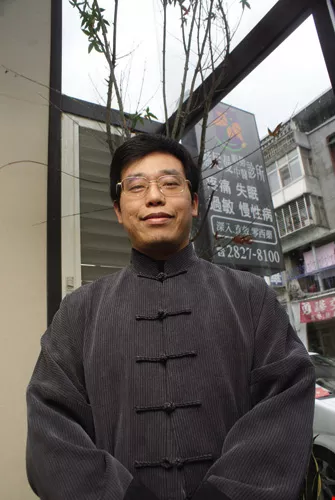
Alex Chiang's integrated center for naturopathic medicine makes use of the strengths of multiple treatment modalities and also trains new practitioners.


@List.jpg?w=522&h=410&mode=crop&format=webp&quality=80)


