Landrush! Taiwan's Property Market Takes Off Again
Vito Lee / photos Chi Kuo-chang / tr. by Chris Findler
October 2004


So you want to buy a house....
Boosted by record low interest rates since the beginning of the year, an atmosphere of optimism surrounds the real estate market throughout Taiwan. Offers ranging from upmarket homes in Taipei City, to townhouses in central and southern Taiwan with ads touting 100% financing, have stirred awake many people's long-silent itch to buy.
Back in 1999, when Taiwan's real estate market was in the doldrums, the government began implementing policies to rescue it and avert a hard landing for the economy. That January, the government announced measures to revitalize construction investment, dipping into NT$150 billion in post office savings accounts. The central bank distributed the funds among various financial institutions to be used in preferential home purchasing loans. Money from the national treasury was used to subsidize interest.
In addition to preferential interest rates, the government set up an array of supporting measures, including raising the income tax deductible for interest on home loans and placing a moratorium on public housing construction. A variety of policies aimed at shoring up the real estate market and the banking industry, including halving land value increment tax, would continue to come down the pipe.
The policies, combined with unprecedented low interest rates and an assortment of low-interest home loan products offered by banks, pushed consumer home loan interest rates to historic lows. Following a year of negative growth in 2001, the real estate market began to rebound. It picked up in 2002 with 300,000 homes sold, returning to near-1997 levels last year with over 349,000 houses changing hands. The enthusiasm on the market was evidence of its recovery.
To funnel capital into Taiwan's real estate market, the government also opened up it up to foreign and mainland Chinese investment and implemented the policy of real estate securitization. As a result, the degree of freedom of investment in today's real estate industry is higher than at any time in the past.
Both investment buying and home purchases for personal use are showing undeniable signs of recovery. But how does the current wave of buying differ from the frenzy before the economic bubble burst?
Outside Shihpai Station on the MRT Tanshui line, people navigate around street vendors as they rush to catch their trains to work.
Crowds, traffic, and money. Following the opening up of the Mass Rapid Transit system-Taipei's subway-the long-established residential area around Shihpai has seen little superficial change, but it is hard miss the deeper changes-the animation, the enthusiasm in the air.
During the real estate rebound of the last two years, realty prices along the MRT's Tanshui line have increased by almost 20%. Although they are not up to the exorbitant levels reached back when the MRT was still in the planning stages, the rush to buy homes is clearly evident from the sheer mass of home advertisements.
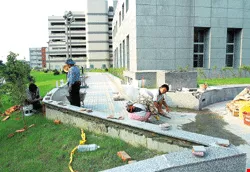
The balance of supply and demand is the major factor determining long-term property market trends. Faced with a glut of surplus buildings and continuing transparency problems, even if the government has the gumption to act it is difficult for it to know what to do.
Light at the end of the tunnel
Brand new buildings lining the tracks greet the trains as they emerge from the tunnel at Yuanshan. Taipei, which already has the most expensive real estate in Taiwan, has picked up more steam during the current rebound as it has outstripped other regions in terms of both rate of growth and number of transactions.
In the Greater Taipei area, real estate straddling the MRT lines is leading the trend.
Shihpai, along with neighboring areas eastward to Tienmu and westward to Kuantu, has traditionally been an epicenter of high-value real estate in Taipei. Following the current resurgence, a realty office franchise sandwiched between a bakery and a hardware store next to the Shihpai MRT station witnesses an endless flow of individuals inquiring about real estate daily from the moment the doors open at eight o'clock in the morning till they close at 11 at night.
To those interested but financially unable to live in Tienmu, Shihpai's fine environment makes it a good second choice. The opening of the MRT has only made it better.
"Second-hand homes sell just as well as new ones." Real estate chain manager Chiang Tsung-ming divulges that turnover has grown by more than 30% over the past two years, with 90% of the business in pre-owned homes.
He explains, "Even for rentals, the return on investment along MRT lines can be as high as 6%, much higher than the 3% interest on home loans. Even after making allowances for age, older homes are still worth investing in."
The presence of relatively old buildings along the Tanshui line in Shihpai is the exception, not the rule. New ones continue to pop up next to the line from Yuanshan and Chientan to Hongshulin and Tanshui. Huge placards vie for the attention of MRT passengers. Ad signs are carried around on the street to grab the attention of passersby.
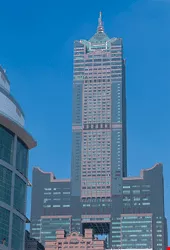
Compared to homes, the rebound in commercial buildings has been relatively slow during the current recovery. This is Kaohsiung's Grand 85 Tower, the second tallest building in Taiwan.
Ideal for investment or own use
Following on the heels of a slump lasting more than a decade, there is reason for the optimism of this recovery. With a steadily increasing gap between city and country, however, "the current groundswell in Taiwan's realty market is, in fact, concentrated in its big three urban centers-Greater Taipei, Taichung, and Kaohsiung," explains Lin Fa-hsiang, who has worked in land development for over a decade and written several books on real estate investment.
There are differences between the current wave and the market frenzy that characterized the 1990s. In the early 1980s, interest rates on home loans were at 10%. Expecting the NT Dollar to appreciate, speculative money from abroad flooded into Taiwan's real estate market, driving up prices and planting the seeds for their later collapse.
Lin continues, "This is an excellent time to invest in real estate, but you're not likely to see the same levels of return on investment. On the other hand, the risk is comparatively low."
Years of sluggishness gave the market time to settle down. Gone are the days of quick turnover and huge profits. Figures released by the Council for Economic Planning and Development (CEPD) in August also seem to reflect investor caution.
Although the real estate market looks promising, the numbers tell us that the first two quarters of this year saw growth in home buying of only 15.7% and 17.3% respectively-a big difference from the more than 30% growth at the peak of the 1980s.
During the high point of the 80s, the real estate market grew almost threefold over the course of three short years. Most houses were bought and sold again for the profit. But the days of high profits from real estate are gone. That coupled with a surge in new ways to invest money have added up to a diminished interest in real estate as an investment.
In other words, the people driving this round of house buying are those purchasing homes for their own use, rather than investors looking for a hedge against inflation or international speculators hoping to make a quick buck. The overall market has been growing steadily.
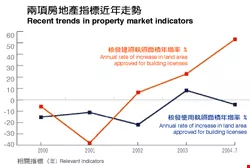
Recent trends in property market indicators source: DGBAS
Upscale homes, 100% financing
Leaving Taipei, Taichung, and Kaohsiung for the small towns of southern and central Taiwan, you will see no subways, upmarket homes, or spas. But you will see row after row of three and four-story townhouses. Builders and bankers have joined ranks to stimulate buying in rural areas using a different method-100% home loan financing.
"This is obviously difficult for Taipei consumers to imagine, but this trend in home loans has been a big hit in central and southern Taiwan over the past few years," observes Wu Nan-chang, chief of the Taichung City government's construction license section.
With the low prices prevalent in central and southern Taiwan, to buy a NT$3 million two-bedroom or small three-bedroom place on loan with nothing down, you can expect monthly payments of only NT$18,000-well within the range of middle-class couples with a combined monthly income of NT$60,000.
To promote sales, some builders initially went 20/80 with banks to offer 100% home loan financing. The current practice of banks extending total financing, however, has only emerged in recent years.
Market factors, such as supply and demand and interest rates, are rather difficult to pin down. The US Federal Reserve lowered interest rates 13 times between 2000 and 2003, creating unprecedented low interest rates in Taiwan.
Furthermore, 1998 saw banks cut loans to corporate clients as a spate of bankruptcies erupted among local industries. As a result, the ratio of home loan clients with sufficient security began to account for an increasingly large proportion of bank business.
In addition, "The fact that bankers today have the courage to offer loan services of this kind reflects their optimistic expectations for the future of the real estate market," explains Victor Chang, an associate manager in Sinyi Realty's planning and research department.
Looking back at Taipei with its high cost of housing, we discover there is much less enthusiasm for 100% home financing. Real estate industry surveys reveal that less than 10% of Taipei buyers would consider using such loans. After all, pre-owned homes that commonly go for NT$6 or 7 million can be heavy burdens when purchased with 100% financing. Brand new homes can only be all the more so.
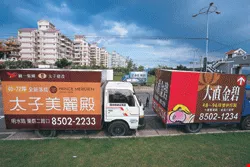
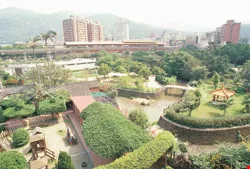
Residential areas in Tachih, with its comfortable and convenient living environment, are regarded by many Taipei residents as upscale. New upmarket homes have attracted many buyers of late.
Interest is the key
Even without 100% loans, exceptionally low interest rates are already enough to draw buyers. What's more, preferential home loans promoted by the government since 1999 are still in effect.
In January 1999, the government earmarked NT$150 billion for preferential home loans. Later allotments would bring the total amount to NT$1.5 trillion. "This money not only saved the realty market, it rescued the banking industry, with which it has a symbiotic relationship," comments Victor Chang.
Central bank statistics show that as of February 2004, 532,921 home buyers have been approved for preferential home loans, 62.76% of whom opted for pre-owned homes and 37.24% for new ones. The numbers indicate that this program has helped builders divest themselves of approximately 20,000 surplus new homes and homes in new projects.
Making up over 60% of all the nation's assets, the real estate market is a gauge of Taiwan's overall economic wellbeing. In 2001, Taiwan faced a rare bout of negative economic growth and the bottom fell out of the real estate market. That same year, the Taichung City government published land prices for the city's fifth redevelopment zone. Prices had dropped from an average NT$120,000 per ping (3.3 square meters) in 1997 to NT$80,000. At about 900, the number of applications for new construction licenses hit an all-time low.
Wu Nan-chang points out, "The number of change of use applications for commercial premises also peaked during that time, because no sooner did one business belly up than another took its place."
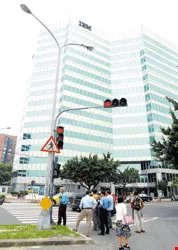
Taipei's IBM Building was the first piece of real estate in Taiwan to be securitized and traded over the counter. The face value of each certificate was set at NT$1 million.
Reforms yet to bite
Since 1999, non-performing loans (NPLs) in the banking system have decreased noticeably. According to data released by the Ministry of Finance, the average rate of NPLs among banks in Taiwan has declined from a high of 8% in 2002 to 3.5% in July 2004. "Part of the reason is the trend toward normalization of profits from real estate loans," explains Victor Chang.
"The problem of unsound financial structures in construction companies is as yet unresolved," notes Yang Tsung-hsien, a researcher at the Taiwan Institute for Real Estate Information (TIREI).
Although the bad-debt ratios of listed construction companies is declining, one-third of their stocks are lingering below the NT$10 mark and are not worth much more than wallpaper. Some construction companies have long since stopped building new homes, and are therefore unable to benefit from the current boom.
In addition to highlighting a sluggish market, years of red ink revealed the difficulty of surviving in the construction business. The quarterly report on economic trends in wan's real estate market issued by the Ministry of the Interior's Institute of Architecture indicates that although the market is showing signs of rebounding, a recovery for the construction industry seems to be lagging behind.
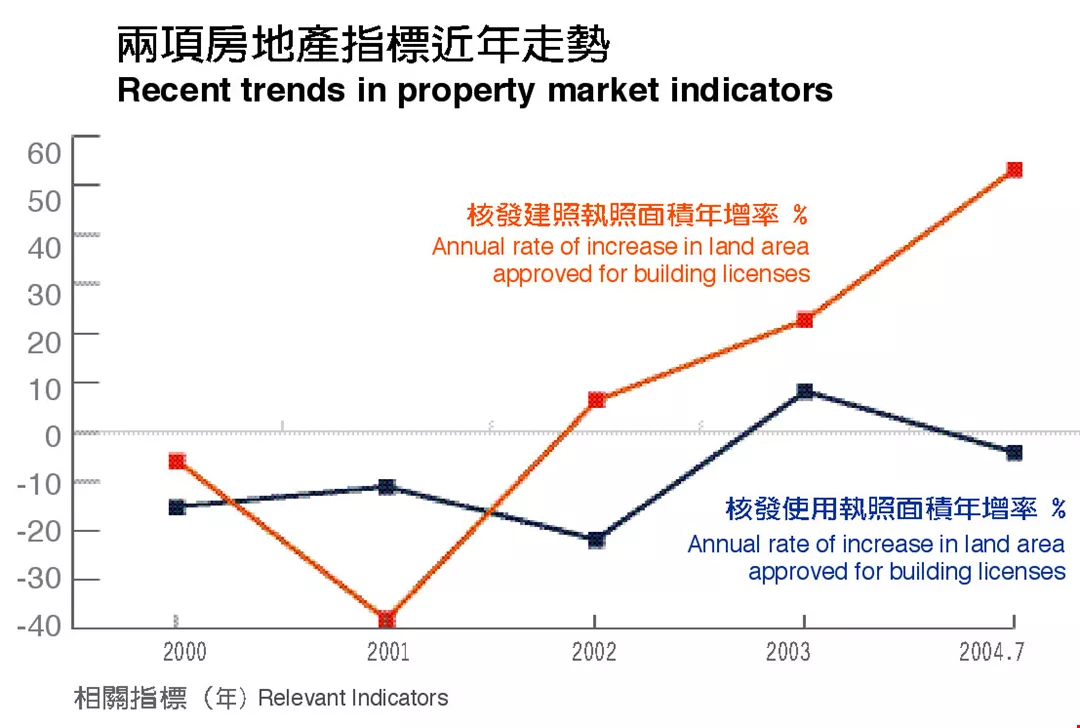
Recent trends in property market indicators source: DGBAS
Fly-by-night builders
Yang points out, "Compared with other countries, Taiwan's construction companies are just too small."
In addition to the 30 major builders, including both listed and OTC companies, 2002 figures show that there are no fewer than 6,000 legally registered construction ompanies in Taiwan. Small-scale builders tend to finance their construction projects with the land on which they are building. Because they are so small and lack the necessary finances, "more often than not they start new projects with only one-tenth of the necessary capital," continues Yang.
As a result, many jobs are rushed and the building quality shoddy. Due to lack of buyer interest in some pre-sold homes, builders find themselves strapped for cash and resort to cutting corners, so that buyers of pre-sold homes may end up with a lemon. In entral and southern Taiwan, four-story townhouses are being pumped out in less than ten months from applying for the building permit to completing construction and handing over to the buyer. If something goes wrong with such a house during the two to five year warranty period, the builders will more than likely have gone out of business.
What's more, once builders sense an upturn in the economy, they throw up new buildings like there is no tomorrow. They do not carry out detailed assessments of arket demand, and thus indirectly cause supply to mushroom, far outstripping demand.
Obtaining accurate information on Taiwan's real estate market has been a problem for years. This has served to increase risk for builder and buyer alike.
Figures from the TIREI show that first-tiem home buyers comprise about half the market. They are the driving force behind the current upswing. Second-time (or more) buyers make up 20-30%. Those buying for investment purposes are a mere 15%, yet it is this segment that has the most potential to drive the real estate and peripheral markets.
Yang Tsung-hsien points out, "Taiwan is seeing self-occupied property rates of over 80%. On the other hand, it is also experiencing declining birth rates as well as serious population and money drains. Decreased investment in the real estate market is all but an inevitable result. Trying to hold up the market on new home sales alone is a tall order."
To encourage the flow of revitalizing capital into the market, the Legislative Yuan passed the Real Estate Securitization Act in July 2003, but to date only one securitization has been made under the act. "Even more embarrassing is the fact that its securities only saw transactions on the first day," says one inside source.
Victor Chang explains, "Real estate securitization is obviously a step in the right direction, but the lack of supporting measures was probably the reason that almost no investors were attracted." The authorities cannot stop at making laws. They need to provide guidance and show investors the opportunities available by providing all relevant product information.
In addition to real estate securitization, another important real estate market policy was the opening up in 2002 of local real estate to mainland Chinese and foreign investors. For all the trumpeting, however, next to nothing has happened. To date only one project has been executed under this policy, too.
The lack of any real effect from either of these two major real estate strategies sheds doubt on the idea that policy can do any good. Some, however, point out that more time is needed for further observation.
Dr. Chiang Yao-min, associate professor in National Chengchi University's finance department and a consultant with the Sinyi Realty Research Center, says, "It's obviously too early to draw any conclusions." Expecting mainland or foreign investors to absorb the surplus of homes is fundamentally unrealistic. But opening up the market to foreign investors should stimulate Taiwan's real estate market over the long term. "This is especially true of commercial and leisure property that can provide profit from rent or other income, such as office buildings, commercial centers, hotels, and theme parks."
Recent trends in property market indicators source: DGBAS
What you see not what you get?
What's more, investors need time to adjust to and accept new investment products. "The market framework for real estate securitization has only just been set up, and builders, investors, credit rating companies, and asset management companies are still feeling out their new roles."
One inescapable reality is the fact that in Taiwan, real estate price information seriously lacks transparency-the list price and the actual purchase price are not necessarily the same. Huge gaps generally exist between official figures and reality. Credit rating companies specializing in performing valuations do exist, "but the confusion of prices is enough to send any foreign investors heading for the hills," explains Chen Yu-lin, general manager of China Credit Information.
Chen states, "The direct result of this is that it is easy to buy in, but difficult to pull out. Nowadays, capital flows freely around Asia and the world. But in Taiwan, information does not enable investors to keep their finger on the pulse of the property market. Consequently, they simply steer clear of Taiwan. Add to that rates of return on real estate that pale in comparison to those in neighboring Hong Kong and China-Taiwan's market lacks appeal to foreign investors."
The TIREI was officially established in 2002 to resolve the long-term problem of a lack of transparency in information, so that investors and buyers can enter the market without reservation. Hsia Cheng-chung, director-general of the institute and director of the CEPD's urban and housing development department, explains that the TIREI hopes to employ real estate expertise to reverse the tendencies toward ambiguous information so prevalent in the real estate market.
Since its establishment in 2003, the institute has collected and compiled large quantities of data, including real estate news, market information, government statistics, and industry trends. It has been recognized by industry and academia for the success it has achieved in serving as a platform to enhance information transparency. But it is still unable to provide data on transactions for various real estate categories, information that would be highly valued by buyer and investor alike, because the real estate industry is very protective of such data.
As to long-term doubts as to the soundness of construction companies themselves, the "construction company soundness rating module," established at the suggestion of academics, is already showing results. In the private sector, Taiwan's leading realtor Sinyi Realty has been using its own transaction database to publish a highly trusted price index of pre-owned homes every quarter since 1994.
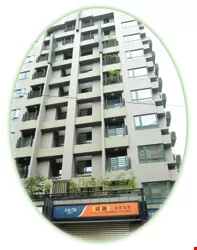
First a small place, then, when the time is right, buy a bigger one. To Taiwanese, more than 80% of whom own their own homes, recent low interest rates offer an excellent opportunity to buy homes. This is especially true of first time buyers.
What the doctor ordered
How long will the current recovery last?
After several straight quarters of growth, signs of a slowdown in the real estate market emerged in August of this year, because of a sharp downturn in the number of new houses made available.
In July, builders had over NT$40 billion in pre-sold homes available for sale in northern Taiwan. By August, that figure had plummeted by 70% to NT$12 billion. Flooding on 11 September not only put a damper on interest in buying in certain areas (like Hsichih, where real estate prices had only started to recover this year), but also subdued the traditional home selling peak that falls around the Mid-Autumn Festival.
Although some believe that the true peak will not hit until the first quarter of next year, confidence is lacking among the general public.
Hsia Cheng-chung predicts, "Market forces will obviously take over again next year. The tug-of-war between supply and demand will resume."
The land value increment tax rates have been adjusted downward from 40, 50, and 60% to 20, 30, and 40%. For the many builders that hold on to land for long periods of time as they wait for prices to rise, their holdings will be not be impacted much if the reduced tax rate expires next year. In the current atmosphere of low interest rates, the home loan rates of many retail banks are already approaching those of preferential loans, so that when the government's preferential loan budget is exhausted this coming Chinese New Year, this will also have little impact.
As inflation and economies around the globe stabilize, it is very important to watch further whether the rise in interest rates initiated by the US will influence Taiwan's real estate market.
Victor Chang sums it up this way: "In the past, Taiwan's real estate market was ailing, so, just as an ill person takes medicine, a restorative tonic was applied, consisting of preferential home loans, halved land value increment tax, and foreign investment. Close examination should reveal whether the market has improved as a result of the treatment."
|
Major Real Estate Stimulation Policies
|
*Rates adjusted downward to 20%, 30%, and 40%. (compiled by Vito Lee)
Properties close to MRT lines are a barometer for the Greater Taipei real estate market. Even pre-owned homes are popular.
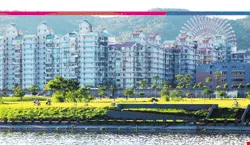
Even if a home lacks a spa and wasn't designed by a famous architect, at least there should be a park, some greenery and a river view. Demands for better quality of life will drive future progress in the building industry.
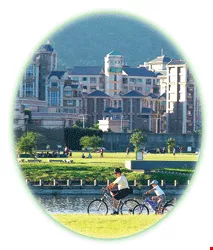
First a small place, then, when the time is right, buy a bigger one. To Taiwanese, more than 80% of whom own their own homes, recent low interest rates offer an excellent opportunity to buy homes. This is especially true of first time buyers.

@List.jpg?w=522&h=410&mode=crop&format=webp&quality=80)


