A New Approach to Organic and Eco
-Friendly Agriculture
Esther Tseng / photos Jimmy Lin / tr. by Phil Newell
April 2026


Hualien County has the largest land area growing organic rice in Taiwan.
Organic agriculture in Taiwan is currently transitioning to a new model that moves beyond “subtraction” (no use of pesticides) to “addition” (constructing symbiotic ecological communities).
In 2026, the promotion of organic agriculture in Taiwan is entering its fourth decade.
Eco-friendly farming
Yang Ta-chi, director of the Ministry of Agriculture’s Hualien District Agricultural Research and Extension Station (Hualien DARES), says that organic farming these days is about more than just not spraying chemical pesticides. Rather, its core concept is the application of ecological concepts to environmental management, for promoting biodiversity is conducive to the expansion of organic cultivation.
For example, pest and disease control is not just about prevention or post-attack treatment, but rather uses environmental regeneration methods, such as cultivating hedges or flowering plants to attract parasitic wasps and ladybugs, which are natural enemies of crop pests. By offering a home to these predator species, farmers enable them to act as biocontrols, reducing pest damage. Another example is planting carpet grass as ground cover to smother weeds. Such practices are in keeping with the spirit of eco-friendly agriculture (a.k.a. sustainable farming), a holistic approach to agriculture that aims to enhance soil health and biodiversity.
The government has also committed resources to helping farmers who aim to protect the environment to still be able to pay their bills, through programs such as the local environmental payments program and green subsidies. For example, in areas with vulnerable habitats for creatures like the leopard cat and the eastern grass-owl, the government offers additional funding to farmers who adopt organic farming.

The Hualien DARES has developed this soybean sorter, which can sort over 250 kilograms of soybeans per hour.

This towed dry-field seed sowing machine—which simultaneously prepares the ground, plows furrows, sows seeds, and covers them with soil—is a labor-saving device employed in growing soybeans.
Mechanized cultivation
Nonetheless, the main incentive for farmers to continue expanding the area of land farmed organically is the availability of agricultural machinery to replace human labor.
For instance, machinery offers a potential solution to the question of how to deal with weeds, since spraying herbicides is prohibited in organic agriculture. Taking soybeans for example, simply the thought of weeding a few tenths of a hectare of land by hand or with a sickle has caused many farmers who were considering taking up organic farming to steer clear. Moreover, the task of sorting soybeans was also tedious and exhausting, since small farmers couldn’t afford to buy sorting machines costing upwards of NT$1 million and had to screen their soybeans using just their hands and eyes, which was especially hard on the eyes.
Fortunately, the Hualien DARES has developed a weeding machine for dry-field farmland. Pulling the machine behind a tractor, farmers can weed four rows at a time, cutting through weed roots and raking the soil surface, with immediate results. The Hualien DARES also developed a conveyor-belt soybean sorting and grading machine that costs only NT$60,000. The machine is able to sort soybeans by size as well as filtering out bad beans.
Thanks to policy incentives and the impact of machinery, the area of land in Hualien planted with soybeans has expanded from just a few hectares to more than 600, of which organic soybean farming accounts for 300 hectares.
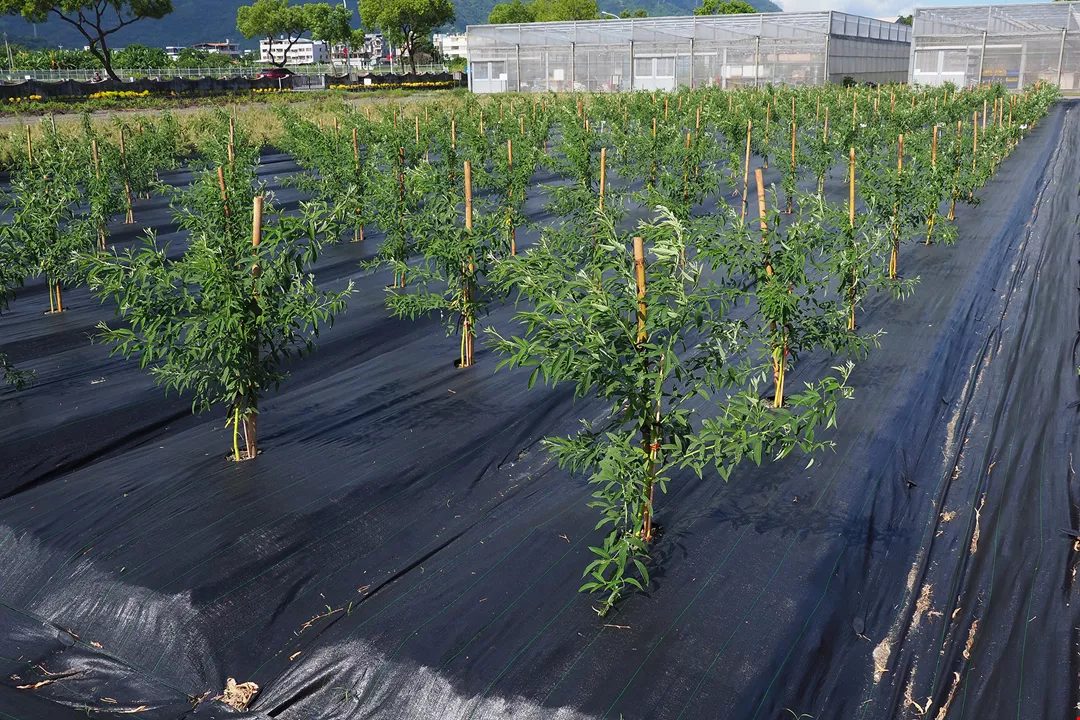
The Organic Agricultural Research Institute is helping Indigenous farmers with mechanized harvesting of pigeon peas. If efficiency improves, production will increase and the peas can be sold to retail chains.
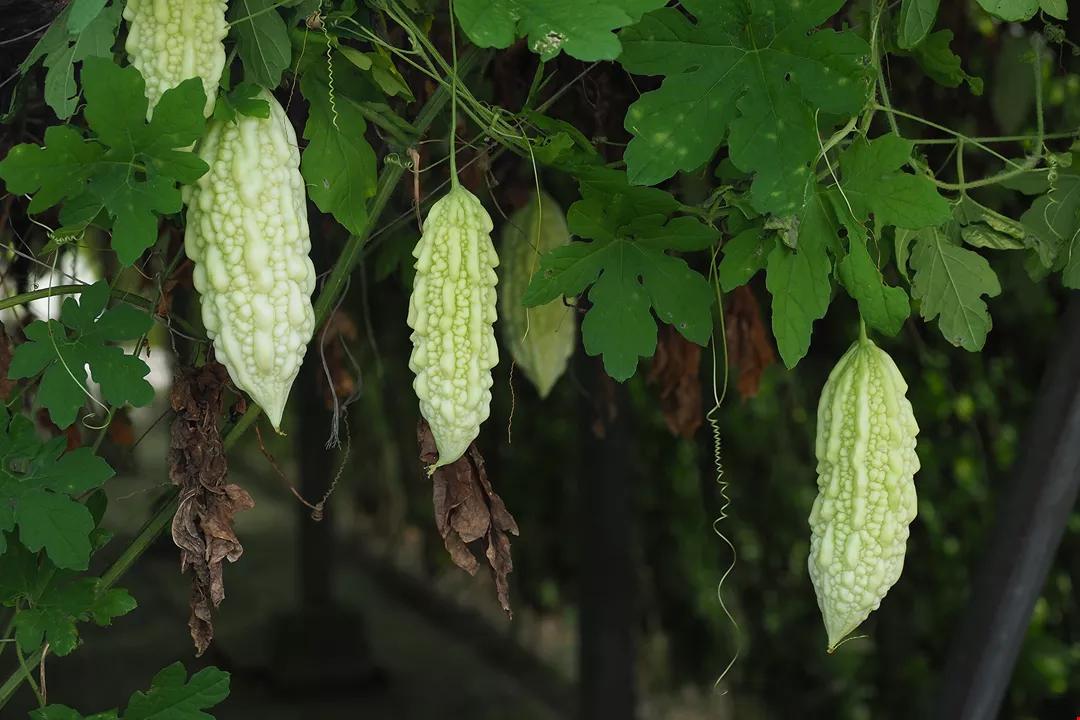
Hualien No. 7 bitter gourd is beneficial for the kidneys. Meanwhile, research is ongoing with Hualien No. 8 to extract a substance that can inhibit the growth of breast cancer cells from both the leaves and the fruit of the plant.
Organic farming handbooks
With about 150 crops eligible for organic certification, to date handbooks have been published for growing about 30‡40 of them. One farmer, who had never planted soybeans in his life, says he “followed the text verbatim,” adopting the relevant manual’s instructions for everything from variety selection and fertilizer application to the use of plant protection products; his soybeans grew very well. Clearly these manuals enable even novices to succeed.
Organically grown rice is an even greater success story, as exemplified by the Rice Master Champion Competition. Only farmers with Traceable Agricultural Product, organic, or eco-friendly farming certification can take part, yet in the last five years it has attracted over 800 participants annually. From the fragrant, al dente character of the entries that have finished in the top 20, it is clear that farmers’ skills in controlled-release fertilizer use and cultivation are outstanding.
Hualien DARES deputy director Hsuan Ta-ping, who began his career doing research on rice, recommends the organic rice grown in Yilan County’s Wujie Township and sold under the Mengtian Yueguang (“dreamfield moonlight”) label. It is not a pest- or disease-resistant variety, but farmers can still grow it organically and even export it to Japan, where the variety originated from.

False heather (Cuphea hyssopifolia) flowers year-round, and is not only a source of nectar but can also be used as a hedge.

Growing medicinal herbs organically can give Taiwan a competitive advantage in the health food and supplements market. The photo shows redroot sage (Salvia miltiorrhiza).
Taiwan’s first organic village
The latest policy goal is to expand organic agriculture to 40,000 hectares by 2040. To underpin this effort, in 2000 the government established Luoshan Organic Village in Hualien’s Fuli Township as the nation’s first organic community. Over time, a cluster of organic farms has grown up there, and the aim is for organic farming to displace conventional farming and for the area to gradually develop into an organic promotion zone.
Eco-tourism has become another highlight of organic farming. For example, Luoshan Organic Village and the Indigenous community of Ceroh in neighboring Yuli Township allow visitors to experience the farm-to-table cycle, showcasing the charm of Hualien’s organic agriculture. Luoshan features soybean milk and mud volcano tofu made using organic Hualien No. 1 soybeans, while the Ceroh Community serves red rice, black glutinous rice, and millet grown by eco-friendly organic methods, such as planting hedgerows and carpet grass.
Eco-friendly agriculture in Indigenous communities has become an interesting highlight of the new trend in organic agriculture. Traditional Aboriginal crops including soybeans, edible wild greens, pigeon peas, red quinoa, and mountain litsea are getting support from consumers, which enables Indigenous people to support themselves in their native villages. Through organic cultivation they can maintain the environment, biodiversity, and traditional cultural practices of their communities.
From these examples one can see that organic and eco-friendly farming are not only making Hualien a better place to live, but can be expanded to make Taiwan and the world a better place to live, so that we can all live better together.
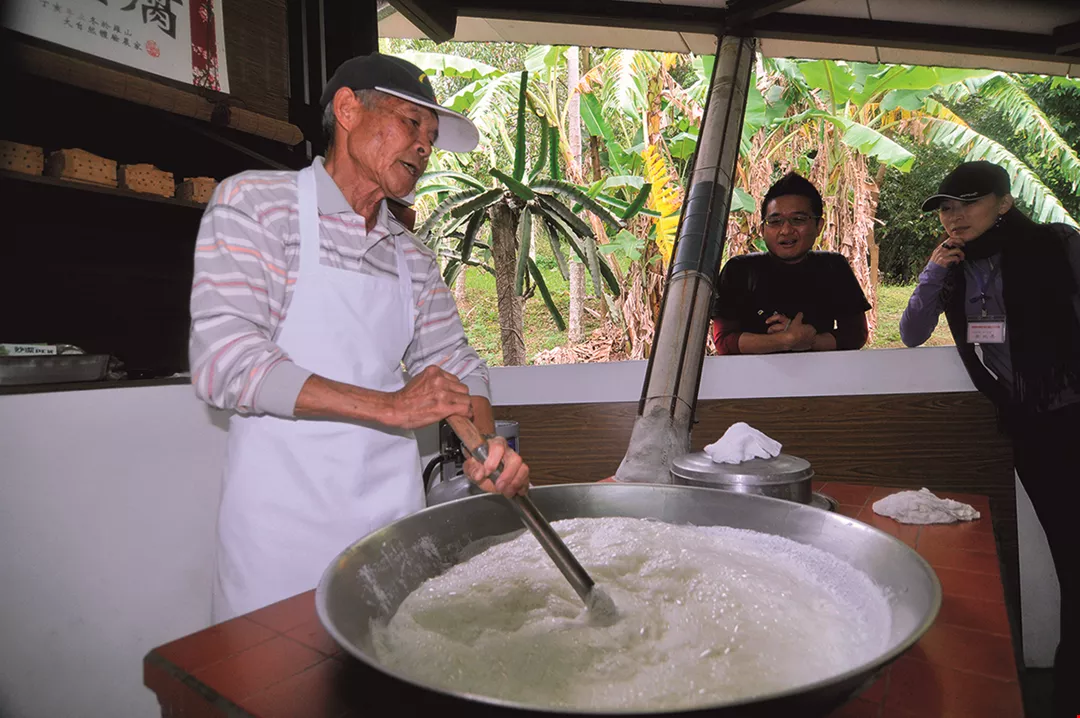
Mud volcano water is added to soybean juice and boiled to produce soybean milk. Once coagulated and pressed in a wooden mold, it becomes mud volcano tofu, offering a smooth, firm texture and a delicate soybean aroma. (photo by Hsueh Chi-kuang)
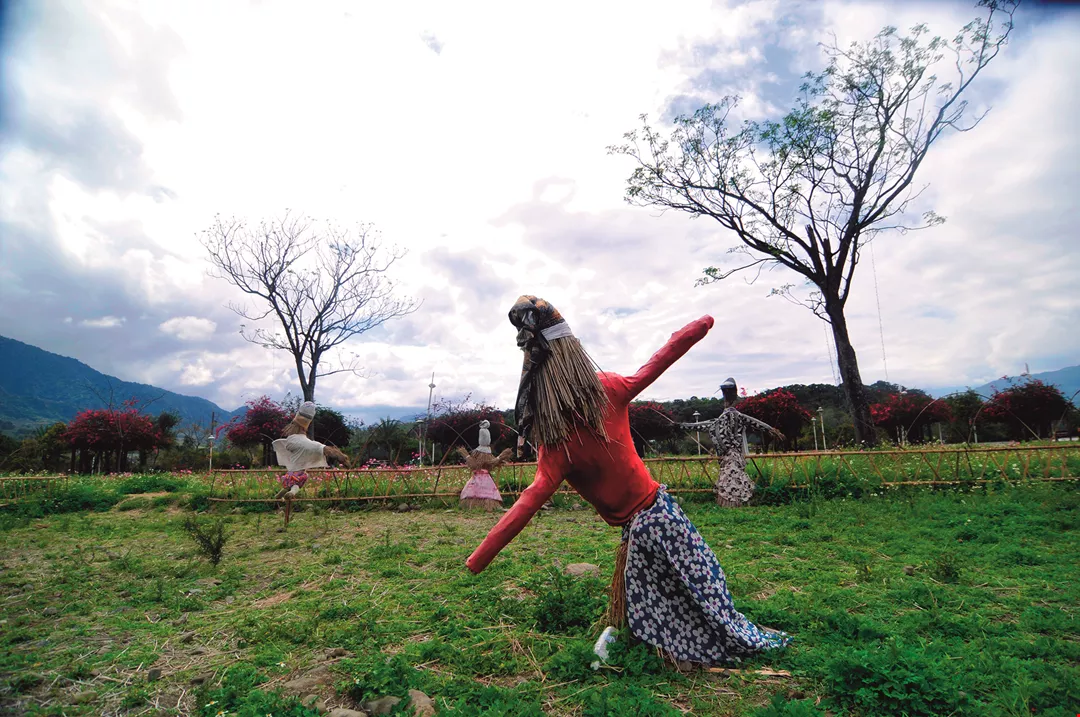
Surrounded by mountains on three sides with an independent water source, Luoshan Village in Hualien’s Fuli Township has never been home to polluting industries. Its lush, verdant landscape makes it a modern-day Shangri-La. (photo by Hsueh Chi-kuang)


