Pawnshops in a Time of Financial Crisis
Chen Hui-ying / photos Chuang Kung-ju / tr. by Phil Newell
April 2009


In the current recession, pawnshops have again become a hot topic of discussion. But all pawnshops are not alike: state-run pawnshops are doing well, but there has been a wave of closings among private pawnshops. There are also notable differences in the status of persons bringing in items to pawn. Poor people hock their sandals, while a rich man puts up a gravel transport ship that would cost over a billion NT dollars to build-the tendency towards "M-shaped collateral" is very obvious. But no matter what they pawn, these people share the same psychology: to get a little more cash in hand and pay a little less interest. What's most important is scraping through the hard times, and knowing the final satisfaction of redeeming that beloved object.
Walking into the Taipei Municipal Secured Small Loans Service (SSLS, a government-run pawnshop), you see a middle-aged man dressed in a carefully pressed suit carrying a notebook computer to the desk; it is his collateral to apply for a loan. After he gets his pawn ticket, with some embarrassment he folds it repeatedly and tucks it deep into his wallet, perhaps fearing that his family will discover it. Because electronic products are worthless once they become obsolete, the NT$3000 loan has a redemption period of only three months. Yet, despite the briefness of the assistance, you can sense how happy the man is, as if the money had fallen out of the sky!
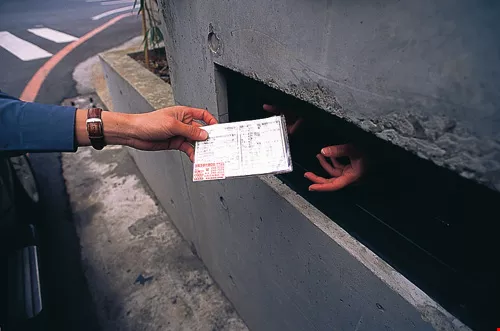
In the wake of the financial tsunami, rich people also are turning to pawnshops. To save clients the embarrassment of being recognized, some dealers now offer "drive-thru" service to satisfy their clients' demand for privacy.
Novel customers
SSLS director Chen Hwei-pin states that most of the people who come in are housewives running short of cash, or unemployed or partly employed persons with no regular income, who hock the family's one and only gold watch or heirloom to get through until the next paycheck. But since the end of last year, there has been a new type of client pouring into the 10 branches in Taipei City: these people are normally well dressed and bring in mainly tools that are essential to their lives and livelihoods, such as notebook computers, motorcycles, and so on. "You can tell that these are people who have been struck by the financial tsunami," surmises Chen. As the number of jobless soars, once they have exhausted their unemployment benefits there could very well be another big wave of pawn transactions in May and June of this year.
What the SSLS sees is just the tip of the iceberg. Huang Yi-hsiu, chairman of the Taipei City Association of Pawnshops, says that in the past most of the people going to pawnshops were between 25 and 50 years of age, but now there are a lot of elderly folks as well.
Just before the Lunar New Year an elderly couple-both of them must have been over 70-rode in on a motorcycle that was more than 20 years old, hoping to hock it for NT$5000. "But that bike wasn't worth even NT$3000!" It was raining hard that day, and Huang could see the sadness and desperation in their eyes. They said they did odd jobs to get by, but now badly needed this money. They begged for half an hour until Huang felt so conflicted that he gave them NT$5000 and even let them ride the motorcycle home so that they could save the bus fare. "Anyway, leaving a broken-down old motorcycle here would just take up space, and if they can't pay the interest (it's illegal to deduct the interest up front), well, it doesn't really matter!"
At the end of last year there was also one handicapped citizen, a man who sold government lottery tickets for a living, who wanted to pawn his special three-wheeled motorcycle for NT$25,000. "This is something that he needed every day to make a living!" Because the vehicle was too large, and the asking price too high, Huang had no choice but to regretfully refuse. But to this day he still feels bad about it.
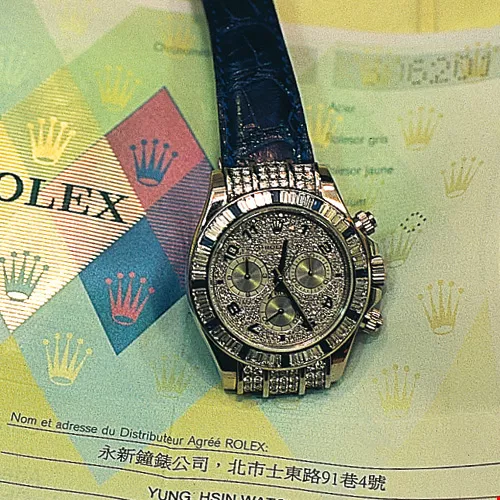
Assessing the value of the proffered collateral is an essential part of the pawn transaction, and a mistake in judgment can cost a pawnbroker dearly. The photos show a pawnbroker evaluating the size and color of diamonds, and judging the authenticity of a watch.
Not junk dealers
Not only have the tools of daily life and work replaced jewelry or heirlooms, some people even bring in items that would be hard to resell or are worthless, such as clunky old picture-tube TVs or Casio digital watches. One guy even wanted to know if he could pawn his plot in the cemetery! Chen Hwei-pin explains: "Because a state-run pawn service has to avoid risk, only a very limited number of objects can be accepted. The only thing we can do in such cases is to direct the people over to the social welfare agencies."
Huang Yi-hsiu has found that whereas in the past you could find high-value items worth NT$500,000 or NT$1 million, now most things are household items worth just a few hundred or at most a few thousand. There are even things that could not possibly be resold, such as microwave ovens, rice cookers, obsolete DVD players, and the like. He points to some purple crystal on a wooden shelf and says that it is worth at most a few hundred NT dollars, but he still let the guy borrow NT$1500, "because behind every pawned item there is a heartrending story."
Huang says that the Taipei City Association of Pawnshops has to file a foreclosure report with the police every month. Recently there has been a clear decline in the total value of pawned goods. One reason for this is that there are now a lot of Internet auction sites, which have taken away part of the market. A second reason is that people who used to regularly patronize pawnshops "have nothing left to pawn." Thus there has also been a slide in terms of the average value of items used for collateral. For example, in the past about 600 motorcycles per year would come through the pawnshops in Taipei City, but last year that number fell to 380. This reveals that "a lot fewer people are coming to pawnshops, and they don't have many things of value left to pawn."
What's one way to verify that consumer activity has stagnated in Taiwan? Huang says that in the past expensive consumer goods like brand-name watches and diamonds would circulate around the island like crazy, without any fear that the pawnbroker would be unable to find a buyer. But starting last June or July, this situation changed. It seems there were fewer people with idle cash hoping to pick up a fancy watch on the cheap. Instead, businessmen from Dubai, Hong Kong, and Macao started coming with piles of cash to buy up goods at big discounts, taking away 400 or 500 Rolexes and other similar luxury goods at a pop in order to resell them in mainland China.
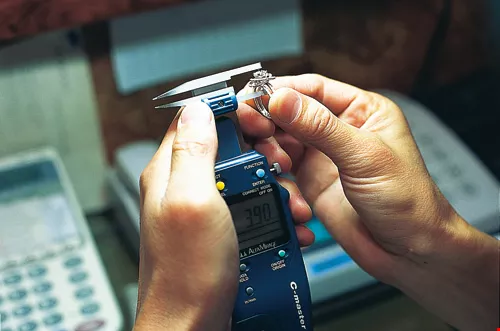
Assessing the value of the proffered collateral is an essential part of the pawn transaction, and a mistake in judgment can cost a pawnbroker dearly. The photos show a pawnbroker evaluating the size and color of diamonds, and judging the authenticity of a watch.
The fake goods test
Even more exasperating is that clients routinely come in with no intention of ever redeeming the collateral, which sharply increases the foreclosure rate (currently estimated at about 50%) and drives up operating risks.
Huang Yi-hsiu recalls that during economic booms in the past, you would see owners of small businesses coming in to pawn Mercedes Benz cars worth NT$2-3 million, or even jewelry worth NT$10-20 million. It's not that they didn't have wealth, but that they wanted to turn idle capital into liquid assets to get through a temporary cash shortfall or to invest. "They would pay the interest happily, without even haggling!" Once someone came in and hocked seven or eight high-class automobiles at once to get cash to play the stock market, immediately buying back his beloved cars after making a fast killing. But it's completely different now in these harsh belt-tightening days. Even if the clients are rich, they will still shop around for the best deal, and haggle for hours just for a few extra thousand, or just to shave the interest by a fraction.
Also, when the economy turns bad, so do people, and fraud becomes common. Just before the Lunar New Year, some guy turned up at Huang's pawnshop claiming to be from Taichung, and saying that he had been robbed of all his money (NT$5000) after coming to Taipei to visit a friend. He had only NT$100 in his pocket, and wanted to hock his cell phone for another NT$200 so he could get a bus ticket home. Huang, who considers himself a wily old veteran, in order to make sure the phone wasn't stolen, used it to call someone and confirmed the guy's ID number on the spot. But the client never came back to redeem the phone, which stopped functioning shortly thereafter-it turned out to be one of those phones that only work if you prepay a monthly fee.
At the same time Huang has discovered that over the past few months there have been a lot more fake items pawned off, such as "gold" that is really just silver gilt, or phony watches or designer handbags. With gold, most pawnbrokers usually first heat the object then wash it in water to make sure it is real, but there are still mistakes, and if you allow someone to hoodwink you then you can only blame your own incompetence, and the other party is under no criminal liability. Therefore, when this kind of thing happens pawnbrokers always notify one another to help their fellow dealers avoid falling for the same thing.
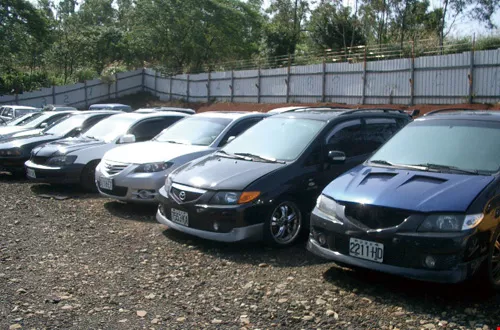
The majority of private pawnbrokers specialize in making loans against automobiles. The sight of parking lots in the mountains filled with unredeemed vehicles is really amazing.
Your money, your livelihood
There has been diversification of goods sold to private pawnshops and a trend toward specialization among shops, with some dealing only in designer goods, others only in cars, and so on. In Taipei City, for instance, because interest on cars is high and risk is low, they have become the dominant line of business, with only about 10% of pawnshops still being run along traditional lines.
Huang Yi-hsiu, on the other hand, specializes in the tricky area of large vehicles, ships, yachts, and other oversized collateral. Walking into his pawnshop in the Wanhua District of Taipei, you find only a few square meters of space and a small window for transactions. It's hard to imagine that behind this facade is a very serious business, and when Huang enumerates the collateral he has stored away, it's breathtaking.
A few months ago, Huang accepted a gravel-transport ship worth more than NT$1 billion from a businessman in Kaohsiung, lending out NT$40 million at one shot. Fortunately the ship was redeemed within a month, allowing Huang to get that weight off his shoulders.
He also gets a lot of fishing boats. Early last year petroleum prices rose sharply, and then came the financial storm, causing many fishermen to conclude that it simply wasn't worth leaving the harbor, and that it would be easier just to hock their craft for some ready cash to get through the hard times. However, these boat owners still have to come up with money to pay the monthly interest, which means they have to be able to at least sometimes go out to catch fish (or buy fish from other fishing boats at sea). In some cases, depending on the specific circumstances, Huang has allowed owners of deep-sea fishing boats to take their collateral out to sea. The biggest risk is that the owner won't be able to afford to hire any crew, nor will he be able to sell the ship for a profit, leaving it to rot without paying interest or redeeming the ship, thereby making it the property of the pawnbroker. "I've got 20 fishing vessels in my warehouse right now-what a headache!"
Where the collateral is also essential to a person's job or daily life, there is often no choice but to relax the rules and let the client take home both the money and the object, so that he or she can continue to earn money to pay the interest. This is especially true for taxis.
Huang says, picturing the taxi-jammed streets of Taipei, "six out of ten are being driven around on borrowed money." It is possible to borrow NT$20-50,000 per vehicle, and if the client is known to the dealer or is presentable and trustworthy, or if the borrowed amount is not too high, then the client can drive off with the car and the money. This has become a distinctive feature of recent times. Fortunately, so far there have been few cases of people who run off without paying the interest or without turning over the vehicle at the appointed time.
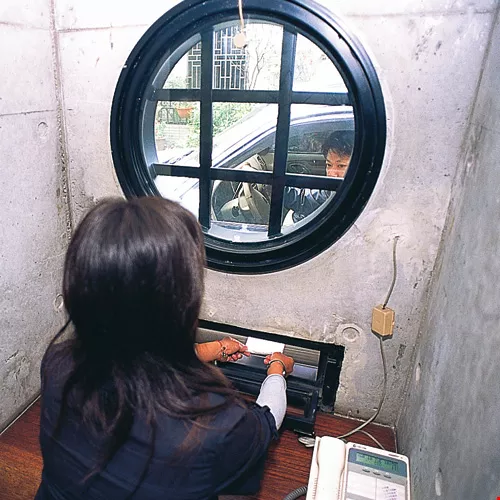
In the wake of the financial tsunami, rich people also are turning to pawnshops. To save clients the embarrassment of being recognized, some dealers now offer "drive-thru" service to satisfy their clients' demand for privacy.
M-shaped collateral
Most extraordinary is that even factory facilities and big pieces of machinery have joined the recent wave of pawning. Huang says that last October, one businessman brought in a first-rate imported tour bus, never used, with a market value of NT$8 million, against which he borrowed NT$4.2 million. Today that vehicle still sits, untouched, in the parking lot. "I even slashed the price to NT$3 million, but I still couldn't sell it. I'm gonna lose more than NT$1 million on this deal!" Also, a construction company couldn't get its project started because the housing market is in the dumps, so to save costs, they hocked their big earth mover.
The way things are going, parking lots in Taipei City, Taipei County, and Taoyuan County that specialize in storing pawned vehicles are just about at the "no vacancy" point. There are now 700-800 vehicles in each lot, an impressive sight indeed, and the greater Taipei area alone has six or seven of these lots. It's another kind of "Taiwan miracle."
Some people hock even their most personal belongings at private shops, including underwear and plastic sandals, and when these items aren't redeemed the shop takes possession and auctions them off. It is understood that they are taken to night markets and sold for NT$10 per item-yet who knows if the eventual consumer has any idea of where they come from! A few years ago one business owner borrowed NT$30,000 against several boxes of hi-liter fluorescent markers, which were later redeemed. This year the same person brought in a similar amount of markers, but seeing the way the economy is tanking, Huang was only willing to lend him a little more than NT$10,000, which the guy was still delighted to get.
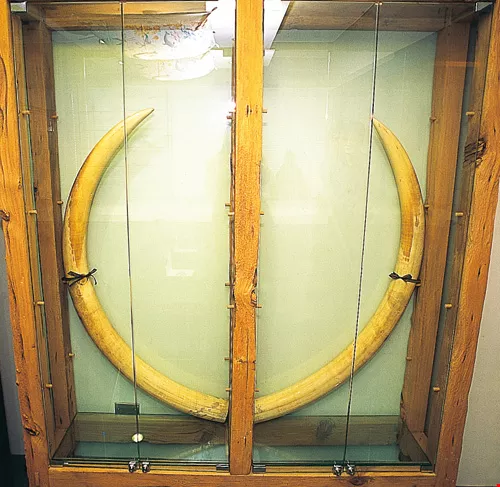
Some private pawnshops accept a wide variety of goods as collateral, including (licensed) ivory, women's name-brand shoes, and even sandals or underwear. Such dealers feel that they run the only genuine pawnshops, because they cater to very poor people who desperately need help.
Last resort
"What do you say about a situation like this, is this brutal or what?" Huang says that these are the worst times he has seen since he began running a pawnshop, because even big firms in industries that you would never imagine going to a pawnbroker-like construction or metals-are coming to pawnshops for liquidity. There are even people who bring family heirlooms and precious belongings to ask for a loan, which is really depressing. Huang infers that these are business people whose bank credit has been cut off, only coming to a pawnshop because they are in desperate straits. If things don't work out with the pawnbroker, they may take the next step and borrow from loan sharks, which is a situation that the authorities should keep a close eye on.
In fact, it's not only those who come to pawn objects who are in dire straits. Private pawnshops-taking a wide variety of items and turning almost no one away-are sometimes dragged down as well. Huang states that last March there were 273 private pawnshops in Taipei City, but 27 had already closed by September, "and that number has got to be well over 30 by now!" The victims include some old firms that had been in operation for two or three decades.
Gold has always been one of the most important items for traditional pawnshops. But even here times are getting tough. For one thing, interest rates charged by private pawnshops are higher than those at the state-run pawn service, so it is hard for the former to compete, and, for another, the price of gold has been skyrocketing, so people are unloading their gold to jewelry shops while the price is high. Thus private pawnshops have lost one of their most profitable lines, adding further to their woes. Many have turned to other lines of business or closed up shop altogether.
Pawnshops in southern Taiwan have reportedly come up with "drive thru" service. The whole process is shrouded in secrecy. The client doesn't even have to get out of his or her car, but merely leaves the collateral at a window to be verified as genuine and then assessed for value, after which cash is immediately paid out. There have been a lot of positive comments about allowing the client to remain anonymous. What other tricks will private pawnshops come up with in the future to survive? We'll keep watching, with interest.
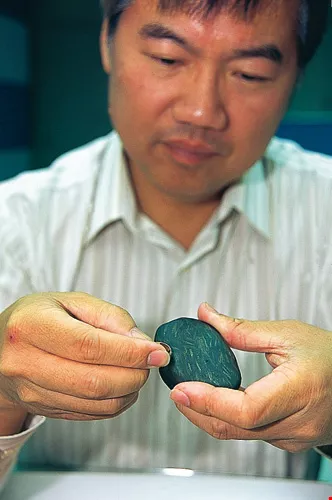
Assessing the value of the proffered collateral is an essential part of the pawn transaction, and a mistake in judgment can cost a pawnbroker dearly. The photos show a pawnbroker evaluating the size and color of diamonds, and judging the authenticity of a watch.
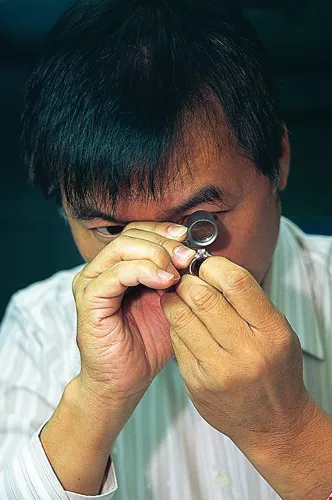
Assessing the value of the proffered collateral is an essential part of the pawn transaction, and a mistake in judgment can cost a pawnbroker dearly. The photos show a pawnbroker evaluating the size and color of diamonds, and judging the authenticity of a watch.

@List.jpg?w=522&h=410&mode=crop&format=webp&quality=80)


