

Tired of always just taking your foreign friends to the usual places, like the National Palace Museum and night markets? How can we really showcase Taiwan’s charm and attraction to guests?
To help encourage foreign students to come to Taiwan to learn Chinese, the Ministry of Education has developed a program called “Walking on the Street, Studying Chinese Language.” The program makes use of Taipei itself through a series of activities designed to get students from around the world to read their way through the city, experiencing the local vibe in Taipei’s lanes, alleys and restaurants.
The two-month program began in mid-January, with students attending classes every Monday through Thursday. Unlike past efforts, this program uses Taiwan’s first American-style model community, Minsheng Community, where a whole variety of unusual stores have sprung up in recent years and given the area a distinctively cultured air.
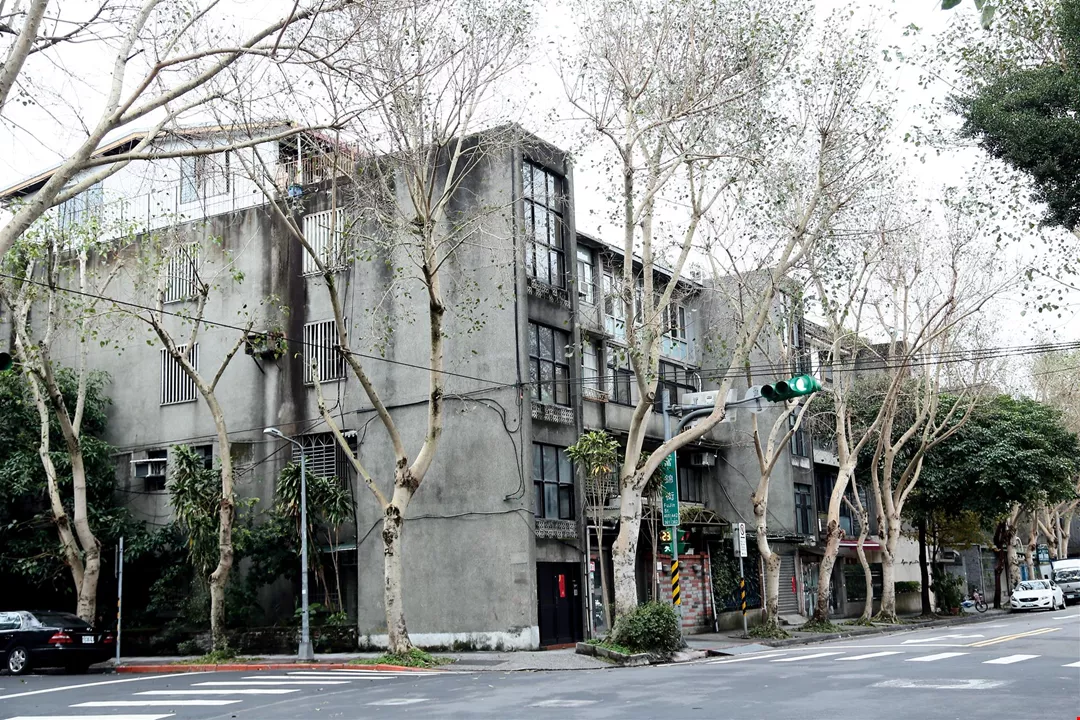
The Ministry of Education program “Walking on the Street, Studying Chinese Language” aims to give international students studying Chinese in Taiwan a sample of another face of the island through the creative atmosphere of Taipei’s Minsheng Community.
Stroll, sample, share, and savor Taiwan
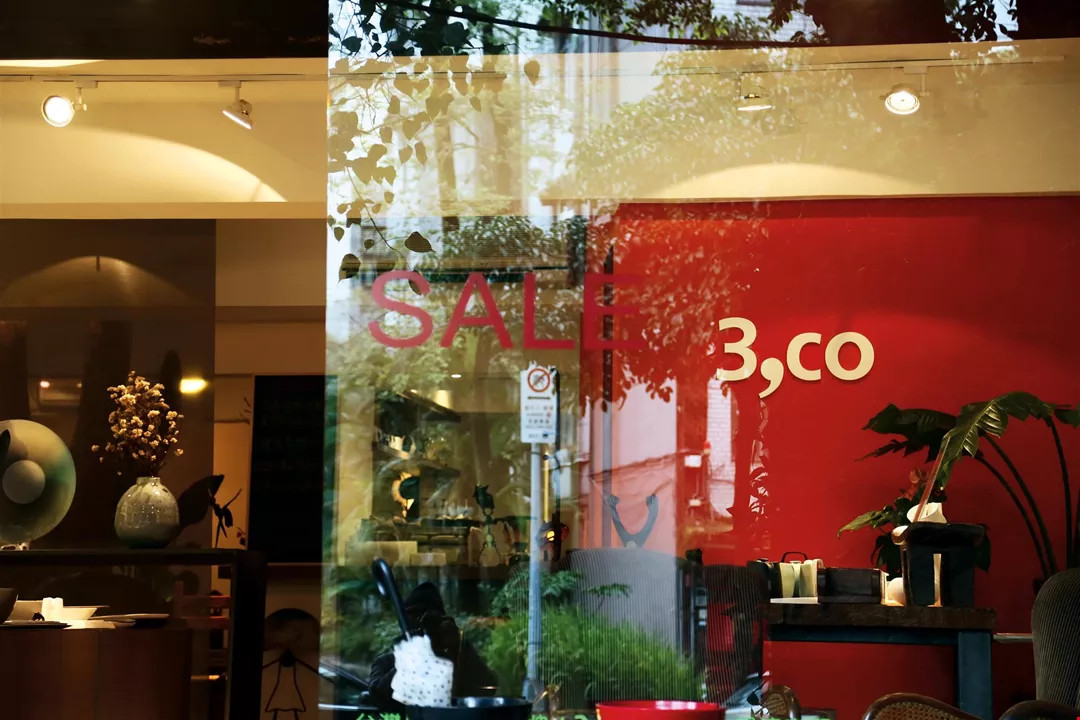
The course includes three modules—“The City Is Classroom,” “My Third Space” and “Be Friends with Celebrities.” In “The City Is Classroom,” founder of creative store funfuntown Adam Hsiao takes students on a tour through the Fujin Street area. “My Third Space” sees four stores—3,co, MoonWine Seller, Zucchini Café and Café Ballet—giving students activities through which they can also learn Chinese. And in “Be Friends with Celebrities,” students meet and learn from well-known figures like long-time resident of Taiwan and advocate of Taiwanese puppet-show culture Robin Ruizendaal, and Double Square Gallery founder Sean Hu.
Over 30 stores in Minsheng Community are taking part in the program, and while the classes may differ in theme and style, they share one common element: “Taiwaneseness.” Zucchini Café, which specializes in fusing Taiwanese and Western cuisine, has its head chef lead a tour of the Xihu traditional market to buy ingredients. MoonWine Seller, meanwhile, breaks down the old stereotype that red and white wines only go with Western food by pairing wines with hot pot, creating a surprising culinary journey for the students participating.
Liao Kao-hsien, deputy education counselor of international and cross-strait education for the Ministry of Education, says that the aim is to draw more young students to Taiwan through cultural experience trips combined with Taiwan’s rising cultural and creative industries, creating a glimmering new face for Chinese language education.
This new trail is being blazed out of a desire to take on mainland China in the field of international Chinese education, where the PRC has significant competitive advantages through things like massive domestic resources and the international Confucius Institutes.
Taiwan has a long history of promoting Chinese language education, with schools like National Taiwan Normal University and National Cheng Kung University having earned stellar reputations in the field. No small number of well-known international figures have previously studied Chinese in Taiwan, including former Australian prime minister Kevin Rudd.
However, as the mainland Chinese market has boomed, Taiwan’s position in Chinese language education has come under assault. The Ministry of Education has worked with Chinese language centers in over 40 tertiary schools around Taiwan, and is still considering overseas exposure through education fairs.
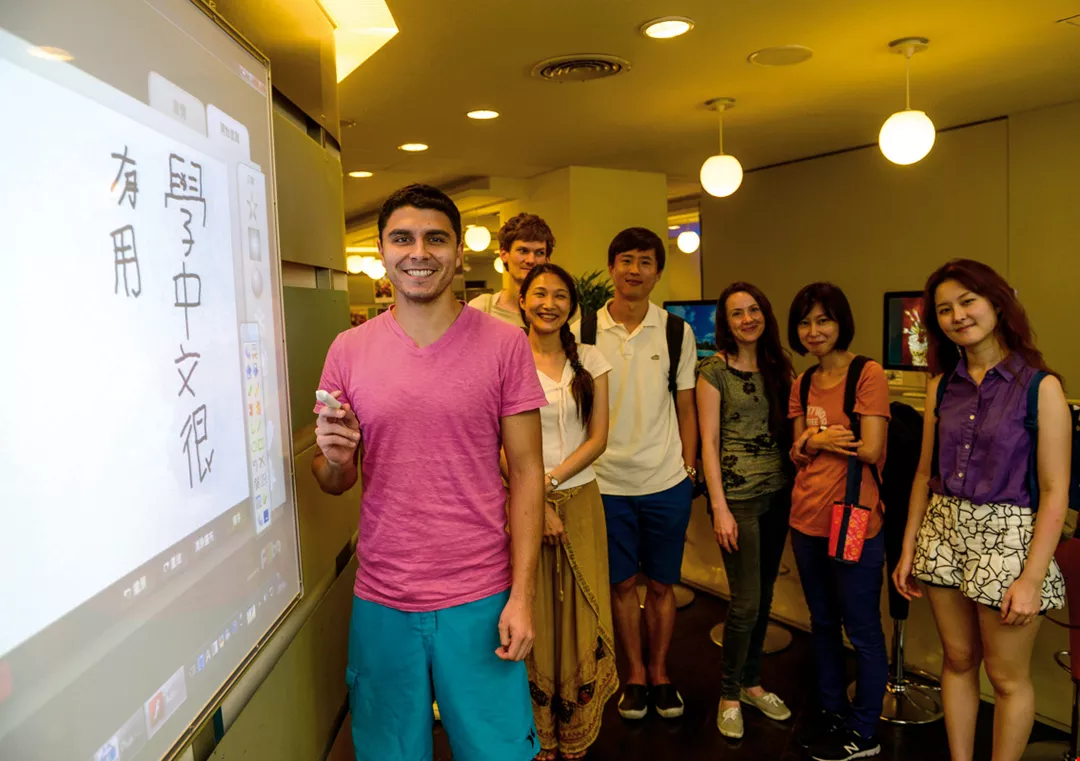
Using a stylus, an international student writes the Chinese for “Studying Chinese is useful.” (photo by Chuang Kung-ju)
Learning Chinese and promoting tourism
In mid-January, Minsheng Community cafe 3,co held the first week’s classes. Although it was raining outside, the bad weather did nothing to dampen the students’ enthusiasm. Some eight or nine students, hailing from countries as diverse as Japan and Canada, took part, learning about Taiwanese tea culture.
Whereas traditionally classes involve students memorizing and repeating vocabulary lists, this cohort of international students from Soochow University, National Taiwan Normal University and Chinese Culture University found themselves exposed to the real Taiwan from the very start of their course.
Armenian student Varditer Harutyunyan, in her red hat and fashionable dress, was a particularly eye-catching member of the crowd. Currently studying Chinese at Chinese Culture University, Harutyunyan is on her third visit to Taiwan. Three years ago, while working in marketing for a travel agency, she made her first trip to the island, and while it was only a three- or four-day whirlwind trip, the warmth of Taiwan touched her deeply. Through her work, Harutyunyan has traveled around the world, and she says that compared to Taiwan, European society seems quite cold. When she first visited, she recalls, her lack of knowledge of Chinese meant she would often get lost, but as soon as she was about to ask for directions, a local would beat her to it, whipping out their smartphone and using that and sign language to point the way. In Europe, people would be more likely to just shrug or wave to indicate they couldn’t understand, leaving the lost person no better off.
Always eager to experience new things, Harutyunyan began studying Chinese because she knew it would be the only way to really understand Taiwan. In November 2014, during the low season for travel in Armenia, she came to Taiwan to spend three months studying the language. Her return this year is to further improve her Chinese.
When talking about Taiwan, Harutyunyan’s eyes light up; European impressions of Taiwan are generally quite vague, but she has strived to learn as much as she can. An international relations major at college, her final paper was on the four-way relationship between America, China, Japan, and Taiwan.
So distant from one another and lacking formal diplomatic ties, Taiwan and Armenia are each ignorant of the other. Harutyunyan, who has shuttled between the two, has become a kind of tourism ambassador for Taiwan in Armenia, helping promote the country there and introducing Taiwanese to Armenia. In March this year, she plans to hold Taiwan’s first “Armenia Festival,” familiarizing even more people with her homeland.
At another location, the well-known Café Ballet, Japanese students Sumiko Suzuki and Hikari Tamaki, both currently studying Chinese at Chinese Culture University, are in attendance. A long-time lover of Taiwan, the 68-year-old Suzuki wanted to visit the island in her younger days, but found herself too tied down by work and family commitments. Two or three years ago, after she retired, Suzuki finally realized that dream, coming to Taiwan to study and commute alongside classmates a generation or two younger than her as a student at Chinese Culture University.
One of those classmates is Hikari Tamaki, who decided to come to Taiwan and learn Chinese as a fan of Taiwanese celebrities. Several years ago Taiwanese entertainers made a big push into the Japanese market, including releasing the then-popular idol drama Meteor Garden there. That was the start of Tamaki’s interest in Taiwanese entertainment. Whenever she saw her favorite Taiwanese celebrities at public events, she would always scream and yell excitedly, but felt unable to really communicate her feelings because of her limited linguistic ability. That was what inspired her to start studying Chinese.
In September 2015, she decided to leave her job and come to Taiwan to focus on learning the language. Just five months later, she already speaks quite good Mandarin. One of her favorite things to do after class is to join her classmates on trips up the Maokong Gondola to sample the locally grown tea. With her dreams of studying Chinese and visiting Maokong realized, now all that remains for Tamaki is to find a nice professional tea set so she can fully appreciate her beloved Taiwanese tea.

Varditer Harutyunyan of Armenia first came to Taiwan for work reasons, but soon fell in love with the island’s tea culture, night markets, and other features. (courtesy of the Association of Creative Economy, Taiwan)
Appreciating the beauty of the traditional
The “My Third Space” series of classes are particularly enthusiastically attended. Alongside a few familiar faces are six or seven students from Southeast Asia currently studying Chinese at Tamkang University. Among them are Luong Thi Chinh, Vu Thi Hong, and Pham Thi Thanh Lan from Vietnam and Indonesian Gao Weilian, all ethnic Chinese. Gathered at the same table, these energetic young women chatter to each other in Chinese as they cook jiaozi dumplings, a food familiar from their own homes.
Wearing brilliantly colored lipstick, Gao excitedly finishes sealing up her dumplings and takes a photo as a souvenir. Although she’s been in Taiwan less than a year, Gao has a deep connection to the island, with her older brother currently studying at a college in southern Taiwan and her older sister living in Taiwan with her husband. After finishing high school, Gao opted not to pursue higher education in Indonesia, instead choosing to study Chinese in Taiwan, having recognized the growing global importance of the language.
The lively courses and encouragement of interaction with the locals at Tamkang University, Gao says, are something never seen in Indonesian schools. Whenever Taiwan comes up in conversation with her friends, she is bursting with praise. Thanks to her efforts, she even convinced a couple of others to follow her to Taiwan, enrolling in Tamkang’s Chinese program a semester behind her.
Luong, meanwhile, chose Taiwan because she is a lover of traditional Chinese characters. She and several of her compatriots studying Chinese came to Taiwan with zero ability in the language. In just one short year, Luong has made phenomenal progress with her Chinese. While many of her classmates from Vietnam opted to study in mainland China, the thought never even entered her mind. She finds traditional Chinese characters, only still in use in Taiwan and Hong Kong, much more beautiful than their simplified brothers across the strait. “Just look at the simplified character for ai, ‘love’—it’s lost the ‘heart’ part of it!” she says.
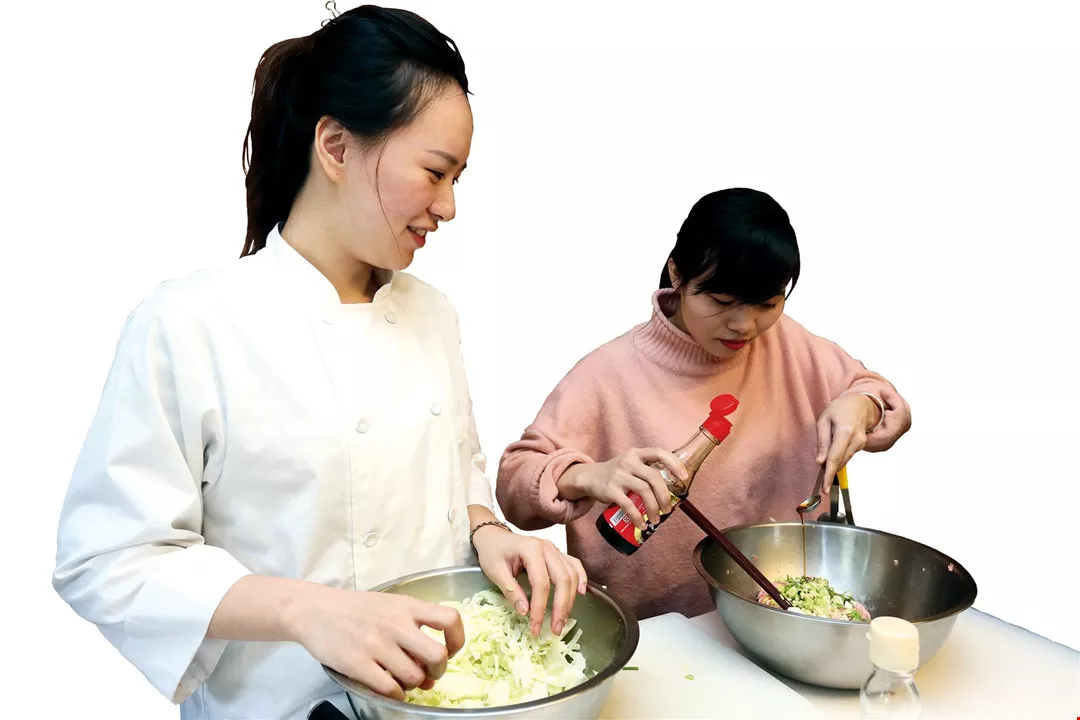
A little soy sauce, some sweetcorn…. With instruction from the head chef at Zucchini Café, a Vietnamese student uses fresh ingredients from a local market to make the filling for jiaozi dumplings.
Hooked on Taiwan
Many Chinese courses have students travel all around Taiwan, greedily gulping down night-market treats and visiting places like the National Palace Museum—the value-meal version of Taiwan. But “no matter how much course material they get through in class, nothing compares to getting the students out there personally experiencing Taiwan,” says Zhang Huimin, a veteran Chinese teacher at Soochow University with over a decade’s experience. In language learning, she explains, what’s most important is passion. “When they’re in love with the language, students have the drive to put in the effort that’s needed.”
Still worried there’s no way to convince foreign students to choose Taiwan? Strolling through the lanes and alleys off Fujin Street, sampling the distinctive businesses of Minsheng Community and chatting with locals, these students are getting to experience a different side of Taiwan, and this is the best possible way to draw in those with an interest in Taiwan and in learning Chinese.
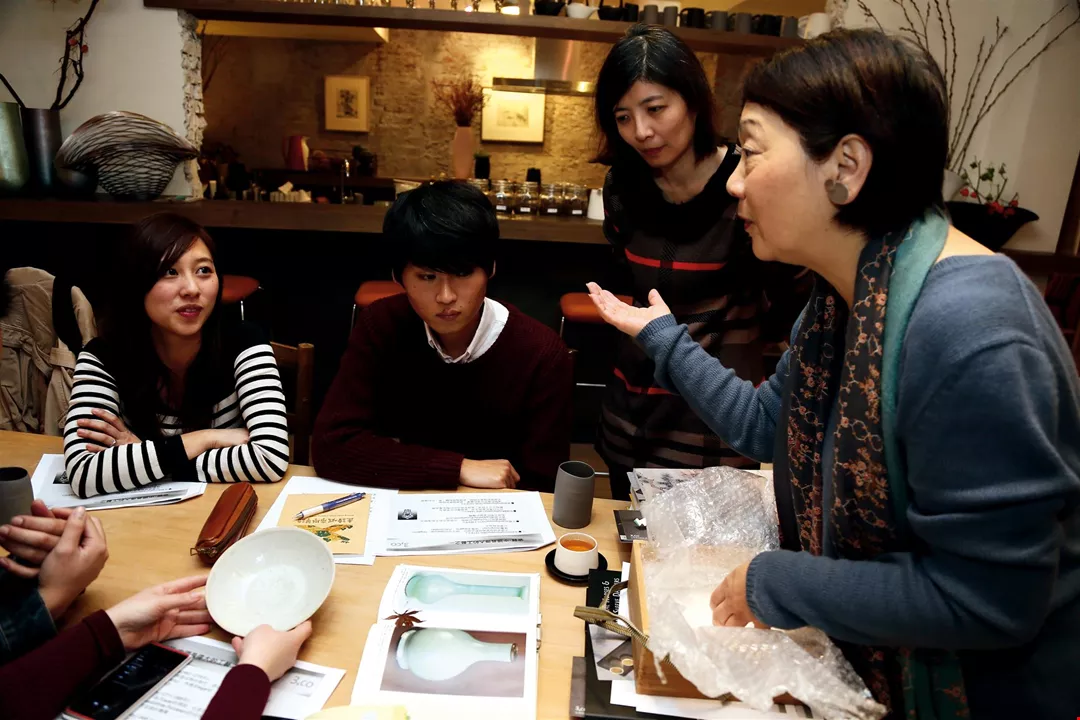
Cathy Yu—founder of 3,co, which combines modern design and traditional ceramics—personally introduces students to the world of ceramics.
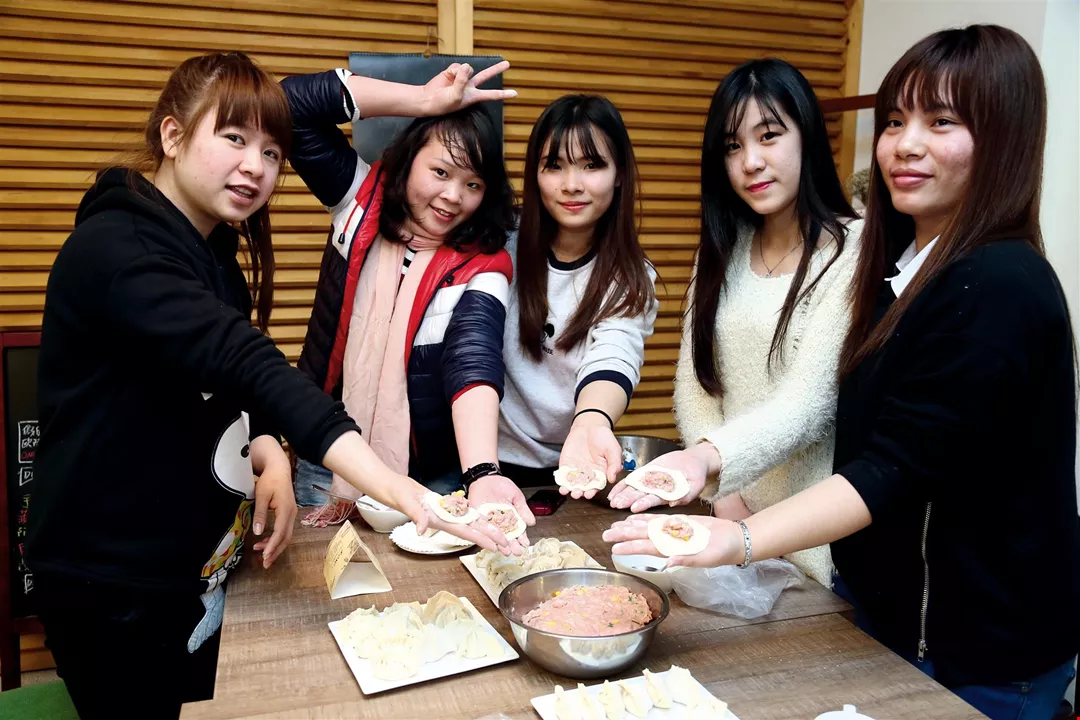
Gao Weilian (second from right), from Indonesia and currently studying Chinese at Tamkang University, shares a happy cooking class with her Vietnamese classmates as they make jiaozi dumplings.
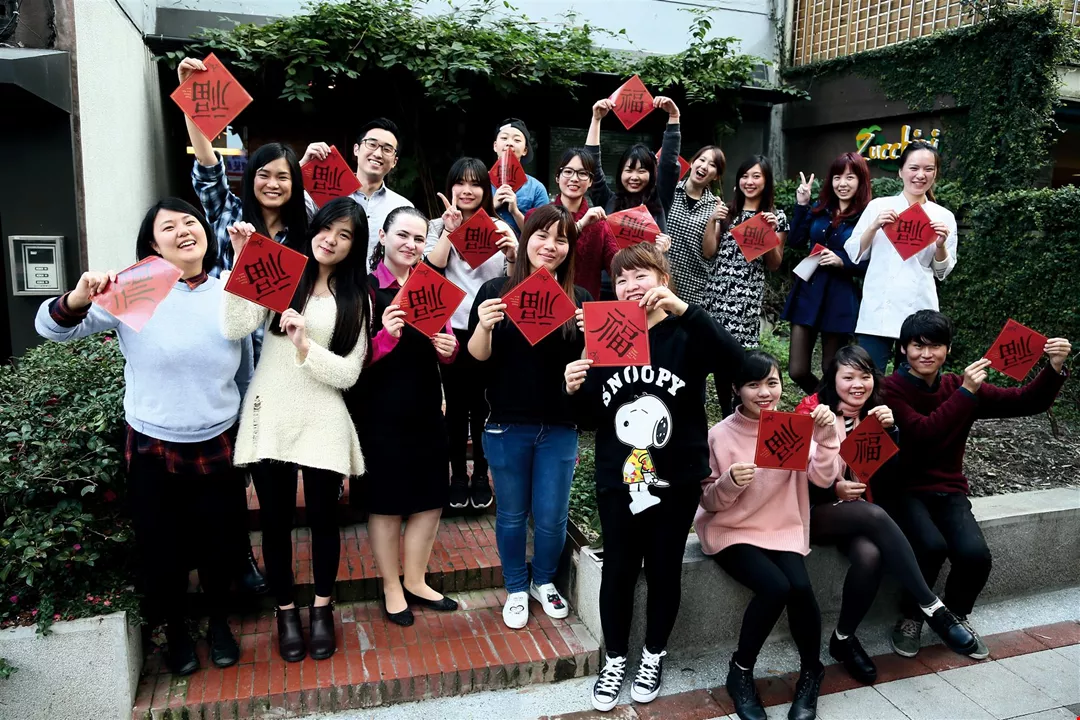
As “My Third Space,” the final module in the program, winds up, the nearly 20 students from around the world hold up Chinese New Year doufang for a commemorative photo.
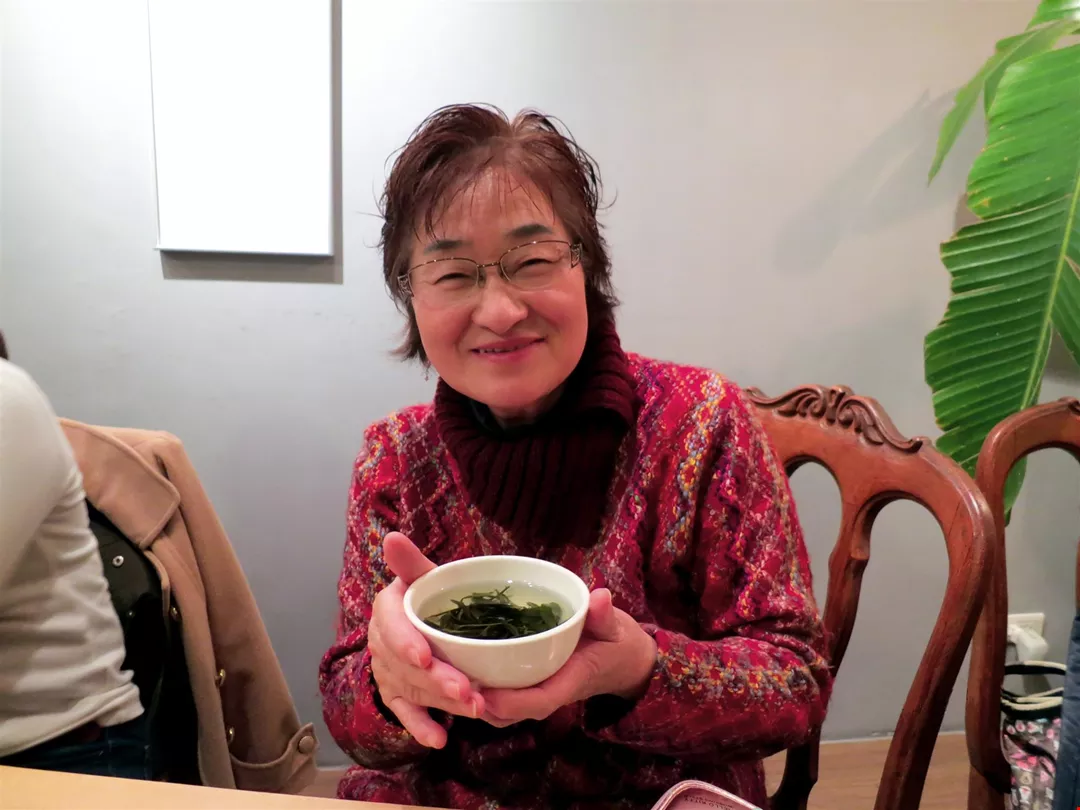
Sixty-eight-year-old Sumiko Suzuki decided to come to Taiwan and study Chinese after she retired, finally fulfilling a lifelong dream. (courtesy of the Association of Creative Economy, Taiwan)
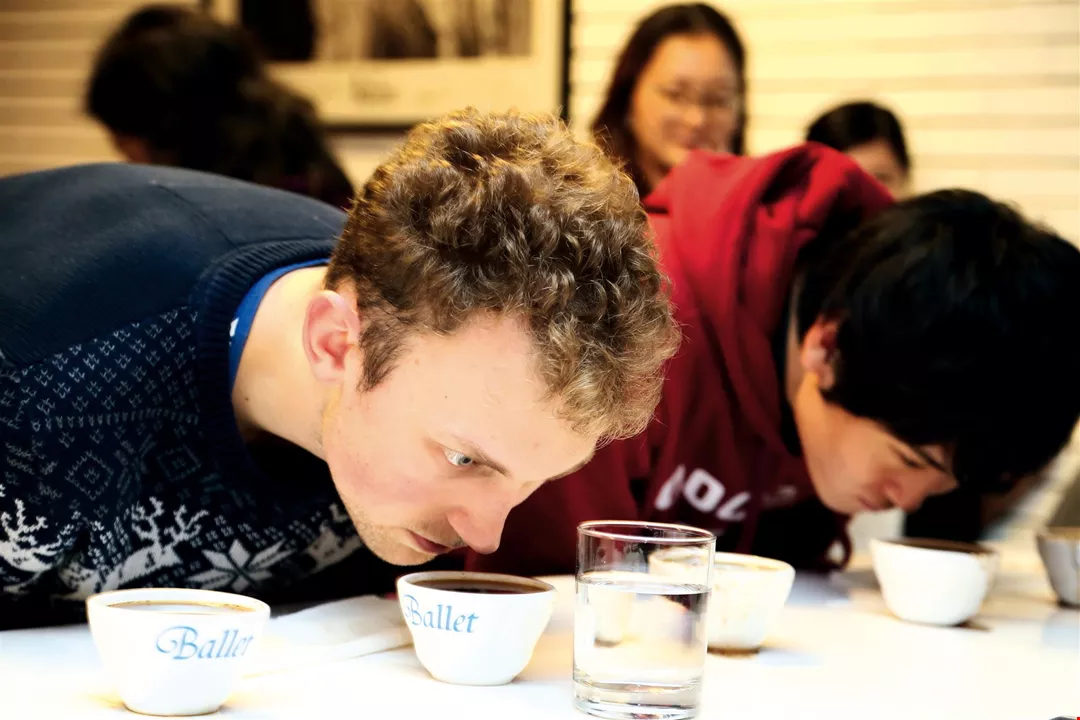
Students from as far afield as Russia, Japan, and Spain come together for a class where Café Ballet coffee cupper Tim teaches them about coffee beans and introduces them to Taiwan’s coffee culture.
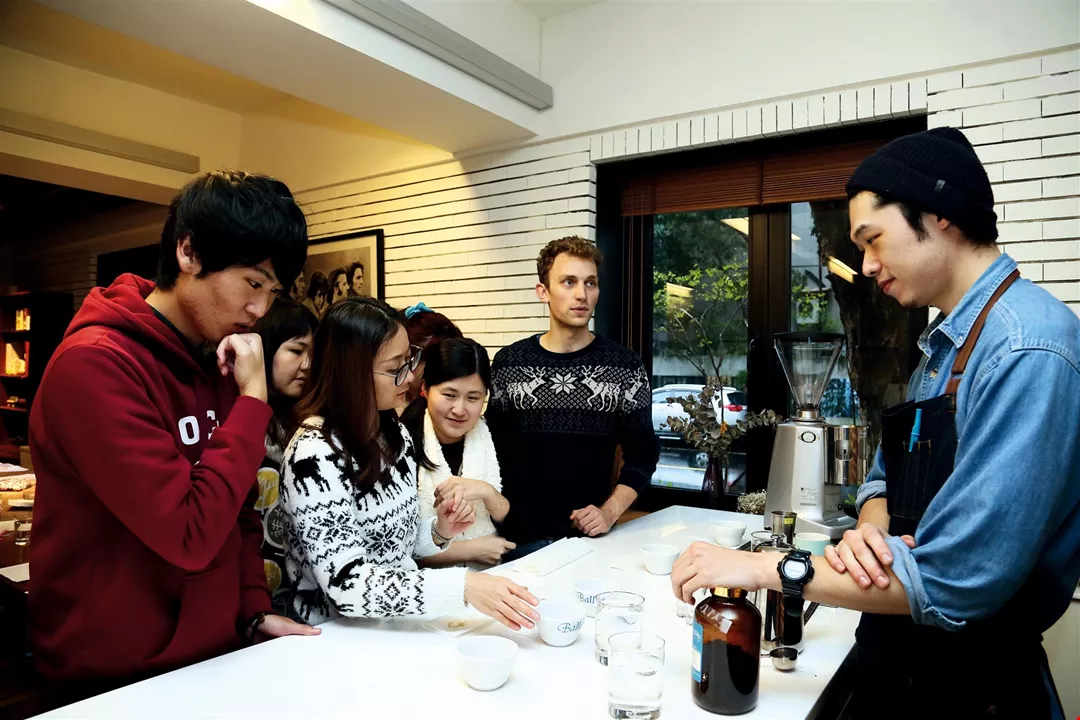
Students from as far afield as Russia, Japan, and Spain come together for a class where Café Ballet coffee cupper Tim teaches them about coffee beans and introduces them to Taiwan’s coffee culture.


