Letting Nature Nurture: Horticultural Therapy
Kelly Chang / photos Chuang Kung-ju / tr. by Josh Aguiar
October 2009


"My dad loved gardening. Last winter on the first anniversary of his death I was having a pretty tough time. I was walking through my yard and saw a bloom on a quince bush-one of my dad's favorites. I shared this story with one of my sisters, and she told me that at the same time she found a rose-another of Dad's favorites-blooming in winter! It made me feel like my dad was telling me he was Okay!"-from Garden of Love and Healing by Marsha Olson.
Plants don't talk or move, but they do exude a special life energy that can succor sagging spirits. As horticultural therapy programs continue to spring up at hospitals, nursing homes, convalescent homes, schools, and communities throughout the island, more people are turning to this kind of alternative treatment to help restore their injured bodies and souls.
In the mountains near Bali, by the banks of the Danshui River, a road winds circuitously up to the Ai-Hsin Home for Persons with Disabilities. Though capacious and squeaky clean, the atmosphere there is a bit cheerless, as it is home to more than 100 children between the ages of two and 18 with cases of cerebral palsy ranging from serious to very serious. Today, the teachers are building a therapy session around beans.
"Can everybody feel how hairy the outside of the beans are? That's why they are called 'hairy beans,' and they're green," explains Huang Shenglin deliberately in a clarion voice. One of the children can't keep from yelling "muh, muh, muh," his single voice rising above the chatter of the classroom.
Most of the class's 13 children are in wheelchairs; a number of the others require braces for support. Some of the children are able to walk over to the table to feel the beans that are laid out on the table, while others need counselors to bring the beans over to them.
After a while, the teacher brings out a withered, yellow pod, explaining that once the beans have matured, you remove the pod and, voila: you have soybeans. "They're actually the same thing! Now, who knows what soybeans are used for?" On the whiteboard in large, crisp characters are the words "soymilk," "tofu pudding," "soy sauce," and "vegetable oil." Next comes the best part, the tasting of the beans. The teachers and other staff members distribute a few cooked soybeans to each child, showing them how to pop them out of their pods or extract them using their teeth. Though some of the children swallow the pods along with the beans and others spill the beans on the floor, one has only to look at the beaming faces to know that the activity is a hit.
Later on, the children are paraded out in their wheelchairs to the flower garden in the central courtyard so that they can plant soybeans. Each child is positioned in front of the flowerbed before a card with their name on it. "This is corn, and this is broad bean, this is..." the teacher says, giving the name of each plant in the garden. She then reaches over and plucks some of the mugwort that the class planted last session to show them how luxuriant it has become and to let them experience its pungent odor. Then, with a little help from the adult staff, the children scatter their soybeans into the soil. As a final spot of fun, the kids receive straws so that they can spit their beans into their personal plots.
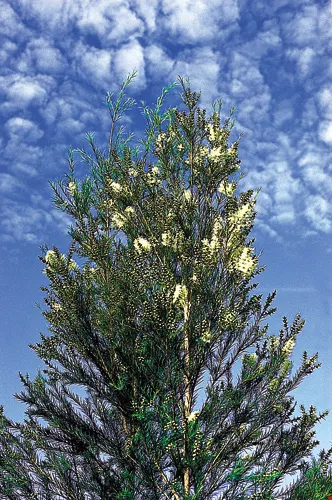
Mother Nature supplies the sunlight and rain to make plants flourish. Horticultural therapists find a way to bring nature's innate healing power to those ailing in either body or spirit.
Prisoners of the flesh
Taken out of context, these learning activities aren't unusual, but for kids afflicted with palsy, they are tremendously significant. "I want these children to experience nature up close," says Huang, who is the first person in Taiwan to be certified in the United States as a horticultural therapist. The biggest problem facing students with this condition is the lack of contact with the outside world. Because the part of their brains that controls motor skills has been compromised by the disease, their movements are slow and laborious. As a result, most schools and caregiving organizations find it easier to stay away from hands-on activities, depriving the children the kind of experience they most long for.
Huang takes the children out to the flower garden to play with the soil, to witness how plants grow steadily from the time of their planting, to eat fresh vegetables with seeds and leaves as opposed to vegetables already ground into a pulp. They get to paint their own individual flowerpots and make nametags for themselves using petals and leaves. In short, plants provide stimuli for all five senses: sight, hearing, smell, taste, and touch.
After six months of work, Huang says she's noticed that the children smile more. Once she gave the children the simple assignment of playing with mud, just pushing it back and forth with their fingers, when one of the counselors, much to her surprise, noticed a normally impassive child giggling audibly, the first time she had ever seen such a reaction in the year-plus time she had been taking care of him!
Huang has come to realize that these "special needs" children have highly developed intuitions. If one lets them experience nature directly, then the plants themselves will do the work in unlocking their hidden joy and life energy. She recalls a child who had multiple impairments that not only made speech impossible, but even following simple instructions excruciatingly difficult. After several sessions with plants, however, every time the teacher asked the student to "hold" or "insert," the student was able to comply accordingly, showing heretofore unrevealed potential.
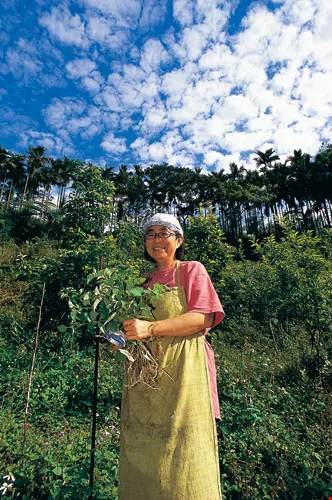
Here's one of Taiwan's most zealous proponents of horticultural therapy, Huang Shenglin.
Nature's way
What exactly is the definition of horticultural therapy? If someone enjoys gardening on their own or if the residents of a community set aside a plot of land to tend to in their free time, do these activities qualify? According to the American Horticultural Therapy Association, it is "a process utilizing plants and horticultural activities to improve social, educational, psychological, and physical adjustments of persons thus improving their body, mind, and spirit." It offers broad benefits to people young and old dealing with a range of mental, physical, or social problems, from school dropouts, drug offenders, and sufferers of domestic violence, to the mentally ill or senescent.
Horticultural therapists prescribe activities to suit the needs of the patient. For instance, activities for the mentally ill seek to aid with cognition, independent behavior, and social development to help them towards normal lives; for stroke victims, therapy emphasizes reviving sensation and promoting mental calm in order to help the person rehabilitate their body; nursing home residents are shown ways to reinvigorate themselves and discover new interests and pleasures.
Huang observes one important difference between horticultural therapy and other kinds of alternative therapies such as art, music, and dance: in horticultural therapy, the media employed-plants-are themselves living creatures. By nurturing a living thing, the therapy recipient becomes aware of all of life's continual changes, from the sprouting of new buds and the growing of new leaves to flowers blooming then eventually fading. Having the responsibility to cultivate and tend to another life gives us strength and a sense of self-worth.
However, when a horticultural therapist encounters a patient who finds caring for plants unappealing, there are still other options available. Veteran Canadian therapist Mitchell Hewson provides an example of a model who experienced severe depression after a bout with breast cancer forced her to have a mastectomy. Depressed to the point where she was no longer eating or sleeping well, she found little to hold her interest. Her therapist noticed that she was only going through the motions in class and that she seemed increasingly melancholy and withdrawn. So he changed tactics, shifting the focus of the classes to flower arrangement. With the emphasis now on color, beauty, and design, her interest suddenly awoke, and within a very short time, she was showing remarkable talent and skill. Once the pride that she had previously reserved for her beautiful figure became invested in her newfound floral artistry, she finally began to emerge from her funk. Before being released from the hospital, she often visited a floral shop nearby, and eventually went on to open her own successful shop.
Already in existence for over 40 years in the West, horticultural therapy has four major applications: curative, rehabilitative, social, and educational. Curative applications are most often used in medical institutions, rehabilitative most often refers to helping people recover from injury so that they can continue working, social deals with improving quality of life, and educational involves learning about life cycles and nature.
In Taiwan, all four basic varieties have wound their way into the establishment. In the medical system, for example, Taipei's Chung Hsing Municipal Hospital, the Far Eastern Memorial Hospital in Banqiao, Chang-Gung Memorial Hospital in Keelung, and the Mennonite Christian Hospital in Hualien, as well as various convalescent centers, have integrated horticultural therapy into treatments for mental patients.
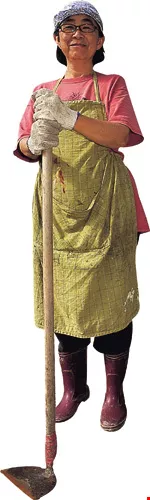
Mother Nature supplies the sunlight and rain to make plants flourish. Horticultural therapists find a way to bring nature's innate healing power to those ailing in either body or spirit.
Little Du's Soliloquy
Thirty-one-year-old Little Du suffers from bipolar disorder. After attempting to slit his wrists last year he was admitted to the acute psychiatric ward at Far Eastern Memorial Hospital. He was discharged and subsequently placed at Buildheart Garden, a daycare center affiliated with the hospital that addresses the needs of psychiatric outpatients.
No stranger to gardening, Little Du grew up watching his father plant orchids, and he himself enjoys doing little bit of landscaping. Nonetheless, the new experience of working closely with plants under the supervision of a trained therapist, deciding how much water and sunlight to give the amaranth and on choy that he planted himself, changed his life perspective. "You see them doing their best to grow and you know that you can try harder, as well," he says. He comments that his disposition used to be much cloudier, that he would cry inexplicably at times. But over the past few months his mood swings have leveled out a lot, and he's been able to resume working as usual.
When Little Du's father passed away last year, it came as a big blow. He felt lost and confused, blaming himself for not properly valuing his father while he was alive. He recounts the following experience: "There is a row of Chionanthus near my home. One day last fall I saw some of its white flowers on the ground. As I knelt down to touch these precious little flowers I could see how their cycle of blooming and withering according to the seasons mirrored human beings' own cycle of life and death." He has regained the ability to live life with a childlike simplicity, holding up as a model the kind of pastoral life eulogized in Tao Yuanming's poem, "Picking Chrysanthemums by the East Hedge."
"Turmeric can be used as a dye or steeped in liquor. It also goes well with on choy. The leaves of the chameleon plant that we see everywhere can be used in chicken soup. If you wash the roots thoroughly, they combine with Japanese dressing for a tasty salad," says Little Du excitedly, expounding at length about various herbs and their medicinal benefits. Seeing him participate enthusiastically in class at Buildheart Garden one can hardly believe that he is a psychiatric patient. The self-evident pleasure he takes in assisting his teacher and fellow classmates is hardly suggestive of the usual symptoms of listlessness and withdrawal. He even says that he would like to be come a horticultural therapist himself!
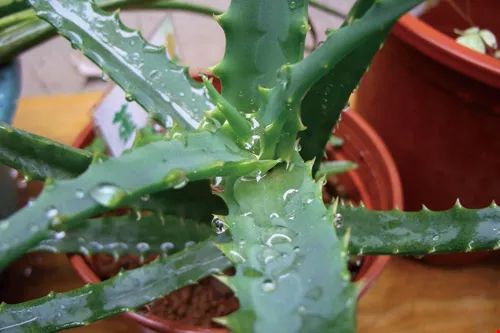
Mother Nature supplies the sunlight and rain to make plants flourish. Horticultural therapists find a way to bring nature's innate healing power to those ailing in either body or spirit.
Life looking after life
At present, Far Eastern Memorial Hospital uses horticultural therapies for patients with schizophrenia, bipolar disorder, depression, dementia, and organic mental illness. Following their release from the acute psychiatric ward, doctors encourage them to participate in the sessions at Buildheart Garden for further psychological rehabilitation.
The psychiatrist at Far Eastern responsible for steering patients towards horticultural therapy is Dr. Chen Junlin. The hospital sees it as complementary treatment outside the purview of standard Western medicine that can motivate people to be involved in their own rehabilitation.
He explains that Buildheart Garden offers classes on wellness, physical fitness, and handicrafts, but mental patients often lack the energy, patience, and motivation to follow through on such things, making it difficult for them to achieve mental and emotional stability. Medicine can help suppress their symptoms, but they are still vulnerable to episodes that could be touched off by any nmber of variables.
Horticultural therapy has been shown to unleash several innate "healing factors" within mental patients. Among them are improving motivation, providing a sense of achievement, increasing the will to participate and the will to share experience in support groups, and constructing therapeutic metaphors. It is effective on two important levels: providing immediate support for the patient and, more subliminally, leading them towards self-discovery and self-healing. Dr. Chen has been conducting a year-long research project with Huang Shenglin to look into establishing a model for horticultural therapy in Taiwan.
Supportive psychotherapy centers on helping the patient achieve balance and stability; the patient will be better prepared to resolve their issues, much in the way that Little Du was able to leave his negativity behind after experiencing an epiphany observing the life cycles of the plants. The second, more profound level is metaphorical or allegorical. It promotes a gradual awakening of consciousness, so that the sufferer is able to see clearly, and therefore adjust, the flaws in their thinking.
Dr. Chen offers the example of a depressed mother at Buildheart who was often at odds with her daughter. When cultivating peas, she would attempt to protect the seeds by packing the soil extremely tightly, not realizing that she was actually suffocating them. Once after a particularly nasty go-around with her daughter, she had no energy to give her plants her usual degree of attention, but much to her surprise the seeds that she felt she had planted desultorily yielded her best results. The experience awakened her to the shortcomings of her heavy-handed parenting.
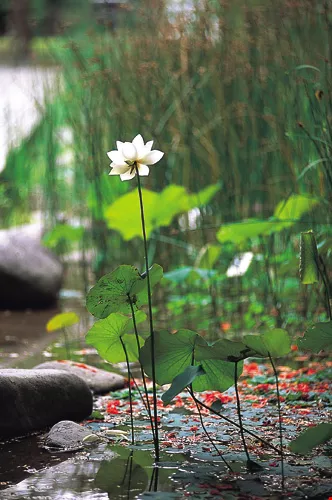
Mother Nature supplies the sunlight and rain to make plants flourish. Horticultural therapists find a way to bring nature's innate healing power to those ailing in either body or spirit.
Budding friendships
Along with its effectiveness in probing the psyche, horticultural therapy is socially efficacious, as well. This is the area that is expanding most rapidly in Taiwan at the present, its most common manifestations being convalescent homes, nursing homes, and farms that employ the mentally disabled.
At one such organization, the Bade Service Center of the Eden Social Welfare Foundation, disabled people take classes that have been tremendously beneficial. In fact, when the spring term ended, the students were so eager for more that they formed their own gardening society.
The "Garden of Eden" consists of a half-enclosed patio about 60 square meters in area with potted plants, vegetables, and herbs lined meticulously alongside the walls. In the center of the patio is a worktable that doubles as a picnic table where, on this drizzly afternoon, the members of the gardening society are sitting down to afternoon tea after a day of hard work potting new plants and cleaning the patio afterwards. Their discussion of future plans for the group is punctuated by bursts of mirth while strains of music glide between the rows of manicured plants. It all makes for a scene that does the "Eden" moniker justice.
Zhang Jingwen, a social worker who advocates horticultural therapy, says that a lot of people who become handicapped as adults develop difficulties in social interaction. Their relationships with family members, who often double as caregivers, become strained, as well, and they run the risk of estrangement. Being close to nature in a peaceful setting can help them rediscover their joie de vivre, and gardening in a group can be an antidote for loneliness.
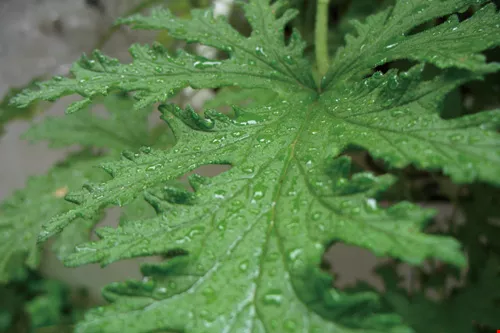
Mother Nature supplies the sunlight and rain to make plants flourish. Horticultural therapists find a way to bring nature's innate healing power to those ailing in either body or spirit.
New lease on life
Fifty-one-year-old Jasmine lost the use of the left half of her body nine years ago due to a flare-up of a hereditary disease. Forced to give up her active lifestyle and lucrative career as a patternmaker, she fell into a severe depression. It wasn't until she began horticultural therapy that her naturally upbeat personality started to reemerge.
"I used to just sit in my chair with random thoughts running through my head, trying to figure out what to do with the endless days." Since taking classes, she has been able to structure the days with meaningful gardening activities like removing pests, making compost piles, loosening the soil, and inserting grafts. Her thriving plants by the entrance to her building have generated a lot of interest, inspiring neighbors to follow suit. The shared interest in gardening has brought her and her neighbors-previously merely nodding acquaintances-a growing friendship.
"Are these chili peppers not growing properly because they haven't gotten enough sunlight?" "It's been raining so much recently that my fruits keep falling off. What should I do?" Everyone shares problems and tips with one another. When they can't think of a solution, they deputize Jasmine to ask the teacher for advice. They share the vegetables that they grow, which helps everyone save on shopping expenses. Gardening has even furnished a point of reconciliation between Jasmine and her husband!
"My husband's been asking me why I spend so much time with plants. He also wants to know why the neighbors and I have gotten so friendly." Jasmine explained to him that one of the neighbors had a persistent ear infection that wouldn't go away no matter how many times he saw the doctor. When Jasmine gave him some Spanish mint to rub on his skin the problem began to disappear on its own. Grateful, he often brought over tasty treats for her. She laughs when she says that this made her husband a little bit jealous, and he has been seeing her in a wholly new light ever since!
Looking at the most common practitioners of horticultural therapy, it seems that they all fall into the physically or otherwise disadvantaged category. But does the therapy have anything to offer so-called "normal" people dealing with economic difficulties or environmental degradation?
Kainan University has devoted some of its resources in recent years to developing qualified horticultural therapists. According to Associate Professor Kuo Yu-jen at the School of Healthcare Management, this field has tremendous potential that has been largely neglected.
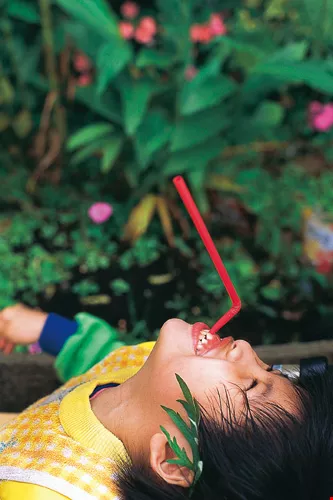
Who says that scattering seeds has to be done with the hands? These disabled kids are using straws to blow the seeds into the nursery soil.
Returning to nature
"Why is it that being amongst Mother Nature's infinite plant life lightens the soul?" Kuo queries rhetorically. He explains that most of us-with the exception of certain very sensitive, poetic souls like Lin Daiyu from Dream of the Red Chamber, who was overwhelmed by poignancy at the sight of beautiful flowers-feel comfort and security amongst nature. Some academics have suggested that this goes back to prehistory, when man dwelled in a natural habitat, sheltering himself in the trees and bushes to evade sun, rain and physical danger, using herbs and roots to cure illness. Over time, that attachment to nature inscribed itself onto our genetic codes.
Kuo recently devised a series of classes aimed at helping college students reduce stress. The curriculum's stated goals are to foster self-confidence and to help people tolerate stress, and it includes activities like planting, floral arrangement, potscaping, and then describing and sharing results through blogs. He recruited a number of participants via the Internet for a study that has borne out the effectiveness of his approach-the follow-up surveys reveal substantial boosts in the students' creativity and emotional stability.
Some of the recent graduates of Kuo's program have quite successfully taken these stress-reduction activities back to their workplaces. For instance, Yi-Lan Chiao Shi Junior High School's special education class and Taipei First Girls High School have established gardening areas in the classroom that are very popular with the students.
Just how much power do plants possess? "Rice paddies and mulberry bushes make me recall my childhood home. Michelia and banana shrubs remind me of how my mom used to put flowers in my pencil case. Lemons, sugar cane, bitter melon, and chili peppers invest our lives with a complete spectrum of flavor. Our homes are built out of plants, as are the desks and chairs we use at school. They make our surroundings better and give us happiness...." writes Kuo in his blog. Plants have been healing us and silently sustaining us all along, though we often ignore it. Let's hope that horticultural therapy can rebuild that bridge connecting mankind and nature.
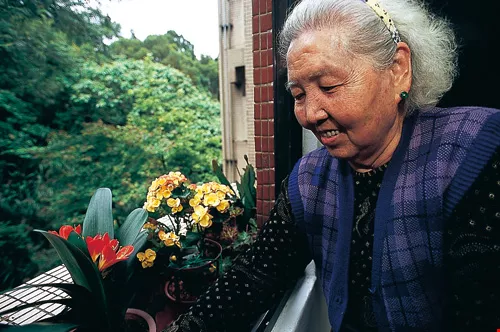
Retirement communities offer horticultural therapy to spice up the lives of their residents. Here we see a retiree at Cuiebo Village in Xizhi.
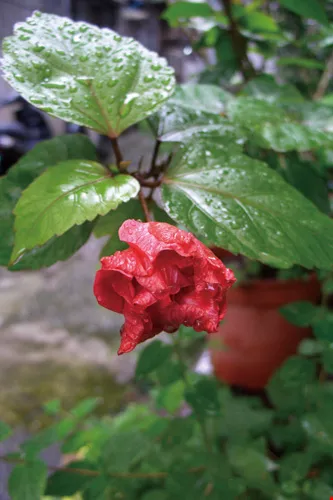
Mother Nature supplies the sunlight and rain to make plants flourish. Horticultural therapists find a way to bring nature's innate healing power to those ailing in either body or spirit.
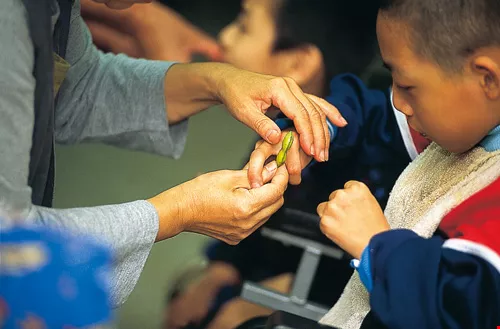
At this class at the Bali Ai-Hsin Home for Persons with Disabilities, the instructor is showing the children how to squeeze peas out of their pods. These hands-on activities provide rare sensual stimulation for these isolated children.
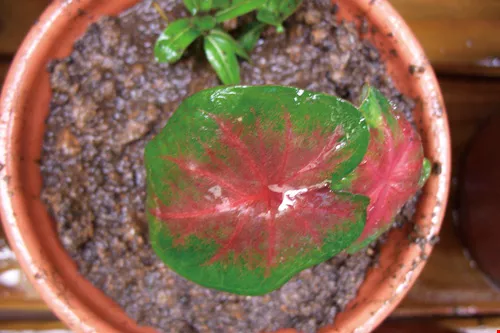
Mother Nature supplies the sunlight and rain to make plants flourish. Horticultural therapists find a way to bring nature's innate healing power to those ailing in either body or spirit.
Mother Nature supplies the sunlight and rain to make plants flourish. Horticultural therapists find a way to bring nature's innate healing power to those ailing in either body or spirit.
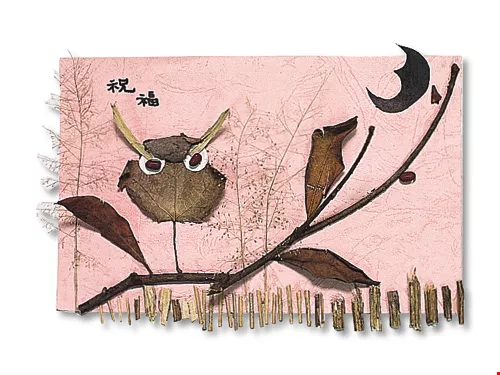
Using dried leaves and seeds to create greeting cards is a common activity.

A wall painting commemorating the conclusion of a horticultural therapy training session at the Eden Social Welfare Foundation.


@List.jpg?w=522&h=410&mode=crop&format=webp&quality=80)


