Inventive New Uses for Charcoal
Chen Chun-fang / photos Chuang Kung-ju / tr. by Jonathan Barnard
June 2016
In former times, people would cut down trees and bamboo both for fuel and to as materials to build houses and make furniture. But today people are transforming wood and bamboo into charcoal for new and innovative uses. Pitch-black charcoal was originally used only for heating and cooking, but having perceived its potential for generating value, inventors have developed a steady stream of new uses. Thanks to this R&D, charcoal has begun to be used in many new ways, opening doors to whole new categories of products.
Hailing from Hsinchu’s Hukou Township, Jacky Chen, the second-generation CEO of a charcoal factory that manufactures Dawoko Wood Vinegar, saw from a young age how much his parents would sweat as they made charcoal. But the unburnt logs became his toys, and the hot and steamy charcoal factory served as his playground. These experiences left him with a particularly strong affection for wood.
In 2003 the Industrial Technology Research Institute made its wood vinegar extraction process available for transfer to private industry, and Chen’s father and some friends invested NT$10 million in equipment. After several attempts, they succeeded in distilling wood vinegar and contracted with a factory to make two products with it: a body wash and a shampoo. Despite the natural-extract angle in advertising, the pungent smell put off consumers, and his father nearly declared his investment a failure.

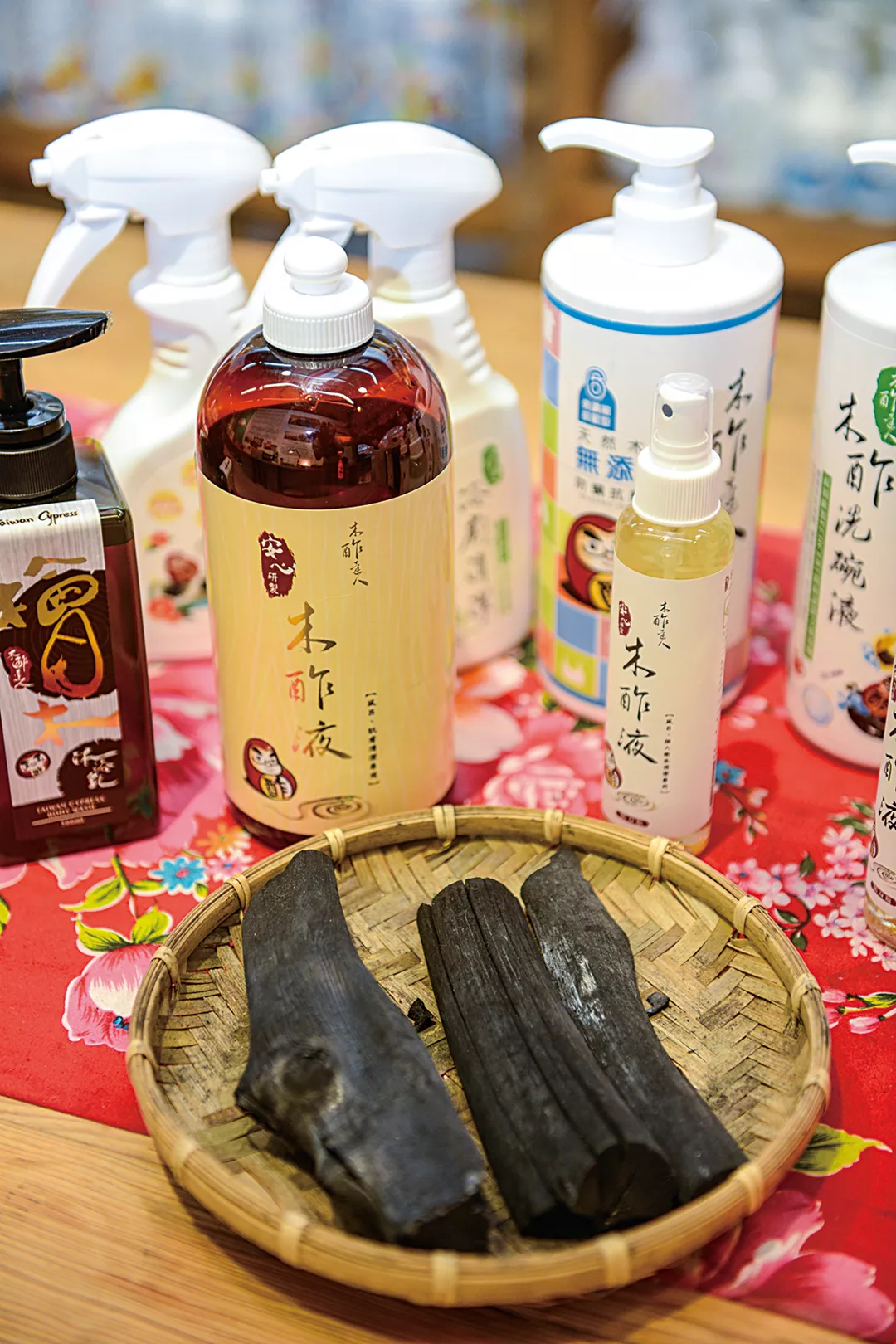
Thanks to extensive R&D, Dawoko wood vinegar has come to be used in all manner of cleaning products.
Precious gift from nature
One day, Chen, who was then a junior at a college in southern Taiwan, happened to be spending his nights at the charcoal factory that his father owned with partners. The stuffy humid air of the factory aggravated his eczema. Having once heard his father say that wood vinegar was an antibacterial and disinfectant, he sprayed some of the factory’s distilled wood vinegar on his arm. “Much to my surprise, it stopped being itchy. I went on to try it on half my face, and the result was that the itchiness and swelling receded on that side, whereas the other half remained as swollen as a pig’s head,” laughs Chen.
Chen went on to delve into Japanese research on wood vinegar, discovering that it was effective as a cleanser, a disinfectant, a sterilizer and a deodorant. “Wood vinegar is extracted from the smoke produced during charcoal production,” explains Chen. “Unlike petrochemical products, this completely natural substance poses no threat to the environment. We ought to put this gift from Mother Nature to good use.”
And so, based on the results from numerous experiments, Chen and a few good friends developed a series of products with different ratios of wood vinegar as an active ingredient, including skincare products and environmental cleansers. By insisting on natural ingredients and not adding any artificial chemicals, they were able to make the most of wood vinegar’s natural antibacterial and cleansing properties.
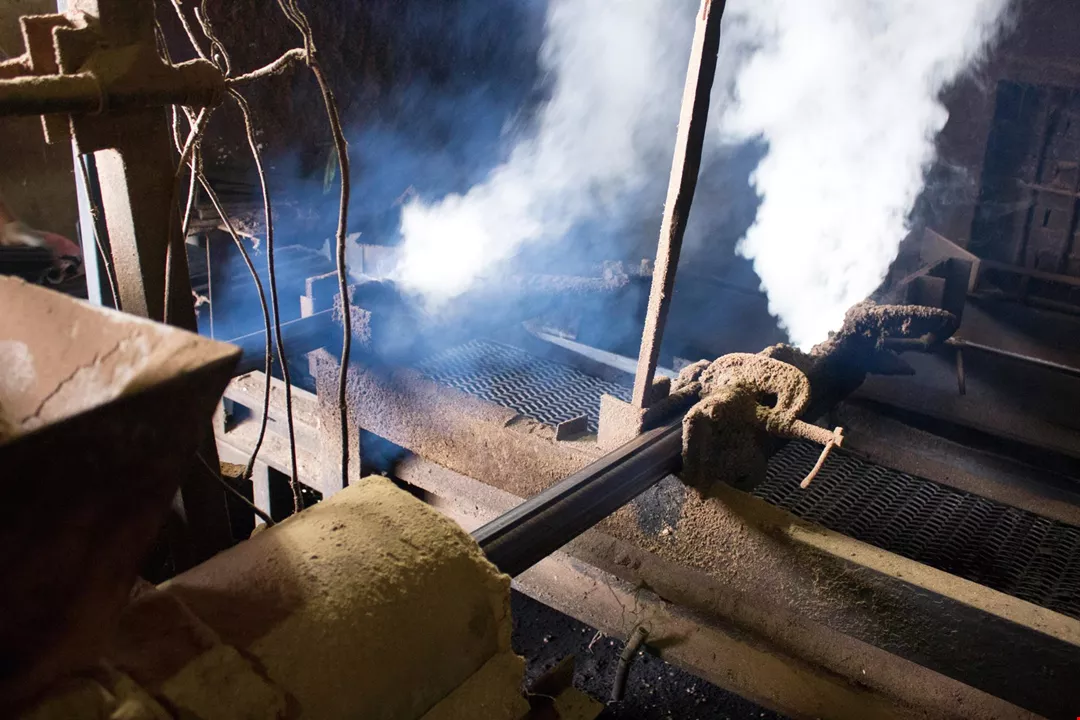
It used to be that the smoke emitted during charcoal manufacture was regarded as a contributor to air pollution, but research has determined that the wood vinegar extracted from that smoke is a natural substance of considerable vitality. Many inventive uses for it have been discovered in Taiwan, and the hope is that more people will produce and use this environmentally sustainable product.
Distilled wood vinegar is extracted from the smoke that is a by-product of producing charcoal. A precious gift from Mother Nature, it can be used as a cleanser and antibacterial. (courtesy of Jacky Chen)

Black jewels of the natural world
Bamboo charcoal is another jewel of nature. When subjected to high temperatures, the water in bamboo cells evaporates, leaving behind cell walls full of small holes. “The pores in a single gram of bamboo charcoal average about 300 square meters in specific surface area, which is the size of a tennis court, notes Chen Hsi-chou, executive director of the Eco-Carbon Development Association of Taiwan. “This gives bamboo charcoal sponge-like adsorption qualities.”
Early on, bamboo charcoal was used in its whole unadulterated form, put in water and stores of rice to absorb impurities, or ground up and placed in deodorant pouches. Thanks to scientific research and technological advance, ceramic grinding technology has been employed to turn bamboo charcoal into nanoparticles used in yarns for clothing and bedding that emit far-infrared radiation.

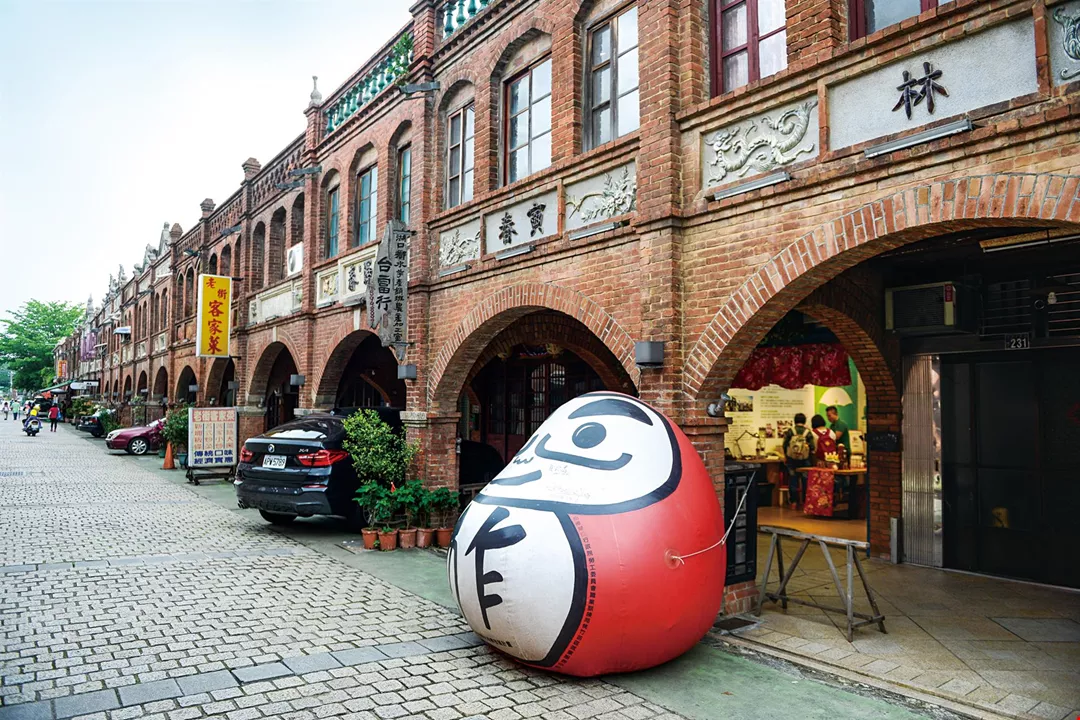
Jacky Chen’s charcoal factory, which has an outlet in the old part of Hukou, has breathed new life into a traditional industry.
Bringing greater convenience
Apart from its use in clothing and other household goods, “activated” bamboo charcoal, which has been subjected to high temperatures, can be eaten and used as a natural food coloring—completely overturning people’s image of charcoal. “We were the first to try adding some bamboo charcoal powder to flour to make noodles and dumplings,” recalls David Chen, the manager of Bamboo Paradise Resort. “We found that they retained moisture very well and didn’t get too sticky after cooling. The first time they were shown at a food exhibition at the Taipei World Trade Center, everyone was pleasantly surprised.”
The charcoal adsorption paper for which a patent was granted in 2015 has likewise surprised people. Laboratory results show that its chemical particle adsorption capacity is as high as 92%. Currently, bamboo charcoal adsorption paper is being used in protective packaging for exports of Taiwan’s fruit and flowers so as to extend freshness. It is also being used in wallpapers, leveraging its powers of adsorption to reduce harmful substances in the environment.
Making use of the conductive qualities of bamboo charcoal, Taiwan has also developed supercapacitors for electric vehicles with activated carbon from bamboo charcoal. By cutting charging times without any reduction in range, these supercapacitors have brought greater convenience to the disabled and elderly users of mobility scooters.
Everyday life has provided inspiration for many wood and bamboo charcoal applications. Uses for charcoal can be found among all aspects of daily living: food, clothing, shelter and transportation. Meanwhile, new efforts in research and development are continuing to advance. May the future bring ever more uses for charcoal that will help all of us to lead richer and brighter lives!

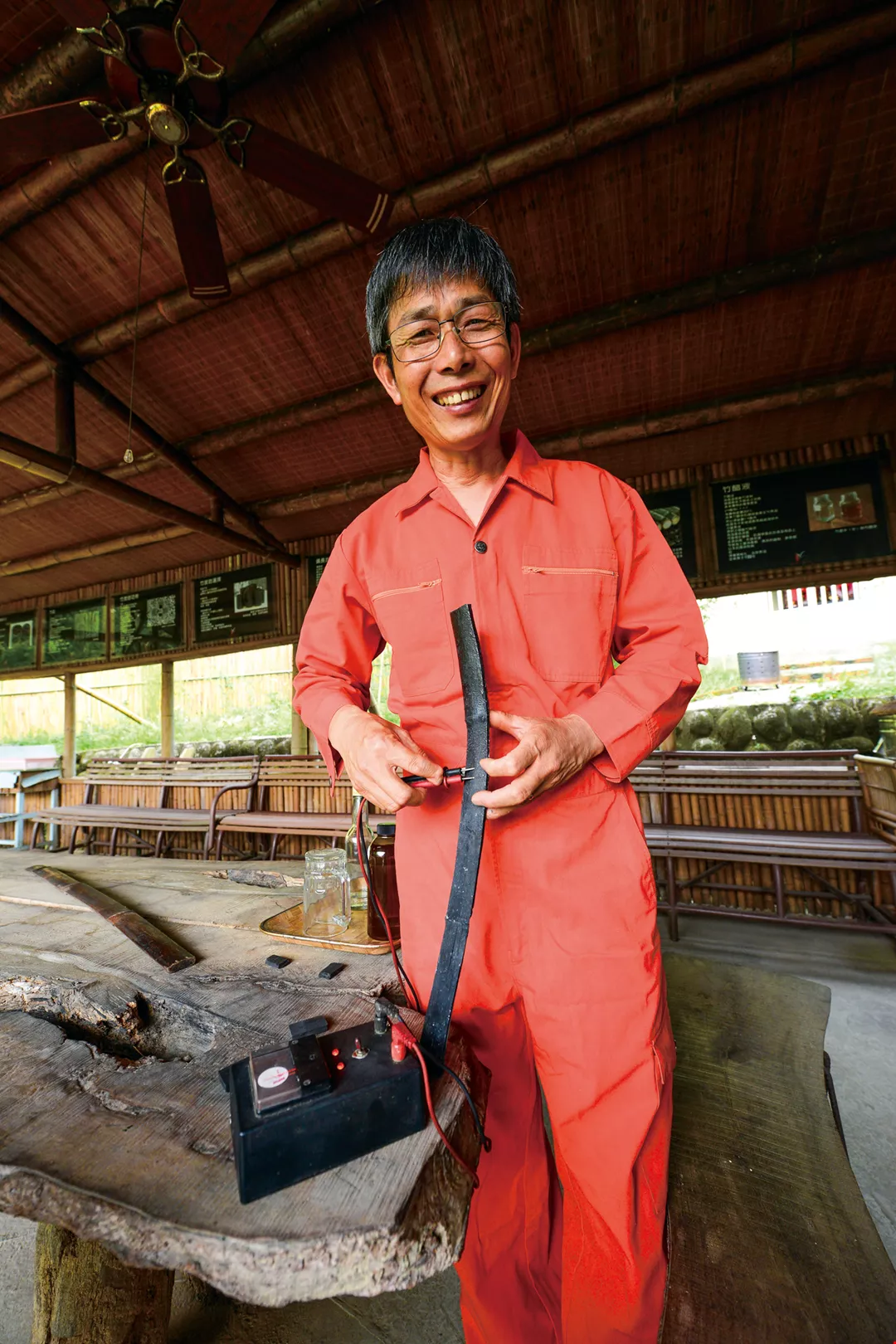
When produced at high temperatures, bamboo charcoal loses much of its electrical resistance, making it an excellent conductor. Leveraging this quality, scientists have opened up a whole new field of uses for bamboo charcoal.

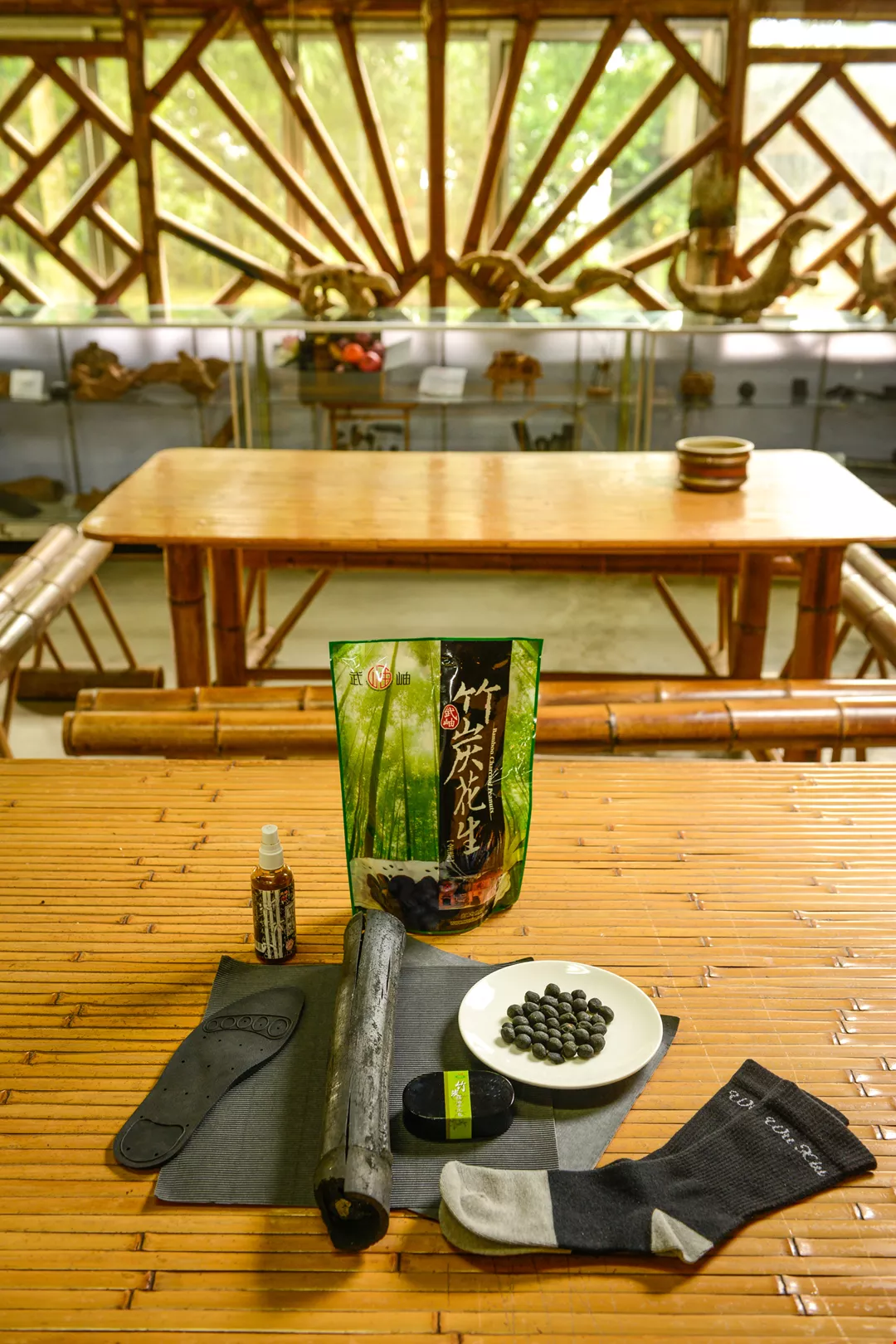
With extensive R&D, new and inventive applications for charcoal are being found in all realms of life.