Dorigo--Place of Dreams for One Returning Son
Lin Hsin-ching / photos Jimmy Lin / tr. by Christopher J. Findler
March 2008


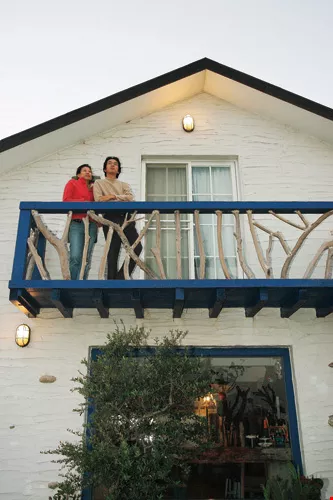
At the mention of Chiku Township in Tainan County, most people probably think of the black-faced spoonbill, an internationally renowned bird species that rests here during its winter migration each year, and of course, the endless expanses of salt fields, oyster farms, and milkfish ponds. Chiku is also home to Dorigo Guesthouse. A-Wang and A-Chuan, proprietors of this fishery-ecology-inspired inn, both grew up in this fishing village. After toiling amid the din of the city for several years, they elected to return to the place of their childhood to run a guesthouse. Nestled among the fishing village's vast fish farms, the guesthouse not only offers travelers an all-new experience, it represents a new life for this couple and their children.
Located in Chiku Township's Shihfen Village and sprawling out over 264 acres, Jin De Feng Fisheries, collectively owned by the members of the sizeable Tu clan, is known for its milkfish. Tu Chi-wang, who six years ago was third-generation owner of a jewelry store in Taipei, returned with his wife Su Li-chuan and their three children to his childhood home to fill in one corner of a fishpond upon which they would build a guesthouse and restaurant. Their plan: introduce tourists to the milkfish farming industry and Chiku's unique cultural and ecological landscape.
A-Chuan's saltwater tilapia in brown sauce is a favorite of guests.
Reliving childhood memories
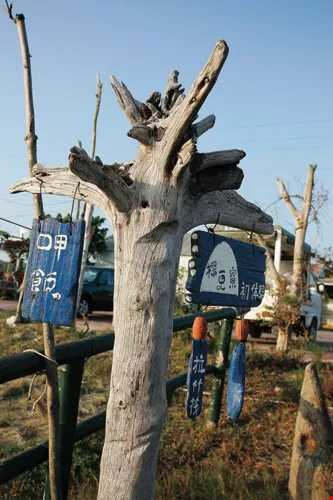
Perched on the pond's edge, the blue-on-white lodge has an ocean theme. The walls of each cabin are adorned with pictures of colorful fish and seaweed and intriguing clamshell windchimes dangle from the eaves. All tables, chairs, lighting fixtures, cup stands, the handrails on the stairs, and even the key rings for the guest rooms are made of driftwood found on the beach by "A-Wang" and his family. It's not uncommon to see guests riveted in place as they study the ingeniously crafted pieces.
The inn has three types of cottage: "Experience Life Cabins," "Waterside Family Bungalows," and "Waterside Lookouts." The intriguing "lookouts" resemble thatched Quonset huts.
A-Wang explains that lookouts like these are nicknamed "bucket lookouts" in Taiwanese, because they resemble pails sawn in half vertically and turned over. They were used years ago by laborers watching over milkfish and as places of rest for fish-farm night patrols. They are smaller and simpler than the guesthouse's other cabins.
A-Chuan's saltwater tilapia in brown sauce is a favorite of guests.
Experiencing a fishing village
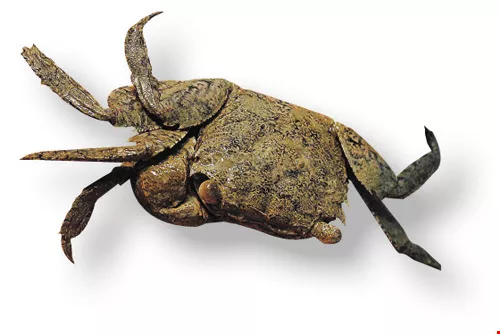
In addition to its fishery-themed rooms, Dorigo also offers a variety of hands-on activities, from fishing for tilapia and feeding milkfish to riding bamboo rafts and catching fiddler crabs. Guests can take part in any of these activities to their hearts' content right here at the pond. If you're looking for more to do, A-Wang and A-Chuan, both licensed ecology guides, offer customized tours like watching black-faced spoonbills, taking boat trips on Chiku Lagoon, and visiting the seaside "driftwood forest."
A-Wang explains that very few young people return to the village to work like him. At first, elders in the village, including his father, were set against the idea of opening up a guesthouse on the fish farm. They asked, "Why on earth would you open up your home to public viewing?" A few years ago, however, the guesthouse finally started making itself a name, and the Fishery Agency of the Council of Agriculture even asked A-Wang to come to northern Taiwan to lecture on his experiences in revitalizing the fishing village. It wasn't until all of this happened that his father started to grudgingly shed his bias. "My father used to glare at guests. Now, he volunteers to be their personal tour guide. He has changed a lot," relates A-Wang with a smile.
A-Wang and A-Chuan like to plant trees to help reverse soil salinization and block the strong ocean winds, both of which have had an adverse impact on the environment. The area around the guesthouse simply bristles with Indian almond trees. The dusk breeze ruffles the verdant trees and the expansive fishpond's occupants cluster to feed. The twisting, leaping milkfish shimmer in the light of the setting sun. It doesn't get any better than this at Dorigo. This family returned home to run a bed and breakfast; in the end, they have been blessed with peace of mind and spirit.
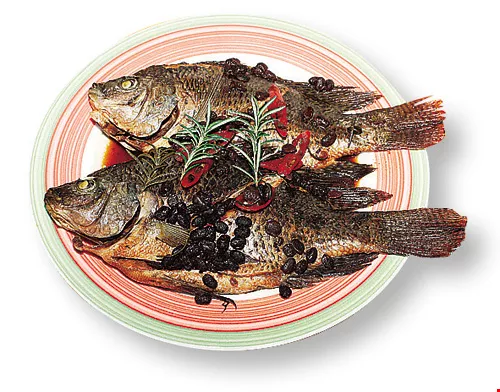
A-Chuan's saltwater tilapia in brown sauce is a favorite of guests.
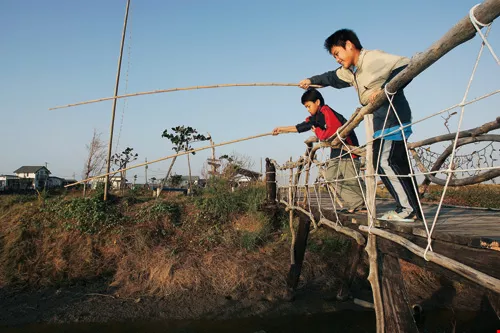
The Dorigo B&B management has designed a number of fun activities for the whole family, including crabbing, rafting, and fishing for tilapia.
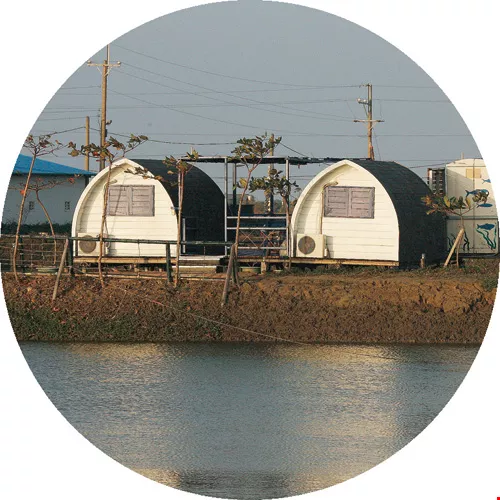
The semi-cylindrical waterside lookouts are where laborers used to stay at night years ago when watching over milkfish farms. Today, they are cabins very popular with Dorigo's guests.
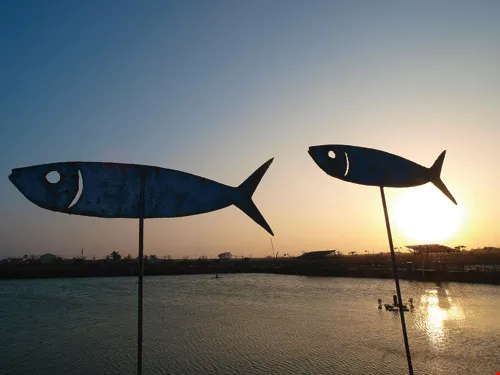
The Dorigo B&B, which boasts a fishing industry ecology theme, was erected on top of a milkfish farming pond. The golden rays of the gently rising sun dance on the surface of this expansive body of water every morning, bringing joy to all who witness it.


@List.jpg?w=522&h=410&mode=crop&format=webp&quality=80)


