

In recent years, advanced education for professionals has become a hot topic in the business community. With this trend, suddenly the mature faces of managers boasting an average of over ten years of professional experience have flooded in among the young people populating university campuses.
In order to attract this group of seasoned adults pulling in over NT$1 million a year back to the ivory tower, universities have begun to establish executive MBA (EMBA) programs. In response, each year over 1000 mature professionals looking to recharge their minds and retool their know-how compete for a precious few openings in executive degree programs at top institutions such as National Taiwan University (NTU) and National Chengchi University.
What brings these accomplished business professionals back to the classroom? What knowledge do they seek that cannot be found in society at large? And what effect does their return have on campus?
Morris Chang, chairman of TSMC and a leading light of Taiwan's high-tech industry, is the hottest university lecturer around. Two years ago, National Chiaotung University invited Chang, one of the Taiwan IT sector's most prominent success stories, to lecture to students in its MBA program for top managers, single-handedly raising awareness of executive MBA (EMBA) programs. This year, Acer Group chairman Stan Shih will be a guest lecturer at the university. The crush of business professionals fighting for a spot in the MBA program at Taiwan's most illustrious institution of higher education-National Taiwan University-ensured that the acceptance rate for the executive graduate school was even lower than that for undergraduates taking the national university entrance examinations.
Various indications demonstrate that the "back flow education"promoted by the Ministry of Education has become the hottest investment undertaking among Taiwan's universities. Three years ago, in the effort to establish a greater diversity of higher educational avenues, the Ministry of Education (MOE) greatly increased the number of MA degrees open to professionals in the workforce, steadily reducing the proportion of regular students to professionals from the previous 9-to-1 ratio. In addition, the MOE allowed universities to determine entrance examination topics, testing dates and times, and fee structures individually to help them find and obtain the best students.
Always in search of revenue sources, universities naturally fell right into line. Twelve institutions opened programs in 1999, with the number of executive degree programs growing to 34 as of this year. And as the supply has grown, professionals looking to recharge their intellectual batteries in disciplines ranging from Chinese, foreign languages, and physics to information technology and management now have a greater selection from which to choose.
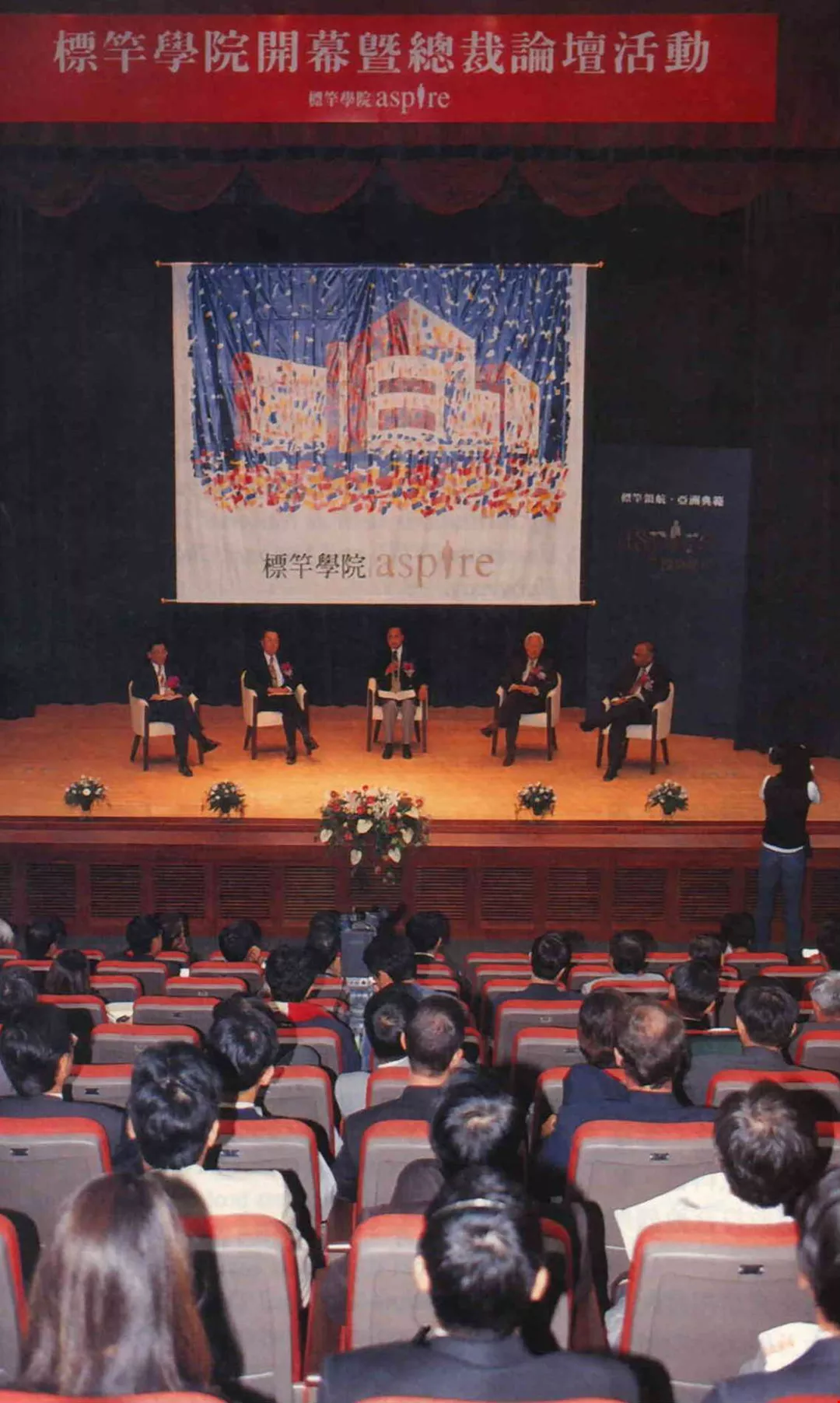
Although it doesn't offer an MA degree, the Acer Group's long-awaited Aspire Academy boasts a solid curriculum and excellent instructors. Acer invited such domestic business luminaries as Morris Chang and Huang Ho-ming, and US management guru C.K. Prahalad to join in the academy's opening celebrations in late 1999.
Management white hot
A wide range of programs is available, but popularity varies greatly.
Last year, National Taiwan University of Science and Technology (NTUST) opened the doors of five of its graduate schools to professionals in the workforce. Among them, the Institute of Fiber planned to accept 10 students, but only 20 applied, resulting in a 50% acceptance rate; meanwhile, the Institute of Mechanical Engineering had only 30 applicants for 10 spots. Similarly, nine graduate institutes at NTU, including mechanical engineering, Three Principles of the People, and biology, opened degree programs to professionals last year. Expecting to accept 167 students, they attracted a mere 330 combined applicants.
Compared to the lukewarm popularity of other graduate programs, management institutes are white hot.
The NTUST College of Management attracted nearly 500 applicants with over 10 years of work experience for 20 spots in its executive management program beginning in 1999. NTU's College of Management opened its doors to 44 professionals on a trial basis in 1996, attracting a phenomenal 990 applicants. When 95 spots were offered the following year, the number of applicants rose again to 1400.
Currently, around a dozen public and private universities in Taiwan, including NTU, National Chiaotung University, National Sun Yat-sen University, Da-Yeh Institute of Technology, and Yuan-Ze Institute of Technology, offer advanced degree programs for executive management personnel. What is it that makes graduate programs in management so popular among the working population?
Liao Ching-jong, director of the NTUST College of Management, relates that new entrants into the professional ranks concentrate on accumulating professional know-how, while seasoned middle- and top-level executives seek an edge in management. And while most recent university graduates are able to apply professional know-how upon entering the work force, one is not necessarily taught management in the workplace. Hence universities are the place for systematic instruction on management.
"Given the speed at which the business environment is changing, many new concepts were not previously taught," says Wu Se-hwa, dean of National Chengchi University's College of Commerce. Wu notes that such new fields as venture capital, technology management, intellectual property, and e-commerce are all recent additions to the curriculum over the past few years.
Professor Tang Ming-je of NTU's College of Management adds: "With small, medium-size and family businesses forming the backbone of Taiwanese industry, one could do just fine without professional management. But in the age of the global village, many bosses are finding that relying on 'instinct' to make business decisions is not enough, and that they need systematic management concepts."
Other management experts note that once Taiwan joins the World Trade Organization (WTO), foreign universities will be able to recruit students directly in Taiwan, and that with the Ministry of Education asking national universities to come up with a portion of their own funding, universities are doubly motivated to establish programs of this sort.
NTU, which enjoys the distinction of being Taiwan's premier institution of higher education, "never lacks for students, because there are always people who want to attend NTU," says Tang Ming-je.
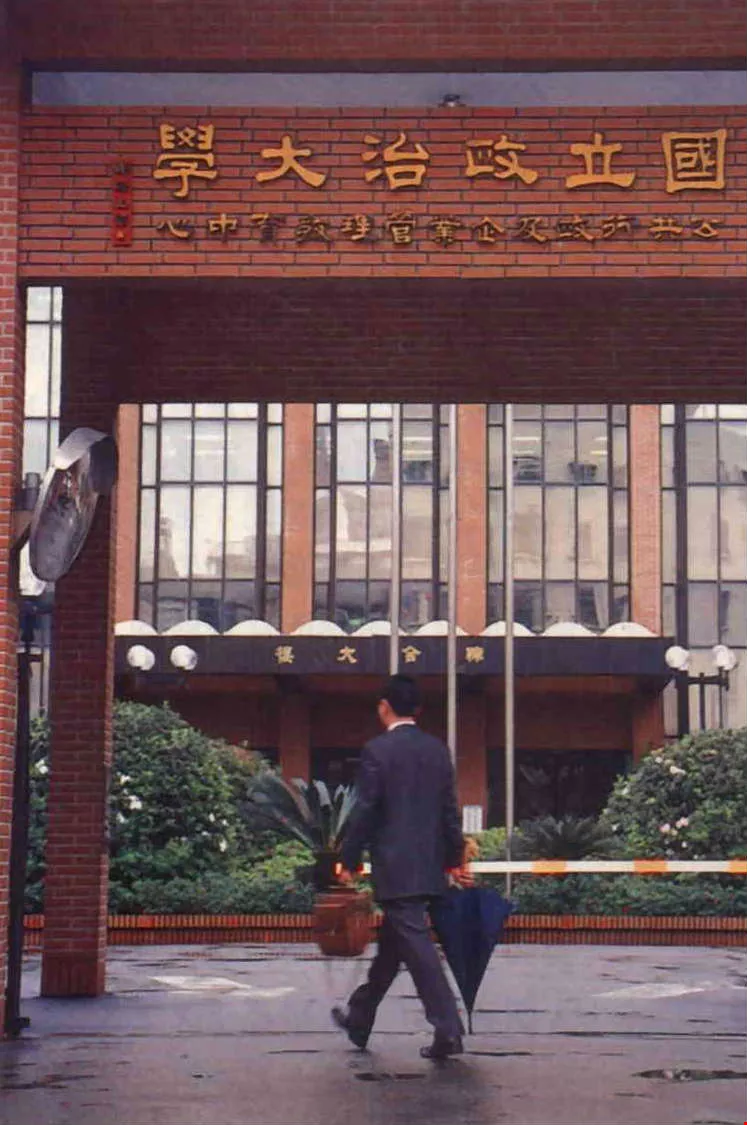
National Chengchi University's College of Commerce has offered non-degree courses to business executives for over 20 years, cultivating many fine industry leaders. Despite paving the way for today's EMBA programs, it never offered a degree.
More than a diploma
In order to accommodate professionals with day jobs, many universities have scheduled their business management courses during evening hours. The sight of professionals in suits and ties rushing to class at dusk contrasts greatly from the typical jeans and casual attire of fresh-faced undergrads.
Shuttling between the office and the campus, do they ever feel like they're burning the candle at both ends? At some schools, even professionals boasting Ph.D. degrees are coming back to school for Master's degrees. Is the degree really that important to them?
Mouton Lee, in charge of over 80 employees and production of key components as president of ABBA Linear Tech Co., Ltd., is a second-year student in the NTUST Graduate School of Management. Lee relates that as a youth he studied because he was forced to, but now his motivations for learning are far greater-so great in fact that he registered for three classes at the start of the semester, a decision he has come to regret for lack of time. Lee, who has also taken short-term management courses, says, "Degree programs are better, since the pressure makes you grow."
Mouton Lee would like a Master's degree, yet today he studies for the knowledge it brings. Ever since graduating with a degree in mechanical engineering from NTUST and setting out to start his own business over 20 years ago, that degree has sat in a drawer somewhere, relegated to mere symbolic significance.
Hsieh Sun-chi, director of the Control Yuan's Office of Information Management and a 25-year veteran of civil service, relates that he has already attained the highest rank a general civil servant can achieve, yet at the age of 50 he still has over a decade until retirement. Two years ago, this led him to consider taking a new direction, and he tested into National Chengchi University's College of Commerce intent on making connections with movers and shakers in different fields.
Chang Chin-tsung, a researcher at the Chung-Shan Institute of Science & Technology with a Ph.D. in mechanical engineering from a US university, shuttles between his office in Taoyuan s Lungtan and the NTU campus three days each week. Long immersed in the sciences and always focusing on numbers and statistics, Chang says he feels like he "has gotten into a mental rut." Although Hsinchu's National Chiaotung University offers a similar management curriculum, he was concerned that the students there would be science park types with similar backgrounds in high tech fields. Thus he would rather spend the extra time commuting to NTU to be around students with experience in such fields as advertising, finance, and architecture. "I'd be lying if I said the degree doesn't matter. If it didn't, why not just get into a non-degree program? The truth is that a degree in management does nothing to help me in my current job, but it gives me a second skill if I choose another route in the future."
Advanced training for professionals has become a hot topic among executives over the past two years, but continuing education is nothing new among Taiwan's universities. For instance, National Chengchi University's Public Administration Center has offered graduate extension courses for executives for over a decade, the difference being that, upon completion of the curriculum students only receive a certificate of course credit. In comparison, a Master's degree is far more appealing, given that a degree is awarded upon completion of studies.
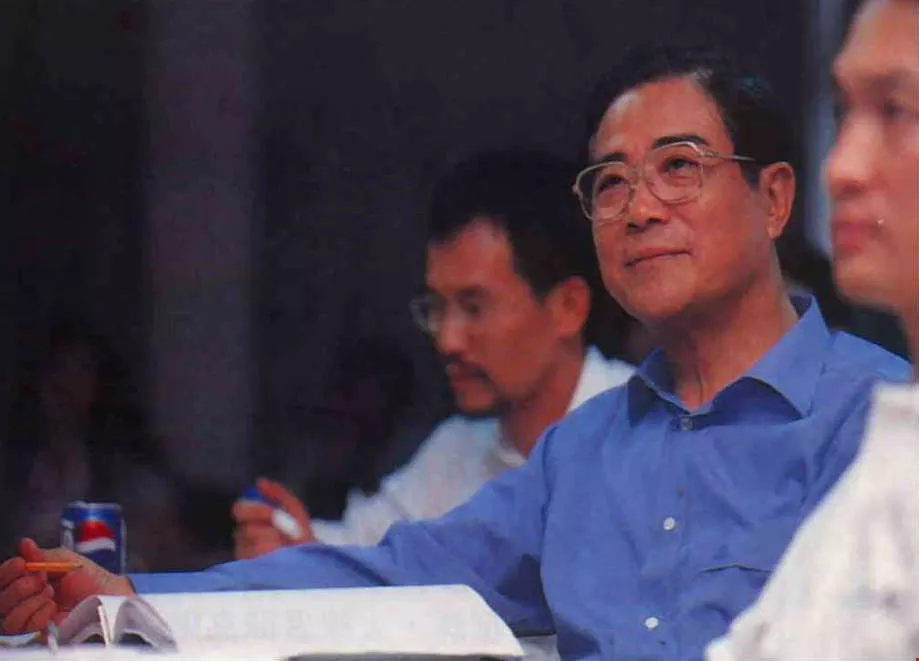
Ma Yu-shan, chairman of Kingdom Construction, was accepted into NTU's College of Management two years ago. Ma sets a good example for others as a boss who never stops learning.
Burning the proverbial candle
Motivated by the degree or not, the enthusiasm of these professionals for their studies is impressive. Nevertheless, they must pay a hefty price to be able to study in the first place. First, working during the day and attending classes at night is often a war of energy and will. Next, they must shuffle their work schedules to accommodate their studies. Many of them have to reschedule business trips. Meanwhile, some become highway speeders, rushing from Taoyuan or Hsinchu to attend class. And female managers, ordinarily responsible for household chores as well, really burn the proverbial candle at both ends.
"I have my time perfectly allotted," says Morna Lee, Taiwan regional business manager for Kellogg's. She divides her schedule into three-month cycles, and with one class on Thursday afternoons, her company does its best to accommodate her by not holding meetings that involve her on that day of the week. Still, sometimes nothing can be done, such as the time that she had a meeting in Hong Kong early one Friday morning, forcing her to miss class on Thursday while she flew to Hong Kong. She had to fly quickly back to Taipei to make class on Saturday afternoon. Despite often staying up until 2:00 or 3:00 AM to study or write reports, Lee likes mingling in the executive management class with a diverse group of students from different fields, and feels that the new ideas the professors feed them help keep her brain supple. Moreover, she muses, "We managers are a strange breed. If we don't exhaust ourselves, we end up sick."
Female professionals like Morna Lee represent a minority among executive degree students, accounting for just about five percent.
"If you asked me whether work or family is more important, I would say that since entering society 20 years ago work has always come first," states Donna Sun, vice president of the Human Resource Division at Schmidt Scientific Taiwan. Even if she has no classes to attend, leaving the office at 8:00 PM is no different from the perspective of her family life than the extra hour she spends attending classes until 9:00 PM. She is thankful that her son, a university student, and her daughter, a third-year junior high school student, have always been very independent and self-reliant. Hiring someone to help with housework, Lee is a model for the children when it comes to studying, even taking them to the library on breaks to conduct research.
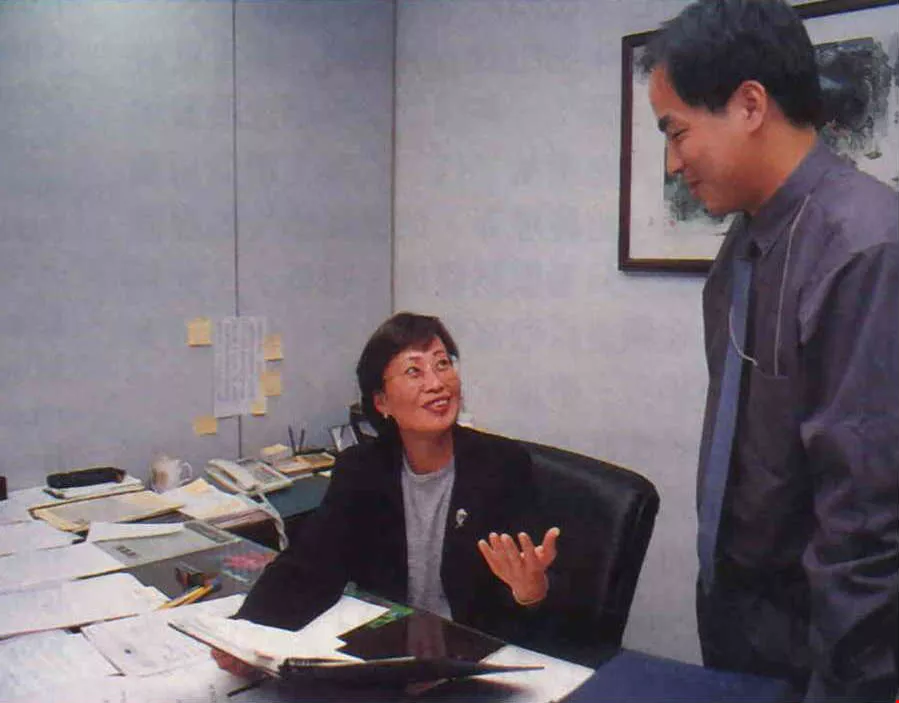
Female executives able to successfully juggle family, school and work are a rare species. In order to effectively make use of her time, Donna Sun, vice president of human resources at Schmidt Scientific Taiwan, relates that she hires someone to help with domestic work and cook three meals each day.
No magic bullet
Compared to young students focused on getting a degree, the motivations of professionals studying for advanced degrees "are not that simple." They might be after new knowledge, keen to sport a fancy degree from a graduate school like NTU or Chengchi University, out to network with others, or looking out for the survival of business and to raise competitiveness by searching for answers to difficult work or business issues.
"Looking for quick answers from professors is a misguided concept," says Tang Ming-je, professor of strategic management at NTU's Department of International Business. Before commencing a course, Tang tells his students, "I am not in the consulting business. There are no magic bullets, for if I had any I'd have gotten rich long ago."
Wu Se-hwa, dean of National Chengchi University's College of Commerce, relates, "Academic institutions provide systematic thinking, not the answers to specific questions." Wu tells his students that if they put other things aside and concentrate on their studies for three weeks, maybe they'll find the answer themselves.
Wu notes that adult students bring rich practical experience to the table, and lack only the knowledge to combine and integrate scattered experience. For them, returning to school is valuable for establishing their own modes of thinking with the knowledge they pick up. Unlike the 20th century, where the amount of capital was the greatest factor determining success, Wu Se-hwa believes that the next century will be about "knowledge as the main competitive force."
The book The 500-year Delta notes that in the 1960s each executive might only have to learn one new skill each year, such as how to use a computer or send e-mail. By the 1990s, accumulation of know-how accelerated many times over, so that executives needed to learn something new each day. Now, in the 21st century, each manager might have to learn something new every single hour of the working day.
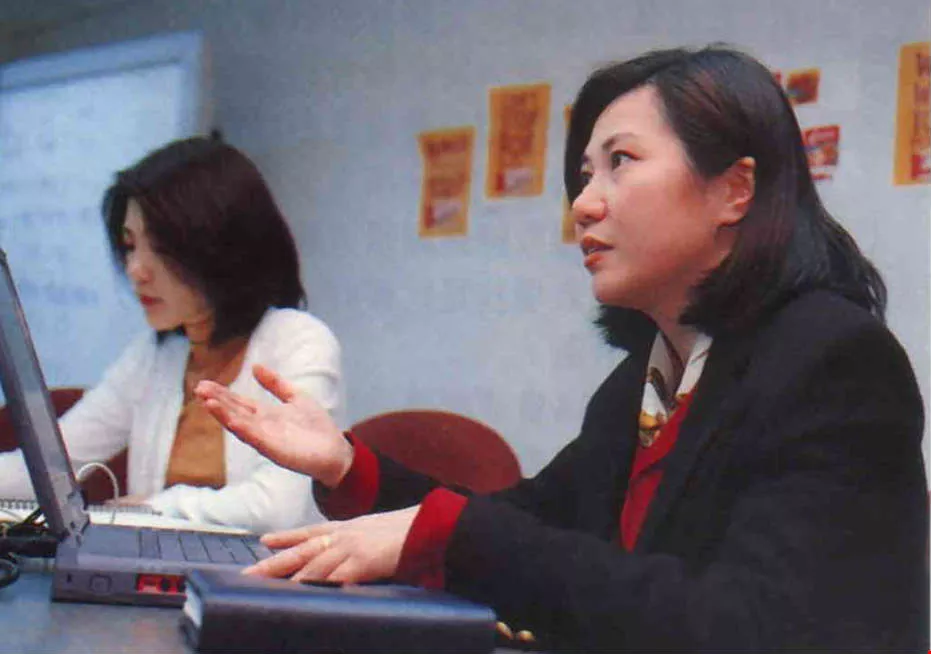
In order to attend classes at NTU each week, Morna Lee, a business manager for Kellogg's Taiwan, must plan her business trips carefully to avoid conflicts with her school schedule.
Curriculums need selling points
In order to satisfy students with diverse expectations and needs for basic knowledge, what innovative means must a professor resort to? And what challenges does this pose for the institution itself?
"People are going to fall asleep no matter what, so you have to think on your feet and use different techniques to stimulate their attention," remarks Mark Gia-khy Tang, professor in the Department of Risk Management and Insurance at National Chengchi University. Students who have been away from the classroom for well over a decade cannot be expected to remember all the formulas they learned in statistics and economics classes way back when. Nor should classes turn into solo performances by the professor.
Professor Tang's approach is to lecture on theory for the first hour, then use the remaining time on the homework that each group worked on since the previous week. Tang's own "Three No's" policy guides his teaching approach: No midterms, no final exams, and no calling on students. Instead, grades are based on homework results and class participation.
Tang's risk management class is discussing how to identify risks. One of the questions is: "If there were a fairy who could spell out for you exactly what you would experience for the rest of your life, consider what advantages and disadvantages the following information might have for you. For instance, no matter how hard you work, you are still fated to be poor all your life. Or what if you were fated to have everything go your way? What if, for example, you're going to be elected to the legislature, or become the president?"
Tom Lin, associate professor of marketing at NTUST, describes the main difference between teaching adult executives and regular students: "Executives are always asking questions. Even when they have an idea themselves, they'll still bring up issues they encountered in their jobs to see how you respond." Often, says Lin, such questions leave him stumped.
Another issue for adult students always on the run is their unfamiliarity with the campus. In order to enhance their sense of identification with the school, NTUST designed an overseas business camp program. Last year, one professor made a big hit with over 30 students, taking them to mainland China for over ten days to familiarize them with the investment environment there. This year, trips are planned to Japan and Silicon Valley in the United States.
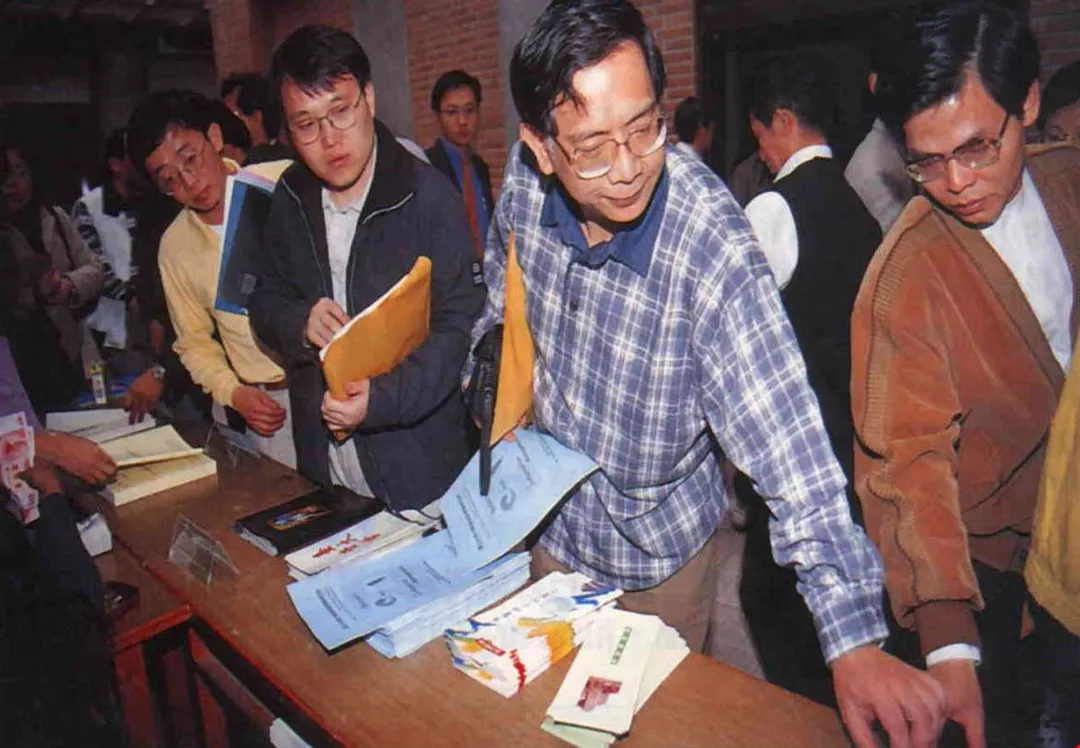
It's a rainy day during winter vacation, and time for universities to release the brochures for their continuing education Master's degree programs. From these, interested parties can see if they might meet the qualifications for applicants. (photo by Jimmy Lin)
Planting in fertile soil
Judging from the manner in which universities are opening their doors for continuing education, non-degree programs, and professional training, higher education in Taiwan appears to be undergoing a sort of makeover. With these changes, universities must not only take care of teaching and research, but must also make sure they play their third function properly-spreading knowledge and sharing it with the public.
Still, detractors point out that university graduate programs for business executives appear to be elitist. One student attending a non-degree program at NTUST relates that there are not enough spots to go around in the executive degree programs. Hoping to make the switch from the non-degree program, he failed to pass the screening that is administered prior to the admissions test. "If you fail a test, you only have yourself to blame, but tripping up on the initial screening is just a matter of not having a high enough job title."
Each year when EMBA program acceptances are released, newspapers carry letters from readers relating how certain national university graduate schools compete to accept CEOs and presidents of listed corporations, or the children of rich business people. The NTUST student expresses cynicism toward the application and review process, suspecting that "they just pay attention to company name and job title." Moreover, continuing education courses charge hefty tuition fees. For instance, NTU divides the school year into three semesters, at NT$50,000 per semester, while other institutions charge between NT$3700 and $10,000 per credit, a full two to three times more than regular graduate student tuition. Such instances naturally lead to suspicion that graduate schools such as these are "out to make a killing" by catering only to an elite few.
"From review, to written test, to oral exam, in order to ensure fairness, no professor is involved in more than one portion of the process," says Huang Chung-hsing, director of the EMBA program at NTU. Still, Huang admits that the bigger the company and higher the candidate's job title, the greater their chances of acceptance into the program. This can be partially attributed to the belief among professors that the commitment of their educational resources yields "more bang for the buck."
As Tang Ming-je forthrightly explains, university professors' time is a national resource, and if they can have a positive impact on an executive controlling budgets of billions of NT dollars, their contribution to country and society is considerable.
Asks Liao Ching-jong, director of the NTUST Graduate School of Management, concurs, "Which is greater, the marginal benefit of a company president or a staff member's education? The president can go back and put what she learns into practice right away." What is more, even if schools do not deliberately seek out company presidents, they invariably perform better on oral exams-perhaps due to their greater experience.
"We must ask ourselves some questions, too, when EMBAs are thought of as giving away degrees to the privileged few," comments Wu Se-Hwa. Wu tells his professors that unless they perform well in class, the EMBA cannot develop further, as universities are founded upon academic research.
As for tuition policies, Wu Se-Hwa relates that with an annual budget of NT$2.1 billion, National Chengchi University spends about NT$200,000 per student. Thus, when it comes down to calculating costs, NT$10,000 per credit is actually quite cheap.
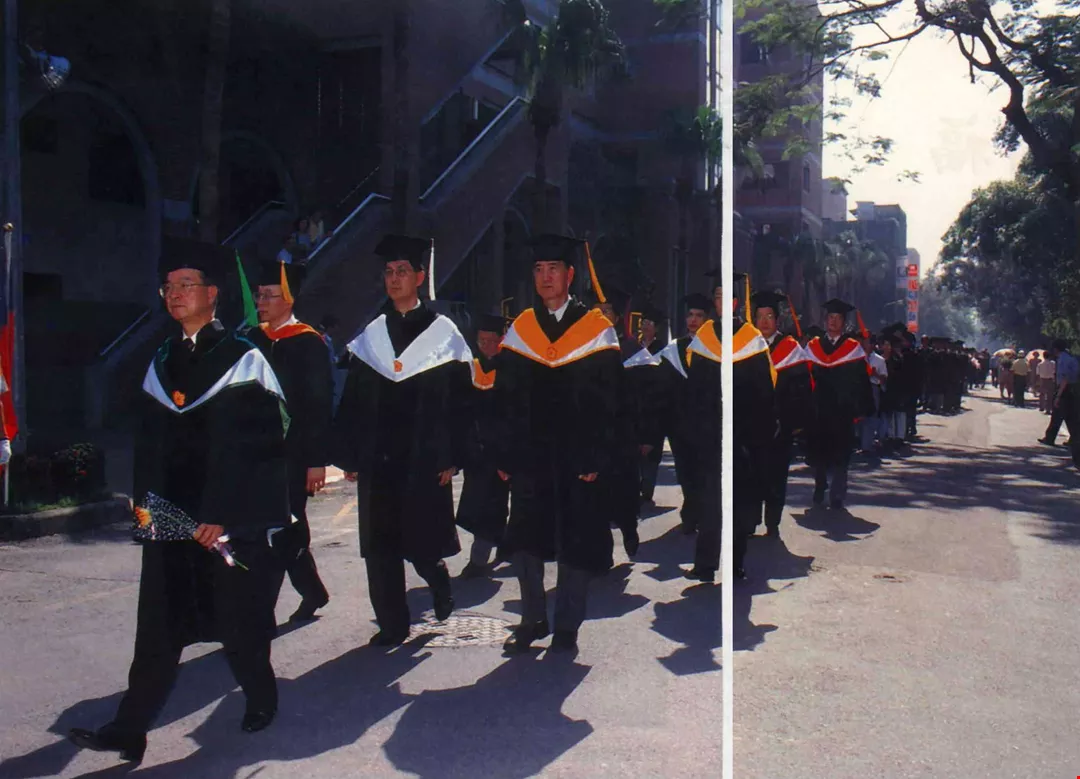
In the new millennium, each manager must learn a new skill every hour. Enhancing competitive advantage relies on education and training to turn individual learning into organizational assets.
Industry retooling
The EMBA craze reflects the cold, intense competition of social Darwinism, but does it also signify that Taiwanese industry is beginning to devote greater attention to the training of top executives?
Many scholars believe that with the EMBA phenomenon just getting off its feet in Taiwan, many corporate bosses are taking a "wait-and-see" attitude. This is reflected in the way students approach the programs, not informing their bosses that they have applied to a program until they have been accepted, and not occupying work time if school takes place in the evening. This way, their boss's attitude has no particular bearing on what they do.
Perhaps business education may not be widespread in Taiwan at this time, yet a small number of company bosses have taken the lead themselves-taking advanced courses and setting an example for management personnel.
Ma Yu-shan, chairman of Kingdom Construction and 64 years old this year, tested into NTU's College of Management in 1998, becoming NTU's oldest student.
For Ma, "living and learning" is more than just a maxim, as each year Kingdom Construction employees are required to undergo 80 hours of on-the-job training. "For the boss to lead his team, he can't just tell his subordinates to learn, while he remains static himself. Not to mention that in discussions with employees, if they know you're the kind of boss who doesn't seek to further himself, they put less stock in what you say," notes Ma. With the rapid changes in the business environment, poor decision-making can have serious consequences for company development. "The pressure on the boss is tremendous, because nobody comes to the CEO with easy questions."
Too busy to attend regular courses, Ma Yu-shan took the advice of an NTU professor and hired a Ph.D. student to tutor him one semester in "management economics."
Amber Huang, president of Changhua's Feng Huei Steel & Iron Company, is a student in the Department of Business Administration at NTUST. Huang notes three advantages of the boss going to school. First, it's good for his company's image. As his company must frequently seek bank loans, Huang asks rhetorically, "Could a studious boss be a bad guy?" This image has helped him secure loans with little difficulty every time. Second, it sets a good example for employees. Lastly, speaking the professional lingo fluently helps enhance his authority.
Knowledge for the new century
In the effort to cultivate management talent, many prominent multinational corporations have founded their own teaching institutions, Toyota University and Intel University being two good examples. In Taiwan, the Acer Group's Aspire Academy opened its doors in Lungtan (Taoyuan Country) last October after three years of planning.
During the Aspire Academy opening ceremony, academy president Stan Shih, chairman of the Acer Group, remarked that he hopes to introduce management models from Europe and America and mesh them with the unique attributes of Taiwanese industry to enhance the globalization of Asian business. Shih noted that through the sharing of experiences, emerging businesses might save themselves a lot of groping in the dark.
Are people at the fin de siecle inspired to learn by the confluence of technology, humanities, and economic knowledge? At least the entrepreneurs, managers, and executives in campuses around Taiwan clearly recognize that learning is a necessity for survival and an engine of growth.


